
Special Adviser, Media and Democracy Reform Initiative, Common Cause
Michael Copps is special adviser for Common Cause's Media and Democracy Reform Initiative.
From 2001-11, he served as a member of the Federal Communications Commission, where his tenure was marked by a consistent embrace of the public interest. As a strong voice in opposition to consolidation in the media, he dissented in the FCC vote on the Comcast-NBC Universal merger. He has been a consistent proponent of localism in programming and diversity in media ownership. Though retired from the Commission, he has maintained a commitment to an inclusive, informative media landscape. In addition to his work at Common Causes, Mr. Copps sits on the boards of Free Press and Public Knowledge.
Before joining the FCC, Mr. Copps served as assistant secretary of commerce for trade development at the Department of Commerce and chief of staff to U.S. Sen. Fritz Hollings from the early 1970s to 1983. He has a Ph.D. in History from the University of North Carolina at Chapel Hill.
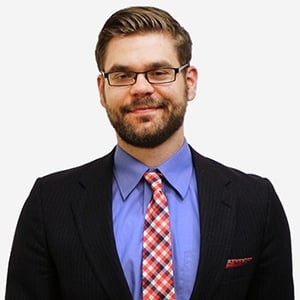
Senior Research Fellow, Center for Growth and Opportunity
William Rinehart is a Senior Research Fellow at the Center for Growth and Opportunity at Utah State University.
He specializes in telecommunication, Internet, and data policy, with a focus on emerging technologies and innovation. His work has appeared in The Wall Street Journal, Bloomberg, Wired, Morning Consult, The Hill, Forbes, Reason, Marginal Revolution, Overlawyered, and on BBC Radio and NPR, just to name a few. Rinehart speaks regularly on topics related to tech policy and has been cited in regulatory orders from the FCC as well as Supreme Court petitions.
Rinehart came to the Center from the American Action Forum, where he served as Director of Technology and Innovation Policy. He was also previously a Research Fellow at TechFreedom and the Director of Operations at the International Center for Law & Economics. Additionally, he worked for the Institute for Policy and Civic Engagement as the Research Assistant in Technology and Civic Engagement. Rinehart is currently a Frédéric Bastiat Fellow at the Mercatus Center and previously a Fellow at the Internet Law & Policy Foundry. Additionally, he served on the Federal Communications Commission’s Broadband Deployment Committee and Consumer Advocacy Committee.
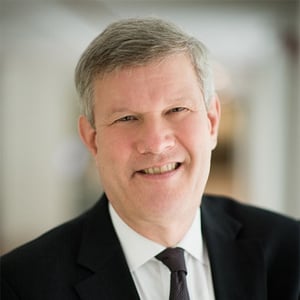
Senior Fellow and Director, Center for the Economics of the Internet, Hudson Institute
Harold Furchtgott-Roth is a senior fellow and director of the Center for the Economics of the Internet at Hudson Institute.
Mr. Furchtgott-Roth founded Furchtgott-Roth Economic Enterprises in 2003. He frequently comments on issues related to the communications sector of the economy. From 2001 to 2003, he was a visiting fellow at the American Enterprise Institute where he published A Tough Act to Follow, chronicling the difficulties implementing the Telecommunications Act of 1996.
From 1997 through 2001, Mr. Furchtgott-Roth served as a commissioner of the Federal Communications Commission. In that capacity, he served on the Joint Board on Universal Service. He is one of the few economists to have served as a federal regulatory commissioner, and the only one to have served on the Federal Communications Commission.
Before his appointment to the FCC, he was chief economist for the House Committee on Commerce and a principal staff member on the Telecommunications Act of 1996. Earlier in his career, he was a senior economist with Economists Incorporated and a research analyst with the Center for Naval Analyses.
Mr. Furchtgott-Roth is a member of the Washington Legal Foundation’s Legal Policy Advisory Board. He is the coauthor of three books: Cable TV: Regulation or Competition, with R.W. Crandall; Economics of A Disaster: The Exxon Valdez Oil Spill, with B.M. Owen et al; and International Trade in Computer Software, with S.E. Siwek.
Mizuho Financial Group Professor of Finance, Harvard Business Sc, Harvard Law School
Mihir A. Desai is the Mizuho Financial Group Professor of Finance at Harvard Business School and a Professor of Law at Harvard Law School. He received his Ph.D. in political economy from Harvard University; his MBA as a Baker Scholar from Harvard Business School; and a bachelor's degree in history and economics from Brown University. In 1994, he was a Fulbright Scholar to India.
Professor Desai's areas of expertise include tax policy, international finance, and corporate finance. His academic publications have appeared in leading economics, finance, and law journals. His work has emphasized the appropriate design of tax policy in a globalized setting, the links between corporate governance and taxation, and the internal capital markets of multinational firms. His research has been cited in The Economist, BusinessWeek, The New York Times, and several other publications. He is a Research Associate in the National Bureau of Economic Research's Public Economics and Corporate Finance Programs, and served as the co-director of the NBER's India program.
His general interest publications include opinion pieces on varied topics, including tax policy and the effects of globalization on domestic welfare, in The Washington Post, The Wall Street Journal, Tax Notes and The New York Times. He has also written for practitioners in the Harvard Business Review on the role of the Global CFO, on how to reform the U.S. tax system, and how changing incentive systems have contributed to the degradation of American competitiveness. He has testified several times to Congressional bodies, including most recently to the Senate Finance Committee on corporate tax reform and inversions.
Professor Desai has taught extensively as an award-winning teacher at HBS and at Harvard University. As a second-year professor teaching finance in the required curriculum, he received the Student Association Award for teaching excellence from the HBS Class of 2001. He subsequently built a second-year elective on International Financial Management, and his many cases on international finance are collected in a casebook published by John Wiley and are taught around the world. Since 1999, he has co-taught Public Economics (EC 1410) at Harvard College. He has also taught seminars and classes on tax policy at Harvard Law School, NYU Law School, and Columbia Law School. Most recently, Professor Desai has been active in delivering various executive education programs at HBS, including the General Managers Program (GMP), on campus and around the world. In 2011, Professor Desai launched, with Professor Joe Lassiter, the first offering at HBS for Harvard undergraduates, Innovation and Entrepreneurship, that is also included as part of the General Education curriculum at Harvard College. In the fall of 2014, Professor Desai began teaching Taxation at Harvard Law School.
From 2008 to 2011, Professor Desai led HBS's doctoral programs, which include the DBA and joint programs with the Graduate School of Arts and Sciences. In that role, he led the restructuring of various programs and initiated a terminal master's program. From 2010 to 2014, Professor Desai was the Senior Associate Dean for Planning and University Affairs, where he was part of the senior management team of the Business School focused on integration with the rest of the University. Specifically, he has launched a program for Harvard undergraduates to collaborate on research with HBS professors (PRIMO), led the course for undergraduates described above, helped launch the Harvard Innovation Lab, worked on campus planning efforts including the design of Tata Hall and served on the newly created Harvard Libraries Board.
His professional experiences include working at CS First Boston (1989-1991), McKinsey & Co. (1992), and advising a number of firms and governmental organizations. He is also on the Advisory Board of the International Tax Policy Forum and the Centre for Business Taxation at Oxford University.
Senior Lecturer on Law, Harvard Law School
Stephen E. Shay is a Senior Lecturer at Harvard Law School.
Before joining the Harvard Law School faculty as a Professor of Practice in 2011, Mr. Shay was Deputy Assistant Secretary for International Tax Affairs in the United States Department of the Treasury. Prior to re-joining the Treasury Department in 2009, Mr. Shay was a tax partner for 22 years with Ropes & Gray, LLP. Mr. Shay served in the Office of International Tax Counsel at the Department of the Treasury, including as International Tax Counsel, from 1982 to 1987, during which Mr. Shay actively participated in the development and enactment of international provisions in the Tax Reform Act of 1986.
Mr. Shay has published scholarly and practice articles relating to international taxation, and testified for law reform before Congressional tax-writing committees. He has had extensive practice experience in the international tax area and while in active practice was recognized as a leading practitioner in Chambers Global: The World's Leading Lawyers, Chambers USA: America's Leading Lawyers, The Best Lawyers in America, Euromoney's Guide to The World's Leading Tax Advisers and Euromoney's, Guide to The Best of the Best. Mr. Shay discloses certain related interests and activities not connected with his position at Harvard Law School on the Harvard Law School website.
Mr. Shay is President of the American Tax Policy Institute Board of Trustees and is the IBFD Professor in Residence for 2015. Mr. Shay serves on the Executive Committee of the New York State Bar Association Tax Section and has been active in the American Bar Association Tax Section as a Council Director and Chair of the Committee on Foreign Activities of U.S. Taxpayers, in the American Law Institute as an Associate Reporter and in the Taxes Committee of the International Bar Association. Mr. Shay is a 1972 graduate of Wesleyan University, and he earned his J.D. and his M.B.A. from Columbia University in 1976.

Laurence A. Tisch Professor of Law and Director, Classical Liberal Institute, New York University School of Law; Director, Classical Liberal Institute, Civitas Institute University of Texas at Austin
Richard A. Epstein is the Laurence A. Tisch Professor of Law, at New York University, a senior research fellow at the Civitas Institute at the University of Texas Austin, and a senior Lecturer, the University of Chicago. He received an LL.D., h.c . from the University of Ghent, 2003 , and an LLD h.c . from the University of Siegen in 2018 and the Bradley Prize in 2011. He has been a member of the American Academy of Arts and Sciences since 1985. He has edited both the Journal of Legal Studies (1981-1991) and the Journal of Law and Economics (1991-2001). He is also a founder and director of the Classical Liberal Institute at NYU Law School. His most recent book is The Classical Liberal Constitution: The Uncertain Quest for Limited Government (2014). His other books include Takings: Private Property and the Power of Eminent Domain ( 1985); Bargaining with the State (1993); Simple Rules for a Complex World (1995); Principles for a Free Society: Reconciling Individual Liberty and the Common Good (1998); Skepticism and Freedom: A Modern Theory of Classical Liberalism (2003); Design for Liberty: Private Property, Public Administration and the Rule of Law (2011), and most recently, The Myth of Birthright citizenship—and Beyond (2026). He has taught courses in , administrative law, antitrust, constitutional, contracts, environmental law, land use planning; real property, torts and water law. He has written and spoken extensively on a wide range of topics, and is writes a regular column for Defining Ideas.
Laurence A. Tisch Professor of Law and Director, Classical Liberal Institute, New York University School of Law; Director, Classical Liberal Institute, Civitas Institute University of Texas at Austin
Richard A. Epstein is the Laurence A. Tisch Professor of Law, at New York University, a senior research fellow at the Civitas Institute at the University of Texas Austin, and a senior Lecturer, the University of Chicago. He received an LL.D., h.c . from the University of Ghent, 2003 , and an LLD h.c . from the University of Siegen in 2018 and the Bradley Prize in 2011. He has been a member of the American Academy of Arts and Sciences since 1985. He has edited both the Journal of Legal Studies (1981-1991) and the Journal of Law and Economics (1991-2001). He is also a founder and director of the Classical Liberal Institute at NYU Law School. His most recent book is The Classical Liberal Constitution: The Uncertain Quest for Limited Government (2014). His other books include Takings: Private Property and the Power of Eminent Domain ( 1985); Bargaining with the State (1993); Simple Rules for a Complex World (1995); Principles for a Free Society: Reconciling Individual Liberty and the Common Good (1998); Skepticism and Freedom: A Modern Theory of Classical Liberalism (2003); Design for Liberty: Private Property, Public Administration and the Rule of Law (2011), and most recently, The Myth of Birthright citizenship—and Beyond (2026). He has taught courses in , administrative law, antitrust, constitutional, contracts, environmental law, land use planning; real property, torts and water law. He has written and spoken extensively on a wide range of topics, and is writes a regular column for Defining Ideas.
Associate, Wiley Rein LLP
Shane B. Kelly represents individual and corporate clients in government and internal investigations, civil enforcement matters, criminal investigations and prosecutions, and other litigation. He regularly conducts internal investigations to assess allegations of misconduct and potential exposure and advises on disclosure obligations and corrective actions. Mr. Kelly also defends government contractors and other clients accused of false claims, fraud, and kickbacks. He often assists clients in responding to subpoenas and civil investigative demands, including managing the preservation, collection, and production of electronically-stored information.
Partner, Wiley Rein LLP
Stephen J. Obermeier has a wide range of experience litigating complex disputes before federal and state courts and administrative agencies and in arbitration. He has represented clients in both individual and class action cases involving commercial and government contract disputes, the False Claims Act (FCA), procurement fraud, consumer fraud, business torts, and the Administrative Procedure Act (APA). Mr. Obermeier has authored dozens of appellate and dispositive motions briefs in courts across the country and has successfully argued multiple motions to dismiss, summary judgment motions, and appeals in federal and state court. He also has experience conducting internal investigations for corporate clients in response to government allegations of misconduct. Mr. Obermeier previously served as an Assistant U.S. Attorney in the civil section in the Eastern District of Virginia.

Member, Mintz, Levin, Cohn, Ferris, Glovsky, and Popeo, P.C.
Ms. Foster is qualified in England and Wales as well as California, and has experience practicing law in both the United States and the United Kingdom. She has been based in Mintz Levin’s London office since September 2007, and worked in the United Kingdom for another international law firm from 2001 to 2004. Susan is a Certified Information Privacy Professional/Europe (CIPP/E).
Ms. Foster works with clients primarily on European data protection compliance and licensing, collaborations, and commercial matters in the fields of clean tech, high tech, mobile media, and life sciences. She has represented a broad range of clients, from start-up companies to international industry leaders, and has significant experience with cross-border transactions.
Within the life sciences, Ms. Foster has assisted biotech, pharmaceutical, diagnostic, and medical device companies with licenses, collaborations, spin-offs, and agreements relating to consulting services, R&D, manufacturing, and distribution.
Within the high-tech and mobile media fields, Ms. Foster has advised clients on deals involving the sale and licensing of intellectual property rights; multi-tier distribution arrangements; OEM and value-added reseller arrangements; research, development, and consulting activities; and the provision and outsourcing of technology services. She has assisted mobile media and Internet services clients with service agreements and content licenses, including user-generated content and web-to-mobile deals.
Ms. Foster’s clean tech experience includes advising on a joint venture for the development and marketing of electric cars and various agreements relating to the development and sale of fuel cells.
She has spoken on data protection, open source software, European antitrust and technology transfer law, and other intellectual property and technology law issues at a number of webinars and conferences in the United States and the United Kingdom.
During law school, Ms. Foster was on the executive board for the Stanford Technology Law Review.

Partner, Steptoe & Johnson LLP
Stewart Baker is a partner in the law firm of Steptoe & Johnson in Washington, D.C. From 2005 to 2009, he was the first Assistant Secretary for Policy at the Department of Homeland Security. His law practice covers cybersecurity, data protection, homeland security, and travel and foreign investment regulation; he has been awarded one patent.
Mr. Baker has been General Counsel of the National Security Agency and General Counsel of the commission that investigated WMD intelligence failures prior to the Iraq war. He is the author of Skating on Stilts, a book on terrorism, cybersecurity, and other technology issues; he also hosts the weekly Cyberlaw Podcast.
Executive Vice President, Chief Legal Officer, Gates Corporation
Matthew R. A. Heiman joined the Company in May 2026 and has served as the Company’s Chief Legal Officer and Corporate Secretary since June 2026. As Chief Legal Officer, Mr. Heiman is responsible for all legal functions for Gates, including securities and corporate governance, M&A, litigation, commercial, regulatory, compliance, patents and trademarks, real estate, employment and labor, sustainability and environmental matters. Prior to joining Gates, Mr. Heiman held senior legal leadership roles at Waystar, where he served as Chief Legal & Administrative Officer from 2023 to 2025 and as General Counsel and Corporate Secretary from 2020 to 2023. Prior to that, he was with Johnson Controls, where he served as Vice President, Corporate Secretary, and Associate General Counsel. Mr. Heiman has been a Senior Fellow for the National Security Institute at George Mason University’s Antonin Scalia School of Law since 2018.
Professor of Law and Public Policy, Pepperdine University Caruso School of Law
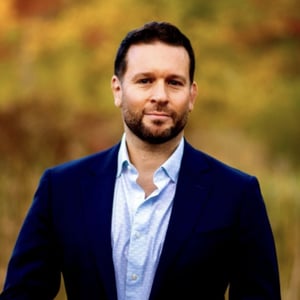
Greg McNeal is an award winning entrepreneur, professor, and investor. He co-founded AirMap, a multinational aerospace and defense company honored as one of the “World’s Most Innovative Companies” by Fast Company and ranked as an Inc.com 25 Most Disruptive Company. The company also received a Los Angeles Business Journal Innovation Award, and a Consumer Electronics Show “Innovation Award.” The company was acquired in 2021.
He invests in and advises companies and entrepreneurs in SAAS, Defense, AI, and entertainment. The companies he founded or serves on the corporate board of have raised over $100 million in funding with his direct participation in the process. Those investors include Microsoft, Flexport, Sony, Qualcomm, Rakuten, Baidu, Airbus, and top global financial services and venture capital funds including Greycroft, Social Capital, General Catalyst, Lux Capital, Bullpen Capital, Bay Bridge Ventures, Teamworthy Ventures, Operate Studio, TenOneTen, Temasek, Macquarie Group, Graph Ventures and many others. The companies he advises have raised substantially more funding, in part due to his advice and mentorship.
He is a tenured Professor of Law and Public Policy at Pepperdine University and a faculty member with the Palmer Center for Entrepreneurship and the Law and teaches courses in technology, public policy, internet, and privacy law.
As a public policy and legal expert, Greg has worked with the White House, the Department of Defense, the State Department, and independent regulatory agencies on matters related to technology, law and policy. He has on multiple occasions testified before Congress and state legislatures about entrepreneurship and emerging technology and has aided state legislators, cities, municipalities, and executive branch officials in drafting legislation and ordinances related to technological advances and has been appointed by Cabinet officials to serve on Federal Rulemaking Committees.
He is a frequent keynote speaker at industry events and academic conferences related to technology, law, and public policy. He advises venture capital firms and other investors, start-ups, law enforcement, consulting firms, and Fortune 500 companies about the legal and regulatory issues associated with emerging technologies.
He regularly appears on television and radio to discuss technology and business, wrote a column on business and technology for Forbes and has authored Op-Eds for the New York Times, the Washington Post, and The Washington Times, among others. In his early career he worked on national security, international criminal law and counterterrorism matters and served as an Army officer.

Telecommunications Transactions and the Public Interest - Podcast
Michael J. Copps, William Rinehart, Harold W. Furchtgott-Roth
Telecommunications & Electronic Media Practice Group Podcast
Mergers and other transactions between large telecommunications companies are always the subject of vigorous public...
Corporate Inversions: Tax Dodge, or Symptom of the Tax Code? - Podcast
Mihir A. Desai, Stephen E. Shay
Administrative Law & Regulation Practice Group Podcast
Corporate inversions are transactions, such as mergers or acquisitions, that involve a U.S. and foreign...
Changes in Markets and Foreign Competitors?
Richard A. Epstein
Short Video with Richard Epstein
Professor Richard Epstein, Professor of Law at NYU School of Law, continues to give an...
Labor Unions: History of Unions and Collective Bargaining
Richard A. Epstein
Short Video with Richard Epstein
Professor Richard Epstein, Professor of Law at NYU School of Law, gives a brief history...
Topics
Video: Why is the FAA Regulating Recreational Drone Use?
Gregory S. McNeal, Associate Professor of Law and Public Policy at Pepperdine School of Law,...
Topics
State Court Docket Watch News Clips: 1/28/2016
Delaware's legislature is debating whether or not to repeal the state's death penalty. The issue...
How “False” Must a Claim be under the False Claims Act? - Podcast
Shane B. Kelly, Stephen J. Obermeier
Litigation Practice Group Podcast
If you do business with the federal government, when does violating a statute, regulation, or...
Running Aground in the Surveillance Safe Harbor - Podcast
Susan L. Foster, Stewart A. Baker, Matthew R. A. Heiman
International & National Security Law Practice Group Podcast
In October of 2015, the European Court of Justice invalidated the EU-U.S. Safe Harbor agreement...
Why is the FAA regulating recreational drone use?
Gregory S. McNeal
Short video featuring Gregory S. McNeal
Gregory S. McNeal, Associate Professor of Law and Public Policy at Pepperdine School of Law,...
OMB Memo Tries to Get Ahead of Midnight Regulations
Regulatory activity tends to surge in the final year of a presidential administration. Significant legislation from...