

Senior Fellow and Director of Constitutional Studies, Manhattan Institute
Ilya Shapiro is a senior fellow and director of constitutional studies at the Manhattan Institute and a contributing editor of City Journal. Previously he was executive director and senior lecturer at the Georgetown Center for the Constitution, and before that a vice president of the Cato Institute.
Shapiro is the author of Lawless: The Miseducation of America’s Elites (2025) and Supreme Disorder: Judicial Nominations and the Politics of America’s Highest Court (2020), coauthor of Religious Liberties for Corporations? (2014), and editor of 11 volumes of the Cato Supreme Court Review (2008-18). He has contributed to a variety of academic, popular, and professional publications, including the Wall Street Journal, Harvard Journal of Law & Public Policy, Washington Post, Los Angeles Times, USA Today, National Review, and Newsweek. He also regularly provides commentary for various media outlets, writes the Shapiro’s Gavel newsletter on Substack, and once appeared on the Colbert Report.
Shapiro has testified many times before Congress and state legislatures and has filed more than 500 amicus curiae “friend of the court” briefs in the Supreme Court. He lectures regularly on behalf of the Federalist Society, is a member of the board of fellows of the Jewish Policy Center, was an inaugural Washington Fellow at the National Review Institute, and has been an adjunct law professor at the George Washington University and University of Mississippi. He is also the chairman of the board of advisers of the Mississippi Justice Institute, a barrister in the Edward Coke Appellate Inn of Court, and a former member of the Virginia Advisory Committee to the U.S. Commission on Civil Rights.
Earlier in his career, Shapiro was a special assistant/adviser to the Multi-National Force in Iraq on rule-of-law issues and practiced at Patton Boggs and Cleary Gottlieb. Before entering private practice, he clerked for Judge E. Grady Jolly of the U.S. Court of Appeals for the Fifth Circuit. He holds an AB from Princeton University, an MSc from the London School of Economics, and a JD from the University of Chicago Law School.
Immigration Policy Analyst, Cato Institute
David J. Bier is an immigration policy analyst at the Cato Institute’s Center for Global Liberty and Prosperity. He is an expert on visa reform, border security, and interior enforcement, and his work has been cited in the Washington Post, New York Times, Wall Street Journal, USA Today, Politico, and many other print and online publications.
From 2013 to 2015, Mr. Bier drafted immigration legislation as senior policy advisor for Congressman Raúl Labrador, a member of the House Judiciary Committee’s Subcommittee on Immigration and Border Security. Previously, he worked as the immigration policy analyst at the Competitive Enterprise Institute and most recently as the director of immigration policy at the Niskanen Center.
Mr. Bier has a B.A. in political science from Grove City College in Pennsylvania.
Senior Fellow, National Review
Bestselling author Andrew C. McCarthy is a contributing editor at National Review, a senior fellow at National Review Institute, and a Fox News contributor. He is a former Chief Assistant United States Attorney in the Southern District of New York and led the terrorism prosecution against the “Blind Sheikh” (Omar Abdel Rahman) and eleven other jihadists for conducting a war of urban terrorism against the United States that included the 1993 World Trade Center bombing and a plot to bomb New York City landmarks. During is 20-year career as a prosecutor, he received numerous honors, including the Justice Department’s highest awards. Andy speaks and writes widely on law and national security, radical Islam, politics, and culture. He has testified before Congress as an expert on issues of constitutional law, counterterrorism, and law-enforcement. He is a columnist for The Hill, and his essays and book reviews appear frequently at The New Criterion. His most recent New York Times bestselling book is Ball of Collusion (Encounter Books, 2019), about the Russiagate controversy (an updated version was published in 2020). His other books include Willful Blindness (2008), The Grand Jihad (2010), Spring Fever: The Illusion of Islamic Democracy (2012), and Faithless Execution (2014). He has also written several pamphlets in the Broadside series published by Encounter Books, most recently Islam and Free Speech (2015).

Director of Muslim Matters, America Matters
Shireen Qudosi is an American Muslim writer and strategist. She specializes in understanding and defeating ideological drivers. Her articles have been featured in The Federalist, The Huffington Post, On Being, The Middle East Forum, Fox, and The Hill, among others. She’s appeared on Fox, BBC, Australia’s Radio National, NewsMax, and Breitbart to discuss challenges facing American Muslims.
Her keynote writings also include an in-depth assessment on the War on Terror through the lens of WWII and a two-hour exclusive interview with radical Imam Abu Taubah, who was linked to Orlando Shooter Omar Mateen. In 2016, Ms. Qudosi testified before the House Homeland Security Committee Hearing on Radical Islam, offering a powerful testimony that tied the current crisis to Islam's conflicted history.
Her experience has given her insight in forecasting the conversation among the world’s leading secular and religious Islamic leaders. As a former refugee raised across three continents, Ms. Qudosi has a unique perspective of the issues facing the U.S. and global Muslim community.
In 2011, she was also named one of the top ten North American Muslim Reformers. She presently serves as Director of Muslim Matters, at America Matters. She’s currently also working on her first book titled Islam’s Origin Story.
Managing Director, Lexpat Global Services
Adam R. Pearlman is the Founder and Managing Director of Lexpat Global Services, an international law and consulting services firm specializing in security, defense, investigations, compliance, and training. A Special Advisor to and member of the Executive Committee of the Federalist Society’s International and National Security Law Practice Group, he is National Security Law expert and a proven senior leader with more than fifteen years of experience across the U.S. Departments of Justice, Defense, and State, in the White House, and with the U.S. Federal Judiciary.
Most recently, he served as the Senior Advisor for Legal Policy in the State Department’s Bureau of Counterterrorism, where he counseled senior officials on matters covering the entire spectrum of programs and operations to counter terrorism and violent extremism. While participating in sensitive diplomatic engagements and helping to coordinate military operations, he also advised in the development of sanctions policy and initiatives to build legal and operational capacity in partner nations. Mr. Pearlman also managed the Bureau’s participation in federal litigation and led U.S. delegations in multilateral forums concerning criminal justice and rule of law.
A former Associate Deputy General Counsel of the Department of Defense, Mr. Pearlman was agency counsel for complex civil and criminal national security matters in federal and military courts, and led the Supreme Court and appellate unit of the team dedicated to litigating classified counterterrorism cases. His earlier service in the Department of Justice spanned four litigating divisions and the Office of the Deputy Attorney General. His diverse experience included reviewing complex international transactions and mergers, and advising on immigration removal proceedings, human rights abuses, and terrorist financing investigations. Mr. Pearlman also served with distinction in Iraq as an early advisor to the Iraqi High Tribunal’s prosecution of Saddam Hussein. He was a law clerk for The Honorable Royce C. Lamberth, and during law school interned in the White House Counsel’s Office.
Mr. Pearlman is a Term Member of the Council on Foreign Relations, a Visiting Fellow at the National Security Institute at George Mason University’s Antonin Scalia Law School, a member of the American Bar Association’s Africa Law Initiative Council, and a member of the Center for Strategic & International Studies’ Project on Nuclear Issues. He is a former National Security Fellow at the Foundation for Defense of Democracies, vice chairman of the ABA Section of International Law’s committees on national security, and aerospace and defense, and also previously served as a liaison to the Board of Directors of the ABA’s Rule of Law Initiative. He has been co-editor of the U.S. Intelligence Community Law Sourcebook since 2011 and has published articles in the Harvard National Security Journal, Stanford Law & Policy Review, and Intelligence & National Security.
Mr. Pearlman earned his B.A., with honors, from UCLA, and his J.D., with honors, from The George Washington University Law School, where he was a member of the International Law Review. He also earned a Master of Science of Strategic Intelligence degree from the National Intelligence University, where he was the inaugural recipient of the Kornblum Award for national security law and ethics. Mr. Pearlman speaks and reads Portuguese at the intermediate level and holds certificates in international human rights law from the University of Oxford and in U.S. and international anti-corruption law from American University’s Washington College of Law. He is admitted to the State Bars of California and Virginia, as well as to the Bar of the United States Supreme Court.

Director of the Institute for Law, Science and Global Security a, Georgetown University
Professor Catherine Lotrionte is the Director of the Institute for Law, Science and Global Security and Visiting Assistant Professor of Government and Foreign Service at Georgetown University. Professor Lotrionte teaches courses on national security law, U.S. intelligence law, and international law. In addition to teaching, Professor Lotrionte coordinates research projects and events for the Institute for Law, Science and Global Security at Georgetown. She is the Institute Liaison for the Program on Nonproliferation Policy and Law, funded by the Defense Threat Reduction Agency, in cooperation with the Monterey Institute for International Studies’ James Martin Center for Nonproliferation Studies. Professor Lotrionte is also the Director of the CyberProject. Professor Lotrionte and the Institute focus on the role of international and domestic law in recent and upcoming developments in cyber technology and cyber threats.
In 2002 she was appointed by General Brent Scowcroft to be Counsel to the President's Foreign Intelligence Advisory Board at the White House, a position she held until 2006. In 2002 she served as a legal counsel for the Joint Inquiry Committee of the Senate Select Committee on Intelligence. Prior to that, Professor Lotrionte was Assistant General Counsel with the Office of General Counsel at the Central Intelligence Agency, where she provided legal advice relating to information warfare, foreign intelligence and counterintelligence activities, and international terrorism. Before working in the Office of General Counsel at the Central Intelligence Agency, Professor Lotrionte served in the U.S. Department of Justice.
Professor Lotrionte earned her Ph.D. from Georgetown University and her J.D. from New York University and is the author of numerous publications, including a forthcoming book concerning U.S. national security law in the post-Cold War era. She is a frequent speaker at cyber conferences held by academic, military, government, and media organizations. She is a Life Member of the Council on Foreign Relations.
Ira A. Lipman Chair, Emerging Technologies & National Security a, Council on Foreign Relations (CFR)
Adam Segal is the Ira A. Lipman chair in emerging technologies and national security and director of the Digital and Cyberspace Policy Program at the Council on Foreign Relations (CFR). An expert on security issues, technology development, and Chinese domestic and foreign policy, Segal was the project director for the CFR-sponsored Independent Task Force report Defending an Open, Global, Secure, and Resilient Internet. His book The Hacked World Order: How Nations Fight, Trade, Maneuver, and Manipulate in the Digital Age (PublicAffairs, 2016) describes the increasingly contentious geopolitics of cyberspace. His work has appeared in the Financial Times, The Economist, Foreign Policy, The Wall Street Journal, and Foreign Affairs, among others. He currently writes for the blog, “Net Politics.”
Before coming to CFR, Segal was an arms control analyst for the China Project at the Union of Concerned Scientists. There, he wrote about missile defense, nuclear weapons, and Asian security issues. He has been a visiting scholar at the Hoover Institution at Stanford University, the Massachusetts Institute of Technology's Center for International Studies, the Shanghai Academy of Social Sciences, and Tsinghua University in Beijing. He has taught at Vassar College and Columbia University. Segal is the author of Advantage: How American Innovation Can Overcome the Asian Challenge (W.W. Norton, 2011) and Digital Dragon: High-Technology Enterprises in China (Cornell University Press, 2003), as well as several articles and book chapters on Chinese technology policy.
Segal has a BA and PhD in government from Cornell University, and an MA in international relations from the Fletcher School of Law and Diplomacy, Tufts University.
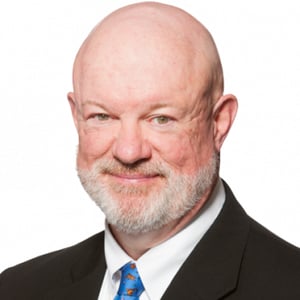
Senior Legal Fellow, the Meese Institute for the Rule of Law, Advancing American Freedom
Paul J. Larkin is a Senior Legal Fellow in the Meese Institute for the Rule of Law at Advancing American Freedom. Paul has held various positions in the federal and state governments throughout his career, such as being an attorney in the Organized Crime and Racketeering Section of the Criminal Division at the U.S. Department of Justice, an Assistant to the Solicitor General in the Office of the Solicitor General at the U.S. Department of Justice, Special Agent-in-Charge and Acting Director of the Criminal Investigation Division at the Environmental Protection Agency, and a member of the Parole Abolition and Sentencing Reform Commission and of the Juvenile Justice Reform Commission in the Office of Virginia Governor George Allen.
He has also worked at Verizon Communications and two law firms in Washington, D.C. His current research is principally in the fields of drug policy, criminal justice policy, and administrative law and policy. He has published numerous articles in law and public policy journals, both in print and online.
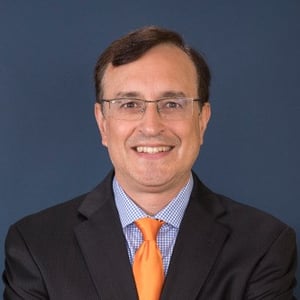
President, Center for Individual Rights
Todd Gaziano is the President of the Center for Individual Rights. Mr. Gaziano received his J.D. in 1988 from the University of Chicago Law School, where he was a John M. Olin Fellow in Law and Economics. He received his B.A. from West Virginia University, summa cum laude in 1985. He was selected as a Truman Scholar from West Virginia while an undergraduate.
Mr. Gaziano’s previous legal work includes service as a law clerk for U.S. Court of Appeals for the Fifth Circuit Judge Edith Jones, as an attorney in the U.S. Department of Justice Office of Legal Counsel, as a chief subcommittee counsel in the U.S. House of Representatives, as a Houston trial attorney, and as a chief corporate legal officer. He also served a six-year term as commissioner on the U.S. Commission on Civil Rights (2008-2013), where he helped conduct oversight and investigations of civil rights agencies.
For most of the last 25 years, Mr. Gaziano was a legal scholar and public interest law leader, promoting individual liberty in the Supreme Court and Congress. From 1997 to 2013, he was the founding director of the Edwin Meese Center for Legal and Judicial Studies at The Heritage Foundation. From 2014 until he joined CIR, he was the Chief of Legal Policy and Strategic Research, and Director of the Center for the Separation of Powers, at Pacific Legal Foundation.
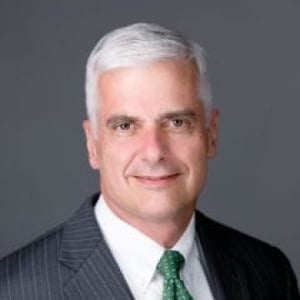
David McIntosh is a leader for the principles of limited constitutional government and individual freedom. He is president of the Club for Growth, the leading advocate for economic liberty.
Former Congressman David McIntosh represented Indiana's 2nd Congressional District in the United States Congress from 1995-2001. As a Freshman, David chaired the Subcommittee on Regulatory Relief. He passed the Congressional Review Act and held extensive oversight and field hearings to build a record of public support for regulatory relief initiatives in energy, biotechnology, pharmaceutical, healthcare, transportation and technology sectors. Another issue that he championed was the elimination of the marriage penalty in the Federal Tax Code.
David served during the Reagan administration as special assistant to Attorney General Edwin Meese III, and as special assistant to President Reagan for Domestic Affairs. During the first Bush administration, he served as executive director of the President's Council on Competitiveness and assistant to the Vice President. The Competitiveness Council coordinated the cost/benefit review of major regulations and promoted legal reform measures.
David is a co-founder of the Federalist Society for Law and Public Policy and serves on the Board of Directors. He remains active with several free market and conservative think tanks and grassroots organizations. David has also had stints at the Hudson Institute and as a Professor of Economics at Ball State School of Business.
Prior to the Club for Growth, David was a partner at Mayer Brown, LLP in Washington, DC.
David graduated from the University of Chicago Law School in 1983, and Yale University, BA, cum laude, in 1980. He and his wife, Ruthie, are the proud parents of Ellie age 17 and Davey age 13.
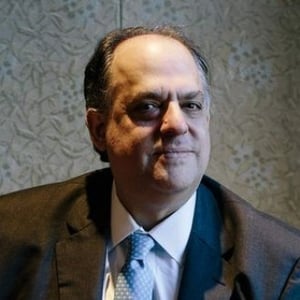
Director of Litigation and Senior Attorney, Hamilton Lincoln Law Institute
Theodore H. Frank is director at the Hamilton Lincoln Law Institute and the Center for Class Action Fairness. Frank founded and ran CCAF as a non-profit, public interest law firm in 2009.
Frank has won several landmark appeals and tens of millions of dollars for consumers and other plaintiffs through his class action work. Adam Liptak of The New York Times calls Frank “the leading critic of abusive class action settlements” and the American Lawyer Litigation Daily referred to him as “the indefatigable scourge of underwhelming class action settlements.”
Previously, Frank clerked for the Honorable Frank H. Easterbrook on the Seventh Circuit Court of Appeals, and was a litigator at firms in Washington and Los Angeles and a resident fellow at the American Enterprise Institute. Frank is a frequent public speaker and has testified before Congress multiple times on legal issues. He has been profiled by The Wall Street Journal, Forbes, GQ, and the ABA Journal, among other publications.
In 2008, Frank was elected to membership in the American Law Institute. He also serves on the Executive Committee of the Federalist Society Litigation Practice Group. Frank graduated from The University of Chicago Law School in 1994 with high honors and as a member of the Order of the Coif and the Law Review. He is a member of the District of Columbia Bar and the state bars of California and Illinois.

Courthouse Steps: Packingham v. North Carolina - Podcast
Ilya Shapiro
Free Speech & Election Law Practice Group Podcast
In Packingham v. North Carolina, the Supreme Court will decide whether the First Amendment bars...
Topics
Should Bar Disciplinary Committees Conduct Political Fact-Checking?
On February 20, fifteen law professors submitted a complaint to the D.C. bar seeking discipline...
Travel Moratorium Executive Order - Podcast
David J. Bier, Andrew McCarthy, Shireen Qudosi
International & National Security Law Practice Group Podcast
On January 21, President Trump signed an executive order “Protecting the nation from foreign terrorist...
Topics
Regulation by Litigation at the State Level
Last week, Peggy Little and the Competitive Enterprise Institute published Pirates at the Parchment Gates,...
Public-Private Partnerships in Cybersecurity and Technology - Podcast
Adam R. Pearlman, Catherine B. Lotrionte, Adam Segal
International & National Security Law Practice Group Podcast
The second Teleforum in our Security Partnership Series will examine the complex mechanics and ethics...
Professionals, Amateurs, and Rape: How Colleges Are Failing Their Students
Paul James Larkin
Federalist Society Review, Volume 18
A Review of: The Campus Rape Frenzy: The Attack on Due Process at America’s Universities,...
The Congressional Review Act’s “Rediscovery” and Hidden Uses - Podcast
Todd F. Gaziano, David M. McIntosh
Administrative Law & Regulation Practice Group Podcast
In 1996, Congress passed the Congressional Review Act (CRA). Before an executive agency rule—broadly defined...
JUST ANNOUNCED: March 2017 DC Luncheon with Donald McGahn
Join us Thursday, March 2, for this month's DC lawyers' chapter luncheon at Tony Cheng's...
Topics
Fourth Circuit misinterprets Supreme Court 2nd Amendment precedent
In Kolbe v. Hogan, the Fourth Circuit, sitting en banc, became the first Federal Circuit...
In Re: Walgreen Co. Stockholder Litigation Update - Podcast
Theodore "Ted" Frank
Litigation Practice Group Podcast
According to the Competitive Enterprise Institute, over 97% of mergers and acquisitions result in "strike...