
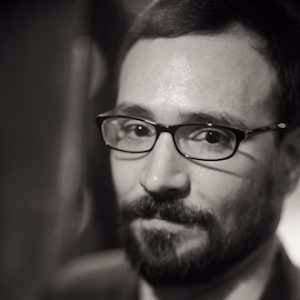
Senior Editor, Reason magazine and Reason.com
Damon Root is a senior editor of Reasonmagazine and Reason.com, where he writes about legal affairs, politics, and history. He is the author of Overruled: The Long War for Control of the U.S. Supreme Court (Palgrave Macmillan).
Root was awarded the R.C. Hoiles Prize for Journalism in 2011 for his writing on eminent domain abuse in New York. His July 2010Reason cover story, "Conservatives v. Libertarians: The debate over judicial activism divides former allies," was nominated for a 2010 Los Angeles Press Club award for best magazine feature or commentary.
Root's writing on the 14th Amendment has been cited in the Georgetown Journal of Law & Public Policy, his reporting on eminent domain has been cited in the Fordham Urban Law Journal, and his work on federalism and gay marriage has been cited in theColumbia Law Review. His 2007 essay on NAACP co-founder Moorfield Storey was recommended inRace & Liberty in America: The Essential Reader (University Press of Kentucky).
Root's writing has appeared in the New York Post, New York Daily News, Chicago Sun-Times,Washington Times, WallStreetJournal.com, New York Press, Cato Policy Report, and other publications.
Root has spoken before audiences at the New York Civil Liberties Union, Columbia University, and the Cato Institute and has appeared on the Fox Business Channel, New York Public Radio, SIRIUS Satellite Radio, and other media outlets.
Root is a graduate of Columbia University, where he received a B.A. in history. He lives in New York's Hudson Valley.
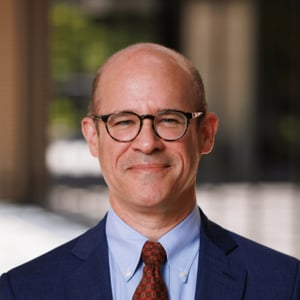
Professor of Law, Stanford Law School
Orin S. Kerr is a Professor of Law at Stanford Law School, where he teaches and writes in the areas of criminal procedure and computer crime law. Kerr earned mechanical engineering degrees from Princeton University and Stanford University before graduating with a J.D. from Harvard Law School. He is a former law clerk to Justice Anthony M. Kennedy at the United States Supreme Court and Judge Leonard I. Garth of the U.S. Court of Appeals for the Third Circuit.
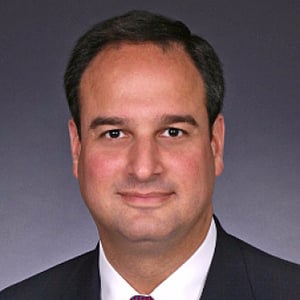
Partner, Perkins Coie LLP
Michael Sussmann, formerly with the U.S. Department of Justice, is a nationally-recognized privacy, cybersecurity and national security lawyer. He is engaged on some of the most sophisticated, high-stakes matters today, such as his representation of the Democratic National Committee and Hillary Clinton’s presidential campaign in their responses to Russian hacking in the 2016 presidential election. This work was most recently discussed in the best-selling book Hacks (2017).
Michael has been ranked as a “Privacy and Data Security Expert” in the Chambers Global and Chambers USAdirectories. As such, he is often quoted in The New York Times, The Washington Post, The Wall Street Journal and other media. His legal work also has been cited by investigative reporters in two other important books: Power Wars (2015) and Dragnet Nation (2015). He has provided Congressional testimony and litigated national security issues in federal court.
Attorney, Robinson, Bradshaw & Hinson, PA
Erik Zimmerman is a commercial and appellate litigator. He previously clerked for Chief Justice John G. Roberts Jr. of the U.S. Supreme Court and the Honorable J. Harvie Wilkinson III of the U.S. Court of Appeals for the Fourth Circuit. Aided by his experience in the judicial system, Erik represents clients at all levels of the federal and state courts, including the U.S. Supreme Court, federal and state appellate and trial courts, and federal administrative agencies.
Erik has experience in a broad range of subject areas, including contract disputes, employment and labor law, ERISA, and health care and health insurance law. He also represents clients in cases involving constitutional law, communications law, fraud, the False Claims Act, product liability, punitive damages and federal preemption of state law.
Erik's representative matters include helping to secure dismissal of a multibillion dollar breach of contract action in federal district court. He also successfully represented a client in appealing a judgment of nearly $100 million to the U.S. Court of Appeals for the Fourth Circuit in another contract dispute.
Erik also maintains an active pro bono practice. He has represented clients in federal and state appeals involving issues of criminal law, the Fourth Amendment and landlord-tenant law. Erik is admitted only in the District of Columbia.
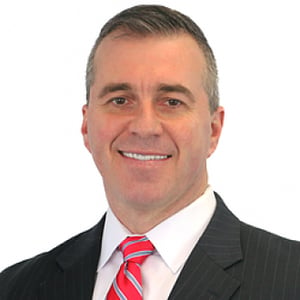
Founder and Partner, Dowd Scheffel PLLC
Matthew Dowd focuses his skills on complex appellate and trial litigation, with an emphasis on patent and intellectual property issues. Through his years of practice, Mr. Dowd has successfully worked on numerous high-stakes and eclectic legal matters, focusing primarily on all stages of complex patent matters (AIA proceedings, litigation, prosecution, and counseling). Mr. Dowd's expertise and leadership are regularly consulted, as he is frequently asked to comment in the press on leading intellectual property issues.
Mr. Dowd has substantial experience with Hatch-Waxman litigation, including all stages of opinion analysis, litigation, and appeals. His technical background in medicinal chemistry is ideally suited for litigating pharmaceutical patents. He has represented clients in a range of trial forums for patent disputes, such as the Eastern District of Texas and the District of Delaware, as well as the Patent Trial and Appeal Board at the USPTO.
He has argued and briefed numerous appeals before the U.S. Court of Appeals for the Federal Circuit and other courts involving issues such as patent law, Hatch-Waxman, administrative law, Fifth Amendment takings, contract claims, government employment issues, and criminal law. In 2018, Mr. Dowd is co-counsel with the Hon. Richard Posner (ret.) of U.S. Court of Appeals for the Seventh Circuit in an appeal before the U.S. Court of Appeals for the Fourth Circuit.
In 2013, Mr. Dowd represented Nobel Laureate James Watson, co-discoverer of the DNA double helix, as amicus curiae in the groundbreaking 2013 Supreme Court gene patent case. Mr. Dowd has over 15 years of experience representing clients before the U.S. Patent and Trademark Office.
Mr. Dowd is also well-known for his successful pro bono representation in the "free-range kids" case. The case was widely reported in the national, local, and international news.
Mr. Dowd attended The George Washington University Law School, graduating with high honors and being awarded Order of the Coif. While attending law school and before, Mr. Dowd worked full-time as a registered patent agent at the renowned IP boutique Sterne, Kessler, Goldstein & Fox.
After law school, Mr. Dowd clerked for the Honorable Paul R. Michel, Chief Judge (ret.) of the U.S. Court of Appeals for the Federal Circuit. While a law clerk, Mr. Dowd gained an insider's perspective on the appellate process. Understanding the appellate process is critical to maximizing success at the earlier stages of a case.
Mr. Dowd is currently appointed as a Professorial Lecturer in Law at The George Washington University Law School. He teaches appellate advocacy and is the coach for the student moot court team for the AIPLA Giles Sutherland Rich Moot Court Competition.
Prior to his legal career, Mr. Dowd spent four years in a Ph.D. program in medical chemistry, studying organic chemistry, pharmacology, and pharmaceutical drug design. During his Ph.D. program, Mr. Dowd's research discovered a novel structure-activity relationship for nicotinic ligands with potential utility in treating Alzheimer's and Parkinson's diseases. Mr. Dowd attended The College of William and Mary, in Williamsburg, VA, and Regis High School in New York City.
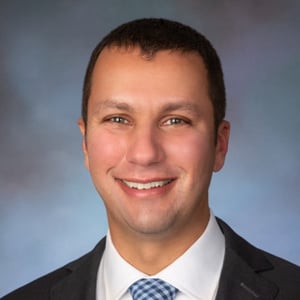
Partner, Duane Morris LLP
Brian Pandya is Partner at Duane Morris LLP. A member of the firm’s Trial Practice Group, Brian represents technology, manufacturing, and healthcare companies in high-stakes litigation, arbitrations, investigations and appeals. He has served as lead trial counsel in a range of intellectual property, antitrust, complex commercial and white-collar matters. He also regularly counsels clients on cybersecurity and national security issues, particularly matters concerning emerging technologies and artificial intelligence.
Before joining Duane Morris, Brian served at the U.S. Department of Justice as Deputy Associate Attorney General from 2019-21, where he oversaw investigations and litigation undertaken by the Antitrust Division and Civil Division and served on several high-profile task forces and trial teams. Brian was also previously a litigation and IP partner at another prominent Washington, DC firm.
Brian clerked for Judge Leonard Davis on the United States District Court for the Eastern District of Texas. He is a two-time recipient of the Federal Circuit Bar Association’s Pro Bono Advocacy Award for work on behalf of military veterans and has served as volunteer federal public defender in the Eastern District of Virginia, among many other bar and community engagements.
Brian graduated cum laude from the University of Michigan Law School, where he was articles editor of the Michigan Telecommunications and Technology Law Review, and with honors and high distinction in mechanical engineering from Penn State University, where he received the Ralph Dorn Hetzel Memorial Award.
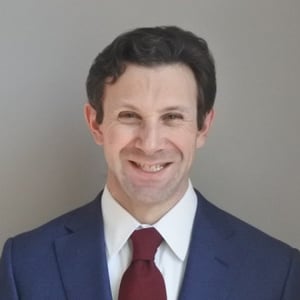
General Counsel - International, Willis Towers Watson
Todd F. Braunstein is General Counsel - International as well as Head of Global Investigations at Willis Towers Watson, an insurance broking and consulting firm with $9 billion in revenues, 45,000 employees, and business in 140+ countries. He previously worked as a federal prosecutor, at two DC law firms, and in the White House.
A.B., Harvard College; J.D., Harvard Law School
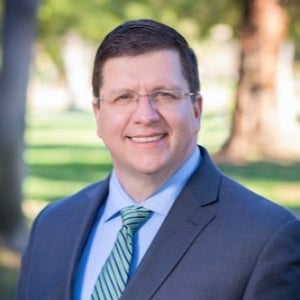
Vice President and Senior Counsel, The Becket Fund for Religious Liberty
Eric Rassbach is Vice President and Senior Counsel at the Becket Fund for Religious Liberty, where he has served since 2003. He has briefed over 90 cases at the United States Supreme Court and has led or been a part of Becket litigation teams in each of Becket’s pathbreaking victories there, including Hosanna-Tabor, Hobby Lobby, Holt v. Hobbs, Zubik v. Burwell, Agudath Israel of America v. Cuomo, and Fulton v. Philadelphia. In 2020, Eric argued Our Lady of Guadalupe School v. Morrissey-Berru to the Supreme Court, garnering a 7-2 win for his Catholic school clients. Eric has also briefed and argued cases in federal appeals courts and state supreme courts across the nation. Eric has also represented clients in appeals to the European Court of Human Rights in Strasbourg, France and in the highest courts of several other countries.
Eric believes passionately in the right of all people to the full measure of religious liberty and has represented members of almost every religious group present in the United States, including Buddhists, Christians, Hindus, Jains, Jews, Muslims, Native Americans, Santeros, and Sikhs, as well as many governmental entities targeted for accommodating religion.
Eric frequently comments on church-state issues in the media, including the New York Times, the Washington Post, the Wall Street Journal, and other major press outlets. He has published legal scholarship in the Harvard Law Review Forum, the Tennessee Law Review, the Illinois Law Review, the Cato Supreme Court Review, and other legal journals, and often speaks to law school audiences.
Before joining Becket, Eric worked at Baker Botts LLP in Houston, where he worked in international project finance. He also served as a law clerk to United States District Court Judge Lee Rosenthal in Houston, Texas.
Eric graduated from Haverford College with a degree in Comparative Literature, is a member of Fitzwilliam College, University of Cambridge, and is a graduate of Harvard Law School. Eric was a 2012-2013 Wasserstein Public Interest Fellow at Harvard Law School. He is Visiting Professor and Executive Director of The Hugh and Hazel Darling Foundation Religious Liberty Clinic at Pepperdine University Caruso School of Law in Malibu, where he leads students in litigating cases in American courts. He is also an Associated Scholar with the Centre for Religious Freedom at Jagiellonian University in Kraków, Poland. Eric is admitted in Texas, DC, California, and Ireland.

Thomas M. Siebel Senior Fellow, The Hoover Institution, Stanford University; Gary T. Schwartz Distinguished Professor of Law Emeritus, UCLA School of Law
Eugene Volokh is the Thomas M. Siebel Senior Fellow at the Hoover Institution (Stanford), as well as the Gary T. Schwartz Distinguished Professor of Law Emeritus and Distinguished Research Professor at UCLA School of Law. He recently retired from teaching at UCLA, after 30 years there, and is now focusing on research.
Volokh is the author of the textbooks The First Amendment and Related Statutes (8th ed. 2023), and Academic Legal Writing (5th ed. 2016), as well as over 100 academic law journal articles, mostly on First Amendment law. He is a member of The American Law Institute; the editor-in-chief of the Journal of Free Speech Law; and the creator and coauthor of The Volokh Conspiracy, a leading legal blog founded in 2002 (hosted at the Washington Post from 2014 to 2017 and now at Reason Magazine).

Senior Fellow and Director of Constitutional Studies, Manhattan Institute
Ilya Shapiro is a senior fellow and director of constitutional studies at the Manhattan Institute and a contributing editor of City Journal. Previously he was executive director and senior lecturer at the Georgetown Center for the Constitution, and before that a vice president of the Cato Institute.
Shapiro is the author of Lawless: The Miseducation of America’s Elites (2025) and Supreme Disorder: Judicial Nominations and the Politics of America’s Highest Court (2020), coauthor of Religious Liberties for Corporations? (2014), and editor of 11 volumes of the Cato Supreme Court Review (2008-18). He has contributed to a variety of academic, popular, and professional publications, including the Wall Street Journal, Harvard Journal of Law & Public Policy, Washington Post, Los Angeles Times, USA Today, National Review, and Newsweek. He also regularly provides commentary for various media outlets, writes the Shapiro’s Gavel newsletter on Substack, and once appeared on the Colbert Report.
Shapiro has testified many times before Congress and state legislatures and has filed more than 500 amicus curiae “friend of the court” briefs in the Supreme Court. He lectures regularly on behalf of the Federalist Society, is a member of the board of fellows of the Jewish Policy Center, was an inaugural Washington Fellow at the National Review Institute, and has been an adjunct law professor at the George Washington University and University of Mississippi. He is also the chairman of the board of advisers of the Mississippi Justice Institute, a barrister in the Edward Coke Appellate Inn of Court, and a former member of the Virginia Advisory Committee to the U.S. Commission on Civil Rights.
Earlier in his career, Shapiro was a special assistant/adviser to the Multi-National Force in Iraq on rule-of-law issues and practiced at Patton Boggs and Cleary Gottlieb. Before entering private practice, he clerked for Judge E. Grady Jolly of the U.S. Court of Appeals for the Fifth Circuit. He holds an AB from Princeton University, an MSc from the London School of Economics, and a JD from the University of Chicago Law School.
Partner, Troutman Pepper Hamilton Sanders LLP
Misha leads Troutman Peppers' national appellate and Supreme Court practice. Most recently, he successfully obtained orders from the Supreme Court blocking an unconstitutional restriction on places of worship, as well as overturning a lower court order that had blocked several state election laws. He has also argued and prevailed before the Supreme Court in Gill v. Whitford, one of the most significant redistricting cases in decades, as well as Murr v. Wisconsin, a high-stakes regulatory taking case.
Before joining Troutman, Misha served as Solicitor General of the State of Wisconsin. Misha previously served as a law clerk for the Honorable Anthony M. Kennedy of the Supreme Court, Janice Rogers Brown of the D.C. Circuit, and Alex Kozinski of the 9th Circuit. He graduated from Georgetown University Law Center, where he was President of the Federalist Society Chapter.

Christie v. NCAA [SCOTUSbrief]
Damon Root
Short video featuring Damon Root
Does a federal law against sports betting prohibit the state of New Jersey from legalizing...
Courthouse Steps: Carpenter v. United States
Orin S. Kerr, Michael Sussmann
Criminal Law & Procedure and Telecommunications & Electronic Media Practice Groups Teleforum
Arrests made in an armed robbery case occurred because the Federal Bureau of Investigation was...
Topics
Who’s The (Acting) Boss? Judge Timothy Kelly Rules That Mulvaney Is Acting CFPB Director
Yesterday afternoon Judge Timothy Kelly, U.S. District Court for the District of Columbia, ruled that Mick...
Patchak v. Zinke - Post-Argument SCOTUScast
Erik R. Zimmerman
SCOTUScast featuring Erik Zimmerman
On November 7, 2017, the Supreme Court heard argument in Patchak v. Zinke, a case...
Courthouse Steps: Oil States and SAS Institute Inc. v. Matal
Matthew J. Dowd, Brian Pandya
Intellectual Property Practice Group and Regulatory Transparency Project Teleforum
Oil States Energy Services v. Greene’s Energy Group Has the administrative state gone too far into...
Courthouse Steps: Digital Reality Trust, Inc. v. Somers
Todd F. Braunstein
Criminal Law & Procedure Practice Group Teleforum
While working for Digital Reality Trust, Paul Somers filed reports to senior management concerned about...
Preview: Masterpiece Cakeshop, v. Colorado CRC
Eric Rassbach, Eugene Volokh
Religious Liberties Practice Group Teleforum
Oral arguments for a case involving a Denver-based, Christian baker are slated for December 5th...
Carpenter v. United States [SCOTUSbrief]
Ilya Shapiro
Short video featuring Ilya Shapiro
Does the Fourth Amendment allow for a warrantless search and seizure of cellphone location data...
Artis v. DC - Post-Argument SCOTUScast
Misha Tseytlin
SCOTUScast featuring Misha Tseytlin
On November 1, 2017, the Supreme Court heard argument in Artis v. District of Columbia,...
Topics
Yes, President Trump Can Replace Richard Cordray with an Acting Director
On Friday, Richard Cordray resigned as director of the Consumer Finance Protection Bureau. On the...