
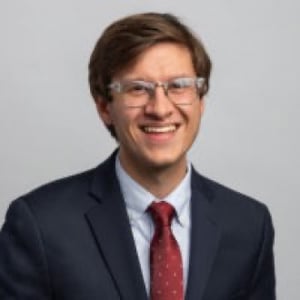
Activism Associate, Institute for Justice
Andrew Meleta is an Activism Associate at the Institute for Justice. He joined the Activism team in 2018 and focuses on municipal regulation and policy and its effect on entrepreneurship. He also co-leads IJ’s Cities Work initiative. Before joining IJ, Andrew worked at the Cato Institute as a fundraising research assistant and as a policy research intern for the Manhattan Institute and Cato. He graduated from George Mason University in 2017 with a B.S. in economics and data analysis. In his free time, Andrew spends time traveling, riding trains, and running.
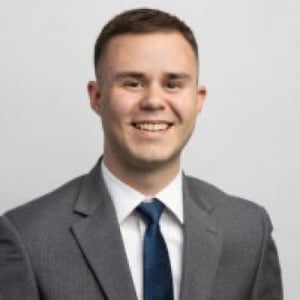
City Policy Associate, Institute for Justice
Alex Montgomery is IJ’s City Policy Associate. In that role, he produces internal reports and external research products to support activism campaigns.
Currently, Alex’s main focus is fighting for reforms at the grassroots to protect people’s right to earn an honest living. He’s especially interested in reducing red tape that inhibits entrepreneurship, learning from regulatory best-practices in cities across the country.
Alex previously worked at IJ as a Maffucci Fellow. Prior to joining the team, he was a summer fellow at the D.C.-based Hertog Foundation. Born and raised in Western North Carolina, he received his B.A. in Political Science and English from the University of North Carolina at Chapel Hill.
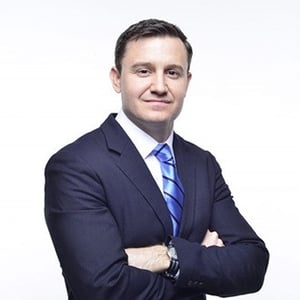
Vice President for Litigation & General Counsel, Goldwater Institute
Jon Riches is the Vice President for Litigation for the Goldwater Institute’s Scharf-Norton Center for Constitutional Litigation and General Counsel for the Institute. He litigates in federal and state trial and appellate courts in the areas of economic liberty, regulatory reform, free speech, taxpayer protections, public labor issues, government transparency, and school choice, among others.
Jon has developed and authored several pieces of legislation, including the landmark Right to Earn a Living Act, which provides some of the greatest protections in the country to job-seekers and entrepreneurs facing arbitrary licensing regulations. He also developed legislation eliminating deference to administrative agencies in Arizona—a first-of-its-kind regulatory reform that can serve as a model for the rest of the country.
His work at the Institute has been covered by national media, including the Wall Street Journal, New York Times, CBS This Morning, Bloomberg News, and Politico. Jon is also a member of the Federalist Society’s Regulatory Transparency Project: State and Local Working Group.
Prior to joining the Goldwater Institute, Jon served on active duty in the U.S. Navy Judge Advocate General’s (JAG) Corps. While on active duty, Jon represented hundreds of clients, litigated dozens of court-martial cases, and advised commanders on a vast array of legal issues.
He previously clerked for Sen. Jon Kyl on the U.S. Senate Judiciary Committee, worked for the Rules Committee in the Arizona State Senate, and clerked in the Office of Counsel to the President at the White House. Jon received his B.A. from Boston College, where he graduated magna cum laude and Phi Beta Kappa. He earned his J.D. from the University of Arizona, James E. Rogers College of Law.
Jon served as a presidentially appointed Panel Member on the Federal Service Impasses Panel. He is an officer in the U.S. Navy Reserve and an Adjunct Professor at Arizona State University School of Law. Jon is a native of Phoenix.
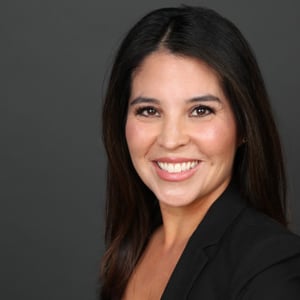
President, Defending Education
Nicole Neily is the president and founder of Defending Education, a national membership organization that gives parents, students, and others the resources and support they need to advocate for their children’s education. She is also the executive director of PDE Action, a 501(c)4 advocacy organization.
Defending Education champions equal protection and combats race and sex-based discrimination in both the court of law and the court of public opinion, and has successfully sued school districts and the US Department of Education in federal court; facilitated tens of thousands of comments submitted to the Federal Register; filed dozens of federal OCR and EEOC complaints, as well as over two thousand public records requests since its launch in 2021. The organization regularly releases deep-dive education investigations, recently covering political spending by teachers’ unions, biased accreditation agencies, and ethnic studies curriculum in both K-12 and universities.
Prior to launching Defending Education, Nicole created Speech First, a campus free speech organization that sued 6 public universities under her leadership; she has also worked as president of the Franklin Center for Government & Public Integrity; as executive director and senior fellow at the Independent Women’s Forum; and at the Cato Institute. She is the mother of two school-aged children and serves on the board of a public university.
President, Defending Education
Nicole Neily is the president and founder of Defending Education, a national membership organization that gives parents, students, and others the resources and support they need to advocate for their children’s education. She is also the executive director of PDE Action, a 501(c)4 advocacy organization.
Defending Education champions equal protection and combats race and sex-based discrimination in both the court of law and the court of public opinion, and has successfully sued school districts and the US Department of Education in federal court; facilitated tens of thousands of comments submitted to the Federal Register; filed dozens of federal OCR and EEOC complaints, as well as over two thousand public records requests since its launch in 2021. The organization regularly releases deep-dive education investigations, recently covering political spending by teachers’ unions, biased accreditation agencies, and ethnic studies curriculum in both K-12 and universities.
Prior to launching Defending Education, Nicole created Speech First, a campus free speech organization that sued 6 public universities under her leadership; she has also worked as president of the Franklin Center for Government & Public Integrity; as executive director and senior fellow at the Independent Women’s Forum; and at the Cato Institute. She is the mother of two school-aged children and serves on the board of a public university.
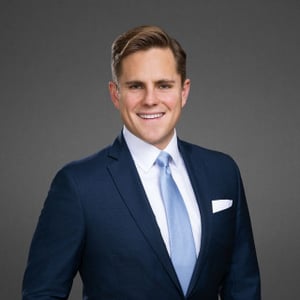
Environmental Law Attorney, DLA Piper
Garrett Kral is an attorney in DLA Piper’s Washington, DC, office, and a member of the Regulatory and Government Affairs Practice Group. His practice includes regulatory counseling, enforcement defense, and complex civil litigation on matters arising under major federal environmental statutes.
Garrett builds on a strong background in environmental science, a familiarity with technical processes involved in industrial operations, and valuable insights gained by serving in each branch of the federal government. With this experience, he advances the business objectives of Fortune 500 companies while limiting exposure and risk. Garrett is regarded as a strategic advisor to such clients on matters of environmental law and policy.
Founder, CGCN Law, PLLC
Environmental Law Attorney, DLA Piper
Garrett Kral is an attorney in DLA Piper’s Washington, DC, office, and a member of the Regulatory and Government Affairs Practice Group. His practice includes regulatory counseling, enforcement defense, and complex civil litigation on matters arising under major federal environmental statutes.
Garrett builds on a strong background in environmental science, a familiarity with technical processes involved in industrial operations, and valuable insights gained by serving in each branch of the federal government. With this experience, he advances the business objectives of Fortune 500 companies while limiting exposure and risk. Garrett is regarded as a strategic advisor to such clients on matters of environmental law and policy.
Founder, CGCN Law, PLLC
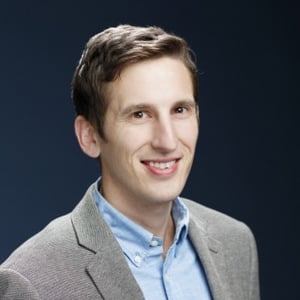
Legal Fellow, Center for Constitutional Studies, Cato Institute
Brent Skorup is a legal fellow in the Cato Institute’s Robert A. Levy Center for Constitutional Studies.
Before joining Cato, he was a senior research fellow at the Mercatus Center at the George Mason University. His research areas include free speech, technology law, Fourth Amendment protections, regulation, and property law. Skorup has published pieces in economics and law journals and in popular media, including The Wall Street Journal, The New York Times, Bloomberg Law, Reuters, and Wired. He’s appeared as a TV and radio interview guest for news outlets like C‑SPAN, NPR, CBS News, ABC News, and CNBC Asia.
The Pennsylvania Supreme Court, a dissenting opinion at the Illinois Supreme Court, and the ALI's Restatement of the Law of Property have cited his legal research and he has testified as a technology and legal expert in legislative hearings in several states. Skorup has been appointed to several federal and state advisory bodies and he is currently a member of the Texas Advanced Air Mobility Advisory Committee.
Skorup has a BA in economics from Wheaton College and a law degree from the George Mason University School of Law, where he was articles editor for the Civil Rights Law Journal. He was a legal clerk at the FCC’s wireless bureau and Office of General Counsel and at the Energy and Commerce Committee in the U.S. House of Representatives.
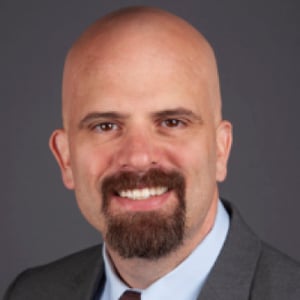
Director of Innovation Policy, International Center for Law & Economics
Kristian Stout, ICLE’s Director of Innovation Policy is an expert in intellectual property, antitrust, telecommunications, and Internet governance. Kristian has been a Fellow at the Internet Law & Policy Foundry, as well as the Eagleton Institute of Politics. Before practicing law, Kristian worked as a technology entrepreneur and a lecturer in the Computer Science Department at Rutgers University. Kristian served on the board of the New Jersey Leadership Program, and wasthe Chair of the Asset Forfeiture Working Group for the NJ State Advisory Committee to the United States Commission on Civil Rights. He has previously served on the Broadband Deployment Advisory Committee for the Federal Communications Commission. Kristian graduated magna cum laude from the Rutgers University School of law, and served on the editorial board of the Rutgers Journal of Law and Public Policy.
Senior Fellow, R Street Institute
Prior to R Street, Adam spent 12 years as a senior fellow at the Mercatus Center at George Mason University. Before the Mercatus Center, he served as the president of the Progress and Freedom Foundation. Adam has also worked for the Adam Smith Institute, the Heritage Foundation and the Cato Institute.
Adam has published 10 books on a wide range of topics, including online child safety, internet governance, intellectual property, telecommunications policy, media regulation and federalism.
In 2008, Adam received the Family Online Safety Institute’s “Award for Outstanding Achievement.”
Warren Distinguished Professor of Law, University of San Diego School of Law
B.A. 1965, Williams College
LL.B. 1968, Yale University
Professor of Law, University of Colorado Law School
Paul Campos left a position with a Chicago law firm to begin his teaching career at Colorado Law School in 1990. As a scholar, he has focused on constitutional law and legal theory. His graduate studies in English literature, which culminated in a thesis on Shakespeare's King Lear, provided him with rigorous training in literary theory that has been helpful in his current work in constitutional interpretation. He has written several well-regarded law review articles in this area, including "Against Constitutional Theory," published in the Yale Journal of Law and Humanities, and "Advocacy in Scholarship," published in the California Law Review. Both of these articles have been noted as major critiques of the political and normative orientation of current constitutional theory. Professor Campos' regular column for the Rocky Mountain News (distributed by the Scripps Howard News Service), written for a general audience on political, social, and legal issues, has developed a considerable following. A packed house, drawn by his provocative take on a wide range of topics, attended his presentation of the 27th Annual Austin W. Scott, Jr. Lecture entitled "The Obesity Myth & The Lewinsky Scandal," which was based on his latest book project. His second book, Jurismania: The Madness of American Law, critiques the American legal system. Professor Campos also served as the first director of CU law school's Byron R. White Center for the Study of American Constitutional Law.
Wallace Stevens Professor of Law Emeritus, Oliver Ellsworth Research Professor, University of Connecticut
David McIntosh is a leader for the principles of limited constitutional government and individual freedom. He is president of the Club for Growth, the leading advocate for economic liberty.
Former Congressman David McIntosh represented Indiana's 2nd Congressional District in the United States Congress from 1995-2001. As a Freshman, David chaired the Subcommittee on Regulatory Relief. He passed the Congressional Review Act and held extensive oversight and field hearings to build a record of public support for regulatory relief initiatives in energy, biotechnology, pharmaceutical, healthcare, transportation and technology sectors. Another issue that he championed was the elimination of the marriage penalty in the Federal Tax Code.
David served during the Reagan administration as special assistant to Attorney General Edwin Meese III, and as special assistant to President Reagan for Domestic Affairs. During the first Bush administration, he served as executive director of the President's Council on Competitiveness and assistant to the Vice President. The Competitiveness Council coordinated the cost/benefit review of major regulations and promoted legal reform measures.
David is a co-founder of the Federalist Society for Law and Public Policy and serves on the Board of Directors. He remains active with several free market and conservative think tanks and grassroots organizations. David has also had stints at the Hudson Institute and as a Professor of Economics at Ball State School of Business.
Prior to the Club for Growth, David was a partner at Mayer Brown, LLP in Washington, DC.
David graduated from the University of Chicago Law School in 1983, and Yale University, BA, cum laude, in 1980. He and his wife, Ruthie, are the proud parents of Ellie age 17 and Davey age 13.
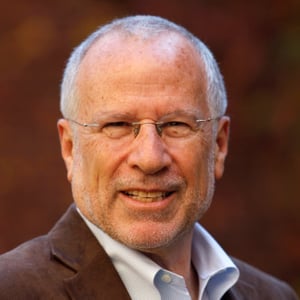
David and Mary Harrison Distinguished Professor of Law, University of Virginia School of Law
Frederick Schauer is David and Mary Harrison Distinguished Professor of Law at the University of Virginia, and previously was Frank Stanton Professor of the First Amendment at Harvard University. A Fellow of the American Academy of Arts and Sciences and recipient of a Guggenheim Fellowship, Schauer is the author of The Law of Obscenity (BNA, 1976), Free Speech: A Philosophical Enquiry (Cambridge, 1982), Playing By the Rules: A Philosophical Examination of Rule-Based Decision-Making in Law and in Life (Oxford, 1991), Profiles, Probabilities, and Stereotypes (Harvard, 2003), Thinking Like a Lawyer: A New Introduction to Legal Reasoning (Harvard, 2009), and The Force of Law (Harvard, 2015). The editor of Karl Llewellyn, The Theory of Rules (Chicago, 2011), and a founding editor of Legal Theory, he has chaired the Section on Constitutional Law of the Association of American Law Schools and the Committee on Philosophy and Law of the American Philosophical Association. In 2005 he wrote the Foreword to the Harvard Law Review’s Supreme Court issue, and has written widely on freedom of speech, constitutional interpretation, evidence, legal reasoning, and the philosophy of law.
Warren Distinguished Professor of Law, University of San Diego School of Law
B.A. 1965, Williams College
LL.B. 1968, Yale University
Professor of Law, University of Colorado Law School
Paul Campos left a position with a Chicago law firm to begin his teaching career at Colorado Law School in 1990. As a scholar, he has focused on constitutional law and legal theory. His graduate studies in English literature, which culminated in a thesis on Shakespeare's King Lear, provided him with rigorous training in literary theory that has been helpful in his current work in constitutional interpretation. He has written several well-regarded law review articles in this area, including "Against Constitutional Theory," published in the Yale Journal of Law and Humanities, and "Advocacy in Scholarship," published in the California Law Review. Both of these articles have been noted as major critiques of the political and normative orientation of current constitutional theory. Professor Campos' regular column for the Rocky Mountain News (distributed by the Scripps Howard News Service), written for a general audience on political, social, and legal issues, has developed a considerable following. A packed house, drawn by his provocative take on a wide range of topics, attended his presentation of the 27th Annual Austin W. Scott, Jr. Lecture entitled "The Obesity Myth & The Lewinsky Scandal," which was based on his latest book project. His second book, Jurismania: The Madness of American Law, critiques the American legal system. Professor Campos also served as the first director of CU law school's Byron R. White Center for the Study of American Constitutional Law.
Wallace Stevens Professor of Law Emeritus, Oliver Ellsworth Research Professor, University of Connecticut
David McIntosh is a leader for the principles of limited constitutional government and individual freedom. He is president of the Club for Growth, the leading advocate for economic liberty.
Former Congressman David McIntosh represented Indiana's 2nd Congressional District in the United States Congress from 1995-2001. As a Freshman, David chaired the Subcommittee on Regulatory Relief. He passed the Congressional Review Act and held extensive oversight and field hearings to build a record of public support for regulatory relief initiatives in energy, biotechnology, pharmaceutical, healthcare, transportation and technology sectors. Another issue that he championed was the elimination of the marriage penalty in the Federal Tax Code.
David served during the Reagan administration as special assistant to Attorney General Edwin Meese III, and as special assistant to President Reagan for Domestic Affairs. During the first Bush administration, he served as executive director of the President's Council on Competitiveness and assistant to the Vice President. The Competitiveness Council coordinated the cost/benefit review of major regulations and promoted legal reform measures.
David is a co-founder of the Federalist Society for Law and Public Policy and serves on the Board of Directors. He remains active with several free market and conservative think tanks and grassroots organizations. David has also had stints at the Hudson Institute and as a Professor of Economics at Ball State School of Business.
Prior to the Club for Growth, David was a partner at Mayer Brown, LLP in Washington, DC.
David graduated from the University of Chicago Law School in 1983, and Yale University, BA, cum laude, in 1980. He and his wife, Ruthie, are the proud parents of Ellie age 17 and Davey age 13.
David and Mary Harrison Distinguished Professor of Law, University of Virginia School of Law
Frederick Schauer is David and Mary Harrison Distinguished Professor of Law at the University of Virginia, and previously was Frank Stanton Professor of the First Amendment at Harvard University. A Fellow of the American Academy of Arts and Sciences and recipient of a Guggenheim Fellowship, Schauer is the author of The Law of Obscenity (BNA, 1976), Free Speech: A Philosophical Enquiry (Cambridge, 1982), Playing By the Rules: A Philosophical Examination of Rule-Based Decision-Making in Law and in Life (Oxford, 1991), Profiles, Probabilities, and Stereotypes (Harvard, 2003), Thinking Like a Lawyer: A New Introduction to Legal Reasoning (Harvard, 2009), and The Force of Law (Harvard, 2015). The editor of Karl Llewellyn, The Theory of Rules (Chicago, 2011), and a founding editor of Legal Theory, he has chaired the Section on Constitutional Law of the Association of American Law Schools and the Committee on Philosophy and Law of the American Philosophical Association. In 2005 he wrote the Foreword to the Harvard Law Review’s Supreme Court issue, and has written widely on freedom of speech, constitutional interpretation, evidence, legal reasoning, and the philosophy of law.

Explainer Episode 34 – Institute for Justice's "Barriers to Business" Report
Andrew Meleta, Alex Montgomery, Jonathan Riches
Regulatory Transparency Project's Fourth Branch Podcast
"To better understand the challenges small businesses face and to offer recommendations," Institute for Justice's...
Litigation Update: Thomas Jefferson High Litigation
Nicole Neily
Last year, Thomas Jefferson High School (TJ), ranked #1 in the nation for academic excellence,...
Litigation Update: Thomas Jefferson High Litigation
Nicole Neily
Last year, Thomas Jefferson High School (TJ), ranked #1 in the nation for academic excellence,...
Courthouse Steps Oral Argument: West Virginia v. EPA
Garrett Kral, Justin Schwab
On February 28, 2022, the U.S. Supreme Court will hear West Virginia v. EPA, one...
Courthouse Steps Oral Argument: West Virginia v. EPA
Garrett Kral, Justin Schwab
On February 28, 2022, the U.S. Supreme Court will hear West Virginia v. EPA, one...
Section 230, Common Law, and Free Speech
Brent Skorup, Kristian Stout, Adam Thierer
A Regulatory Transparency Project Webinar
Social media has become a prominent way for lawmakers, public agencies, experts, and governments to...
Panel III: What is Originalism? [Archive Collection]
Lawrence Alexander, Paul Campos, Richard S. Kay, David M. McIntosh, Frederick Schauer
1995 National Student Symposium
On April 7-9, 1995, the Federalist Society held its fourteenth annual National Student Symposium at...
Panel III: What is Originalism? [Archive Collection]
Lawrence Alexander, Paul Campos, Richard S. Kay, David M. McIntosh, Frederick Schauer
1995 National Student Symposium
On April 7-9, 1995, the Federalist Society held its fourteenth annual National Student Symposium at...
The Federalist Paper, Winter 2022
The Federalist Society’s National Lawyers Convention was held in November and, as always, it was...
Topics
The Incoherence of the Biden Administration’s Labor-Market Policies
The Biden administration is pushing two irreconcilable theories about labor markets. One theory argues that...