
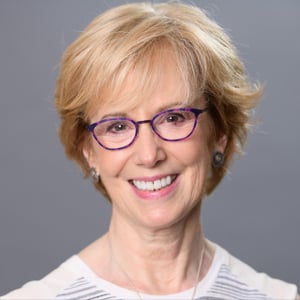
Director, GW Regulatory Studies Center & Distinguished Professor of Practice, Trachtenberg School of Public Policy & Public Administration, The George Washington University
Susan Dudley is the Founder and Director of the George Washington University Regulatory Studies Center, established in 2009 to raise awareness of regulations’ effects and improve regulatory policy through research, education, and outreach. She is also a distinguished professor of practice in the Trachtenberg School of Public Policy and Public Administration. She is past-president of the Society for Benefit Cost Analysis, a senior fellow of the Administrative Conference of the United States, and on the Regulatory Transparency Project Regulatory Practice Working Group. Her book, Regulation: A Primer, with Jerry Brito, is available on Amazon.com.
From April 2007 through January 2009, Professor Dudley served as the Presidentially-appointed Administrator of the Office of Information and Regulatory Affairs in the U.S. Office of Management and Budget and was responsible for the review of draft executive branch regulations under Executive Order 12866, the collection of federal-government-wide information under the Paperwork Reduction Act, the development and implementation of government-wide policies in the areas of information policy, privacy, and statistical policy, and international regulatory cooperation efforts.
Prior to OIRA, she directed the Regulatory Studies Program at the Mercatus Center at George Mason University, and taught courses on regulation at the George Mason University School of Law. Earlier in her career, Professor Dudley served as an economist at OIRA, as well as the Environmental Protection Agency and the Commodity Futures Trading Commission. She was also a consultant to government and private clients at Economists Incorporated. She holds a Master of Science degree from the Sloan School of Management at MIT and a Bachelor of Science degree (summa cum laude) in Resource Economics from the University of Massachusetts, Amherst.
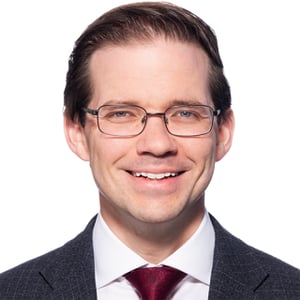
Of Counsel, Covington & Burling LLP
The Honorable Paul J. Ray is currently Of Counsel at Covington & Burling LLP where he advises clients on regulatory opportunities and challenges and helps them formulate and execute advocacy strategies for their regulatory policy priorities before the executive branch and Congress.
During the first Trump Administration, Paul held various senior positions at the Office of Information and Regulatory Affairs (OIRA) within the White House’s Office of Management and Budget, including as acting, and then Senate-confirmed, head of the office. As OIRA Administrator (the "regulations czar"), Paul supervised the review of hundreds of regulations from across the government, drafted numerous executive orders governing the regulatory process, and led the Administration’s regulatory reform effort. As a result of this experience, Paul is well-positioned to help clients understand and achieve regulatory policy priorities in the context of the government’s regulatory agenda and ongoing reform efforts.
Most recently, Paul was also the Director of the Roe Institute for Economic Policy Studies at The Heritage Foundation. In that role, he supervised the formulation of the Foundation’s economic and regulatory policy recommendations and provided technical assistance to congressional committees and staff regarding legislative changes to the regulatory process. In addition to his role at The Heritage Foundation, Paul also served as a Senior Advisor at a strategic advisory firm. Before his time in government, Paul practiced law at a law firm in Washington, specializing in administrative law matters.
Prior to his role at the White House, Paul was Counselor to the Secretary at the U.S. Department of Labor. There he led departmental efforts in high-profile rulemakings and helped formulate the Department’s legal positions and strategy.
Paul served as a law clerk to Supreme Court Justice Samuel Alito and as a law clerk to the Honorable Debra Livingston of the U.S. Court of Appeals for the Second Circuit.
Paul is a thought leader in the conservative legal movement and is a frequent commentator and speaker on regulatory policy and reform matters, including at law schools, professional gatherings, and other venues. He is the Chairman of Innovations in Peacebuilding International and the Regulatory Process Working Group of the Federalist Society’s Regulatory Transparency Project and a public member of the Administrative Conference of the United States. Paul is also an adjunct lecturer at the Hillsdale College School of Government.
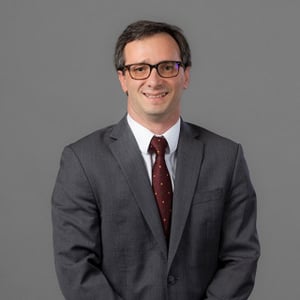
Assistant Professor of Law, George Mason University, Antonin Scalia Law School
Robert Leider is an Assistant Professor of Law at Antonin Scalia Law School, George Mason University. His scholarly interests are in criminal law, criminal procedure, and constitutional law, especially concerning questions about the use of force and the rule of law. He has written on the law of self-defense, the constitutional allocation of military power, and gun control. Among other places, he has published in the Florida Law Review (forthcoming), the Indiana Law Journal, and the Wall Street Journal.
Before joining Antonin Scalia Law School, Professor Leider was at Arnold & Porter in Washington, DC. He was previously with Mayer Brown LLP and was an Olin-Searle-Smith Fellow at the University of Pennsylvania Law School. He has clerked for Judge Diane S. Sykes, of the U.S. Court of Appeals for the Seventh Circuit, and Justice Clarence Thomas. Professor Leider earned a BA, summa cum laude, from The George Washington University, a JD from Yale Law School, and a PhD in Philosophy (dissertation defended with distinction) from Georgetown University. While at Yale, he served as an articles editor for the Yale Law Journal.
Professor Leider teaches criminal law and torts.
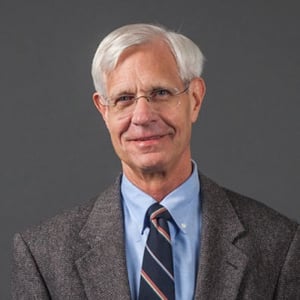
Distinguished University Professor, Antonin Scalia Law School, George Mason University
University Professor Nelson Lund is the author of Rousseau’s Rejuvenation of Political Philosophy: A New Introduction. He has also written widely in the field of constitutional law, including articles on constitutional interpretation, federalism, separation of powers, the Second Amendment, the Commerce Clause, the Speech or Debate Clause, the Equal Protection Clause, and the Uniformity Clause. In addition, he has published articles in the fields of employment discrimination and civil rights, the legal regulation of medical ethics, and the application of economic analysis to legal institutions and legal ethics.
Professor Lund graduated from St. John's College in Annapolis, Maryland, after which he received an MA in philosophy from the Catholic University of America and a PhD in political science from Harvard University. He left the faculty of the University of Chicago to attend its law school, where he served as executive editor of the University of Chicago Law Review and chapter chairman of the Federalist Society for Law and Public Policy Studies. After law school, he held positions at the United States Department of Justice in the Office of the Solicitor General and the Office of Legal Counsel. He also served as a law clerk to the Honorable Patrick E. Higginbotham of the United States Court of Appeals for the Fifth Circuit and to the Honorable Sandra Day O'Connor of the United States Supreme Court. Following his clerkship with Justice O'Connor, Professor Lund served in the White House as associate counsel to the president from 1989 to 1992.
Since joining the faculty at George Mason University's Antonin Scalia Law School, Professor Lund has taught Constitutional Law, Legislation, Federal Election Law, Employment Discrimination, State and Local Government, and seminars on the Second Amendment and on a variety of topics in Jurisprudence.
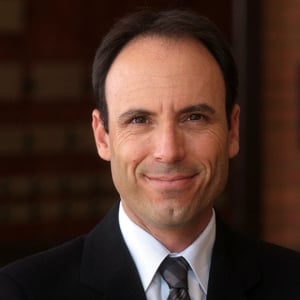
Professor of Law, UCLA School of Law
Assistant Professor of Law, George Mason University, Antonin Scalia Law School
Robert Leider is an Assistant Professor of Law at Antonin Scalia Law School, George Mason University. His scholarly interests are in criminal law, criminal procedure, and constitutional law, especially concerning questions about the use of force and the rule of law. He has written on the law of self-defense, the constitutional allocation of military power, and gun control. Among other places, he has published in the Florida Law Review (forthcoming), the Indiana Law Journal, and the Wall Street Journal.
Before joining Antonin Scalia Law School, Professor Leider was at Arnold & Porter in Washington, DC. He was previously with Mayer Brown LLP and was an Olin-Searle-Smith Fellow at the University of Pennsylvania Law School. He has clerked for Judge Diane S. Sykes, of the U.S. Court of Appeals for the Seventh Circuit, and Justice Clarence Thomas. Professor Leider earned a BA, summa cum laude, from The George Washington University, a JD from Yale Law School, and a PhD in Philosophy (dissertation defended with distinction) from Georgetown University. While at Yale, he served as an articles editor for the Yale Law Journal.
Professor Leider teaches criminal law and torts.
Distinguished University Professor, Antonin Scalia Law School, George Mason University
University Professor Nelson Lund is the author of Rousseau’s Rejuvenation of Political Philosophy: A New Introduction. He has also written widely in the field of constitutional law, including articles on constitutional interpretation, federalism, separation of powers, the Second Amendment, the Commerce Clause, the Speech or Debate Clause, the Equal Protection Clause, and the Uniformity Clause. In addition, he has published articles in the fields of employment discrimination and civil rights, the legal regulation of medical ethics, and the application of economic analysis to legal institutions and legal ethics.
Professor Lund graduated from St. John's College in Annapolis, Maryland, after which he received an MA in philosophy from the Catholic University of America and a PhD in political science from Harvard University. He left the faculty of the University of Chicago to attend its law school, where he served as executive editor of the University of Chicago Law Review and chapter chairman of the Federalist Society for Law and Public Policy Studies. After law school, he held positions at the United States Department of Justice in the Office of the Solicitor General and the Office of Legal Counsel. He also served as a law clerk to the Honorable Patrick E. Higginbotham of the United States Court of Appeals for the Fifth Circuit and to the Honorable Sandra Day O'Connor of the United States Supreme Court. Following his clerkship with Justice O'Connor, Professor Lund served in the White House as associate counsel to the president from 1989 to 1992.
Since joining the faculty at George Mason University's Antonin Scalia Law School, Professor Lund has taught Constitutional Law, Legislation, Federal Election Law, Employment Discrimination, State and Local Government, and seminars on the Second Amendment and on a variety of topics in Jurisprudence.
Professor of Law, UCLA School of Law
Visiting Scholar, Center for Citizenship & Constitutional Government, University of Notre Dame
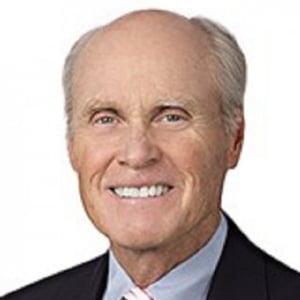
Former United States Assistant Attorney General, Civil Rights Division, United States Department of Justice
William Bradford served as the United States Assistant Attorney General for the Civil Rights Division from 1981 to 1988.
Reynolds was Senior Counsel in BakerBotts Antitrust and Competition division. He graduated with a LL.B. from Vanderbilt University Law School in 1967 where he was Order of the Coif and Editor-in-Chief of the Vanderbilt Law Review. In 1964, he received a B.A. from Yale University.
Reynolds passed away on September 14, 2019, in Seabrook Island, South Carolina at age 77.
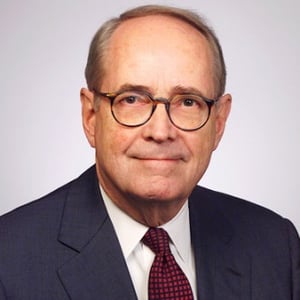
Former United States Attorney General
Richard Lewis Thornburgh was born on July 16, 1932 in Pittsburgh, Pennsylvania. He graduated with a bachelor’s degree in engineering from Yale University in 1954 and earned his LL.B degree from the University of Pittsburgh in 1957. Mr. Thornburgh also holds honorary degrees from 31 colleges and universities.
Following law school, Mr. Thornburgh worked in private industry until 1959 when he joined the Pittsburgh law firm then known as Kirkpatrick & Lockhart. In 1967, he was elected as a delegate to the Pennsylvania Constitutional Convention. From 1969 to 1975, Mr. Thornburgh was the U.S. Attorney for the Western District of Pennsylvania and was appointed Assistant Attorney General for the Criminal Division in 1975, serving two years in Washington, D.C. in that role before returning to private practice as a partner at Kirkpatrick & Lockhart. Pennsylvania elected Mr. Thornburgh governor in 1979 and he served two terms. Mr. Thornburgh also taught courses at the Harvard University Kennedy School of Government and directed that school’s Institute of Politics from 1987 to 1988.
Appointed by President Reagan, Richard Thornburgh was sworn in as Attorney General on August 12, 1988. President George H.W. Bush reinstated him as Attorney General in 1989 and he served until 1991. In 1992, the American Legion honored Mr. Thornburgh with its highest award, the “Distinguished Services Medal.” He published his autobiography in 2003 entitled, Where the Evidence Leads: The Autobiography of Dick Thornburgh.
Former United States Assistant Attorney General, Civil Rights Division, United States Department of Justice
William Bradford served as the United States Assistant Attorney General for the Civil Rights Division from 1981 to 1988.
Reynolds was Senior Counsel in BakerBotts Antitrust and Competition division. He graduated with a LL.B. from Vanderbilt University Law School in 1967 where he was Order of the Coif and Editor-in-Chief of the Vanderbilt Law Review. In 1964, he received a B.A. from Yale University.
Reynolds passed away on September 14, 2019, in Seabrook Island, South Carolina at age 77.
Former United States Attorney General
Richard Lewis Thornburgh was born on July 16, 1932 in Pittsburgh, Pennsylvania. He graduated with a bachelor’s degree in engineering from Yale University in 1954 and earned his LL.B degree from the University of Pittsburgh in 1957. Mr. Thornburgh also holds honorary degrees from 31 colleges and universities.
Following law school, Mr. Thornburgh worked in private industry until 1959 when he joined the Pittsburgh law firm then known as Kirkpatrick & Lockhart. In 1967, he was elected as a delegate to the Pennsylvania Constitutional Convention. From 1969 to 1975, Mr. Thornburgh was the U.S. Attorney for the Western District of Pennsylvania and was appointed Assistant Attorney General for the Criminal Division in 1975, serving two years in Washington, D.C. in that role before returning to private practice as a partner at Kirkpatrick & Lockhart. Pennsylvania elected Mr. Thornburgh governor in 1979 and he served two terms. Mr. Thornburgh also taught courses at the Harvard University Kennedy School of Government and directed that school’s Institute of Politics from 1987 to 1988.
Appointed by President Reagan, Richard Thornburgh was sworn in as Attorney General on August 12, 1988. President George H.W. Bush reinstated him as Attorney General in 1989 and he served until 1991. In 1992, the American Legion honored Mr. Thornburgh with its highest award, the “Distinguished Services Medal.” He published his autobiography in 2003 entitled, Where the Evidence Leads: The Autobiography of Dick Thornburgh.
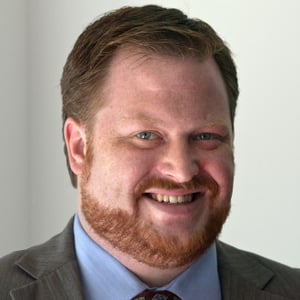
Research Fellow, Robert A. Levy Center for Constitutional Studies, Cato Institute
Trevor Burrus is a research fellow in the Cato Institute’s Robert A. Levy Center for Constitutional Studies and Center for the Study of Science, as well as managing editor of the Cato Supreme Court Review. His research interests include constitutional law, civil and criminal law, legal and political philosophy, legal history, and the interface between science and public policy. His academic work has appeared in journals such as the Harvard Journal of Law and Public Policy, the New York University Journal of Law and Liberty, the New York University Annual Survey of American Law, the Syracuse Law Review, and many others. His popular writing has appeared in the Washington Post, the New York Times, USA Today, Forbes, the Huffington Post, the New York Daily News, and others.
Burrus lectures regularly on behalf of the Federalist Society, the Institute for Humane Studies, the Foundation for Economics Education, and other organizations, and he frequently appears on major media outlets. He is also the co-host of Free Thoughts, a weekly podcast that covers topics in libertarian theory, history, and philosophy.
He is the editor of A Conspiracy against Obamacare (Palgrave Macmillan, 2013) and Deep Commitments: The Past, Present, and Future of Religious Liberty (Cato, 2017), and holds a BA in philosophy from the University of Colorado at Boulder and a JD from the University of Denver Sturm College of Law.
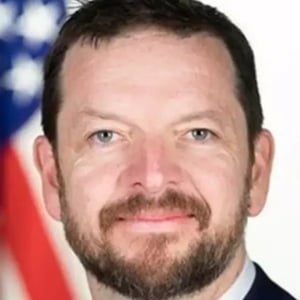
Founder, Fire Arrow Consulting
Joe Grogan is a healthcare expert with a unique blend of private sector and government experience spanning over two decades in the Washington, D.C. healthcare arena. Joe is a trained lawyer who began his healthcare career as Executive Director of the Presidential Advisory Council on HIV and AIDS in the Administration of George W. Bush. He went on to serve as Special Assistant to Commissioner Andy Von Eschenbach at the Food and Drug Administration. In the private sector, he worked as an advisor to Wall Street and private equity investors before working for Amgen, Inc. He went on to Gilead Sciences, Inc., founding their Washington, DC office and leading Federal efforts during the three most successful drug launches in history. He capped his governmental service by serving at the Office of Management and Budget (OMB) as Associate Director of Health Programs, clearing every major regulation and guidance issued by the Department of Health and Human Services, drafting the health sections of three Presidential Budgets and managing over $1.3 trillion in health care spending. He went on to the West Wing, serving as Domestic Policy Advisor, taking the lead on health care policy development and serving as one of the original members of the President's Covid Task Force. He created Fire Arrow to help innovators navigate the pitfalls of Washington, DC and deliver their products and services to those who need them.
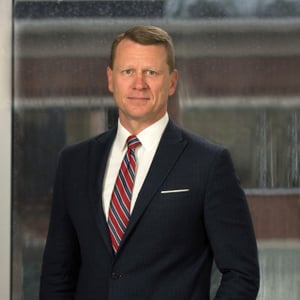
Partner, Phelps Dunbar LLP
Mike Hurst is a partner with Phelps Dunbar LLP where he optimizes his in-depth knowledge of the court system, investigative and prosecutorial agencies, the regulatory arena, and the public policy realm to help clients facing government investigations, enforcement actions, regulatory matters, general litigation and policy issues. Mike currently serves as the General Counsel of the Republican National Committee and as Chairman of the Mississippi Republican Party. He previously served as the U.S. Attorney for the Southern District of Mississippi from 2017-2021, and with over 20 years of experience before judges, juries and policy makers, handling some of the largest and most high-profile cases in Mississippi, he's known for untangling the most complex legal issues.
As U.S. Attorney, Mike was described as a “hard charger,” leading efforts to combat violent crime, human trafficking and public corruption, among many other issues, throughout Mississippi. He almost tripled prosecutions in the U.S. Attorney’s Office over a three-year period, resulting in the most indictments and federal defendants indicted in a one-year period in Mississippi history. He created innovative and national award-winning crime-fighting solutions, like “Project EJECT,” and he established the first statewide, multilevel and multidisciplinary human trafficking body, the Mississippi Human Trafficking Council, to comprehensively and holistically address this criminal scourge.
During his tenure as U.S. Attorney, Mike oversaw some of the biggest cases in Mississippi history: the largest health care fraud scheme (Wade Walters, et. al.), the largest Ponzi scheme (Lamar Adams), the largest False Claims Act health care fraud settlement (Region 8), and the largest nursing home False Claim Act settlement (Hyperion). In addition, as Chief Federal Law Enforcement Officer for the Southern District, Mike coordinated the largest single-state immigration worksite enforcement operation in our nation’s history, involving hundreds of federal law enforcement agents covering seven different locations operated by multiple companies.
Mike’s no show pony – he’s a work horse. Before his tenure as U.S. Attorney, Mike was an Assistant U.S. Attorney for the Southern District of Mississippi for more than eight years. He handled some of the most difficult and complex cases in that office, dealing with white collar crimes, public corruption and financial fraud, including numerous jury trials before almost every federal judge in the Southern District.
He also has experience in the private sector. He has practiced law in Washington, D.C., and has served as a litigator and general counsel for a conservative nonprofit. He also has extensive experience in public policy, having served as the Legislative Director to a U.S. Congressman and as Counsel to the House Judiciary Committee.
Mike has also testified before both the United States Senate and the U.S. House of Representatives on issues ranging from crime to Presidential pardons. He has worked on all sides of the legal, regulatory, investigative, prosecutorial and policy spectrum. The incredible insight gained from this varied experience enables him to find a path forward for clients, no matter how complicated the case.
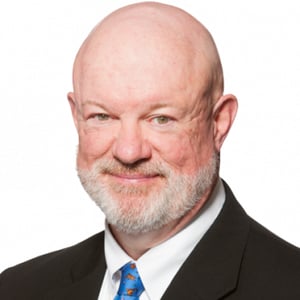
Senior Legal Fellow, the Meese Institute for the Rule of Law, Advancing American Freedom
Paul J. Larkin is a Senior Legal Fellow in the Meese Institute for the Rule of Law at Advancing American Freedom. Paul has held various positions in the federal and state governments throughout his career, such as being an attorney in the Organized Crime and Racketeering Section of the Criminal Division at the U.S. Department of Justice, an Assistant to the Solicitor General in the Office of the Solicitor General at the U.S. Department of Justice, Special Agent-in-Charge and Acting Director of the Criminal Investigation Division at the Environmental Protection Agency, and a member of the Parole Abolition and Sentencing Reform Commission and of the Juvenile Justice Reform Commission in the Office of Virginia Governor George Allen.
He has also worked at Verizon Communications and two law firms in Washington, D.C. His current research is principally in the fields of drug policy, criminal justice policy, and administrative law and policy. He has published numerous articles in law and public policy journals, both in print and online.
Research Fellow, Robert A. Levy Center for Constitutional Studies, Cato Institute
Trevor Burrus is a research fellow in the Cato Institute’s Robert A. Levy Center for Constitutional Studies and Center for the Study of Science, as well as managing editor of the Cato Supreme Court Review. His research interests include constitutional law, civil and criminal law, legal and political philosophy, legal history, and the interface between science and public policy. His academic work has appeared in journals such as the Harvard Journal of Law and Public Policy, the New York University Journal of Law and Liberty, the New York University Annual Survey of American Law, the Syracuse Law Review, and many others. His popular writing has appeared in the Washington Post, the New York Times, USA Today, Forbes, the Huffington Post, the New York Daily News, and others.
Burrus lectures regularly on behalf of the Federalist Society, the Institute for Humane Studies, the Foundation for Economics Education, and other organizations, and he frequently appears on major media outlets. He is also the co-host of Free Thoughts, a weekly podcast that covers topics in libertarian theory, history, and philosophy.
He is the editor of A Conspiracy against Obamacare (Palgrave Macmillan, 2013) and Deep Commitments: The Past, Present, and Future of Religious Liberty (Cato, 2017), and holds a BA in philosophy from the University of Colorado at Boulder and a JD from the University of Denver Sturm College of Law.
Founder, Fire Arrow Consulting
Joe Grogan is a healthcare expert with a unique blend of private sector and government experience spanning over two decades in the Washington, D.C. healthcare arena. Joe is a trained lawyer who began his healthcare career as Executive Director of the Presidential Advisory Council on HIV and AIDS in the Administration of George W. Bush. He went on to serve as Special Assistant to Commissioner Andy Von Eschenbach at the Food and Drug Administration. In the private sector, he worked as an advisor to Wall Street and private equity investors before working for Amgen, Inc. He went on to Gilead Sciences, Inc., founding their Washington, DC office and leading Federal efforts during the three most successful drug launches in history. He capped his governmental service by serving at the Office of Management and Budget (OMB) as Associate Director of Health Programs, clearing every major regulation and guidance issued by the Department of Health and Human Services, drafting the health sections of three Presidential Budgets and managing over $1.3 trillion in health care spending. He went on to the West Wing, serving as Domestic Policy Advisor, taking the lead on health care policy development and serving as one of the original members of the President's Covid Task Force. He created Fire Arrow to help innovators navigate the pitfalls of Washington, DC and deliver their products and services to those who need them.
Partner, Phelps Dunbar LLP
Mike Hurst is a partner with Phelps Dunbar LLP where he optimizes his in-depth knowledge of the court system, investigative and prosecutorial agencies, the regulatory arena, and the public policy realm to help clients facing government investigations, enforcement actions, regulatory matters, general litigation and policy issues. Mike currently serves as the General Counsel of the Republican National Committee and as Chairman of the Mississippi Republican Party. He previously served as the U.S. Attorney for the Southern District of Mississippi from 2017-2021, and with over 20 years of experience before judges, juries and policy makers, handling some of the largest and most high-profile cases in Mississippi, he's known for untangling the most complex legal issues.
As U.S. Attorney, Mike was described as a “hard charger,” leading efforts to combat violent crime, human trafficking and public corruption, among many other issues, throughout Mississippi. He almost tripled prosecutions in the U.S. Attorney’s Office over a three-year period, resulting in the most indictments and federal defendants indicted in a one-year period in Mississippi history. He created innovative and national award-winning crime-fighting solutions, like “Project EJECT,” and he established the first statewide, multilevel and multidisciplinary human trafficking body, the Mississippi Human Trafficking Council, to comprehensively and holistically address this criminal scourge.
During his tenure as U.S. Attorney, Mike oversaw some of the biggest cases in Mississippi history: the largest health care fraud scheme (Wade Walters, et. al.), the largest Ponzi scheme (Lamar Adams), the largest False Claims Act health care fraud settlement (Region 8), and the largest nursing home False Claim Act settlement (Hyperion). In addition, as Chief Federal Law Enforcement Officer for the Southern District, Mike coordinated the largest single-state immigration worksite enforcement operation in our nation’s history, involving hundreds of federal law enforcement agents covering seven different locations operated by multiple companies.
Mike’s no show pony – he’s a work horse. Before his tenure as U.S. Attorney, Mike was an Assistant U.S. Attorney for the Southern District of Mississippi for more than eight years. He handled some of the most difficult and complex cases in that office, dealing with white collar crimes, public corruption and financial fraud, including numerous jury trials before almost every federal judge in the Southern District.
He also has experience in the private sector. He has practiced law in Washington, D.C., and has served as a litigator and general counsel for a conservative nonprofit. He also has extensive experience in public policy, having served as the Legislative Director to a U.S. Congressman and as Counsel to the House Judiciary Committee.
Mike has also testified before both the United States Senate and the U.S. House of Representatives on issues ranging from crime to Presidential pardons. He has worked on all sides of the legal, regulatory, investigative, prosecutorial and policy spectrum. The incredible insight gained from this varied experience enables him to find a path forward for clients, no matter how complicated the case.
Senior Legal Fellow, the Meese Institute for the Rule of Law, Advancing American Freedom
Paul J. Larkin is a Senior Legal Fellow in the Meese Institute for the Rule of Law at Advancing American Freedom. Paul has held various positions in the federal and state governments throughout his career, such as being an attorney in the Organized Crime and Racketeering Section of the Criminal Division at the U.S. Department of Justice, an Assistant to the Solicitor General in the Office of the Solicitor General at the U.S. Department of Justice, Special Agent-in-Charge and Acting Director of the Criminal Investigation Division at the Environmental Protection Agency, and a member of the Parole Abolition and Sentencing Reform Commission and of the Juvenile Justice Reform Commission in the Office of Virginia Governor George Allen.
He has also worked at Verizon Communications and two law firms in Washington, D.C. His current research is principally in the fields of drug policy, criminal justice policy, and administrative law and policy. He has published numerous articles in law and public policy journals, both in print and online.
Director, GW Regulatory Studies Center & Distinguished Professor of Practice, Trachtenberg School of Public Policy & Public Administration, The George Washington University
Susan Dudley is the Founder and Director of the George Washington University Regulatory Studies Center, established in 2009 to raise awareness of regulations’ effects and improve regulatory policy through research, education, and outreach. She is also a distinguished professor of practice in the Trachtenberg School of Public Policy and Public Administration. She is past-president of the Society for Benefit Cost Analysis, a senior fellow of the Administrative Conference of the United States, and on the Regulatory Transparency Project Regulatory Practice Working Group. Her book, Regulation: A Primer, with Jerry Brito, is available on Amazon.com.
From April 2007 through January 2009, Professor Dudley served as the Presidentially-appointed Administrator of the Office of Information and Regulatory Affairs in the U.S. Office of Management and Budget and was responsible for the review of draft executive branch regulations under Executive Order 12866, the collection of federal-government-wide information under the Paperwork Reduction Act, the development and implementation of government-wide policies in the areas of information policy, privacy, and statistical policy, and international regulatory cooperation efforts.
Prior to OIRA, she directed the Regulatory Studies Program at the Mercatus Center at George Mason University, and taught courses on regulation at the George Mason University School of Law. Earlier in her career, Professor Dudley served as an economist at OIRA, as well as the Environmental Protection Agency and the Commodity Futures Trading Commission. She was also a consultant to government and private clients at Economists Incorporated. She holds a Master of Science degree from the Sloan School of Management at MIT and a Bachelor of Science degree (summa cum laude) in Resource Economics from the University of Massachusetts, Amherst.
Of Counsel, Covington & Burling LLP
The Honorable Paul J. Ray is currently Of Counsel at Covington & Burling LLP where he advises clients on regulatory opportunities and challenges and helps them formulate and execute advocacy strategies for their regulatory policy priorities before the executive branch and Congress.
During the first Trump Administration, Paul held various senior positions at the Office of Information and Regulatory Affairs (OIRA) within the White House’s Office of Management and Budget, including as acting, and then Senate-confirmed, head of the office. As OIRA Administrator (the "regulations czar"), Paul supervised the review of hundreds of regulations from across the government, drafted numerous executive orders governing the regulatory process, and led the Administration’s regulatory reform effort. As a result of this experience, Paul is well-positioned to help clients understand and achieve regulatory policy priorities in the context of the government’s regulatory agenda and ongoing reform efforts.
Most recently, Paul was also the Director of the Roe Institute for Economic Policy Studies at The Heritage Foundation. In that role, he supervised the formulation of the Foundation’s economic and regulatory policy recommendations and provided technical assistance to congressional committees and staff regarding legislative changes to the regulatory process. In addition to his role at The Heritage Foundation, Paul also served as a Senior Advisor at a strategic advisory firm. Before his time in government, Paul practiced law at a law firm in Washington, specializing in administrative law matters.
Prior to his role at the White House, Paul was Counselor to the Secretary at the U.S. Department of Labor. There he led departmental efforts in high-profile rulemakings and helped formulate the Department’s legal positions and strategy.
Paul served as a law clerk to Supreme Court Justice Samuel Alito and as a law clerk to the Honorable Debra Livingston of the U.S. Court of Appeals for the Second Circuit.
Paul is a thought leader in the conservative legal movement and is a frequent commentator and speaker on regulatory policy and reform matters, including at law schools, professional gatherings, and other venues. He is the Chairman of Innovations in Peacebuilding International and the Regulatory Process Working Group of the Federalist Society’s Regulatory Transparency Project and a public member of the Administrative Conference of the United States. Paul is also an adjunct lecturer at the Hillsdale College School of Government.

Deep Dive Episode 230 - Who Is Regulating the Regulators?
Susan E. Dudley, Paul J. Ray
Regulatory Transparency Project's Fourth Branch Podcast
In the Executive Office of the President is a small office that most people outside...
Should the Future Be Determined by the Past? Bearing Arms After Bruen.
Robert Leider, Nelson Lund, Adam Winkler
Professor Nelson Lund will moderate a debate between Professors Adam Winkler and Robert Leider on...
Should the Future Be Determined by the Past? Bearing Arms After Bruen.
Robert Leider, Nelson Lund, Adam Winkler
Professor Nelson Lund will moderate a debate between Professors Adam Winkler and Robert Leider on...
Rights Talk in a Post-Liberal Age: Mary Ann Glendon's Enduring Insight Into the American Rights Tradition
Gabrielle M. Girgis
Federalist Society Review, Volume 23
Gross human rights violations occur every day, often invisibly to most of us. Media coverage...
Topics
Pres. Biden Signs Camp Lejeune Justice Act Into Law
President Biden has signed the “Camp Lejeune Justice Act of 2022” (S.3373) into law. The Act...
Banquet and Address by Attorney General Richard Thornburgh [Archive Collection]
Wm. Bradford Reynolds, Richard Thornburgh
Second Annual National Lawyers Convention
Attorney General Richard Thornburgh offered a keynote address to conclude the first day of the...
Banquet and Address by Attorney General Richard Thornburgh [Archive Collection]
Wm. Bradford Reynolds, Richard Thornburgh
Second Annual National Lawyers Convention
Attorney General Richard Thornburgh offered a keynote address to conclude the first day of the...
Opioids: The Crisis in 2022 and Beyond
Trevor Burrus, Joseph James Grogan, Mike Hurst, Paul James Larkin
After years of tragic deaths and through a global pandemic, some experts contend that the...
Opioids: The Crisis in 2022 and Beyond
Trevor Burrus, Joseph James Grogan, Mike Hurst, Paul James Larkin
After years of tragic deaths and through a global pandemic, some experts contend that the...
Who Is Regulating the Regulators?
Susan E. Dudley, Paul J. Ray
A Regulatory Transparency Project Webinar
In the Executive Office of the President is a small office that most people outside...