
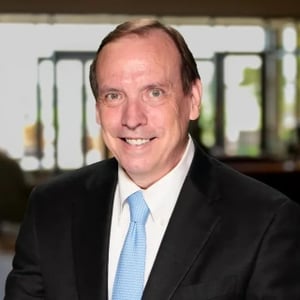
Senior Counsel, First Liberty Institute
Prior to coming to First Liberty, Nate was the Founder and Chief Counsel of the Center for Religious Expression.
For over 3 decades, Nate has defended religious liberty in courtrooms all over the country. He has handled more than 500 litigated cases and 50 appeals before various federal appellate courts regarding, winning numerous landmark decisions, including Brindley v. City of Memphis, Johnson v. Minneapolis Park & Recreation Board, Boardley v. Dept. of Interior and Brown v. Polk County.
Nate is also a sought after speaker and has appeared on numerous television and radio shows, including Huckabee, Hannity, Fox and Friends, and the Hugh Hewitt show. He has been frequently quoted in major print media, like Time magazine, The New Yorker, The Wall Street Journal, National Review, and USA Today. He has also written op-eds and articles for various media outlets, including Townhall, American Thinker, One News Now, and was a regular contributor for the Christian Post.
Nate earned his Juris Doctorate from the University of Mississippi, graduating with honors in 1988. He is admitted to state bars in Tennessee and Mississippi, as well as numerous federal appellate courts.
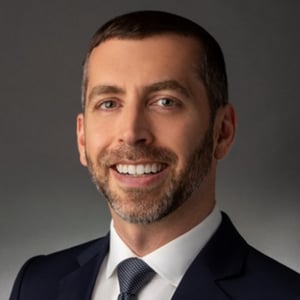
Partner, Sidley Austin LLP
TOBIAS LOSS-EATON is an appellate and regulatory litigator who helps clients navigate complex, novel, or high-stakes legal issues, from the earliest strategy discussions to the U.S. Supreme Court. Chambers USA, which has ranked him for Transport: Rail (for Railroads) in USA—Nationwide (2023–2025), notes his “impressive experience,” with clients reporting that he is “a fantastic lawyer” and “an excellent civil litigation advocate” who “provides great client service.” One client tells Chambers: “Tobias is my first call when there is no playbook for complex issues. He approaches issues with calm, reasoned discernment. His judgment, intellect and writing abilities are top-rate.”
As a member of Sidley’s Supreme Court & Appellate and Regulatory Litigation practices, Tobias has extensive experience challenging and defending state and federal agency actions and regulations, including in the environmental, trade, securities, and healthcare sectors. That experience includes addressing the key threshold questions of when, where, and how to press an issue in the proper judicial forum—including issues of personal jurisdiction, sovereign immunity, federal removal jurisdiction, and abstention. It also includes substantial experience with federal preemption and Takings Clause issues. Tobias also has significant experience in complex contractual and commercial disputes, including cases involving the Federal Arbitration Act and insurance and reinsurance issues.
Tobias is also part of Sidley’s top-ranked Transportation group. Chambers USA highlights his strong experience advising and litigating on behalf of the nation’s largest freight railroads (2023–2025). He has represented the railroads in many cases involving federal preemption or preclusion, contractual disputes, challenges to regulatory action, and the proper interpretation of the Federal Employers Liability Act (FELA). He also advises and litigates on behalf of airline-industry clients on preemption, regulatory, and commercial issues. So far in 2025, Tobias and the Transportation team have won three precedent-setting appeals, in the Fourth and Seventh Circuits and the Virginia Supreme Court.
Tobias prides himself on clearly explaining complex legal issues to busy generalist judges. One prominent legal writing expert has praised Tobias’s briefs as better than the typical work product of “elite” Supreme Court advocates. Tobias has written or coauthored over 185 briefs in state and federal appellate courts, including over 90 briefs in the Supreme Court. He has presented oral argument in the Second, Fourth, Sixth, Seventh, and D.C. Circuits and in state appellate and supreme courts, producing successful results for his clients in 70% of the appeals he has argued.
Tobias is a co-director of the Carter G. Phillips/Sidley Austin LLP Supreme Court Clinic at Northwestern Pritzker School of Law, where he teaches Supreme Court advocacy, moots advocates preparing for merits arguments, and supervises students working with Sidley lawyers on cases at the Court.
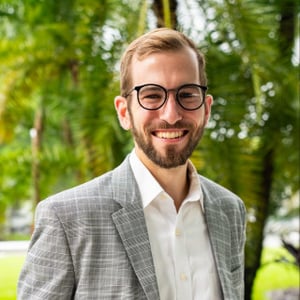
AI Innovation and Law Fellow, University of Texas School of Law
Kevin Frazier is an AI Innovation and Law Fellow with University of Texas School of Law.
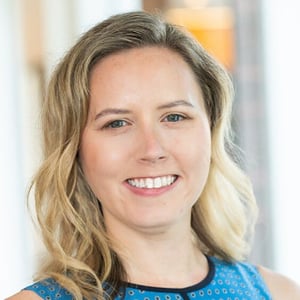
Senior Fellow, Technology Policy, Cato Institute
Jennifer’s research focuses on the intersection of emerging technology and law with a particular interest in the interactions between technology and the administrative state. Her work covers topics including judicial deference, liability protection for Internet platforms, autonomous vehicles and other disruptive transportation technologies, the regulation of data privacy, and the benefits of technology and innovation. Her work has appeared in USA Today, the Chicago Tribune, the New York Daily News, the Sacramento Bee, the Washington Times, Real Clear Policy, and U.S. News and World Report. Jennifer has a JD from the University of Alabama School of Law and a BA in political science at Wellesley College.
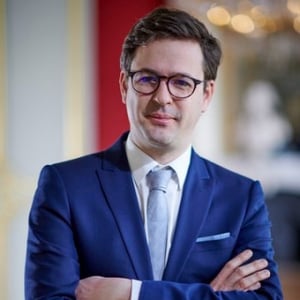
Partner, Briard Bonichot & Associés
Stéphane Bonichot is a Partner at Briard Bonichot & Associés, a Paris-based firm renowned for its work before France’s highest courts. A member of the Paris Bar since 2010, he represents clients across a wide spectrum of legal fields, including civil and commercial law, banking and financial matters, securities, competition, intellectual property, criminal law, and international economic law, with particular expertise in Franco-German legal issues. He holds dual master’s degrees in French and German law from the University of Cologne and the University of Paris I Panthéon-Sorbonne, as well as a master’s in Law and Economic Globalization from Sciences Po Paris and Paris I. He also earned an LL.M. from the London School of Economics and Political Science and is completing advanced training at the Institut de formation et de recherche des avocats aux Conseils (IFRAC).
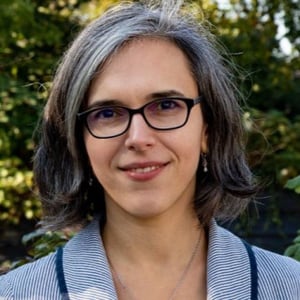
Senior Counsel, Alliance Defending Freedom International
Dr. Adina Portaru serves as senior counsel, Europe, for ADF International in Belgium, where she leads the work of our Brussels and Strasbourg teams with a particular focus on advocacy at the international organisations and institutions in Europe.
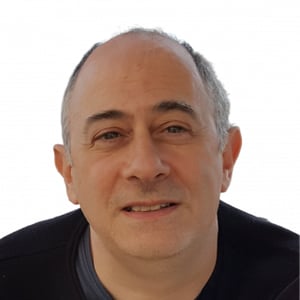
Independent scholar and journalist
John Rosenthal is a journalist and political analyst who has been covering European
politics for the last two decades. His writings have appeared in such publications as Policy
Review, World Affairs, The Weekly Standard, World Politics Review, Al-Monitor and Brussels
Signal, as well as in French and German in publications like Les Temps Modernes and Die
Weltwoche. He holds a PhD in philosophy and previously taught political philosophy and the
history of European philosophy at schools in both the United States and Europe.
He is the author of “Make Speech Free Again: How the U.S. can defeat E.U. censorship” in
the Spring 2025 issue of the Claremont Review of Books.
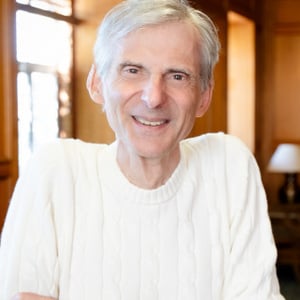
Professor of Law, University of San Diego School of Law
Maimon Schwarzschild is Professor of Law at the University of San Diego, where he has taught
since 1982. He has published extensively on constitutional law, jurisprudence, law and religion,
and civil rights. He is an English barrister and an American lawyer: he was an attorney in the
Civil Rights Division of the US Department of Justice from 1976 to 1981 and practised as a
barrister in London in the 1980s. He was a visiting professor at the Sorbonne for several years,
and has been a visiting professor at the Hebrew University in Jerusalem. He is a Director of the
Institute of Law and Religion at the University of San Diego and a member of the editorial board
of Law and Philosophy. With Gail Heriot he recently co-edited a volume entitled “A Dubious
Expediency: How Race Preferences Damage Higher Education”, published by Encounter Books.

President, TechFreedom
Berin Szoka serves as President of TechFreedom. Previously, he was a Senior Fellow and the Director of the Center for Internet Freedom at The Progress & Freedom Foundation. Before joining PFF, he was an Associate in the Communications Practice Group at Latham & Watkins LLP, where he advised clients on regulations affecting the Internet and telecommunications industries. Before joining Latham's Communications Practice Group, Szoka practiced at Lawler Metzger Milkman & Keeney, LLC, a boutique telecommunications law firm in Washington, and clerked for the Hon. H. Dale Cook, Senior U.S. District Judge for the Northern District of Oklahoma. Szoka received his Bachelor's degree in economics from Duke University and his juris doctor from the University of Virginia School of Law, where he served as Submissions Editor of the Virginia Journal of Law and Technology. He is admitted to practice law in the District of Columbia and California (inactive).
Partner, Briard Bonichot & Associés
Stéphane Bonichot is a Partner at Briard Bonichot & Associés, a Paris-based firm renowned for its work before France’s highest courts. A member of the Paris Bar since 2010, he represents clients across a wide spectrum of legal fields, including civil and commercial law, banking and financial matters, securities, competition, intellectual property, criminal law, and international economic law, with particular expertise in Franco-German legal issues. He holds dual master’s degrees in French and German law from the University of Cologne and the University of Paris I Panthéon-Sorbonne, as well as a master’s in Law and Economic Globalization from Sciences Po Paris and Paris I. He also earned an LL.M. from the London School of Economics and Political Science and is completing advanced training at the Institut de formation et de recherche des avocats aux Conseils (IFRAC).
Senior Counsel, Alliance Defending Freedom International
Dr. Adina Portaru serves as senior counsel, Europe, for ADF International in Belgium, where she leads the work of our Brussels and Strasbourg teams with a particular focus on advocacy at the international organisations and institutions in Europe.
Independent scholar and journalist
John Rosenthal is a journalist and political analyst who has been covering European
politics for the last two decades. His writings have appeared in such publications as Policy
Review, World Affairs, The Weekly Standard, World Politics Review, Al-Monitor and Brussels
Signal, as well as in French and German in publications like Les Temps Modernes and Die
Weltwoche. He holds a PhD in philosophy and previously taught political philosophy and the
history of European philosophy at schools in both the United States and Europe.
He is the author of “Make Speech Free Again: How the U.S. can defeat E.U. censorship” in
the Spring 2025 issue of the Claremont Review of Books.
Professor of Law, University of San Diego School of Law
Maimon Schwarzschild is Professor of Law at the University of San Diego, where he has taught
since 1982. He has published extensively on constitutional law, jurisprudence, law and religion,
and civil rights. He is an English barrister and an American lawyer: he was an attorney in the
Civil Rights Division of the US Department of Justice from 1976 to 1981 and practised as a
barrister in London in the 1980s. He was a visiting professor at the Sorbonne for several years,
and has been a visiting professor at the Hebrew University in Jerusalem. He is a Director of the
Institute of Law and Religion at the University of San Diego and a member of the editorial board
of Law and Philosophy. With Gail Heriot he recently co-edited a volume entitled “A Dubious
Expediency: How Race Preferences Damage Higher Education”, published by Encounter Books.
President, TechFreedom
Berin Szoka serves as President of TechFreedom. Previously, he was a Senior Fellow and the Director of the Center for Internet Freedom at The Progress & Freedom Foundation. Before joining PFF, he was an Associate in the Communications Practice Group at Latham & Watkins LLP, where he advised clients on regulations affecting the Internet and telecommunications industries. Before joining Latham's Communications Practice Group, Szoka practiced at Lawler Metzger Milkman & Keeney, LLC, a boutique telecommunications law firm in Washington, and clerked for the Hon. H. Dale Cook, Senior U.S. District Judge for the Northern District of Oklahoma. Szoka received his Bachelor's degree in economics from Duke University and his juris doctor from the University of Virginia School of Law, where he served as Submissions Editor of the Virginia Journal of Law and Technology. He is admitted to practice law in the District of Columbia and California (inactive).
AI Innovation and Law Fellow, University of Texas School of Law
Kevin Frazier is an AI Innovation and Law Fellow with University of Texas School of Law.
Senior Fellow, Berkeley Center for Consumer Law & Economic Justice
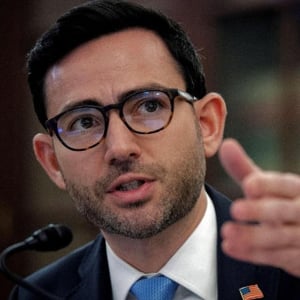
Samuel Levine served as Director of the FTC’s Bureau of Consumer Protection, where he oversaw enforcement, rulemaking, and policy work across a wide range of areas, including privacy, data security, marketing, financial services, digital advertising, consumer reporting, algorithmic decision-making, and small business financing. Before his appointment as Director, he served as an attorney advisor to Commissioner Rohit Chopra and as a staff attorney in the Midwest Regional Office. Prior to joining the FTC, Mr. Levine worked for the Illinois Attorney General, where he prosecuted predatory for-profit colleges and participated in rulemaking and other policy initiatives to promote affordability and accountability in higher education.
Mr. Levine is a graduate of Harvard Law School, where he spearheaded student-led efforts to challenge illegal foreclosures, and of Washington University in St. Louis. He clerked with The Honorable Milton I. Shadur in the U.S. District Court for the Northern District of Illinois, and received the Gary Bellow Public Service Award in recognition of his commitment to social justice.
Senior Legal Counsel, Pacific Legal Foundation
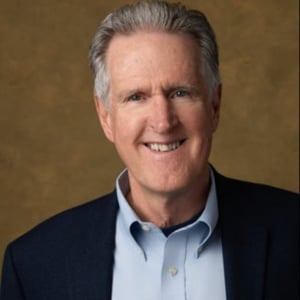
Before becoming an attorney, James had been a productive member of society working as an exploration geologist in the late 1970s throughout the southwestern United States. However, after several years of dealing with irrational government bureaucrats and environmental policies untethered from reality, James decided that what the world needs is more lawyers — if they are willing to fight for rationality in regulatory regimes, property rights, and liberty.
James attended the University of Arizona College of Law in Tucson, where he served as an editor for the Law Review and received a J.D. degree in 1983. He had previously received a Masters degree in geological sciences from Brown University and an undergraduate degree from Hamilton College in New York. James received the Professional Achievement Award from the University of Arizona Alumni Association in 2018.
James has worked with Pacific Legal Foundation since 1983, litigating cases from Alaska to Florida. He is a member of the Federalist Society’s Environmental Law and Property Rights Practice Group’s Executive Committee, a member of the American College of Real Estate Lawyers, and an honorary member of Owners Counsel of America, an organization comprised of eminent domain attorneys who represent property owners. The Owners Counsel awarded James its Crystal Eagle award in 2013. In 2022, James was awarded the Brigham-Kanner Property Rights Prize at the William & Mary College of Law. The prize is awarded annually to an individual whose work has advanced the cause of property rights and has contributed to the overall awareness of the important role property rights occupy in the broader scheme of individual liberty.
In 2001, James successfully argued a major property rights case, Palazzolo v. Rhode Island, before the United States Supreme Court, a case which affirmed that rights in regulated property do not disappear when land is bought and sold. He has written extensively on all aspects of property rights and environmental law and frequently speaks on these subjects throughout the nation.
When James is not suing the government he enjoys skiing faster than he should, bicycling, hiking, swimming, and spending quality time with his wife, family, and grandchild.
Mr. Burling’s book Nowhere to Live: The Hidden Story of America’s Housing Crisis is available now on Amazon.
James is a member of the bar only in the states of Alaska and California.
Martin Luther King Jr. Professor of Law, UC Davis School of Law
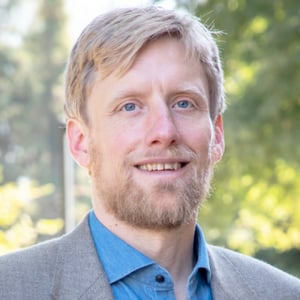
Professor Elmendorf works in the areas of property law, election law, statutory interpretation, and administrative law, using both doctrinal and empirical methods. He is an authority on California land-use and housing law, and has also done widely noted work on public understanding of housing markets and opinion about housing policy. His research has been published in numerous top law reviews and political science journals, including the Yale Law Journal, Columbia Law Review, University of Chicago Law Review, New York University Law Review, American Journal of Political Science, Journal of Politics, and Political Analysis. It has also been covered by major media outlets including The Atlantic, The Washington Post, Financial Times, Bloomberg News, and CalMatters.
Elmendorf enjoys translating academic research and legal developments for popular audiences. He’s known for breaking down everything from knotty judicial opinions to pending legislation with long Twitter threads, and he’s written articles and op-eds for The Atlantic, Mother Jones, The New York Times, the Los Angeles Times, and the San Francisco Chronicle. Sometimes these various forms of public engagement come together, as when a Twitter thread about a housing controversy in San Francisco led to invited blog posts and op-eds, which he expanded into a law-review article, which engendered statutory reforms, which begat another Twitter thread and a webinar for practitioners.
Beyond the law school, Elmendorf serves on the advisory board of the Abundance Academic Network, a new initiative of Arnold Ventures to advance policy-minded research on housing, transportation, and clean-energy development. He has also served on working groups and task forces convened by the California Department of Housing and Community Development, and on the Legal Advisory Committee of the California Housing Defense Fund. He is an elected member of the American Law Institute.
Walter E. Meyer Professor of Property and Urban Law, Yale Law School
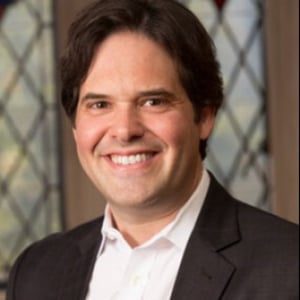
David Schleicher is the Walter E. Meyer Professor of Property and Urban Law at Yale Law School and is an expert in local government law, land use, federalism, state and local finance, and urban development. His work has been published widely in academic journals and popular outlets. He recently released a new book, "In a Bad State: Responding to State and Local Fiscal Crises," and has co-authored leading casebooks about local government and property law. Professor Schleicher is also the co-host of the hit podcast, “Digging a Hole: The Legal Theory Podcast.”
Professor Schleicher has been called “the ideal legal scholar of cities” (Edward Glaeser, Harvard University), “the leading lawyer on state and city governments” (Lt. Gov. Richard Ravitch ‘58), and “one of the most brilliant and far-ranging political thinkers of his generation.” (Benjamin Wallace-Wells, The New Yorker). In the press, he has been called “the most important thinker we have on the subject of local government” and “ingenious” by National Review and one of the “most interesting writers on land use” by Washington Monthly. His work has been described as “great but old fashioned” by Vox, “interesting” by The Nation, “clever” by The Economist, “neat” by Slate, “startling” by City Observatory, “excellent” by Forbes, and discussed extensively in The New York Times, The New Yorker, The Atlantic, National Affairs and Reuters, among a number of other places.
Schleicher was previously an Associate Professor of Law at George Mason University School of Law, where he won the university’s Teaching Excellence Award. He has also taught at Georgetown, Harvard, and New York University. He is a 2004 graduate of Harvard Law School. He also holds an MSc in Economics from the London School of Economics and an AB in Economics and Government from Dartmouth College.

Professor of Law, Antonin Scalia Law School, George Mason University
ILYA SOMIN is Professor of Law at George Mason University and the B. Kenneth Simon Chair in Constitutional Studies at the Cato Institute. His research focuses on constitutional law, property law, democratic theory, federalism, and migration rights. He is the author of Free to Move: Foot Voting, Migration, and Political Freedom (Oxford University Press, revised and expanded edition, 2022), Democracy and Political Ignorance: Why Smaller Government is Smarter (Stanford University Press, revised and expanded second edition, 2016), and The Grasping Hand: Kelo v. City of New London and the Limits of Eminent Domain (University of Chicago Press, 2015, rev. paperback ed., 2016), coauthor of A Conspiracy Against Obamacare: The Volokh Conspiracy and the Health Care Case (Palgrave Macmillan, 2013), and co-editor of Eminent Domain: A Comparative Perspective (Cambridge University Press, 2017). Democracy and Political Ignorance has been translated into Italian and Japanese.
Somin’s work has appeared in numerous scholarly journals, including the Yale Law Journal, Stanford Law Review, Northwestern University Law Review, Georgetown Law Journal, Critical Review, and others. Somin has also published articles in a variety of popular press outlets, including the New York Times, Washington Post, Wall Street Journal, Los Angeles Times, CNN, NBC, The Atlantic, USA Today, Boston Globe, US News and World Report, South China Morning Post, National Law Journal and Reason. He has been quoted or interviewed by the New York Times, Washington Post, Wall Street Journal, Time, Newsweek, The Economist, the Christian Science Monitor, the Financial Times, The Guardian, the Associated Press, CBS, MSNBC, NPR, BBC, Reuters, the Canadian Broadcasting Corporation, the Australian Broadcasting Corporation, Radio Free Europe/Radio Liberty, Al Jazeera, and the Voice of America, among other media.
Somin’s writings have been cited in decisions by the United States Supreme Court, multiple state supreme courts and lower federal courts, and the Supreme Court of Israel. He is co-counsel for the plaintiffs in VOS Selections, Inc. v. Trump, a case challenging the constitutionality of President Trump’s “Liberation Day” tariffs. Somin has testified on the use of drones for targeted killing in the War on Terror before the US Senate Judiciary Subcommittee on the Constitution, Civil Rights, and Human Rights. In 2009, he testified on property rights issues at the United States Senate Judiciary Committee confirmation hearings for Supreme Court Justice Sonia Sotomayor. Somin writes regularly for the popular Volokh Conspiracy law and politics blog, now affiliated with Reason magazine (previously affiliated with the Washington Post from 2014 to 2017). From 2006 to 2013, he served as Co-Editor of the Supreme Court Economic Review, one of the country’s top-rated law and economics journals.
Somin has served as a visiting professor at the University of Pennsylvania Law School. He has also been a visiting professor or scholar at the Georgetown University Law Center, the University of Hamburg, Germany, the University of Torcuato Di Tella in Buenos Aires, Argentina, Uriel Reichman University in Israel, and Zhengzhou University in China. He is a University Affiliate of the Schar School of Policy and Government at George Mason University, and an affiliated faculty member of the George Mason University Institute for Immigration Research. Before joining the faculty at George Mason, Somin was the John M. Olin Fellow in Law at Northwestern University Law School in 2002-2003. In 2001-2002, he clerked for the Hon. Judge Jerry E. Smith of the U.S. Court of Appeals for the Fifth Circuit. Professor Somin earned his B.A., Summa Cum Laude, at Amherst College, M.A. in Political Science from Harvard University, and J.D. from Yale Law School.
Senior Legal Counsel, Pacific Legal Foundation
Before becoming an attorney, James had been a productive member of society working as an exploration geologist in the late 1970s throughout the southwestern United States. However, after several years of dealing with irrational government bureaucrats and environmental policies untethered from reality, James decided that what the world needs is more lawyers — if they are willing to fight for rationality in regulatory regimes, property rights, and liberty.
James attended the University of Arizona College of Law in Tucson, where he served as an editor for the Law Review and received a J.D. degree in 1983. He had previously received a Masters degree in geological sciences from Brown University and an undergraduate degree from Hamilton College in New York. James received the Professional Achievement Award from the University of Arizona Alumni Association in 2018.
James has worked with Pacific Legal Foundation since 1983, litigating cases from Alaska to Florida. He is a member of the Federalist Society’s Environmental Law and Property Rights Practice Group’s Executive Committee, a member of the American College of Real Estate Lawyers, and an honorary member of Owners Counsel of America, an organization comprised of eminent domain attorneys who represent property owners. The Owners Counsel awarded James its Crystal Eagle award in 2013. In 2022, James was awarded the Brigham-Kanner Property Rights Prize at the William & Mary College of Law. The prize is awarded annually to an individual whose work has advanced the cause of property rights and has contributed to the overall awareness of the important role property rights occupy in the broader scheme of individual liberty.
In 2001, James successfully argued a major property rights case, Palazzolo v. Rhode Island, before the United States Supreme Court, a case which affirmed that rights in regulated property do not disappear when land is bought and sold. He has written extensively on all aspects of property rights and environmental law and frequently speaks on these subjects throughout the nation.
When James is not suing the government he enjoys skiing faster than he should, bicycling, hiking, swimming, and spending quality time with his wife, family, and grandchild.
Mr. Burling’s book Nowhere to Live: The Hidden Story of America’s Housing Crisis is available now on Amazon.
James is a member of the bar only in the states of Alaska and California.
Martin Luther King Jr. Professor of Law, UC Davis School of Law
Professor Elmendorf works in the areas of property law, election law, statutory interpretation, and administrative law, using both doctrinal and empirical methods. He is an authority on California land-use and housing law, and has also done widely noted work on public understanding of housing markets and opinion about housing policy. His research has been published in numerous top law reviews and political science journals, including the Yale Law Journal, Columbia Law Review, University of Chicago Law Review, New York University Law Review, American Journal of Political Science, Journal of Politics, and Political Analysis. It has also been covered by major media outlets including The Atlantic, The Washington Post, Financial Times, Bloomberg News, and CalMatters.
Elmendorf enjoys translating academic research and legal developments for popular audiences. He’s known for breaking down everything from knotty judicial opinions to pending legislation with long Twitter threads, and he’s written articles and op-eds for The Atlantic, Mother Jones, The New York Times, the Los Angeles Times, and the San Francisco Chronicle. Sometimes these various forms of public engagement come together, as when a Twitter thread about a housing controversy in San Francisco led to invited blog posts and op-eds, which he expanded into a law-review article, which engendered statutory reforms, which begat another Twitter thread and a webinar for practitioners.
Beyond the law school, Elmendorf serves on the advisory board of the Abundance Academic Network, a new initiative of Arnold Ventures to advance policy-minded research on housing, transportation, and clean-energy development. He has also served on working groups and task forces convened by the California Department of Housing and Community Development, and on the Legal Advisory Committee of the California Housing Defense Fund. He is an elected member of the American Law Institute.
Walter E. Meyer Professor of Property and Urban Law, Yale Law School
David Schleicher is the Walter E. Meyer Professor of Property and Urban Law at Yale Law School and is an expert in local government law, land use, federalism, state and local finance, and urban development. His work has been published widely in academic journals and popular outlets. He recently released a new book, "In a Bad State: Responding to State and Local Fiscal Crises," and has co-authored leading casebooks about local government and property law. Professor Schleicher is also the co-host of the hit podcast, “Digging a Hole: The Legal Theory Podcast.”
Professor Schleicher has been called “the ideal legal scholar of cities” (Edward Glaeser, Harvard University), “the leading lawyer on state and city governments” (Lt. Gov. Richard Ravitch ‘58), and “one of the most brilliant and far-ranging political thinkers of his generation.” (Benjamin Wallace-Wells, The New Yorker). In the press, he has been called “the most important thinker we have on the subject of local government” and “ingenious” by National Review and one of the “most interesting writers on land use” by Washington Monthly. His work has been described as “great but old fashioned” by Vox, “interesting” by The Nation, “clever” by The Economist, “neat” by Slate, “startling” by City Observatory, “excellent” by Forbes, and discussed extensively in The New York Times, The New Yorker, The Atlantic, National Affairs and Reuters, among a number of other places.
Schleicher was previously an Associate Professor of Law at George Mason University School of Law, where he won the university’s Teaching Excellence Award. He has also taught at Georgetown, Harvard, and New York University. He is a 2004 graduate of Harvard Law School. He also holds an MSc in Economics from the London School of Economics and an AB in Economics and Government from Dartmouth College.
Professor of Law, Antonin Scalia Law School, George Mason University
ILYA SOMIN is Professor of Law at George Mason University and the B. Kenneth Simon Chair in Constitutional Studies at the Cato Institute. His research focuses on constitutional law, property law, democratic theory, federalism, and migration rights. He is the author of Free to Move: Foot Voting, Migration, and Political Freedom (Oxford University Press, revised and expanded edition, 2022), Democracy and Political Ignorance: Why Smaller Government is Smarter (Stanford University Press, revised and expanded second edition, 2016), and The Grasping Hand: Kelo v. City of New London and the Limits of Eminent Domain (University of Chicago Press, 2015, rev. paperback ed., 2016), coauthor of A Conspiracy Against Obamacare: The Volokh Conspiracy and the Health Care Case (Palgrave Macmillan, 2013), and co-editor of Eminent Domain: A Comparative Perspective (Cambridge University Press, 2017). Democracy and Political Ignorance has been translated into Italian and Japanese.
Somin’s work has appeared in numerous scholarly journals, including the Yale Law Journal, Stanford Law Review, Northwestern University Law Review, Georgetown Law Journal, Critical Review, and others. Somin has also published articles in a variety of popular press outlets, including the New York Times, Washington Post, Wall Street Journal, Los Angeles Times, CNN, NBC, The Atlantic, USA Today, Boston Globe, US News and World Report, South China Morning Post, National Law Journal and Reason. He has been quoted or interviewed by the New York Times, Washington Post, Wall Street Journal, Time, Newsweek, The Economist, the Christian Science Monitor, the Financial Times, The Guardian, the Associated Press, CBS, MSNBC, NPR, BBC, Reuters, the Canadian Broadcasting Corporation, the Australian Broadcasting Corporation, Radio Free Europe/Radio Liberty, Al Jazeera, and the Voice of America, among other media.
Somin’s writings have been cited in decisions by the United States Supreme Court, multiple state supreme courts and lower federal courts, and the Supreme Court of Israel. He is co-counsel for the plaintiffs in VOS Selections, Inc. v. Trump, a case challenging the constitutionality of President Trump’s “Liberation Day” tariffs. Somin has testified on the use of drones for targeted killing in the War on Terror before the US Senate Judiciary Subcommittee on the Constitution, Civil Rights, and Human Rights. In 2009, he testified on property rights issues at the United States Senate Judiciary Committee confirmation hearings for Supreme Court Justice Sonia Sotomayor. Somin writes regularly for the popular Volokh Conspiracy law and politics blog, now affiliated with Reason magazine (previously affiliated with the Washington Post from 2014 to 2017). From 2006 to 2013, he served as Co-Editor of the Supreme Court Economic Review, one of the country’s top-rated law and economics journals.
Somin has served as a visiting professor at the University of Pennsylvania Law School. He has also been a visiting professor or scholar at the Georgetown University Law Center, the University of Hamburg, Germany, the University of Torcuato Di Tella in Buenos Aires, Argentina, Uriel Reichman University in Israel, and Zhengzhou University in China. He is a University Affiliate of the Schar School of Policy and Government at George Mason University, and an affiliated faculty member of the George Mason University Institute for Immigration Research. Before joining the faculty at George Mason, Somin was the John M. Olin Fellow in Law at Northwestern University Law School in 2002-2003. In 2001-2002, he clerked for the Hon. Judge Jerry E. Smith of the U.S. Court of Appeals for the Fifth Circuit. Professor Somin earned his B.A., Summa Cum Laude, at Amherst College, M.A. in Political Science from Harvard University, and J.D. from Yale Law School.
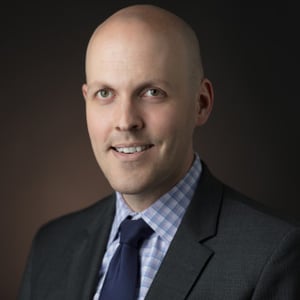
Partner, Barr & Klein PLLC
Steve Klein, a partner at Barr & Klein PLLC, is an experienced free speech attorney who has successfully fought for the First Amendment rights of his clients against local, state and federal regulators. As a lobbyist, Steve’s advocacy has led to the successful amendment of state laws to respect political engagement and prevented the enactment of laws that burden it. Steve has published articles in several legal journals, and his commentary has appeared in The Wall Street Journal, The Washington Times, The Detroit News, and other outlets. Steve earned a bachelors degree in politics at Hillsdale College and a law degree from Ave Maria School of Law, where he served as Managing Editor of the Ave Maria Law Review. He is licensed to practice law in the District of Columbia, Illinois and Michigan.
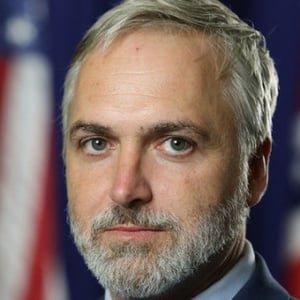
Senior Attorney, Institute for Free Speech
Charles “Chip” Miller joined the Institute for Free Speech as a Senior Attorney in May 2023, where he has handled cases in the 1st, 5th, and 10th Circuits, District Courts in Maine, Iowa, Kansas, Ohio, Texas and Utah, and State Supreme Courts in Alaska and Connecticut, as well as amicus briefs in SCOTUS and the First Circuit. At IFS, Miller's work focuses on Campaign Finance, Donor Privacy, Political Speech and Freedom of the Press. Miller previously served as Ohio’s Deputy Attorney General, where he directed major litigation. Before joining the state AG’s office as General Counsel, he served as a judge for the First Appellate District of Ohio and had also served as a “visiting judge” on the Ohio Supreme Court. Prior to entering public service, Miller spent over 10 years at Keating, Muething & Klekamp, PLL as a litigation partner arguing cases before the Sixth Circuit and the Ohio Supreme Court.
Miller has extensive litigation and appellate experience and has spearheaded important regulatory matters. His previous work includes advancing innovative protections of free expression and competition in the digital sphere.
Miller is a graduate of Boston University College of Law and clerked for Justice Maureen O’Connor at the Ohio Supreme Court. Among other honors, Miller was selected to represent Boston University at the National First Amendment Moot Court.
Partner, Barr & Klein PLLC
Steve Klein, a partner at Barr & Klein PLLC, is an experienced free speech attorney who has successfully fought for the First Amendment rights of his clients against local, state and federal regulators. As a lobbyist, Steve’s advocacy has led to the successful amendment of state laws to respect political engagement and prevented the enactment of laws that burden it. Steve has published articles in several legal journals, and his commentary has appeared in The Wall Street Journal, The Washington Times, The Detroit News, and other outlets. Steve earned a bachelors degree in politics at Hillsdale College and a law degree from Ave Maria School of Law, where he served as Managing Editor of the Ave Maria Law Review. He is licensed to practice law in the District of Columbia, Illinois and Michigan.
Senior Attorney, Institute for Free Speech
Charles “Chip” Miller joined the Institute for Free Speech as a Senior Attorney in May 2023, where he has handled cases in the 1st, 5th, and 10th Circuits, District Courts in Maine, Iowa, Kansas, Ohio, Texas and Utah, and State Supreme Courts in Alaska and Connecticut, as well as amicus briefs in SCOTUS and the First Circuit. At IFS, Miller's work focuses on Campaign Finance, Donor Privacy, Political Speech and Freedom of the Press. Miller previously served as Ohio’s Deputy Attorney General, where he directed major litigation. Before joining the state AG’s office as General Counsel, he served as a judge for the First Appellate District of Ohio and had also served as a “visiting judge” on the Ohio Supreme Court. Prior to entering public service, Miller spent over 10 years at Keating, Muething & Klekamp, PLL as a litigation partner arguing cases before the Sixth Circuit and the Ohio Supreme Court.
Miller has extensive litigation and appellate experience and has spearheaded important regulatory matters. His previous work includes advancing innovative protections of free expression and competition in the digital sphere.
Miller is a graduate of Boston University College of Law and clerked for Justice Maureen O’Connor at the Ohio Supreme Court. Among other honors, Miller was selected to represent Boston University at the National First Amendment Moot Court.

Courthouse Steps Preview: Olivier v. City of Brandon
Nathan Kellum, Tobias S. Loss-Eaton
Gabriel Olivier is an evangelical Christian who often shares his faith in public. In May...
Law For Little Tech: Part 3 - Is Big Tech Bad Tech?
Kevin Frazier, Jennifer Huddleston
What priorities should shape U.S. innovation policy at the national level? Historically, the federal government...
The Digital Services Act and Global Free Speech
Stéphane Bonichot, Adina Portaru, John Rosenthal, Maimon Schwarzschild, Berin Szóka
The European Union’s Digital Services Act applies to digital platforms and service providers offering services...
The Digital Services Act and Global Free Speech
Stéphane Bonichot, Adina Portaru, John Rosenthal, Maimon Schwarzschild, Berin Szóka
The European Union’s Digital Services Act applies to digital platforms and service providers offering services...
Law For Little Tech: Part 2 - Examining the Little Tech Agenda's Approach to Regulations
Kevin Frazier, Samuel Levine
Over the past 25 years, the rapid growth of Big Tech has raised questions about...
State-Level Remedies for the Housing Crisis
James S. Burling, Christopher S. Elmendorf, David Schleicher, Ilya Somin
Many areas of the country are beset by serious housing shortages. State-level regulatory policies...
State-Level Remedies for the Housing Crisis
James S. Burling, Christopher S. Elmendorf, David Schleicher, Ilya Somin
Many areas of the country are beset by serious housing shortages. State-level regulatory policies...
In Memoriam: Charlie Kirk (1993-2025)
The Federalist Society community joins in mourning the passing of Charlie Kirk, founder of Turning...
Litigation Update: Dinner Table Action v. Schneider
Stephen R. Klein, Charles M. Miller
In Dinner Table Action v. Schneider, pending in the First Circuit, Maine is appealing a...
Litigation Update: Dinner Table Action v. Schneider
Stephen R. Klein, Charles M. Miller
In Dinner Table Action v. Schneider, pending in the First Circuit, Maine is appealing a...