
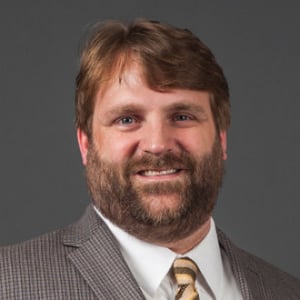
Senior Fellow, Forum for Intellectual Property, Hudson Institute
Devlin Hartline is a senior fellow at Hudson Institute’s Forum for Intellectual Property. His research agenda spans a broad spectrum of doctrinal and political issues in intellectual property law, with particular focus on advancing and protecting the rights of creators and innovators. The Forum for Intellectual Property supports data-driven research and promotes evidence-based policy discussions about the key role of intellectual property in growing innovation economies and flourishing societies.
Prior to joining Hudson Institute, Mr. Hartline was an assistant professor of law at George Mason University Antonin Scalia Law School in Arlington, Virginia, where he taught intellectual property law, including copyright, patent, and trademark law. Mr. Hartline also served as director of communications at the law school’s Center for the Protection of Intellectual Property, where he led the center’s communications and academic advocacy efforts, working closely with scholars to publicize and promote rigorous research on the law, economics, and history of intellectual property.
Mr. Hartline holds a JD, cum laude, from Loyola University New Orleans College of Law and an LLM with concentrations in intellectual property and constitutional law from Tulane University Law School in New Orleans, Louisiana. Mr. Hartline also holds a BA in mathematics from the University of Colorado at Boulder.
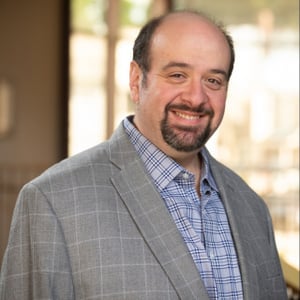
Associate Professor, UNH Franklin Pierce School of Law
Zvi S. Rosen is an Associate Professor at UNH Franklin Pierce School of Law and the Faculty Director of the Franklin Pierce Society for Intellectual Property. He has served as a Assistant Professor at the Southern Illinois University School of Law, as a Visiting Assistant Professor at the Maurice A. Deane School of Law at Hofstra University, and as a Visiting Scholar and Professorial Lecturer in Law at George Washington University School of Law.
In 2015-2016, he was the Abraham L. Kaminstein Scholar in Residence at the U.S. Copyright Office. Mr. Rosen received his J.D. from Northwestern University School of Law in 2005 and LLM in Intellectual Property in 2006 from the George Washington University Law School. He has practiced at Fried, Frank, Harris, Shriver & Jacobson LLP as well as smaller firms and his own practice, and clerked for the Hon. Thomas B. Bennett of the U.S. Bankruptcy Court for the Northern District of Alabama. He has written extensively on the development of modern copyright and trademark law, as well as on bankruptcy law.
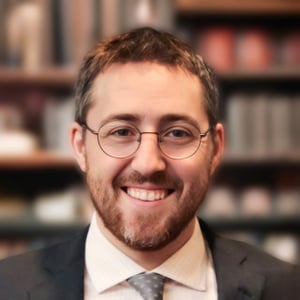
Senior Attorney, Institute for Free Speech
Brett Nolan is a Senior Attorney at the Institute for Free Speech, a public interest law firm that defends the First Amendment rights of those engaged in political speech and advocacy around the country.
Before joining the Institute, Brett served as the Principal Deputy Solicitor General of Kentucky, where he represented the Commonwealth in a wide variety of high-stakes litigation at every level of state and federal court. In that role, Brett led a successful challenge against the Department of Treasury over the constitutionality of a federal law limiting the ability of states to modify their tax codes, and he helped secure a U.S. Supreme Court victory that upheld a state’s constitutional right to defend its interests in federal court.
Prior to that, Brett served as the Deputy General Counsel to the former Governor of Kentucky, where he advised the governor and other executive branch officials on legal and policy issues and represented them in litigation. Brett clerked for Judge John Nalbandian of the U.S. Court of Appeals for the Sixth Circuit and Judge Karen K. Caldwell of the U.S. District Court for the Eastern District of Kentucky. Between clerkships, he worked in private practice. Brett received his law degree from the University of Chicago Law School, where he graduated with High Honors and was an editor of The University of Chicago Law Review.
Senior Attorney, Institute for Free Speech
Brett Nolan is a Senior Attorney at the Institute for Free Speech, a public interest law firm that defends the First Amendment rights of those engaged in political speech and advocacy around the country.
Before joining the Institute, Brett served as the Principal Deputy Solicitor General of Kentucky, where he represented the Commonwealth in a wide variety of high-stakes litigation at every level of state and federal court. In that role, Brett led a successful challenge against the Department of Treasury over the constitutionality of a federal law limiting the ability of states to modify their tax codes, and he helped secure a U.S. Supreme Court victory that upheld a state’s constitutional right to defend its interests in federal court.
Prior to that, Brett served as the Deputy General Counsel to the former Governor of Kentucky, where he advised the governor and other executive branch officials on legal and policy issues and represented them in litigation. Brett clerked for Judge John Nalbandian of the U.S. Court of Appeals for the Sixth Circuit and Judge Karen K. Caldwell of the U.S. District Court for the Eastern District of Kentucky. Between clerkships, he worked in private practice. Brett received his law degree from the University of Chicago Law School, where he graduated with High Honors and was an editor of The University of Chicago Law Review.
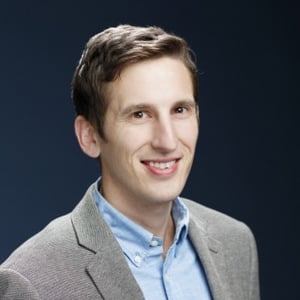
Legal Fellow, Center for Constitutional Studies, Cato Institute
Brent Skorup is a legal fellow in the Cato Institute’s Robert A. Levy Center for Constitutional Studies.
Before joining Cato, he was a senior research fellow at the Mercatus Center at the George Mason University. His research areas include free speech, technology law, Fourth Amendment protections, regulation, and property law. Skorup has published pieces in economics and law journals and in popular media, including The Wall Street Journal, The New York Times, Bloomberg Law, Reuters, and Wired. He’s appeared as a TV and radio interview guest for news outlets like C‑SPAN, NPR, CBS News, ABC News, and CNBC Asia.
The Pennsylvania Supreme Court, a dissenting opinion at the Illinois Supreme Court, and the ALI's Restatement of the Law of Property have cited his legal research and he has testified as a technology and legal expert in legislative hearings in several states. Skorup has been appointed to several federal and state advisory bodies and he is currently a member of the Texas Advanced Air Mobility Advisory Committee.
Skorup has a BA in economics from Wheaton College and a law degree from the George Mason University School of Law, where he was articles editor for the Civil Rights Law Journal. He was a legal clerk at the FCC’s wireless bureau and Office of General Counsel and at the Energy and Commerce Committee in the U.S. House of Representatives.
Of Counsel, GrayRobinson
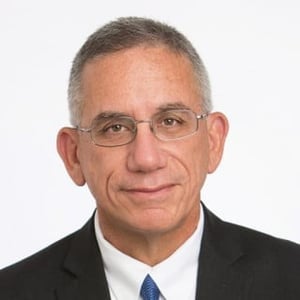
Charlie Trippe practiced civil litigation for the 14 years between 1980 and 1994, most of that with Jones Day, where he was a partner in the New York office. He was the chief litigation counsel of CSX Transportation, Inc., one of the country’s largest freight railroads, from 1994 through 2001. He returned to private practice in Jacksonville in 2001, continuing to practice in the area of civil litigation. He also served as General Counsel to both the Governor of Florida (2010-2011) and the Attorney General of Florida (2020-2022), and as the Chief Counsel of the Federal Aviation Administration (2017-2019). Since 2025 he has been Of Counsel to the Florida firm of GrayRobinson. He is a Florida Supreme Court Certified Circuit Civil Mediator, as well as an experienced arbitrator.
Partner, Global Regulatory, Hogan Lovells
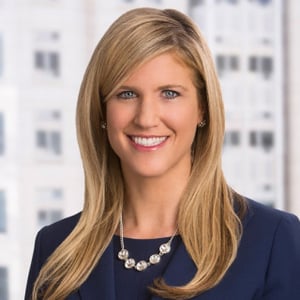
As chair of the Uncrewed Aircraft Systems (UAS) practice and co-founder and Executive Director of the non-profit Commercial Drone Alliance, Lisa is focused on helping businesses succeed in the dynamic drone marketplace. She also focuses on UAS security efforts and enabling Advanced Air Mobility (AAM). Lisa founded and hosts the Advanced Aviation Innovation Summit series, bringing together regulators, policymakers, and industry stakeholders to explore ways to enhance U.S. global leadership in advanced aviation.
Legal Fellow, Center for Constitutional Studies, Cato Institute
Brent Skorup is a legal fellow in the Cato Institute’s Robert A. Levy Center for Constitutional Studies.
Before joining Cato, he was a senior research fellow at the Mercatus Center at the George Mason University. His research areas include free speech, technology law, Fourth Amendment protections, regulation, and property law. Skorup has published pieces in economics and law journals and in popular media, including The Wall Street Journal, The New York Times, Bloomberg Law, Reuters, and Wired. He’s appeared as a TV and radio interview guest for news outlets like C‑SPAN, NPR, CBS News, ABC News, and CNBC Asia.
The Pennsylvania Supreme Court, a dissenting opinion at the Illinois Supreme Court, and the ALI's Restatement of the Law of Property have cited his legal research and he has testified as a technology and legal expert in legislative hearings in several states. Skorup has been appointed to several federal and state advisory bodies and he is currently a member of the Texas Advanced Air Mobility Advisory Committee.
Skorup has a BA in economics from Wheaton College and a law degree from the George Mason University School of Law, where he was articles editor for the Civil Rights Law Journal. He was a legal clerk at the FCC’s wireless bureau and Office of General Counsel and at the Energy and Commerce Committee in the U.S. House of Representatives.
Of Counsel, GrayRobinson
Charlie Trippe practiced civil litigation for the 14 years between 1980 and 1994, most of that with Jones Day, where he was a partner in the New York office. He was the chief litigation counsel of CSX Transportation, Inc., one of the country’s largest freight railroads, from 1994 through 2001. He returned to private practice in Jacksonville in 2001, continuing to practice in the area of civil litigation. He also served as General Counsel to both the Governor of Florida (2010-2011) and the Attorney General of Florida (2020-2022), and as the Chief Counsel of the Federal Aviation Administration (2017-2019). Since 2025 he has been Of Counsel to the Florida firm of GrayRobinson. He is a Florida Supreme Court Certified Circuit Civil Mediator, as well as an experienced arbitrator.
Former Chief Counsel, Federal Aviation Administration
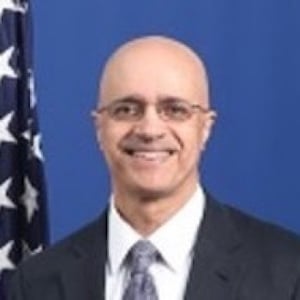
Reggie Govan is former Chief Counsel of the Federal Aviation Administration’s (FAA). The Office of the Chief Counsel provides legal advice in support of the FAA Administrator and all aspects of agency operations at headquarters, regions, and centers and works closely with the Department of Transportation’s Office of General Counsel on issues of national significance to the aviation industry.
Mr. Govan previously served as a corporate counsel, litigator, and legislative counsel. Prior to joining the FAA, he served as Managing Associate General Counsel of Freddie Mac. He also served as Counsel to Chairmen Augustus H. Hawkins and William D. Ford of the United States (U.S.) House of Representatives Committee on Education and Labor, and as Counsel to the then-Chairman (now Vice President) Joseph R. Biden of the U.S. Senate Committee on the Judiciary. His litigation experience includes service as an Assistant District Attorney in Manhattan and as plaintiffs’ counsel in federal civil rights litigation, including school desegregation and voting rights cases.
After acquiring a Bachelor’s degree in Economics and Philosophy from Carnegie-Mellon University and a Juris Doctor from the University of Pennsylvania Law School, he clerked for the Honorable Nathaniel Jones of U.S. Court of Appeals for Sixth Circuit.
Mr. Govan is the author of several professional journal and law review articles. He lives in the District of Columbia.
Associate, Covington & Burling LLP
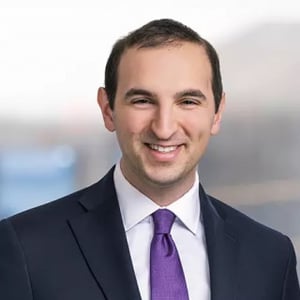
Eli Nachmany is an associate at Covington & Burling LLP in the Washington, DC, office. He clerked for Judge Steven J. Menashi of the U.S. Court of Appeals for the Second Circuit. Eli graduated magna cum laude from Harvard Law School, where he was Editor-in-Chief of the Harvard Journal of Law & Public Policy. Prior to law school, Eli served as the speechwriter to the U.S. Secretary of the Interior and as a domestic policy aide in the White House Office of American Innovation. He graduated summa cum laude from New York University with a B.S. in Sports Management. Eli’s scholarship on administrative law and executive power has appeared in the BYU Law Review, George Mason Law Review, Wake Forest Law Review, and Yale Law Journal Forum.
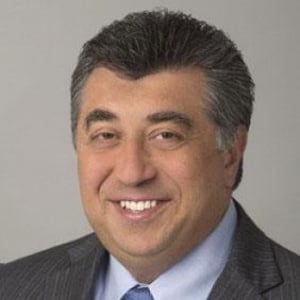
Counsel, Cadwalader, Wickersham & Taft LLP; Senior Competition Counsel, TechFreedom
Bilal Sayyed represents clients before the Federal Trade Commission (FTC) and Department of Justice (DOJ) in significant merger, civil and criminal antitrust matters. A significant portion of his practice involves representing investment funds on antitrust and Hart-Scott-Rodino (HSR) Act compliance matters; he has also provided expert witness services related to HSR compliance. Bilal also counsels clients before the FTC in consumer protection and privacy investigations. He maintains an active amicus and appellate brief writing practice in antitrust litigation and antitrust merger matters.
Prior to joining Cadwalader, Bilal was the Director of the FTC’s Office of Policy Planning (OPP) (2018-2021). In that role, he provided legal and policy advice to the Chairman and Commissioners on antitrust and consumer protection matters and worked closely with the senior and career leadership of the FTC’s Bureaus of Competition, Consumer Protection, and Economics. Bilal previously served as an Attorney Advisor to FTC Chairman Timothy J. Muris from 2001 to 2004. In that role, Bilal advised the Chairman on matters involving a wide spectrum of industries, including chemical and mining, petroleum and natural gas, health care and pharmaceutical, defense and transportation, gaming, various consumer products and retail operations, and professional associations and standard-setting organizations.
Bilal has taught antitrust and competition law at the George Mason University School of Law since 2011.
Bilal received his B.A. from Case Western Reserve University, and a J.D. from George Mason University School of Law. He is admitted to practice in the District of Columbia and the State of New York, as well as before the U.S. District Courts for the District of Colorado and the District of Columbia, the U.S. Court of Appeals for the District of Columbia Circuit, the Fifth Circuit, the Ninth Circuit, and the U.S. Supreme Court.
Bilal is the host of Rethinking Antitrust, a podcast published by TechFreedom that examines the economics, institutions, law, legislation, and policy goals of antitrust enforcement.
Associate, Covington & Burling LLP
Eli Nachmany is an associate at Covington & Burling LLP in the Washington, DC, office. He clerked for Judge Steven J. Menashi of the U.S. Court of Appeals for the Second Circuit. Eli graduated magna cum laude from Harvard Law School, where he was Editor-in-Chief of the Harvard Journal of Law & Public Policy. Prior to law school, Eli served as the speechwriter to the U.S. Secretary of the Interior and as a domestic policy aide in the White House Office of American Innovation. He graduated summa cum laude from New York University with a B.S. in Sports Management. Eli’s scholarship on administrative law and executive power has appeared in the BYU Law Review, George Mason Law Review, Wake Forest Law Review, and Yale Law Journal Forum.
Counsel, Cadwalader, Wickersham & Taft LLP; Senior Competition Counsel, TechFreedom
Bilal Sayyed represents clients before the Federal Trade Commission (FTC) and Department of Justice (DOJ) in significant merger, civil and criminal antitrust matters. A significant portion of his practice involves representing investment funds on antitrust and Hart-Scott-Rodino (HSR) Act compliance matters; he has also provided expert witness services related to HSR compliance. Bilal also counsels clients before the FTC in consumer protection and privacy investigations. He maintains an active amicus and appellate brief writing practice in antitrust litigation and antitrust merger matters.
Prior to joining Cadwalader, Bilal was the Director of the FTC’s Office of Policy Planning (OPP) (2018-2021). In that role, he provided legal and policy advice to the Chairman and Commissioners on antitrust and consumer protection matters and worked closely with the senior and career leadership of the FTC’s Bureaus of Competition, Consumer Protection, and Economics. Bilal previously served as an Attorney Advisor to FTC Chairman Timothy J. Muris from 2001 to 2004. In that role, Bilal advised the Chairman on matters involving a wide spectrum of industries, including chemical and mining, petroleum and natural gas, health care and pharmaceutical, defense and transportation, gaming, various consumer products and retail operations, and professional associations and standard-setting organizations.
Bilal has taught antitrust and competition law at the George Mason University School of Law since 2011.
Bilal received his B.A. from Case Western Reserve University, and a J.D. from George Mason University School of Law. He is admitted to practice in the District of Columbia and the State of New York, as well as before the U.S. District Courts for the District of Colorado and the District of Columbia, the U.S. Court of Appeals for the District of Columbia Circuit, the Fifth Circuit, the Ninth Circuit, and the U.S. Supreme Court.
Bilal is the host of Rethinking Antitrust, a podcast published by TechFreedom that examines the economics, institutions, law, legislation, and policy goals of antitrust enforcement.
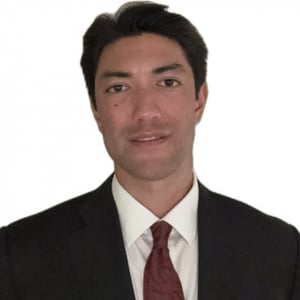
Clinical Instructional Fellow, Religious Freedom Clinic, Harvard Law School
Steven is an instructional fellow at the Religious Freedom Clinic. Before joining the clinic, he clerked in his hometown, San Diego, CA, for the Honorable Patrick J. Bumatay on the United States Court of Appeals for the Ninth Circuit. He received his J.D. from Stanford Law School, where he participated in Stanford’s Religious Liberty Clinic, and was Managing Editor of the Stanford Law & Policy Review. Before law school, Steven was a software engineer at Google, first in Mountain View, CA, and then in New York City. Steven received a B.S. in Physics and a B.A. in Linguistics from Stanford University.
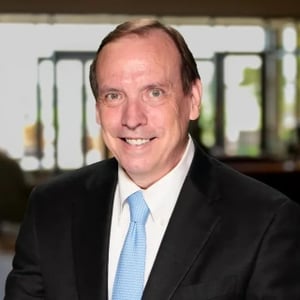
Senior Counsel, First Liberty Institute
Prior to coming to First Liberty, Nate was the Founder and Chief Counsel of the Center for Religious Expression.
For over 3 decades, Nate has defended religious liberty in courtrooms all over the country. He has handled more than 500 litigated cases and 50 appeals before various federal appellate courts regarding, winning numerous landmark decisions, including Brindley v. City of Memphis, Johnson v. Minneapolis Park & Recreation Board, Boardley v. Dept. of Interior and Brown v. Polk County.
Nate is also a sought after speaker and has appeared on numerous television and radio shows, including Huckabee, Hannity, Fox and Friends, and the Hugh Hewitt show. He has been frequently quoted in major print media, like Time magazine, The New Yorker, The Wall Street Journal, National Review, and USA Today. He has also written op-eds and articles for various media outlets, including Townhall, American Thinker, One News Now, and was a regular contributor for the Christian Post.
Nate earned his Juris Doctorate from the University of Mississippi, graduating with honors in 1988. He is admitted to state bars in Tennessee and Mississippi, as well as numerous federal appellate courts.
Clinical Instructional Fellow, Religious Freedom Clinic, Harvard Law School
Steven is an instructional fellow at the Religious Freedom Clinic. Before joining the clinic, he clerked in his hometown, San Diego, CA, for the Honorable Patrick J. Bumatay on the United States Court of Appeals for the Ninth Circuit. He received his J.D. from Stanford Law School, where he participated in Stanford’s Religious Liberty Clinic, and was Managing Editor of the Stanford Law & Policy Review. Before law school, Steven was a software engineer at Google, first in Mountain View, CA, and then in New York City. Steven received a B.S. in Physics and a B.A. in Linguistics from Stanford University.
Senior Counsel, First Liberty Institute
Prior to coming to First Liberty, Nate was the Founder and Chief Counsel of the Center for Religious Expression.
For over 3 decades, Nate has defended religious liberty in courtrooms all over the country. He has handled more than 500 litigated cases and 50 appeals before various federal appellate courts regarding, winning numerous landmark decisions, including Brindley v. City of Memphis, Johnson v. Minneapolis Park & Recreation Board, Boardley v. Dept. of Interior and Brown v. Polk County.
Nate is also a sought after speaker and has appeared on numerous television and radio shows, including Huckabee, Hannity, Fox and Friends, and the Hugh Hewitt show. He has been frequently quoted in major print media, like Time magazine, The New Yorker, The Wall Street Journal, National Review, and USA Today. He has also written op-eds and articles for various media outlets, including Townhall, American Thinker, One News Now, and was a regular contributor for the Christian Post.
Nate earned his Juris Doctorate from the University of Mississippi, graduating with honors in 1988. He is admitted to state bars in Tennessee and Mississippi, as well as numerous federal appellate courts.

Courthouse Steps Oral Argument: Cox Communications, Inc. v. Sony Music Entertainment
Devlin Hartline, Zvi Rosen
In Cox Communications, Inc. v. Sony Music Entertainment, the Supreme Court is set to determine whether...
Courthouse Steps Oral Argument: NRSC v. FEC
Brett Nolan
In National Republican Senatorial Committee (NRSC) v. Federal Election Commission (FEC) the Court is set to...
Courthouse Steps Oral Argument: NRSC v. FEC
Brett Nolan
In National Republican Senatorial Committee (NRSC) v. Federal Election Commission (FEC) the Court is set to...
Aviation Policy Episode 2: Innovation at the FAA
Brent Skorup, Charles M. Trippe, Lisa Ellman
Brent Skorup (Cato Institute) continues the discussion of innovation at the Federal Aviation Administration (FAA),...
Aviation Policy Episode 1: Drones & Federalism
Brent Skorup, Charles M. Trippe, Reggie Govan
Brent Skorup (Cato Institute) is joined by Reggie Govan (Former Chief Counsel, Federal Aviation Administration)...
Courthouse Steps Oral Argument: Trump v. Slaughter
Eli Nachmany, Bilal Sayyed
Humphrey's Executor v. United States, decided in 1935, upheld the Federal Trade Commission Act, declaring...
Courthouse Steps Oral Argument: Trump v. Slaughter
Eli Nachmany, Bilal Sayyed
Humphrey's Executor v. United States, decided in 1935, upheld the Federal Trade Commission Act, declaring...
[Free to Choose Network] We Hold These Truths: The Global Quest for Liberty
In We Hold These Truths, Federal Judge Douglas Ginsburg explores the enduring influence of...
Courthouse Steps Oral Argument: Olivier v. City of Brandon
Steven Burnett, Nathan Kellum
Gabriel Olivier is an evangelical Christian who often shares his faith in public. In May...
Courthouse Steps Oral Argument: Olivier v. City of Brandon
Steven Burnett, Nathan Kellum
Gabriel Olivier is an evangelical Christian who often shares his faith in public. In May...