

James T. Jensen Endowed Professor for Transactional Law & Director of the Program on Intellectual Property and Technology Law, University of Utah S.J. Quinney College of Law
Jorge L. Contreras is a Distinguished University Professor, the James T. Jensen Endowed Professor for Transactional Law and Director of the Program on Intellectual Property and Technology Law. He teaches and researches in the areas of intellectual property, property law, technical standardization, antitrust and science policy. In 2020 he received the University of Utah's Distinguished Research Award and is an elected member of the American Law Institute. He has testified before the U.S. Senate and House Subcommittees on Intellectual Property, and was awarded the Rossman Memorial Award by the Patent & Trademark Office Society in 2022.
Professor Contreras has written or edited fourteen books and published more than 150 scholarly articles and chapters. His book, The Genome Defense: Inside the Epic Legal Battle to Determine Who Owns Your DNA (NY: Hachette/Algonquin, 2021), has been praised by the NY Times, Wall St. Journal, Nature and numerous other outlets, and was named "Best Patent Law Book of the Year" by the international IPKat blog. His scholarly articles have appeared in leading scientific, legal and policy journals including Science, Nature, NYU Law Review, Georgetown Law Journal, Iowa Law Review and Antitrust Law Journal. He has been quoted by media outlets around the world including the New York Times, Wall Street Journal, Economist, Bloomberg, Washington Post, Korea Times and has been featured on C-SPAN, NPR, PRI and BBC shows and a range of podcasts and online news programs.
Professor Contreras currently serves Co-Chair of the Interdisciplinary Division of the ABA's Section of Science & Technology Law and a member of the Advisory Board of the American Antitrust Institute. He has previously served as Co-Chair of the National Conference of Lawyers and Scientists, a member of the National Academy of Sciences (NAS) Committee on Intellectual Property Management in Standard-Setting Processes, the National Institutes of Health (NIH) Council of Councils, the Advisory Council of NIH's National Center for the Advancement of Translational Sciences (NCATS), the National Advisory Council for Human Genome Research, and the Intellectual Property Rights Policy Committee of the American National Standards Institute (ANSI). In 2021 he served as Chair of the Art Law Section of the Association of American Law Schools (AALS) and currently serves as Chair of the AALS Remedies Section.
Professor Contreras has previously taught at American University Washington College of Law and Washington University in St. Louis. Prior to entering academia he was a partner at the international law firm Wilmer Cutler Pickering Hale and Dorr LLP, where he practiced transactional and intellectual property law in Boston, London and Washington DC. He is a cum laude graduate of Harvard Law School (JD) and Rice University (BA, BSEE) and clerked for Chief Justice Thomas R. Philips of the Texas Supreme Court.

Professor of Law, Antonin Scalia Law School, George Mason University
Adam Mossoff is Professor of Law at Antonin Scalia Law School, George Mason University. He has published extensively on why patents, copyrights, and other intellectual property rights have been—and should be—legally secured to innovators and creators as property rights. His scholarship has been relied on by the United States Supreme Court, by lower federal courts, and by U.S. federal agencies. He has been invited to testify numerous times before the U.S. Senate and the House of Representatives on intellectual property legislation. His writings on intellectual property policy have also appeared in the Wall Street Journal, New York Times, Forbes, Investors Business Daily, and in other media outlets. His journal articles can be downloaded here.
Professor Mossoff is a longstanding member of the Executive Committee of the Intellectual Property Practice Group of the Federalist Society, on which he served as Chairperson from 2016-2018, and he is Chair of the Intellectual Property Working Group of the Regulatory Transparency Project of the Federalist Society. He is a Senior Fellow and Chair of the Forum for Intellectual Property at the Hudson Institute, a Visiting Intellectual Property Fellow at the Heritage Foundation, and a member of the Board of Directors of the Center for Intellectual Property Understanding. He is a member of the Intellectual Property Rights Policy Committee of ANSI and he has served as Chair and Vice-Chair of the Intellectual Property Committee of the IEEE-USA, on which he remains a member in good standing.

Founder and Principal Solicitor, Opie International Technology Lawyers
Elisabeth Opie BA LLB(Hons) LLM GAICD has almost 20 years’ international experience in the global innovation system. Holding senior legal and executive positions, Elisabeth has worked with industry, spin-offs, research organisations and government. She has extensive experience in international business transactions, policy advice, negotiation and alternative dispute resolution. Her legal and executive experience has been developed across sectors such as IT, automotive, aerospace, health and energy. Elisabeth has experience in both non-contentious and contentious matters.
Elisabeth has received a number of awards in the field of international science and technology, including Business and Strategy Excellence Awards, and was the inaugural Global Research Alliance Fellow. She has appeared in the IAM Strategy 300 Global Leaders since 2020 and the IAM Patent 1000 since 2019.

Senior Fellow, Hudson Institute
Urška Petrovčič is a senior fellow at Hudson Institute and director of economic strategy at Qualcomm. Her work focuses on antitrust and intellectual property.
Since 2017, Dr. Petrovčič has acted as the European Commission’s non-governmental adviser for the Unilateral Conduct Working Group of the International Competition Network. She has been a visiting scholar at the University of California, Berkeley and the University of Oslo. She was chosen as the inaugural scholar of the American Bar Association’s International Scholar-in-Residence Program, which enabled her to conduct research in cooperation with the Office of Policy Planning of the US Federal Trade Commission on antitrust enforcement concerning SEPs.
Dr. Petrovčič previously worked in the Brussels office of the law firm Skadden, Arps, Slate, Meagher & Flom LLP and was a stagiaire at the Directorate-General for Competition of the European Commission.
Her publications on the enforcement of standard-essential patents (SEPs) include a book, Competition Law and Standard Essential Patents: A Transatlantic Perspective (Wolters Kluwer 2014), and articles in the Common Market Law Review and other journals.
She holds a BA in law from the University of Ljubljana, a master of law and economics from Erasmus University Rotterdam, and an LLM and a PhD in law from the European University Institute.
James T. Jensen Endowed Professor for Transactional Law & Director of the Program on Intellectual Property and Technology Law, University of Utah S.J. Quinney College of Law
Jorge L. Contreras is a Distinguished University Professor, the James T. Jensen Endowed Professor for Transactional Law and Director of the Program on Intellectual Property and Technology Law. He teaches and researches in the areas of intellectual property, property law, technical standardization, antitrust and science policy. In 2020 he received the University of Utah's Distinguished Research Award and is an elected member of the American Law Institute. He has testified before the U.S. Senate and House Subcommittees on Intellectual Property, and was awarded the Rossman Memorial Award by the Patent & Trademark Office Society in 2022.
Professor Contreras has written or edited fourteen books and published more than 150 scholarly articles and chapters. His book, The Genome Defense: Inside the Epic Legal Battle to Determine Who Owns Your DNA (NY: Hachette/Algonquin, 2021), has been praised by the NY Times, Wall St. Journal, Nature and numerous other outlets, and was named "Best Patent Law Book of the Year" by the international IPKat blog. His scholarly articles have appeared in leading scientific, legal and policy journals including Science, Nature, NYU Law Review, Georgetown Law Journal, Iowa Law Review and Antitrust Law Journal. He has been quoted by media outlets around the world including the New York Times, Wall Street Journal, Economist, Bloomberg, Washington Post, Korea Times and has been featured on C-SPAN, NPR, PRI and BBC shows and a range of podcasts and online news programs.
Professor Contreras currently serves Co-Chair of the Interdisciplinary Division of the ABA's Section of Science & Technology Law and a member of the Advisory Board of the American Antitrust Institute. He has previously served as Co-Chair of the National Conference of Lawyers and Scientists, a member of the National Academy of Sciences (NAS) Committee on Intellectual Property Management in Standard-Setting Processes, the National Institutes of Health (NIH) Council of Councils, the Advisory Council of NIH's National Center for the Advancement of Translational Sciences (NCATS), the National Advisory Council for Human Genome Research, and the Intellectual Property Rights Policy Committee of the American National Standards Institute (ANSI). In 2021 he served as Chair of the Art Law Section of the Association of American Law Schools (AALS) and currently serves as Chair of the AALS Remedies Section.
Professor Contreras has previously taught at American University Washington College of Law and Washington University in St. Louis. Prior to entering academia he was a partner at the international law firm Wilmer Cutler Pickering Hale and Dorr LLP, where he practiced transactional and intellectual property law in Boston, London and Washington DC. He is a cum laude graduate of Harvard Law School (JD) and Rice University (BA, BSEE) and clerked for Chief Justice Thomas R. Philips of the Texas Supreme Court.
Professor of Law, Antonin Scalia Law School, George Mason University
Adam Mossoff is Professor of Law at Antonin Scalia Law School, George Mason University. He has published extensively on why patents, copyrights, and other intellectual property rights have been—and should be—legally secured to innovators and creators as property rights. His scholarship has been relied on by the United States Supreme Court, by lower federal courts, and by U.S. federal agencies. He has been invited to testify numerous times before the U.S. Senate and the House of Representatives on intellectual property legislation. His writings on intellectual property policy have also appeared in the Wall Street Journal, New York Times, Forbes, Investors Business Daily, and in other media outlets. His journal articles can be downloaded here.
Professor Mossoff is a longstanding member of the Executive Committee of the Intellectual Property Practice Group of the Federalist Society, on which he served as Chairperson from 2016-2018, and he is Chair of the Intellectual Property Working Group of the Regulatory Transparency Project of the Federalist Society. He is a Senior Fellow and Chair of the Forum for Intellectual Property at the Hudson Institute, a Visiting Intellectual Property Fellow at the Heritage Foundation, and a member of the Board of Directors of the Center for Intellectual Property Understanding. He is a member of the Intellectual Property Rights Policy Committee of ANSI and he has served as Chair and Vice-Chair of the Intellectual Property Committee of the IEEE-USA, on which he remains a member in good standing.
Founder and Principal Solicitor, Opie International Technology Lawyers
Elisabeth Opie BA LLB(Hons) LLM GAICD has almost 20 years’ international experience in the global innovation system. Holding senior legal and executive positions, Elisabeth has worked with industry, spin-offs, research organisations and government. She has extensive experience in international business transactions, policy advice, negotiation and alternative dispute resolution. Her legal and executive experience has been developed across sectors such as IT, automotive, aerospace, health and energy. Elisabeth has experience in both non-contentious and contentious matters.
Elisabeth has received a number of awards in the field of international science and technology, including Business and Strategy Excellence Awards, and was the inaugural Global Research Alliance Fellow. She has appeared in the IAM Strategy 300 Global Leaders since 2020 and the IAM Patent 1000 since 2019.
Senior Fellow, Hudson Institute
Urška Petrovčič is a senior fellow at Hudson Institute and director of economic strategy at Qualcomm. Her work focuses on antitrust and intellectual property.
Since 2017, Dr. Petrovčič has acted as the European Commission’s non-governmental adviser for the Unilateral Conduct Working Group of the International Competition Network. She has been a visiting scholar at the University of California, Berkeley and the University of Oslo. She was chosen as the inaugural scholar of the American Bar Association’s International Scholar-in-Residence Program, which enabled her to conduct research in cooperation with the Office of Policy Planning of the US Federal Trade Commission on antitrust enforcement concerning SEPs.
Dr. Petrovčič previously worked in the Brussels office of the law firm Skadden, Arps, Slate, Meagher & Flom LLP and was a stagiaire at the Directorate-General for Competition of the European Commission.
Her publications on the enforcement of standard-essential patents (SEPs) include a book, Competition Law and Standard Essential Patents: A Transatlantic Perspective (Wolters Kluwer 2014), and articles in the Common Market Law Review and other journals.
She holds a BA in law from the University of Ljubljana, a master of law and economics from Erasmus University Rotterdam, and an LLM and a PhD in law from the European University Institute.

Before coming to MSU College of Law, Professor Kalt worked at the Washington D.C. office of Sidley and Austin in one of the top appellate law practices in the country. He earned his juris doctor from Yale Law School, where he was an editor on the Yale Law Journal. After law school, he served as a law clerk for the Honorable Danny J. Boggs, U.S. Court of Appeals for the 6th Circuit. Professor Kalt’s research focuses on structural constitutional law and juries. At MSU Law, Professor Kalt teaches Constitutional Law, Torts, and Administrative Law.
J.D. Yale Law School, 1997; A.B., with Highest Distinction, University of Michigan, 1994
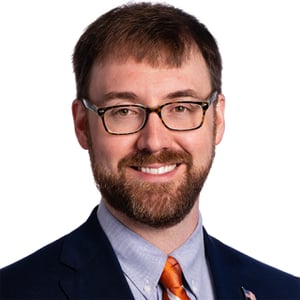
Senior Legal Fellow, Courts and the Constitution, Legal Policy Center, The Heritage Foundation
Zack is a Senior Legal Fellow of Courts and the Constitution at The Heritage Foundation.
He previously served for several years as an Assistant United States Attorney in the Northern District of Florida. Prior to that, he spent two years as an associate in the Washington, D.C. office of Cleary Gottlieb Steen & Hamilton, which he joined after clerking for the Hon. Emmett R. Cox on the United States Court of Appeals for the Eleventh Circuit.
Smith received his undergraduate, master’s, and law degrees from the University of Florida. During law school, Smith served as the Editor in Chief of the Florida Law Review and served on the executive boards of several student organizations, including the UF Chapter of the Federalist Society.

Legal Director & General Counsel, Criminal Justice Legal Foundation
Kent S. Scheidegger has been the Legal Director of the Criminal Justice Legal Foundation since December 1986. He also served as Chairman of the Criminal Law Practice Group of the Federalist Society 2003 to 2005. His articles on criminal and constitutional law have been published in law reviews, national legal publications, and congressional reports. Legal arguments authored by Mr. Scheidegger have been cited and incorporated in several precedent-setting United States Supreme Court decisions.
After receiving a degree in physics with honors from New Mexico State University in 1976, Mr. Scheidegger served for six years in the United States Air Force as a Nuclear Research Officer. He took his law degree with distinction from the University of the Pacific, McGeorge School of Law in 1982 and practiced civil law in Northern California. He was general counsel of California Cooler, Inc. from 1984 until 1986, when he joined the Foundation.
Legal Director & General Counsel, Criminal Justice Legal Foundation
Kent S. Scheidegger has been the Legal Director of the Criminal Justice Legal Foundation since December 1986. He also served as Chairman of the Criminal Law Practice Group of the Federalist Society 2003 to 2005. His articles on criminal and constitutional law have been published in law reviews, national legal publications, and congressional reports. Legal arguments authored by Mr. Scheidegger have been cited and incorporated in several precedent-setting United States Supreme Court decisions.
After receiving a degree in physics with honors from New Mexico State University in 1976, Mr. Scheidegger served for six years in the United States Air Force as a Nuclear Research Officer. He took his law degree with distinction from the University of the Pacific, McGeorge School of Law in 1982 and practiced civil law in Northern California. He was general counsel of California Cooler, Inc. from 1984 until 1986, when he joined the Foundation.

Tamar is an Assistant Professor. She holds a J.D. degree from the University of British Columbia, and a B.A. (Hons), LL.M., and SJD degrees from the University of Toronto.
Tamar practiced international commercial arbitration in a law firm in Vancouver and as Deputy Counsel at the International Court of Arbitration of the International Chamber of Commerce in Paris. She also acted as legal advisor to the Jerusalem Arbitration Center in Israel and Palestine and was a Graduate Fellow with the conflict resolution group of The Carter Center in Atlanta.

The EU’s Proposed Regulations of SEP Licensing and Litigation: A Solution or Setback for the Global Innovation Economy?
Jorge L. Contreras, Adam Mossoff, Elisabeth Opie, Ur?ka Petrov?i?
A Regulatory Transparency Project Webinar
The European Union is considering adopting a wide-ranging regulatory regime for the licensing and litigation...
The EU’s Proposed Regulations of SEP Licensing and Litigation: A Solution or Setback for the Global Innovation Economy?
Jorge L. Contreras, Adam Mossoff, Elisabeth Opie, Ur?ka Petrov?i?
A Regulatory Transparency Project Webinar
The European Union is considering adopting a wide-ranging regulatory regime for the licensing and litigation...
Topics
Consular Access And International Law Protections for American Foreign Affairs Correspondents
American journalists reporting in the United States are protected by constitutional rights—including the First Amendment...
Smith v. United States - Post-Argument SCOTUScast
Brian C. Kalt
Brian Kalt
On March 28, 2023, the Supreme Court heard oral argument in Smith v. United States. At...
Textualism, Governmental Immunity, and the Common Law at the Tennessee Supreme Court
Zack Smith
Writing for a unanimous Tennessee Supreme Court in Lawson v. Hawkins County, Justice Sarah Campbell...
Courthouse Steps Oral Argument: Counterman v. Colorado
Kent Scheidegger
On April 19, 2023, the Court is set to consider a question of free speech...
Courthouse Steps Oral Argument: Counterman v. Colorado
Kent Scheidegger
On April 19, 2023, the Court is set to consider a question of free speech...
Topics
ABA Holds “ABA Day” in Congress
After several years hosting virtual programs, the American Bar Association held its annual ABA Day...
Coinbase, Inc. v. Bielski - Post-Argument SCOTUScast
Tamar Meshel
Tamar Meshel
On March 21, 2023, the Supreme Court heard oral argument in Coinbase, Inc. v. Bielski. At...
Topics
Supreme Court Holds That Federal District Courts Have Jurisdiction To Hear Structural Challenges To FTC And SEC
This blog post has been reprinted with permission from Gibson Dunn’s website. The Supreme...