
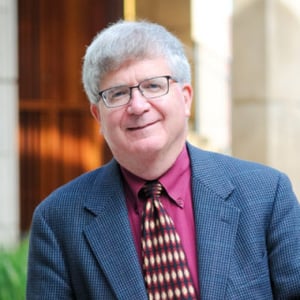
Richard and Frances Mallery Professor of Law and Faculty Director, Constitutional Law Center, Stanford Law School
Michael W. McConnell is the Richard and Frances Mallery Professor and Faculty Director of the Constitutional Law Center at Stanford Law School, and a Senior Fellow at the Hoover Institution. From 2002 to 2009, he served as a Circuit Judge on the United States Court of Appeals for the Tenth Circuit. He was nominated by President George W. Bush, a Republican, and confirmed by a Democratic Senate by unanimous consent. McConnell has previously held chaired professorships at the University of Chicago and the University of Utah, and visiting professorships at Harvard and NYU. He teaches courses on constitutional law, constitutional history, First Amendment, and interpretive theory. He has published widely in the fields of constitutional law and theory, especially church and state, equal protection, and separation of powers. His book, “The President Who Would Not Be King: Executive Power Under the Constitution,” was published by Princeton University Press in 2020, based on the Tanner Lectures in Human Values, which he delivered at Princeton in 2019. His latest book, co-authored with Nathan Chapman, “Agreeing to Disagree: How the Establishment Clause Protects Religious Diversity and Freedom of Conscience,” was published by Oxford University Press in mid-2023. McConnell has argued sixteen cases in the United States Supreme Court, most recently Carney v. Adams (2020). defending a provision of the Delaware Constitution requiring political balance on that state’s courts. More recently, he was co-counsel in Gonzalez v. Google. He earned his B.A. from Michigan State University and his J.D. from the University of Chicago, and has received honorary degrees from Notre Dame University and Michigan State. He served as law clerk to Supreme Court Justice William J. Brennan, Jr. and D.C. Circuit Chief Judge J. Skelly Wright. He has been Assistant General Counsel of the Office of Management & Budget, Assistant to the Solicitor General of the Department of Justice, and a member of the President’s Intelligence Oversight Board. He is Senior of Counsel to the law firm Wilson, Sonsini, Goodrich & Rosati, and is co-chair of Meta’s Oversight Review Board.
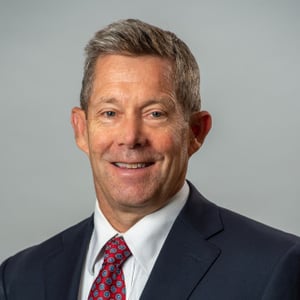
Chief Judge, United States Court of Appeals, Sixth Circuit
JEFFREY S. SUTTON is the Chief Judge of the United States Court of Appeals for the Sixth Circuit. He has served as Chair of the Federal Judicial Conference Committee on Rules of Practice and Procedure, Chair of the Advisory Committee on Appellate Rules, and Chair of the Supreme Court Fellows Commission. He currently serves as Chair of the Executive Committee of the Judicial Conference of the United States. Since 1993, Chief Judge Sutton has been an adjunct professor at The Ohio State University College of Law, where he teaches seminars on State Constitutional Law, the United States Supreme Court, and Appellate Advocacy. He also teaches a class on State Constitutional Law at Harvard Law School. Among other publications, he is the author of Who Decides? States as Laboratories of Constitutional Experimentation and 51 Imperfect Solutions: States and the Making of American Constitutional Law. He is the co-author of a casebook, State Constitutional Law: The Modern Experience, as well as The Law of Judicial Precedent. He is also the co-editor of The Essential Scalia: On the Constitution, the Courts, and the Rule of Law. In 2006, Chief Judge Sutton was elected to the American Law Institute, and in 2017 he was elected to its Council.

A Summary of, and Comments on: "Are We Seeing Global Warming?"
Jason E. Schaff
Environmental Law & Property Rights Practice Group Newsletter - Volume 1, Issue 3, Fall 1997
Dr. Klaus Hasselmann's recent article in Science1 provides a clear and accurate summary of the...
Why Government Is Bad For Ducks
John Povejsil
Environmental Law & Property Rights Practice Group Newsletter - Volume 1, Issue 3, Fall 1997
Environmental policy invariably seems to be created in a melodramatic world of good-guy government officials...
The RFRA Decision: A Blow for Judicial Supremacy and Against Religious Freedom
Michael W. McConnell
Federalism & Separation of Powers Practice Group Newsletter - Volume 1, Issue 3, Fall 1997
It does not often happen that a "conservative" Supreme Court manages, in a single decision,...
Municipal Liability Under Section 1983: The Importance of State Law
Daniel W. Nelson
Federalism & Separation of Powers Practice Group Newsletter - Volume 1, Issue 3, Fall 1997
During the October 1996 term, the Supreme Court handed down two cases involving municipal liability...
Printz v. United States
Kelly M. Klaus
Federalism & Separation of Powers Practice Group Newsletter - Volume 1, Issue 3, Fall 1997
It is something of an annual tradition at the Supreme Court that each Term's biggest...
City of Boerne v. Flores: A Victory for Federalism
Jeffrey S. Sutton
Federalism & Separation of Powers Practice Group Newsletter - Volume 1, Issue 3, Fall 1997
In deciding whether to invalidate the Religious Freedom Restoration Act (RFRA) in City of Boerne...
The Separation of Banking and Commerce: Is It Worth It?
Bradley K. Sabel
Financial Services & E-Commerce Newsletter - Volume 1, Issue 3, Fall 1997
One of the great outstanding issues in American finance, both generally and in particular during...
Book Review: Money Meltdown: Restoring Order to the Global Currency System by Judy Shelton
Aaron A. Goach
Financial Services & E-Commerce Newsletter - Volume 1, Issue 3, Fall 1997
Money Meltdown: Restoring Order to the Global Currency Systemby Judy SheltonFree Press/Macmillan 1994 (399 pages) If...
The "Millennium Bug": Financial Class Actions For the New Century
Edward C. Anderson
Financial Services & E-Commerce Newsletter - Volume 1, Issue 3, Fall 1997
Almost since the adoption of the current Rules of Civil Procedure in the 1960's, the...
WIPO Treaties to Raise International Copyright Norms, Provoke Legislative Debate in the United States
Jeffrey P. Cunard, Bruce P. Keller, Albert L. Wells
Intellectual Property Practice Group Newsletter - Volume 1, Issue 3, Fall 1997
The three-week World Intellectual Property Organization ("WIPO") diplomatic conference in Geneva ("WIPO Conference"), which concluded...