
Partner, Davis Polk & Wardwell LLP
Mr. Douglas is a partner in Davis Polk’s Financial Institutions Group, heading the firm’s bank regulatory practice and focusing on bank restructuring and resolutions and other issues arising from the current banking and financial crisis. He has been involved in some of the most difficult and sensitive matters during the crisis, including advising the boards of directors of Indymac and Bank United, counseling Citigroup with respect to FDIC matters, advising various parties on the fallout from the failure of Washington Mutual and advising various private equity firms on proposed investments in troubled or failed banks.
Mr. Douglas was appointed General Counsel of the Federal Deposit Insurance Corporation in 1987 and continued in that capacity through 1989. This was a period of unprecedented stress on the financial system, and he was involved in the major bank failures and restructurings of the late 1980s, participated in the landmark Financial Institutions Regulatory Reform and Restructuring Act of 1989 and assisted in the organization of the Resolution Trust Corporation.
Mr. Douglas is regarded as one of the leading bank insolvency lawyers in the nation.
Partner, Davis Polk & Wardwell LLP
Mr. Douglas is a partner in Davis Polk’s Financial Institutions Group, heading the firm’s bank regulatory practice and focusing on bank restructuring and resolutions and other issues arising from the current banking and financial crisis. He has been involved in some of the most difficult and sensitive matters during the crisis, including advising the boards of directors of Indymac and Bank United, counseling Citigroup with respect to FDIC matters, advising various parties on the fallout from the failure of Washington Mutual and advising various private equity firms on proposed investments in troubled or failed banks.
Mr. Douglas was appointed General Counsel of the Federal Deposit Insurance Corporation in 1987 and continued in that capacity through 1989. This was a period of unprecedented stress on the financial system, and he was involved in the major bank failures and restructurings of the late 1980s, participated in the landmark Financial Institutions Regulatory Reform and Restructuring Act of 1989 and assisted in the organization of the Resolution Trust Corporation.
Mr. Douglas is regarded as one of the leading bank insolvency lawyers in the nation.

Laurence A. Tisch Professor of Law and Director, Classical Liberal Institute, New York University School of Law; Director, Classical Liberal Institute, Civitas Institute University of Texas at Austin
Richard A. Epstein is the Laurence A. Tisch Professor of Law, at New York University, a senior research fellow at the Civitas Institute at the University of Texas Austin, and a senior Lecturer, the University of Chicago. He received an LL.D., h.c . from the University of Ghent, 2003 , and an LLD h.c . from the University of Siegen in 2018 and the Bradley Prize in 2011. He has been a member of the American Academy of Arts and Sciences since 1985. He has edited both the Journal of Legal Studies (1981-1991) and the Journal of Law and Economics (1991-2001). He is also a founder and director of the Classical Liberal Institute at NYU Law School. His most recent book is The Classical Liberal Constitution: The Uncertain Quest for Limited Government (2014). His other books include Takings: Private Property and the Power of Eminent Domain ( 1985); Bargaining with the State (1993); Simple Rules for a Complex World (1995); Principles for a Free Society: Reconciling Individual Liberty and the Common Good (1998); Skepticism and Freedom: A Modern Theory of Classical Liberalism (2003); Design for Liberty: Private Property, Public Administration and the Rule of Law (2011), and most recently, The Myth of Birthright citizenship—and Beyond (2026). He has taught courses in , administrative law, antitrust, constitutional, contracts, environmental law, land use planning; real property, torts and water law. He has written and spoken extensively on a wide range of topics, and is writes a regular column for Defining Ideas.
Senior Judge, United States District Court for the Southern District of New York
Loretta A. Preska is a senior judge for the United States District Court for the Southern District of New York. She joined the court in 1992 after being nominated by President George H.W. Bush. Preska became the chief judge of the court in May of 2009 when Kimba Wood assumed senior status. She served as chief judge of the court for a seven-year term from 2009 to 2016, and took senior status in 2017.
Preska graduated from the College of St. Rose with her Bachelor's degree in 1970 and also graduated from Fordham Law with her Juris Doctor Degree in 1973. She graduated from NYU Law with her Master of Laws degree in 1978.
Executive Vice President and Dean of the Law Center; Paul Regis Dean Leadership Chair; Professor of Law, Georgetown University Law Center
William M. Treanor is the Executive Vice President of Georgetown University, Dean of the Law Center, and Paul Regis Dean Leadership Chair. Treanor joined Georgetown in 2010 and was reappointed to serve a third term as Dean and Executive Vice President on July 1, 2020.
Under Treanor’s leadership, Georgetown Law has hired 75 new faculty members; tripled the number of experiential offerings for students in its clinical, externship, and practicum programs; transformed its law and technology offerings into a world class program with 19 full-time faculty experts and over 80 courses in this area; and experienced its most successful era of fundraising, culminating in nearly $67 million in giving in the last fiscal year.
Treanor has also advanced Georgetown Law’s commitment to affordability and access. During his tenure, Georgetown has more than doubled financial aid; raised nearly $25 million dollars for the Law Center’s scholarship program for exceptional students with significant financial need; and launched the RISE program, which provides academic support for students from historically underrepresented groups. The Law Center also created the Early Outreach Initiative, which brings the Law Center’s dean of admissions, current law students, and alumni together to encourage students in underserved high schools to consider pursuing careers as lawyers.
In keeping with Georgetown Law’s motto, “Law is but the means; justice is the end,” Treanor has focused on increasing opportunities for students to pursue careers in public interest law. He is proud that nearly 1 in 4 graduates move straight into public service jobs – a ratio higher than any other top law school in America. The Law Center supports post-graduate fellowships that have enabled more than 400 graduates to work in public interest jobs, and, in combination with the law firms ArentFox Schiff and DLA Piper, it has launched the D.C. Affordable Law Firm, a “low bono” law firm where recent Georgetown Law graduates provide legal representation to people of limited means.
The National Jurist magazine has named Treanor one of the most influential people in legal education five times. He is a member of the Morristown (N.J.) High School Hall of Fame. In 2020, he was elected into the American Academy of Arts & Sciences for law and education. Most recently, he was selected for the inaugural Honorable Robert A. Katzmann Award for Academic Excellence by the Burton Awards.
Treanor’s areas of academic expertise include constitutional law, property law, criminal law, intellectual property, and legal history. At Georgetown Law, he has taught a first-year legal justice seminar, an upper-level course on the drafting of the U.S. Constitution, and leadership courses. His writings have principally been in the area of constitutional history, and he has been recognized as one of the 10 most-cited legal history scholars in the United States by the University of Chicago Law School’s Brian Leiter. His early work largely focused on the history of constitutional protections of private property. His article “The Original Understanding of the Takings Clause and the Political Process,” 95 Colum. L. Rev. 782 (1995), was recognized by the Land Use Professors Blog as the most cited land use article of the past 30 years. Treanor’s article, “Judicial Review before Marbury” was cited in the Moore v. Harper (2023) majority opinion written by Chief Justice Roberts. His recent article, “The Case of the Dishonest Scrivener: Gouverneur Morris and the Creation of the Federalist Constitution,” examined the changes that Gouverneur Morris and the Committee of Style made in preparing the Constitution’s final draft. W.W. Norton will publish his upcoming book, Fathers of the Constitution: Triumph, Tragedy, and the Creation of the American Republic.
Before coming to Georgetown, Treanor was Dean and Paul Fuller Professor of Law at Fordham Law School. He also served in a variety of positions in the government, including Deputy Assistant Attorney General in the Office of Legal Counsel, U.S. Department of Justice; Associate Counsel, Office of Independent Counsel during the Iran/Contra investigation. He was law clerk to the Honorable James L. Oakes, U.S. Court of Appeals for the Second Circuit. Treanor has a Ph.D. in history from Harvard University, a J.D. from Yale Law School, and a B.A., summa cum laude, from Yale College.
Laurence A. Tisch Professor of Law and Director, Classical Liberal Institute, New York University School of Law; Director, Classical Liberal Institute, Civitas Institute University of Texas at Austin
Richard A. Epstein is the Laurence A. Tisch Professor of Law, at New York University, a senior research fellow at the Civitas Institute at the University of Texas Austin, and a senior Lecturer, the University of Chicago. He received an LL.D., h.c . from the University of Ghent, 2003 , and an LLD h.c . from the University of Siegen in 2018 and the Bradley Prize in 2011. He has been a member of the American Academy of Arts and Sciences since 1985. He has edited both the Journal of Legal Studies (1981-1991) and the Journal of Law and Economics (1991-2001). He is also a founder and director of the Classical Liberal Institute at NYU Law School. His most recent book is The Classical Liberal Constitution: The Uncertain Quest for Limited Government (2014). His other books include Takings: Private Property and the Power of Eminent Domain ( 1985); Bargaining with the State (1993); Simple Rules for a Complex World (1995); Principles for a Free Society: Reconciling Individual Liberty and the Common Good (1998); Skepticism and Freedom: A Modern Theory of Classical Liberalism (2003); Design for Liberty: Private Property, Public Administration and the Rule of Law (2011), and most recently, The Myth of Birthright citizenship—and Beyond (2026). He has taught courses in , administrative law, antitrust, constitutional, contracts, environmental law, land use planning; real property, torts and water law. He has written and spoken extensively on a wide range of topics, and is writes a regular column for Defining Ideas.
Senior Judge, United States District Court for the Southern District of New York
Loretta A. Preska is a senior judge for the United States District Court for the Southern District of New York. She joined the court in 1992 after being nominated by President George H.W. Bush. Preska became the chief judge of the court in May of 2009 when Kimba Wood assumed senior status. She served as chief judge of the court for a seven-year term from 2009 to 2016, and took senior status in 2017.
Preska graduated from the College of St. Rose with her Bachelor's degree in 1970 and also graduated from Fordham Law with her Juris Doctor Degree in 1973. She graduated from NYU Law with her Master of Laws degree in 1978.
Executive Vice President and Dean of the Law Center; Paul Regis Dean Leadership Chair; Professor of Law, Georgetown University Law Center
William M. Treanor is the Executive Vice President of Georgetown University, Dean of the Law Center, and Paul Regis Dean Leadership Chair. Treanor joined Georgetown in 2010 and was reappointed to serve a third term as Dean and Executive Vice President on July 1, 2020.
Under Treanor’s leadership, Georgetown Law has hired 75 new faculty members; tripled the number of experiential offerings for students in its clinical, externship, and practicum programs; transformed its law and technology offerings into a world class program with 19 full-time faculty experts and over 80 courses in this area; and experienced its most successful era of fundraising, culminating in nearly $67 million in giving in the last fiscal year.
Treanor has also advanced Georgetown Law’s commitment to affordability and access. During his tenure, Georgetown has more than doubled financial aid; raised nearly $25 million dollars for the Law Center’s scholarship program for exceptional students with significant financial need; and launched the RISE program, which provides academic support for students from historically underrepresented groups. The Law Center also created the Early Outreach Initiative, which brings the Law Center’s dean of admissions, current law students, and alumni together to encourage students in underserved high schools to consider pursuing careers as lawyers.
In keeping with Georgetown Law’s motto, “Law is but the means; justice is the end,” Treanor has focused on increasing opportunities for students to pursue careers in public interest law. He is proud that nearly 1 in 4 graduates move straight into public service jobs – a ratio higher than any other top law school in America. The Law Center supports post-graduate fellowships that have enabled more than 400 graduates to work in public interest jobs, and, in combination with the law firms ArentFox Schiff and DLA Piper, it has launched the D.C. Affordable Law Firm, a “low bono” law firm where recent Georgetown Law graduates provide legal representation to people of limited means.
The National Jurist magazine has named Treanor one of the most influential people in legal education five times. He is a member of the Morristown (N.J.) High School Hall of Fame. In 2020, he was elected into the American Academy of Arts & Sciences for law and education. Most recently, he was selected for the inaugural Honorable Robert A. Katzmann Award for Academic Excellence by the Burton Awards.
Treanor’s areas of academic expertise include constitutional law, property law, criminal law, intellectual property, and legal history. At Georgetown Law, he has taught a first-year legal justice seminar, an upper-level course on the drafting of the U.S. Constitution, and leadership courses. His writings have principally been in the area of constitutional history, and he has been recognized as one of the 10 most-cited legal history scholars in the United States by the University of Chicago Law School’s Brian Leiter. His early work largely focused on the history of constitutional protections of private property. His article “The Original Understanding of the Takings Clause and the Political Process,” 95 Colum. L. Rev. 782 (1995), was recognized by the Land Use Professors Blog as the most cited land use article of the past 30 years. Treanor’s article, “Judicial Review before Marbury” was cited in the Moore v. Harper (2023) majority opinion written by Chief Justice Roberts. His recent article, “The Case of the Dishonest Scrivener: Gouverneur Morris and the Creation of the Federalist Constitution,” examined the changes that Gouverneur Morris and the Committee of Style made in preparing the Constitution’s final draft. W.W. Norton will publish his upcoming book, Fathers of the Constitution: Triumph, Tragedy, and the Creation of the American Republic.
Before coming to Georgetown, Treanor was Dean and Paul Fuller Professor of Law at Fordham Law School. He also served in a variety of positions in the government, including Deputy Assistant Attorney General in the Office of Legal Counsel, U.S. Department of Justice; Associate Counsel, Office of Independent Counsel during the Iran/Contra investigation. He was law clerk to the Honorable James L. Oakes, U.S. Court of Appeals for the Second Circuit. Treanor has a Ph.D. in history from Harvard University, a J.D. from Yale Law School, and a B.A., summa cum laude, from Yale College.
Fox Family Pavilion Distinguished Scholar in Residence, University of Pennsylvania
MARCI A. HAMILTON is a Fox Family Pavilion Distinguished Scholar in Residence in the Program for Research on Religion and Urban Civil Society at the University of Pennsylvania. She is also the founder, CEO, and Academic Director of CHILD USA, www.childusa.org, a 501(c)(3) nonprofit academic think tank at the University of Pennsylvania dedicated to interdisciplinary, evidence-based research to prevent child abuse and neglect. Before joining the program on religion at Penn, Professor Hamilton was the Paul R. Verkuil Chair in Public Law at Benjamin N. Cardozo School of Law, Yeshiva University.
Hamilton is the leading public intellectual critic of extreme religious liberty and its impact on vulnerable populations including children, LGBTQ, and women. The author of God vs. the Gavel: The Perils of Extreme Religious Liberty (Cambridge University Press), which was nominated for a Pulitzer Prize, she is also a columnist for Verdict on Justia.com. Hamilton successfully challenged the constitutionality of the Religious Freedom Restoration Act (“RFRA”) at the Supreme Court in Boerne v. Flores (1997), and defeated the RFRA claim brought by the Archdiocese of Milwaukee against hundreds of child sex abuse survivors in Committee of Unsecured Creditors v. Listecki (7th Cir. 2015).
Drawing on her experience studying and advising in cases involving clergy sex abuse, Hamilton is the leading expert on child sex abuse statutes of limitations and has submitted testimony and advised legislators in every state where significant reform has occurred. She is the author of Justice Denied: What America Must Do to Protect Its Children (Cambridge University Press), which advocates for the elimination of child sex abuse statutes of limitations. She has also filed countless pro bono amicus briefs for the protection of children at the United States Supreme Court and the state supreme courts. Her textbook, Children and the Law, co-authored with Martin Gardner, will be published Fall 2017 by Carolina Academic Press, formerly Lexis/Nexis.
Hamilton clerked for United States Supreme Court Justice Sandra Day O’Connor and Judge Edward R. Becker of the United States Court of Appeals for the Third Circuit.
Hamilton has been honored with the 2016 Voice Today, Voice of Gratitude Award; the 2015 Religious Liberty Award, American Humanist Association; the 2014 Freethought Heroine Award; the National Crime Victim Bar Association’s Frank Carrington Champion of Civil Justice Award, 2012; the E. Nathaniel Gates Award for outstanding public advocacy and scholarship, 2008; and selected as a Pennsylvania Woman of the Year Award, 2012, among others. She is also frequently quoted in the national media on RFRA, RLUIPA, First Amendment, clergy sex abuse, and statute of limitations issues.
Professor Hamilton is a graduate of Vanderbilt University, B.A., summa cum laude; Pennsylvania State University, M.A. (English, fiction writing, High Honors); M.A. (Philosophy); and the University of Pennsylvania School of Law, J.D., magna cum laude, where she served as Editor-in-Chief of the University of Pennsylvania Law Review. She is a member of Phi Beta Kappa and Order of the Coif.
Chairman and President, The Becket Fund for Religious Liberty
Kevin J. "Seamus" Hasson is Founder and President of The Becket Fund for Religious Liberty, a bipartisan, public-interest law firm that protects the free expression of all religious traditions. Since 1994, Hasson and the Becket Fund have successfully represented clients from nearly every faith tradition including Christians, Jews, Muslims, Buddhists, Sikhs, Hindus, Native Americans, Unitarians and Zoroastrians. Along the way, The Becket Fund has won kudos from thinkers from Pope John Paul II to Elie Wiesel.
Hasson enjoys broad credibility in the national media. He has been widely quoted, appearing for example, in Newsweek, US News and World Report, The New York Times, The Washington Post, The Wall Street Journal, The Christian Science Monitor and USA Today, as well as in regional media from The L.A. Times to The Chicago Tribune to The Philadelphia Enquirer. He has appeared on broadcast news programs including The Today Show, Dateline NBC, McLaughlin One on One, NPR's Talk of the Nation, and CNN Talkback Live. He's also appeared twice on Al-Jazeera, debating Saudi clerics.
Hasson lectures and debates frequently, in venues ranging from Oxford to the Vatican, from Harvard to BYU. He is the author of The Right to be Wrong: Ending the Culture War over Religion in America.
Before founding the Becket Fund in 1994, Hasson was an attorney at Williams & Connolly in Washington D.C., where he focused on religious liberty litigation. From 1986 to 1987, he served in the Office of Legal Counsel at the Justice Department where he advised the White House and cabinet departments on church-state relations. He is a 1985 magna cum laude graduate of Notre Dame Law School and also holds a Master's degree in theology from Notre Dame.
Senior Judge, United States District Court for the Southern District of New York
Loretta A. Preska is a senior judge for the United States District Court for the Southern District of New York. She joined the court in 1992 after being nominated by President George H.W. Bush. Preska became the chief judge of the court in May of 2009 when Kimba Wood assumed senior status. She served as chief judge of the court for a seven-year term from 2009 to 2016, and took senior status in 2017.
Preska graduated from the College of St. Rose with her Bachelor's degree in 1970 and also graduated from Fordham Law with her Juris Doctor Degree in 1973. She graduated from NYU Law with her Master of Laws degree in 1978.
Fox Family Pavilion Distinguished Scholar in Residence, University of Pennsylvania
MARCI A. HAMILTON is a Fox Family Pavilion Distinguished Scholar in Residence in the Program for Research on Religion and Urban Civil Society at the University of Pennsylvania. She is also the founder, CEO, and Academic Director of CHILD USA, www.childusa.org, a 501(c)(3) nonprofit academic think tank at the University of Pennsylvania dedicated to interdisciplinary, evidence-based research to prevent child abuse and neglect. Before joining the program on religion at Penn, Professor Hamilton was the Paul R. Verkuil Chair in Public Law at Benjamin N. Cardozo School of Law, Yeshiva University.
Hamilton is the leading public intellectual critic of extreme religious liberty and its impact on vulnerable populations including children, LGBTQ, and women. The author of God vs. the Gavel: The Perils of Extreme Religious Liberty (Cambridge University Press), which was nominated for a Pulitzer Prize, she is also a columnist for Verdict on Justia.com. Hamilton successfully challenged the constitutionality of the Religious Freedom Restoration Act (“RFRA”) at the Supreme Court in Boerne v. Flores (1997), and defeated the RFRA claim brought by the Archdiocese of Milwaukee against hundreds of child sex abuse survivors in Committee of Unsecured Creditors v. Listecki (7th Cir. 2015).
Drawing on her experience studying and advising in cases involving clergy sex abuse, Hamilton is the leading expert on child sex abuse statutes of limitations and has submitted testimony and advised legislators in every state where significant reform has occurred. She is the author of Justice Denied: What America Must Do to Protect Its Children (Cambridge University Press), which advocates for the elimination of child sex abuse statutes of limitations. She has also filed countless pro bono amicus briefs for the protection of children at the United States Supreme Court and the state supreme courts. Her textbook, Children and the Law, co-authored with Martin Gardner, will be published Fall 2017 by Carolina Academic Press, formerly Lexis/Nexis.
Hamilton clerked for United States Supreme Court Justice Sandra Day O’Connor and Judge Edward R. Becker of the United States Court of Appeals for the Third Circuit.
Hamilton has been honored with the 2016 Voice Today, Voice of Gratitude Award; the 2015 Religious Liberty Award, American Humanist Association; the 2014 Freethought Heroine Award; the National Crime Victim Bar Association’s Frank Carrington Champion of Civil Justice Award, 2012; the E. Nathaniel Gates Award for outstanding public advocacy and scholarship, 2008; and selected as a Pennsylvania Woman of the Year Award, 2012, among others. She is also frequently quoted in the national media on RFRA, RLUIPA, First Amendment, clergy sex abuse, and statute of limitations issues.
Professor Hamilton is a graduate of Vanderbilt University, B.A., summa cum laude; Pennsylvania State University, M.A. (English, fiction writing, High Honors); M.A. (Philosophy); and the University of Pennsylvania School of Law, J.D., magna cum laude, where she served as Editor-in-Chief of the University of Pennsylvania Law Review. She is a member of Phi Beta Kappa and Order of the Coif.
Chairman and President, The Becket Fund for Religious Liberty
Kevin J. "Seamus" Hasson is Founder and President of The Becket Fund for Religious Liberty, a bipartisan, public-interest law firm that protects the free expression of all religious traditions. Since 1994, Hasson and the Becket Fund have successfully represented clients from nearly every faith tradition including Christians, Jews, Muslims, Buddhists, Sikhs, Hindus, Native Americans, Unitarians and Zoroastrians. Along the way, The Becket Fund has won kudos from thinkers from Pope John Paul II to Elie Wiesel.
Hasson enjoys broad credibility in the national media. He has been widely quoted, appearing for example, in Newsweek, US News and World Report, The New York Times, The Washington Post, The Wall Street Journal, The Christian Science Monitor and USA Today, as well as in regional media from The L.A. Times to The Chicago Tribune to The Philadelphia Enquirer. He has appeared on broadcast news programs including The Today Show, Dateline NBC, McLaughlin One on One, NPR's Talk of the Nation, and CNN Talkback Live. He's also appeared twice on Al-Jazeera, debating Saudi clerics.
Hasson lectures and debates frequently, in venues ranging from Oxford to the Vatican, from Harvard to BYU. He is the author of The Right to be Wrong: Ending the Culture War over Religion in America.
Before founding the Becket Fund in 1994, Hasson was an attorney at Williams & Connolly in Washington D.C., where he focused on religious liberty litigation. From 1986 to 1987, he served in the Office of Legal Counsel at the Justice Department where he advised the White House and cabinet departments on church-state relations. He is a 1985 magna cum laude graduate of Notre Dame Law School and also holds a Master's degree in theology from Notre Dame.
Senior Judge, United States District Court for the Southern District of New York
Loretta A. Preska is a senior judge for the United States District Court for the Southern District of New York. She joined the court in 1992 after being nominated by President George H.W. Bush. Preska became the chief judge of the court in May of 2009 when Kimba Wood assumed senior status. She served as chief judge of the court for a seven-year term from 2009 to 2016, and took senior status in 2017.
Preska graduated from the College of St. Rose with her Bachelor's degree in 1970 and also graduated from Fordham Law with her Juris Doctor Degree in 1973. She graduated from NYU Law with her Master of Laws degree in 1978.
Associate Professor of Law, Antonin Scalia Law School, George Mason University
Associate Professor of Law J.W. Verret joined the Antonin Scalia Law School, George Mason University faculty in 2008. In 2013, he took leave for two years to serve as the Chief Economist and Senior Counsel for the U.S. House Committee on Financial Services. He received his JD and MA in Public Policy from Harvard Law School and the Harvard Kennedy School of Government, respectively, in 2006. While in law school, Professor Verret served an Olin Fellowship in Law and Economics at the Harvard Program on Corporate Governance under the guidance of Prof. Lucian Bebchuk.
Professor Verret then served as a law clerk for Vice-Chancellor John W. Noble of the Delaware Court of Chancery. Prior to joining the faculty at Scalia Law, Professor Verret was an associate in the SEC Enforcement Defense Practice Group at Skadden, Arps in Washington, D.C. He has written extensively on corporate law topics, including Delaware's Guidance, co-written with Chief Justice Myron T. Steele of the Delaware Supreme Court. His academic work has been featured in the Yale Journal on Regulation, The Business Lawyer, the Delaware Journal of Corporate Law, the Stanford Law Review, the University of Pennsylvania Journal of Business Law, and the Virginia Law and Business Review. Professor Verret was selected by the Northwestern Law School Searle Center on Law, Regulation, and Economic Growth for a 2009-2010 Searle-Kaufmann Research Fellowship.
Professor Verret is also a Senior Scholar at the Mercatus Center Working Group on Financial Markets, where he regularly briefs Congressional staff, members of Congress, SEC Commissioners and other financial regulatory agencies on financial regulation topics. He also directs the Corporate Federalism Initiative, where he obtains research grants for a network of students and faculty scholars who study the division between states and the federal government as sources of corporate law. Professor Verret has been invited to testify before various House and Senate Committees four times during the financial crisis of 2009 regarding all of the central provisions of the Obama Administration's 2009 financial regulatory reform proposals. For a full list of Professor Verret's C-Span appearances, including testimony before the U.S. House of Representatives and the U.S. Senate, see http://www.c-spanvideo.org/jwverret.
Professor Verret has been an invited panelist for various television appearances, including an interview on The NewsHour with Jim Lehrer. Professor Verret has been quoted in various media on financial regulation and corporate law topics, including the New York Times, CNN Money, the CNN Political Ticker, CNBC, ABC News, Investor's Business Daily, ESPN.com, The American Banker, The American Lawyer, The Huffington Post, CBS.com, and AP News. Professor Verret's op-eds have been featured in Forbes, The Chicago Tribune, The Orange County Register, and The Wall Street Journal. Professor Verret is also a regular guest contributor to three of the most noted corporate law and financial regulation law blogs: the Harvard Law School Corporate Governance and Financial Regulation Forum, Deallawyers.com, and The Conglomerate.
Secretary, Galen Institute
John Hoff, founding board member of the Galen Institute, has a unique background that combines both health care policy and legal expertise. He served as the Health Attaché of the United States Mission to the United Nations Educational, Scientific and Cultural Organization (UNESCO) and the U.S. Mission to the Organization for Economic Cooperation and Development (OECD) from 2005-2009. While stationed in Paris, Mr. Hoff represented the U.S. Government on a broad range of issues of health and science policy on the international level, including intellectual property rights, health information technology, medical innovation, and comparative health systems data.
Prior to his work with UNESCO and the OECD, Mr. Hoff served as a Deputy Assistant Secretary for Planning and Evaluation at the U.S. Department of Health and Human Services. He was in charge of the Office of Disability, Aging, and Long Term Care Policy. He led the Office’s research on these issues, and also worked on additional policy initiatives such as reform of the medical malpractice litigation system, improvements in patient safety, and reform of the health care financing system.
Before joining the Government, Mr. Hoff practiced law for more than 30 years, specializing in health law and policy. He has published a number of articles and drafted legislation on health care issues, including the first bill introduced in Congress for market-based health care reform.
Mr. Hoff received his B.A. and LL.B. degrees from Harvard University. He is a member of the Bar of the District of Columbia and of the Supreme Court of the United States.
Scott K. Ginsburg Professor of Health Law & Policy, Georgetown University
David A. Hyman, M.D., J.D., is the Scott K. Ginsburg Professor of Health Law & Policy at Georgetown University. Professor Hyman focuses his research and writing on the regulation and financing of health care. He teaches or has taught health care regulation, civil procedure, insurance, medical malpractice, law & economics, professional responsibility, and tax policy.
While serving as Special Counsel to the Federal Trade Commission, Professor Hyman was principal author and project leader for the first joint report ever issued by the Federal Trade Commission and Department of Justice, “Improving Health Care: A Dose of Competition” (2004). He is also the author of Medicare Meets Mephistopheles, which was selected by the U.S. Chamber of Commerce/National Chamber Foundation as one of the top ten books of 2007, and the co-author (with Charles Silver) of Overcharged: Why Americans Pay Too Much for Health Care (2018). He has published widely in student-edited law reviews and peer-reviewed medical, health policy, law, and economics journals.
Robert L. Willett Family Professor of Law, Washington and Lee University School of Law
Timothy Stoltzfus Jost, J.D., holds the Robert L. Willett Family Professorship of Law at the Washington and Lee University School of Law. He is a coauthor of a casebook, Health Law, used widely throughout the United States in teaching health law and now in its sixth edition. He is also the author of Health Care at Risk, A Critique of the Consumer-Driven Movement, Health Care Coverage Determinations: An International Comparative Study, Readings in Comparative Health Law and Bioethics, and many articles and book chapters on health care regulation and comparative health law and policy. He has written numerous monographs on legal issues in health care reform for national organizations and blogs regularly for Health Affairs on regulatory issues. He is a consumer representative to the National Association of Insurance Commissioners and a member of the Institute of Medicine.
James R. Dougherty Chair for Faculty Excellence, University of Texas School of Law
Bill Sage, both a medical doctor and a lawyer, and a leading expert in health law and policy, joined the UT Law faculty at the beginning of the fall semester in 2006. Sage holds the James R. Dougherty Chair for Faculty Excellence and teaches courses in health law and in regulation and public policy. Sage is also the vice provost for health affairs at UT-Austin.
Sage has edited two books, including Medical Malpractice and the U.S. Health Care System (Cambridge University Press, 2006), and has written approximately 75 articles in legal, health policy, and medical publications. From 2002 through 2005, he was the principal investigator for the Project on Medical Liability in Pennsylvania funded by The Pew Charitable Trusts. In 2002, Sage served on the Institute of Medicine’s Committee on Rapid Advances in Health Care. In 1998, he received an Investigator Award in Health Policy Research from the Robert Wood Johnson Foundation. In 1993, he headed four working groups for the White House Task Force on Health Care Reform. He is an elected fellow of the Hastings Center on bioethics, and is a member of the editorial board of Health Affairs.
In 2002, Sage served on the Institute of Medicine’s Committee on Rapid Advances in Health Care. In 1998, he received an Investigator Award in Health Policy Research from the Robert Wood Johnson Foundation. In 1993, he headed four working groups for the White House Task Force on Health Care Reform. He is an elected fellow of the Hastings Center on bioethics, and is a member of the editorial board of Health Affairs.
Paula Stannard is a former deputy general counsel and acting general counsel of the U.S. Department of Health and Human Services (HHS), where she oversaw the Food and Drug, Civil Rights and Legislation divisions of the 450-attorney HHS Office of the General Counsel and provided legal advice and counsel to senior HHS officials, including the Secretary of the department, on the issues arising in their respective areas.
At Alston & Bird, Paula advises clients on regulatory questions that arise out of the on-going health care reform effort and focuses her practice on HIPAA and health information technology (including certified EHR and meaningful use issues), food and drug and other regulatory issues in the health care sector. Her HHS experience provides clients substantive knowledge of, and experience in, FDA, HIPAA, e-health and health IT, federal health insurance regulation, patient safety, and public health preparedness and emergency response issues.
Paula received her J.D. from Stanford Law School in 1990, where she was an executive editor of the Stanford Law Review, and her B.A., magna cum laude, in political science and Latin from Amherst College, where she was elected to Phi Beta Kappa. She clerked for the Honorable J.L. Edmondson of the United States Court of Appeals for the Eleventh Circuit.
Stanford University
(J.D., 1990)
Amherst College
(B.A., 1987)
Managing Director, Alvarez & Marsal Healthcare Industry Group
With prior service as Deputy General Counsel of the U.S. Department of Health and Human Services and as Executive Vice President and General Counsel of Tenet Healthcare, he brings more than 20 years of experience in addressing challenging healthcare issues in government and private industry.
Mr. Urbanowicz regularly advises boards of directors, senior management, investors and lenders of health care organizations facing significant regulatory, compliance, financial or operating challenges. His clients include healthcare providers, payors and suppliers.
Recent engagements include: serving as a federally-appointed hospital restructuring and safety monitor; compliance and operational improvements for publicly-traded and not-for-profit Medicare Advantage plans, Medicare Prescription Drug Plans (PDP) and Medicaid managed care companies; renegotiating of government debt for a major hospital system; restructuring advisory services to the Medicaid program of a large state; numerous internal and government investigations involving healthcare providers including: academic health systems, medical device companies, pharmaceutical manufacturers, long term care hospital companies, hospice providers, dental services companies and disease management companies.
Mr. Urbanowicz also serves on the board of directors of Maxim Healthcare Services, one of the nation’s largest home health services companies, and chairs the company’s compliance committee.
As Deputy General Counsel of HHS, from 2001 to 2003, Mr. Urbanowicz served as the senior legal adviser to the Secretary of Health and Human Services on significant federal healthcare policy issues including Medicare and Medicaid provider payment and fraud and abuse enforcement policy. He was part of the team that drafted the historic Medicare Prescription Drug Act of 2003.
During his tenure at Tenet, Mr. Urbanowicz was responsible for successfully resolving several major federal criminal investigations and civil lawsuits facing Tenet by the U.S. Department of Justice, the Securities and Exchange Commission, and the HHS Office of Inspector General. Prior to his government service, he was a partner in the law firm of Locke, Liddell & Sapp.
Mr. Urbanowicz earned a bachelor of arts’ degree and a Juris Doctor degree from Tulane University. He is admitted to the bars of the District of Columbia, the U.S. Supreme Court and the Louisiana Supreme Court, and is a member of the American Law Institute.
Professor of Law, Antonin Scalia Law School, George Mason University
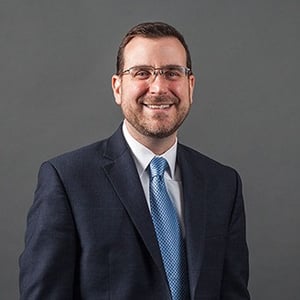
Adam Mossoff is Professor of Law at Antonin Scalia Law School, George Mason University. He has published extensively on why patents, copyrights, and other intellectual property rights have been—and should be—legally secured to innovators and creators as property rights. His scholarship has been relied on by the United States Supreme Court, by lower federal courts, and by U.S. federal agencies. He has been invited to testify numerous times before the U.S. Senate and the House of Representatives on intellectual property legislation. His writings on intellectual property policy have also appeared in the Wall Street Journal, New York Times, Forbes, Investors Business Daily, and in other media outlets. His journal articles can be downloaded here.
Professor Mossoff is a longstanding member of the Executive Committee of the Intellectual Property Practice Group of the Federalist Society, on which he served as Chairperson from 2016-2018, and he is Chair of the Intellectual Property Working Group of the Regulatory Transparency Project of the Federalist Society. He is a Senior Fellow and Chair of the Forum for Intellectual Property at the Hudson Institute, a Visiting Intellectual Property Fellow at the Heritage Foundation, and a member of the Board of Directors of the Center for Intellectual Property Understanding. He is a member of the Intellectual Property Rights Policy Committee of ANSI and he has served as Chair and Vice-Chair of the Intellectual Property Committee of the IEEE-USA, on which he remains a member in good standing.
Professor of Law, Seton Hall University School of Law
Professor Opderbeck's work focuses on the regulation of access to scientific and technological information. His published work has employed the tools of game theory, classical microeconomics, and statistical analysis to address issues such as intellectual property restrictions on essential medicines in developing countries, open source biotechnology, patent damages reform, and the interaction of law and social norms concerning music file sharing.
In addition to his traditional legal scholarship, Professor Opderbeck is interested in the philosophical and moral foundations of information policy and other aspects of the law. He has written on a virtue ethics approach to biotechnology law, and most recently has explored the philosophical aspects of information policy in a groundbreaking essay that seeks to apply a critical realist approach to the ontology of information. He is a principal organizer of a conference on "Religious Legal Theory: State of the Art" that will be held at the Law School in 2009.
Professor Opderbeck graduated cum laude from Seton Hall Law School in 1991 and earned an LL.M. in Trade Regulation from New York University Law School in 1998. He previously was a Partner in the Intellectual Property / Trade Regulation group at McCarter & English, LLP, where he represented clients in the life sciences, consumer products, telecommunications, computer software, and other industries. Representative litigated cases include Wedeco UV Technologies, Inc. v. Calgon Corp, 2006 WL 1867201 (D.N.J. 2006); Bamberger v. Rohm & Hass Corp., 1998 WL 684263, 40 Fed.R.Serv.3d 667 (D.N.J. 1998); McCall v. Metropolitan Life Ins. Co., 956 F. Supp. 1172 (D.N.J. 1996).
Professor of Law, Antonin Scalia Law School, George Mason University
Adam Mossoff is Professor of Law at Antonin Scalia Law School, George Mason University. He has published extensively on why patents, copyrights, and other intellectual property rights have been—and should be—legally secured to innovators and creators as property rights. His scholarship has been relied on by the United States Supreme Court, by lower federal courts, and by U.S. federal agencies. He has been invited to testify numerous times before the U.S. Senate and the House of Representatives on intellectual property legislation. His writings on intellectual property policy have also appeared in the Wall Street Journal, New York Times, Forbes, Investors Business Daily, and in other media outlets. His journal articles can be downloaded here.
Professor Mossoff is a longstanding member of the Executive Committee of the Intellectual Property Practice Group of the Federalist Society, on which he served as Chairperson from 2016-2018, and he is Chair of the Intellectual Property Working Group of the Regulatory Transparency Project of the Federalist Society. He is a Senior Fellow and Chair of the Forum for Intellectual Property at the Hudson Institute, a Visiting Intellectual Property Fellow at the Heritage Foundation, and a member of the Board of Directors of the Center for Intellectual Property Understanding. He is a member of the Intellectual Property Rights Policy Committee of ANSI and he has served as Chair and Vice-Chair of the Intellectual Property Committee of the IEEE-USA, on which he remains a member in good standing.
Professor of Law, Seton Hall University School of Law
Professor Opderbeck's work focuses on the regulation of access to scientific and technological information. His published work has employed the tools of game theory, classical microeconomics, and statistical analysis to address issues such as intellectual property restrictions on essential medicines in developing countries, open source biotechnology, patent damages reform, and the interaction of law and social norms concerning music file sharing.
In addition to his traditional legal scholarship, Professor Opderbeck is interested in the philosophical and moral foundations of information policy and other aspects of the law. He has written on a virtue ethics approach to biotechnology law, and most recently has explored the philosophical aspects of information policy in a groundbreaking essay that seeks to apply a critical realist approach to the ontology of information. He is a principal organizer of a conference on "Religious Legal Theory: State of the Art" that will be held at the Law School in 2009.
Professor Opderbeck graduated cum laude from Seton Hall Law School in 1991 and earned an LL.M. in Trade Regulation from New York University Law School in 1998. He previously was a Partner in the Intellectual Property / Trade Regulation group at McCarter & English, LLP, where he represented clients in the life sciences, consumer products, telecommunications, computer software, and other industries. Representative litigated cases include Wedeco UV Technologies, Inc. v. Calgon Corp, 2006 WL 1867201 (D.N.J. 2006); Bamberger v. Rohm & Hass Corp., 1998 WL 684263, 40 Fed.R.Serv.3d 667 (D.N.J. 1998); McCall v. Metropolitan Life Ins. Co., 956 F. Supp. 1172 (D.N.J. 1996).

Resolution Authority over Systemically Important Financial Companies
John L. Douglas
New Federal Initiatives Project
Brought to you by the Financial Services & E-Commerce Practice GroupOne of the key elements of...
Treasury’s Proposed Resolution Authority for Systemically Significant Financial Companies
John L. Douglas
The reorganization or liquidation of most types of companies is governed in the United States...
Does the Law of Regulatory Takings Impede Growth or Protect the Community?
Richard A. Epstein, Loretta Preska, William M. Treanor
Fordham Student Chapter
The Federalist Society's Fordham Student Chapter presented this panel discussion on September 22, 2009, at Fordham...
Does the Law of Regulatory Takings Impede Growth or Protect the Community?
Richard A. Epstein, Loretta Preska, William M. Treanor
Fordham Student Chapter
The Federalist Society's Fordham Student Chapter presented this panel discussion on September 22, 2009, at Fordham...
The Elimination of Conscience Clauses: An Assault on Religious Liberty?
Marci A. Hamilton, Kevin J. Hasson, Loretta Preska
Fordham Student Chapter
The Federalist Society's Fordham Student Chapter presented this panel discussion on September 21, 2009, at Fordham...
The Elimination of Conscience Clauses: An Assault on Religious Liberty?
Marci A. Hamilton, Kevin J. Hasson, Loretta Preska
Fordham Student Chapter
The Federalist Society's Fordham Student Chapter presented this panel discussion on September 21, 2009, at Fordham...
Executive Compensation
J.W. Verret
New Federal Initiatives Project
Brought to you by the Corporations, Securities, and Antitrust Practice Group The Corporate and Financial...
Health Care Reform
John S. Hoff, David Hyman, Timothy S. Jost, William M. Sage, Paula M. Stannard, Peter Urbanowicz
Online Debate
Last Updated at 11:00 AM, Friday, October 27, 2009 The current debate about health care reform...
Copyright v. Copyleft
Adam Mossoff, David W. Opderbeck
Seton Hall Student Chapter
The Federalist Society's Seton Hall Student Chapter presented this panel discussion on September 17, 2009, at Seton...
Copyright v. Copyleft
Adam Mossoff, David W. Opderbeck
Seton Hall Student Chapter
The Federalist Society's Seton Hall Student Chapter presented this panel discussion on September 17, 2009, at Seton...