

Professor of Law and Executive Director, Law and Economics Center, Antonin Scalia Law School, George Mason University
Donald Kochan is Professor of Law and Executive Director of the Law & Economics Center (LEC). Professor Kochan is an elected member of the American Law Institute (ALI) and serves as an Adviser to ALI's Restatement of the Law Fourth, Property project. Professor Kochan is a Nonresident Scholar at the Center for the Constitution at Georgetown University Law Center, where he was a Visiting Scholar in residence during Fall 2018. Before joining the Antonin Scalia Law School faculty, he was the Parker S. Kennedy Professor in Law at Chapman University’s Dale E. Fowler School of Law from 2004 to 2020. From 2003 to 2004, Professor Kochan was an Olin Fellow at the University of Virginia School of Law. During 2002-2003, he was a Visiting Assistant Professor of Law at George Mason’s Scalia Law School.
Professor Kochan’s scholarship focuses on areas of property law, constitutional law, administrative law, local government law, natural resources and environmental law, and law & economics. He has published several books and more than 50 scholarly articles and essays in well-regarded law journals. His work has been cited in more than a dozen state and federal court opinions, in more than 75 briefs filed in state and federal courts including more than 25 filed in the U.S. Supreme Court, in dozens of books and treatises, and in more than 800 scholarly articles.
Professor Kochan received his JD from Cornell Law School, where he was a John M. Olin Scholar in Law and Economics and managing editor of the Cornell International Law Journal. During law school, he also served as editor and executive editor of the Harvard Journal of Law & Public Policy symposium issues in 1997 and 1998. He received his BA from Western Michigan University, magna cum laude, with majors in both political science and philosophy, where he studied as the John W. Gill Medallion Scholar and was honored as the Presidential Scholar (awarded to the top graduate in the political science department).
After graduating from law school, Professor Kochan was a law clerk to The Honorable Richard F. Suhrheinrich of the United States Court of Appeals for the Sixth Circuit. Following his clerkship, Professor Kochan was an associate with the firm of Crowell & Moring LLP in Washington, D.C., where he specialized in natural resources & environmental law as well as tort, products, and consumer civil litigation & legislative affairs.
Professor of Law, Case Western Reserve University School of Law
Professor Dent taught law at New York University, Cardozo, and the New York Law School before joining the faculty in 1990. Earlier he had clerked for Judge Paul R. Hays of the U.S. Court of Appeals, Second Circuit, and practiced corporate law in New York with Debevoise, Plimpton, Lyons & Gates. He teaches Business Associations, Mergers and Acquisitions, and Business Planning and is the faculty supervisor for the Business Organizations Concentration. He has published many articles on corporate and securities law, including “Academics in Wonderland: The Team Production and Director Primacy Models of Corporate Governance,” Houston Law Review (2008); “Corporate Governance: Still Broke, No Fix in Sight,” Journal of Corporation Law (2005); “Lawyers and Trust in Business Alliances,” Business Lawyer (2002); and “Gap Fillers and Fiduciary Duties in Strategic Alliances,” The Business Lawyer (2001). He also writes on law and religion, as in “Civil Rights for Whom: Gay Rights Versus Religious Freedom,” University of Kentucky Law Journal (2006-07); and “How Does Same-Sex Marriage Threaten You?,” Rutgers Law Review (2007). Mr. Dent serves as a director of the National Association of Scholars and as president of the Ohio Association of Scholars. He serves as an officer of Cleveland Chapter of the Federalist Society. He heads the Law Section of the Association for the Study of Free Institutions. He is chairman of the Ohio State Advisory Committee to the U.S. Commission on Civil Rights.
Trustees Professor of Law, Capital University Law School
Professor Mark P. Strasser has been named Trustees Professor of Law at Capital University Law School. This appointment recognizes Professor Strasser's extraordinary and sustained commitment to legal scholarship. Nationally recognized for his scholarship in family law, Professor Strasser is the author of numerous books and articles in the areas of family law, bioethics, and constitutional law. His most recent books include On Same-Sex Marriages, Civil Unions, and the Rule of Law: Constitutional Interpretation at the Crossroads (Praeger Publishers/Greenwood Publishing Group, 2002), Marriage and Same-Sex Unions: A Debate (Praeger Publishers, 2003), co-edited with Lynn Wardle, David Coolidge and William Duncan and Questions and Answers: Family Law (LexisNexis, 2003). Professor Strasser frequently presents papers at conferences across the country and internationally. His recent lectures have taken place at New York University Law School; the International Lesbian and Gay Law Association Conference in Turin, Italy; the Medical College of Wisconsin; Queen's University in Kingston, Canada; the University of Texas at Austin; Brigham Young University Law School; and Albany Law School. He also spoke before the Vermont House Judiciary Committee on interstate implications of Vermont recognizing same-sex marriages or domestic partnerships.
Professor Strasser is a former professor of philosophy and taught at Illinois State University, University of Texas at Arlington, and Washington University in St. Louis. A member of Capital University Law School's faculty since 1993, Professor Strasser teaches Constitutional Law, Torts, Family Law, Jurisprudence, and a seminar on Sexual Diversity and the Law. Professor Strasser was the Visiting Tyler Haynes Chair Professor of Law at the University of Richmond School of Law in 2001 and a Visiting Professor of Law at the University of Maryland School of Law during the 1999-2000 academic year.
Director of the Program in Human Rights, Catholic University of America
William L. Saunders is Chair Emeritus of the Religious Liberties Practice Group of the Federalist Society. He is also a religious liberty and human rights scholar as well as director of the Center for Human rights at The Catholic University of America. He is Law Fellow with the Institute for Human Ecology, Professor and Director of the Program in Human Rights in the School of Arts & Sciences and Co-director of the Center for Religious Liberty at the Columbus School of Law. Before joining The Catholic University of America, Mr. Saunders served as Senior Vice President and Senior Counsel with Americans United for Life for ten years. From 1999 to 2009, he was Senior Fellow in Bioethics and Human Rights Counsel at the Family Research Council.
Mr. Saunders attended the University of North Carolina at Chapel Hill on a Morehead scholarship. He obtained his degree in law from the Harvard Law School.
Mr. Saunders was featured in Harvard’s first Guide to Conservative Public Interest Law in 2003 and again in the 2008 edition. He served on Harvard’s Advisory Committee for its 2008 celebration of public interest law. A member of the Supreme Court bar, he has authored numerous legal briefs in state, federal, foreign, and international courts.
Mr. Saunders’ book, Unborn Human Life and Fundamental Rights: Leading Constitutional Cases Under Scrutiny, was published in 2019. His articles and book chapters have been published by the university presses of Harvard, Villanova, Brigham Young, Fordham, Georgetown, Houston, Scranton, and the Catholic University of America, as well as by the Intercollegiate Studies Institute, Freedom House, Greenhaven Press, Rowan & Littlefield, Praeger, St. Augustine’s, and Intervarsity press. He has given lectures and participated in debates at many colleges, universities, and law schools, including Princeton, Harvard, Georgetown, and Notre Dame. He delivered the annual J. Michael Miller Lecture at the University of St. Thomas (on international law) in February 2007, the annual R. Wayne Kraft Memorial Lecture (on bioethics) at DeSales University in February 2004 and the annual James Moore Lecture (on human rights violations in Sudan) at Millikin University in 1999. He has also lectured, and/or has been published, in many foreign countries, including Italy, Germany, Poland, Austria, Spain, Greece, Slovakia, Mexico, Qatar, Malaysia, Romania, the Philippines, Hong Kong, and the United Kingdom.
In addition to speaking and writing frequently on bioethics topics, Mr. Saunders has submitted testimony to the President’s Council on Bioethics, as well as to UNESCO’s Committee on Bioethics, and has briefed Congressional staff and state legislatures. He is a regular columnist for the National Catholic Bioethics Quarterly.
Mr. Saunders has appeared often in the media, including BBC World News, CNN, Fox News, Vatican Radio, and National Public Radio. His articles on issues have appeared in a variety of journals, such as First Things, Human Events, Human Life Review, The Legal Times, Communio, The Family in America: A Journal of Public Policy, Ethics & Medics, and Touchstone.
Mr. Saunders served on the official United States delegation to the UN Special Session on Children in 2001/02. In 2011, he was a speaker at an official briefing at the UN, addressing the topic, why euthanasia is not a human right.
In 2004, he served on the NGO Working Committee in connection with the Doha Intergovernmental Conference for the Family.
Mr. Saunders is Senior Fellow with the Religious Freedom Institute, and Affiliated Scholar with the Pellegrino Center for Clinical Ethics at the Georgetown University School of Medicine. He is President of the Fellowship of Catholic Scholars and a member of the boards of the International Association of Catholic Bioethicists, the International Right to Life Federation, the Institute on Religion and Democracy, and the Society of Catholic Social Scientists.
In 1999, Mr. Saunders founded Sudan Relief and Rescue, Inc., to aid the persecuted church in Sudan. He has worked for and written on behalf of the persecuted church for many years.
Professor of Law, Antonin Scalia Law School, George Mason University
Adam Mossoff is Professor of Law at Antonin Scalia Law School, George Mason University. He has published extensively on why patents, copyrights, and other intellectual property rights have been—and should be—legally secured to innovators and creators as property rights. His scholarship has been relied on by the United States Supreme Court, by lower federal courts, and by U.S. federal agencies. He has been invited to testify numerous times before the U.S. Senate and the House of Representatives on intellectual property legislation. His writings on intellectual property policy have also appeared in the Wall Street Journal, New York Times, Forbes, Investors Business Daily, and in other media outlets. His journal articles can be downloaded here.
Professor Mossoff is a longstanding member of the Executive Committee of the Intellectual Property Practice Group of the Federalist Society, on which he served as Chairperson from 2016-2018, and he is Chair of the Intellectual Property Working Group of the Regulatory Transparency Project of the Federalist Society. He is a Senior Fellow and Chair of the Forum for Intellectual Property at the Hudson Institute, a Visiting Intellectual Property Fellow at the Heritage Foundation, and a member of the Board of Directors of the Center for Intellectual Property Understanding. He is a member of the Intellectual Property Rights Policy Committee of ANSI and he has served as Chair and Vice-Chair of the Intellectual Property Committee of the IEEE-USA, on which he remains a member in good standing.
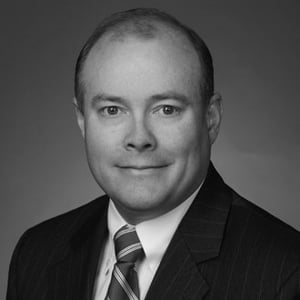
Partner, Kirkland and Ellis, LLP
John O'Quinn is a Partner in Kirkland's Washington, D.C. office. His practice focuses on litigation, including intellectual property disputes, commercial litigation, regulatory issues arising from or likely to lead to litigation, and other complex litigation matters at both the trial and appellate levels. He has extensive argument experience before both trial and appellate courts, and has argued in most of the U.S. Courts of Appeals, including the D.C. Circuit and the Federal Circuit. Mr. O'Quinn has been to trial multiple times, where he has examined expert and fact witnesses. Representative clients include Apple, Boeing, B. Braun Medical, Charter Communications, C.R. Bard, POET LLC, Siemens, and Teva Pharmaceuticals.
From 2006 to 2009, Mr. O'Quinn served in the United States Department of Justice. As Deputy Associate Attorney General, he was responsible for helping to oversee much of the government's civil litigation and reviewing proposed settlements of multi-million dollar civil cases brought by or against the government. As the Deputy Assistant Attorney General for the Federal Programs Branch of the Civil Division, Mr. O'Quinn supervised over 100 attorneys charged with defending the constitutionality of federal statutes and regulations, representing the diplomatic and national security interests of the United States in court, and conducting significant Title VII, personnel, social security, Medicare and Medicaid-related litigation. Mr. O'Quinn worked with counsel from virtually every federal agency on complex civil litigation matters and personally directed significant cases defending the government's interests, arguing more than 20 cases in federal court. In February of 2009, Mr. O'Quinn was awarded the Office of the Secretary of Defense Medal for Exceptional Public Service for his leadership in defending the Department of Defense in lawsuits challenging the detention and trial of enemy combatants captured abroad by United States Armed Forces.
Mr. O'Quinn was previously an associate with Kirkland from 2003 to 2006. While on leave from the Firm, he served as special counsel to the United States Senate Committee on the Judiciary for the nomination of Chief Justice Roberts. Prior to joining the Firm, Mr. O'Quinn was a law clerk for Justice Antonin Scalia of the U.S. Supreme Court and Judge David Sentelle of the U.S. Court of Appeals for the D.C. Circuit.
While at Kirkland, Mr. O'Quinn has also provided legal counseling and representation for individuals and organizations on a pro bono basis, including arguing a habeas petition on behalf of a defendant convicted of capital murder, and submitting FOIA requests on behalf of a civil rights organization.
Deputy District Attorney, Philadelphia District Attorney's Office
Ronald Eisenberg heads the Law Division of the Philadelphia District Attorney's Office. The 60 lawyers in the division handle appeals, habeas corpus and civil litigation, and legislative matters. Mr. Eisenberg has appeared at all levels of the state and federal court system, and has argued several cases in the United States Supreme Court.
Mr. Eisenberg is a member of the Pennsylvania Supreme Court Investigating Grand Jury Task Force and the Advisory Committee for the Pennsylvania Suggested Standard Criminal Jury Instructions. He has represented his office on the Pennsylvania Advisory Committee on Wrongful Convictions, was an adjunct professor at Temple University School of Law, teaching legal writing and research, and has served on the Pennsylvania Criminal Rules and Appellate Rules Committees. He is a past president and current board member of the Association of Government Attorneys in Capital Litigation, a national organization of capital prosecutors.
Mr. Eisenberg received his bachelor's degree from Haverford College in 1978 and his law degree from the University of Pennsylvania Law School in 1981.
J.D., University of Pennsylvania
B.A., Haverford College
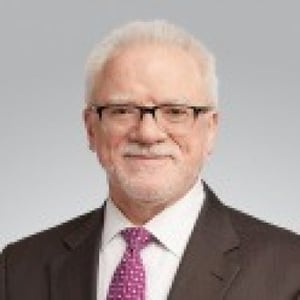
Partner, Williams & John LTD
David L. Applegate is a partner of Williams & John Ltd., where he chairs the firm's intellectual property practice group and is a member of the commercial litigation practice group. He focuses his practice on patent, trademark, copyright, trade secret, unfair competition, and business litigation and arbitration, and on U. S. Supreme Court and related amicus brief practice.
Mr. Applegate is a Fellow of Litigation Counsel of America, the Intellectual Property Institute, and the Diversity Law Institute; a Senior Master Member of the Richard Linn American Inn of Court; a Past President of the Chicago Lincoln American Inn of Court; and a Legal Policy Advisor to The Heartland Institute. He is "AV Preeminent" peer review rated by Martindale-Hubbell, reflecting the highest peer recognition for both ethical standards and legal ability, and has been named by his peers for inclusion in Illinois Leading Lawyers and IllinoisSuper Lawyers in both commercial and intellectual property litigation for decades.
Throughout his career, Mr. Applegate has represented corporations and individuals as both plaintiffs and defendants in state and federal litigation at the trial and appellate levels. He has tried multiple cases to verdict in both jury and bench trials nationwide and has argued appeals in the Illinois appellate courts and the U.S. Court of Appeals for the Seventh and Federal Circuits; his amicus brief was cited twice in the U. S. Supreme Court’s 5-4 majority opinion in the Janus case. Mr. Applegate also has extensive commercial arbitration and private mediation experience in both national and international dispute resolution forums, and is a former member of the Chicago International Dispute Resolution Association. In 2001, the U. S. District Court for the Northern District of Illinois and the Chicago Chapter of the Federal Bar Association recognized him for his outstanding individual commitment to pro bono service to indigent clients throughout the Northern District of Illinois.
In addition to his legal practice, Mr. Applegate has written and spoken frequently on matters of law and public policy, including on both local and national television and radio. He is an avid collector and amateur historian of original comic strip and editorial cartoon art, and has written extensively in that field as well for over three decades.
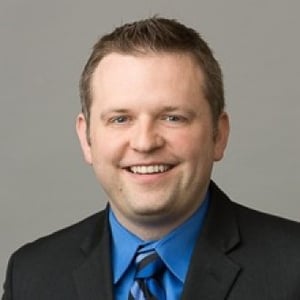
Partner, Marshall, Gerstein & Borun LLP
Ryan Schermerhorn is a registered patent attorney in the firm's Industrial & Mechanical Technologies Practice Group. His engineering background provides him with an understanding of clients’ technologies and enables him to effectively and efficiently provide a range of patent procurement services. He also leverages his experience to assist on intellectual property litigation as well as develop strategies for acquiring and protecting intellectual property.
Since 2017, Ryan has been listed as an "Emerging Lawyer" by Emerging Lawyers Magazine and has been selected for inclusion in the Illinois Rising Stars® lists. Ryan was recognized in Chicago Daily Law Bulletin's 2023 40 Under Forty list. Since 2024, Ryan has been selected for inclusion in The Best Lawyers in America© list in the practice areas of Litigation - Patent and Patent Law. In 2025, Ryan was selected by the Law Bulletin Publishing Company’s Leading Lawyer Network as a “Leading Lawyer.”
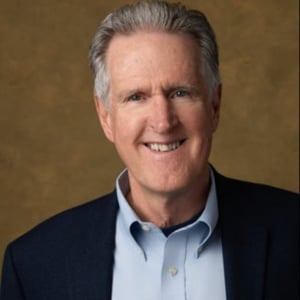
Senior Legal Counsel, Pacific Legal Foundation
Before becoming an attorney, James had been a productive member of society working as an exploration geologist in the late 1970s throughout the southwestern United States. However, after several years of dealing with irrational government bureaucrats and environmental policies untethered from reality, James decided that what the world needs is more lawyers — if they are willing to fight for rationality in regulatory regimes, property rights, and liberty.
James attended the University of Arizona College of Law in Tucson, where he served as an editor for the Law Review and received a J.D. degree in 1983. He had previously received a Masters degree in geological sciences from Brown University and an undergraduate degree from Hamilton College in New York. James received the Professional Achievement Award from the University of Arizona Alumni Association in 2018.
James has worked with Pacific Legal Foundation since 1983, litigating cases from Alaska to Florida. He is a member of the Federalist Society’s Environmental Law and Property Rights Practice Group’s Executive Committee, a member of the American College of Real Estate Lawyers, and an honorary member of Owners Counsel of America, an organization comprised of eminent domain attorneys who represent property owners. The Owners Counsel awarded James its Crystal Eagle award in 2013. In 2022, James was awarded the Brigham-Kanner Property Rights Prize at the William & Mary College of Law. The prize is awarded annually to an individual whose work has advanced the cause of property rights and has contributed to the overall awareness of the important role property rights occupy in the broader scheme of individual liberty.
In 2001, James successfully argued a major property rights case, Palazzolo v. Rhode Island, before the United States Supreme Court, a case which affirmed that rights in regulated property do not disappear when land is bought and sold. He has written extensively on all aspects of property rights and environmental law and frequently speaks on these subjects throughout the nation.
When James is not suing the government he enjoys skiing faster than he should, bicycling, hiking, swimming, and spending quality time with his wife, family, and grandchild.
Mr. Burling’s book Nowhere to Live: The Hidden Story of America’s Housing Crisis is available now on Amazon.
James is a member of the bar only in the states of Alaska and California.
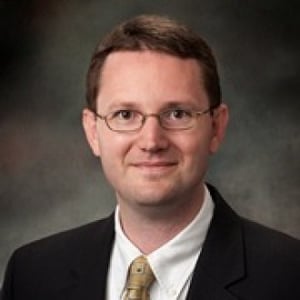
Assistant City Attorney, City of Arlington City Attorney's Office
Joshua Skinner is an assistant city attorney with the City of Arlington, Texas, with almost two decades of experience in civil rights, employment litigation, local government defense, and appellate advocacy.

PPL Montana, LLC v. Montana - Post-Argument SCOTUScast
Donald J. Kochan
SCOTUScast 12-20-11 featuring Donald Kochan
On December 7, 2011, the Supreme Court heard oral argument in PPL Montana, LLC v. Montana....
Perry v. Schwarzenegger: Is Traditional Marriage Unconstitutional?
George W. Dent
Engage Volume 12, Issue 3, November 2011
Note from the Editor: This article and the article in this issue by Mark Strasser...
Perry, Same-Sex Marriage, and Federal Constitutional Guarantees
Mark P. Strasser
Engage Volume 12, Issue 3, November 2011
Note from the Editor: This article and the article in this issue by George W....
Does Neutrality Equal Secularism? The European Court of Human Rights Decides Lautsi v. Italy
William L. Saunders
Engage Volume 12, Issue 3, November 2011
Introduction Religion can be an intensely personal activity. However, the idea that religion is only...
Mayo Collaborative Services v. Prometheus Laboratories, Inc. - Post-Argument SCOTUScast
Adam Mossoff
SCOTUScast 12-16-11 featuring Adam Mossoff
On December 7, 2011, the Supreme Court heard oral argument in Mayo Collaborative Services v. Prometheus...
Williams v. Illinois - Post-Argument SCOTUScast
John C. O'Quinn
SCOTUScast 12-15-11 featuring John O'Quinn
On December 6, 2011, the Supreme Court heard oral argument in Williams v. Illinois. The issue...
Martel v. Clair - Post-Argument SCOTUScast
Ronald Eisenberg
SCOTUScast 12-14-11 featuring Ronald Eisenberg
On December 6, 2011, the Supreme Court heard oral argument in Martel v. Clair. The...
Hot News: The "Hot-News" Doctrine Is Hot Again! Or Is It?
David L. Applegate, Ryan Schermerhorn
Engage Volume 12, Issue 3, November 2011
Copyright law, like contract law, is deceptively complex. Just as the familiar elements of offer,...
Rebuilding the Ark: New Perspectives on Endangered Species Act Reform, Edited by Jonathan H. Adler
James S. Burling
Engage Volume 12, Issue 3, November 2011
In 2005, Congressman Richard Pombo engineered the passage of the most sweeping reform of the...
Messerschmidt v. Millender - Post-Argument SCOTUScast
Joshua Skinner
SCOTUScast 12-13-11 featuring Joshua Skinner
On December 5, 2011, the Supreme Court heard oral argument in Messerschmidt v. Millender. This case...