

Professor of Law, Pepperdine University
Professor Babette Boliek is a Professor of Law at Pepperdine University. She recently served as Chief Economist of the Federal Communications Commission in Washington, D.C.
Professor Boliek earned her BA with distinction from California State University, Chico, her JD from Columbia University School of Law and her PhD in Economics from the University of California, Davis. While at Columbia, she was both a Harlan Fiske Stone Scholar and a John M. Olin Fellow for Law and Economics. Her doctoral, and much of her subsequent research, focuses on the theoretical and quantitative analysis of legal issues of the U.S. communications industry. Professor Boliek's scholarly research also focuses on issues in administrative, antitrust, and communications and sports law. Professor Boliek clerked for the Honorable Michael B. Mukasey of the U.S. District Court for the Southern District of New York and is admitted to practice in the State of New York.
Prior to joining the Pepperdine Law faculty in 2009, Professor Boliek served as a Senior Fellow at the Information Economy Project at George Mason University School of Law, where she integrated her background in law and applied economics to analyze media, Internet, and telecommunications issues. Professor Boliek's work at George Mason followed and echoed her experience as a Fellow for the Center for Communication Law and Policy, a joint research venture of the University of Southern California Gould School of Law and the Annenberg School of Communication. In addition to her scholarly research at Pepperdine, Professor Boliek is a Visiting Scholar for the American Enterprise Institute and blogs regularly for AEI.org on a variety of technology and telecommunications related issues.
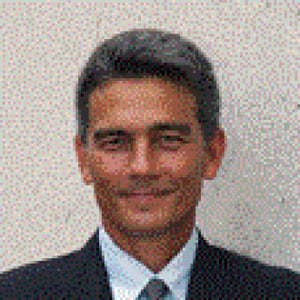
William Gardiner Hammond Professor of Law, Washington University Law
Professor Brian Z. Tamanaha is a renowned jurisprudence scholar and the author of eight books and numerous scholarly articles, including his groundbreaking book, Beyond the Formalist–Realist Divide: The Role of Politics in Judging. His articles have appeared in a variety of leading journals, and his publications have been translated into eight languages. Also an expert in law and society, he has delivered lectures in Brazil, Indonesia, Japan, France, the Netherlands, Colombia, Singapore, Australia, Canada, and the United Kingdom. He spent a year in residence as a Member of the Institute for Advanced Study in Princeton. Professor Tamanaha is the recipient of several book prizes and awards, including Professor of the Year, and a frequent speaker and lecturer at legal conferences throughout the United States and abroad. His professional affiliations include serving as a past member of the Board of Trustees of the Law and Society Association. Before becoming a law professor, he clerked for the Hon. Walter E. Hoffman, U.S. District Court for the Eastern District of Virginia. He also practiced law in Hawaii and Micronesia, where he served as legal counsel for the Micronesian Constitutional Convention, Assistant Attorney General for the Yap State, and Assistant Federal Public Defender for the District of Hawaii. He then earned a doctorate of juridical science at Harvard Law School.?
His latest book, Failing Law Schools, is available at http://www.amazon.com/Failing-Schools-Chicago-Series-Society/dp/0226923614. ?

Associate Professor of Law, Charleston School of Law
Kristin Balding Gutting joined the faculty of the Charleston School of Law in 2007. Upon graduating from the Levin College of Law, Gutting received the Richard B. Stephens Award, given to the most outstanding student in the LL.M. program, as determined by the University of Florida Levin College of Law tax faculty. Prior to her work in academia, Gutting served as an associate in the area of tax law at Sutherland Asbill and Brennen, and at Chamberlain, Hrdlicka, White, Williams and Martin, working in the tax controversy and state and local tax groups. She was an international tax senior consultant for Deloitte in McLean, Va., from 2001 to 2003. Before joining the Charleston School of Law, Gutting taught basic federal income tax law, tax research, partnership tax and a tax seminar at the Levin College of Law at the University of Florida?

Professor of Law, Stanford Law School
Orin S. Kerr is a Professor of Law at Stanford Law School, where he teaches and writes in the areas of criminal procedure and computer crime law. Kerr earned mechanical engineering degrees from Princeton University and Stanford University before graduating with a J.D. from Harvard Law School. He is a former law clerk to Justice Anthony M. Kennedy at the United States Supreme Court and Judge Leonard I. Garth of the U.S. Court of Appeals for the Third Circuit.
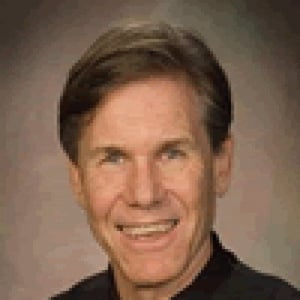
Chief Judge (ret.), U.S. Court of Appeals for the Federal Circuit, and Honorary Professor, Tsinghua University
Randall R. Rader was appointed to the United States Court of Appeals for the Federal Circuit by President George H. W. Bush in 1990 and served as Chief Judge from June 2010 to June 2014. He was appointed to the United States Claims Court (now the U. S. Court of Federal Claims) by President Ronald W. Reagan in 1988. Judge Rader's most prized title may well be "Professor Rader."
As Professor, Judge Rader has taught courses on patent law and other advanced intellectual property courses at The George Washington University Law School,University of Virginia School of Law, Georgetown University Law Center, the Munich Intellectual Property Law Center, and other university programs in Tokyo, Taipei, New Delhi, and Beijing. Due to the size and diversity of his classes, Judge Rader may have taught patent law to more students than anyone else. Judge Rader has also co-authored several texts including the most widely used textbook on U. S. patent law, "Cases and Materials on Patent Law," (St. Paul, Minn.: Thomson/West 3d ed. 2009) and "Patent Law in a Nutshell," (St. Paul, Minn.: Thomson/West 2007) (translated into Chinese and Japanese). Judge Rader has won acclaim for leading dozens of government and educational delegations to every continent (except Antarctica), teaching rule of law and intellectual property law principles.
Judge Rader has received many awards, including the Sedona Lifetime Achievement Award for Intellectual Property Law, 2009; Distinguished Teaching Awards from George Washington University Law School, 2003 and 2008 (by election of the students); the Jefferson Medal from the New Jersey Intellectual Property Law Association, 2003; the Distinguished Service Award from the Berkeley Center for Law and Technology, 2003; the J. William Fulbright Award for Distinguished Public Service from George Washington University Law School, 2000; and the Younger Federal Lawyer Award from the Federal Bar Association, 1983. Before appointment to the Court of Federal Claims, Judge Rader served as Minority and Majority Chief Counsel to Subcommittees of the U.S. Senate Committee on the Judiciary. From 1975 to 1980, he served as Counsel in the House of Representatives for representatives serving on the Interior, Appropriations, and Ways and Means Committees. He received a B.A. in English from Brigham Young University in 1974 and a J.D. from George Washington University Law School in 1978.

Professor of Law, South Texas College of Law Houston
Josh Blackman is a national thought leader on constitutional law and the United States Supreme Court. Josh’s work was quoted during two presidential impeachment trials. He has testified before Congress and advises federal and state lawmakers. Josh regularly appears on TV, including NBC, CBS, ABC, Fox, and the BBC. Josh is also a frequent guest on NPR and other syndicated radio programs. He has published commentaries in the New York Times, Wall Street Journal, Washington Post, and leading national publications.
Since 2012, Josh has served as a professor at the South Texas College of Law Houston. He holds the Centennial Chair of Constitutional Law. Josh is an Adjunct Fellow at the Manhattan Institute. Josh has written more than seven dozen law review articles that have been cited more than a thousand times. Josh was selected as the Jurist of the Year by the Texas Journal of Law & Public Policy, received the inaugural Meese III Originalism Award, and was awarded the Inaugural Joseph Story Award. Josh was selected by Forbes Magazine for the “30 Under 30” in Law and Policy. Josh is the President of the Harlan Institute, and founded FantasySCOTUS, the Internet’s Premier Supreme Court Fantasy League. He blogs at the Volokh Conspiracyand posts@JoshMBlackman.
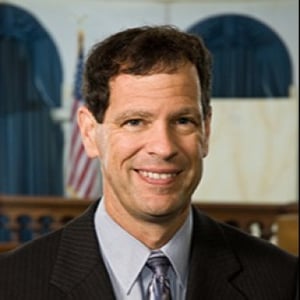
Warren Distinguished Professor of Law, University of San Diego School of Law
Michael D. Ramsey is Warren Distinguished Professor of Law at the University of San Diego School of Law, where he teaches and writes in the areas of Constitutional Law, Foreign Relations Law and International Law. He is the author of The Constitution’s Text in Foreign Affairs (Harvard University Press), co-editor of International Law in the U.S. Supreme Court: Continuity and Change (Cambridge University Press), and co-author of two casebooks, Transnational Law and Practice (2d ed., Aspen) and International Business Transactions: A Problem-Oriented Coursebook (14th ed., West). His scholarly articles have appeared in publications such as the Yale Law Journal, the University of Chicago Law Review, the Georgetown Law Journal and the American Journal of International Law. He received his B.A. magna cum laude from Dartmouth College and his J.D. summa cum laude from Stanford Law School. Prior to teaching, he served as a judicial clerk for Judge J. Clifford Wallace of the United States Court of Appeals for the Ninth Circuit and for Justice Antonin Scalia of the United States Supreme Court, and practiced law with the law firm of Latham & Watkins, where he specialized in international finance and investment. He has taught as a visiting professor at the University of California, San Diego, in the Department of Political Science and at the University of Paris – Sorbonne, in the Department of Comparative Law.

Former President & CEO, The Federalist Society for Law and Public Policy Studies
Eugene B. Meyer, former President and CEO of the Federalist Society, has served as Executive Director, CEO, and/or President of the organization for more than 40 years. He is responsible for shepherding the organization from a small group of law students to a community of 90,000 lawyers, law students, academics, judges, and others interested in the rule of law. The Society now includes a Student Chapter at nearly every ABA-accredited law school in the country and Lawyers Chapters in 220 major cities across the nation. Gene earned his B.A. in history at Yale in 1975 and his M.A. in political science from the London School of Economics in 1976. Gene currently serves on the boards of the U.S. Chess Center, the Holman Foundation, the Sarah Scaife Foundation, and the advisory board of the Adam Smith Society. He holds the title of International Chess Master.

Vice President, Edwin Meese III Institute for the Rule of Law, Advancing American Freedom
John G. Malcolm oversees Advancing American Freedom’s work to increase understanding of the Constitution and the rule of law as Vice President of the organization’s Edwin Meese III Institute for the Rule of Law. Malcolm brings to the challenge a wealth of legal expertise and experience in both the public and private sectors.
Prior to joining Advancing American Freedom in 2025, Malcolm was the Vice President of the Institute for Constitutional Government and the Director of the Meese Center for Legal and Judicial Studies at the Heritage Foundation. Prior to joining Heritage in 2012, Malcolm was general counsel at the U.S. Commission on International Religious Freedom, as well as a distinguished practitioner in residence at Pepperdine Law School. From 2004 to 2009, Malcolm was executive vice president and director of worldwide anti-piracy operations for the Motion Picture Association.
Malcolm served as a deputy assistant attorney general in the Department of Justice’s Criminal Division from 2001 to 2004, where he oversaw sections on computer crime and intellectual property, domestic security, child exploitation and obscenity, and special investigations. Immediately prior to that, he was a founding partner in the Atlanta law firm of Malcolm & Schroeder, LLP.
From 1990 to 1997, Malcolm was an assistant U.S. attorney in Atlanta, assigned to the fraud and public corruption section, and also an associate independent counsel, investigating fraud and abuse in the Department of Housing and Urban Development. He was honored with the Director’s Award for Superior Performance for his work in connection with the successful prosecution of Walter Leroy Moody Jr., who assassinated an 11th Circuit judge and the head of the Savannah chapter of the NAACP.
A graduate of Harvard Law School and Columbia College, Malcolm began his career as a law clerk to a federal district court judge and a federal appellate court judge, and as an associate at the Atlanta-based law firm of Sutherland, Asbill & Brennan (new Eversheds Sutherland).
Malcolm, who resides in Washington, D.C., serves on the Board of Trustees of the Washington National Opera and is a Senate-confirmed member of the Board of Directors of the Legal Services Corporation, the largest funder of civil legal aid in the United States.
At Harvard Law School, where he won the Oberman Prize for the best graduating thesis, Professor Blecker was one of only two students to publicly defend the death penalty.
Professor Blecker still espouses his carefully considered, yet almost universally unpalatable position in the academic community. Based on 13 years of interviewing convicted killers, and hundreds of hours inside maximum security prisons and on death rows, he makes a case for the death penalty as retribution, but only for the “worst of the worst” offenders.
The sole keynote speaker supporting the death penalty at major conferences and at the Association of the Bar of the City of New York, he was also the lone American advocate at an international conference in Geneva on the death penalty sponsored by Duke University Law School.
Professor Blecker frequently appears in The New York Times, on PBS, CourtTV, CNN, BBC World News, and other major media outlets.

American Broadcasting Companies, Inc. v. Aereo, Inc. - Post-Argument SCOTUScast
Babette E. Boliek
SCOTUScast 5-8-14 featuring Babette Boliek
On April 22, 2014, the Supreme Court heard oral argument in American Broadcasting Companies, Inc....
Failing Law Schools? - Podcast
Brian Z. Tamanaha, James A. Haynes
Professional Responsibility & Legal Education Practice Group Podcast
Washington University in Saint Louis School of Law Professor Brian Z. Tamanaha argues law schools...
United States v. Clarke - Post-Argument SCOTUScast
Kristin Gutting
SCOTUScast 5-8-14 featuring Kristin Gutting
On April 23, 2014, the Supreme Court heard oral argument in United States v. Clarke....
Cellphone Searches and the Fourth Amendment – Riley v. California and United States v. Wurie - Podcast
Orin S. Kerr
Criminal Law & Procedure Practice Group Podcast
On Tuesday, April 29, 2014 the Supreme Court held back-to-back hearings on cases testing the...
Who Rules Patents? A Discussion with Chief Judge Randall R. Rader - Podcast
Randall R. Rader
Intellectual Property Practice Group Podcast
Having completed work on the America Invents Act in 2011, Congress is now considering further...
Lane v. Franks - Post-Argument SCOTUScast
Josh Blackman
SCOTUScast 5-2-14 featuring Josh Blackman
On April 28, 2014, the Supreme Court heard oral argument in Lane v. Franks. The...
Republic of Argentina v. NML Capital - Post-Argument SCOTUScast
Michael D. Ramsey
SCOTUScast 5-2-14 featuring Michael Ramsey
On April 21, 2014, the Supreme Court heard oral argument in Republic of Argentina v....
2013 Annual Report
Eugene B. Meyer
The year 2013 was a good one for the Federalist Society as an insitution, in...
Susan B. Anthony List v. Driehaus - Post-Argument SCOTUScast
John G. Malcolm
SCOTUScast 4-29-14 featuring John Malcolm
On April 22, 2014, the Supreme Court heard oral argument in Susan B. Anthony List...
White v. Woodall - Post-Decision SCOTUScast
Robert Blecker
SCOTUScast 4-29-14 featuring Robert Blecker
On April 23, 2014, the Supreme Court issued its decision in White v. Woodall. The...