

Associate Professor, Boston College Law School
David Olson is an associate professor and the Faculty Director of the Program on Innovation and Entrepreneurship. He teaches patent law, intellectual property law, antitrust law, and various seminars. His research and writing primarily focus on patents, copyrights, antitrust, and incentives for innovation and competition. Since joining BC Law in 2007, he has been recognized for his teaching excellence and contributions. In 2011, he received the Business & Law Society Faculty Award for Achievement in Business & Law. In 2012, he received the Professor Emil Slizewski Award for Faculty Excellence. For one semester in 2015, Olson served as a visiting professor at Pontifical Catholic University, Rio de Janeiro, Brazil, where he conducted research and taught a course on intellectual property.
Olson has published scholarly articles on patent law, copyright law, antitrust, music licensing, and first amendment copyright issues. His writing has been cited in Supreme Court and other legal opinions. He has testified before the U.S. Congress on matters of drug patents, FDA regulation, and antitrust.
The media frequently seeks Olson’s insights and opinions. He has been quoted in the Wall Street Journal, Associated Press, and Reuters, among others. He has appeared as a guest panelist on WBUR’s Radio Boston, WAMU's Kojo Namdi Show, and Public Radio Canada. His op-eds have appeared in the Chicago Tribune, Washington Times, and The Hill.
Olson came to Boston College from Stanford Law School's Center for Internet and Society, where he conducted research on patent law and litigated copyright fair use impact cases. Before entering academia, Olson practiced law as a patent litigator. He clerked for Judge Jerry Smith of the U.S. Court of Appeals for the Fifth Circuit.
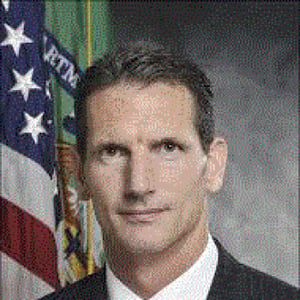
Co-founder, The Financial Integrity Network
Chip Poncy is a co-founder of the Financial Integrity Network (FIN), a strategic and technical advisory company focused on assisting key financial and jurisdictional stakeholders in combating and protecting against the full spectrum of illicit finance. Launched in 2014, FIN advises jurisdictional authorities, financial institutions, and vulnerable sectors, industries, and organizations in developing and implementing counter-illicit finance policies, requirements and best practices.
Prior to launching FIN, Mr. Poncy assisted one of the world’s largest banks in developing and implementing its enterprise-wide financial crimes compliance program in Latin America, including by serving in Mexico City as the bank’s interim Head of Financial Crimes Compliance for Mexico and the Latin American region.
From 2002-2013, Mr. Poncy served as the inaugural Director of the Office of Strategic Policy for Terrorist Financing and Financial Crimes (OSP) and a Senior Advisor at the U.S. Department of the Treasury. As the Director of OSP from 2005-2013, Mr. Poncy led an office of strategic policy advisors in creating policies and initiatives to combat the full spectrum of illicit finance, including money laundering, terrorist financing, WMD proliferation financing, and kleptocracy flows. As a Senior Advisor from 2002- 2005, Mr. Poncy assisted Treasury leadership in developing the U.S. Government’s post-9/11 strategy to combat terrorist financing. He also assisted senior leadership in creating and developing the Office of Terrorism and Financial Intelligence in the post-9/11 Government reorganization.
Mr. Poncy led the U.S. delegation to the Financial Action Task Force (FATF) from 2010-2013, co-chaired the policy working group of the FATF from 2007-2013, and managed U.S. participation on various G7, G8 and G20 illicit finance experts groups from 2008-2013. Key accomplishments in these roles included assisting in the revision and adoption of the FATF’s global standards and assessment processes for evaluating jurisdictions under the FATF global network, and facilitating the integration of counter-illicit finance into the broader global financial reform agenda since 2008.
Mr. Poncy began his career as an associate in the New York offices of the law firm White & Case and has served as general counsel to biotechnology and internet radio companies. He has co-pioneered a graduate course on national security and the international financial system as an adjunct associate professor at Georgetown University’s Edmund A. Walsh School of Foreign Service. Mr. Poncy graduated with honors from Harvard University (Bachelor of Arts in Government) and The Johns Hopkins School of Advanced International Studies (Masters of Arts in International Relations) and holds a Juris Doctor from the Georgetown University Law Center.
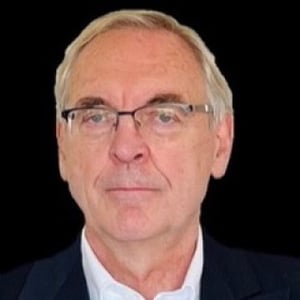
Fellow, National Security Institute, Antonin Scalia Law School, George Mason University
Vince Vitkowsky chaired the Executive Committee of the Federalist Society’s International and National Security Law and Policy Practice Group for over a decade. He is also a Fellow at the National Security Institute of George Mason University Law School. Vince spent 45 years in private practice, primarily in AmLaw 100/200 firms and their spin-offs. His practice included domestic and international commercial arbitration and litigation, as well as cyber risks and liabilities. Vince's current focus is on national security policy, artificial intelligence, cybersecurity, and counterterrorism. He has often written and spoken on national security and other public policy issues. Among other affiliations, Vince has been an Adjunct Fellow at the Center for Law and Counterterrorism of the Foundation for the Defense of Democracies, a member of the Executive Committee of the American Branch of the International Law Association, and Co-Chair of the Committee on Interventions and Trial Observations of the International Bar Association’s Human Rights Institute. He received his B.A. from Northwestern University and his J.D. from Cornell Law School.

Nonresident Senior Fellow, American Enterprise Institute
Jim Harper is a nonresident senior fellow at the American Enterprise Institute (AEI), where he focuses on privacy issues, and select legal and constitutional law issues.
A lawyer by training, Mr. Harper has served as counsel for the Subcommittee on Commercial, and Administrative Law of the US House Committee on the Judiciary and as counsel for the Senate Committee on Government Affairs. More recently, he worked at the Competitive Enterprise Institute and the Cato Institute, where he wrote on the intersection of business, technology, and public policy, including privacy, surveillance, data security, telecommunications, and cryptocurrencies. He also served as global policy counsel for the Bitcoin Foundation. Mr. Harper was a founding member of the Department of Homeland Security’s Data Privacy and Integrity Advisory Committee. Early in his post-Hill career, he represented companies such as PayPal and Verisign before Congress.
Mr. Harper is the co-editor of “Terrorizing Ourselves: Why U.S. Counterterrorism Policy Is Failing and How to Fix It” (Cato Institute, 2010) and the author of “Identity Crisis: How Identification Is Overused and Misunderstood” (Cato Institute, 2006). He has written several amicus briefs in Fourth Amendment cases before the U.S. Supreme Court and has published scholarly articles in a variety of law journals. In the popular press, Mr. Harper has been published in The New York Times and The Wall Street Journal, among many other publications.
Mr. Harper has a law degree from the U.C. Hastings College of the Law, where he was editor-in-chief of the Hastings Constitutional Law Quarterly, and a BA from the University of California, Santa Barbara.

Prof. Sheley joined the College of Law in 2018. Before coming to OU she was an Assistant Professor at the University of Calgary Faculty of Law. She has also served as a Visiting Associate Professor at the George Washington University Law School and an Olin-Searle Fellow at Georgetown University Law Center. Prior to academia she practiced for several years in the litigation group of the Washington, D.C. offices of Gibson, Dunn & Crutcher LLP. While in practice she was commended by the Humane Society of the United States for her pro bono work in the prosecution of dog fighting sponsors. She is proud to have served on the Board of Directors of the Alberta Animal Rescue Crew Society.

Of Counsel, Christian Legal Society's Center for Law & Religious Freedom
Kim Colby has worked for Christian Legal Society’s Center for Law and Religious Freedom since graduating from Harvard Law School in 1981. She has represented religious groups in several appellate cases, including two cases heard by the United States Supreme Court. She has filed numerous amicus briefs in federal and state courts. In 1984, she assisted in congressional passage of the Equal Access Act, 20 U.S.C. § 4071, et seq., which protects the right of secondary school students to meet for prayer and Bible study on campus. Ms. Colby has prepared several CLS publications addressing issues about religious expression in public schools, including released time programs, implementation of the Equal Access Act, and teachers’ religious expression.
Ms. Colby graduated summa cum laude from the University of Illinois with a major in American History and a particular interest in slavery in colonial North America.
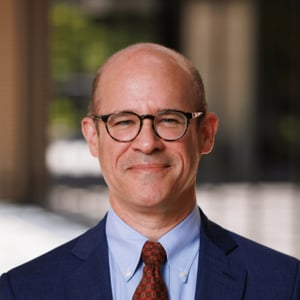
Professor of Law, Stanford Law School
Orin S. Kerr is a Professor of Law at Stanford Law School, where he teaches and writes in the areas of criminal procedure and computer crime law. Kerr earned mechanical engineering degrees from Princeton University and Stanford University before graduating with a J.D. from Harvard Law School. He is a former law clerk to Justice Anthony M. Kennedy at the United States Supreme Court and Judge Leonard I. Garth of the U.S. Court of Appeals for the Third Circuit.
Of Counsel, Christian Legal Society's Center for Law & Religious Freedom
Kim Colby has worked for Christian Legal Society’s Center for Law and Religious Freedom since graduating from Harvard Law School in 1981. She has represented religious groups in several appellate cases, including two cases heard by the United States Supreme Court. She has filed numerous amicus briefs in federal and state courts. In 1984, she assisted in congressional passage of the Equal Access Act, 20 U.S.C. § 4071, et seq., which protects the right of secondary school students to meet for prayer and Bible study on campus. Ms. Colby has prepared several CLS publications addressing issues about religious expression in public schools, including released time programs, implementation of the Equal Access Act, and teachers’ religious expression.
Ms. Colby graduated summa cum laude from the University of Illinois with a major in American History and a particular interest in slavery in colonial North America.

Professor of Law, Pepperdine University
Professor Babette Boliek is a Professor of Law at Pepperdine University. She recently served as Chief Economist of the Federal Communications Commission in Washington, D.C.
Professor Boliek earned her BA with distinction from California State University, Chico, her JD from Columbia University School of Law and her PhD in Economics from the University of California, Davis. While at Columbia, she was both a Harlan Fiske Stone Scholar and a John M. Olin Fellow for Law and Economics. Her doctoral, and much of her subsequent research, focuses on the theoretical and quantitative analysis of legal issues of the U.S. communications industry. Professor Boliek's scholarly research also focuses on issues in administrative, antitrust, and communications and sports law. Professor Boliek clerked for the Honorable Michael B. Mukasey of the U.S. District Court for the Southern District of New York and is admitted to practice in the State of New York.
Prior to joining the Pepperdine Law faculty in 2009, Professor Boliek served as a Senior Fellow at the Information Economy Project at George Mason University School of Law, where she integrated her background in law and applied economics to analyze media, Internet, and telecommunications issues. Professor Boliek's work at George Mason followed and echoed her experience as a Fellow for the Center for Communication Law and Policy, a joint research venture of the University of Southern California Gould School of Law and the Annenberg School of Communication. In addition to her scholarly research at Pepperdine, Professor Boliek is a Visiting Scholar for the American Enterprise Institute and blogs regularly for AEI.org on a variety of technology and telecommunications related issues.

William Gardiner Hammond Professor of Law, Washington University Law
Professor Brian Z. Tamanaha is a renowned jurisprudence scholar and the author of eight books and numerous scholarly articles, including his groundbreaking book, Beyond the Formalist–Realist Divide: The Role of Politics in Judging. His articles have appeared in a variety of leading journals, and his publications have been translated into eight languages. Also an expert in law and society, he has delivered lectures in Brazil, Indonesia, Japan, France, the Netherlands, Colombia, Singapore, Australia, Canada, and the United Kingdom. He spent a year in residence as a Member of the Institute for Advanced Study in Princeton. Professor Tamanaha is the recipient of several book prizes and awards, including Professor of the Year, and a frequent speaker and lecturer at legal conferences throughout the United States and abroad. His professional affiliations include serving as a past member of the Board of Trustees of the Law and Society Association. Before becoming a law professor, he clerked for the Hon. Walter E. Hoffman, U.S. District Court for the Eastern District of Virginia. He also practiced law in Hawaii and Micronesia, where he served as legal counsel for the Micronesian Constitutional Convention, Assistant Attorney General for the Yap State, and Assistant Federal Public Defender for the District of Hawaii. He then earned a doctorate of juridical science at Harvard Law School.?
His latest book, Failing Law Schools, is available at http://www.amazon.com/Failing-Schools-Chicago-Series-Society/dp/0226923614. ?

Associate Professor of Law, Charleston School of Law
Kristin Balding Gutting joined the faculty of the Charleston School of Law in 2007. Upon graduating from the Levin College of Law, Gutting received the Richard B. Stephens Award, given to the most outstanding student in the LL.M. program, as determined by the University of Florida Levin College of Law tax faculty. Prior to her work in academia, Gutting served as an associate in the area of tax law at Sutherland Asbill and Brennen, and at Chamberlain, Hrdlicka, White, Williams and Martin, working in the tax controversy and state and local tax groups. She was an international tax senior consultant for Deloitte in McLean, Va., from 2001 to 2003. Before joining the Charleston School of Law, Gutting taught basic federal income tax law, tax research, partnership tax and a tax seminar at the Levin College of Law at the University of Florida?
Professor of Law, Stanford Law School
Orin S. Kerr is a Professor of Law at Stanford Law School, where he teaches and writes in the areas of criminal procedure and computer crime law. Kerr earned mechanical engineering degrees from Princeton University and Stanford University before graduating with a J.D. from Harvard Law School. He is a former law clerk to Justice Anthony M. Kennedy at the United States Supreme Court and Judge Leonard I. Garth of the U.S. Court of Appeals for the Third Circuit.

Lexmark International, Inc. v. Static Control Components, Inc. - Post-Decision SCOTUScast
David S. Olson
SCOTUScast 5-12-14 featuring David Olson
On March 25, 2014, the Supreme Court issued its decision in Lexmark International, Inc. v....
Bitcoin: Commerce, Government and Security - Podcast
Chip Poncy, Vincent Vitkowsky, Jim Harper
International & National Security Law Practice Group Podcast
Bitcoin is the most prominent cryptographic digital currency emerging as a privately-created medium of exchange....
Navarette v. California - Post-Decision SCOTUScast
Erin Sheley
SCOTUScast 5-9-14 featuring Erin Sheley
On April 22, 2014 the Supreme Court issued its decision in Navarette v. California. The...
Town of Greece v. Galloway - Post-Decision SCOTUScast
Kim Colby
SCOTUScast 5-8-14 featuring Kim Colby
On May 5, 2014, the Supreme Court issued its decision in Town of Greece v....
Riley v. California and United States v. Wurie - Post-Argument SCOTUScast
Orin S. Kerr
SCOTUScast 5-8-14 featuring Orin Kerr
On April 29, 2014, the Supreme Court heard oral argument in two cellphone privacy cases,...
Prayer in the Public Square: Town of Greece v. Galloway Decided - Podcast
Kim Colby
Religious Liberties Practice Group Podcast
On May 5, 2014, the Supreme Court issued its decision in Town of Greece v....
American Broadcasting Companies, Inc. v. Aereo, Inc. - Post-Argument SCOTUScast
Babette E. Boliek
SCOTUScast 5-8-14 featuring Babette Boliek
On April 22, 2014, the Supreme Court heard oral argument in American Broadcasting Companies, Inc....
Failing Law Schools? - Podcast
Brian Z. Tamanaha, James A. Haynes
Professional Responsibility & Legal Education Practice Group Podcast
Washington University in Saint Louis School of Law Professor Brian Z. Tamanaha argues law schools...
United States v. Clarke - Post-Argument SCOTUScast
Kristin Gutting
SCOTUScast 5-8-14 featuring Kristin Gutting
On April 23, 2014, the Supreme Court heard oral argument in United States v. Clarke....
Cellphone Searches and the Fourth Amendment – Riley v. California and United States v. Wurie - Podcast
Orin S. Kerr
Criminal Law & Procedure Practice Group Podcast
On Tuesday, April 29, 2014 the Supreme Court held back-to-back hearings on cases testing the...