
Troutman Sanders LLP
Attorney, Troutman Sanders LLP
Troutman Sanders LLP
Attorney, Troutman Sanders LLP
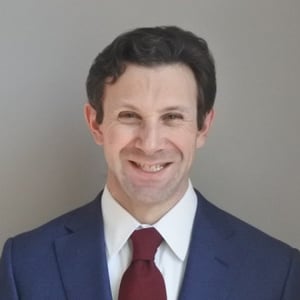
General Counsel - International, Willis Towers Watson
Todd F. Braunstein is General Counsel - International as well as Head of Global Investigations at Willis Towers Watson, an insurance broking and consulting firm with $9 billion in revenues, 45,000 employees, and business in 140+ countries. He previously worked as a federal prosecutor, at two DC law firms, and in the White House.
A.B., Harvard College; J.D., Harvard Law School

Trade and Globalization Policy Specialist, AFL-CIO
Celeste Drake is the Trade & Globalization Policy Specialist at the AFL-CIO, a job she boils down two main goals: 1) try to improve U.S. trade policy so it doesn’t undercut democracy, gut the American manufacturing sector, and send more U.S. jobs overseas; and 2) try to improve labor rights globally so that empowered workers can race to the top instead of allowing global corporations to force a race to the bottom.
Celeste has testified before the Senate Foreign Relations Committee, various House Subcommittees, the International Trade Commission, and the Executive Branch’s Trade Policy Staff Committee.
Prior to joining the AFL-CIO, Celeste served as Legislative Director for Congresswoman Linda T. Sánchez (D-CA), Legislative Counsel for Congressman Lloyd Doggett (D-TX), Clerk for the Honorable David R. Thompson of the U.S. Court of Appeals for the 9th Circuit, and Economics and World History teacher at Granite Hills High School in El Cajon, CA. She has a J.D., an M.P.P., and a B.A. from the University of California, Los Angeles.
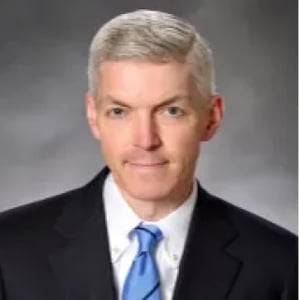
Executive Vice President, Chief Legal Officer, Gates Corporation
Matthew R. A. Heiman joined the Company in May 2026 and has served as the Company’s Chief Legal Officer and Corporate Secretary since June 2026. As Chief Legal Officer, Mr. Heiman is responsible for all legal functions for Gates, including securities and corporate governance, M&A, litigation, commercial, regulatory, compliance, patents and trademarks, real estate, employment and labor, sustainability and environmental matters. Prior to joining Gates, Mr. Heiman held senior legal leadership roles at Waystar, where he served as Chief Legal & Administrative Officer from 2023 to 2025 and as General Counsel and Corporate Secretary from 2020 to 2023. Prior to that, he was with Johnson Controls, where he served as Vice President, Corporate Secretary, and Associate General Counsel. Mr. Heiman has been a Senior Fellow for the National Security Institute at George Mason University’s Antonin Scalia School of Law since 2018.

George C. Dix Professor in Constitutional Law, Northwestern University Pritzker School of Law
John O. McGinnis is a graduate of Harvard College and Harvard Law School where he was an editor of the Harvard Law Review. He also has an MA degree from Balliol College, Oxford, in philosophy and theology. Professor McGinnis clerked on the U.S. Court of Appeals for the District of Columbia. From 1987 to 1991, he was deputy assistant attorney general in the Office of Legal Counsel at the Department of Justice. He is the author of Accelerating Democracy: Transforming Government Through Technology (Princeton 2013) and Originalism and the Good Constitution (Harvard 2013) (with M. Rappaport). He is a past winner of the Paul Bator award given by the Federalist Society to an outstanding academic under 40. He has been listed by the United States on the roster of panelists who may be called upon to decide World Trade Organization Disputes.
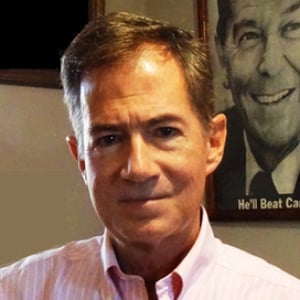
Former General Counsel of the U.S. Immigration and Naturalization, Former United States Ambassador to East Timor
Grover Joseph Rees is a Louisiana native whose family has lived in the Breaux Bridge/Lafayette area since the 1700s.
His first job after college was as an assistant to Congressman Dave Treen (R-LA3), who had just been elected as the first Republican Congressman from Louisiana since Reconstruction.
Rees graduated with honors from LSU Law School, where he served as Editor-in-Chief of the Louisiana Law Review. While in law school he worked on Ronald Reagan’s 1976 presidential campaign and was a Reagan delegate from Louisiana to the Republican National Convention. He also served as a member of the Lafayette Parish Republican Executive Committee and as a board member of Acadiana Right to Life.
In 1979, when Congressman Treen ran successfully for Governor, he asked Rees to write his authorized biography. The book, Dave Treen of Louisiana, was read and discussed widely during the campaign and after Treen’s election.
In 1985-86 Rees served as Special Counsel for Judicial Selection in President Reagan’s Justice Department, working closely with Attorney General Ed Meese to reorganize the judicial selection process to make it more philosophically oriented. These efforts resulted in the appointment of over 100 federal judges and were widely credited with transforming the federal judiciary.
From 1986 through 1991 Rees served as Chief Justice of the High Court of American Samoa, an Article I federal judicial position.
From 1991 through 1993 he was General Counsel of the U.S. Immigration and Naturalization Service.
In 1995 Rees went to work for the new Republican Congress as staff director and chief counsel of the Subcommittee on International Operations and Human Rights. He worked with subcommittee chairman Chris Smith (R.-N.J.) to cut U.S. funding for the International Planned Parenthood Federation and other organizations that perform and promote abortions overseas. Rees also worked on the drafting and enactment of the International Religious Freedom Act, the Trafficking Victims Protection Act, and other legislation that has helped to bring U.S. foreign policy into closer alignment not only with our national interests but also with our values.
In 2001-2002 Rees worked for Congressman Henry Hyde (R.-Ill.), who was then serving as Chairman of the House International Relations Committee.
From 2002 until 2006 Rees served as the first United States Ambassador to newly independent East Timor.
From 2006 until 2009 Ambassador Rees was the United States Special Representative for Social Issues, responsible for representing the United States on issues relating to vulnerable persons and the family within the United Nations system.
Ambassador Rees retired from government service in January 2009 and returned to Lafayette. He is married to Lan Dai Nguyen Rees and is a member of St. Genevieve’s Catholic parish in Lafayette. He was recently elected to serve as a member of the Louisiana Republican State Central Committee.
Trade and Globalization Policy Specialist, AFL-CIO
Celeste Drake is the Trade & Globalization Policy Specialist at the AFL-CIO, a job she boils down two main goals: 1) try to improve U.S. trade policy so it doesn’t undercut democracy, gut the American manufacturing sector, and send more U.S. jobs overseas; and 2) try to improve labor rights globally so that empowered workers can race to the top instead of allowing global corporations to force a race to the bottom.
Celeste has testified before the Senate Foreign Relations Committee, various House Subcommittees, the International Trade Commission, and the Executive Branch’s Trade Policy Staff Committee.
Prior to joining the AFL-CIO, Celeste served as Legislative Director for Congresswoman Linda T. Sánchez (D-CA), Legislative Counsel for Congressman Lloyd Doggett (D-TX), Clerk for the Honorable David R. Thompson of the U.S. Court of Appeals for the 9th Circuit, and Economics and World History teacher at Granite Hills High School in El Cajon, CA. She has a J.D., an M.P.P., and a B.A. from the University of California, Los Angeles.
Executive Vice President, Chief Legal Officer, Gates Corporation
Matthew R. A. Heiman joined the Company in May 2026 and has served as the Company’s Chief Legal Officer and Corporate Secretary since June 2026. As Chief Legal Officer, Mr. Heiman is responsible for all legal functions for Gates, including securities and corporate governance, M&A, litigation, commercial, regulatory, compliance, patents and trademarks, real estate, employment and labor, sustainability and environmental matters. Prior to joining Gates, Mr. Heiman held senior legal leadership roles at Waystar, where he served as Chief Legal & Administrative Officer from 2023 to 2025 and as General Counsel and Corporate Secretary from 2020 to 2023. Prior to that, he was with Johnson Controls, where he served as Vice President, Corporate Secretary, and Associate General Counsel. Mr. Heiman has been a Senior Fellow for the National Security Institute at George Mason University’s Antonin Scalia School of Law since 2018.
George C. Dix Professor in Constitutional Law, Northwestern University Pritzker School of Law
John O. McGinnis is a graduate of Harvard College and Harvard Law School where he was an editor of the Harvard Law Review. He also has an MA degree from Balliol College, Oxford, in philosophy and theology. Professor McGinnis clerked on the U.S. Court of Appeals for the District of Columbia. From 1987 to 1991, he was deputy assistant attorney general in the Office of Legal Counsel at the Department of Justice. He is the author of Accelerating Democracy: Transforming Government Through Technology (Princeton 2013) and Originalism and the Good Constitution (Harvard 2013) (with M. Rappaport). He is a past winner of the Paul Bator award given by the Federalist Society to an outstanding academic under 40. He has been listed by the United States on the roster of panelists who may be called upon to decide World Trade Organization Disputes.
Former General Counsel of the U.S. Immigration and Naturalization, Former United States Ambassador to East Timor
Grover Joseph Rees is a Louisiana native whose family has lived in the Breaux Bridge/Lafayette area since the 1700s.
His first job after college was as an assistant to Congressman Dave Treen (R-LA3), who had just been elected as the first Republican Congressman from Louisiana since Reconstruction.
Rees graduated with honors from LSU Law School, where he served as Editor-in-Chief of the Louisiana Law Review. While in law school he worked on Ronald Reagan’s 1976 presidential campaign and was a Reagan delegate from Louisiana to the Republican National Convention. He also served as a member of the Lafayette Parish Republican Executive Committee and as a board member of Acadiana Right to Life.
In 1979, when Congressman Treen ran successfully for Governor, he asked Rees to write his authorized biography. The book, Dave Treen of Louisiana, was read and discussed widely during the campaign and after Treen’s election.
In 1985-86 Rees served as Special Counsel for Judicial Selection in President Reagan’s Justice Department, working closely with Attorney General Ed Meese to reorganize the judicial selection process to make it more philosophically oriented. These efforts resulted in the appointment of over 100 federal judges and were widely credited with transforming the federal judiciary.
From 1986 through 1991 Rees served as Chief Justice of the High Court of American Samoa, an Article I federal judicial position.
From 1991 through 1993 he was General Counsel of the U.S. Immigration and Naturalization Service.
In 1995 Rees went to work for the new Republican Congress as staff director and chief counsel of the Subcommittee on International Operations and Human Rights. He worked with subcommittee chairman Chris Smith (R.-N.J.) to cut U.S. funding for the International Planned Parenthood Federation and other organizations that perform and promote abortions overseas. Rees also worked on the drafting and enactment of the International Religious Freedom Act, the Trafficking Victims Protection Act, and other legislation that has helped to bring U.S. foreign policy into closer alignment not only with our national interests but also with our values.
In 2001-2002 Rees worked for Congressman Henry Hyde (R.-Ill.), who was then serving as Chairman of the House International Relations Committee.
From 2002 until 2006 Rees served as the first United States Ambassador to newly independent East Timor.
From 2006 until 2009 Ambassador Rees was the United States Special Representative for Social Issues, responsible for representing the United States on issues relating to vulnerable persons and the family within the United Nations system.
Ambassador Rees retired from government service in January 2009 and returned to Lafayette. He is married to Lan Dai Nguyen Rees and is a member of St. Genevieve’s Catholic parish in Lafayette. He was recently elected to serve as a member of the Louisiana Republican State Central Committee.
Since 1976, Milton L. Chappell has been a staff attorney with the National Right to Work Legal Defense Foundation, a non-profit legsl aid organization located in Springfield, Virginia. During his 38 years of practice, he has specialized in representing nonunion public employees and teachers in litigation before the United States Supreme Court, and other federal and state courts and administrative agencies, against the abuses of compulsory unionism. The litigation has resulted in the establishment of procedures and notices that assist nonunion teachers in reducing the amount of their compulsory union fees the public sector unions spend on political and other non-collective bargaining activities that his clients oppose. In addition to representing clients claiming a political objection to joining or financially supporting a labor union, he has also represented clients claiming a religious objection to unions, as well as defending against numerous union attacks on the Right to Work laws passed in Indiana and Michigan, and Wisconsin’s Act 10, which includes right to work protection for most public employees. Mr. Chappell is an expert in constitutional and labor law, especially the First Amendment. Mr. Chappell has represented clients in Arizona, California, Connecticut, Delaware, Florida, Hawaii, Illinois, Indiana, Kentucky, Maryland, Michigan, New York, Ohio, Oregon, Pennsylvania, Texas, and Virginia, Washington, Wisconsin, and the District of Columbia.
Mr. Chappell is a member of the following bars: Maryland, the District of Columbia, United States Supreme Court, United States Courts of Appeals for the 2nd, 3rd, 4th, 5th, 6th, 7th, 9th, 11th, and District of Columbia Circuits, and the United States District Courts for the Districts of Maryland, Northern California, Western Wisconsin, and the District of Columbia. He is the author of “From Abood to Tierney: The Protection on Nonunion Employees in an Agency Shop,” 15 Ohio Northern University Law Review 1 (1988) and “Seeking a New Foundation,” 16 Government Union Review 1 (1995). He is coauthor of “Protecting the Rights of State Employees Against Compulsory Unionism,” California Public Employee Relations 143 (August 2000).

President, Harned Strategies LLC
Karen Harned is President at Harned Strategies LLC. Previously, she served as Executive Director of the National Federation of Independent Business Small Business Legal Center, a post she held from 2002-2022. Prior to joining the Legal Center, Ms. Harned was an attorney at a Washington, D.C. law firm specializing in food and drug law, where she represented several small and large businesses and their respective trade associations before Congress and federal agencies. She also served as Assistant Press Secretary to U.S. Senator Don Nickles of Oklahoma from August of 1989 to March of 1993. Ms. Harned received her B.A. from the University of Oklahoma in 1989 and her J.D. from The George Washington University National Law Center in 1995. She is admitted to practice in the District of Columbia.
As Executive Director of the NFIB Small Business Legal Center, Ms. Harned commented regularly on small business cases before federal and state courts, as well as the U.S. Supreme Court. She has appeared on Fox News, Fox Business, NBC Nightly News, CNN, CNBC and MSNBC, as well as National Public Radio, CBS Radio, and radio outlets across the country. Her opinion editorials and articles regarding healthcare, lawsuit abuse, regulation, and other issues important to small business have been published in newspapers and other publications nationwide.
Ms. Harned has testified before Congress on the small business impact of regulation and the civil justice system. Additionally, she has conducted numerous webinars and legal compliance seminars for small business owners across the country on issues relating to employment law, including unionization and immigration.
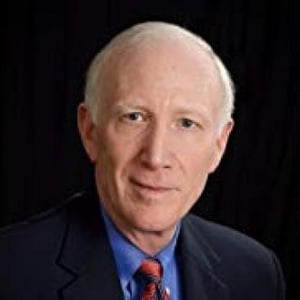
President, The Free State Foundation
Randolph J. May is Founder and President of The Free State Foundation. The Free State Foundation is an independent, non-profit free market-oriented think tank founded in 2006.
From October 1999-May 2006, May was a Senior Fellow and Director of Communications Policy Studies at The Progress & Freedom Foundation, a Washington, DC-based think tank. Prior to joining PFF, he practiced communications, administrative, and regulatory law as a partner at major national law firms. From 1978 to 1981, May served as Assistant General Counsel and Associate General Counsel at the Federal Communication Commission.
May has held numerous leadership positions in bar associations. He is a past Chair of the American Bar Association’s Section of Administrative Law and Regulatory Practice. He is a Fellow of the National Academy of Public Administration. Mr. May also has served as a Public Member of the Administrative Conference of the United States and currently is a Senior Fellow at ACUS.
Mr. May has published more than two hundred articles and essays on communications, administrative and constitutional law topics. He is author of A Call for a Radical New Communications Policy: Proposals for Free Market Reform, and co-author of #CommActUpdate: A Communications Law Fit for the Digital Age and The Constitutional Foundations of Intellectual Property. Mr. May is editor of two books, Communications Law and Policy in the Digital Age: The Next Five Years and New Directions in Communications Policy. In addition, he is the co-editor of two other books, Net Neutrality or Net Neutering: Should Broadband Internet Services Be Regulated? and Communications Deregulation and FCC Reform. In the past, Mr. May has written regular columns on legal and regulatory affairs for Legal Times and the National Law Journal, leading national legal periodicals.
He received his A.B. from Duke University and his J.D. from Duke Law School, where he serves as a member of the Board of Visitors.
President, Harned Strategies LLC
Karen Harned is President at Harned Strategies LLC. Previously, she served as Executive Director of the National Federation of Independent Business Small Business Legal Center, a post she held from 2002-2022. Prior to joining the Legal Center, Ms. Harned was an attorney at a Washington, D.C. law firm specializing in food and drug law, where she represented several small and large businesses and their respective trade associations before Congress and federal agencies. She also served as Assistant Press Secretary to U.S. Senator Don Nickles of Oklahoma from August of 1989 to March of 1993. Ms. Harned received her B.A. from the University of Oklahoma in 1989 and her J.D. from The George Washington University National Law Center in 1995. She is admitted to practice in the District of Columbia.
As Executive Director of the NFIB Small Business Legal Center, Ms. Harned commented regularly on small business cases before federal and state courts, as well as the U.S. Supreme Court. She has appeared on Fox News, Fox Business, NBC Nightly News, CNN, CNBC and MSNBC, as well as National Public Radio, CBS Radio, and radio outlets across the country. Her opinion editorials and articles regarding healthcare, lawsuit abuse, regulation, and other issues important to small business have been published in newspapers and other publications nationwide.
Ms. Harned has testified before Congress on the small business impact of regulation and the civil justice system. Additionally, she has conducted numerous webinars and legal compliance seminars for small business owners across the country on issues relating to employment law, including unionization and immigration.

Partner, Arnold & Porter LLP
John Bellinger heads the firm's Global Law and Public Policy practice. He joined the firm in 2009, after holding several senior Presidential appointments in the US government, including as the Senate-confirmed Legal Adviser to the Department of State and Senior Associate Counsel to the President and Legal Adviser to the National Security Council (NSC) at the White House in the George W. Bush Administration.
Mr. Bellinger represents individuals, corporations, and sovereign governments in litigation in US courts and before international institutions. He has extensive experience in US foreign relations litigation involving the Alien Tort Statute, the Foreign Sovereign Immunities Act, the Anti-Terrorism Act, and the diplomatic and official immunities of foreign governments and government officials. He advises clients on other public international law matters, including treaties and international agreements as well as international humanitarian law and human rights law. He also counsels US and foreign clients on national security legal and policy issues, including US and multilateral financial sanctions and asset controls, the extraterritorial application of US criminal and civil laws, and transactions reviewed by the Committee on Foreign Investment in the United States (CFIUS).
Chambers Global ranks Mr. Bellinger among the best international lawyers in the world, reporting that he has "second-to-none experience in public international law, international litigation and foreign sovereign immunity" and that his "experience at the highest levels of the Executive branch...gives him a distinct and important vantage point on legal issues." Chambers adds: "For any cross border work he's just extraordinary, he knows the area inside-out."
Mr. Bellinger was the State Department Legal Adviser–the most senior international lawyer in the US Government–from 2005 to 2009, serving under Secretary of State Condoleezza Rice. He directed more than 170 lawyers on domestic and international law matters affecting US foreign relations. Before joining the State Department, Mr. Bellinger managed Secretary Rice's Senate confirmation process and co-directed her State Department transition team. In 2009, Mr. Bellinger received the Secretary of State's Distinguished Service Award.
Mr. Bellinger has argued cases before the International Court of Justice (Mexico v. United States–(Medellin)) and the Iran-United States Claims Tribunal in The Hague. He has appeared on numerous briefs in US federal courts, including the Supreme Court, in litigation involving international law issues.
As Legal Adviser to the NSC from 2001 to 2005, Mr. Bellinger advised President Bush, Cabinet officials, National Security Advisor Rice, and NSC staff on a wide range of national security and international law issues, including counterterrorism issues after the 9-11 attacks. He was one of the principal drafters of the legislation that created the Director of National Intelligence.
Prior to his service in the Bush Administration, Mr. Bellinger served as Counsel for National Security Matters in the Criminal Division at the US Department of Justice (1997-2001); Of Counsel to the Senate Select Committee on Intelligence (1996); General Counsel of the Commission on the Roles and Capabilities of the US Intelligence Community (1995-1996); and Special Assistant to Director of Central Intelligence William Webster (1988-1991). Mr. Bellinger is an Adjunct Senior Fellow in International and National Security Law at the Council on Foreign Relations. He has testified before Congress on numerous occasions, is quoted regularly in the media on international and national security law matters, and has lectured at numerous US and foreign universities and law schools. He is the author of many law review articles and op-eds on international law, including op-eds in The Washington Post, The New York Times, and The Wall Street Journal. Mr. Bellinger is a senior contributor to the Lawfare blog.
Mr. Bellinger is a member of the Secretary of State's Advisory Committee on International Law. He served from 2005-2019 as one of four US Members of the Permanent Court of Arbitration in The Hague and a member of the US "National Group", which nominates judges to the International Court of Justice. He is also a member of the Council on Foreign Relations and the American Society of International Law. He is a member of the Council of the American Law Institute; the boards of directors of the American Ditchley Foundation, the Salzburg Global Seminar, and the Stimson Center; and the advisory committee of Foreign Affairs magazine.
Mr. Bellinger is a graduate of Princeton University's Woodrow Wilson School of Public and International Affairs, and he holds an MA in Foreign Affairs from the University of Virginia and a JD from Harvard Law School, where he was an editor of the Harvard International Law Journal.
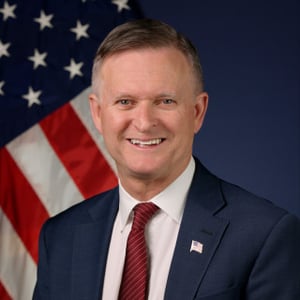
Deputy Secretary of Transportation, US Department of Transportation
Steven G. Bradbury was sworn in as the Deputy Secretary of Transportation on March 13, 2025, following his confirmation by the U.S. Senate on March 11, 2025. In this role, he oversees the Department’s operating administrations and spearheads initiatives to ensure a safe, efficient, and modern transportation system that strengthens economic productivity and global competitiveness. Deputy Secretary Bradbury also assists Secretary Duffy in managing the Department’s activities, including its workforce of over 58,000 employees and an annual budget exceeding $109 billion.
Bradbury previously served as the 23rd General Counsel of the Department of Transportation from 2017 to 2021, as the Acting Deputy Secretary from 2019, and as Acting Secretary of Transportation in 2021. As General Counsel, he was the chief legal officer, advising on all legal matters and ensuring the integrity and compliance of the Department’s policies and programs.
Before rejoining DOT, Bradbury was a Distinguished Fellow at The Heritage Foundation from December 2022 to March 2025. He has extensive experience in the public and private sector, having served as Principal Deputy and Acting Assistant Attorney General at the U.S. Department of Justice and as a partner at Kirkland & Ellis LLP and Dechert LLP. Earlier in his career, he clerked for Justice Clarence Thomas and Judge James L. Buckley.
Bradbury holds a J.D., magna cum laude, from the University of Michigan Law School and a B.A. in English from Stanford University.

Executive Vice President of Global Governance, Chief Legal Officer and Corporate Secretary, Walmart Inc.
Rachel Brand is Walmart’s executive vice president of global governance, chief legal officer, and corporate secretary. She oversees the company’s global legal, compliance, ethics, corporate governance, digital citizenship, aviation, investigative, and corporate security functions, including Walmart’s Emergency Operations Center.
Immediately before joining Walmart, Rachel served as the United States Associate Attorney General and holds the distinction of being the first woman to serve in this role. She had previously served in the U.S. Department of Justice as the Assistant Attorney General for the Office of Legal Policy during President George W. Bush’s administration. Her other government service includes an appointment by President Obama to serve as a Member of the U.S. Privacy and Civil Liberties Oversight Board, service as an Associate Counsel to the President at the White House, and judicial clerkships with Justice Charles Fried of the Supreme Judicial Court of Massachusetts and Justice Anthony Kennedy at the Supreme Court of the United States. In the private sector, Rachel was a lawyer in private practice at two law firms in Washington, D.C. and served as the Vice President and Chief Counsel for Regulatory Litigation at the U.S. Chamber of Commerce Litigation Center.
Rachel serves on the board of directors for the Walmart Foundation and is the executive sponsor for Walmart’s Tribal Voices Associate Resource Group. Outside of Walmart, she serves on the board of directors for the International Justice Mission and is a member of The American Law Institute.
Rachel earned her Bachelor of Arts degree from the University of Minnesota-Morris and her J.D. from Harvard Law School.
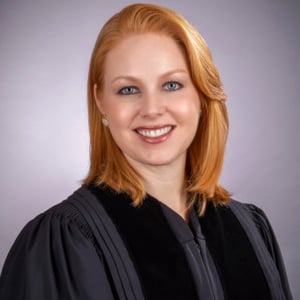
Presiding Justice, Supreme Court of Georgia
Justice Sarah Hawkins Warren was appointed to the Supreme Court of Georgia by Governor Nathan Deal and was sworn in on September 17, 2018. She previously served as Solicitor General for the State of Georgia under Attorney General Chris Carr.
Justice Warren earned a B.A. in Public Policy and Spanish, magna cum laude, from Duke University. After graduation, Justice Warren served as Deputy Press Secretary for the White House Office of Management and Budget.
Justice Warren received her J.D., magna cum laude, from Duke University School of Law, where she served as Editor in Chief of Law and Contemporary Problems and on the Executive Committee of the Federalist Society.
Following her graduation from law school, Justice Warren served as a law clerk to then-Chief Judge J.L. Edmondson of the United States Court of Appeals for the Eleventh Circuit and to the Honorable Richard J. Leon of the United States District Court for the District of Columbia. She also practiced as a litigation partner at Kirkland & Ellis LLP in Washington, D.C., where she represented clients before state and federal courts and was outside counsel to Georgia in Florida v. Georgia, No. 142 Original (United States Supreme Court).
In 2015, Justice Warren and her family returned home to Georgia, where she began service in the Office of Attorney General Sam Olens as Deputy Solicitor General and Special Counsel for Water Litigation. In January 2017, she was appointed Solicitor General by Attorney General Chris Carr, and in that role served as the chief appellate lawyer for the State of Georgia and the primary constitutional law advisor to the Attorney General. As Solicitor General, Justice Warren represented Georgia in multi-state litigation and in appeals before state and federal courts, including in an argument before the United States Supreme Court.
Justice Warren currently serves on the Duke Law School Board of Visitors, the Berry College Board of Trustees, and the Advisory Board for the Atlanta Lawyers Chapter of the Federalist Society. She lives in Atlanta with her husband, Blaise, and their three children.
Partner, Arnold & Porter LLP
John Bellinger heads the firm's Global Law and Public Policy practice. He joined the firm in 2009, after holding several senior Presidential appointments in the US government, including as the Senate-confirmed Legal Adviser to the Department of State and Senior Associate Counsel to the President and Legal Adviser to the National Security Council (NSC) at the White House in the George W. Bush Administration.
Mr. Bellinger represents individuals, corporations, and sovereign governments in litigation in US courts and before international institutions. He has extensive experience in US foreign relations litigation involving the Alien Tort Statute, the Foreign Sovereign Immunities Act, the Anti-Terrorism Act, and the diplomatic and official immunities of foreign governments and government officials. He advises clients on other public international law matters, including treaties and international agreements as well as international humanitarian law and human rights law. He also counsels US and foreign clients on national security legal and policy issues, including US and multilateral financial sanctions and asset controls, the extraterritorial application of US criminal and civil laws, and transactions reviewed by the Committee on Foreign Investment in the United States (CFIUS).
Chambers Global ranks Mr. Bellinger among the best international lawyers in the world, reporting that he has "second-to-none experience in public international law, international litigation and foreign sovereign immunity" and that his "experience at the highest levels of the Executive branch...gives him a distinct and important vantage point on legal issues." Chambers adds: "For any cross border work he's just extraordinary, he knows the area inside-out."
Mr. Bellinger was the State Department Legal Adviser–the most senior international lawyer in the US Government–from 2005 to 2009, serving under Secretary of State Condoleezza Rice. He directed more than 170 lawyers on domestic and international law matters affecting US foreign relations. Before joining the State Department, Mr. Bellinger managed Secretary Rice's Senate confirmation process and co-directed her State Department transition team. In 2009, Mr. Bellinger received the Secretary of State's Distinguished Service Award.
Mr. Bellinger has argued cases before the International Court of Justice (Mexico v. United States–(Medellin)) and the Iran-United States Claims Tribunal in The Hague. He has appeared on numerous briefs in US federal courts, including the Supreme Court, in litigation involving international law issues.
As Legal Adviser to the NSC from 2001 to 2005, Mr. Bellinger advised President Bush, Cabinet officials, National Security Advisor Rice, and NSC staff on a wide range of national security and international law issues, including counterterrorism issues after the 9-11 attacks. He was one of the principal drafters of the legislation that created the Director of National Intelligence.
Prior to his service in the Bush Administration, Mr. Bellinger served as Counsel for National Security Matters in the Criminal Division at the US Department of Justice (1997-2001); Of Counsel to the Senate Select Committee on Intelligence (1996); General Counsel of the Commission on the Roles and Capabilities of the US Intelligence Community (1995-1996); and Special Assistant to Director of Central Intelligence William Webster (1988-1991). Mr. Bellinger is an Adjunct Senior Fellow in International and National Security Law at the Council on Foreign Relations. He has testified before Congress on numerous occasions, is quoted regularly in the media on international and national security law matters, and has lectured at numerous US and foreign universities and law schools. He is the author of many law review articles and op-eds on international law, including op-eds in The Washington Post, The New York Times, and The Wall Street Journal. Mr. Bellinger is a senior contributor to the Lawfare blog.
Mr. Bellinger is a member of the Secretary of State's Advisory Committee on International Law. He served from 2005-2019 as one of four US Members of the Permanent Court of Arbitration in The Hague and a member of the US "National Group", which nominates judges to the International Court of Justice. He is also a member of the Council on Foreign Relations and the American Society of International Law. He is a member of the Council of the American Law Institute; the boards of directors of the American Ditchley Foundation, the Salzburg Global Seminar, and the Stimson Center; and the advisory committee of Foreign Affairs magazine.
Mr. Bellinger is a graduate of Princeton University's Woodrow Wilson School of Public and International Affairs, and he holds an MA in Foreign Affairs from the University of Virginia and a JD from Harvard Law School, where he was an editor of the Harvard International Law Journal.
Deputy Secretary of Transportation, US Department of Transportation
Steven G. Bradbury was sworn in as the Deputy Secretary of Transportation on March 13, 2025, following his confirmation by the U.S. Senate on March 11, 2025. In this role, he oversees the Department’s operating administrations and spearheads initiatives to ensure a safe, efficient, and modern transportation system that strengthens economic productivity and global competitiveness. Deputy Secretary Bradbury also assists Secretary Duffy in managing the Department’s activities, including its workforce of over 58,000 employees and an annual budget exceeding $109 billion.
Bradbury previously served as the 23rd General Counsel of the Department of Transportation from 2017 to 2021, as the Acting Deputy Secretary from 2019, and as Acting Secretary of Transportation in 2021. As General Counsel, he was the chief legal officer, advising on all legal matters and ensuring the integrity and compliance of the Department’s policies and programs.
Before rejoining DOT, Bradbury was a Distinguished Fellow at The Heritage Foundation from December 2022 to March 2025. He has extensive experience in the public and private sector, having served as Principal Deputy and Acting Assistant Attorney General at the U.S. Department of Justice and as a partner at Kirkland & Ellis LLP and Dechert LLP. Earlier in his career, he clerked for Justice Clarence Thomas and Judge James L. Buckley.
Bradbury holds a J.D., magna cum laude, from the University of Michigan Law School and a B.A. in English from Stanford University.
Executive Vice President of Global Governance, Chief Legal Officer and Corporate Secretary, Walmart Inc.
Rachel Brand is Walmart’s executive vice president of global governance, chief legal officer, and corporate secretary. She oversees the company’s global legal, compliance, ethics, corporate governance, digital citizenship, aviation, investigative, and corporate security functions, including Walmart’s Emergency Operations Center.
Immediately before joining Walmart, Rachel served as the United States Associate Attorney General and holds the distinction of being the first woman to serve in this role. She had previously served in the U.S. Department of Justice as the Assistant Attorney General for the Office of Legal Policy during President George W. Bush’s administration. Her other government service includes an appointment by President Obama to serve as a Member of the U.S. Privacy and Civil Liberties Oversight Board, service as an Associate Counsel to the President at the White House, and judicial clerkships with Justice Charles Fried of the Supreme Judicial Court of Massachusetts and Justice Anthony Kennedy at the Supreme Court of the United States. In the private sector, Rachel was a lawyer in private practice at two law firms in Washington, D.C. and served as the Vice President and Chief Counsel for Regulatory Litigation at the U.S. Chamber of Commerce Litigation Center.
Rachel serves on the board of directors for the Walmart Foundation and is the executive sponsor for Walmart’s Tribal Voices Associate Resource Group. Outside of Walmart, she serves on the board of directors for the International Justice Mission and is a member of The American Law Institute.
Rachel earned her Bachelor of Arts degree from the University of Minnesota-Morris and her J.D. from Harvard Law School.
Presiding Justice, Supreme Court of Georgia
Justice Sarah Hawkins Warren was appointed to the Supreme Court of Georgia by Governor Nathan Deal and was sworn in on September 17, 2018. She previously served as Solicitor General for the State of Georgia under Attorney General Chris Carr.
Justice Warren earned a B.A. in Public Policy and Spanish, magna cum laude, from Duke University. After graduation, Justice Warren served as Deputy Press Secretary for the White House Office of Management and Budget.
Justice Warren received her J.D., magna cum laude, from Duke University School of Law, where she served as Editor in Chief of Law and Contemporary Problems and on the Executive Committee of the Federalist Society.
Following her graduation from law school, Justice Warren served as a law clerk to then-Chief Judge J.L. Edmondson of the United States Court of Appeals for the Eleventh Circuit and to the Honorable Richard J. Leon of the United States District Court for the District of Columbia. She also practiced as a litigation partner at Kirkland & Ellis LLP in Washington, D.C., where she represented clients before state and federal courts and was outside counsel to Georgia in Florida v. Georgia, No. 142 Original (United States Supreme Court).
In 2015, Justice Warren and her family returned home to Georgia, where she began service in the Office of Attorney General Sam Olens as Deputy Solicitor General and Special Counsel for Water Litigation. In January 2017, she was appointed Solicitor General by Attorney General Chris Carr, and in that role served as the chief appellate lawyer for the State of Georgia and the primary constitutional law advisor to the Attorney General. As Solicitor General, Justice Warren represented Georgia in multi-state litigation and in appeals before state and federal courts, including in an argument before the United States Supreme Court.
Justice Warren currently serves on the Duke Law School Board of Visitors, the Berry College Board of Trustees, and the Advisory Board for the Atlanta Lawyers Chapter of the Federalist Society. She lives in Atlanta with her husband, Blaise, and their three children.

EPA’s Section 111(d) Carbon Rule: What if States Just Said No?
Peter Glaser, Carroll W. McGuffey, Hahnah Gaines
Federalist Society White Paper
This White Paper discusses the latest proposal of the Environmental Protection Agency to regulate greenhouse...
Something Fishy in Sarbanes-Oxley? Yates v. United States - Podcast
Todd F. Braunstein
Criminal Law & Procedure Practice Group Podcast
At issue in Yates v. United States is the "anti-shredding" provision of the Sarbanes-Oxley Act...
How Free Should Trade Be?
Celeste Drake, Matthew R. A. Heiman, John O. McGinnis, Grover Joseph Rees
International Law Weekend 2014
The panel of experts will focus on international trade and what limits, if any, should...
How Free Should Trade Be?
Celeste Drake, Matthew R. A. Heiman, John O. McGinnis, Grover Joseph Rees
International Law Weekend 2014
The panel of experts will focus on international trade and what limits, if any, should...
Right to Work in the Midwest - Podcast
Milton L. Chappell
Labor & Employment Law Practice Group Podcast
In 2012 and 2013, Indiana and Michigan, respectively, passed Right to Work laws covering both...
Integrity Staffing Solutions v. Busk - Post-Argument SCOTUScast
Karen Harned
SCOTUScast10-27-14 - featuring Karen Harned
On October 8, 2014, the Supreme Court heard oral argument in Integrity Staffing Solutions v....
Congress Begins to Consider a New Communications Act
Randolph May
Engage Volume 15, Issue 2
Introduction On December 3, 2013, House of Representative Energy and Commerce Committee Chairman Fred...
Employee Security Screening: The Supreme Court to Decide Who Pays - Podcast
Karen Harned
Labor & Employment Law Practice Group Podcast
On October 8, the U.S. Supreme Court heard oral arguments in Integrity Staffing Solutions, Inc.,...
IS It Legal? Legal Authority for the Campaign Against the Islamic State
John B. Bellinger, Steven Gill Bradbury, Rachel L. Brand, Sarah Hawkins Warren
DC Young Lawyers Chapter and The Alexander Hamilton Society
The Federalist Society's DC Young Lawyers Chapter and The Alexander Hamilton Society co-hosted this event...
IS It Legal? Legal Authority for the Campaign Against the Islamic State
John B. Bellinger, Steven Gill Bradbury, Rachel L. Brand, Sarah Hawkins Warren
DC Young Lawyers Chapter and The Alexander Hamilton Society
The Federalist Society's DC Young Lawyers Chapter and The Alexander Hamilton Society co-hosted this event...