

Partner, Steptoe & Johnson LLP
Stewart Baker is a partner in the law firm of Steptoe & Johnson in Washington, D.C. From 2005 to 2009, he was the first Assistant Secretary for Policy at the Department of Homeland Security. His law practice covers cybersecurity, data protection, homeland security, and travel and foreign investment regulation; he has been awarded one patent.
Mr. Baker has been General Counsel of the National Security Agency and General Counsel of the commission that investigated WMD intelligence failures prior to the Iraq war. He is the author of Skating on Stilts, a book on terrorism, cybersecurity, and other technology issues; he also hosts the weekly Cyberlaw Podcast.
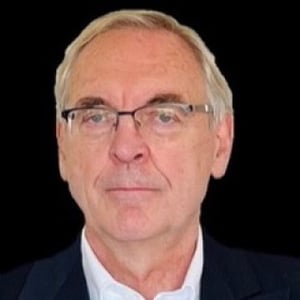
Fellow, National Security Institute, Antonin Scalia Law School, George Mason University
Vince Vitkowsky chaired the Executive Committee of the Federalist Society’s International and National Security Law and Policy Practice Group for over a decade. He is also a Fellow at the National Security Institute of George Mason University Law School. Vince spent 45 years in private practice, primarily in AmLaw 100/200 firms and their spin-offs. His practice included domestic and international commercial arbitration and litigation, as well as cyber risks and liabilities. Vince's current focus is on national security policy, artificial intelligence, cybersecurity, and counterterrorism. He has often written and spoken on national security and other public policy issues. Among other affiliations, Vince has been an Adjunct Fellow at the Center for Law and Counterterrorism of the Foundation for the Defense of Democracies, a member of the Executive Committee of the American Branch of the International Law Association, and Co-Chair of the Committee on Interventions and Trial Observations of the International Bar Association’s Human Rights Institute. He received his B.A. from Northwestern University and his J.D. from Cornell Law School.
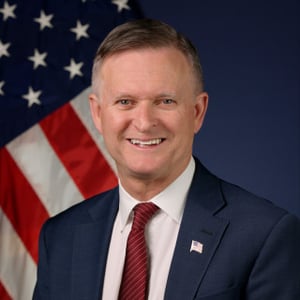
Deputy Secretary of Transportation, US Department of Transportation
Steven G. Bradbury was sworn in as the Deputy Secretary of Transportation on March 13, 2025, following his confirmation by the U.S. Senate on March 11, 2025. In this role, he oversees the Department’s operating administrations and spearheads initiatives to ensure a safe, efficient, and modern transportation system that strengthens economic productivity and global competitiveness. Deputy Secretary Bradbury also assists Secretary Duffy in managing the Department’s activities, including its workforce of over 58,000 employees and an annual budget exceeding $109 billion.
Bradbury previously served as the 23rd General Counsel of the Department of Transportation from 2017 to 2021, as the Acting Deputy Secretary from 2019, and as Acting Secretary of Transportation in 2021. As General Counsel, he was the chief legal officer, advising on all legal matters and ensuring the integrity and compliance of the Department’s policies and programs.
Before rejoining DOT, Bradbury was a Distinguished Fellow at The Heritage Foundation from December 2022 to March 2025. He has extensive experience in the public and private sector, having served as Principal Deputy and Acting Assistant Attorney General at the U.S. Department of Justice and as a partner at Kirkland & Ellis LLP and Dechert LLP. Earlier in his career, he clerked for Justice Clarence Thomas and Judge James L. Buckley.
Bradbury holds a J.D., magna cum laude, from the University of Michigan Law School and a B.A. in English from Stanford University.
Staff Judge Advocate, United States Cyber Command, U.S. Air Force
Colonel Gary Brown is the staff judge advocate of the United States Cyber Command.
Col Brown was called to the Nebraska Bar in 1987 and he has since remained a member in good standing. He was commissioned a first lieutenant in the Air Force in November, 1988. Col Brown is married to Joan Culling Brown of Omaha, Nebraska. He and Joan have four sons, Edmund, Andrew, Thomas and Philip
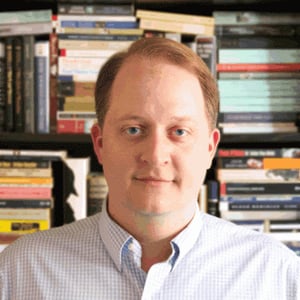
Senior Correspondent, The Daily Beast, and ASU Future of War Fel, New America
Shane Harris is an author and journalist who has written extensively about intelligence and national security. His new book, @War: The Rise of the Military Internet Complex, explores the frontlines of America's new cyber war (Eamon Dolan/Houghton Mifflin Harcourt, 2014). Mr. Harris' first book, The Watchers: The Rise of America's Surveillance, tells the story of five men who played central roles in the creation of a vast national security apparatus and the rise of surveillance in America (Penguin Press, 2010). The Watchers won the New York Public Library's Helen Bernstein Book Award for Excellence in Journalism, and the Economist named it one of the best books of 2010. Mr. Harris is the winner of the 2010 Gerald R. Ford Prize for Distinguished Reporting on National Defense. He has four times been named a finalist for the Livingston Awards for Young Journalists, which honor the best journalists in America under the age of 35.
Mr. Harris is currently a senior correspondent at The Daily Beast, where he covers national security, intelligence, and cyber security. He is also an ASU Future of War Fellow at New America. His work has appeared in The New York Times, The Wall Street Journal, Slate, TheAtlantic.com, National Journal, The Washington Post, The Bulletin of the Atomic Scientists, and the U.S. Naval Institute's Proceedings. He has provided analysis and commentary for CNN, NPR, the BBC, The History Channel, National Geographic, several foreign media organizations and many local public radio stations.
Prior to joining The Daily Beast, Mr. Harris was a senior writer at Foreign Policy magazine and, before that, at the Washingtonian magazine, where he was part of the team that won the publication its 2011 award for Excellence in Writing from the City and Regional Magazine Association. In 2012, Washingtonian won the coveted General Excellence award for the print magazine and web site, where Mr. Harris wrote a blog on national security called ADead Drop.
From 2005 to 2010, Mr. Harris was a staff correspondent for National Journal, where he wrote about intelligence and homeland security. Before that post, he was the technology editor and a staff correspondent at Government Executive magazine. Mr. Harris also was the managing editor for Movieline magazine in Los Angeles. He began his journalism career in 1999, as the research coordinator and a writer for Governing magazine in Washington.
Mr. Harris graduated from Wake Forest University with a B.A. in Politics in 1998. He is also a fiction writer. While living in Los Angeles, he helped found and served as the artistic director of a sketch comedy troupe. Mr. Harris is a Sundance Film Festival screenwriting finalist.
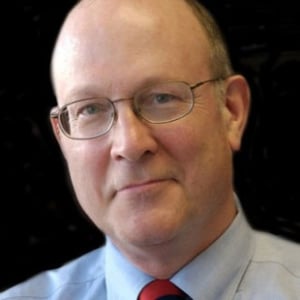
Professor Emeritus of Law, Antonin Scalia Law School, George Mason University
Jeremy A. Rabkin is a Professor Emeritus of Law at the Antonin Scalia Law School, George Mason University. Before joining the faculty in June 2007, he was for over two decades a professor in the Department of Government at Cornell University. Professor Rabkin serves on the board of directors of the Center for Individual Rights, a public interest law firm based in Washington, D.C. Previously he was a board member of the U.S. Institute of Peace and the board of academic advisors of the American Enterprise Institute.
Professor Rabkin’s books include Law Without Nations? (Princeton University Press, 2005). He authored “If You Need a Friend, Don’t Call a Cosmopolitan,” a chapter in Varieties of Sovereignty and Citizenship (Sigal R. Ben-Porath & Rogers M. Smith eds., University of Pennsylvania Press, 2012). His articles have appeared in major law reviews and political science journals and his journalistic contributions in a range of magazines and newspapers, including the Washington Post and the Wall Street Journal.
Professorial Lecturer in Law, The George Washington University
Paul Rosenzweig is an accomplished writer and speaker with a national reputation in cyber security and homeland security. He is the founder of Red Branch Consulting PLLC, a homeland security consulting company. He is also a Senior Advisor to The Chertoff Group. Mr. Rosenzweig formerly served as Deputy Assistant Secretary for Policy in the Department of Homeland Security.
He is a Professorial Lecturer in Law at George Washington University, and a Senior Fellow in the Tech, Law & Security Program at the American University, Washington College of Law. He serves as an advisor to and former member of the American Bar Association Standing Committee on Law and National Security, and a Contributing Editor of the Lawfare blog. He is a member of the ABA Cybersecurity Legal Task Force and of the United States Court of Appeals for the District of Columbia Circuit Advisory Committee on Admissions and Grievances. He serves, as well, as a Hearing Committee Member of the District of Columbia Board of Professional Responsibility. In 2011 he was a Carnegie Fellow in National Security Journalism at the Medill School of Journalism, Northwestern University.
Mr. Rosenzweig is a cum laude graduate of the University of Chicago Law School. He has an M.S. in Chemical Oceanography from the Scripps Institution of Oceanography, University of California at San Diego and a B.A from Haverford College. Following graduation from law school he served as a law clerk to the Honorable R. Lanier Anderson, III of the United States Court of Appeals for the Eleventh Circuit.
He is the author of Cyber Warfare: How Conflicts in Cyberspace are Challenging America and Changing the World and of three video lecture series from The Great Courses, Thinking About Cybersecurity: From Cyber Crime to Cyber Warfare; The Surveillance State: Big Data, Freedom, and You; and Investigating American Presidents.
He is the co-author (with James Jay Carafano) of Winning the Long War: Lessons from the Cold War for Defeating Terrorism and Preserving Freedom and co-editor (with Jill D. Rhodes and Robert S. Litt) of the Cybersecurity Handbook (3rd ed.). He is also co-editor (with Timothy McNulty and Ellen Shearer) of two books, Whistleblowers, Leaks and the Media: The First Amendment and National Security, and National Security Law in the News: A Guide for Journalists, Scholars, and Policymakers. Mr. Rosenzweig is a member of the Literary Society of Washington.
Fellow, National Security Institute, Antonin Scalia Law School, George Mason University
Vince Vitkowsky chaired the Executive Committee of the Federalist Society’s International and National Security Law and Policy Practice Group for over a decade. He is also a Fellow at the National Security Institute of George Mason University Law School. Vince spent 45 years in private practice, primarily in AmLaw 100/200 firms and their spin-offs. His practice included domestic and international commercial arbitration and litigation, as well as cyber risks and liabilities. Vince's current focus is on national security policy, artificial intelligence, cybersecurity, and counterterrorism. He has often written and spoken on national security and other public policy issues. Among other affiliations, Vince has been an Adjunct Fellow at the Center for Law and Counterterrorism of the Foundation for the Defense of Democracies, a member of the Executive Committee of the American Branch of the International Law Association, and Co-Chair of the Committee on Interventions and Trial Observations of the International Bar Association’s Human Rights Institute. He received his B.A. from Northwestern University and his J.D. from Cornell Law School.
Deputy Secretary of Transportation, US Department of Transportation
Steven G. Bradbury was sworn in as the Deputy Secretary of Transportation on March 13, 2025, following his confirmation by the U.S. Senate on March 11, 2025. In this role, he oversees the Department’s operating administrations and spearheads initiatives to ensure a safe, efficient, and modern transportation system that strengthens economic productivity and global competitiveness. Deputy Secretary Bradbury also assists Secretary Duffy in managing the Department’s activities, including its workforce of over 58,000 employees and an annual budget exceeding $109 billion.
Bradbury previously served as the 23rd General Counsel of the Department of Transportation from 2017 to 2021, as the Acting Deputy Secretary from 2019, and as Acting Secretary of Transportation in 2021. As General Counsel, he was the chief legal officer, advising on all legal matters and ensuring the integrity and compliance of the Department’s policies and programs.
Before rejoining DOT, Bradbury was a Distinguished Fellow at The Heritage Foundation from December 2022 to March 2025. He has extensive experience in the public and private sector, having served as Principal Deputy and Acting Assistant Attorney General at the U.S. Department of Justice and as a partner at Kirkland & Ellis LLP and Dechert LLP. Earlier in his career, he clerked for Justice Clarence Thomas and Judge James L. Buckley.
Bradbury holds a J.D., magna cum laude, from the University of Michigan Law School and a B.A. in English from Stanford University.
Staff Judge Advocate, United States Cyber Command, U.S. Air Force
Colonel Gary Brown is the staff judge advocate of the United States Cyber Command.
Col Brown was called to the Nebraska Bar in 1987 and he has since remained a member in good standing. He was commissioned a first lieutenant in the Air Force in November, 1988. Col Brown is married to Joan Culling Brown of Omaha, Nebraska. He and Joan have four sons, Edmund, Andrew, Thomas and Philip
Senior Correspondent, The Daily Beast, and ASU Future of War Fel, New America
Shane Harris is an author and journalist who has written extensively about intelligence and national security. His new book, @War: The Rise of the Military Internet Complex, explores the frontlines of America's new cyber war (Eamon Dolan/Houghton Mifflin Harcourt, 2014). Mr. Harris' first book, The Watchers: The Rise of America's Surveillance, tells the story of five men who played central roles in the creation of a vast national security apparatus and the rise of surveillance in America (Penguin Press, 2010). The Watchers won the New York Public Library's Helen Bernstein Book Award for Excellence in Journalism, and the Economist named it one of the best books of 2010. Mr. Harris is the winner of the 2010 Gerald R. Ford Prize for Distinguished Reporting on National Defense. He has four times been named a finalist for the Livingston Awards for Young Journalists, which honor the best journalists in America under the age of 35.
Mr. Harris is currently a senior correspondent at The Daily Beast, where he covers national security, intelligence, and cyber security. He is also an ASU Future of War Fellow at New America. His work has appeared in The New York Times, The Wall Street Journal, Slate, TheAtlantic.com, National Journal, The Washington Post, The Bulletin of the Atomic Scientists, and the U.S. Naval Institute's Proceedings. He has provided analysis and commentary for CNN, NPR, the BBC, The History Channel, National Geographic, several foreign media organizations and many local public radio stations.
Prior to joining The Daily Beast, Mr. Harris was a senior writer at Foreign Policy magazine and, before that, at the Washingtonian magazine, where he was part of the team that won the publication its 2011 award for Excellence in Writing from the City and Regional Magazine Association. In 2012, Washingtonian won the coveted General Excellence award for the print magazine and web site, where Mr. Harris wrote a blog on national security called ADead Drop.
From 2005 to 2010, Mr. Harris was a staff correspondent for National Journal, where he wrote about intelligence and homeland security. Before that post, he was the technology editor and a staff correspondent at Government Executive magazine. Mr. Harris also was the managing editor for Movieline magazine in Los Angeles. He began his journalism career in 1999, as the research coordinator and a writer for Governing magazine in Washington.
Mr. Harris graduated from Wake Forest University with a B.A. in Politics in 1998. He is also a fiction writer. While living in Los Angeles, he helped found and served as the artistic director of a sketch comedy troupe. Mr. Harris is a Sundance Film Festival screenwriting finalist.
Professor Emeritus of Law, Antonin Scalia Law School, George Mason University
Jeremy A. Rabkin is a Professor Emeritus of Law at the Antonin Scalia Law School, George Mason University. Before joining the faculty in June 2007, he was for over two decades a professor in the Department of Government at Cornell University. Professor Rabkin serves on the board of directors of the Center for Individual Rights, a public interest law firm based in Washington, D.C. Previously he was a board member of the U.S. Institute of Peace and the board of academic advisors of the American Enterprise Institute.
Professor Rabkin’s books include Law Without Nations? (Princeton University Press, 2005). He authored “If You Need a Friend, Don’t Call a Cosmopolitan,” a chapter in Varieties of Sovereignty and Citizenship (Sigal R. Ben-Porath & Rogers M. Smith eds., University of Pennsylvania Press, 2012). His articles have appeared in major law reviews and political science journals and his journalistic contributions in a range of magazines and newspapers, including the Washington Post and the Wall Street Journal.
Professorial Lecturer in Law, The George Washington University
Paul Rosenzweig is an accomplished writer and speaker with a national reputation in cyber security and homeland security. He is the founder of Red Branch Consulting PLLC, a homeland security consulting company. He is also a Senior Advisor to The Chertoff Group. Mr. Rosenzweig formerly served as Deputy Assistant Secretary for Policy in the Department of Homeland Security.
He is a Professorial Lecturer in Law at George Washington University, and a Senior Fellow in the Tech, Law & Security Program at the American University, Washington College of Law. He serves as an advisor to and former member of the American Bar Association Standing Committee on Law and National Security, and a Contributing Editor of the Lawfare blog. He is a member of the ABA Cybersecurity Legal Task Force and of the United States Court of Appeals for the District of Columbia Circuit Advisory Committee on Admissions and Grievances. He serves, as well, as a Hearing Committee Member of the District of Columbia Board of Professional Responsibility. In 2011 he was a Carnegie Fellow in National Security Journalism at the Medill School of Journalism, Northwestern University.
Mr. Rosenzweig is a cum laude graduate of the University of Chicago Law School. He has an M.S. in Chemical Oceanography from the Scripps Institution of Oceanography, University of California at San Diego and a B.A from Haverford College. Following graduation from law school he served as a law clerk to the Honorable R. Lanier Anderson, III of the United States Court of Appeals for the Eleventh Circuit.
He is the author of Cyber Warfare: How Conflicts in Cyberspace are Challenging America and Changing the World and of three video lecture series from The Great Courses, Thinking About Cybersecurity: From Cyber Crime to Cyber Warfare; The Surveillance State: Big Data, Freedom, and You; and Investigating American Presidents.
He is the co-author (with James Jay Carafano) of Winning the Long War: Lessons from the Cold War for Defeating Terrorism and Preserving Freedom and co-editor (with Jill D. Rhodes and Robert S. Litt) of the Cybersecurity Handbook (3rd ed.). He is also co-editor (with Timothy McNulty and Ellen Shearer) of two books, Whistleblowers, Leaks and the Media: The First Amendment and National Security, and National Security Law in the News: A Guide for Journalists, Scholars, and Policymakers. Mr. Rosenzweig is a member of the Literary Society of Washington.
Fellow, National Security Institute, Antonin Scalia Law School, George Mason University
Vince Vitkowsky chaired the Executive Committee of the Federalist Society’s International and National Security Law and Policy Practice Group for over a decade. He is also a Fellow at the National Security Institute of George Mason University Law School. Vince spent 45 years in private practice, primarily in AmLaw 100/200 firms and their spin-offs. His practice included domestic and international commercial arbitration and litigation, as well as cyber risks and liabilities. Vince's current focus is on national security policy, artificial intelligence, cybersecurity, and counterterrorism. He has often written and spoken on national security and other public policy issues. Among other affiliations, Vince has been an Adjunct Fellow at the Center for Law and Counterterrorism of the Foundation for the Defense of Democracies, a member of the Executive Committee of the American Branch of the International Law Association, and Co-Chair of the Committee on Interventions and Trial Observations of the International Bar Association’s Human Rights Institute. He received his B.A. from Northwestern University and his J.D. from Cornell Law School.
Ella A. and Ernest H. Fisher Professor of Law, Ohio Northern University Claude W. Pettit College of Law
Professor Lewis joined the Ohio Northern faculty in August, 2006. Lewis flew F-14's for the United States Navy in Operation Desert Shield, conducted strike planning for Desert Storm and was deployed to the Persian Gulf to enforce the no-fly zone over Iraq. He was a Topgun graduate in 1992 and was featured in a NOVA documentary on Topgun and aircraft carriers.
After his naval service, Lewis graduated from Harvard Law School, cum laude, was a management consultant with McKinsey and Company, and served as a litigation associate with McGuireWoods, LLP, in Norfolk, Virginia.
Professor Lewis published more than a dozen articles and essays on various aspects of the law of war and the conflict between the US and al Qaeda. His work has been cited by the Seventh, Ninth and Eleventh Circuit Courts of Appeals. He has testified before Congress on the legality of drone strikes in Pakistan and Yemen and on the civil liberties tradeoffs associated with trying some Al Qaeda members or terrorist suspects before military commissions. His op-eds have appeared in numerous media outlets including the LA Times and the New York Post and he has appeared on Public Radio International to discuss the increasing use of armed drones in warfare. He delivered scores of presentations and panel presentations before military and law school audiences alike including presentations to the international Military Operations Law conference in Queensland, Australia, the US Army's JAG School in Charlottesville, VA and law school events at Stanford, Chicago, Columbia, Penn, Duke, Texas and Northwestern among others.
Professor Lewis received the Award for Excellence in Classroom Teaching for the 2007-08 academic year.
He taught Commercial Law, International Law, a Law of War Seminar and Torts. He also taught Corporate Finance and Accounting for Lawyers. His other teaching interests included Civil Procedure and Contracts.
Fellow, National Security Institute, Antonin Scalia Law School, George Mason University
Vince Vitkowsky chaired the Executive Committee of the Federalist Society’s International and National Security Law and Policy Practice Group for over a decade. He is also a Fellow at the National Security Institute of George Mason University Law School. Vince spent 45 years in private practice, primarily in AmLaw 100/200 firms and their spin-offs. His practice included domestic and international commercial arbitration and litigation, as well as cyber risks and liabilities. Vince's current focus is on national security policy, artificial intelligence, cybersecurity, and counterterrorism. He has often written and spoken on national security and other public policy issues. Among other affiliations, Vince has been an Adjunct Fellow at the Center for Law and Counterterrorism of the Foundation for the Defense of Democracies, a member of the Executive Committee of the American Branch of the International Law Association, and Co-Chair of the Committee on Interventions and Trial Observations of the International Bar Association’s Human Rights Institute. He received his B.A. from Northwestern University and his J.D. from Cornell Law School.
Ella A. and Ernest H. Fisher Professor of Law, Ohio Northern University Claude W. Pettit College of Law
Professor Lewis joined the Ohio Northern faculty in August, 2006. Lewis flew F-14's for the United States Navy in Operation Desert Shield, conducted strike planning for Desert Storm and was deployed to the Persian Gulf to enforce the no-fly zone over Iraq. He was a Topgun graduate in 1992 and was featured in a NOVA documentary on Topgun and aircraft carriers.
After his naval service, Lewis graduated from Harvard Law School, cum laude, was a management consultant with McKinsey and Company, and served as a litigation associate with McGuireWoods, LLP, in Norfolk, Virginia.
Professor Lewis published more than a dozen articles and essays on various aspects of the law of war and the conflict between the US and al Qaeda. His work has been cited by the Seventh, Ninth and Eleventh Circuit Courts of Appeals. He has testified before Congress on the legality of drone strikes in Pakistan and Yemen and on the civil liberties tradeoffs associated with trying some Al Qaeda members or terrorist suspects before military commissions. His op-eds have appeared in numerous media outlets including the LA Times and the New York Post and he has appeared on Public Radio International to discuss the increasing use of armed drones in warfare. He delivered scores of presentations and panel presentations before military and law school audiences alike including presentations to the international Military Operations Law conference in Queensland, Australia, the US Army's JAG School in Charlottesville, VA and law school events at Stanford, Chicago, Columbia, Penn, Duke, Texas and Northwestern among others.
Professor Lewis received the Award for Excellence in Classroom Teaching for the 2007-08 academic year.
He taught Commercial Law, International Law, a Law of War Seminar and Torts. He also taught Corporate Finance and Accounting for Lawyers. His other teaching interests included Civil Procedure and Contracts.
Fellow, National Security Institute, Antonin Scalia Law School, George Mason University
Vince Vitkowsky chaired the Executive Committee of the Federalist Society’s International and National Security Law and Policy Practice Group for over a decade. He is also a Fellow at the National Security Institute of George Mason University Law School. Vince spent 45 years in private practice, primarily in AmLaw 100/200 firms and their spin-offs. His practice included domestic and international commercial arbitration and litigation, as well as cyber risks and liabilities. Vince's current focus is on national security policy, artificial intelligence, cybersecurity, and counterterrorism. He has often written and spoken on national security and other public policy issues. Among other affiliations, Vince has been an Adjunct Fellow at the Center for Law and Counterterrorism of the Foundation for the Defense of Democracies, a member of the Executive Committee of the American Branch of the International Law Association, and Co-Chair of the Committee on Interventions and Trial Observations of the International Bar Association’s Human Rights Institute. He received his B.A. from Northwestern University and his J.D. from Cornell Law School.
Fellow, National Security Institute, Antonin Scalia Law School, George Mason University
Vince Vitkowsky chaired the Executive Committee of the Federalist Society’s International and National Security Law and Policy Practice Group for over a decade. He is also a Fellow at the National Security Institute of George Mason University Law School. Vince spent 45 years in private practice, primarily in AmLaw 100/200 firms and their spin-offs. His practice included domestic and international commercial arbitration and litigation, as well as cyber risks and liabilities. Vince's current focus is on national security policy, artificial intelligence, cybersecurity, and counterterrorism. He has often written and spoken on national security and other public policy issues. Among other affiliations, Vince has been an Adjunct Fellow at the Center for Law and Counterterrorism of the Foundation for the Defense of Democracies, a member of the Executive Committee of the American Branch of the International Law Association, and Co-Chair of the Committee on Interventions and Trial Observations of the International Bar Association’s Human Rights Institute. He received his B.A. from Northwestern University and his J.D. from Cornell Law School.
Quinnipiac University School of Law
Managing Editor, Connecticut Law Tribune
Provost & Chief Academic Officer, Bryant University
An acclaimed international law and national security expert experienced in academic, law, and government service settings, Provost Glenn M. Sulmasy brings a distinguished record of Higher Education leadership and academic achievement to his position as Bryant’s first university Provost and Chief Academic Officer.
Sulmasy previously served as Deputy University Counsel and later led the Humanities Department at the United States Coast Guard Academy (USCGA), in New London, CT. Additionally, he served as Professor of Law at USCGA and has been involved in higher education since 1997.
In addition to serving on the faculties of the Academy and the U.S. Naval War College, Sulmasy has lectured in the fields of International Law, U.S. Constitutional Law, and National Security at numerous universities and think tanks. He has also served as a National Security and Human Rights Fellow at the Carr Center for Human Rights Policy at the Harvard Kennedy School.
A former fellow in Homeland Security and National Security Law for the Center for National Policy in Washington D.C., Sulmasy lectures extensively on the law of armed conflict, international law, and national security matters. He is widely published internationally on national security matters, and as an expert has been featured in the LA Times, on CBS News Radio, National Public Radio, CNN International, US News & World Report, the New York Times and the San Francisco Chronicle, Al-Jazeera America, MSNBC, Fox News and numerous other national media outlets. He is the author of The National Security Court System – A Natural Evolution of Justice in an Age of Terror (Oxford University Press) and Co-Editor of International Law Challenges – Homeland Security and Combating Terrorism (2005).
Sulmasy was educated at the U.S. Coast Guard Academy, University of Baltimore School of Law (cum laude), UC Berkeley School of Law (Boalt Hall) and the Harvard Kennedy School.
Provost Sulmasy, his wife Marla, and seven children hail from Old Lyme, CT and Smithfield, RI.
Fellow, National Security Institute, Antonin Scalia Law School, George Mason University
Vince Vitkowsky chaired the Executive Committee of the Federalist Society’s International and National Security Law and Policy Practice Group for over a decade. He is also a Fellow at the National Security Institute of George Mason University Law School. Vince spent 45 years in private practice, primarily in AmLaw 100/200 firms and their spin-offs. His practice included domestic and international commercial arbitration and litigation, as well as cyber risks and liabilities. Vince's current focus is on national security policy, artificial intelligence, cybersecurity, and counterterrorism. He has often written and spoken on national security and other public policy issues. Among other affiliations, Vince has been an Adjunct Fellow at the Center for Law and Counterterrorism of the Foundation for the Defense of Democracies, a member of the Executive Committee of the American Branch of the International Law Association, and Co-Chair of the Committee on Interventions and Trial Observations of the International Bar Association’s Human Rights Institute. He received his B.A. from Northwestern University and his J.D. from Cornell Law School.
Akin Gump Strauss Hauer & Feld, LLP
Visiting Professor of Public and International Affairs, Charles and Marie Robertson Visiting Professor, Princeton School of Public and International Affairs
Martin S. Flaherty is a longtime is Visiting Professor at the Princeton School of Public and International Affairs, where he was Fellow in the Program in Law and Public Affairs. He is also Leitner Family Professor of International Human Rights Law and Founding Co-Director of the Leitner Center for International Law and Justice at Fordham Law School. Professor Flaherty also currently teaches at Columbia Law School and Barnard College. Previously he has taught at China University of Political Science and Law and the National Judges College in Beijing, Sungkyunkwan University in Seoul, Queen’s University Belfast. Professor Flaherty earlier served as a law clerk for Justice Byron R. White of the U.S. Supreme Court and Chief Judge John Gibbons of the U.S. Court of Appeals for the Third Circuit.
Flaherty received a J.D. from Columbia Law School, where he was Book Reviews and Articles Editor of the Columbia Law Review, an M.A. and M.Phil., with distinction, from Yale (in history), and B.A. summa cum laude from Princeton. For the Leitner Center, Human Rights First, and the New York City Bar Association, he has led or participated in human rights missions to Northern Ireland, Turkey, Hong Kong, Mexico, Malaysia, Kenya, Romania and China. Professor Flaherty is currently the President of the American Association of the International Commission of Jurists, https://www.aaicj.org, a member of the Council on Foreign Relations, and a legal expert advisor at the Sixth Committee of the United Nations General Assembly.
Flaherty’s scholarly publications focus upon international human rights, foreign affairs, and constitutional law and history, and appear in such journals as the Columbia Law Review, the Yale Law Journal, the Michigan Law Review, the University of Chicago Law Review, Constitutional Commentary, the Harvard Journal of Law and Policy, and the Harvard Human Rights Journal. He has written, appeared, or been quoted in The New York Times, The Washington Post, The New Yorker, The Boston Globe, The Daily News, Newsday, the PBS Newshour, CNN, MSNBC, and NPR. He is also the author of the Restoring the Global Judiciary: Why the Supreme Court Should Rule in Foreign Affairs (Princeton University Press, 2019).
Associate Dean and Associate Professor of Law, University of Notre Dame Law School
William K. Kelley teaches constitutional law and administrative law, and focuses on public law issues in his scholarship. He serves as Associate Dean with responsibility for coordinating special projects. During Spring 2008 semester, he will act as Associate Dean for Faculty Research. From 2005-2007, he served in the White House as Deputy Counsel to the President. In that capacity, he was responsible for advising the President of the United States on all legal matters affecting the Executive Branch. He joined the faculty in 1995 after practicing with two major law firms, and serving from 1991-1994 as assistant to the solicitor general at the Department of Justice in Washington, D.C. Professor Kelley began his legal career by serving as law clerk to the Honorable Kenneth W. Starr on the U.S. Court of Appeals for the District of Columbia Circuit (1987-88), as well as for Chief Justice Warren E. Burger and Associate Justice Antonin Scalia (1988-89). He earned his B.A. from Marquette University in 1984, where he was a member of Phi Beta Kappa, and his J.D. from Harvard Law School in 1987, where he served as Supreme Court editor of the Harvard Law Review.
Professor of Law, Fordham University School of Law
Professor Andrew Kent teaches and writes about constitutional law, foreign relations law, federal courts and procedure, national security law, public international law, professional responsibility and legal ethics. He received the Dean’s Distinguished Research Award (2016-17) for his scholarship.
After graduating from Yale Law School, Professor Kent clerked for the Hon. Robert A. Katzmann of the U.S. Court of Appeals for the Second Circuit and the Hon. Carol B. Amon of the U.S. District Court for the Eastern District of New York. Before joining Fordham’s faculty, he was a Climenko Fellow at Harvard Law School and an attorney at both Sullivan & Cromwell and WilmerHale.
From 2014-2015, Professor Kent served as Senior Counsel to the Solicitor General, State of New York, Office of the Attorney General.
Professor Kent is a member of the New York City Bar’s Professional Responsibility Committee. He provides appellate representation to the indigent as a member of the Pro Bono Panel of the U.S. Court of Appeals for the Second Circuit.
Fellow, National Security Institute, Antonin Scalia Law School, George Mason University
Vince Vitkowsky chaired the Executive Committee of the Federalist Society’s International and National Security Law and Policy Practice Group for over a decade. He is also a Fellow at the National Security Institute of George Mason University Law School. Vince spent 45 years in private practice, primarily in AmLaw 100/200 firms and their spin-offs. His practice included domestic and international commercial arbitration and litigation, as well as cyber risks and liabilities. Vince's current focus is on national security policy, artificial intelligence, cybersecurity, and counterterrorism. He has often written and spoken on national security and other public policy issues. Among other affiliations, Vince has been an Adjunct Fellow at the Center for Law and Counterterrorism of the Foundation for the Defense of Democracies, a member of the Executive Committee of the American Branch of the International Law Association, and Co-Chair of the Committee on Interventions and Trial Observations of the International Bar Association’s Human Rights Institute. He received his B.A. from Northwestern University and his J.D. from Cornell Law School.
Akin Gump Strauss Hauer & Feld, LLP
Visiting Professor of Public and International Affairs, Charles and Marie Robertson Visiting Professor, Princeton School of Public and International Affairs
Martin S. Flaherty is a longtime is Visiting Professor at the Princeton School of Public and International Affairs, where he was Fellow in the Program in Law and Public Affairs. He is also Leitner Family Professor of International Human Rights Law and Founding Co-Director of the Leitner Center for International Law and Justice at Fordham Law School. Professor Flaherty also currently teaches at Columbia Law School and Barnard College. Previously he has taught at China University of Political Science and Law and the National Judges College in Beijing, Sungkyunkwan University in Seoul, Queen’s University Belfast. Professor Flaherty earlier served as a law clerk for Justice Byron R. White of the U.S. Supreme Court and Chief Judge John Gibbons of the U.S. Court of Appeals for the Third Circuit.
Flaherty received a J.D. from Columbia Law School, where he was Book Reviews and Articles Editor of the Columbia Law Review, an M.A. and M.Phil., with distinction, from Yale (in history), and B.A. summa cum laude from Princeton. For the Leitner Center, Human Rights First, and the New York City Bar Association, he has led or participated in human rights missions to Northern Ireland, Turkey, Hong Kong, Mexico, Malaysia, Kenya, Romania and China. Professor Flaherty is currently the President of the American Association of the International Commission of Jurists, https://www.aaicj.org, a member of the Council on Foreign Relations, and a legal expert advisor at the Sixth Committee of the United Nations General Assembly.
Flaherty’s scholarly publications focus upon international human rights, foreign affairs, and constitutional law and history, and appear in such journals as the Columbia Law Review, the Yale Law Journal, the Michigan Law Review, the University of Chicago Law Review, Constitutional Commentary, the Harvard Journal of Law and Policy, and the Harvard Human Rights Journal. He has written, appeared, or been quoted in The New York Times, The Washington Post, The New Yorker, The Boston Globe, The Daily News, Newsday, the PBS Newshour, CNN, MSNBC, and NPR. He is also the author of the Restoring the Global Judiciary: Why the Supreme Court Should Rule in Foreign Affairs (Princeton University Press, 2019).
Associate Dean and Associate Professor of Law, University of Notre Dame Law School
William K. Kelley teaches constitutional law and administrative law, and focuses on public law issues in his scholarship. He serves as Associate Dean with responsibility for coordinating special projects. During Spring 2008 semester, he will act as Associate Dean for Faculty Research. From 2005-2007, he served in the White House as Deputy Counsel to the President. In that capacity, he was responsible for advising the President of the United States on all legal matters affecting the Executive Branch. He joined the faculty in 1995 after practicing with two major law firms, and serving from 1991-1994 as assistant to the solicitor general at the Department of Justice in Washington, D.C. Professor Kelley began his legal career by serving as law clerk to the Honorable Kenneth W. Starr on the U.S. Court of Appeals for the District of Columbia Circuit (1987-88), as well as for Chief Justice Warren E. Burger and Associate Justice Antonin Scalia (1988-89). He earned his B.A. from Marquette University in 1984, where he was a member of Phi Beta Kappa, and his J.D. from Harvard Law School in 1987, where he served as Supreme Court editor of the Harvard Law Review.
Professor of Law, Fordham University School of Law
Professor Andrew Kent teaches and writes about constitutional law, foreign relations law, federal courts and procedure, national security law, public international law, professional responsibility and legal ethics. He received the Dean’s Distinguished Research Award (2016-17) for his scholarship.
After graduating from Yale Law School, Professor Kent clerked for the Hon. Robert A. Katzmann of the U.S. Court of Appeals for the Second Circuit and the Hon. Carol B. Amon of the U.S. District Court for the Eastern District of New York. Before joining Fordham’s faculty, he was a Climenko Fellow at Harvard Law School and an attorney at both Sullivan & Cromwell and WilmerHale.
From 2014-2015, Professor Kent served as Senior Counsel to the Solicitor General, State of New York, Office of the Attorney General.
Professor Kent is a member of the New York City Bar’s Professional Responsibility Committee. He provides appellate representation to the indigent as a member of the Pro Bono Panel of the U.S. Court of Appeals for the Second Circuit.
Fellow, National Security Institute, Antonin Scalia Law School, George Mason University
Vince Vitkowsky chaired the Executive Committee of the Federalist Society’s International and National Security Law and Policy Practice Group for over a decade. He is also a Fellow at the National Security Institute of George Mason University Law School. Vince spent 45 years in private practice, primarily in AmLaw 100/200 firms and their spin-offs. His practice included domestic and international commercial arbitration and litigation, as well as cyber risks and liabilities. Vince's current focus is on national security policy, artificial intelligence, cybersecurity, and counterterrorism. He has often written and spoken on national security and other public policy issues. Among other affiliations, Vince has been an Adjunct Fellow at the Center for Law and Counterterrorism of the Foundation for the Defense of Democracies, a member of the Executive Committee of the American Branch of the International Law Association, and Co-Chair of the Committee on Interventions and Trial Observations of the International Bar Association’s Human Rights Institute. He received his B.A. from Northwestern University and his J.D. from Cornell Law School.
Partner, Steptoe & Johnson LLP
Stewart Baker is a partner in the law firm of Steptoe & Johnson in Washington, D.C. From 2005 to 2009, he was the first Assistant Secretary for Policy at the Department of Homeland Security. His law practice covers cybersecurity, data protection, homeland security, and travel and foreign investment regulation; he has been awarded one patent.
Mr. Baker has been General Counsel of the National Security Agency and General Counsel of the commission that investigated WMD intelligence failures prior to the Iraq war. He is the author of Skating on Stilts, a book on terrorism, cybersecurity, and other technology issues; he also hosts the weekly Cyberlaw Podcast.
Policy Counsel, American Civil Liberties Union
Senior Fellow, Center for American Progress
Kate Martin is a Senior Fellow at American Progress where she works on issues at the intersection of national security, civil liberties, and human rights. The New York Times’ Taking Note blog described her as “an expert on surveillance and detention, and a leading advocate for the rule of law in the so-called ‘war on terror.’” Before coming to American Progress, Ms. Martin served as director of the Center for National Security Studies for more than 20 years. She frequently testifies before Congress on national security and civil liberties issues. She is also a frequent commentator in the national media and has written extensively on these issues for the past 25 years. At the Center for National Security Studies, Martin brought lawsuits that challenged government deprivations of civil liberties. She has taught national security law and served as general counsel to the National Security Archive.
Ms. Martin is a graduate of the University of Virginia School of Law and Pomona College. Before joining the public interest world, she served as a partner at the law firm of Nussbaum, Owen & Webster.
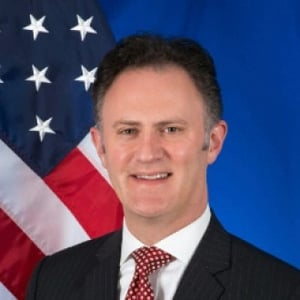
Founder and Principal, Fillmore Global Strategies LLC
Ambassador Nathan A. Sales is the founder and principal of Fillmore Global Strategies LLC, a consultancy that provides legal and strategic advisory services on matters at the intersection of law, policy, and diplomacy.
From 2017 to 2021, Ambassador Sales served at the U.S. Department of State as Under Secretary for Civilian Security, Democracy, and Human Rights (acting). He oversaw nine bureaus and offices led by Senate-confirmed principals, with 1,300 employees and a combined foreign assistance budget of more than $5 billion annually, and the mission of preventing and countering threats to civilian security, including terrorism, mass atrocities, and violations of human rights and the rule of law.
Concurrently, Ambassador Sales was Ambassador-at-Large and Coordinator for Counterterrorism. After being nominated by the President and unanimously confirmed by the U.S. Senate, he was sworn in on August 10, 2017. He served as the principal adviser to the Secretary of State on international counterterrorism matters, and led the State Department’s Counterterrorism Bureau, a 200-person team with an annual foreign assistance budget of $400 million. He was also the Special Presidential Envoy to the Global Coalition to Defeat ISIS, leading U.S. relations with the 83-member Coalition and efforts to ensure the lasting defeat of ISIS in the Middle East and around the world.
While at the State Department, Ambassador Sales led the elements of the U.S. government’s China strategy promoting democratic values and human rights, including with respect to Hong Kong and Xinjiang. He oversaw the development and implementation of a wide range of U.S. government sanctions, including Global Magnitsky actions and Executive Order 13,936, targeting those responsible for undermining Hong Kong’s freedoms and autonomy. Ambassador Sales was the architect of the landmark 2017 UN Security Council Resolution 2396 on terrorist travel, and successfully pressed NATO to make counterterrorism a core Alliance mission. He led diplomatic engagements to persuade a dozen key partners in Europe and the Americas to designate Hizballah as a terrorist organization in its entirety. He launched the Western Hemisphere Counterterrorism Ministerial, in which heads of state and minister-level officials meet bianually to coordinate efforts against terrorist threats in the region. He led the U.S. government’s international efforts to combat white supremacist terrorism. Under his leadership, the State Department imposed terrorism sanctions on the Russian Imperial Movement – the first-ever U.S. designation of white supremacist terrorists.
Before joining the State Department, Ambassador Sales was Of Counsel at the law firm Kirkland & Ellis LLP (formerly Bancroft PLLC). He was also a tenured law professor, teaching and writing in the fields of administrative law, constitutional law, and national security law. His scholarship has been cited by the U.S. Supreme Court multiple times.
Ambassador Sales previously was Deputy Assistant Secretary for Policy at the U.S. Department of Homeland Security. He led DHS’s efforts to draft and implement legislation that strengthened the security of and expanded the Visa Waiver Program (which allows citizens of certain countries to travel to the United States without a visa). He headed the U.S. delegation in talks with seven countries to implement the new security measures and was the Secretary of Homeland Security’s Special Envoy to South Korea.
Ambassador Sales also served at the Office of Legal Policy at the U.S. Department of Justice, where he worked on regulatory initiatives, counterterrorism, and judicial confirmations. In 2005, he managed DOJ’s “war room” for the confirmation of Chief Justice John Roberts. He received the Attorney General’s Award for Exceptional Service – the Justice Department’s highest honor – for his role in drafting the USA PATRIOT Act, as well as the Attorney General’s Distinguished Service Award for his work on judicial confirmations.
In addition to his work at Fillmore Global Strategies, Ambassador Sales is a nonresident senior fellow at the Atlantic Council and a senior advisor at the Soufan Group, a global intelligence and security consultancy. He serves on a number of advisory boards, including for the Counter-Extremism Project (a nonprofit and nonpartisan international policy organization formed to combat the growing threat from extremist ideologies), the Secure Community Network (the official safety and security organization for the North American Jewish community), and the Sue J. Henry Center for Pre-Law Education at Miami University.
An Ohio native, Ambassador Sales received his B.A., summa cum laude, from Miami University in Oxford, Ohio, where he was elected to Phi Beta Kappa. He earned his J.D., magna cum laude, from Duke Law School, where he was Research Editor of the Duke Law Journal and joined the Order of the Coif. After law school, he clerked for the Honorable David B. Sentelle of the U.S. Court of Appeals for the DC Circuit.
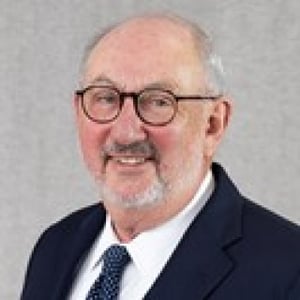
Partner, McGuireWoods LLP
George Terwilliger is co-head of the firm's white collar practice and leads the firm's Strategic Response and Crisis Management practice group. Following his fifteen years of public service in the US Department of Justice, where he began as a law clerk and concluded as Acting Attorney General, George has provided counsel in government and internal investigations, agency enforcement proceedings and in civil and criminal litigation. He has represented many of the nation's and the world's largest corporations, including major financial institutions, energy companies, public institutions as well as leading business and government officials, including members of the US Senate and House as well as cabinet officials. He has also represented lawyers and corporate legal departments in investigations. As a result of both his private sector work and government positions, George is called upon to provide counsel as well as commentary to government officials, Congress and private organizations on national security, homeland defense, terrorism, and other public policy and legal issues. George's work regularly involves providing counsel in the executive suites and boardrooms of major corporations.
In private practice for international law firms, George has represented national and international financial, energy, telecommunications, industrial and healthcare companies. He is a recognized expert in leading credible corporate internal investigations and his experience designing and executing both targeted and global legal compliance reviews has involved work in more than 60 countries around the globe. George is an expert on the Foreign Corrupt Practices Act and regularly provides counsel to companies addressing FCPA issues. No stranger to high stakes litigation and crisis events, George helped lead the Bush-Cheney legal team in the 2000 Florida vote recount, served as special outside counsel to a Senate committee investigating vote fraud allegations, served as counsel to an executive commission on gambling, and has represented many clients in politically charged election law and similar cases. He has guided corporations and individual through high stakes matters of intense public interest. He represented an incumbent president in First Amendment litigation concerning the right to have an inaugural prayer said in a public ceremony.
At the Department of Justice, George served for 10 years as a frontline federal prosecutor, handling hundreds of investigations, trials and appeals, including in white collar and national security cases. President Ronald Reagan appointed him as a U.S. attorney, and he next served as the deputy attorney general and as acting attorney general during the George H.W. Bush administration. As Deputy Attorney General, George ran the Justice Department's operations, overseeing all the nation's federal prosecutors, as well as the FBI and other law enforcement agencies. He also had leadership responsibility in several national and international crises, including a hostage-taking in a federal prison and the federal law enforcement response to domestic unrest in Los Angeles. In several instances, he personally handled negotiations of high-profile criminal and civil matters in the United States and abroad.
Fellow, National Security Institute, Antonin Scalia Law School, George Mason University
Vince Vitkowsky chaired the Executive Committee of the Federalist Society’s International and National Security Law and Policy Practice Group for over a decade. He is also a Fellow at the National Security Institute of George Mason University Law School. Vince spent 45 years in private practice, primarily in AmLaw 100/200 firms and their spin-offs. His practice included domestic and international commercial arbitration and litigation, as well as cyber risks and liabilities. Vince's current focus is on national security policy, artificial intelligence, cybersecurity, and counterterrorism. He has often written and spoken on national security and other public policy issues. Among other affiliations, Vince has been an Adjunct Fellow at the Center for Law and Counterterrorism of the Foundation for the Defense of Democracies, a member of the Executive Committee of the American Branch of the International Law Association, and Co-Chair of the Committee on Interventions and Trial Observations of the International Bar Association’s Human Rights Institute. He received his B.A. from Northwestern University and his J.D. from Cornell Law School.

Luncheon Address by Stewart A. Baker
Stewart A. Baker, Vincent Vitkowsky
Cyber Security, National Security and Economic Security
Both President Bush and President Obama directed comprehensive reviews of America's cyber security strategy. The...
Panel One: National Security
Steven Gill Bradbury, Gary D. Brown, Shane Harris, Jeremy A. Rabkin, Paul Rosenzweig, Vincent Vitkowsky
Cyber Security, National Security and Economic Security
Both President Bush and President Obama directed comprehensive reviews of America's cyber security strategy. The...
Panel One: National Security
Steven Gill Bradbury, Gary D. Brown, Shane Harris, Jeremy A. Rabkin, Paul Rosenzweig, Vincent Vitkowsky
Cyber Security, National Security and Economic Security
Both President Bush and President Obama directed comprehensive reviews of America's cyber security strategy. The...
The Use of Drones and Targeted Killing in Counterterrorism
Michael W. Lewis, Vincent Vitkowsky
Engage Volume 12, Issue 1, June 2011
Shortly after September 11, 2001, President George W. Bush, as Commander in Chief, authorized unmanned...
The Use of Drones and Targeted Killing in Counterterrorism
Michael W. Lewis, Vincent Vitkowsky
New Federal Initiatives Project
Brought to you by the International & National Security Law Practice GroupThe Federalist Society takes no position on...
International Law Under the Constitution and Transnational Progressives
Vincent Vitkowsky
The U.S. Constitution created the structure for a sovereign nation operating in an international system....
Trying Alleged Terrorists in U.S. Courts
William V. Dunlap, Douglas Malan, Robert B. Shepherd, Glenn M. Sulmasy, Vincent Vitkowsky
Connecticut Lawyers Chapter and Quinnipiac Student Chapter
The Connecticut Lawyers Chapter and the Quinnipiac Student Chapter hosted this debate and discussion at...
Will Trying Suspected Terrorists in Federal Court Advance the Interests of Justice and National Security?
James J. Benjamin, Reuvain Borchardt, Martin Flaherty, William K. Kelley, Andrew Kent, Vincent Vitkowsky
Fordham Student Chapter, New York Lawyers Chapter, and the International & National Security Law Practice Group
The Federalist Society's Fordham Student Chapter, New York Lawyers Chapter, and the International & National...
Will Trying Suspected Terrorists in Federal Court Advance the Interests of Justice and National Security?
James J. Benjamin, Reuvain Borchardt, Martin Flaherty, William K. Kelley, Andrew Kent, Vincent Vitkowsky
Fordham Student Chapter, New York Lawyers Chapter, and the International & National Security Law Practice Group
The Federalist Society's Fordham Student Chapter, New York Lawyers Chapter, and the International & National...
Luncheon and Panel 3: Preventing Attacks through Surveillance and Intelligence
Stewart A. Baker, Mike German, Kate Martin, Nathan A. Sales, George J. Terwilliger, Vincent Vitkowsky
Counterterrorism and the Obama Administration
Mike German, Policy Counsel, American Civil Liberties Union Kate Martin, Director, Center for National Security...