
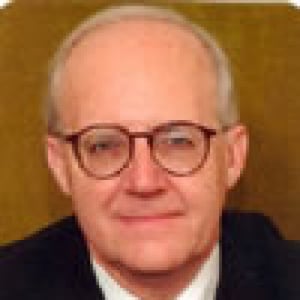
U.S. Court of Appeals, Sixth Circuit
Danny Julián Boggs is a Judge on the United States Court of Appeals for the Sixth Circuit. He was appointed to a newly created seat on that court on January 29, 1986 by President Ronald Reagan, confirmed by the U.S. Senate on March 3, and received his commission on March 25. He served as the Chief Judge of the Sixth Circuit from 2003 to 2009.
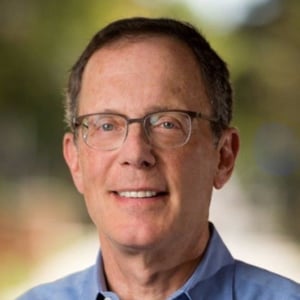
Professor of the Practice of Law, Stanford Law School
Doug Melamed practiced law for 43 years before spending the 2014-15 academic year at the Law School as the Herman Phleger Visiting Professor of Law. He was appointed Professor of the Practice of Law in 2015.
From 2009 until 2014, Professor Melamed was Senior Vice President and General Counsel of Intel Corporation and was responsible for overseeing Intel’s legal, government affairs and corporate affairs departments. Prior to joining Intel in 2009, he was a partner in the Washington, D.C., office of WilmerHale, a global law firm in which he served as a chair of the Antitrust and Competition Practice Group. His practice included appellate and trial court litigation, counseling, and representing clients in matters before government law enforcement and regulatory agencies. He joined WilmerHale’s predecessor in 1971. From 1996 to 2001, Professor Melamed served in the U.S. Department of Justice as Acting Assistant Attorney General in charge of the Antitrust Division and, before that, as Principal Deputy Assistant Attorney General.
Professor Melamed has received numerous professional awards and honors. He has been the Distinguished Visitor from Practice and an adjunct professor at the Georgetown University Law Center, and he has authored numerous articles on antitrust and on law and economics. He is a member of the boards of directors of the Nasdaq exchanges and the American Law Institute and a Contributing Editor of the Antitrust Law Journal. He was for many years a member of the Yale University Council and a member of the board of trustees of Sidwell Friends School in Washington, D.C. After graduating from law school, he clerked for Judge Charles M. Merrill of the U.S. Court of Appeals for the Ninth Circuit.

Professor of Law, Boston University School of Law
The son of an economics professor, Michael Meurer knew by the time he was 13 that he, too, wanted to teach at the university level. An S.B., J.D. and Ph.D. later, he became an economics professor at Duke University and later a law professor at the University of Buffalo. He came to Boston University School of Law in 1999, where he has taught courses in patents, intellectual property and public policy toward the high-tech industry. "It's a special privilege to be able to speak three times a week to an attentive and thoughtful audience," he says.
Professor Meurer has received several grants and fellowships, including two grants from the Pew Charitable Trust, a Ford Foundation grant, an Olin Faculty Fellowship at Yale Law School and a postdoctoral fellowship at AT&T Bell Labs. He has served as an expert witness for the Federal Trade Commission on a merger case presenting issues related to patent licensing. He also has consulted with government officials from developing countries about antitrust law, and taught short courses in American intellectual property law at the law faculties of the University of Victoria and the National University of Singapore. "I'm excited by the prospect of having a positive influence on American technology law and policy," Professor Meurer says. Outside of work, he enjoys playing and watching basketball.
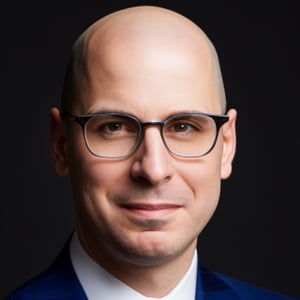
Partner and Lecturer
Adam Mortara graduated from the University of Chicago in 1996 with a B.Sc. in chemistry. He then attended Magdalene College, Cambridge, where he received a masters degree in astrophysics on a British Marshall Scholarship.
Mr. Mortara graduated from the University of Chicago Law School with highest honors in 2001. Following graduation, he clerked for Judge Patrick Higginbotham of the U.S. Court of Appeals for the Fifth Circuit and then for Justice Clarence Thomas of the Supreme Court of the United States. After his clerkships, he was a Temple Bar Scholar of the American Inns of Court.
From 2003 to 2020, Mr. Mortara was with Bartlit Beck LLP where he tried high stakes intellectual property cases and, more notably, Students For Fair Admissions v. Harvard. He retired from Bartlit Beck and founded Lawfair LLC, a civil and voting rights firm. He has been a Lecturer in Law at the University of Chicago Law School since 2007, where he teaches Federal Habeas Corpus, Federal Jurisdiction, Criminal Procedure, and Writing for the Judiciary.

Vice President - Chief IP Counsel, Intellectual Ventures
Phyllis T. Turner-Brim is Vice President, Chief IP Counsel of Intellectual Ventures headquartered in Bellevue, WA.
In this role, Phyllis is responsible for managing and coordinating legal services supporting patent asset acquisitions and divestitures, licensing, prosecution and related transactions. Phyllis’ current team consists of over fifty-five attorneys, para-professionals, assistants and clerks. Immediately prior to this post, Phyllis was Licensing Attorney Director – Program Development at IV.
Prior to joining IV, Phyllis had dual legal and business roles as IP Counsel and Director of RFID Strategy and Licensing at Intermec Technologies Corporation. In her legal role as IP Counsel, Phyllis had responsibility for managing and providing a full spectrum of intellectual property services and related legal counseling including, managing the IP Legal budget, selecting and managing outside prosecution counsel, managing and developing licensing programs, docketing and litigation support. In her business role as Director of RFID Strategy and Licensing, Phyllis had the general management responsibility for Intermec’s RFID BU. In this regard, Phyllis was responsible for driving RFID revenue, developing and implementing product strategy and roadmaps, managing internal and external partner relationships, developing and managing budget, and managing all business unit functions and personnel.
From 2000 to 2004, Phyllis was Associate General Counsel – Intellectual Property at Cabot Microelectronics Corporation. In this position, Ms. Turner-Brim established a full service intellectual property department as part of a corporate “spin-off,” and had responsibility for the corporate intellectual property function worldwide. In addition, Phyllis was responsible for providing legal counseling in the areas of Labor and Employment, Product Stewardship, Environmental Law, and Immigration.
Prior to her post at Intermec, Phyllis served briefly as Assistant General Counsel, Intellectual Property for Wal-Mart Stores, Inc. in Bentonville, Arkansas. She has also served as Intellectual Property Attorney for Amoco Corporation (now BP), and as an associate attorney at the IP boutique firm of McAndrews, Held and Malloy, Ltd.
Phyllis is a 1993 graduate of the University of Cincinnati Law School, and a 1986 honors graduate of the Illinois Institute of Technology (B.S. Chemical Engineering). She has served as a lecturer/presenter on several topics including, developing business focused licensing programs, diversity in the law, recruitment and retention of minorities and women in technical professions, chemical patent drafting, IP strategy development, career development and personal risk taking. Phyllis accepted an invitation to join the Board of Trustees for the AIPLEF in 2013. She has also been a member of the Board of Trustees for the Snohomish County YMCA since 2012 and in 2011, she was elected to Board of Trustees for Trinity Lutheran College in Everett, WA. Prior to pursuing a career in the law, Ms. Turner-Brim held technical management positions with General Electric Co. and Procter and Gamble Co.
U.S. Court of Appeals, Sixth Circuit
Danny Julián Boggs is a Judge on the United States Court of Appeals for the Sixth Circuit. He was appointed to a newly created seat on that court on January 29, 1986 by President Ronald Reagan, confirmed by the U.S. Senate on March 3, and received his commission on March 25. He served as the Chief Judge of the Sixth Circuit from 2003 to 2009.
Professor of the Practice of Law, Stanford Law School
Doug Melamed practiced law for 43 years before spending the 2014-15 academic year at the Law School as the Herman Phleger Visiting Professor of Law. He was appointed Professor of the Practice of Law in 2015.
From 2009 until 2014, Professor Melamed was Senior Vice President and General Counsel of Intel Corporation and was responsible for overseeing Intel’s legal, government affairs and corporate affairs departments. Prior to joining Intel in 2009, he was a partner in the Washington, D.C., office of WilmerHale, a global law firm in which he served as a chair of the Antitrust and Competition Practice Group. His practice included appellate and trial court litigation, counseling, and representing clients in matters before government law enforcement and regulatory agencies. He joined WilmerHale’s predecessor in 1971. From 1996 to 2001, Professor Melamed served in the U.S. Department of Justice as Acting Assistant Attorney General in charge of the Antitrust Division and, before that, as Principal Deputy Assistant Attorney General.
Professor Melamed has received numerous professional awards and honors. He has been the Distinguished Visitor from Practice and an adjunct professor at the Georgetown University Law Center, and he has authored numerous articles on antitrust and on law and economics. He is a member of the boards of directors of the Nasdaq exchanges and the American Law Institute and a Contributing Editor of the Antitrust Law Journal. He was for many years a member of the Yale University Council and a member of the board of trustees of Sidwell Friends School in Washington, D.C. After graduating from law school, he clerked for Judge Charles M. Merrill of the U.S. Court of Appeals for the Ninth Circuit.
Professor of Law, Boston University School of Law
The son of an economics professor, Michael Meurer knew by the time he was 13 that he, too, wanted to teach at the university level. An S.B., J.D. and Ph.D. later, he became an economics professor at Duke University and later a law professor at the University of Buffalo. He came to Boston University School of Law in 1999, where he has taught courses in patents, intellectual property and public policy toward the high-tech industry. "It's a special privilege to be able to speak three times a week to an attentive and thoughtful audience," he says.
Professor Meurer has received several grants and fellowships, including two grants from the Pew Charitable Trust, a Ford Foundation grant, an Olin Faculty Fellowship at Yale Law School and a postdoctoral fellowship at AT&T Bell Labs. He has served as an expert witness for the Federal Trade Commission on a merger case presenting issues related to patent licensing. He also has consulted with government officials from developing countries about antitrust law, and taught short courses in American intellectual property law at the law faculties of the University of Victoria and the National University of Singapore. "I'm excited by the prospect of having a positive influence on American technology law and policy," Professor Meurer says. Outside of work, he enjoys playing and watching basketball.
Partner and Lecturer
Adam Mortara graduated from the University of Chicago in 1996 with a B.Sc. in chemistry. He then attended Magdalene College, Cambridge, where he received a masters degree in astrophysics on a British Marshall Scholarship.
Mr. Mortara graduated from the University of Chicago Law School with highest honors in 2001. Following graduation, he clerked for Judge Patrick Higginbotham of the U.S. Court of Appeals for the Fifth Circuit and then for Justice Clarence Thomas of the Supreme Court of the United States. After his clerkships, he was a Temple Bar Scholar of the American Inns of Court.
From 2003 to 2020, Mr. Mortara was with Bartlit Beck LLP where he tried high stakes intellectual property cases and, more notably, Students For Fair Admissions v. Harvard. He retired from Bartlit Beck and founded Lawfair LLC, a civil and voting rights firm. He has been a Lecturer in Law at the University of Chicago Law School since 2007, where he teaches Federal Habeas Corpus, Federal Jurisdiction, Criminal Procedure, and Writing for the Judiciary.
Vice President - Chief IP Counsel, Intellectual Ventures
Phyllis T. Turner-Brim is Vice President, Chief IP Counsel of Intellectual Ventures headquartered in Bellevue, WA.
In this role, Phyllis is responsible for managing and coordinating legal services supporting patent asset acquisitions and divestitures, licensing, prosecution and related transactions. Phyllis’ current team consists of over fifty-five attorneys, para-professionals, assistants and clerks. Immediately prior to this post, Phyllis was Licensing Attorney Director – Program Development at IV.
Prior to joining IV, Phyllis had dual legal and business roles as IP Counsel and Director of RFID Strategy and Licensing at Intermec Technologies Corporation. In her legal role as IP Counsel, Phyllis had responsibility for managing and providing a full spectrum of intellectual property services and related legal counseling including, managing the IP Legal budget, selecting and managing outside prosecution counsel, managing and developing licensing programs, docketing and litigation support. In her business role as Director of RFID Strategy and Licensing, Phyllis had the general management responsibility for Intermec’s RFID BU. In this regard, Phyllis was responsible for driving RFID revenue, developing and implementing product strategy and roadmaps, managing internal and external partner relationships, developing and managing budget, and managing all business unit functions and personnel.
From 2000 to 2004, Phyllis was Associate General Counsel – Intellectual Property at Cabot Microelectronics Corporation. In this position, Ms. Turner-Brim established a full service intellectual property department as part of a corporate “spin-off,” and had responsibility for the corporate intellectual property function worldwide. In addition, Phyllis was responsible for providing legal counseling in the areas of Labor and Employment, Product Stewardship, Environmental Law, and Immigration.
Prior to her post at Intermec, Phyllis served briefly as Assistant General Counsel, Intellectual Property for Wal-Mart Stores, Inc. in Bentonville, Arkansas. She has also served as Intellectual Property Attorney for Amoco Corporation (now BP), and as an associate attorney at the IP boutique firm of McAndrews, Held and Malloy, Ltd.
Phyllis is a 1993 graduate of the University of Cincinnati Law School, and a 1986 honors graduate of the Illinois Institute of Technology (B.S. Chemical Engineering). She has served as a lecturer/presenter on several topics including, developing business focused licensing programs, diversity in the law, recruitment and retention of minorities and women in technical professions, chemical patent drafting, IP strategy development, career development and personal risk taking. Phyllis accepted an invitation to join the Board of Trustees for the AIPLEF in 2013. She has also been a member of the Board of Trustees for the Snohomish County YMCA since 2012 and in 2011, she was elected to Board of Trustees for Trinity Lutheran College in Everett, WA. Prior to pursuing a career in the law, Ms. Turner-Brim held technical management positions with General Electric Co. and Procter and Gamble Co.
Partner, McCarter & English, LLP
Erik concentrates his practice in the area of Intellectual Property/Information Technology. He is a trial attorney specializing in patent, trademark, and licensing disputes in federal and state courts, arbitrations, and the U.S. Patent and Trademark Office. He has handled a wide range of technology cases involving, for example, x-ray inspection systems, speech recognition software, Internet security software, diagnostic and medical devices, immunoassays, telecommunications electronics, and water purification systems.
Erik has extensive experience representing national and international clients in patent litigation in federal courts throughout the country. He has successfully enforced patent rights and has also defended companies accused of infringement. Erik has also designed and implemented trademark and copyright protection and enforcement strategies for clients in virtually every industry, including business consulting, financial services, life sciences, electronics, communications equipment, computer products, and consumer goods.
Erik's recent litigation victories include, for example, a case involving infringement of x-ray technology patents in which he obtained sanctions against an alleged infringer for making material misrepresentations to the court and for other misconduct. Sanctions included an award of attorneys' fees and striking of the validity defenses. He also successfully moved to exclude the alleged infringer's expert witness. This case settled on the first day of trial, after Erik and his team defeated the accused infringer's motion for summary judgment of non-infringement and won a number of motionsin limine.
In a precedent-setting case, Erik represented a vendor of Internet security software that had been sued by an adware company for blocking pop-up ads and adware. A federal court dismissed the claims, holding that his client was immune from civil liability under the Communications Decency Act. 47 USC § 230(c)(2)(B). The United States Court of Appeals for the Ninth Circuit affirmed the district court's ruling. SeeZango, Inc. v. Kaspersky Lab., Inc.(9th Cir. Case No. 07-35800). The case set precedent as the first application of the Act to immunize a vendor of Internet security software used to screen adware and spyware.
Erik represented a Sonoma winery that that owned a well-known trademark. In a summary judgment decision, a federal court ruled that the winery's licensee, an importer of luxury vodka, breached the license, that the winery properly terminated the license, and that the importer's continued sale of the vodka infringed the winery's trademark rights. The case settled soon afterwards.
Erik represented an R&D lab that had invented the key component of a medical diagnostic device. When the R&D lab discovered that its licensee, the manufacturer of the device, was using questionable accounting methods to reduce royalties, the lab sued to recover the unpaid royalties. Erik's client was awarded approximately $11 million in unpaid royalties, attorneys' fees, and interest. The First Circuit Court of Appeals upheld this award. SeeCytyc Corp. v. DEKA Products Limited Partnership, 439 F.2d 27 (1st Cir. 2006).
Erik writes and speaks on intellectual property and litigation issues. He has been honored for the past four years as aMassachusetts Super Lawyerin the field of intellectual property litigation in Massachusetts by Law & Politics and Boston Magazine.
Partner, Burns & Levinson LLP
Prior to joining Burns & Levinson LLP in January 2006, Mr. Cohen was a partner with the firm Perkins Smith & Cohen LLP.
He has more than 40 years experience as a lawyer dealing with patent, copyright, trademark, unfair competition, licensing/franchising, visual arts, software, databases and publication law, formation and operation of business enterprises and not-for-profit organizations, international trade, litigation/ADR, and legal ethics. He handles acquisition, licensing and litigation of intellectual property rights. He has also served as an expert witness, arbitrator and mediator in intellectual property matters.
Partner, McCarter & English LLP
Mr. Cote represents both small and large businesses and occasionally individuals in both federal and state courts throughout the country. His practice concentrates primarily on hospitality, employment, civil rights, contracts, unfair and deceptive conduct, class action, private property rights and appellate litigation.
During his time with McCarter, Mr. Cote has played an integral role in obtaining several significant victories for the firm's clients, including the dismissal of a challenge under the public trust doctrine to the private ownership of lawfully filled, tidelands that were developed pursuant to a legislative grant issued in 1832 and the successful defense of a large food service company in a case of first impression concerning the application and interpretation of the Massachusetts Tips Act. Mr. Cote was also instrumental in obtaining a sanctions award of $100,000 in connection with a construction accident case brought in bad faith against one of the firm's clients.
Prior to his admission to the bar, Mr. Cote served for over ten years as a paralegal and law clerk in Arizona, Massachusetts, Vermont and Washington, D.C. During this time, he served as the principal legal assistant to the Arizona Legislature's Ombudsman for Private Property Rights. He also clerked for the Honorable Roger J. Marzulla and Nancie G. Marzulla at Defenders of Property Rights, which, at the time, was the nation's only non-profit legal foundation dedicated exclusively to the protection of private property rights. He is a contributing author of that organization's 1999 publication "State Property Rights Legislation Report: Federalism in Action."
Mr. Cote presently serves as the vice-chair of the Boston Lawyers Division of the Federalist Society for Law and Public Policy Studies. He is also a member of the executive committee for the Federalist Society's Litigation Practice Group and the primary author of the Environmental Practice Group's 2001 terrorism briefing paper entitled: "National Security vs. Public Disclosure: The War on Terrorism's Implications Upon Federal Emergency Planning and Right to Know Laws."

Stevenson Bernard Professor, George Washington University Law School
The Honorable F. Scott Kieff is the Stevenson Bernard Professor at George Washington University Law School and a Visiting Fellow at Stanford University’s Hoover Institution.
He served as Commissioner of the U.S. International Trade Commission from 2013-2017. He also served during the Bush, Obama, and Trump Administrations in the part-time leadership of the national security defense-intelligence community.
He was previously a professor of law and medicine at Washington University in Saint Louis and a Senior Fellow at Hoover. A former law clerk to U.S. Circuit Judge Giles S. Rich, he is a graduate of Penn Law School and MIT, where he studied molecular biology and microeconomics. He was elected to the European Academy of Sciences and Arts in 2012 and the Academia Europaea in 2024.
His private sector work through Kieff Strategies LLC (www.kieffstrategies.com) provides neutral services including mediation and compliance, and expert services including crisis management, advising, and testimony.
Professor of Law, Boston University School of Law
The son of an economics professor, Michael Meurer knew by the time he was 13 that he, too, wanted to teach at the university level. An S.B., J.D. and Ph.D. later, he became an economics professor at Duke University and later a law professor at the University of Buffalo. He came to Boston University School of Law in 1999, where he has taught courses in patents, intellectual property and public policy toward the high-tech industry. "It's a special privilege to be able to speak three times a week to an attentive and thoughtful audience," he says.
Professor Meurer has received several grants and fellowships, including two grants from the Pew Charitable Trust, a Ford Foundation grant, an Olin Faculty Fellowship at Yale Law School and a postdoctoral fellowship at AT&T Bell Labs. He has served as an expert witness for the Federal Trade Commission on a merger case presenting issues related to patent licensing. He also has consulted with government officials from developing countries about antitrust law, and taught short courses in American intellectual property law at the law faculties of the University of Victoria and the National University of Singapore. "I'm excited by the prospect of having a positive influence on American technology law and policy," Professor Meurer says. Outside of work, he enjoys playing and watching basketball.
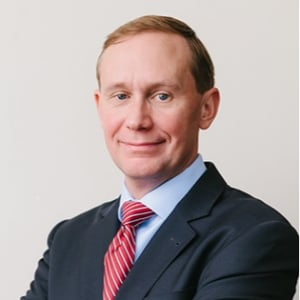
Associate Professor, Boston College Law School
David Olson is an associate professor and the Faculty Director of the Program on Innovation and Entrepreneurship. He teaches patent law, intellectual property law, antitrust law, and various seminars. His research and writing primarily focus on patents, copyrights, antitrust, and incentives for innovation and competition. Since joining BC Law in 2007, he has been recognized for his teaching excellence and contributions. In 2011, he received the Business & Law Society Faculty Award for Achievement in Business & Law. In 2012, he received the Professor Emil Slizewski Award for Faculty Excellence. For one semester in 2015, Olson served as a visiting professor at Pontifical Catholic University, Rio de Janeiro, Brazil, where he conducted research and taught a course on intellectual property.
Olson has published scholarly articles on patent law, copyright law, antitrust, music licensing, and first amendment copyright issues. His writing has been cited in Supreme Court and other legal opinions. He has testified before the U.S. Congress on matters of drug patents, FDA regulation, and antitrust.
The media frequently seeks Olson’s insights and opinions. He has been quoted in the Wall Street Journal, Associated Press, and Reuters, among others. He has appeared as a guest panelist on WBUR’s Radio Boston, WAMU's Kojo Namdi Show, and Public Radio Canada. His op-eds have appeared in the Chicago Tribune, Washington Times, and The Hill.
Olson came to Boston College from Stanford Law School's Center for Internet and Society, where he conducted research on patent law and litigated copyright fair use impact cases. Before entering academia, Olson practiced law as a patent litigator. He clerked for Judge Jerry Smith of the U.S. Court of Appeals for the Fifth Circuit.

Laurence A. Tisch Professor of Law and Director, Classical Liberal Institute, New York University School of Law; Director, Classical Liberal Institute, Civitas Institute University of Texas at Austin
Richard A. Epstein is the inaugural Laurence A. Tisch Professor of Law at NYU School of Law. Prior to his joining the faculty, he was a visiting law professor at NYU from 2007 through 2009. He served as the Peter and Kirstin Bedford Senior Fellow at the Hoover Institution from 2000 to 2024. Since 2024 to the present he is a senior lecturer at the Civitas Institute at the University of Texas—Austin. Epstein is also the James Parker Hall Distinguished Service Professor of Law Emeritus and a senior lecturer at the University of Chicago. His initial law school appointment was at the University of Southern California from 1968 to 1972. Epstein received an LL.D., h.c. from the University of Ghent, 2003. He has been a member of the American Academy of Arts and Sciences since 1985 and was a Senior Fellow of the Center for Clinical Medical Ethics at the University of Chicago Division of Biological Sciences, also from 1983. to 2022 He served as editor of the Journal of Legal Studies from 1981 to 1991, and of the Journal of Law and Economics from 1991-2001. From 2001 to 2010 he was a director of the John M. Olin Program in Law and Economics at the University of Chicago.
His newest book, The Myth of Birthright Citizenship: What the Fourteenth Amendment Really Says was published in 2026 (Encounter Books). Prior to that he has published many books including, The Dubious Morality of the Modern Administrative State (Roman & Littlefield 2020).Earlier he published th Classical Liberal Constitution: The Uncertain Quest for Limited Government (Harvard 2014) iHis previous books include Design for Liberty: Private Property, Public Administration and the Rule of Law (Harvard 2011); The Case Against the Employee Free Choice Act (Hoover 2009); Supreme Neglect: How to Revive the Constitutional Protection of Property Rights (Oxford 2008); Antitrust Decrees in Theory and Practice: Why Less is More (AEI 2007); Overdose: How Excessive Government Regulation Stifles Pharmaceutical Innovation (Yale University Press. 2006); How Progressives Rewrote the Constitution (Cato 2006); Cases and Materials on Torts (Aspen Law & Business; 8th ed. 2004); Skepticism and Freedom: A Modern Case for Classical Liberalism (University of Chicago, 2003); Torts (Aspen Law & Business 1999); Principles for a Free Society: Reconciling Individual Liberty with the Common Good (Perseus Books, 1998): Mortal Peril: Our Inalienable Rights to Health Care (Addison-Wesley, 1997); Simple Rules for a Complex World (Harvard, 1995); Bargaining With the State (Princeton, 1993); Forbidden Grounds: The Case Against Employment Discrimination Laws (Harvard , 1992); Takings: Private Property and the Power of Eminent Domain (Harvard, 1985); and Modern Products Liability Law (Greenwood Press, 1980). He has also edited(with Catherine M. Sharkey) Cases and Materials on the Law of Torts (10th edition 2012).
Professor Epstein has written numerous articles on a wide range of legal and interdisciplinary subjects. He has taught courses in administrative law, antitrust law, civil procedure, communications, constitutional law, contracts, corporations, criminal law, employment discrimination law, environmental law, food and drug law health law and policy, legal history, labor law, property, real estate development and finance, jurisprudence, labor law; land use planning, patents, individual, estate and corporate taxation, Roman Law; torts, and workers' compensation.
Professor Epstein also writes a regular column for Civitas Institute, which also sponsors his podcast, The Libertarian with Charles C.W. Cooke, and Law Talk, with Cooke and John Yoo. He also does a podcast with John Batchelor. And appears regularly on the Freedom File with Judge Andrew Napolitano.
Stevenson Bernard Professor, George Washington University Law School
The Honorable F. Scott Kieff is the Stevenson Bernard Professor at George Washington University Law School and a Visiting Fellow at Stanford University’s Hoover Institution.
He served as Commissioner of the U.S. International Trade Commission from 2013-2017. He also served during the Bush, Obama, and Trump Administrations in the part-time leadership of the national security defense-intelligence community.
He was previously a professor of law and medicine at Washington University in Saint Louis and a Senior Fellow at Hoover. A former law clerk to U.S. Circuit Judge Giles S. Rich, he is a graduate of Penn Law School and MIT, where he studied molecular biology and microeconomics. He was elected to the European Academy of Sciences and Arts in 2012 and the Academia Europaea in 2024.
His private sector work through Kieff Strategies LLC (www.kieffstrategies.com) provides neutral services including mediation and compliance, and expert services including crisis management, advising, and testimony.
Professor of Law, Boston University School of Law
The son of an economics professor, Michael Meurer knew by the time he was 13 that he, too, wanted to teach at the university level. An S.B., J.D. and Ph.D. later, he became an economics professor at Duke University and later a law professor at the University of Buffalo. He came to Boston University School of Law in 1999, where he has taught courses in patents, intellectual property and public policy toward the high-tech industry. "It's a special privilege to be able to speak three times a week to an attentive and thoughtful audience," he says.
Professor Meurer has received several grants and fellowships, including two grants from the Pew Charitable Trust, a Ford Foundation grant, an Olin Faculty Fellowship at Yale Law School and a postdoctoral fellowship at AT&T Bell Labs. He has served as an expert witness for the Federal Trade Commission on a merger case presenting issues related to patent licensing. He also has consulted with government officials from developing countries about antitrust law, and taught short courses in American intellectual property law at the law faculties of the University of Victoria and the National University of Singapore. "I'm excited by the prospect of having a positive influence on American technology law and policy," Professor Meurer says. Outside of work, he enjoys playing and watching basketball.

Lecturer in Law; Executive Director, Public Patent Foundation, Cardozo School of Law
Daniel B. Ravicher is a Lecturer in Law at Benjamin N. Cardozo School of Law and Executive Director of the Public Patent Foundation (“PUBPAT”). Labeled a modern day 'Robin Hood' by Science, named one of "The 50 Most Influential People in IP" by Managing Intellectual Property, and awarded anEchoing Green Fellowship for social entrepreneurship, Professor Ravicher is a registered patent attorney who writes and speaks frequently on patent law and policy, including testifying as an invited witness before Congress on the topic of patent reform. Professor Ravicher writes about patent policy issues for the Huffington Post and patent related corporate valuations issues for Seeking Alpha and through the Ravicher Reports. He is on Twitter@danravicher.
Professor Ravicher received his law degree from the University of Virginia School of Law, where he was the Franklin O'Blechman Scholar of his class, a Mortimer Caplin Public Service Award recipient and an Editor of the Virginia Journal of Law and Technology, and his bachelors degree in materials science magna cum laude with University Honors from the University of South Florida. He is admitted to the United States Supreme Court, the Courts of Appeals for the Federal, 2nd and 11th Circuits, the District Courts for the Southern and Eastern Districts of New York, the State of New York, and the United States Patent and Trademark Office.

Professor of Law, Southern Illinois University School of Law
Professor Mark F. Schultz joined the faculty in 2003. He teaches and writes primarily in the area of intellectual property.
Professor Schultz is a frequent author and speaker known for his work on the law and economics of the global intellectual property system. In one of his most influential projects, he worked with the Organization for Economic Cooperation and Development (OECD) to construct a groundbreaking global trade secret protection index (the TSPI). The TSPI is influencing policy discussions on this cutting-edge topic in capitals around the world. Other recent projects have included an empirical study that quantified for the first time the backlogs in patent offices worldwide, a report on how patented innovation is meeting global health challenges, and the construction of a new global index of copyright strength.
Professor Schultz is an influential voice in public policy debates regarding intellectual property. He has testified before the U.S. Congress on copyright law at the invitation of the House Judiciary Committee and has briefed the staff of the U.S. Senate Judiciary Committee on trade secret legislation. He speaks frequently around the world about the connection between secure and effective intellectual property rights and flourishing national economies and individual lives, with invitations from the U.S. Patent and Trademark Office, the U.S. Trade Representative, and the U.S. Copyright Office, as well as numerous academic institutions, think tanks, and industry groups. He served as an NGO delegate to the World Intellectual Property Organization (WIPO) for several years during the WIPO Development Agenda talks. He is also one of the organizers of an ongoing multilateral diplomatic dialogue on best practices in national trade secret laws, and is co-founder of the Center for Protection of Intellectual Property (CPIP) at George Mason University in Washington, D.C.
Among the awards and recognition he has received for his scholarship was the School of Law's Outstanding Scholar of the Year award in 2008. He has been a distinguished visiting scholar at the University of Botswana and a visiting professor at DePaul University College of Law.
Professor Schultz graduated with honors from the George Washington University School of Law. Following law school, he was a judicial clerk for the Hon. Daniel M. Friedman of the United States Court of Appeals for the Federal Circuit in Washington, D.C., and the Hon. Eric G. Bruggink of the United States Court of Federal Claims. Prior to joining academia, he practiced law for a decade, serving as outside general counsel to several tech startups and helping technology companies to expand their businesses and commercialize their intellectual property in dozens of countries. He holds a B.A. in International Economics from George Washington University and has done PhD level coursework in development economics at Southern Illinois University.
He is active in leadership roles in local and national organizations. He has served as chair of the Federalist Society's Intellectual Property Practice Group and the AALS Section on Internet and Computer Law. He is an officer of the American Bar Association's International IP Committee of the International Law Section and the American Intellectual Property Law Association’s Trade Secret Law Committee. He currently is chair of the Academic Advisory Board of the Copyright Alliance.
Professor Schultz teaches Copyright Law, Trade Secret Law, Trademark Law, and a senior seminar on Intellectual Property and Global Development. He established and directs both the Specialization in Intellectual Property Law and the IP Semester in Practice Externship Program. He also co-founded a Legal Globalization Class, offered every other year, that takes students to South Africa and Botswana after spending a semester learning about the legal system, culture, history, and politics of southern Africa. The popular course is a once-in-a-lifetime experience that introduces students to leading lawyers, judges, government officials, and human rights advocates, taking them from Cape Town to Johannesburg to Gaborone as well as many popular destinations including game reserves, national parks, the Cape of Good Hope, and the Cradle of Humankind.
Laurence A. Tisch Professor of Law and Director, Classical Liberal Institute, New York University School of Law; Director, Classical Liberal Institute, Civitas Institute University of Texas at Austin
Richard A. Epstein is the inaugural Laurence A. Tisch Professor of Law at NYU School of Law. Prior to his joining the faculty, he was a visiting law professor at NYU from 2007 through 2009. He served as the Peter and Kirstin Bedford Senior Fellow at the Hoover Institution from 2000 to 2024. Since 2024 to the present he is a senior lecturer at the Civitas Institute at the University of Texas—Austin. Epstein is also the James Parker Hall Distinguished Service Professor of Law Emeritus and a senior lecturer at the University of Chicago. His initial law school appointment was at the University of Southern California from 1968 to 1972. Epstein received an LL.D., h.c. from the University of Ghent, 2003. He has been a member of the American Academy of Arts and Sciences since 1985 and was a Senior Fellow of the Center for Clinical Medical Ethics at the University of Chicago Division of Biological Sciences, also from 1983. to 2022 He served as editor of the Journal of Legal Studies from 1981 to 1991, and of the Journal of Law and Economics from 1991-2001. From 2001 to 2010 he was a director of the John M. Olin Program in Law and Economics at the University of Chicago.
His newest book, The Myth of Birthright Citizenship: What the Fourteenth Amendment Really Says was published in 2026 (Encounter Books). Prior to that he has published many books including, The Dubious Morality of the Modern Administrative State (Roman & Littlefield 2020).Earlier he published th Classical Liberal Constitution: The Uncertain Quest for Limited Government (Harvard 2014) iHis previous books include Design for Liberty: Private Property, Public Administration and the Rule of Law (Harvard 2011); The Case Against the Employee Free Choice Act (Hoover 2009); Supreme Neglect: How to Revive the Constitutional Protection of Property Rights (Oxford 2008); Antitrust Decrees in Theory and Practice: Why Less is More (AEI 2007); Overdose: How Excessive Government Regulation Stifles Pharmaceutical Innovation (Yale University Press. 2006); How Progressives Rewrote the Constitution (Cato 2006); Cases and Materials on Torts (Aspen Law & Business; 8th ed. 2004); Skepticism and Freedom: A Modern Case for Classical Liberalism (University of Chicago, 2003); Torts (Aspen Law & Business 1999); Principles for a Free Society: Reconciling Individual Liberty with the Common Good (Perseus Books, 1998): Mortal Peril: Our Inalienable Rights to Health Care (Addison-Wesley, 1997); Simple Rules for a Complex World (Harvard, 1995); Bargaining With the State (Princeton, 1993); Forbidden Grounds: The Case Against Employment Discrimination Laws (Harvard , 1992); Takings: Private Property and the Power of Eminent Domain (Harvard, 1985); and Modern Products Liability Law (Greenwood Press, 1980). He has also edited(with Catherine M. Sharkey) Cases and Materials on the Law of Torts (10th edition 2012).
Professor Epstein has written numerous articles on a wide range of legal and interdisciplinary subjects. He has taught courses in administrative law, antitrust law, civil procedure, communications, constitutional law, contracts, corporations, criminal law, employment discrimination law, environmental law, food and drug law health law and policy, legal history, labor law, property, real estate development and finance, jurisprudence, labor law; land use planning, patents, individual, estate and corporate taxation, Roman Law; torts, and workers' compensation.
Professor Epstein also writes a regular column for Civitas Institute, which also sponsors his podcast, The Libertarian with Charles C.W. Cooke, and Law Talk, with Cooke and John Yoo. He also does a podcast with John Batchelor. And appears regularly on the Freedom File with Judge Andrew Napolitano.
Stevenson Bernard Professor, George Washington University Law School
The Honorable F. Scott Kieff is the Stevenson Bernard Professor at George Washington University Law School and a Visiting Fellow at Stanford University’s Hoover Institution.
He served as Commissioner of the U.S. International Trade Commission from 2013-2017. He also served during the Bush, Obama, and Trump Administrations in the part-time leadership of the national security defense-intelligence community.
He was previously a professor of law and medicine at Washington University in Saint Louis and a Senior Fellow at Hoover. A former law clerk to U.S. Circuit Judge Giles S. Rich, he is a graduate of Penn Law School and MIT, where he studied molecular biology and microeconomics. He was elected to the European Academy of Sciences and Arts in 2012 and the Academia Europaea in 2024.
His private sector work through Kieff Strategies LLC (www.kieffstrategies.com) provides neutral services including mediation and compliance, and expert services including crisis management, advising, and testimony.
Professor of Law, Boston University School of Law
The son of an economics professor, Michael Meurer knew by the time he was 13 that he, too, wanted to teach at the university level. An S.B., J.D. and Ph.D. later, he became an economics professor at Duke University and later a law professor at the University of Buffalo. He came to Boston University School of Law in 1999, where he has taught courses in patents, intellectual property and public policy toward the high-tech industry. "It's a special privilege to be able to speak three times a week to an attentive and thoughtful audience," he says.
Professor Meurer has received several grants and fellowships, including two grants from the Pew Charitable Trust, a Ford Foundation grant, an Olin Faculty Fellowship at Yale Law School and a postdoctoral fellowship at AT&T Bell Labs. He has served as an expert witness for the Federal Trade Commission on a merger case presenting issues related to patent licensing. He also has consulted with government officials from developing countries about antitrust law, and taught short courses in American intellectual property law at the law faculties of the University of Victoria and the National University of Singapore. "I'm excited by the prospect of having a positive influence on American technology law and policy," Professor Meurer says. Outside of work, he enjoys playing and watching basketball.
Lecturer in Law; Executive Director, Public Patent Foundation, Cardozo School of Law
Daniel B. Ravicher is a Lecturer in Law at Benjamin N. Cardozo School of Law and Executive Director of the Public Patent Foundation (“PUBPAT”). Labeled a modern day 'Robin Hood' by Science, named one of "The 50 Most Influential People in IP" by Managing Intellectual Property, and awarded anEchoing Green Fellowship for social entrepreneurship, Professor Ravicher is a registered patent attorney who writes and speaks frequently on patent law and policy, including testifying as an invited witness before Congress on the topic of patent reform. Professor Ravicher writes about patent policy issues for the Huffington Post and patent related corporate valuations issues for Seeking Alpha and through the Ravicher Reports. He is on Twitter@danravicher.
Professor Ravicher received his law degree from the University of Virginia School of Law, where he was the Franklin O'Blechman Scholar of his class, a Mortimer Caplin Public Service Award recipient and an Editor of the Virginia Journal of Law and Technology, and his bachelors degree in materials science magna cum laude with University Honors from the University of South Florida. He is admitted to the United States Supreme Court, the Courts of Appeals for the Federal, 2nd and 11th Circuits, the District Courts for the Southern and Eastern Districts of New York, the State of New York, and the United States Patent and Trademark Office.
Professor of Law, Southern Illinois University School of Law
Professor Mark F. Schultz joined the faculty in 2003. He teaches and writes primarily in the area of intellectual property.
Professor Schultz is a frequent author and speaker known for his work on the law and economics of the global intellectual property system. In one of his most influential projects, he worked with the Organization for Economic Cooperation and Development (OECD) to construct a groundbreaking global trade secret protection index (the TSPI). The TSPI is influencing policy discussions on this cutting-edge topic in capitals around the world. Other recent projects have included an empirical study that quantified for the first time the backlogs in patent offices worldwide, a report on how patented innovation is meeting global health challenges, and the construction of a new global index of copyright strength.
Professor Schultz is an influential voice in public policy debates regarding intellectual property. He has testified before the U.S. Congress on copyright law at the invitation of the House Judiciary Committee and has briefed the staff of the U.S. Senate Judiciary Committee on trade secret legislation. He speaks frequently around the world about the connection between secure and effective intellectual property rights and flourishing national economies and individual lives, with invitations from the U.S. Patent and Trademark Office, the U.S. Trade Representative, and the U.S. Copyright Office, as well as numerous academic institutions, think tanks, and industry groups. He served as an NGO delegate to the World Intellectual Property Organization (WIPO) for several years during the WIPO Development Agenda talks. He is also one of the organizers of an ongoing multilateral diplomatic dialogue on best practices in national trade secret laws, and is co-founder of the Center for Protection of Intellectual Property (CPIP) at George Mason University in Washington, D.C.
Among the awards and recognition he has received for his scholarship was the School of Law's Outstanding Scholar of the Year award in 2008. He has been a distinguished visiting scholar at the University of Botswana and a visiting professor at DePaul University College of Law.
Professor Schultz graduated with honors from the George Washington University School of Law. Following law school, he was a judicial clerk for the Hon. Daniel M. Friedman of the United States Court of Appeals for the Federal Circuit in Washington, D.C., and the Hon. Eric G. Bruggink of the United States Court of Federal Claims. Prior to joining academia, he practiced law for a decade, serving as outside general counsel to several tech startups and helping technology companies to expand their businesses and commercialize their intellectual property in dozens of countries. He holds a B.A. in International Economics from George Washington University and has done PhD level coursework in development economics at Southern Illinois University.
He is active in leadership roles in local and national organizations. He has served as chair of the Federalist Society's Intellectual Property Practice Group and the AALS Section on Internet and Computer Law. He is an officer of the American Bar Association's International IP Committee of the International Law Section and the American Intellectual Property Law Association’s Trade Secret Law Committee. He currently is chair of the Academic Advisory Board of the Copyright Alliance.
Professor Schultz teaches Copyright Law, Trade Secret Law, Trademark Law, and a senior seminar on Intellectual Property and Global Development. He established and directs both the Specialization in Intellectual Property Law and the IP Semester in Practice Externship Program. He also co-founded a Legal Globalization Class, offered every other year, that takes students to South Africa and Botswana after spending a semester learning about the legal system, culture, history, and politics of southern Africa. The popular course is a once-in-a-lifetime experience that introduces students to leading lawyers, judges, government officials, and human rights advocates, taking them from Cape Town to Johannesburg to Gaborone as well as many popular destinations including game reserves, national parks, the Cape of Good Hope, and the Cradle of Humankind.

Panel II: Current Issues in Patent Law
Danny J. Boggs, A. Douglas Melamed, Michael J. Meurer, Adam K. Mortara, Phyllis Turner-Brim
2015 National Student Symposium
Our patent system has historically been thought to be an engine of innovation, but it...
Panel II: Current Issues in Patent Law
Danny J. Boggs, A. Douglas Melamed, Michael J. Meurer, Adam K. Mortara, Phyllis Turner-Brim
2015 National Student Symposium
Our patent system has historically been thought to be an engine of innovation, but it...
Patent Enforcement in the 21st Century
Erik P. Belt, Jerry Cohen, Gregory D. Cote, F. Scott Kieff, Michael J. Meurer, David S. Olson
Boston Lawyers Chapter, Intellectual Property Practice Group, and Litigation Practice Group
This panel will explore the long-standing debate over remedies for patent infringement and whether and...
Intellectual Property: Intellectual Property and Economic Growth
Richard A. Epstein, F. Scott Kieff, Michael J. Meurer, Daniel B. Ravicher, Mark F. Schultz
2009 National Lawyers Convention
Strong property rights are generally believed to be essential for a healthy (and free) economy. ...
Intellectual Property: Intellectual Property and Economic Growth
Richard A. Epstein, F. Scott Kieff, Michael J. Meurer, Daniel B. Ravicher, Mark F. Schultz
2009 National Lawyers Convention
Strong property rights are generally believed to be essential for a healthy (and free) economy. ...