

Founder and Partner, Dowd Scheffel PLLC
Matthew Dowd focuses his skills on complex appellate and trial litigation, with an emphasis on patent and intellectual property issues. Through his years of practice, Mr. Dowd has successfully worked on numerous high-stakes and eclectic legal matters, focusing primarily on all stages of complex patent matters (AIA proceedings, litigation, prosecution, and counseling). Mr. Dowd's expertise and leadership are regularly consulted, as he is frequently asked to comment in the press on leading intellectual property issues.
Mr. Dowd has substantial experience with Hatch-Waxman litigation, including all stages of opinion analysis, litigation, and appeals. His technical background in medicinal chemistry is ideally suited for litigating pharmaceutical patents. He has represented clients in a range of trial forums for patent disputes, such as the Eastern District of Texas and the District of Delaware, as well as the Patent Trial and Appeal Board at the USPTO.
He has argued and briefed numerous appeals before the U.S. Court of Appeals for the Federal Circuit and other courts involving issues such as patent law, Hatch-Waxman, administrative law, Fifth Amendment takings, contract claims, government employment issues, and criminal law. In 2018, Mr. Dowd is co-counsel with the Hon. Richard Posner (ret.) of U.S. Court of Appeals for the Seventh Circuit in an appeal before the U.S. Court of Appeals for the Fourth Circuit.
In 2013, Mr. Dowd represented Nobel Laureate James Watson, co-discoverer of the DNA double helix, as amicus curiae in the groundbreaking 2013 Supreme Court gene patent case. Mr. Dowd has over 15 years of experience representing clients before the U.S. Patent and Trademark Office.
Mr. Dowd is also well-known for his successful pro bono representation in the "free-range kids" case. The case was widely reported in the national, local, and international news.
Mr. Dowd attended The George Washington University Law School, graduating with high honors and being awarded Order of the Coif. While attending law school and before, Mr. Dowd worked full-time as a registered patent agent at the renowned IP boutique Sterne, Kessler, Goldstein & Fox.
After law school, Mr. Dowd clerked for the Honorable Paul R. Michel, Chief Judge (ret.) of the U.S. Court of Appeals for the Federal Circuit. While a law clerk, Mr. Dowd gained an insider's perspective on the appellate process. Understanding the appellate process is critical to maximizing success at the earlier stages of a case.
Mr. Dowd is currently appointed as a Professorial Lecturer in Law at The George Washington University Law School. He teaches appellate advocacy and is the coach for the student moot court team for the AIPLA Giles Sutherland Rich Moot Court Competition.
Prior to his legal career, Mr. Dowd spent four years in a Ph.D. program in medical chemistry, studying organic chemistry, pharmacology, and pharmaceutical drug design. During his Ph.D. program, Mr. Dowd's research discovered a novel structure-activity relationship for nicotinic ligands with potential utility in treating Alzheimer's and Parkinson's diseases. Mr. Dowd attended The College of William and Mary, in Williamsburg, VA, and Regis High School in New York City.

Principal, Knowles Intellectual Property Strategies
Sherry M. Knowles is an intellectual property attorney with 30 years of experience in global corporate and private practice, and is a member of the inaugural class of the IPWatchdog Masters™ Hall of Fame.
Currently the Principal of Knowles Intellectual Property Strategies, Ms. Knowles was the Senior Vice President and Chief Patent Counsel at GlaxoSmithKline from 2006-2010, where she served as the worldwide head of patents for all litigation and transactional matters, and managed a global department of over 200 people in 12 offices. At GSK, Ms. Knowles was a member of the Scientific Advisory Board, the Technology Investment Board, the Product Management Board, the Legal Management Team and she led the Global Patents Executive Team.
Ms. Knowles played a key role in the case of GlaxoSmithKline and Tafas v. Dudas, 541 F. Supp. 2d 805 (E.D. Va. 2008). On October 9, 2007, GSK became the first and only company in the US to file a lawsuit to challenge the Final Rules published by the US Patent and Trademark Office on August 7, 2007. During the course of litigation, 20 amicus briefs were filed by parties in support of GSK and Dr. Tafas, including from the AIPLA, PhRMA, BIO, IPO, Washington Legal Foundation and CropLife America. The litigation concluded in October 2009, when David Kappos made the decision to withdraw the contested regulations and GSK agreed to join with the PTO in a motion to dismiss all litigation.
In 2008, Managing IP Magazine named Ms. Knowles one of the top 10 most influential people in Intellectual Property, referring to her as a “Patent Owner’s Advocate.” In 2010, the New Jersey Intellectual Property Lawyers Association awarded GSK, with Ms. Knowles as the representative, the Jefferson Medal for exceptional contribution to Intellectual Property. In 2010, Managing IP Magazine named the GSK Global Patent Team the “In-House IP Team of the Year” for 2009 for the constructive approach to IP in the developing world, the engagement with public policy in Europe and the successful resolution of the USPTO rules matter in the US.
In November 2011, Intellectual Asset Management Magazine listed Ms. Knowles among the top fifty key individuals, companies and institutions that have shaped the IP marketplace in the last eight years. Ms. Knowles is also listed in the IAM 250 “World’s Leading IP Strategists,” published by IAM Magazine in 2011, the IAM 300 “World’s Leading IP Strategists,” published by IAM Magazine in 2012, 2013, 2014, 2015, 2016 and 2017 as well as the IAM 1000 “World’s Leading Patent Professionals” in 2015, 2016 and 2017. She was also included in the list of Top 250 Women in IP by Managing IP Magazine in 2014, Managing IP’s 2016 and 2017 list of “IP Stars”.
Ms. Knowles was Chair of the IP Subcommittee of PhRMA in 2008, and Chair Emeritus of the PhRMA IP Subcommittees in 2009 and 2010. From 2006-2010, she was a member of InterPat, which is the association of Chief Patent Counsels of the major pharmaceutical companies, and from 2008-2010 was a member of the Executive Committee of InterPat. She was the Chair of the work stream on data exclusivity for InterPat from 2006-2010.

President & CEO, IPWatchdog, Inc.
Gene Quinn is a patent attorney and a leading commentator on patent law and innovation policy. Mr. Quinn has twice been named one of the top 50 most influential people in IP by Managing IP Magazine, in both 2014 and 2019. From 2017-2023, Mr. Quinn has also been recognized by IAM Magazine as one of the top 300 IP strategists in the world, and in 2021 he was recognized by IAM in their inaugural Strategy 300 Global Leaders list.
Mr. Quinn founded IPWatchdog.com in 1999, and he is currently President & CEO of IPWatchdog, Inc. According to IAM Magazine, Mr. Quinn “has reshaped the IP debate in the United States in a way that has forced policy makers to carefully consider the macroeconomic effects of IP law and its potential to drive innovation and economic activity.”
Regarded as an expert on software patentability and U.S. patent procedure, Mr. Quinn has advised inventors, entrepreneurs and start-up businesses throughout the U.S. and around the world. He consults with attorneys facing peculiar procedural issues at the Patent Office, advises investors and executives on patent law changes and pending litigation matters, and has represented patent practitioners before the Office of Enrollment & Discipline.
Mr. Quinn began his career as a litigator handling a variety of civil litigation matters, and he has been a patent attorney for nearly two decades. He has previously taught a variety of intellectual property courses at the law school level, teaching courses such as patent law, patent claim drafting, patent prosecution, copyright law, trademark law and introduction to intellectual property at Syracuse University College of Law, Temple University School of Law, The University of Toledo College of Law, the University of New Hampshire School of Law, the John Marshall Law School (Chicago) and Whittier Law School. Since 2000 Mr. Quinn has also taught the leading patent bar review course in the nation.
Mr. Quinn is admitted to practice law in New Hampshire, is a Registered Patent Attorney licensed to practice before the United States Patent Office and is also admitted to practice before the United States Court of Appeals for the Federal Circuit.

Managing Attorney, Rogitz & Associates
John M. Rogitz is an IAM 300 World-Leading IP Strategist and second-generation patent attorney that currently serves as Managing Attorney at Rogitz & Associates. He is also a member of the IPWatchdog Advisory Committee and an adjunct professor at Trinity Law School. In addition, John recently served on the Executive Committee of the IP Section of the California Lawyers Association (2023-2025) and co-founded CLA’s AI Interest Group.
As Managing Attorney at Rogitz & Associates, John manages the firm’s day-to-day operations and many of the firm’s clients. He is a registered patent attorney specializing in patent preparation and prosecution in a range of technologies including artificial intelligence, robotics, autonomous vehicles, extended reality, video games, Internet of things (IoT), blockchain, fintech, rules-based software, computer hardware, medical devices, and other electrical and mechanical inventions. His clients range from startups and independent inventors to Fortune 500 companies. Before joining Rogitz & Associates, John was engaged in civil litigation at the Watkins Firm, a San Diego-based law firm.
John teaches all types of IP at Trinity Law School and has also taught IP at the undergraduate level. He writes for IPWatchdog, America’s leading patent law publication, and has also been published by IP Today, IP Magazine, and others. John regularly speaks to trade groups like the National Association of Patent Practitioners and Licensing Executives Society. Prior to practicing law, John worked in industry as a web developer.
John received his J.D. in 2009 from California Western School of Law, where he was selected for the Dean’s List and served as President of the Student Intellectual Property Law Association. John studied physics at Loyola Marymount University where, among other activities, he wrote for the school newspaper and participated in various philanthropic endeavors.

Professor of Law, DePaul University College of Law
Joshua D. Sarnoff is a professor of law at DePaul University and a faculty member in and former director of the Center for Intellectual Property Law & Information Technology (CIPLIT®). He teaches patent law, advanced patent law, administrative law, law and climate change, and other intellectual property law courses. He was previously a professor at the Washington College of Law, American University, in the Glushko-Samuelson Intellectual Property Law Clinic, and at the University of Arizona College of Law. In academic year 2014-2015, Professor Sarnoff was a Thomas A. Edison Distinguished Scholar at the United States Patent and Trademark Office. He is a registered patent attorney and a member of the bars of Washington D.C. and California, a former member of the board of governors of the Federal Circuit Bar Association, and a member of the boards of directors and advisory boards of various nonprofit organizations. He has written numerous articles and book chapters on patent law and climate change and has been involved in a wide range of intellectual property legal and policy disputes. He has submitted testimony on domestic patent law reform bills, has filed numerous amicus briefs in the United States Supreme Court and in the U.S. Court of Appeals for the Federal Circuit on important patent law issues, has been a pro bono mediator for the Federal Circuit, and has been a consultant to the United Nations Conference on Trade and Development on international intellectual property, trade and environmental issues. Professor Sarnoff was formerly in the private practice of intellectual property, environmental, and food and drug law in Washington, D.C. He received his BS from MIT and JD from Stanford.
Founder and Partner, Dowd Scheffel PLLC
Matthew Dowd focuses his skills on complex appellate and trial litigation, with an emphasis on patent and intellectual property issues. Through his years of practice, Mr. Dowd has successfully worked on numerous high-stakes and eclectic legal matters, focusing primarily on all stages of complex patent matters (AIA proceedings, litigation, prosecution, and counseling). Mr. Dowd's expertise and leadership are regularly consulted, as he is frequently asked to comment in the press on leading intellectual property issues.
Mr. Dowd has substantial experience with Hatch-Waxman litigation, including all stages of opinion analysis, litigation, and appeals. His technical background in medicinal chemistry is ideally suited for litigating pharmaceutical patents. He has represented clients in a range of trial forums for patent disputes, such as the Eastern District of Texas and the District of Delaware, as well as the Patent Trial and Appeal Board at the USPTO.
He has argued and briefed numerous appeals before the U.S. Court of Appeals for the Federal Circuit and other courts involving issues such as patent law, Hatch-Waxman, administrative law, Fifth Amendment takings, contract claims, government employment issues, and criminal law. In 2018, Mr. Dowd is co-counsel with the Hon. Richard Posner (ret.) of U.S. Court of Appeals for the Seventh Circuit in an appeal before the U.S. Court of Appeals for the Fourth Circuit.
In 2013, Mr. Dowd represented Nobel Laureate James Watson, co-discoverer of the DNA double helix, as amicus curiae in the groundbreaking 2013 Supreme Court gene patent case. Mr. Dowd has over 15 years of experience representing clients before the U.S. Patent and Trademark Office.
Mr. Dowd is also well-known for his successful pro bono representation in the "free-range kids" case. The case was widely reported in the national, local, and international news.
Mr. Dowd attended The George Washington University Law School, graduating with high honors and being awarded Order of the Coif. While attending law school and before, Mr. Dowd worked full-time as a registered patent agent at the renowned IP boutique Sterne, Kessler, Goldstein & Fox.
After law school, Mr. Dowd clerked for the Honorable Paul R. Michel, Chief Judge (ret.) of the U.S. Court of Appeals for the Federal Circuit. While a law clerk, Mr. Dowd gained an insider's perspective on the appellate process. Understanding the appellate process is critical to maximizing success at the earlier stages of a case.
Mr. Dowd is currently appointed as a Professorial Lecturer in Law at The George Washington University Law School. He teaches appellate advocacy and is the coach for the student moot court team for the AIPLA Giles Sutherland Rich Moot Court Competition.
Prior to his legal career, Mr. Dowd spent four years in a Ph.D. program in medical chemistry, studying organic chemistry, pharmacology, and pharmaceutical drug design. During his Ph.D. program, Mr. Dowd's research discovered a novel structure-activity relationship for nicotinic ligands with potential utility in treating Alzheimer's and Parkinson's diseases. Mr. Dowd attended The College of William and Mary, in Williamsburg, VA, and Regis High School in New York City.
Principal, Knowles Intellectual Property Strategies
Sherry M. Knowles is an intellectual property attorney with 30 years of experience in global corporate and private practice, and is a member of the inaugural class of the IPWatchdog Masters™ Hall of Fame.
Currently the Principal of Knowles Intellectual Property Strategies, Ms. Knowles was the Senior Vice President and Chief Patent Counsel at GlaxoSmithKline from 2006-2010, where she served as the worldwide head of patents for all litigation and transactional matters, and managed a global department of over 200 people in 12 offices. At GSK, Ms. Knowles was a member of the Scientific Advisory Board, the Technology Investment Board, the Product Management Board, the Legal Management Team and she led the Global Patents Executive Team.
Ms. Knowles played a key role in the case of GlaxoSmithKline and Tafas v. Dudas, 541 F. Supp. 2d 805 (E.D. Va. 2008). On October 9, 2007, GSK became the first and only company in the US to file a lawsuit to challenge the Final Rules published by the US Patent and Trademark Office on August 7, 2007. During the course of litigation, 20 amicus briefs were filed by parties in support of GSK and Dr. Tafas, including from the AIPLA, PhRMA, BIO, IPO, Washington Legal Foundation and CropLife America. The litigation concluded in October 2009, when David Kappos made the decision to withdraw the contested regulations and GSK agreed to join with the PTO in a motion to dismiss all litigation.
In 2008, Managing IP Magazine named Ms. Knowles one of the top 10 most influential people in Intellectual Property, referring to her as a “Patent Owner’s Advocate.” In 2010, the New Jersey Intellectual Property Lawyers Association awarded GSK, with Ms. Knowles as the representative, the Jefferson Medal for exceptional contribution to Intellectual Property. In 2010, Managing IP Magazine named the GSK Global Patent Team the “In-House IP Team of the Year” for 2009 for the constructive approach to IP in the developing world, the engagement with public policy in Europe and the successful resolution of the USPTO rules matter in the US.
In November 2011, Intellectual Asset Management Magazine listed Ms. Knowles among the top fifty key individuals, companies and institutions that have shaped the IP marketplace in the last eight years. Ms. Knowles is also listed in the IAM 250 “World’s Leading IP Strategists,” published by IAM Magazine in 2011, the IAM 300 “World’s Leading IP Strategists,” published by IAM Magazine in 2012, 2013, 2014, 2015, 2016 and 2017 as well as the IAM 1000 “World’s Leading Patent Professionals” in 2015, 2016 and 2017. She was also included in the list of Top 250 Women in IP by Managing IP Magazine in 2014, Managing IP’s 2016 and 2017 list of “IP Stars”.
Ms. Knowles was Chair of the IP Subcommittee of PhRMA in 2008, and Chair Emeritus of the PhRMA IP Subcommittees in 2009 and 2010. From 2006-2010, she was a member of InterPat, which is the association of Chief Patent Counsels of the major pharmaceutical companies, and from 2008-2010 was a member of the Executive Committee of InterPat. She was the Chair of the work stream on data exclusivity for InterPat from 2006-2010.
President & CEO, IPWatchdog, Inc.
Gene Quinn is a patent attorney and a leading commentator on patent law and innovation policy. Mr. Quinn has twice been named one of the top 50 most influential people in IP by Managing IP Magazine, in both 2014 and 2019. From 2017-2023, Mr. Quinn has also been recognized by IAM Magazine as one of the top 300 IP strategists in the world, and in 2021 he was recognized by IAM in their inaugural Strategy 300 Global Leaders list.
Mr. Quinn founded IPWatchdog.com in 1999, and he is currently President & CEO of IPWatchdog, Inc. According to IAM Magazine, Mr. Quinn “has reshaped the IP debate in the United States in a way that has forced policy makers to carefully consider the macroeconomic effects of IP law and its potential to drive innovation and economic activity.”
Regarded as an expert on software patentability and U.S. patent procedure, Mr. Quinn has advised inventors, entrepreneurs and start-up businesses throughout the U.S. and around the world. He consults with attorneys facing peculiar procedural issues at the Patent Office, advises investors and executives on patent law changes and pending litigation matters, and has represented patent practitioners before the Office of Enrollment & Discipline.
Mr. Quinn began his career as a litigator handling a variety of civil litigation matters, and he has been a patent attorney for nearly two decades. He has previously taught a variety of intellectual property courses at the law school level, teaching courses such as patent law, patent claim drafting, patent prosecution, copyright law, trademark law and introduction to intellectual property at Syracuse University College of Law, Temple University School of Law, The University of Toledo College of Law, the University of New Hampshire School of Law, the John Marshall Law School (Chicago) and Whittier Law School. Since 2000 Mr. Quinn has also taught the leading patent bar review course in the nation.
Mr. Quinn is admitted to practice law in New Hampshire, is a Registered Patent Attorney licensed to practice before the United States Patent Office and is also admitted to practice before the United States Court of Appeals for the Federal Circuit.
Managing Attorney, Rogitz & Associates
John M. Rogitz is an IAM 300 World-Leading IP Strategist and second-generation patent attorney that currently serves as Managing Attorney at Rogitz & Associates. He is also a member of the IPWatchdog Advisory Committee and an adjunct professor at Trinity Law School. In addition, John recently served on the Executive Committee of the IP Section of the California Lawyers Association (2023-2025) and co-founded CLA’s AI Interest Group.
As Managing Attorney at Rogitz & Associates, John manages the firm’s day-to-day operations and many of the firm’s clients. He is a registered patent attorney specializing in patent preparation and prosecution in a range of technologies including artificial intelligence, robotics, autonomous vehicles, extended reality, video games, Internet of things (IoT), blockchain, fintech, rules-based software, computer hardware, medical devices, and other electrical and mechanical inventions. His clients range from startups and independent inventors to Fortune 500 companies. Before joining Rogitz & Associates, John was engaged in civil litigation at the Watkins Firm, a San Diego-based law firm.
John teaches all types of IP at Trinity Law School and has also taught IP at the undergraduate level. He writes for IPWatchdog, America’s leading patent law publication, and has also been published by IP Today, IP Magazine, and others. John regularly speaks to trade groups like the National Association of Patent Practitioners and Licensing Executives Society. Prior to practicing law, John worked in industry as a web developer.
John received his J.D. in 2009 from California Western School of Law, where he was selected for the Dean’s List and served as President of the Student Intellectual Property Law Association. John studied physics at Loyola Marymount University where, among other activities, he wrote for the school newspaper and participated in various philanthropic endeavors.
Professor of Law, DePaul University College of Law
Joshua D. Sarnoff is a professor of law at DePaul University and a faculty member in and former director of the Center for Intellectual Property Law & Information Technology (CIPLIT®). He teaches patent law, advanced patent law, administrative law, law and climate change, and other intellectual property law courses. He was previously a professor at the Washington College of Law, American University, in the Glushko-Samuelson Intellectual Property Law Clinic, and at the University of Arizona College of Law. In academic year 2014-2015, Professor Sarnoff was a Thomas A. Edison Distinguished Scholar at the United States Patent and Trademark Office. He is a registered patent attorney and a member of the bars of Washington D.C. and California, a former member of the board of governors of the Federal Circuit Bar Association, and a member of the boards of directors and advisory boards of various nonprofit organizations. He has written numerous articles and book chapters on patent law and climate change and has been involved in a wide range of intellectual property legal and policy disputes. He has submitted testimony on domestic patent law reform bills, has filed numerous amicus briefs in the United States Supreme Court and in the U.S. Court of Appeals for the Federal Circuit on important patent law issues, has been a pro bono mediator for the Federal Circuit, and has been a consultant to the United Nations Conference on Trade and Development on international intellectual property, trade and environmental issues. Professor Sarnoff was formerly in the private practice of intellectual property, environmental, and food and drug law in Washington, D.C. He received his BS from MIT and JD from Stanford.

Former Chief Judge, U.S. Court of Federal Claims
Judge Braden was appointed to the United States Court of Federal Claims on July 14, 2003, by President George W. Bush, after being confirmed by unanimous consent of the United States Senate. She was sworn into office by Senator Jeff Sessions. Her investiture was conducted on October 24, 2003 by Justice Sandra Day O’Connor and Justice Ruth Bader Ginsburg.
On January 28, 2015, Judge Braden was appointed by the American Law Institute as one of seven Judicial Advisors to the Restatement of the Law on Copyright. In 2013, Judge Braden was appointed to the Judges Special Committee of the American Intellectual Property Law Association and was named as Chair of the Intellectual Property Committee of the Advisory Council of the United States Court of Federal Claims. On March 23, 2012, Judge Braden received the Linn Inn Alliance Distinguished Service Medal at the New York Intellectual Property Lawyers Association Annual Dinner for her work with the American Inns of Court, dedicated to intellectual property law. On February 7, 2012, Judge Braden was appointed as Chair of the American Bar Association’s Section of Intellectual Property Law Task Force to consider how to more efficiently adjudicate "small" patent infringement cases. During 2010-2011, Judge Braden served as President of the Giles S. Rich American Inn of Court, which is affiliated with the United States Court of Appeals for the Federal Circuit. She was recognized at a ceremony in the United States Supreme Court in November 2011, when she received the American Inns of Court’s Platinum Distinction Award. Judge Braden also served as a Member of the Editorial Board of the American Intellectual Property Law Association.
In July 2009, Judge Braden was appointed as a Member of the Standing Committee on Ethics and Professional Responsibility-Judges Advisory Committee to the American Bar Association, on which she served until 2012. On February 14, 2007, Judge Braden was elected as a Member of the American Law Institute and was active in drafting Restatement of Law Third, Restitution and Unjust Enrichment. On October 22, 2004, she was inducted as a Senior Fellow of the ABA’s Administrative Law and Regulatory Section by Justice O’Connor at a ceremony held at the United States Supreme Court.
Prior to joining the bench, Judge Braden litigated complex federal and administrative law cases in private practice in trial and appellate courts. In particular, her work in the intellectual property area received favorable notice in the Wall Street Journal, New York Times, National Law Journal, and the Journal of the American Bar Association, and was featured in Interfaces on Trial: Intellectual Property and Interoperability In The Global Software Industry. In 1996, Judge Braden was honored by the Computer Law Association for winning multiple decisions in the Eastern District of New York, the Eastern District of Texas, the Second Circuit, and a certified question to the Supreme Court of Texas in Computer Assocs. Int’l, Inc. v. Altai Inc., a landmark case that changed the application of copyright law to computer software. In 1998, she also won a companion case brought in France before the Cour de Appel de Paris.
In private practice, Judge Braden represented a wide variety of client interests before almost every major department and federal agency, testified before the United States Congress on a variety of matters, and was a principal lobbyist for the Emergency Oil and Steel Loan Guarantee Act of 1999, that established a $1 billion federal loan guarantee program to assist bankrupt and troubled steel mills and small oil companies.
Judge Braden received a B.A. degree (1970) and J. D. degree (1973) from Case Western Reserve University in Cleveland, Ohio. She also attended post graduate courses at the Harvard Law School in the summer of 1978.

Partner, Cravath Swaine & Moore LLP
David J. Kappos is a partner at Cravath. He is widely recognized as one of the world’s foremost leaders in the field of intellectual property, including intellectual property management and strategy, the development of global intellectual property norms, laws and practices as well as commercialization and enforcement of innovation-based assets. Mr. Kappos supports the Firm’s clients with a wide range of their most complex intellectual property issues, including those pertaining to blockchain and financial technology (FinTech).
From August 2009 to January 2013, Mr. Kappos served as Under Secretary of Commerce and Director of the United States Patent and Trademark Office (USPTO). In that role, he advised the President, the Secretary of Commerce and the Administration on intellectual property policy matters. As Director of the USPTO, he led the Agency in dramatically re-engineering its entire management and operational systems as well as its engagement with the global innovation community. He was instrumental in achieving the greatest legislative reform of the U.S. patent system in generations through passage and implementation of the Leahy‑Smith America Invents Act, signed into law by President Obama in September 2011.
Prior to leading the USPTO, Mr. Kappos held several executive posts in the legal department of IBM, the world’s largest patent holder. From 2003 to 2009, he served as the company’s chief intellectual property lawyer. In that capacity, he managed global intellectual property activities for IBM, including all aspects of patent, trademark, copyright and trade secret protection. Mr. Kappos joined IBM as a development engineer. During his more than 25 years at IBM, he served in a variety of roles including litigation counsel and Asia Pacific IP counsel, based in Tokyo, Japan, where he led all aspects of intellectual property protection, including licensing, transactions support and mergers and acquisitions activity for the Asia/Pacific region.
Mr. Kappos has received numerous accolades for his contributions to the field of intellectual property, including, among others, the 2014 Global Agenda Council Vision Award for the Intellectual Property Council’s pro bono initiative from the World Economic Forum, the 2014 Jefferson Medal from the New Jersey Intellectual Property Law Association (NJIPLA), the 2013 Board of Director’s Excellence Award from the American Intellectual Property Law Association (AIPLA), the 2013 Champion of Intellectual Property Award from the District of Columbia Bar Association and the 2013 North America Government Leadership Award from Semiconductor Equipment and Materials International (SEMI). He was named one of the “Top 25 Icons of IP” by Law360, one of the “50 Most Influential People in Intellectual Property” and the “Outstanding Practitioner of the Year in IP Transactions” by Managing IP, one of the “Top 50 Intellectual Property Trailblazers & Pioneers” and one of the “100 Most Influential Lawyers in America” by The National Law Journal, “Intellectual Property Professional of the Year” by the Intellectual Property Owners Association and inducted into the Intellectual Property Hall of Fame by Intellectual Asset Management Magazine in 2012. Mr. Kappos was also recognized as a leading lawyer by IAM Strategy 300, IAM Patent 1000, World IP Review, The Legal 500 US, Who’s Who Legal: Patents, Lawdragon, Super Lawyers and The Best Lawyers in America. He is a frequent speaker and has authored many published articles on various intellectual property, innovation and leadership topics.
Mr. Kappos serves on the Boards of Directors of the Partnership for Public Service, the Center for Global Enterprise and the Intellectual Property Owners Education Foundation. He is the Chair of the Advisory Council of the Naples Roundtable, and the U.S. Chair of the U.S.-China IP Cooperation Dialogue. He is also an Adjunct Professor at Columbia Law School, where he teaches copyright litigation, and Cornell Law School, where he teaches legal advising for the start-up general counsel.
Mr. Kappos was born in Palos Verdes, California. He received a B.S. summa cum laude in Electrical and Computer Engineering from the University of California, Davis in 1983 and a J.D. from the University of California, Berkeley in 1990.
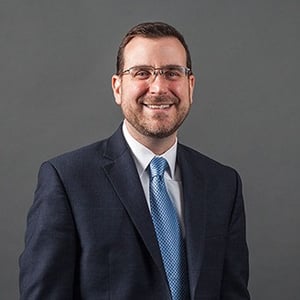
Professor of Law, Antonin Scalia Law School, George Mason University
Adam Mossoff is Professor of Law at Antonin Scalia Law School, George Mason University. He has published extensively on why patents, copyrights, and other intellectual property rights have been—and should be—legally secured to innovators and creators as property rights. His scholarship has been relied on by the United States Supreme Court, by lower federal courts, and by U.S. federal agencies. He has been invited to testify numerous times before the U.S. Senate and the House of Representatives on intellectual property legislation. His writings on intellectual property policy have also appeared in the Wall Street Journal, New York Times, Forbes, Investors Business Daily, and in other media outlets. His journal articles can be downloaded here.
Professor Mossoff is a longstanding member of the Executive Committee of the Intellectual Property Practice Group of the Federalist Society, on which he served as Chairperson from 2016-2018, and he is Chair of the Intellectual Property Working Group of the Regulatory Transparency Project of the Federalist Society. He is a Senior Fellow and Chair of the Forum for Intellectual Property at the Hudson Institute, a Visiting Intellectual Property Fellow at the Heritage Foundation, and a member of the Board of Directors of the Center for Intellectual Property Understanding. He is a member of the Intellectual Property Rights Policy Committee of ANSI and he has served as Chair and Vice-Chair of the Intellectual Property Committee of the IEEE-USA, on which he remains a member in good standing.

Partner, Gibson, Dunn & Crutcher LLP
Mark A. Perry is a partner in the Washington, D.C. office of Gibson, Dunn & Crutcher LLP and Co-Chair of the Firm’s nationwide Appellate and Constitutional Law Practice Group. His practice focuses on complex commercial litigation at both the trial and appellate levels.
Mr. Perry is an accomplished appellate lawyer who has briefed and argued many cases in the Supreme Court of the United States—including winning the landmark decisions in Lucia v. SEC, Alice Corp. v. CLS Bank, and Janus Capital Group v. First Derivative Traders—and the federal courts of appeals. (See Overview of Section 101 Patent Cases Decided After Alice v. CLS (as of March 1, 2019)). He has served as chief appellate counsel to Fortune 100 companies in significant securities, intellectual property, and employment cases. He also appears frequently in federal district courts, serving both as lead counsel and as legal strategist in complex commercial cases. He has special expertise in class actions, and teaches the upper-level course in Class Action Law and Practice at Georgetown University Law Center.
Mr. Perry is ranked by Chambers USA in Nationwide Appellate Law, which noted that he “is described as a ‘master strategist and a brilliant writer.’” He has also been recognized by Best Lawyers in America® in the fields of Appellate Practice and Securities / Capital Markets Law, by Super Lawyers in the Appellate category, and by IAM Patent—which called him “undoubtedly one of the top appellate specialists in the country”—for his work in the Federal Circuit. Mr. Perry has been named a National Litigation Star for both Appellate and General Commercial by Benchmark Litigation (which has also awarded him Appellate Lawyer of the Year), identified as a “Securities MVP” and an “Appellate MVP” by Law360, and named a Litigator of the Week by The American Lawyer. He is a Fellow of the Litigation Counsel of America.
Before joining Gibson Dunn, Mr. Perry served as a law clerk to Justice Sandra Day O’Connor of the Supreme Court of the United States, and to Judge Alex Kozinski of the United States Court of Appeals for the Ninth Circuit. He also worked as what is now called a Bristow Fellow in the Office of the Solicitor General of the United States. Mr. Perry earned his law degree with high honors from the University of Chicago Law School, where he served as Executive Editor of the Law Review. His undergraduate degree was conferred by the University of California at Berkeley.
Mr. Perry is the global co-editor, and co-author of the U.S. chapter, of the international publication Getting the Deal Through: Appeals, and he is the author of the class certification chapter in the PLI treatise Securities Litigation: A Practitioner’s Guide. Other recent publications and additional information are available below. Representative matters and references are available on request.
Professor of Law, DePaul University College of Law
Joshua D. Sarnoff is a professor of law at DePaul University and a faculty member in and former director of the Center for Intellectual Property Law & Information Technology (CIPLIT®). He teaches patent law, advanced patent law, administrative law, law and climate change, and other intellectual property law courses. He was previously a professor at the Washington College of Law, American University, in the Glushko-Samuelson Intellectual Property Law Clinic, and at the University of Arizona College of Law. In academic year 2014-2015, Professor Sarnoff was a Thomas A. Edison Distinguished Scholar at the United States Patent and Trademark Office. He is a registered patent attorney and a member of the bars of Washington D.C. and California, a former member of the board of governors of the Federal Circuit Bar Association, and a member of the boards of directors and advisory boards of various nonprofit organizations. He has written numerous articles and book chapters on patent law and climate change and has been involved in a wide range of intellectual property legal and policy disputes. He has submitted testimony on domestic patent law reform bills, has filed numerous amicus briefs in the United States Supreme Court and in the U.S. Court of Appeals for the Federal Circuit on important patent law issues, has been a pro bono mediator for the Federal Circuit, and has been a consultant to the United Nations Conference on Trade and Development on international intellectual property, trade and environmental issues. Professor Sarnoff was formerly in the private practice of intellectual property, environmental, and food and drug law in Washington, D.C. He received his BS from MIT and JD from Stanford.
Former Chief Judge, U.S. Court of Federal Claims
Judge Braden was appointed to the United States Court of Federal Claims on July 14, 2003, by President George W. Bush, after being confirmed by unanimous consent of the United States Senate. She was sworn into office by Senator Jeff Sessions. Her investiture was conducted on October 24, 2003 by Justice Sandra Day O’Connor and Justice Ruth Bader Ginsburg.
On January 28, 2015, Judge Braden was appointed by the American Law Institute as one of seven Judicial Advisors to the Restatement of the Law on Copyright. In 2013, Judge Braden was appointed to the Judges Special Committee of the American Intellectual Property Law Association and was named as Chair of the Intellectual Property Committee of the Advisory Council of the United States Court of Federal Claims. On March 23, 2012, Judge Braden received the Linn Inn Alliance Distinguished Service Medal at the New York Intellectual Property Lawyers Association Annual Dinner for her work with the American Inns of Court, dedicated to intellectual property law. On February 7, 2012, Judge Braden was appointed as Chair of the American Bar Association’s Section of Intellectual Property Law Task Force to consider how to more efficiently adjudicate "small" patent infringement cases. During 2010-2011, Judge Braden served as President of the Giles S. Rich American Inn of Court, which is affiliated with the United States Court of Appeals for the Federal Circuit. She was recognized at a ceremony in the United States Supreme Court in November 2011, when she received the American Inns of Court’s Platinum Distinction Award. Judge Braden also served as a Member of the Editorial Board of the American Intellectual Property Law Association.
In July 2009, Judge Braden was appointed as a Member of the Standing Committee on Ethics and Professional Responsibility-Judges Advisory Committee to the American Bar Association, on which she served until 2012. On February 14, 2007, Judge Braden was elected as a Member of the American Law Institute and was active in drafting Restatement of Law Third, Restitution and Unjust Enrichment. On October 22, 2004, she was inducted as a Senior Fellow of the ABA’s Administrative Law and Regulatory Section by Justice O’Connor at a ceremony held at the United States Supreme Court.
Prior to joining the bench, Judge Braden litigated complex federal and administrative law cases in private practice in trial and appellate courts. In particular, her work in the intellectual property area received favorable notice in the Wall Street Journal, New York Times, National Law Journal, and the Journal of the American Bar Association, and was featured in Interfaces on Trial: Intellectual Property and Interoperability In The Global Software Industry. In 1996, Judge Braden was honored by the Computer Law Association for winning multiple decisions in the Eastern District of New York, the Eastern District of Texas, the Second Circuit, and a certified question to the Supreme Court of Texas in Computer Assocs. Int’l, Inc. v. Altai Inc., a landmark case that changed the application of copyright law to computer software. In 1998, she also won a companion case brought in France before the Cour de Appel de Paris.
In private practice, Judge Braden represented a wide variety of client interests before almost every major department and federal agency, testified before the United States Congress on a variety of matters, and was a principal lobbyist for the Emergency Oil and Steel Loan Guarantee Act of 1999, that established a $1 billion federal loan guarantee program to assist bankrupt and troubled steel mills and small oil companies.
Judge Braden received a B.A. degree (1970) and J. D. degree (1973) from Case Western Reserve University in Cleveland, Ohio. She also attended post graduate courses at the Harvard Law School in the summer of 1978.
Partner, Cravath Swaine & Moore LLP
David J. Kappos is a partner at Cravath. He is widely recognized as one of the world’s foremost leaders in the field of intellectual property, including intellectual property management and strategy, the development of global intellectual property norms, laws and practices as well as commercialization and enforcement of innovation-based assets. Mr. Kappos supports the Firm’s clients with a wide range of their most complex intellectual property issues, including those pertaining to blockchain and financial technology (FinTech).
From August 2009 to January 2013, Mr. Kappos served as Under Secretary of Commerce and Director of the United States Patent and Trademark Office (USPTO). In that role, he advised the President, the Secretary of Commerce and the Administration on intellectual property policy matters. As Director of the USPTO, he led the Agency in dramatically re-engineering its entire management and operational systems as well as its engagement with the global innovation community. He was instrumental in achieving the greatest legislative reform of the U.S. patent system in generations through passage and implementation of the Leahy‑Smith America Invents Act, signed into law by President Obama in September 2011.
Prior to leading the USPTO, Mr. Kappos held several executive posts in the legal department of IBM, the world’s largest patent holder. From 2003 to 2009, he served as the company’s chief intellectual property lawyer. In that capacity, he managed global intellectual property activities for IBM, including all aspects of patent, trademark, copyright and trade secret protection. Mr. Kappos joined IBM as a development engineer. During his more than 25 years at IBM, he served in a variety of roles including litigation counsel and Asia Pacific IP counsel, based in Tokyo, Japan, where he led all aspects of intellectual property protection, including licensing, transactions support and mergers and acquisitions activity for the Asia/Pacific region.
Mr. Kappos has received numerous accolades for his contributions to the field of intellectual property, including, among others, the 2014 Global Agenda Council Vision Award for the Intellectual Property Council’s pro bono initiative from the World Economic Forum, the 2014 Jefferson Medal from the New Jersey Intellectual Property Law Association (NJIPLA), the 2013 Board of Director’s Excellence Award from the American Intellectual Property Law Association (AIPLA), the 2013 Champion of Intellectual Property Award from the District of Columbia Bar Association and the 2013 North America Government Leadership Award from Semiconductor Equipment and Materials International (SEMI). He was named one of the “Top 25 Icons of IP” by Law360, one of the “50 Most Influential People in Intellectual Property” and the “Outstanding Practitioner of the Year in IP Transactions” by Managing IP, one of the “Top 50 Intellectual Property Trailblazers & Pioneers” and one of the “100 Most Influential Lawyers in America” by The National Law Journal, “Intellectual Property Professional of the Year” by the Intellectual Property Owners Association and inducted into the Intellectual Property Hall of Fame by Intellectual Asset Management Magazine in 2012. Mr. Kappos was also recognized as a leading lawyer by IAM Strategy 300, IAM Patent 1000, World IP Review, The Legal 500 US, Who’s Who Legal: Patents, Lawdragon, Super Lawyers and The Best Lawyers in America. He is a frequent speaker and has authored many published articles on various intellectual property, innovation and leadership topics.
Mr. Kappos serves on the Boards of Directors of the Partnership for Public Service, the Center for Global Enterprise and the Intellectual Property Owners Education Foundation. He is the Chair of the Advisory Council of the Naples Roundtable, and the U.S. Chair of the U.S.-China IP Cooperation Dialogue. He is also an Adjunct Professor at Columbia Law School, where he teaches copyright litigation, and Cornell Law School, where he teaches legal advising for the start-up general counsel.
Mr. Kappos was born in Palos Verdes, California. He received a B.S. summa cum laude in Electrical and Computer Engineering from the University of California, Davis in 1983 and a J.D. from the University of California, Berkeley in 1990.
Professor of Law, Antonin Scalia Law School, George Mason University
Adam Mossoff is Professor of Law at Antonin Scalia Law School, George Mason University. He has published extensively on why patents, copyrights, and other intellectual property rights have been—and should be—legally secured to innovators and creators as property rights. His scholarship has been relied on by the United States Supreme Court, by lower federal courts, and by U.S. federal agencies. He has been invited to testify numerous times before the U.S. Senate and the House of Representatives on intellectual property legislation. His writings on intellectual property policy have also appeared in the Wall Street Journal, New York Times, Forbes, Investors Business Daily, and in other media outlets. His journal articles can be downloaded here.
Professor Mossoff is a longstanding member of the Executive Committee of the Intellectual Property Practice Group of the Federalist Society, on which he served as Chairperson from 2016-2018, and he is Chair of the Intellectual Property Working Group of the Regulatory Transparency Project of the Federalist Society. He is a Senior Fellow and Chair of the Forum for Intellectual Property at the Hudson Institute, a Visiting Intellectual Property Fellow at the Heritage Foundation, and a member of the Board of Directors of the Center for Intellectual Property Understanding. He is a member of the Intellectual Property Rights Policy Committee of ANSI and he has served as Chair and Vice-Chair of the Intellectual Property Committee of the IEEE-USA, on which he remains a member in good standing.
Partner, Gibson, Dunn & Crutcher LLP
Mark A. Perry is a partner in the Washington, D.C. office of Gibson, Dunn & Crutcher LLP and Co-Chair of the Firm’s nationwide Appellate and Constitutional Law Practice Group. His practice focuses on complex commercial litigation at both the trial and appellate levels.
Mr. Perry is an accomplished appellate lawyer who has briefed and argued many cases in the Supreme Court of the United States—including winning the landmark decisions in Lucia v. SEC, Alice Corp. v. CLS Bank, and Janus Capital Group v. First Derivative Traders—and the federal courts of appeals. (See Overview of Section 101 Patent Cases Decided After Alice v. CLS (as of March 1, 2019)). He has served as chief appellate counsel to Fortune 100 companies in significant securities, intellectual property, and employment cases. He also appears frequently in federal district courts, serving both as lead counsel and as legal strategist in complex commercial cases. He has special expertise in class actions, and teaches the upper-level course in Class Action Law and Practice at Georgetown University Law Center.
Mr. Perry is ranked by Chambers USA in Nationwide Appellate Law, which noted that he “is described as a ‘master strategist and a brilliant writer.’” He has also been recognized by Best Lawyers in America® in the fields of Appellate Practice and Securities / Capital Markets Law, by Super Lawyers in the Appellate category, and by IAM Patent—which called him “undoubtedly one of the top appellate specialists in the country”—for his work in the Federal Circuit. Mr. Perry has been named a National Litigation Star for both Appellate and General Commercial by Benchmark Litigation (which has also awarded him Appellate Lawyer of the Year), identified as a “Securities MVP” and an “Appellate MVP” by Law360, and named a Litigator of the Week by The American Lawyer. He is a Fellow of the Litigation Counsel of America.
Before joining Gibson Dunn, Mr. Perry served as a law clerk to Justice Sandra Day O’Connor of the Supreme Court of the United States, and to Judge Alex Kozinski of the United States Court of Appeals for the Ninth Circuit. He also worked as what is now called a Bristow Fellow in the Office of the Solicitor General of the United States. Mr. Perry earned his law degree with high honors from the University of Chicago Law School, where he served as Executive Editor of the Law Review. His undergraduate degree was conferred by the University of California at Berkeley.
Mr. Perry is the global co-editor, and co-author of the U.S. chapter, of the international publication Getting the Deal Through: Appeals, and he is the author of the class certification chapter in the PLI treatise Securities Litigation: A Practitioner’s Guide. Other recent publications and additional information are available below. Representative matters and references are available on request.
Professor of Law, DePaul University College of Law
Joshua D. Sarnoff is a professor of law at DePaul University and a faculty member in and former director of the Center for Intellectual Property Law & Information Technology (CIPLIT®). He teaches patent law, advanced patent law, administrative law, law and climate change, and other intellectual property law courses. He was previously a professor at the Washington College of Law, American University, in the Glushko-Samuelson Intellectual Property Law Clinic, and at the University of Arizona College of Law. In academic year 2014-2015, Professor Sarnoff was a Thomas A. Edison Distinguished Scholar at the United States Patent and Trademark Office. He is a registered patent attorney and a member of the bars of Washington D.C. and California, a former member of the board of governors of the Federal Circuit Bar Association, and a member of the boards of directors and advisory boards of various nonprofit organizations. He has written numerous articles and book chapters on patent law and climate change and has been involved in a wide range of intellectual property legal and policy disputes. He has submitted testimony on domestic patent law reform bills, has filed numerous amicus briefs in the United States Supreme Court and in the U.S. Court of Appeals for the Federal Circuit on important patent law issues, has been a pro bono mediator for the Federal Circuit, and has been a consultant to the United Nations Conference on Trade and Development on international intellectual property, trade and environmental issues. Professor Sarnoff was formerly in the private practice of intellectual property, environmental, and food and drug law in Washington, D.C. He received his BS from MIT and JD from Stanford.

Samuel H. McCoy II Professor of Law, University of Virginia School of Law
John F. Duffy is the Samuel H. McCoy II Professor of Law and Class of 1966 Research Professor of Law at the University of Virginia School of Law, where he teaches administrative law, torts and intellectual property. Professor Duffy has published articles on a wide range of administrative law and regulatory issues in journals such as University of Chicago Law Review, Yale Law Journal, Stanford Law Review, Virginia Law Review, Columbia Law Review, Texas Law Review, Northwestern University Law Review, NYU Law Review, University of Pennsylvania Law Review and the Supreme Court Review. His 1998 article Administrative Common Law in Judicial Review, 77 Tex. L. Rev. 113 (1998), was one of the first articles to criticize the Chevron doctrine as being irreconcilable with § 706 of the APA; it won the American Bar Association’s Scholarship Award in Administrative Law. His 2008 article “Are Administrative Patent Judges Unconstitutional?” was covered on National Public Radio), in the New York Times (Adam Liptak, In One Flaw, Questions on Validity of 46 Judges, May 6, 2008), and in the Wall Street Journal (Dan Slater, Patently Unconstitutional, May 6, 2008). The NYT and WSJ agreed that he was “a different kind of law professor,” “one of the lucky few” whose “writings actually wind up changing the law.”
As an attorney in the courts, Duffy has twice successfully convinced the Supreme Court to overturn lower court doctrines that had been applied in many cases over decades but that were unanimously held to be irreconcilable with Supreme Court precedents. See TC Heartland v. Kraft Foods Group Brands, 581 U.S. 258 (2017); KSR v. Teleflex, 550 U.S. 398 (2007).
Prior to entering legal academics, Duffy clerked on the D.C. Circuit for Stephen Williams and on the Supreme Court for Antonin Scalia. While clerking, he became known as Justice Scalia’s “hapless law clerk,” who had been tasked with unearthing three-quarters of a century of legislative history that made “no difference” to the outcome in an otherwise forgettable case. See Conroy v. Aniskoff, 507 U.S. 511, 527-28 (1993) (Scalia, J., concurring in the judgment).
In earlier days, Duffy enjoyed being a professional blackjack player unwelcome in all Atlantic City casinos and a semi-professional road runner (best marathon time 2:24:33). He holds an A.B. in physics from Harvard and a J.D. from the University of Chicago.

Laurence A. Tisch Professor of Law and Director, Classical Liberal Institute, New York University School of Law; Director, Classical Liberal Institute, Civitas Institute University of Texas at Austin
Richard A. Epstein is the Laurence A. Tisch Professor of Law, at New York University, a senior research fellow at the Civitas Institute at the University of Texas Austin, and a senior Lecturer, the University of Chicago. He received an LL.D., h.c . from the University of Ghent, 2003 , and an LLD h.c . from the University of Siegen in 2018 and the Bradley Prize in 2011. He has been a member of the American Academy of Arts and Sciences since 1985. He has edited both the Journal of Legal Studies (1981-1991) and the Journal of Law and Economics (1991-2001). He is also a founder and director of the Classical Liberal Institute at NYU Law School. His most recent book is The Classical Liberal Constitution: The Uncertain Quest for Limited Government (2014). His other books include Takings: Private Property and the Power of Eminent Domain ( 1985); Bargaining with the State (1993); Simple Rules for a Complex World (1995); Principles for a Free Society: Reconciling Individual Liberty and the Common Good (1998); Skepticism and Freedom: A Modern Theory of Classical Liberalism (2003); Design for Liberty: Private Property, Public Administration and the Rule of Law (2011), and most recently, The Myth of Birthright citizenship—and Beyond (2026). He has taught courses in , administrative law, antitrust, constitutional, contracts, environmental law, land use planning; real property, torts and water law. He has written and spoken extensively on a wide range of topics, and is writes a regular column for Defining Ideas.
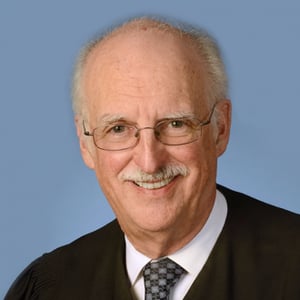
Senior Judge, United States Court of Appeals, District of Columbia Circuit
Circuit Judge Douglas H. Ginsburg was appointed to the United States Court of Appeals for the District of Columbia in 1986. After receiving his B.S. from Cornell University in 1970, and his J.D. from the University of Chicago Law School in 1973, he clerked on the D.C. Circuit and for Justice Thurgood Marshall on the United States Supreme Court. Thereafter, Judge Ginsburg was a professor at the Harvard Law School, the Deputy Assistant and then Assistant Attorney General for the Antitrust Division of the Department of Justice, as well as the Administrator of the Office of Information and Regulatory Affairs in the Office of Management and Budget. Concurrent with his service as a federal judge, Judge Ginsburg has taught at the University of Chicago Law School and the New York University School of Law. Judge Ginsburg is currently a Professor of Law at the George Mason University and a visiting professor at University College London, Faculty of Laws.
Judge Ginsburg is the Chairman of the International Advisory Board of the Global Antitrust Institute at the Law and Economics Center of the George Mason University School of Law. He also serves on the Advisory Boards of: Competition Policy International; the Harvard Journal of Law and Public Policy; the Journal of Competition Law and Economics; the Journal of Law, Economics & Policy; the Supreme Court Economic Review; the University of Chicago Law Review; the New York University Journal of Law and Liberty; and, at University College London, both the Centre for Law, Economics and Society and the Jevons Institute for Competition Law and Economics.
In 2020, Judge Ginsburg was the 11th recipient of the John Sherman Award, presented by the Antitrust Division of the Department of Justice in recognition of the awardee’s Lifetime Contributions to Antitrust Law and Policy.
In 2014, Judge Ginsburg received the Lifetime Achievement Award given annually by the Global Competition Review.
He is the author or co-author of several books and more than 100 articles on competition and regulation, including, most recently, Growing Convergence: The Limited Role of Antitrust in Standard Essential Patent Disputes, in CPI Antitrust Chronicle, Summer 2021, Vol. 1, No. 2.
Professor of Law, DePaul University College of Law
Joshua D. Sarnoff is a professor of law at DePaul University and a faculty member in and former director of the Center for Intellectual Property Law & Information Technology (CIPLIT®). He teaches patent law, advanced patent law, administrative law, law and climate change, and other intellectual property law courses. He was previously a professor at the Washington College of Law, American University, in the Glushko-Samuelson Intellectual Property Law Clinic, and at the University of Arizona College of Law. In academic year 2014-2015, Professor Sarnoff was a Thomas A. Edison Distinguished Scholar at the United States Patent and Trademark Office. He is a registered patent attorney and a member of the bars of Washington D.C. and California, a former member of the board of governors of the Federal Circuit Bar Association, and a member of the boards of directors and advisory boards of various nonprofit organizations. He has written numerous articles and book chapters on patent law and climate change and has been involved in a wide range of intellectual property legal and policy disputes. He has submitted testimony on domestic patent law reform bills, has filed numerous amicus briefs in the United States Supreme Court and in the U.S. Court of Appeals for the Federal Circuit on important patent law issues, has been a pro bono mediator for the Federal Circuit, and has been a consultant to the United Nations Conference on Trade and Development on international intellectual property, trade and environmental issues. Professor Sarnoff was formerly in the private practice of intellectual property, environmental, and food and drug law in Washington, D.C. He received his BS from MIT and JD from Stanford.

Founding Partner, Lodestar Law and Economics PLLC
Josh is the founder of Lodestar Law and Economics, PLLC. On January 1, 2013, the U.S. Senate unanimously confirmed Wright as a Commissioner of the Federal Trade Commission (FTC). He is a leading scholar in antitrust law, economics, intellectual property, regulation, and consumer protection, and has published more than 100 articles and book chapters, co-authored a leading antitrust casebook, and edited several book volumes focusing on these issues. Commentators have recognized Wright as “widely considered his generation’s greatest mind on antitrust law,” and his academic work ranks him as one of the most cited antitrust academics in the world. Wright was also awarded the Paul M. Bator Award by the Federalist Society in 2014 to “an academic who demonstrated excellence in legal scholarship, a commitment to teaching, a concern for students, and who has made a significant public impact.” Wright also served as the Executive Director of the Global Antitrust Institute, the world’s premiere academic institute focused upon antitrust education for judges and regulators and has taught hundreds of judges and thousands of regulators from dozens of countries.
Wright’s practice focuses upon helping clients solve complex competition, consumer protection, and regulatory problems by providing legal and economic analysis, strategic advice and counseling, and economic expert testimony.
Samuel H. McCoy II Professor of Law, University of Virginia School of Law
John F. Duffy is the Samuel H. McCoy II Professor of Law and Class of 1966 Research Professor of Law at the University of Virginia School of Law, where he teaches administrative law, torts and intellectual property. Professor Duffy has published articles on a wide range of administrative law and regulatory issues in journals such as University of Chicago Law Review, Yale Law Journal, Stanford Law Review, Virginia Law Review, Columbia Law Review, Texas Law Review, Northwestern University Law Review, NYU Law Review, University of Pennsylvania Law Review and the Supreme Court Review. His 1998 article Administrative Common Law in Judicial Review, 77 Tex. L. Rev. 113 (1998), was one of the first articles to criticize the Chevron doctrine as being irreconcilable with § 706 of the APA; it won the American Bar Association’s Scholarship Award in Administrative Law. His 2008 article “Are Administrative Patent Judges Unconstitutional?” was covered on National Public Radio), in the New York Times (Adam Liptak, In One Flaw, Questions on Validity of 46 Judges, May 6, 2008), and in the Wall Street Journal (Dan Slater, Patently Unconstitutional, May 6, 2008). The NYT and WSJ agreed that he was “a different kind of law professor,” “one of the lucky few” whose “writings actually wind up changing the law.”
As an attorney in the courts, Duffy has twice successfully convinced the Supreme Court to overturn lower court doctrines that had been applied in many cases over decades but that were unanimously held to be irreconcilable with Supreme Court precedents. See TC Heartland v. Kraft Foods Group Brands, 581 U.S. 258 (2017); KSR v. Teleflex, 550 U.S. 398 (2007).
Prior to entering legal academics, Duffy clerked on the D.C. Circuit for Stephen Williams and on the Supreme Court for Antonin Scalia. While clerking, he became known as Justice Scalia’s “hapless law clerk,” who had been tasked with unearthing three-quarters of a century of legislative history that made “no difference” to the outcome in an otherwise forgettable case. See Conroy v. Aniskoff, 507 U.S. 511, 527-28 (1993) (Scalia, J., concurring in the judgment).
In earlier days, Duffy enjoyed being a professional blackjack player unwelcome in all Atlantic City casinos and a semi-professional road runner (best marathon time 2:24:33). He holds an A.B. in physics from Harvard and a J.D. from the University of Chicago.
Laurence A. Tisch Professor of Law and Director, Classical Liberal Institute, New York University School of Law; Director, Classical Liberal Institute, Civitas Institute University of Texas at Austin
Richard A. Epstein is the Laurence A. Tisch Professor of Law, at New York University, a senior research fellow at the Civitas Institute at the University of Texas Austin, and a senior Lecturer, the University of Chicago. He received an LL.D., h.c . from the University of Ghent, 2003 , and an LLD h.c . from the University of Siegen in 2018 and the Bradley Prize in 2011. He has been a member of the American Academy of Arts and Sciences since 1985. He has edited both the Journal of Legal Studies (1981-1991) and the Journal of Law and Economics (1991-2001). He is also a founder and director of the Classical Liberal Institute at NYU Law School. His most recent book is The Classical Liberal Constitution: The Uncertain Quest for Limited Government (2014). His other books include Takings: Private Property and the Power of Eminent Domain ( 1985); Bargaining with the State (1993); Simple Rules for a Complex World (1995); Principles for a Free Society: Reconciling Individual Liberty and the Common Good (1998); Skepticism and Freedom: A Modern Theory of Classical Liberalism (2003); Design for Liberty: Private Property, Public Administration and the Rule of Law (2011), and most recently, The Myth of Birthright citizenship—and Beyond (2026). He has taught courses in , administrative law, antitrust, constitutional, contracts, environmental law, land use planning; real property, torts and water law. He has written and spoken extensively on a wide range of topics, and is writes a regular column for Defining Ideas.
Senior Judge, United States Court of Appeals, District of Columbia Circuit
Circuit Judge Douglas H. Ginsburg was appointed to the United States Court of Appeals for the District of Columbia in 1986. After receiving his B.S. from Cornell University in 1970, and his J.D. from the University of Chicago Law School in 1973, he clerked on the D.C. Circuit and for Justice Thurgood Marshall on the United States Supreme Court. Thereafter, Judge Ginsburg was a professor at the Harvard Law School, the Deputy Assistant and then Assistant Attorney General for the Antitrust Division of the Department of Justice, as well as the Administrator of the Office of Information and Regulatory Affairs in the Office of Management and Budget. Concurrent with his service as a federal judge, Judge Ginsburg has taught at the University of Chicago Law School and the New York University School of Law. Judge Ginsburg is currently a Professor of Law at the George Mason University and a visiting professor at University College London, Faculty of Laws.
Judge Ginsburg is the Chairman of the International Advisory Board of the Global Antitrust Institute at the Law and Economics Center of the George Mason University School of Law. He also serves on the Advisory Boards of: Competition Policy International; the Harvard Journal of Law and Public Policy; the Journal of Competition Law and Economics; the Journal of Law, Economics & Policy; the Supreme Court Economic Review; the University of Chicago Law Review; the New York University Journal of Law and Liberty; and, at University College London, both the Centre for Law, Economics and Society and the Jevons Institute for Competition Law and Economics.
In 2020, Judge Ginsburg was the 11th recipient of the John Sherman Award, presented by the Antitrust Division of the Department of Justice in recognition of the awardee’s Lifetime Contributions to Antitrust Law and Policy.
In 2014, Judge Ginsburg received the Lifetime Achievement Award given annually by the Global Competition Review.
He is the author or co-author of several books and more than 100 articles on competition and regulation, including, most recently, Growing Convergence: The Limited Role of Antitrust in Standard Essential Patent Disputes, in CPI Antitrust Chronicle, Summer 2021, Vol. 1, No. 2.
Professor of Law, DePaul University College of Law
Joshua D. Sarnoff is a professor of law at DePaul University and a faculty member in and former director of the Center for Intellectual Property Law & Information Technology (CIPLIT®). He teaches patent law, advanced patent law, administrative law, law and climate change, and other intellectual property law courses. He was previously a professor at the Washington College of Law, American University, in the Glushko-Samuelson Intellectual Property Law Clinic, and at the University of Arizona College of Law. In academic year 2014-2015, Professor Sarnoff was a Thomas A. Edison Distinguished Scholar at the United States Patent and Trademark Office. He is a registered patent attorney and a member of the bars of Washington D.C. and California, a former member of the board of governors of the Federal Circuit Bar Association, and a member of the boards of directors and advisory boards of various nonprofit organizations. He has written numerous articles and book chapters on patent law and climate change and has been involved in a wide range of intellectual property legal and policy disputes. He has submitted testimony on domestic patent law reform bills, has filed numerous amicus briefs in the United States Supreme Court and in the U.S. Court of Appeals for the Federal Circuit on important patent law issues, has been a pro bono mediator for the Federal Circuit, and has been a consultant to the United Nations Conference on Trade and Development on international intellectual property, trade and environmental issues. Professor Sarnoff was formerly in the private practice of intellectual property, environmental, and food and drug law in Washington, D.C. He received his BS from MIT and JD from Stanford.
Founding Partner, Lodestar Law and Economics PLLC
Josh is the founder of Lodestar Law and Economics, PLLC. On January 1, 2013, the U.S. Senate unanimously confirmed Wright as a Commissioner of the Federal Trade Commission (FTC). He is a leading scholar in antitrust law, economics, intellectual property, regulation, and consumer protection, and has published more than 100 articles and book chapters, co-authored a leading antitrust casebook, and edited several book volumes focusing on these issues. Commentators have recognized Wright as “widely considered his generation’s greatest mind on antitrust law,” and his academic work ranks him as one of the most cited antitrust academics in the world. Wright was also awarded the Paul M. Bator Award by the Federalist Society in 2014 to “an academic who demonstrated excellence in legal scholarship, a commitment to teaching, a concern for students, and who has made a significant public impact.” Wright also served as the Executive Director of the Global Antitrust Institute, the world’s premiere academic institute focused upon antitrust education for judges and regulators and has taught hundreds of judges and thousands of regulators from dozens of countries.
Wright’s practice focuses upon helping clients solve complex competition, consumer protection, and regulatory problems by providing legal and economic analysis, strategic advice and counseling, and economic expert testimony.

Vice Dean and Professor of Law, Villanova University School of Law
Professor Michael Risch joined the Villanova faculty in 2010 from the West Virginia University College of Law, where he directed the Entrepreneurship, Innovation and Law Program. Prior to joining the West Virginia faculty, he served as an Olin Fellow in Law at Stanford Law School. Professor Risch’s teaching and scholarship focus on intellectual property and internet law, with an emphasis on patents, trade secrets and information access. His articles have been published in the Stanford Law Review and Duke Law Journal, among others; online in the Yale Law Journal Online and PENNumbra; and less formally at the Madisonian, Prawfsblawg, and Patently-O blogs. Two of his articles have been cited by the United States Supreme Court. Professor Risch received his A.B. with honors and distinction in Public Policy and with distinction in Quantitative Economics from Stanford University, and his J.D. with high honors from the University of Chicago Law School. Prior to entering academia, he was a partner at intellectual property boutique Russo & Hale LLP in Palo Alto, California.
Professor of Law, DePaul University College of Law
Joshua D. Sarnoff is a professor of law at DePaul University and a faculty member in and former director of the Center for Intellectual Property Law & Information Technology (CIPLIT®). He teaches patent law, advanced patent law, administrative law, law and climate change, and other intellectual property law courses. He was previously a professor at the Washington College of Law, American University, in the Glushko-Samuelson Intellectual Property Law Clinic, and at the University of Arizona College of Law. In academic year 2014-2015, Professor Sarnoff was a Thomas A. Edison Distinguished Scholar at the United States Patent and Trademark Office. He is a registered patent attorney and a member of the bars of Washington D.C. and California, a former member of the board of governors of the Federal Circuit Bar Association, and a member of the boards of directors and advisory boards of various nonprofit organizations. He has written numerous articles and book chapters on patent law and climate change and has been involved in a wide range of intellectual property legal and policy disputes. He has submitted testimony on domestic patent law reform bills, has filed numerous amicus briefs in the United States Supreme Court and in the U.S. Court of Appeals for the Federal Circuit on important patent law issues, has been a pro bono mediator for the Federal Circuit, and has been a consultant to the United Nations Conference on Trade and Development on international intellectual property, trade and environmental issues. Professor Sarnoff was formerly in the private practice of intellectual property, environmental, and food and drug law in Washington, D.C. He received his BS from MIT and JD from Stanford.
Professor of Law, Antonin Scalia Law School, George Mason University
Adam Mossoff is Professor of Law at Antonin Scalia Law School, George Mason University. He has published extensively on why patents, copyrights, and other intellectual property rights have been—and should be—legally secured to innovators and creators as property rights. His scholarship has been relied on by the United States Supreme Court, by lower federal courts, and by U.S. federal agencies. He has been invited to testify numerous times before the U.S. Senate and the House of Representatives on intellectual property legislation. His writings on intellectual property policy have also appeared in the Wall Street Journal, New York Times, Forbes, Investors Business Daily, and in other media outlets. His journal articles can be downloaded here.
Professor Mossoff is a longstanding member of the Executive Committee of the Intellectual Property Practice Group of the Federalist Society, on which he served as Chairperson from 2016-2018, and he is Chair of the Intellectual Property Working Group of the Regulatory Transparency Project of the Federalist Society. He is a Senior Fellow and Chair of the Forum for Intellectual Property at the Hudson Institute, a Visiting Intellectual Property Fellow at the Heritage Foundation, and a member of the Board of Directors of the Center for Intellectual Property Understanding. He is a member of the Intellectual Property Rights Policy Committee of ANSI and he has served as Chair and Vice-Chair of the Intellectual Property Committee of the IEEE-USA, on which he remains a member in good standing.

Textualism and Patent Statutory Law – Patent Eligibility, ODP, and Upcoming Patent Reform in Congress
Matthew J. Dowd, Sherry Knowles, Gene Quinn, John M. Rogitz, Joshua Sarnoff
When it comes to patent eligibility and statutory construction, does “any” really mean “any?” In...
Textualism and Patent Statutory Law – Patent Eligibility, ODP, and Upcoming Patent Reform in Congress
Matthew J. Dowd, Sherry Knowles, Gene Quinn, John M. Rogitz, Joshua Sarnoff
When it comes to patent eligibility and statutory construction, does “any” really mean “any?” In...
Intellectual Property: Courts vs. Congress: What is a Patentable Invention?
Susan G. Braden, David J. Kappos, Adam Mossoff, Mark A. Perry, Joshua Sarnoff
2016 National Lawyers Convention
In the past six years, there has been a momentous shift in what can be...
Intellectual Property: Courts vs. Congress: What is a Patentable Invention?
Susan G. Braden, David J. Kappos, Adam Mossoff, Mark A. Perry, Joshua Sarnoff
2016 National Lawyers Convention
In the past six years, there has been a momentous shift in what can be...
Intellectual Property: Intellectual Property, Free Markets and Competition Policy
John F. Duffy, Richard A. Epstein, Douglas H. Ginsburg, Joshua Sarnoff, Joshua D. Wright
2013 National Lawyers Convention
Are intellectual property rights compatible with free, competitive markets? This question has long been a...
Intellectual Property: Intellectual Property, Free Markets and Competition Policy
John F. Duffy, Richard A. Epstein, Douglas H. Ginsburg, Joshua Sarnoff, Joshua D. Wright
2013 National Lawyers Convention
Are intellectual property rights compatible with free, competitive markets? This question has long been a...
Bilski v. Doll - Cert Granted SCOTUScast
Michael Risch, Joshua Sarnoff, Adam Mossoff
SCOTUScast 8-13-09
In the Bilski case, a patent application for a method of hedging risks in commodities...