
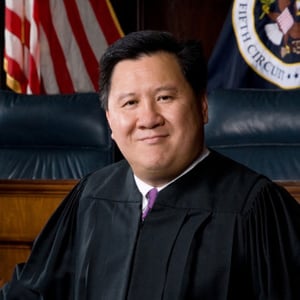
Judge, United States Court of Appeals, Fifth Circuit
James C. Ho is a Circuit Judge on the U.S. Court of Appeals for the Fifth Circuit. Before taking the bench on January 4, 2018, he was a partner and co-chair of the national Appellate and Constitutional Law practice group of Gibson, Dunn & Crutcher LLP.
As an appellate litigator for over a decade, including three years as the Solicitor General of Texas, Judge Ho presented 50 oral arguments in federal and state courts nationwide. He won numerous appeals, including three merits cases at the U.S. Supreme Court. He was routinely ranked among the nation’s leading lawyers by Benchmark, Chambers, Law360, The Legal 500, and The National Law Journal, among other publications. His work has been cited favorably by courts at every level of both the federal and state judiciaries. He won a Best Brief Award from the National Association of Attorneys General for every year that he served as solicitor general, and he is the only state solicitor general in history to be invited by the U.S. Supreme Court to express the views of a state.
Judge Ho has served in all three branches of the federal government. On the Senate Judiciary Committee, he served as chief counsel of the Subcommittees on the Constitution and Immigration under Senator John Cornyn. At the Justice Department, he served as Special Assistant to the Assistant Attorney General for Civil Rights and an attorney-advisor at the Office of Legal Counsel. He clerked for Judge Jerry E. Smith of the U.S. Court of Appeals for the Fifth Circuit and Justice Clarence Thomas of the U.S. Supreme Court.
His record of public service also includes appointments as vice chair of the Federal Judicial Evaluation Committee in Texas and co-chair of the National Asian Pacific American Bar Association Judiciary Committee, and as a member of the U.S. Magistrate Judge Merit Selection Panel for the Northern District of Texas, the U.S. delegation to the United Nations Committee on the Elimination of Racial Discrimination, and the Continuity of Government Commission.
In addition, Judge Ho has served as an Adjunct Professor of Law at the University of Texas School of Law, where he taught seminars on U.S. Supreme Court Litigation and Religious Liberty. He has authored numerous articles in respected law reviews nationwide, including an annual feature on exemplary judicial writing for The Green Bag Almanac & Reader. He previously served as senior editor of The Green Bag and as co-editor of Pub. L. Misc.
Judge Ho graduated from Stanford University with honors and a B.A. in Public Policy in 1995, and the University of Chicago Law School with high honors in 1999. Before law school, he was a legislative aide to California State Senator Quentin Kopp. He and his wife Allyson live in Dallas, Texas, with their twin daughter and son.
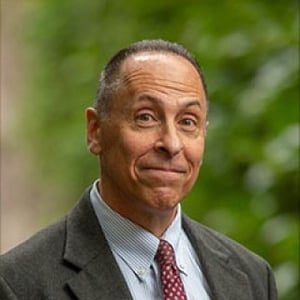
John Paul Stevens Professor of Law, Northwestern University School of Law
Andrew Koppelman is John Paul Stevens Professor of Law, Professor (by courtesy) of Political Science, and Philosophy Department Affiliated Faculty at Northwestern University. He received the Walder Award for Research Excellence from Northwestern, the Hart-Dworkin award in legal philosophy from the Association of American Law Schools, and the Edward S. Corwin Prize from the American Political Science Association. His scholarship focuses on issues at the intersection of law and political philosophy. He has written more than 100 scholarly articles and eight books, most recently Burning Down the House: How Libertarian Philosophy Was Corrupted by Delusion and Greed, (St. Martin’s Press). His column appears regularly at The Hill. You can find his recent work at andrewkoppelman.com.

Senior Research Fellow, Center for Equal Opportunity
In D.C. area for over 20 years, Althea Nagai, Ph.D., is a research fellow at the Center for Equal Opportunity. She has conducted numerous statistical analyses on racial and ethnic preferences in higher education, including racial and ethnic preferences in undergraduate education at five public universities in Virginia, the University of Michigan, two Arizona universities, the University of Wisconsin-Madison, two Ohio universities, and various law and medical schools. In addition, she has written two essays for CEO focusing on Asian Americans, “Too Many Asian Americans,” and “Harvard Investigates Harvard.”
She has also has done work on other statistical studies in the field of social policy. Her first study was a content analysis and critique of the national history standards with John Fonte and Lynne Cheney. She has also conducted studies on marriage, religion, and family structure; on adolescent risk behavior; on philanthropy and social change; and on American elites (American Elites, with Robert Lerner and Stanley Rothman, 1996 Yale University Press).
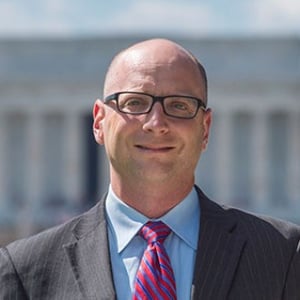
Partner, Consovoy McCarthy Park PLLC
Mr. Strawbridge provides clients with advice and representation at the pre-litigation, trial, and appellate stages. He has represented a broad range of individual and institutional clients on matters of constitutional law, financial and securities regulation, environmental laws, complex commercial disputes, and consumer protection statutes. His experience includes arbitrations, trial and appellate litigation, and administrative and regulatory proceedings.
Mr. Strawbridge served as a law clerk to Supreme Court Justice Clarence Thomas, Judge Morris Sheppard Arnold of the United States Court of Appeals for the Eighth Circuit, and Justice Howard Dana of the Supreme Judicial Court of Maine. Previously, Mr. Strawbridge was a partner at two large international law firms. He worked as a newspaper reporter for four years before attending law school. Mr. Strawbridge is an adjunct professor for the Supreme Court Clinic at the Antonin Scalia Law School at George Mason University.
Mr. Strawbridge earned a Bachelor of Journalism from the University of Missouri, and his J.D. summa cum laude from Creighton University School of Law. Mr. Strawbridge is a member of the Maine and Massachusetts bars.

Emanuel S. Heller Professor of Law, University of California at Berkeley; Senior Research Fellow, School of Civic Leadership, Civitas Institute, University of Texas at Austin; Nonresident Senior Fellow, American Enterprise Institute
John Yoo is the Emanuel Heller Professor of Law. He is also Distinguished Visiting Scholar, School of Civic Leadership and Senior Research Fellow, Civitas Institute, at the University of Texas at Austin. He is also a Nonresident Senior Fellow at the American Enterprise Institute.
His most recent book, The Politically Incorrect Guide to the Supreme Court, co-authored with Robert Delahunty, was published in 2023. Professor Yoo’s other books include Defender-in-Chief: Trump’s Fight for Presidential Power; Striking Power: How Cyber, Robots, and Space Weapons Change the Rules for War, Point of Attack: Preventive War, International Law, and Global Welfare, and Crisis and Command: A History of Executive Power from George Washington to George Bush.
Professor Yoo has published more than 100 articles in academic journals on subjects including national security, constitutional law, international law, and the Supreme Court. He also regularly contributes to the editorial pages of the Wall Street Journal, New York Times, Washington Post, Los Angeles Times, and National Review, among others.
Professor Yoo has served in all three branches of government. He was an official in the U.S. Department of Justice, where he worked on national security and terrorism issues after the 9/11 attacks. He served as general counsel of the U.S. Senate Judiciary Committee. He has been a law clerk for Supreme Court Justice Clarence Thomas and federal appeals Judge Laurence Silberman. He has been a visiting professor at Seoul National University in South Korea, the Interdisciplinary Center in Israel, Keio University in Japan, Trento University in Italy, the University of Chicago, and the Free University of Amsterdam.
Professor Yoo supervises the Public Law and Policy Program and the California Constitution Center. He also serves on the boards of the Pacific Legal Foundation, the Federalist Society’s Separation of Powers and Federalism Division, the Universidad Cientifica del Sur Law School, and the Asia-Pacific Law Institute at Seoul National University. He is a winner of the Federalist Society’s Paul Bator award and been the Edwin Meese III Originalism Lecturer at the Heritage Foundation.
Professor Yoo graduated from Yale Law School and summa cum laude from Harvard College.
Judge, United States Court of Appeals, Fifth Circuit
James C. Ho is a Circuit Judge on the U.S. Court of Appeals for the Fifth Circuit. Before taking the bench on January 4, 2018, he was a partner and co-chair of the national Appellate and Constitutional Law practice group of Gibson, Dunn & Crutcher LLP.
As an appellate litigator for over a decade, including three years as the Solicitor General of Texas, Judge Ho presented 50 oral arguments in federal and state courts nationwide. He won numerous appeals, including three merits cases at the U.S. Supreme Court. He was routinely ranked among the nation’s leading lawyers by Benchmark, Chambers, Law360, The Legal 500, and The National Law Journal, among other publications. His work has been cited favorably by courts at every level of both the federal and state judiciaries. He won a Best Brief Award from the National Association of Attorneys General for every year that he served as solicitor general, and he is the only state solicitor general in history to be invited by the U.S. Supreme Court to express the views of a state.
Judge Ho has served in all three branches of the federal government. On the Senate Judiciary Committee, he served as chief counsel of the Subcommittees on the Constitution and Immigration under Senator John Cornyn. At the Justice Department, he served as Special Assistant to the Assistant Attorney General for Civil Rights and an attorney-advisor at the Office of Legal Counsel. He clerked for Judge Jerry E. Smith of the U.S. Court of Appeals for the Fifth Circuit and Justice Clarence Thomas of the U.S. Supreme Court.
His record of public service also includes appointments as vice chair of the Federal Judicial Evaluation Committee in Texas and co-chair of the National Asian Pacific American Bar Association Judiciary Committee, and as a member of the U.S. Magistrate Judge Merit Selection Panel for the Northern District of Texas, the U.S. delegation to the United Nations Committee on the Elimination of Racial Discrimination, and the Continuity of Government Commission.
In addition, Judge Ho has served as an Adjunct Professor of Law at the University of Texas School of Law, where he taught seminars on U.S. Supreme Court Litigation and Religious Liberty. He has authored numerous articles in respected law reviews nationwide, including an annual feature on exemplary judicial writing for The Green Bag Almanac & Reader. He previously served as senior editor of The Green Bag and as co-editor of Pub. L. Misc.
Judge Ho graduated from Stanford University with honors and a B.A. in Public Policy in 1995, and the University of Chicago Law School with high honors in 1999. Before law school, he was a legislative aide to California State Senator Quentin Kopp. He and his wife Allyson live in Dallas, Texas, with their twin daughter and son.
John Paul Stevens Professor of Law, Northwestern University School of Law
Andrew Koppelman is John Paul Stevens Professor of Law, Professor (by courtesy) of Political Science, and Philosophy Department Affiliated Faculty at Northwestern University. He received the Walder Award for Research Excellence from Northwestern, the Hart-Dworkin award in legal philosophy from the Association of American Law Schools, and the Edward S. Corwin Prize from the American Political Science Association. His scholarship focuses on issues at the intersection of law and political philosophy. He has written more than 100 scholarly articles and eight books, most recently Burning Down the House: How Libertarian Philosophy Was Corrupted by Delusion and Greed, (St. Martin’s Press). His column appears regularly at The Hill. You can find his recent work at andrewkoppelman.com.
Senior Research Fellow, Center for Equal Opportunity
In D.C. area for over 20 years, Althea Nagai, Ph.D., is a research fellow at the Center for Equal Opportunity. She has conducted numerous statistical analyses on racial and ethnic preferences in higher education, including racial and ethnic preferences in undergraduate education at five public universities in Virginia, the University of Michigan, two Arizona universities, the University of Wisconsin-Madison, two Ohio universities, and various law and medical schools. In addition, she has written two essays for CEO focusing on Asian Americans, “Too Many Asian Americans,” and “Harvard Investigates Harvard.”
She has also has done work on other statistical studies in the field of social policy. Her first study was a content analysis and critique of the national history standards with John Fonte and Lynne Cheney. She has also conducted studies on marriage, religion, and family structure; on adolescent risk behavior; on philanthropy and social change; and on American elites (American Elites, with Robert Lerner and Stanley Rothman, 1996 Yale University Press).
Partner, Consovoy McCarthy Park PLLC
Mr. Strawbridge provides clients with advice and representation at the pre-litigation, trial, and appellate stages. He has represented a broad range of individual and institutional clients on matters of constitutional law, financial and securities regulation, environmental laws, complex commercial disputes, and consumer protection statutes. His experience includes arbitrations, trial and appellate litigation, and administrative and regulatory proceedings.
Mr. Strawbridge served as a law clerk to Supreme Court Justice Clarence Thomas, Judge Morris Sheppard Arnold of the United States Court of Appeals for the Eighth Circuit, and Justice Howard Dana of the Supreme Judicial Court of Maine. Previously, Mr. Strawbridge was a partner at two large international law firms. He worked as a newspaper reporter for four years before attending law school. Mr. Strawbridge is an adjunct professor for the Supreme Court Clinic at the Antonin Scalia Law School at George Mason University.
Mr. Strawbridge earned a Bachelor of Journalism from the University of Missouri, and his J.D. summa cum laude from Creighton University School of Law. Mr. Strawbridge is a member of the Maine and Massachusetts bars.
Emanuel S. Heller Professor of Law, University of California at Berkeley; Senior Research Fellow, School of Civic Leadership, Civitas Institute, University of Texas at Austin; Nonresident Senior Fellow, American Enterprise Institute
John Yoo is the Emanuel Heller Professor of Law. He is also Distinguished Visiting Scholar, School of Civic Leadership and Senior Research Fellow, Civitas Institute, at the University of Texas at Austin. He is also a Nonresident Senior Fellow at the American Enterprise Institute.
His most recent book, The Politically Incorrect Guide to the Supreme Court, co-authored with Robert Delahunty, was published in 2023. Professor Yoo’s other books include Defender-in-Chief: Trump’s Fight for Presidential Power; Striking Power: How Cyber, Robots, and Space Weapons Change the Rules for War, Point of Attack: Preventive War, International Law, and Global Welfare, and Crisis and Command: A History of Executive Power from George Washington to George Bush.
Professor Yoo has published more than 100 articles in academic journals on subjects including national security, constitutional law, international law, and the Supreme Court. He also regularly contributes to the editorial pages of the Wall Street Journal, New York Times, Washington Post, Los Angeles Times, and National Review, among others.
Professor Yoo has served in all three branches of government. He was an official in the U.S. Department of Justice, where he worked on national security and terrorism issues after the 9/11 attacks. He served as general counsel of the U.S. Senate Judiciary Committee. He has been a law clerk for Supreme Court Justice Clarence Thomas and federal appeals Judge Laurence Silberman. He has been a visiting professor at Seoul National University in South Korea, the Interdisciplinary Center in Israel, Keio University in Japan, Trento University in Italy, the University of Chicago, and the Free University of Amsterdam.
Professor Yoo supervises the Public Law and Policy Program and the California Constitution Center. He also serves on the boards of the Pacific Legal Foundation, the Federalist Society’s Separation of Powers and Federalism Division, the Universidad Cientifica del Sur Law School, and the Asia-Pacific Law Institute at Seoul National University. He is a winner of the Federalist Society’s Paul Bator award and been the Edwin Meese III Originalism Lecturer at the Heritage Foundation.
Professor Yoo graduated from Yale Law School and summa cum laude from Harvard College.
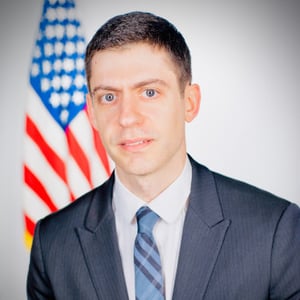
Partner, Quinn Emanuel
John F. Bash is an American attorney who served as the United States Attorney for the Western District of Texas from 2017 to 2020. After graduating from Harvard Law School, Mr. Bash clerked for Judge Kavanaugh during his first year on the bench and went on to clerk for Justice Antonin Scalia. He then served as an Assistant to the Solicitor General in the U.S. Department of Justice, where he argued ten cases in the United States Supreme Court. He also served briefly as Special Assistant to the President and Associate Counsel to the President before his appointment as United States Attorney.
Judge, United States Court of Appeals, Fifth Circuit
James C. Ho is a Circuit Judge on the U.S. Court of Appeals for the Fifth Circuit. Before taking the bench on January 4, 2018, he was a partner and co-chair of the national Appellate and Constitutional Law practice group of Gibson, Dunn & Crutcher LLP.
As an appellate litigator for over a decade, including three years as the Solicitor General of Texas, Judge Ho presented 50 oral arguments in federal and state courts nationwide. He won numerous appeals, including three merits cases at the U.S. Supreme Court. He was routinely ranked among the nation’s leading lawyers by Benchmark, Chambers, Law360, The Legal 500, and The National Law Journal, among other publications. His work has been cited favorably by courts at every level of both the federal and state judiciaries. He won a Best Brief Award from the National Association of Attorneys General for every year that he served as solicitor general, and he is the only state solicitor general in history to be invited by the U.S. Supreme Court to express the views of a state.
Judge Ho has served in all three branches of the federal government. On the Senate Judiciary Committee, he served as chief counsel of the Subcommittees on the Constitution and Immigration under Senator John Cornyn. At the Justice Department, he served as Special Assistant to the Assistant Attorney General for Civil Rights and an attorney-advisor at the Office of Legal Counsel. He clerked for Judge Jerry E. Smith of the U.S. Court of Appeals for the Fifth Circuit and Justice Clarence Thomas of the U.S. Supreme Court.
His record of public service also includes appointments as vice chair of the Federal Judicial Evaluation Committee in Texas and co-chair of the National Asian Pacific American Bar Association Judiciary Committee, and as a member of the U.S. Magistrate Judge Merit Selection Panel for the Northern District of Texas, the U.S. delegation to the United Nations Committee on the Elimination of Racial Discrimination, and the Continuity of Government Commission.
In addition, Judge Ho has served as an Adjunct Professor of Law at the University of Texas School of Law, where he taught seminars on U.S. Supreme Court Litigation and Religious Liberty. He has authored numerous articles in respected law reviews nationwide, including an annual feature on exemplary judicial writing for The Green Bag Almanac & Reader. He previously served as senior editor of The Green Bag and as co-editor of Pub. L. Misc.
Judge Ho graduated from Stanford University with honors and a B.A. in Public Policy in 1995, and the University of Chicago Law School with high honors in 1999. Before law school, he was a legislative aide to California State Senator Quentin Kopp. He and his wife Allyson live in Dallas, Texas, with their twin daughter and son.
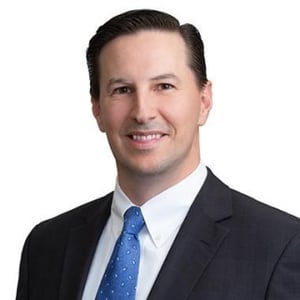
Chairman, Supreme Court and Constitutional Law Practice, Baker Botts LLP
Aaron Streett is the Chairman of Baker Botts’ Supreme Court and Constitutional Law Practice. He has presented oral argument in scores of appeals, covering the U.S. Supreme Court and courts around the country—including over 40 arguments between the Fifth and D.C. Circuits alone. Mr. Streett’s practice involves virtually all substantive areas of the law, including commercial litigation, statutory interpretation, constitutional law, administrative law, securities, and jurisdictional issues. Mr. Streett maintains an active practice in the Supreme Court of the United States, having represented parties in merits cases seven times since 2010, as well as filing numerous amicus and certiorari-stage briefs. Mr. Streett was named one of only six “Appellate MVPs” for 2014 by Law360, which had previously recognized him in 2011 as one of the top five appellate “Rising Stars” under age 40. Mr. Streett has been featured on National Law Journal’s Appellate Hot List three times in recent years and in 2021 was named Houston’s “Lawyer of the Year” for Appellate Practice by Best Lawyers magazine. Mr. Streett is an elected member of the American Law Institute and a fellow of the American Academy of Appellate Lawyers. He serves on the Board of Directors for the Fifth Circuit Bar Association and previously served as President of the Houston Lawyers Chapter of the Federalist Society. Mr. Streett speaks regularly on the Supreme Court and constitutional law to attorneys and law students around the country. Following graduation from Hillsdale College and University of Texas School of Law, Mr. Streett served as a law clerk to the Honorable David B. Sentelle of the United States Court of Appeals for the District of Columbia Circuit and to the Honorable William H. Rehnquist, Chief Justice of the United States.
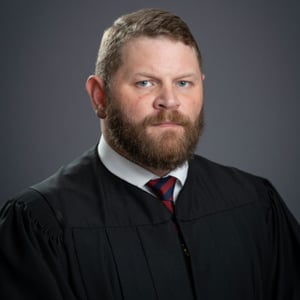
Justice, Texas Supreme Court
James P. Sullivan was appointed to the Texas Supreme Court by Governor Greg Abbott on January 7, 2025, after serving as his General Counsel. He is the proud husband of Alithea and father of Conan. Growing up in Austin, Judge Sully was an extra in the movie "Dazed & Confused." He was a highly unrecruited walk-on at Rice University, until an injury turned him into a debater. Once in law school, he met his wife, Alithea, on the Harvard Law Review. After graduating, he clerked on the D.C. Circuit for Judge Thomas B. Griffith. He also worked under then-Attorney General Abbott in the Office of the Solicitor General, in addition to stints as an adjunct professor at George Mason University and an appellate litigator in private practice.
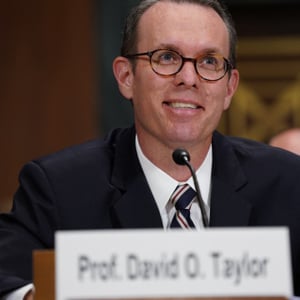
Robert G. Storey Distinguished Faculty Fellow; Associate Professor of Law Co-Director, Tsai Center for Law, Science and Innovation, SMU Dedman School of Law
David O. Taylor is an Associate Professor at the SMU Dedman School of Law in Dallas, Texas. He also founded and currently serves as a Co-Director of the school’s Tsai Center for Law, Science and Innovation.
Professor Taylor earned his bachelor of science, magna cum laude, in mechanical engineering from Texas A&M University and his juris doctor, cum laude, from Harvard Law School. Prior to law school, Professor Taylor worked as an applications engineer at National Instruments Corporation in Austin, Texas. While in law school, he served as an extern for the U.S. Attorney’s Office in Boston, as a member of both the Harvard Journal of Law & Technology and the Harvard Journal of Law & Public Policy, and as President of the law school's Texas Club.
After graduating from law school, Professor Taylor clerked for the current Chief Judge of the U.S. Court of Appeals for the Federal Circuit, the Honorable Sharon Prost. Professor Taylor also worked for seven years at the law firm of Baker Botts LLP in its Dallas office. While at Baker Botts, Professor Taylor engaged in patent litigation in various district courts and at the U.S. Court of Appeals for the Federal Circuit. His litigation experience includes both bench and jury trials. A registered patent attorney, he also gained significant experience in the fields of intellectual property licensing and patent prosecution. During his time in practice he assisted with several advanced patent law courses at SMU Dedman School of Law, including Patent Litigation, Intellectual Property Licensing, and Patent Prosecution, and successfully represented clients in pro bono matters, including before the U.S. Court of Veterans Appeals.
At SMU, Professor Taylor teaches in the areas of contracts and patent law. His scholarship focuses on patent law, patent policy, patent litigation, and civil procedure. Professor Taylor has published articles in various journals, including the Connecticut Law Review, Georgia Law Review, New York University Law Review, and in an assortment of intellectual property specialty journals. His publications have been cited by the U.S. Court of Appeals for the Federal Circuit and various district courts.
A frequent speaker, he has made academic presentations at law schools across the United States, including Boston College, California Berkeley, Cardozo, Chicago-Kent, DePaul, Houston, Kansas, San Diego, Stanford, and Texas, and internationally in Chongqing, China; Ho Chi Minh City, Vietnam; and Taipei, Taiwan. He also is a regular speaker at various continuing legal education (CLE) events, including events sponsored by the Dallas Bar Association, the Eastern District of Texas Bar Association, the Center for American and International Law, and the Federalist Society for Law and Public Policy Studies.
In addition to these activities, Professor Taylor has organized numerous symposia and conferences, helped launch SMU’s Patent and Trademark Clinics, and helped draft the proposal to secure the funding to launch the Tsai Center for Law, Science and Innovation. He serves on several law school committees and is an advisor to both the SMU Science and Technology Law Review and The International Lawyer. Professor Taylor also serves as an advisor to the law school's chapter of the Federalist Society, which regularly hosts speakers addressing hot topics in the field of constitutional law. SMU granted Professor Taylor tenure in 2016.
Professor Taylor serves in various leadership positions. He is a member of the Advisory Council for the U.S. Court of Appeals for the Federal Circuit. He serves on the Executive Board of the Institute for Law and Technology at the Center for American and International Law. He also is currently the Reporter for the Patentable Subject Matter Task Force of the American Intellectual Property Law Association (AIPLA), and he serves as a member of the AIPLA's Amicus Committee. He is a Director of the Intellectual Property Law Section of the Dallas Bar Association (DBA), and he previously served as the Chair of the Computer Law Section of the DBA. In addition to these leadership activities, Professor Taylor has served as an expert and consultant in various intellectual property disputes.
He has received several accolades. Professor Taylor is the recipient of a Thomas Edison Innovation Fellowship from the Center for the Protection of Intellectual Property at the George Mason University Antonin Scalia Law School. He has also been named a founding Barrister of the Honorable Barbara M.G. Lynn American Inn of Court, an Honorary Barrister of the SMU Dedman School of Law Board of Advocates, and an Outstanding Graduate of the Irving Independent School District. In addition to these awards, he has received numerous research and course development grants.
Outside of his work at the law school and the field of intellectual property law, Professor Taylor has engaged in public service with diverse groups including Advocates for Community Transformation, Texas Scottish Rite Hospital for Children, and the Veterans Consortium Pro Bono Program.
Professor Taylor is married. Together with his wife Rachel, he enjoys spending time with his three children: Caroline, Emily, and Joshua.
Partner, Quinn Emanuel
John F. Bash is an American attorney who served as the United States Attorney for the Western District of Texas from 2017 to 2020. After graduating from Harvard Law School, Mr. Bash clerked for Judge Kavanaugh during his first year on the bench and went on to clerk for Justice Antonin Scalia. He then served as an Assistant to the Solicitor General in the U.S. Department of Justice, where he argued ten cases in the United States Supreme Court. He also served briefly as Special Assistant to the President and Associate Counsel to the President before his appointment as United States Attorney.
Judge, United States Court of Appeals, Fifth Circuit
James C. Ho is a Circuit Judge on the U.S. Court of Appeals for the Fifth Circuit. Before taking the bench on January 4, 2018, he was a partner and co-chair of the national Appellate and Constitutional Law practice group of Gibson, Dunn & Crutcher LLP.
As an appellate litigator for over a decade, including three years as the Solicitor General of Texas, Judge Ho presented 50 oral arguments in federal and state courts nationwide. He won numerous appeals, including three merits cases at the U.S. Supreme Court. He was routinely ranked among the nation’s leading lawyers by Benchmark, Chambers, Law360, The Legal 500, and The National Law Journal, among other publications. His work has been cited favorably by courts at every level of both the federal and state judiciaries. He won a Best Brief Award from the National Association of Attorneys General for every year that he served as solicitor general, and he is the only state solicitor general in history to be invited by the U.S. Supreme Court to express the views of a state.
Judge Ho has served in all three branches of the federal government. On the Senate Judiciary Committee, he served as chief counsel of the Subcommittees on the Constitution and Immigration under Senator John Cornyn. At the Justice Department, he served as Special Assistant to the Assistant Attorney General for Civil Rights and an attorney-advisor at the Office of Legal Counsel. He clerked for Judge Jerry E. Smith of the U.S. Court of Appeals for the Fifth Circuit and Justice Clarence Thomas of the U.S. Supreme Court.
His record of public service also includes appointments as vice chair of the Federal Judicial Evaluation Committee in Texas and co-chair of the National Asian Pacific American Bar Association Judiciary Committee, and as a member of the U.S. Magistrate Judge Merit Selection Panel for the Northern District of Texas, the U.S. delegation to the United Nations Committee on the Elimination of Racial Discrimination, and the Continuity of Government Commission.
In addition, Judge Ho has served as an Adjunct Professor of Law at the University of Texas School of Law, where he taught seminars on U.S. Supreme Court Litigation and Religious Liberty. He has authored numerous articles in respected law reviews nationwide, including an annual feature on exemplary judicial writing for The Green Bag Almanac & Reader. He previously served as senior editor of The Green Bag and as co-editor of Pub. L. Misc.
Judge Ho graduated from Stanford University with honors and a B.A. in Public Policy in 1995, and the University of Chicago Law School with high honors in 1999. Before law school, he was a legislative aide to California State Senator Quentin Kopp. He and his wife Allyson live in Dallas, Texas, with their twin daughter and son.
Chairman, Supreme Court and Constitutional Law Practice, Baker Botts LLP
Aaron Streett is the Chairman of Baker Botts’ Supreme Court and Constitutional Law Practice. He has presented oral argument in scores of appeals, covering the U.S. Supreme Court and courts around the country—including over 40 arguments between the Fifth and D.C. Circuits alone. Mr. Streett’s practice involves virtually all substantive areas of the law, including commercial litigation, statutory interpretation, constitutional law, administrative law, securities, and jurisdictional issues. Mr. Streett maintains an active practice in the Supreme Court of the United States, having represented parties in merits cases seven times since 2010, as well as filing numerous amicus and certiorari-stage briefs. Mr. Streett was named one of only six “Appellate MVPs” for 2014 by Law360, which had previously recognized him in 2011 as one of the top five appellate “Rising Stars” under age 40. Mr. Streett has been featured on National Law Journal’s Appellate Hot List three times in recent years and in 2021 was named Houston’s “Lawyer of the Year” for Appellate Practice by Best Lawyers magazine. Mr. Streett is an elected member of the American Law Institute and a fellow of the American Academy of Appellate Lawyers. He serves on the Board of Directors for the Fifth Circuit Bar Association and previously served as President of the Houston Lawyers Chapter of the Federalist Society. Mr. Streett speaks regularly on the Supreme Court and constitutional law to attorneys and law students around the country. Following graduation from Hillsdale College and University of Texas School of Law, Mr. Streett served as a law clerk to the Honorable David B. Sentelle of the United States Court of Appeals for the District of Columbia Circuit and to the Honorable William H. Rehnquist, Chief Justice of the United States.
Justice, Texas Supreme Court
James P. Sullivan was appointed to the Texas Supreme Court by Governor Greg Abbott on January 7, 2025, after serving as his General Counsel. He is the proud husband of Alithea and father of Conan. Growing up in Austin, Judge Sully was an extra in the movie "Dazed & Confused." He was a highly unrecruited walk-on at Rice University, until an injury turned him into a debater. Once in law school, he met his wife, Alithea, on the Harvard Law Review. After graduating, he clerked on the D.C. Circuit for Judge Thomas B. Griffith. He also worked under then-Attorney General Abbott in the Office of the Solicitor General, in addition to stints as an adjunct professor at George Mason University and an appellate litigator in private practice.
Robert G. Storey Distinguished Faculty Fellow; Associate Professor of Law Co-Director, Tsai Center for Law, Science and Innovation, SMU Dedman School of Law
David O. Taylor is an Associate Professor at the SMU Dedman School of Law in Dallas, Texas. He also founded and currently serves as a Co-Director of the school’s Tsai Center for Law, Science and Innovation.
Professor Taylor earned his bachelor of science, magna cum laude, in mechanical engineering from Texas A&M University and his juris doctor, cum laude, from Harvard Law School. Prior to law school, Professor Taylor worked as an applications engineer at National Instruments Corporation in Austin, Texas. While in law school, he served as an extern for the U.S. Attorney’s Office in Boston, as a member of both the Harvard Journal of Law & Technology and the Harvard Journal of Law & Public Policy, and as President of the law school's Texas Club.
After graduating from law school, Professor Taylor clerked for the current Chief Judge of the U.S. Court of Appeals for the Federal Circuit, the Honorable Sharon Prost. Professor Taylor also worked for seven years at the law firm of Baker Botts LLP in its Dallas office. While at Baker Botts, Professor Taylor engaged in patent litigation in various district courts and at the U.S. Court of Appeals for the Federal Circuit. His litigation experience includes both bench and jury trials. A registered patent attorney, he also gained significant experience in the fields of intellectual property licensing and patent prosecution. During his time in practice he assisted with several advanced patent law courses at SMU Dedman School of Law, including Patent Litigation, Intellectual Property Licensing, and Patent Prosecution, and successfully represented clients in pro bono matters, including before the U.S. Court of Veterans Appeals.
At SMU, Professor Taylor teaches in the areas of contracts and patent law. His scholarship focuses on patent law, patent policy, patent litigation, and civil procedure. Professor Taylor has published articles in various journals, including the Connecticut Law Review, Georgia Law Review, New York University Law Review, and in an assortment of intellectual property specialty journals. His publications have been cited by the U.S. Court of Appeals for the Federal Circuit and various district courts.
A frequent speaker, he has made academic presentations at law schools across the United States, including Boston College, California Berkeley, Cardozo, Chicago-Kent, DePaul, Houston, Kansas, San Diego, Stanford, and Texas, and internationally in Chongqing, China; Ho Chi Minh City, Vietnam; and Taipei, Taiwan. He also is a regular speaker at various continuing legal education (CLE) events, including events sponsored by the Dallas Bar Association, the Eastern District of Texas Bar Association, the Center for American and International Law, and the Federalist Society for Law and Public Policy Studies.
In addition to these activities, Professor Taylor has organized numerous symposia and conferences, helped launch SMU’s Patent and Trademark Clinics, and helped draft the proposal to secure the funding to launch the Tsai Center for Law, Science and Innovation. He serves on several law school committees and is an advisor to both the SMU Science and Technology Law Review and The International Lawyer. Professor Taylor also serves as an advisor to the law school's chapter of the Federalist Society, which regularly hosts speakers addressing hot topics in the field of constitutional law. SMU granted Professor Taylor tenure in 2016.
Professor Taylor serves in various leadership positions. He is a member of the Advisory Council for the U.S. Court of Appeals for the Federal Circuit. He serves on the Executive Board of the Institute for Law and Technology at the Center for American and International Law. He also is currently the Reporter for the Patentable Subject Matter Task Force of the American Intellectual Property Law Association (AIPLA), and he serves as a member of the AIPLA's Amicus Committee. He is a Director of the Intellectual Property Law Section of the Dallas Bar Association (DBA), and he previously served as the Chair of the Computer Law Section of the DBA. In addition to these leadership activities, Professor Taylor has served as an expert and consultant in various intellectual property disputes.
He has received several accolades. Professor Taylor is the recipient of a Thomas Edison Innovation Fellowship from the Center for the Protection of Intellectual Property at the George Mason University Antonin Scalia Law School. He has also been named a founding Barrister of the Honorable Barbara M.G. Lynn American Inn of Court, an Honorary Barrister of the SMU Dedman School of Law Board of Advocates, and an Outstanding Graduate of the Irving Independent School District. In addition to these awards, he has received numerous research and course development grants.
Outside of his work at the law school and the field of intellectual property law, Professor Taylor has engaged in public service with diverse groups including Advocates for Community Transformation, Texas Scottish Rite Hospital for Children, and the Veterans Consortium Pro Bono Program.
Professor Taylor is married. Together with his wife Rachel, he enjoys spending time with his three children: Caroline, Emily, and Joshua.

Dr. John Eastman is the former Henry Salvatori Professor of Law & Community Service and former Dean at Chapman University's Dale E. Fowler School of Law, where he had been a member of the faculty since 1999, specializing in Constitutional Law, Legal History, and Property. He is a founding director of the Center for Constitutional Jurisprudence, a public interest law firm affiliated with the Claremont Institute that he founded in 1999. He has a Ph.D. in Government from the Claremont Graduate School and a J.D. from the University of Chicago Law School, and a B.A. in Politics and Economics from the University of Dallas. He serves as the Chairman of the Board of the National Organization for Marriage.
Prior to joining the Chapman law faculty, Dr. Eastman served as a law clerk to the Honorable Clarence Thomas, Associate Justice, Supreme Court of the United States, and to the Honorable J. Michael Luttig, Judge, United States Court of Appeals for the Fourth Circuit and practiced law with the national law firm of Kirkland & Ellis. Dr. Eastman has also represented numerous clients in important constitutional law matters and has argued before the Supreme Court. On behalf of the Claremont Institute Center for Constitutional Jurisprudence, he has participated as amicus curiae before the Supreme Court of the United States, U.S. Courts of Appeals, and State Supreme Courts in more than one hundred cases of constitutional significance, including Boy Scouts of America v. Dale, Zelman v. Simmons-Harris (the school vouchers case), Kelo v. New London, Ct. (eminent domain), and Van Orden v. Perry (the 10 Commandments case). He has also appeared as an expert legal commentator on numerous television and radio programs, including C-SPAN, Fox News, PBS, NewsHour, and The O'Reilly Factor.
Judge, United States Court of Appeals, Fifth Circuit
James C. Ho is a Circuit Judge on the U.S. Court of Appeals for the Fifth Circuit. Before taking the bench on January 4, 2018, he was a partner and co-chair of the national Appellate and Constitutional Law practice group of Gibson, Dunn & Crutcher LLP.
As an appellate litigator for over a decade, including three years as the Solicitor General of Texas, Judge Ho presented 50 oral arguments in federal and state courts nationwide. He won numerous appeals, including three merits cases at the U.S. Supreme Court. He was routinely ranked among the nation’s leading lawyers by Benchmark, Chambers, Law360, The Legal 500, and The National Law Journal, among other publications. His work has been cited favorably by courts at every level of both the federal and state judiciaries. He won a Best Brief Award from the National Association of Attorneys General for every year that he served as solicitor general, and he is the only state solicitor general in history to be invited by the U.S. Supreme Court to express the views of a state.
Judge Ho has served in all three branches of the federal government. On the Senate Judiciary Committee, he served as chief counsel of the Subcommittees on the Constitution and Immigration under Senator John Cornyn. At the Justice Department, he served as Special Assistant to the Assistant Attorney General for Civil Rights and an attorney-advisor at the Office of Legal Counsel. He clerked for Judge Jerry E. Smith of the U.S. Court of Appeals for the Fifth Circuit and Justice Clarence Thomas of the U.S. Supreme Court.
His record of public service also includes appointments as vice chair of the Federal Judicial Evaluation Committee in Texas and co-chair of the National Asian Pacific American Bar Association Judiciary Committee, and as a member of the U.S. Magistrate Judge Merit Selection Panel for the Northern District of Texas, the U.S. delegation to the United Nations Committee on the Elimination of Racial Discrimination, and the Continuity of Government Commission.
In addition, Judge Ho has served as an Adjunct Professor of Law at the University of Texas School of Law, where he taught seminars on U.S. Supreme Court Litigation and Religious Liberty. He has authored numerous articles in respected law reviews nationwide, including an annual feature on exemplary judicial writing for The Green Bag Almanac & Reader. He previously served as senior editor of The Green Bag and as co-editor of Pub. L. Misc.
Judge Ho graduated from Stanford University with honors and a B.A. in Public Policy in 1995, and the University of Chicago Law School with high honors in 1999. Before law school, he was a legislative aide to California State Senator Quentin Kopp. He and his wife Allyson live in Dallas, Texas, with their twin daughter and son.

Executive Vice President, The Federalist Society
Dean Reuter is Executive Vice President at the Federalist Society for Law and Public Policy Studies. He has served in two federal government agency Offices of the Inspector General, as Counsel to the Inspector General and Deputy Inspector General, responsible for policing the use of federal funds granted and contracted through those agencies. As such, he helped conduct and oversee criminal investigations across the country. He is the principal author of the non-fiction book, The Hidden Nazi: The Untold Story of America's Deal with the Devil, and editor of Liberty’s Nemesis: The Unchecked Expansion of the State and Confronting Terror: 9/11 and the Future of American National Security. He was appointed by the President and served as Vice-Chairman of the Board of Directors of the Corporation for National and Community Service, and recently served as an appointee on the U.S. Commission on Presidential Scholars. He is a graduate of Hood College (BA with Honors) and the University of Maryland School of Law.
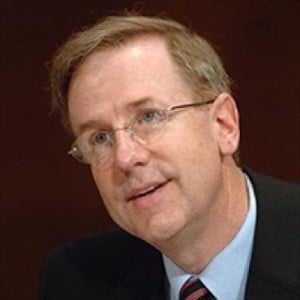
Board Member, Center for Equal Opportunity
Roger Clegg is a Board Member at and former President and General Counsel of the Center for Equal Opportunity. He focuses on legal issues arising from civil rights laws--including the regulatory impact on business and the problems in higher education created by affirmative action. A former Deputy Assistant Attorney General in the Reagan and Bush administrations, Clegg held the second highest positions in both the Civil Rights Division (1987-91) and in the Environment and Natural Resources Division (1991-93). He has held several other positions at the U.S. Justice Department, including Assistant to the Solicitor General (1985-87), Associate Deputy Attorney General (1984-85), and Acting Assistant Attorney General in the Office of Legal Policy (1984). Clegg is a graduate of Yale University Law School (1981).
Judge, United States Court of Appeals, Fifth Circuit
James C. Ho is a Circuit Judge on the U.S. Court of Appeals for the Fifth Circuit. Before taking the bench on January 4, 2018, he was a partner and co-chair of the national Appellate and Constitutional Law practice group of Gibson, Dunn & Crutcher LLP.
As an appellate litigator for over a decade, including three years as the Solicitor General of Texas, Judge Ho presented 50 oral arguments in federal and state courts nationwide. He won numerous appeals, including three merits cases at the U.S. Supreme Court. He was routinely ranked among the nation’s leading lawyers by Benchmark, Chambers, Law360, The Legal 500, and The National Law Journal, among other publications. His work has been cited favorably by courts at every level of both the federal and state judiciaries. He won a Best Brief Award from the National Association of Attorneys General for every year that he served as solicitor general, and he is the only state solicitor general in history to be invited by the U.S. Supreme Court to express the views of a state.
Judge Ho has served in all three branches of the federal government. On the Senate Judiciary Committee, he served as chief counsel of the Subcommittees on the Constitution and Immigration under Senator John Cornyn. At the Justice Department, he served as Special Assistant to the Assistant Attorney General for Civil Rights and an attorney-advisor at the Office of Legal Counsel. He clerked for Judge Jerry E. Smith of the U.S. Court of Appeals for the Fifth Circuit and Justice Clarence Thomas of the U.S. Supreme Court.
His record of public service also includes appointments as vice chair of the Federal Judicial Evaluation Committee in Texas and co-chair of the National Asian Pacific American Bar Association Judiciary Committee, and as a member of the U.S. Magistrate Judge Merit Selection Panel for the Northern District of Texas, the U.S. delegation to the United Nations Committee on the Elimination of Racial Discrimination, and the Continuity of Government Commission.
In addition, Judge Ho has served as an Adjunct Professor of Law at the University of Texas School of Law, where he taught seminars on U.S. Supreme Court Litigation and Religious Liberty. He has authored numerous articles in respected law reviews nationwide, including an annual feature on exemplary judicial writing for The Green Bag Almanac & Reader. He previously served as senior editor of The Green Bag and as co-editor of Pub. L. Misc.
Judge Ho graduated from Stanford University with honors and a B.A. in Public Policy in 1995, and the University of Chicago Law School with high honors in 1999. Before law school, he was a legislative aide to California State Senator Quentin Kopp. He and his wife Allyson live in Dallas, Texas, with their twin daughter and son.
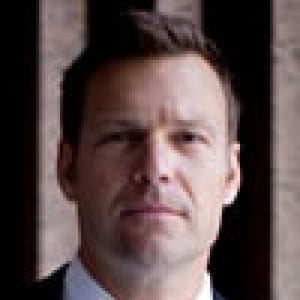
Attorney General, Kansas
Attorney General Kris Kobach was raised in Topeka, Kansas where he graduated from Washburn Rural High School. He completed his undergraduate studies in government at Harvard University, graduating first in his department and summa cum laude. A Marshall Scholarship recipient, he received his Ph.D. in politics from the University of Oxford. Kobach received his J.D. from Yale Law School, serving as notes development editor of the Yale Law Journal.
Kobach clerked for the Tenth Circuit Court of Appeals and shortly thereafter became a professor of constitutional law at the University of Missouri - Kansas City School of Law. Kobach received a White House Fellowship from President George W. Bush. He served in the United States Department of Justice under Attorney General John Ashcroft as Counsel to the Attorney General.
He has litigated some of the most high-profile cases in the country, including defending statutes and ordinances against the ACLU on multiple occasions. In 2012, Kobach brought the first challenge to President Obama’s DACA amnesty on behalf of 10 ICE agents. His victory in federal district court paved the way for Texas to defeat the Obama Justice Department in its litigation.
Kobach served as the 31st Kansas Secretary of State, 2011-2019. He lives near Lecompton with his wife, Heather, and their five children.
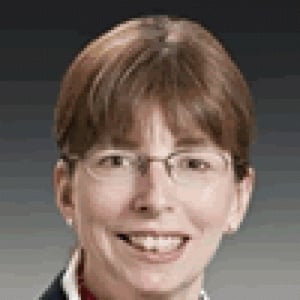
Counsel to the Firm, Cascadia Cross-Border Law
Margaret Stock focuses her practice on immigration and citizenship law. She is a nationally known expert on immigration and national security laws, and has testified regularly before Congressional committees on immigration, homeland security, and military matters. As a retired Lieutenant Colonel in the Military Police, U.S. Army Reserve, Margaret has extensive experience with U.S. military issues. She has also worked as a professor at the United States Military Academy at West Point, and she has served as an adjunct instructor at the University of Alaska. Margaret served as a member of the American Bar Association Commission on Immigration from 2008-2012. She regularly authors articles on military-related immigration issues, and is well-versed on “parole in place” for military family members and the Military Accessions Vital to the National Interest (“MAVNI”) Program. Margaret authored the book Immigration Law & the Military, which was published by the American Immigration Lawyers Association in 2012.
Board Member, Center for Equal Opportunity
Roger Clegg is a Board Member at and former President and General Counsel of the Center for Equal Opportunity. He focuses on legal issues arising from civil rights laws--including the regulatory impact on business and the problems in higher education created by affirmative action. A former Deputy Assistant Attorney General in the Reagan and Bush administrations, Clegg held the second highest positions in both the Civil Rights Division (1987-91) and in the Environment and Natural Resources Division (1991-93). He has held several other positions at the U.S. Justice Department, including Assistant to the Solicitor General (1985-87), Associate Deputy Attorney General (1984-85), and Acting Assistant Attorney General in the Office of Legal Policy (1984). Clegg is a graduate of Yale University Law School (1981).
Judge, United States Court of Appeals, Fifth Circuit
James C. Ho is a Circuit Judge on the U.S. Court of Appeals for the Fifth Circuit. Before taking the bench on January 4, 2018, he was a partner and co-chair of the national Appellate and Constitutional Law practice group of Gibson, Dunn & Crutcher LLP.
As an appellate litigator for over a decade, including three years as the Solicitor General of Texas, Judge Ho presented 50 oral arguments in federal and state courts nationwide. He won numerous appeals, including three merits cases at the U.S. Supreme Court. He was routinely ranked among the nation’s leading lawyers by Benchmark, Chambers, Law360, The Legal 500, and The National Law Journal, among other publications. His work has been cited favorably by courts at every level of both the federal and state judiciaries. He won a Best Brief Award from the National Association of Attorneys General for every year that he served as solicitor general, and he is the only state solicitor general in history to be invited by the U.S. Supreme Court to express the views of a state.
Judge Ho has served in all three branches of the federal government. On the Senate Judiciary Committee, he served as chief counsel of the Subcommittees on the Constitution and Immigration under Senator John Cornyn. At the Justice Department, he served as Special Assistant to the Assistant Attorney General for Civil Rights and an attorney-advisor at the Office of Legal Counsel. He clerked for Judge Jerry E. Smith of the U.S. Court of Appeals for the Fifth Circuit and Justice Clarence Thomas of the U.S. Supreme Court.
His record of public service also includes appointments as vice chair of the Federal Judicial Evaluation Committee in Texas and co-chair of the National Asian Pacific American Bar Association Judiciary Committee, and as a member of the U.S. Magistrate Judge Merit Selection Panel for the Northern District of Texas, the U.S. delegation to the United Nations Committee on the Elimination of Racial Discrimination, and the Continuity of Government Commission.
In addition, Judge Ho has served as an Adjunct Professor of Law at the University of Texas School of Law, where he taught seminars on U.S. Supreme Court Litigation and Religious Liberty. He has authored numerous articles in respected law reviews nationwide, including an annual feature on exemplary judicial writing for The Green Bag Almanac & Reader. He previously served as senior editor of The Green Bag and as co-editor of Pub. L. Misc.
Judge Ho graduated from Stanford University with honors and a B.A. in Public Policy in 1995, and the University of Chicago Law School with high honors in 1999. Before law school, he was a legislative aide to California State Senator Quentin Kopp. He and his wife Allyson live in Dallas, Texas, with their twin daughter and son.
Attorney General, Kansas
Attorney General Kris Kobach was raised in Topeka, Kansas where he graduated from Washburn Rural High School. He completed his undergraduate studies in government at Harvard University, graduating first in his department and summa cum laude. A Marshall Scholarship recipient, he received his Ph.D. in politics from the University of Oxford. Kobach received his J.D. from Yale Law School, serving as notes development editor of the Yale Law Journal.
Kobach clerked for the Tenth Circuit Court of Appeals and shortly thereafter became a professor of constitutional law at the University of Missouri - Kansas City School of Law. Kobach received a White House Fellowship from President George W. Bush. He served in the United States Department of Justice under Attorney General John Ashcroft as Counsel to the Attorney General.
He has litigated some of the most high-profile cases in the country, including defending statutes and ordinances against the ACLU on multiple occasions. In 2012, Kobach brought the first challenge to President Obama’s DACA amnesty on behalf of 10 ICE agents. His victory in federal district court paved the way for Texas to defeat the Obama Justice Department in its litigation.
Kobach served as the 31st Kansas Secretary of State, 2011-2019. He lives near Lecompton with his wife, Heather, and their five children.
Counsel to the Firm, Cascadia Cross-Border Law
Margaret Stock focuses her practice on immigration and citizenship law. She is a nationally known expert on immigration and national security laws, and has testified regularly before Congressional committees on immigration, homeland security, and military matters. As a retired Lieutenant Colonel in the Military Police, U.S. Army Reserve, Margaret has extensive experience with U.S. military issues. She has also worked as a professor at the United States Military Academy at West Point, and she has served as an adjunct instructor at the University of Alaska. Margaret served as a member of the American Bar Association Commission on Immigration from 2008-2012. She regularly authors articles on military-related immigration issues, and is well-versed on “parole in place” for military family members and the Military Accessions Vital to the National Interest (“MAVNI”) Program. Margaret authored the book Immigration Law & the Military, which was published by the American Immigration Lawyers Association in 2012.
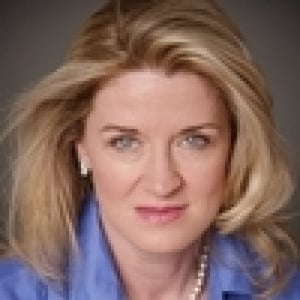
Counsel, The Judicial Confirmation Network
Wendy Long is legal counsel to the Judicial Confirmation Network. Until March 2005, she was a litigation partner in the New York office of Kirkland & Ellis LLP. Wendy was a law clerk to U.S. Supreme Court Justice Clarence Thomas and to Judge Ralph Winter of the U.S. Court of Appeals for the Second Circuit in New York. She is a graduate of Northwestern University School of Law, cum laude and Order of the Coif, where she was articles editor of the Northwestern University Law Review, and of Dartmouth College. She previously served as a press secretary in the U.S. Senate, for former U.S. Senator Bill Armstrong (R-Colo.) and former U.S. Senator Gordon Humphrey (R-N.H.).
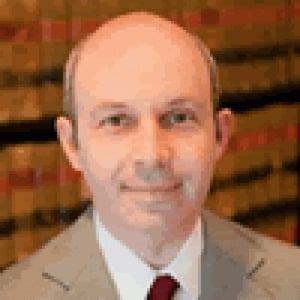
Partner, Goldstein & Russell PC
Thomas C. Goldstein has argued 28 cases before the Supreme Court, including matters involving federal patent law, class action practice, labor and employment, and disability law. In addition to practicing law, Tom teaches Supreme Court Litigation at Harvard Law School and taught at Stanford Law School as well from 2004-2012.
In the Supreme Court and elsewhere, Mr. Goldstein litigates and advises clients in a broad range of issues. For example, he regularly litigates and lectures on questions of federal patent law. Mr. Goldstein frequently advises clients, litigates, and consults on legislative matters relating to the First Amendment. And he regularly represents parties in questions relating to the game of poker, including its lawfulness as a matter of federal and state law. Tom's clients include plaintiffs, criminal defendants, and major corporations such as BG Group, Home Depot, Humana, IMS Health, Nike, PokerStars, POM Wonderful, and Pemex.
In addition to practicing law, Tom founded, and is the publisher of, SCOTUSblog, which in 2013 became the only weblog ever to receive the Peabody Award for excellence in electronic media. It also won the 2013 Society of Professional Journalists (Sigma Delta Chi) prize for deadline reporting for its coverage of the Supreme Court’s healthcare ruling. In 2010, it became the first blog to receive the American Bar Association’s Silver Gavel Award for fostering the American public’s understanding of law and the legal system.
Tom has been repeatedly recognized as a leading member of the bar. In 2010, The National Law Journal named him one of the 40 most influential lawyers of the decade; Tom notably was ten years younger than any other law firm partner listed. Legal Times named him one of the “90 Greatest Washington Lawyers of the Last 30 Years” and praised him for “transforming the practice” of law before the Supreme Court. He is also included in both of the National Law Journal’s most recent lists of the nation’s 100 most influential lawyers (2006 and 2013). He has been repeatedly recognized as one of the nation’s top appellate advocates. GQ Magazine named him one of the 50 most powerful people in Washington, D.C.
Tom is an elected Fellow of the American Academy of Appellate Lawyers, and a member of the American Law Institute. He is involved with a number of professional organizations. He serves as the vice chair of the Amicus Committee of the ABA’s Intellectual Property Section and previously served for two years on the ABA’s Standing Committee on Amicus Curiae Briefs. In those capacities, he has authored several Supreme Court amicus briefs for the ABA. In addition, Tom serves on the boards of advisors of the Washington Legal Foundation and the Georgetown University Supreme Court Institute.
Before founding Goldstein & Howe in 1999, Tom practiced law at Boies & Schiller, LLP and at Jones Day Reavis & Pogue. Tom left the firm he founded in 2006 to create the Supreme Court Practice at Akin, Gump, Strauss, Hauer & Feld, where he also was a partner and principal co-chair of the firmwide litigation practice. He returned to what is now Goldstein & Russell in 2011.
Tom clerked for the Honorable Patricia M. Wald of the U.S. Court of Appeals for the D.C. Circuit.

Professor of Law, Antonin Scalia Law School, George Mason University
ILYA SOMIN is Professor of Law at George Mason University and the B. Kenneth Simon Chair in Constitutional Studies at the Cato Institute. His research focuses on constitutional law, property law, democratic theory, federalism, and migration rights. He is the author of Free to Move: Foot Voting, Migration, and Political Freedom (Oxford University Press, revised and expanded edition, 2022), Democracy and Political Ignorance: Why Smaller Government is Smarter (Stanford University Press, revised and expanded second edition, 2016), and The Grasping Hand: Kelo v. City of New London and the Limits of Eminent Domain (University of Chicago Press, 2015, rev. paperback ed., 2016), coauthor of A Conspiracy Against Obamacare: The Volokh Conspiracy and the Health Care Case (Palgrave Macmillan, 2013), and co-editor of Eminent Domain: A Comparative Perspective (Cambridge University Press, 2017). Democracy and Political Ignorance has been translated into Italian and Japanese.
Somin’s work has appeared in numerous scholarly journals, including the Yale Law Journal, Stanford Law Review, Northwestern University Law Review, Georgetown Law Journal, Critical Review, and others. Somin has also published articles in a variety of popular press outlets, including the New York Times, Washington Post, Wall Street Journal, Los Angeles Times, CNN, NBC, The Atlantic, USA Today, Boston Globe, US News and World Report, South China Morning Post, National Law Journal and Reason. He has been quoted or interviewed by the New York Times, Washington Post, Wall Street Journal, Time, Newsweek, The Economist, the Christian Science Monitor, the Financial Times, The Guardian, the Associated Press, CBS, MSNBC, NPR, BBC, Reuters, the Canadian Broadcasting Corporation, the Australian Broadcasting Corporation, Radio Free Europe/Radio Liberty, Al Jazeera, and the Voice of America, among other media.
Somin’s writings have been cited in decisions by the United States Supreme Court, multiple state supreme courts and lower federal courts, and the Supreme Court of Israel. He is co-counsel for the plaintiffs in VOS Selections, Inc. v. Trump, a case challenging the constitutionality of President Trump’s “Liberation Day” tariffs. Somin has testified on the use of drones for targeted killing in the War on Terror before the US Senate Judiciary Subcommittee on the Constitution, Civil Rights, and Human Rights. In 2009, he testified on property rights issues at the United States Senate Judiciary Committee confirmation hearings for Supreme Court Justice Sonia Sotomayor. Somin writes regularly for the popular Volokh Conspiracy law and politics blog, now affiliated with Reason magazine (previously affiliated with the Washington Post from 2014 to 2017). From 2006 to 2013, he served as Co-Editor of the Supreme Court Economic Review, one of the country’s top-rated law and economics journals.
Somin has served as a visiting professor at the University of Pennsylvania Law School. He has also been a visiting professor or scholar at the Georgetown University Law Center, the University of Hamburg, Germany, the University of Torcuato Di Tella in Buenos Aires, Argentina, Uriel Reichman University in Israel, and Zhengzhou University in China. He is a University Affiliate of the Schar School of Policy and Government at George Mason University, and an affiliated faculty member of the George Mason University Institute for Immigration Research. Before joining the faculty at George Mason, Somin was the John M. Olin Fellow in Law at Northwestern University Law School in 2002-2003. In 2001-2002, he clerked for the Hon. Judge Jerry E. Smith of the U.S. Court of Appeals for the Fifth Circuit. Professor Somin earned his B.A., Summa Cum Laude, at Amherst College, M.A. in Political Science from Harvard University, and J.D. from Yale Law School.

Thomas M. Siebel Senior Fellow, The Hoover Institution, Stanford University; Gary T. Schwartz Distinguished Professor of Law Emeritus, UCLA School of Law
Eugene Volokh is the Thomas M. Siebel Senior Fellow at the Hoover Institution (Stanford), as well as the Gary T. Schwartz Distinguished Professor of Law Emeritus and Distinguished Research Professor at UCLA School of Law. He recently retired from teaching at UCLA, after 30 years there, and is now focusing on research.
Volokh is the author of the textbooks The First Amendment and Related Statutes (8th ed. 2023), and Academic Legal Writing (5th ed. 2016), as well as over 100 academic law journal articles, mostly on First Amendment law. He is a member of The American Law Institute; the editor-in-chief of the Journal of Free Speech Law; and the creator and coauthor of The Volokh Conspiracy, a leading legal blog founded in 2002 (hosted at the Washington Post from 2014 to 2017 and now at Reason Magazine).
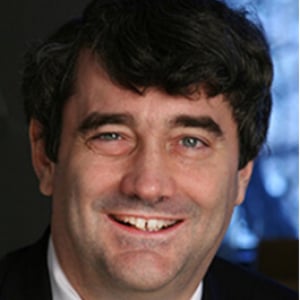
Clayton J. and Henry R. Barber Professor of Law, Northwestern University Pritzker School of Law and Co-Chairman, Board of Directors, The Federalist Society
STEVEN GOW CALABRESI is the Clayton J. & Henry R. Barber Professor at Northwestern Pritzker School of Law. He has also co-taught in the Fall semester at Yale Law School from 2013 to the present. Calabresi clerked for Justice Antonin Scalia and Judges Robert H. Bork and Ralph K. Winter. He was a Special Assistant to Attorney General Meese from 1985 to 1987 and worked with Ken Cribb as his deputy in 1987 on the second floor of the West Wing of the Reagan White House. Calabresi has written books on presidential power and comparative constitutional law and the origins of judicial review. He and Gary Lawson are the co-editors of a casebook on U.S. Constitutional Law, and Calabresi is also the co-editor of a casebook on comparative constitutional law. He has written over seventy law review articles since 1990.
Judge, United States Court of Appeals, Fifth Circuit
James C. Ho is a Circuit Judge on the U.S. Court of Appeals for the Fifth Circuit. Before taking the bench on January 4, 2018, he was a partner and co-chair of the national Appellate and Constitutional Law practice group of Gibson, Dunn & Crutcher LLP.
As an appellate litigator for over a decade, including three years as the Solicitor General of Texas, Judge Ho presented 50 oral arguments in federal and state courts nationwide. He won numerous appeals, including three merits cases at the U.S. Supreme Court. He was routinely ranked among the nation’s leading lawyers by Benchmark, Chambers, Law360, The Legal 500, and The National Law Journal, among other publications. His work has been cited favorably by courts at every level of both the federal and state judiciaries. He won a Best Brief Award from the National Association of Attorneys General for every year that he served as solicitor general, and he is the only state solicitor general in history to be invited by the U.S. Supreme Court to express the views of a state.
Judge Ho has served in all three branches of the federal government. On the Senate Judiciary Committee, he served as chief counsel of the Subcommittees on the Constitution and Immigration under Senator John Cornyn. At the Justice Department, he served as Special Assistant to the Assistant Attorney General for Civil Rights and an attorney-advisor at the Office of Legal Counsel. He clerked for Judge Jerry E. Smith of the U.S. Court of Appeals for the Fifth Circuit and Justice Clarence Thomas of the U.S. Supreme Court.
His record of public service also includes appointments as vice chair of the Federal Judicial Evaluation Committee in Texas and co-chair of the National Asian Pacific American Bar Association Judiciary Committee, and as a member of the U.S. Magistrate Judge Merit Selection Panel for the Northern District of Texas, the U.S. delegation to the United Nations Committee on the Elimination of Racial Discrimination, and the Continuity of Government Commission.
In addition, Judge Ho has served as an Adjunct Professor of Law at the University of Texas School of Law, where he taught seminars on U.S. Supreme Court Litigation and Religious Liberty. He has authored numerous articles in respected law reviews nationwide, including an annual feature on exemplary judicial writing for The Green Bag Almanac & Reader. He previously served as senior editor of The Green Bag and as co-editor of Pub. L. Misc.
Judge Ho graduated from Stanford University with honors and a B.A. in Public Policy in 1995, and the University of Chicago Law School with high honors in 1999. Before law school, he was a legislative aide to California State Senator Quentin Kopp. He and his wife Allyson live in Dallas, Texas, with their twin daughter and son.
Judge, United States Court of Appeals, Fifth Circuit
James C. Ho is a Circuit Judge on the U.S. Court of Appeals for the Fifth Circuit. Before taking the bench on January 4, 2018, he was a partner and co-chair of the national Appellate and Constitutional Law practice group of Gibson, Dunn & Crutcher LLP.
As an appellate litigator for over a decade, including three years as the Solicitor General of Texas, Judge Ho presented 50 oral arguments in federal and state courts nationwide. He won numerous appeals, including three merits cases at the U.S. Supreme Court. He was routinely ranked among the nation’s leading lawyers by Benchmark, Chambers, Law360, The Legal 500, and The National Law Journal, among other publications. His work has been cited favorably by courts at every level of both the federal and state judiciaries. He won a Best Brief Award from the National Association of Attorneys General for every year that he served as solicitor general, and he is the only state solicitor general in history to be invited by the U.S. Supreme Court to express the views of a state.
Judge Ho has served in all three branches of the federal government. On the Senate Judiciary Committee, he served as chief counsel of the Subcommittees on the Constitution and Immigration under Senator John Cornyn. At the Justice Department, he served as Special Assistant to the Assistant Attorney General for Civil Rights and an attorney-advisor at the Office of Legal Counsel. He clerked for Judge Jerry E. Smith of the U.S. Court of Appeals for the Fifth Circuit and Justice Clarence Thomas of the U.S. Supreme Court.
His record of public service also includes appointments as vice chair of the Federal Judicial Evaluation Committee in Texas and co-chair of the National Asian Pacific American Bar Association Judiciary Committee, and as a member of the U.S. Magistrate Judge Merit Selection Panel for the Northern District of Texas, the U.S. delegation to the United Nations Committee on the Elimination of Racial Discrimination, and the Continuity of Government Commission.
In addition, Judge Ho has served as an Adjunct Professor of Law at the University of Texas School of Law, where he taught seminars on U.S. Supreme Court Litigation and Religious Liberty. He has authored numerous articles in respected law reviews nationwide, including an annual feature on exemplary judicial writing for The Green Bag Almanac & Reader. He previously served as senior editor of The Green Bag and as co-editor of Pub. L. Misc.
Judge Ho graduated from Stanford University with honors and a B.A. in Public Policy in 1995, and the University of Chicago Law School with high honors in 1999. Before law school, he was a legislative aide to California State Senator Quentin Kopp. He and his wife Allyson live in Dallas, Texas, with their twin daughter and son.
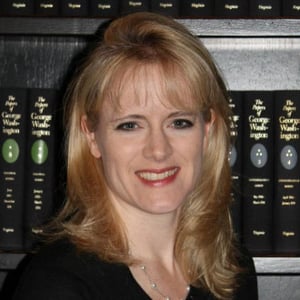
Author, The Indispensable Electoral College: How the Founders’ Plan Saves Our Country from Mob Rule and Enlightened Democracy: The Case for the Electoral College
Tara Ross is nationally recognized for her expertise on the Electoral College. She is the author of Why We Need the Electoral College (2019), The Indispensable Electoral College: How the Founders’ Plan Saves Our Country from Mob Rule (2017), We Elect A President: The Story of our Electoral College (2016), and Enlightened Democracy: The Case for the Electoral College (2d ed. 2012). She is also the author of She Fought Too: Stories of Revolutionary War Heroines (2019), and a co-author of Under God: George Washington and the Question of Church and State (2008) (with Joseph C. Smith, Jr.). Her Prager University video, Do You Understand the Electoral College?, is Prager’s most-viewed video ever, with more than 60 million views.
Tara often appears as a guest on a variety of talk shows nationwide, and she regularly addresses civic, university, and legal audiences. She’s contributed to several law reviews and newspapers, including the National Law Journal, USA Today, the Washington Examiner, The Hill, The Washington Times, and FoxNews.com. She’s appeared before institutions such as the Cooper Union, Brown University, the Dole Institute of Politics, and Mount Vernon. She’s appeared on Fox News, CSPAN, NPR, and a variety of other national and local shows.
Tara is a retired lawyer and a former Editor-in-Chief of the Texas Review of Law & Politics. She obtained her B.A. from Rice University and her J.D. from the University of Texas School of Law. She resides in Dallas with her husband and children.
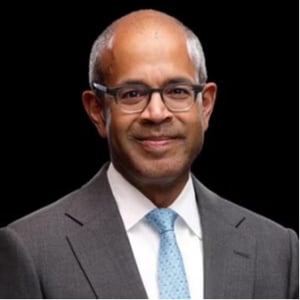
Partner, Davis Polk & Wardwell LLP
Kannon is the head of our Supreme Court & Appellate practice. He has argued 39 cases before the U.S. Supreme Court and has argued more than 150 appeals in courts across the country, including every federal court of appeals and numerous state courts.
Kannon is ranked as a “Star Individual” in appellate law by Chambers USA, where a client notes, “It’s hard to think of enough superlatives to describe his talent, his judgment, his ability, his experience – he is as good as it gets.” Legal 500 U.S. recognizes Kannon in its Hall of Fame for appellate work. A client shares, “His work is the best in the business, and he is a wonderful human being in addition to being a world-class appellate litigator.”
In 2024 and 2022, Kannon was a finalist for the American Lawyer’s “Litigator of the Year” award. He was named “Appellate Litigator of the Year” by Benchmark Litigation in 2021 and was a 2026 finalist for that recognition.
Before entering private practice, Kannon served as an Assistant to the Solicitor General at the U.S. Department of Justice.
Judge, United States Court of Appeals, Fifth Circuit
James C. Ho is a Circuit Judge on the U.S. Court of Appeals for the Fifth Circuit. Before taking the bench on January 4, 2018, he was a partner and co-chair of the national Appellate and Constitutional Law practice group of Gibson, Dunn & Crutcher LLP.
As an appellate litigator for over a decade, including three years as the Solicitor General of Texas, Judge Ho presented 50 oral arguments in federal and state courts nationwide. He won numerous appeals, including three merits cases at the U.S. Supreme Court. He was routinely ranked among the nation’s leading lawyers by Benchmark, Chambers, Law360, The Legal 500, and The National Law Journal, among other publications. His work has been cited favorably by courts at every level of both the federal and state judiciaries. He won a Best Brief Award from the National Association of Attorneys General for every year that he served as solicitor general, and he is the only state solicitor general in history to be invited by the U.S. Supreme Court to express the views of a state.
Judge Ho has served in all three branches of the federal government. On the Senate Judiciary Committee, he served as chief counsel of the Subcommittees on the Constitution and Immigration under Senator John Cornyn. At the Justice Department, he served as Special Assistant to the Assistant Attorney General for Civil Rights and an attorney-advisor at the Office of Legal Counsel. He clerked for Judge Jerry E. Smith of the U.S. Court of Appeals for the Fifth Circuit and Justice Clarence Thomas of the U.S. Supreme Court.
His record of public service also includes appointments as vice chair of the Federal Judicial Evaluation Committee in Texas and co-chair of the National Asian Pacific American Bar Association Judiciary Committee, and as a member of the U.S. Magistrate Judge Merit Selection Panel for the Northern District of Texas, the U.S. delegation to the United Nations Committee on the Elimination of Racial Discrimination, and the Continuity of Government Commission.
In addition, Judge Ho has served as an Adjunct Professor of Law at the University of Texas School of Law, where he taught seminars on U.S. Supreme Court Litigation and Religious Liberty. He has authored numerous articles in respected law reviews nationwide, including an annual feature on exemplary judicial writing for The Green Bag Almanac & Reader. He previously served as senior editor of The Green Bag and as co-editor of Pub. L. Misc.
Judge Ho graduated from Stanford University with honors and a B.A. in Public Policy in 1995, and the University of Chicago Law School with high honors in 1999. Before law school, he was a legislative aide to California State Senator Quentin Kopp. He and his wife Allyson live in Dallas, Texas, with their twin daughter and son.
Author, The Indispensable Electoral College: How the Founders’ Plan Saves Our Country from Mob Rule and Enlightened Democracy: The Case for the Electoral College
Tara Ross is nationally recognized for her expertise on the Electoral College. She is the author of Why We Need the Electoral College (2019), The Indispensable Electoral College: How the Founders’ Plan Saves Our Country from Mob Rule (2017), We Elect A President: The Story of our Electoral College (2016), and Enlightened Democracy: The Case for the Electoral College (2d ed. 2012). She is also the author of She Fought Too: Stories of Revolutionary War Heroines (2019), and a co-author of Under God: George Washington and the Question of Church and State (2008) (with Joseph C. Smith, Jr.). Her Prager University video, Do You Understand the Electoral College?, is Prager’s most-viewed video ever, with more than 60 million views.
Tara often appears as a guest on a variety of talk shows nationwide, and she regularly addresses civic, university, and legal audiences. She’s contributed to several law reviews and newspapers, including the National Law Journal, USA Today, the Washington Examiner, The Hill, The Washington Times, and FoxNews.com. She’s appeared before institutions such as the Cooper Union, Brown University, the Dole Institute of Politics, and Mount Vernon. She’s appeared on Fox News, CSPAN, NPR, and a variety of other national and local shows.
Tara is a retired lawyer and a former Editor-in-Chief of the Texas Review of Law & Politics. She obtained her B.A. from Rice University and her J.D. from the University of Texas School of Law. She resides in Dallas with her husband and children.
Partner, Davis Polk & Wardwell LLP
Kannon is the head of our Supreme Court & Appellate practice. He has argued 39 cases before the U.S. Supreme Court and has argued more than 150 appeals in courts across the country, including every federal court of appeals and numerous state courts.
Kannon is ranked as a “Star Individual” in appellate law by Chambers USA, where a client notes, “It’s hard to think of enough superlatives to describe his talent, his judgment, his ability, his experience – he is as good as it gets.” Legal 500 U.S. recognizes Kannon in its Hall of Fame for appellate work. A client shares, “His work is the best in the business, and he is a wonderful human being in addition to being a world-class appellate litigator.”
In 2024 and 2022, Kannon was a finalist for the American Lawyer’s “Litigator of the Year” award. He was named “Appellate Litigator of the Year” by Benchmark Litigation in 2021 and was a 2026 finalist for that recognition.
Before entering private practice, Kannon served as an Assistant to the Solicitor General at the U.S. Department of Justice.

Discrimination Against Minorities
James C. Ho, Andrew Koppelman, Althea Nagai, Patrick Strawbridge, John C. Yoo
2018 National Lawyers Convention
In 2014, Students for Fair Admissions (SFFA) sued Harvard University, alleging that Harvard was violating...
Discrimination Against Minorities
James C. Ho, Andrew Koppelman, Althea Nagai, Patrick Strawbridge, John C. Yoo
2018 National Lawyers Convention
In 2014, Students for Fair Admissions (SFFA) sued Harvard University, alleging that Harvard was violating...
Supreme Court Review: Justice Gorsuch at Year One
John F. Bash, James C. Ho, Aaron M. Streett, James P. Sullivan, David O. Taylor
2018 Texas Chapters Conference
On September 7-8, 2018, the Federalist Society's Fort Worth Lawyers Chapter hosted the fourth annual...
Supreme Court Review: Justice Gorsuch at Year One
John F. Bash, James C. Ho, Aaron M. Streett, James P. Sullivan, David O. Taylor
2018 Texas Chapters Conference
On September 7-8, 2018, the Federalist Society's Fort Worth Lawyers Chapter hosted the fourth annual...
Birthright Citizenship
John C. Eastman, James C. Ho, Dean Reuter
Civil Rights Practice Group Podcast
The Citizenship Clause of the 14th Amendment states that "All persons born or naturalized in the...
Civil Rights: Immigration, the Arizona Statute, and E Pluribus Unum
Roger B. Clegg, James C. Ho, Kris W. Kobach, Margaret D. Stock
2010 National Lawyers Convention
Mr. Roger Clegg, President and General Counsel, Center for Equal Opportunity Hon. Kris W. Kobach, Daniel...
Civil Rights: Immigration, the Arizona Statute, and E Pluribus Unum
Roger B. Clegg, James C. Ho, Kris W. Kobach, Margaret D. Stock
2010 National Lawyers Convention
Mr. Roger Clegg, President and General Counsel, Center for Equal Opportunity Hon. Kris W. Kobach, Daniel...
SCOTUS term
Wendy Long, Thomas C. Goldstein, Ilya Somin, Eugene Volokh, Steven G. Calabresi, James C. Ho
Online Debate
On June 28, 2007, the Supreme Court handed down its last decisions of the Spring...
Judicial Recess Appointments: A Survey of the Arguments
Stuart Buck, Brett H. McGurk, James C. Ho, Tara Ross, Kannon K. Shanmugam
This paper considers the President’s power to make recess appointments to the federal judiciary. Part...
Judicial Recess Appointments: A Survey of the Arguments
Stuart Buck, Brett H. McGurk, James C. Ho, Tara Ross, Kannon K. Shanmugam
This paper considers the President’s power to make recess appointments to the federal judiciary. Part...