
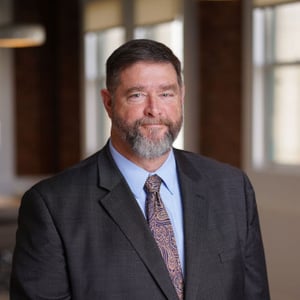
Partner, Briscoe Prows Kao Ivester & Bazel LLP
Tony Francois is experienced in Water and Real Property Law, Land Use and Zoning, Environmental Regulation, Natural Resources Development, Agricultural Law, and Constitutional Law. He has represented homeowners, builders, farmers and ranchers, trade associations, and water districts in administrative, civil, and criminal proceedings before state and federal administrative agencies and state and federal trial and appellate courts. He is a member of the California State Bar and the Northern, Eastern, and Central Districts of California and the Districts of New Mexico and North Dakota, and has litigated cases in federal courts in California, Oregon, Washington, Idaho, Montana, Nevada, Arizona, New Mexico, Colorado, North and South Dakota, Minnesota, Massachusetts, Maryland, South Carolina, and the District of Columbia, as well as the Sixth, Eighth, Ninth, and Tenth Circuit Courts of Appeals. He has appeared before the Supreme Courts of California, Idaho, Nevada, and the United States.
Prior to attending law school, he served as an infantry officer in the United States Army, and was stationed in the former West Germany during the fall of the Berlin Wall.
Tony was an Attorney at Pacific Legal Foundation from 2012 to 2021. He was a lobbyist for 10 years, first with California Farm Bureau Federation from 2003 to 2007, and then with KP Public Affairs from 2007 to 2012. He was an attorney at McQuaid, Bedford & Van Zandt in San Francisco from 1999 – 2003.
Professor of Environmental Practice and Director, California Env, UC Davis School of Law
Richard M. Frank is a Professor of Environmental Practice and Director of the California Environmental Law and Policy Center (CELPC). Formerly the executive director of the Center for Law, Energy, & the Environment (CLEE) at UC Berkeley School of Law, Frank returned to UC Davis School of Law in January 2010. In addition to leading the CELPC, he teaches classroom courses in the environmental law curriculum.
Before coming to CLEE and UC Berkeley, Professor Frank practiced law with federal and state agencies for 32 years, most of that time with the California Department of Justice. Immediately before joining Berkeley Law, he served as California's Chief Deputy Attorney General for Legal Affairs.
In 2006, Governor Schwarzenegger appointed Frank to the Delta Vision Task Force, an advisory body asked to develop policy recommendations for the Governor and Legislature, addressing environmental problems confronting the California Delta. He served in that capacity in 2007-08. In May 2009, the Chair of the California Air Resources Board appointed Frank Vice Chair of the Economic Allocation & Advisory Committee, an advisory body formed to assist the Air Resources Board in implementing California's landmark Global Warming Solutions Act (AB 32).
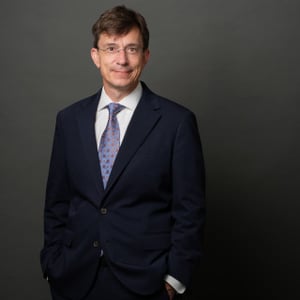
Professor of Law and Executive Director, Law and Economics Center, Antonin Scalia Law School, George Mason University
Donald Kochan is Professor of Law and Executive Director of the Law & Economics Center (LEC). Professor Kochan is an elected member of the American Law Institute (ALI) and serves as an Adviser to ALI's Restatement of the Law Fourth, Property project. Professor Kochan is a Nonresident Scholar at the Center for the Constitution at Georgetown University Law Center, where he was a Visiting Scholar in residence during Fall 2018. Before joining the Antonin Scalia Law School faculty, he was the Parker S. Kennedy Professor in Law at Chapman University’s Dale E. Fowler School of Law from 2004 to 2020. From 2003 to 2004, Professor Kochan was an Olin Fellow at the University of Virginia School of Law. During 2002-2003, he was a Visiting Assistant Professor of Law at George Mason’s Scalia Law School.
Professor Kochan’s scholarship focuses on areas of property law, constitutional law, administrative law, local government law, natural resources and environmental law, and law & economics. He has published several books and more than 50 scholarly articles and essays in well-regarded law journals. His work has been cited in more than a dozen state and federal court opinions, in more than 75 briefs filed in state and federal courts including more than 25 filed in the U.S. Supreme Court, in dozens of books and treatises, and in more than 800 scholarly articles.
Professor Kochan received his JD from Cornell Law School, where he was a John M. Olin Scholar in Law and Economics and managing editor of the Cornell International Law Journal. During law school, he also served as editor and executive editor of the Harvard Journal of Law & Public Policy symposium issues in 1997 and 1998. He received his BA from Western Michigan University, magna cum laude, with majors in both political science and philosophy, where he studied as the John W. Gill Medallion Scholar and was honored as the Presidential Scholar (awarded to the top graduate in the political science department).
After graduating from law school, Professor Kochan was a law clerk to The Honorable Richard F. Suhrheinrich of the United States Court of Appeals for the Sixth Circuit. Following his clerkship, Professor Kochan was an associate with the firm of Crowell & Moring LLP in Washington, D.C., where he specialized in natural resources & environmental law as well as tort, products, and consumer civil litigation & legislative affairs.
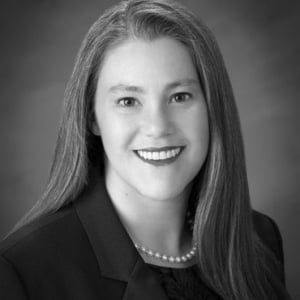
Judge, Arizona Court of Appeals, Division One
The Honorable Jennifer M. Perkins began service on the Arizona Court of Appeals, Division One, on October 30, 2017. At the time of her appointment by Governor Douglas Ducey, Judge Perkins was Assistant Solicitor General for the State of Arizona.
Judge Perkins was born in Portales, New Mexico, and primarily raised in Albuquerque. She attended the prestigious Albuquerque Academy from 1988-1995, before moving to Washington D.C. to attend the Elliott School of International Affairs at the George Washington University as a National Merit Scholar. Therafter, she relocated again to Dallas, Texas, and earned her juris doctor from the SMU Dedman School of Law, graduating cum laude in 2002.
Judge Perkins started her career at the law firm of Browning & Peifer (now Peifer, Hanson, Mullins, and Baker) in Albuquerque, New Mexico. While there, she litigated complex commercial matters including class action plaintiff and defense work, and assisted with employment and contract litigation. In 2003, the judge accompanied the Honorable James O. Browning in transitioning to the federal district court bench, serving as his first law clerk.
After her clerkship, Judge Perkins moved to Arizona to work for the Institute for Justice, Arizona Chapter, a public interest law firm. She spent five years with IJ-AZ litigating civil rights cases in Arizona and across the country. In 2009, the judge became Disciplinary Counsel for the Arizona Commission on Judicial Conduct, where she reviewed and prosecuted ethics complaints against state court judges throughout Arizona. After five years serving the state in this capacity, Judge Perkins entered private practice by joining an appellate law firm in Phoenix. While there, she worked on state and federal appeals involving a wide range of legal subjects, including complex business disputes, property rights, judicial ethics, and personal injury matters.
In January 2015, Judge Perkins joined the Office of the Arizona Attorney General to serve as the first Assistant Solicitor General; in that capacity, she was responsible for oversight of Attorney General Opinions and served as ethics counsel to the entire office. In addition to these two primary roles, the judge assisted on a variety of matters including trial and appellate litigation of election-related matters; federal appellate litigation with the Federalism Unit; state criminal appeals; and drafting amicus briefs on behalf of Arizona in state and federal courts.
Associate Professor, University of Denver Sturm College of Law
Professor Justin Pidot graduated with high honors from Wesleyan University before attending Stanford Law School, where he graduated with distinction and was editor in chief of the Stanford Environmental Law Journal. Professor Pidot clerked for Judge Judith W. Rogers of the U.S. Court of Appeals for the District of Columbia Circuit. Prior to joining the University of Denver faculty, he was an appellate litigator at the Environment and Natural Resources Division of the U.S. Department of Justice, where he presented argument in more than a dozen federal appellate cases and acted as the staff attorney on two cases before the United States Supreme Court. Professor Pidot also completed a fellowship at the Georgetown Environmental Law & Policy Institute.
Professor Pidot’s scholarship and teaching focus on environmental law, natural resources law, and federal courts.
United States Court of Appeals, 9th Circuit
Milan Smith was confirmed on May 16, 2006 to the Ninth Circuit, which hears appeals from the federal district courts of Alaska, Arizona, California, Guam, Hawaii, Idaho, Montana, Nevada, Oregon, and Washington.
Judge Smith has a distinguished record as a practicing attorney in the public and private sectors. In his private practice, Judge Smith was well recognized for his expertise in real estate law. He represented major corporations, such as Honeywell International and Toyota Motor sales USA, Inc., and a wide range of public clients, such as the Palos Verdes Unified School District, the Los Angeles State Business Authority, and non-profit organizations such as Marymount College. Judge Smith also has extensive experience in the areas of tax law, corporate law and environmental law.
In 1988, Judge Smith was appointed by Governor George Deukmejian to the California Fair Employment and Housing Commission. This Commission hears cases of alleged housing and employment discrimination and determines whether and how much recovery to award to claimants. Mr. Smith participated in dozens of such cases on such topics as racial discrimination and sexual harassment.
Judge Smith’s litigation experience encompassed not only real estate matters, but also contract, family law, tax, and administrative cases. He also had a thriving transactional practice.
Judge Smith graduated from Brigham Young University in 1966, where he received his degree cum laude. In 1969, Judge Smith received his Juris Doctor degree from the University of Chicago Law School
Professor of Law and Executive Director, Law and Economics Center, Antonin Scalia Law School, George Mason University
Donald Kochan is Professor of Law and Executive Director of the Law & Economics Center (LEC). Professor Kochan is an elected member of the American Law Institute (ALI) and serves as an Adviser to ALI's Restatement of the Law Fourth, Property project. Professor Kochan is a Nonresident Scholar at the Center for the Constitution at Georgetown University Law Center, where he was a Visiting Scholar in residence during Fall 2018. Before joining the Antonin Scalia Law School faculty, he was the Parker S. Kennedy Professor in Law at Chapman University’s Dale E. Fowler School of Law from 2004 to 2020. From 2003 to 2004, Professor Kochan was an Olin Fellow at the University of Virginia School of Law. During 2002-2003, he was a Visiting Assistant Professor of Law at George Mason’s Scalia Law School.
Professor Kochan’s scholarship focuses on areas of property law, constitutional law, administrative law, local government law, natural resources and environmental law, and law & economics. He has published several books and more than 50 scholarly articles and essays in well-regarded law journals. His work has been cited in more than a dozen state and federal court opinions, in more than 75 briefs filed in state and federal courts including more than 25 filed in the U.S. Supreme Court, in dozens of books and treatises, and in more than 800 scholarly articles.
Professor Kochan received his JD from Cornell Law School, where he was a John M. Olin Scholar in Law and Economics and managing editor of the Cornell International Law Journal. During law school, he also served as editor and executive editor of the Harvard Journal of Law & Public Policy symposium issues in 1997 and 1998. He received his BA from Western Michigan University, magna cum laude, with majors in both political science and philosophy, where he studied as the John W. Gill Medallion Scholar and was honored as the Presidential Scholar (awarded to the top graduate in the political science department).
After graduating from law school, Professor Kochan was a law clerk to The Honorable Richard F. Suhrheinrich of the United States Court of Appeals for the Sixth Circuit. Following his clerkship, Professor Kochan was an associate with the firm of Crowell & Moring LLP in Washington, D.C., where he specialized in natural resources & environmental law as well as tort, products, and consumer civil litigation & legislative affairs.
Staff Attorney, Southern Utah Wilderness Alliance
David Garbett is a staff attorney with the Southern Utah Wilderness Alliance in Salt Lake City, Utah. His practice focuses on public lands law, principally as it relates to the Bureau of Land Management. His litigation and administrative work has involved oil and gas leasing and development, air quality issues, wilderness identification and management, rights of way claims, and resource management planning. Mr. Garbett earned his J.D. from Harvard Law School in 2006. He also holds an M.S. in economics from Utah State University and a B.A. in history from Brigham Young University.
Solicitor General, Montana Attorney General's Office
Christian is currently Solicitor General of Montana, where he serves as the chief litigator and principal legal advisor to Montana Attorney General Austin Knudsen. In that capacity, he manages litigation before the federal district courts, courts of appeal, and the United States Supreme Court, as well as the Montana Supreme Court. He previously served in the Trump Administration as Senior Counsel to the Assistant Secretary for Civil Rights at the U.S. Department of Education. Prior to government service, he was a public interest constitutional litigator at Mountain States Legal Foundation and a fellow at the Institute for Justice. He clerked for Justice Caleb Stegall on the Kansas Supreme Court. He also served as Director of Publications for the Federalist Society's national headquarters.
Christian earned his B.A. in Political Science in 2009 from the University of Pennsylvania before attending the University of Kansas School of Law. Christian is admitted to practice law in Kansas and Montana. A Kansas native, he is a die-hard fan of the Kansas Jayhawks, Kansas City Chiefs, and Kansas City Royals.
Christian is a member of the Federalism & Separation of Powers Practice Group's Executive Committee.
Professor of Law and Executive Director, Law and Economics Center, Antonin Scalia Law School, George Mason University
Donald Kochan is Professor of Law and Executive Director of the Law & Economics Center (LEC). Professor Kochan is an elected member of the American Law Institute (ALI) and serves as an Adviser to ALI's Restatement of the Law Fourth, Property project. Professor Kochan is a Nonresident Scholar at the Center for the Constitution at Georgetown University Law Center, where he was a Visiting Scholar in residence during Fall 2018. Before joining the Antonin Scalia Law School faculty, he was the Parker S. Kennedy Professor in Law at Chapman University’s Dale E. Fowler School of Law from 2004 to 2020. From 2003 to 2004, Professor Kochan was an Olin Fellow at the University of Virginia School of Law. During 2002-2003, he was a Visiting Assistant Professor of Law at George Mason’s Scalia Law School.
Professor Kochan’s scholarship focuses on areas of property law, constitutional law, administrative law, local government law, natural resources and environmental law, and law & economics. He has published several books and more than 50 scholarly articles and essays in well-regarded law journals. His work has been cited in more than a dozen state and federal court opinions, in more than 75 briefs filed in state and federal courts including more than 25 filed in the U.S. Supreme Court, in dozens of books and treatises, and in more than 800 scholarly articles.
Professor Kochan received his JD from Cornell Law School, where he was a John M. Olin Scholar in Law and Economics and managing editor of the Cornell International Law Journal. During law school, he also served as editor and executive editor of the Harvard Journal of Law & Public Policy symposium issues in 1997 and 1998. He received his BA from Western Michigan University, magna cum laude, with majors in both political science and philosophy, where he studied as the John W. Gill Medallion Scholar and was honored as the Presidential Scholar (awarded to the top graduate in the political science department).
After graduating from law school, Professor Kochan was a law clerk to The Honorable Richard F. Suhrheinrich of the United States Court of Appeals for the Sixth Circuit. Following his clerkship, Professor Kochan was an associate with the firm of Crowell & Moring LLP in Washington, D.C., where he specialized in natural resources & environmental law as well as tort, products, and consumer civil litigation & legislative affairs.

Tazewell Taylor Professor of Law and William H. Cabell Research Professor, William & Mary Law School
Jonathan H. Adler joined the William & Mary law faculty as the Tazwell Taylor Professor of Law and William H. Cabell Research Professor in 2025. Prior to joining the faculty, he was the inaugural Johan Verheij Memorial Professor of Law and the founding Director of the Coleman P. Burke Center for Environmental Law at the Case Western Reserve University School of Law.
Professor Adler is the author or editor of seven books, including Climate Liberalism: Perspectives on Liberty, Property and Pollution (Palgrave, 2023), Marijuana Federalism: Uncle Sam and Mary Jane (Brookings Institution Press, 2020), Business and the Roberts Court (Oxford University Press, 2016) and Rebuilding the Ark: New Perspectives on Endangered Species Act Reform (AEI Press, 2011).
His articles have appeared in publications ranging from the Harvard Environmental Law Review and Yale Journal on Regulation to the Wall Street Journal, New York Times, and Washington Post. He has testified before Congress a dozen times, and his work has been cited in the U.S. Supreme Court. A 2024 study identified Professor Adler as the seventh most cited legal academic in administrative and environmental law from 2019 to 2023.
Professor Adler is a contributing editor to Civitas Outlook and a regular contributor to the popular legal blog, The Volokh Conspiracy. A regular commentator on constitutional and regulatory issues, he has appeared on numerous radio and television programs, ranging from the PBS Newshour and National Public Radio to the Fox News Channel and Entertainment Tonight.
Professor Adler is a senior fellow at the Property & Environment Research Center in Bozeman, Montana. In 2018, Professor Adler was elected to membership in the American Law Institute and helped co-found the organization Checks and Balances. In 2024, Professor Adler was appointed a public member of the Administrative Conference of the United States.
Professor Adler clerked for the Honorable David B. Sentelle on the U.S. Court of Appeals for the District of Columbia Circuit.
Professor of Law and Executive Director, Law and Economics Center, Antonin Scalia Law School, George Mason University
Donald Kochan is Professor of Law and Executive Director of the Law & Economics Center (LEC). Professor Kochan is an elected member of the American Law Institute (ALI) and serves as an Adviser to ALI's Restatement of the Law Fourth, Property project. Professor Kochan is a Nonresident Scholar at the Center for the Constitution at Georgetown University Law Center, where he was a Visiting Scholar in residence during Fall 2018. Before joining the Antonin Scalia Law School faculty, he was the Parker S. Kennedy Professor in Law at Chapman University’s Dale E. Fowler School of Law from 2004 to 2020. From 2003 to 2004, Professor Kochan was an Olin Fellow at the University of Virginia School of Law. During 2002-2003, he was a Visiting Assistant Professor of Law at George Mason’s Scalia Law School.
Professor Kochan’s scholarship focuses on areas of property law, constitutional law, administrative law, local government law, natural resources and environmental law, and law & economics. He has published several books and more than 50 scholarly articles and essays in well-regarded law journals. His work has been cited in more than a dozen state and federal court opinions, in more than 75 briefs filed in state and federal courts including more than 25 filed in the U.S. Supreme Court, in dozens of books and treatises, and in more than 800 scholarly articles.
Professor Kochan received his JD from Cornell Law School, where he was a John M. Olin Scholar in Law and Economics and managing editor of the Cornell International Law Journal. During law school, he also served as editor and executive editor of the Harvard Journal of Law & Public Policy symposium issues in 1997 and 1998. He received his BA from Western Michigan University, magna cum laude, with majors in both political science and philosophy, where he studied as the John W. Gill Medallion Scholar and was honored as the Presidential Scholar (awarded to the top graduate in the political science department).
After graduating from law school, Professor Kochan was a law clerk to The Honorable Richard F. Suhrheinrich of the United States Court of Appeals for the Sixth Circuit. Following his clerkship, Professor Kochan was an associate with the firm of Crowell & Moring LLP in Washington, D.C., where he specialized in natural resources & environmental law as well as tort, products, and consumer civil litigation & legislative affairs.
Staff Attorney, Southern Utah Wilderness Alliance
David Garbett is a staff attorney with the Southern Utah Wilderness Alliance in Salt Lake City, Utah. His practice focuses on public lands law, principally as it relates to the Bureau of Land Management. His litigation and administrative work has involved oil and gas leasing and development, air quality issues, wilderness identification and management, rights of way claims, and resource management planning. Mr. Garbett earned his J.D. from Harvard Law School in 2006. He also holds an M.S. in economics from Utah State University and a B.A. in history from Brigham Young University.

Executive Vice President, The Federalist Society
Dean Reuter is Executive Vice President at the Federalist Society for Law and Public Policy Studies. He has served in two federal government agency Offices of the Inspector General, as Counsel to the Inspector General and Deputy Inspector General, responsible for policing the use of federal funds granted and contracted through those agencies. As such, he helped conduct and oversee criminal investigations across the country. He is the principal author of the non-fiction book, The Hidden Nazi: The Untold Story of America's Deal with the Devil, and editor of Liberty’s Nemesis: The Unchecked Expansion of the State and Confronting Terror: 9/11 and the Future of American National Security. He was appointed by the President and served as Vice-Chairman of the Board of Directors of the Corporation for National and Community Service, and recently served as an appointee on the U.S. Commission on Presidential Scholars. He is a graduate of Hood College (BA with Honors) and the University of Maryland School of Law.
Professor of Law and Executive Director, Law and Economics Center, Antonin Scalia Law School, George Mason University
Donald Kochan is Professor of Law and Executive Director of the Law & Economics Center (LEC). Professor Kochan is an elected member of the American Law Institute (ALI) and serves as an Adviser to ALI's Restatement of the Law Fourth, Property project. Professor Kochan is a Nonresident Scholar at the Center for the Constitution at Georgetown University Law Center, where he was a Visiting Scholar in residence during Fall 2018. Before joining the Antonin Scalia Law School faculty, he was the Parker S. Kennedy Professor in Law at Chapman University’s Dale E. Fowler School of Law from 2004 to 2020. From 2003 to 2004, Professor Kochan was an Olin Fellow at the University of Virginia School of Law. During 2002-2003, he was a Visiting Assistant Professor of Law at George Mason’s Scalia Law School.
Professor Kochan’s scholarship focuses on areas of property law, constitutional law, administrative law, local government law, natural resources and environmental law, and law & economics. He has published several books and more than 50 scholarly articles and essays in well-regarded law journals. His work has been cited in more than a dozen state and federal court opinions, in more than 75 briefs filed in state and federal courts including more than 25 filed in the U.S. Supreme Court, in dozens of books and treatises, and in more than 800 scholarly articles.
Professor Kochan received his JD from Cornell Law School, where he was a John M. Olin Scholar in Law and Economics and managing editor of the Cornell International Law Journal. During law school, he also served as editor and executive editor of the Harvard Journal of Law & Public Policy symposium issues in 1997 and 1998. He received his BA from Western Michigan University, magna cum laude, with majors in both political science and philosophy, where he studied as the John W. Gill Medallion Scholar and was honored as the Presidential Scholar (awarded to the top graduate in the political science department).
After graduating from law school, Professor Kochan was a law clerk to The Honorable Richard F. Suhrheinrich of the United States Court of Appeals for the Sixth Circuit. Following his clerkship, Professor Kochan was an associate with the firm of Crowell & Moring LLP in Washington, D.C., where he specialized in natural resources & environmental law as well as tort, products, and consumer civil litigation & legislative affairs.
Professor of Law and Executive Director, Law and Economics Center, Antonin Scalia Law School, George Mason University
Donald Kochan is Professor of Law and Executive Director of the Law & Economics Center (LEC). Professor Kochan is an elected member of the American Law Institute (ALI) and serves as an Adviser to ALI's Restatement of the Law Fourth, Property project. Professor Kochan is a Nonresident Scholar at the Center for the Constitution at Georgetown University Law Center, where he was a Visiting Scholar in residence during Fall 2018. Before joining the Antonin Scalia Law School faculty, he was the Parker S. Kennedy Professor in Law at Chapman University’s Dale E. Fowler School of Law from 2004 to 2020. From 2003 to 2004, Professor Kochan was an Olin Fellow at the University of Virginia School of Law. During 2002-2003, he was a Visiting Assistant Professor of Law at George Mason’s Scalia Law School.
Professor Kochan’s scholarship focuses on areas of property law, constitutional law, administrative law, local government law, natural resources and environmental law, and law & economics. He has published several books and more than 50 scholarly articles and essays in well-regarded law journals. His work has been cited in more than a dozen state and federal court opinions, in more than 75 briefs filed in state and federal courts including more than 25 filed in the U.S. Supreme Court, in dozens of books and treatises, and in more than 800 scholarly articles.
Professor Kochan received his JD from Cornell Law School, where he was a John M. Olin Scholar in Law and Economics and managing editor of the Cornell International Law Journal. During law school, he also served as editor and executive editor of the Harvard Journal of Law & Public Policy symposium issues in 1997 and 1998. He received his BA from Western Michigan University, magna cum laude, with majors in both political science and philosophy, where he studied as the John W. Gill Medallion Scholar and was honored as the Presidential Scholar (awarded to the top graduate in the political science department).
After graduating from law school, Professor Kochan was a law clerk to The Honorable Richard F. Suhrheinrich of the United States Court of Appeals for the Sixth Circuit. Following his clerkship, Professor Kochan was an associate with the firm of Crowell & Moring LLP in Washington, D.C., where he specialized in natural resources & environmental law as well as tort, products, and consumer civil litigation & legislative affairs.
President, Institute for Liberty and Democracy
Mr. de Soto is currently President of the ILD —headquartered in Lima, Peru— considered byThe Economistas one of the two most important think tanks in the world.Timemagazine chose him as one of the five leading Latin American innovators of the century in its special May 1999 issue "Leaders for the New Millennium", and included him among the 100 most influential people in the world in 2004. In its 85th anniversary edition, Forbes named Mr. de Soto as one of 15 innovators “who will reinvent your future”. In January 2000,Entwicklung und Zusammenarbeit, the German development magazine, described Mr. de Soto as one of the most important development theoreticians of the last millennium. In October 2005, over 20,000 readers ofProspectmagazine of the UK andForeign Policyof the US ranked him among the top 13 “public intellectuals” in the world from the magazines’ joint list of 100.
Mr. de Soto has served as an economist for the General Agreement on Tariffs and Trade, as President of the Executive Committee of the Copper Exporting Countries Organization (CIPEC), as CEO of Universal Engineering Corporation (Continental Europe’s largest consulting engineering firm), as a principal of the Swiss Bank Corporation Consultant Group, and as a governor of Peru’s Central Reserve Bank.
Currently, Mr. de Soto, together with his colleagues at the ILD, is focused on designing and implementing capital formation programs to empower the poor in Africa, Asia, Latin America, the Middle East, and former Soviet Nations. Some 30 heads of state have invited him to carry out these ILD programs in their countries. He also co-chairs with former US Secretary of State Madeleine Albright the Commission on Legal Empowerment for the Poor,and currently serves as honorary co-chair on various boards and organizations, including the World Justice Project.
Mr. de Soto has published two books about economic and political development: The Other Path, in the mid- 1980s, and at the end of 2000, The Mystery of Capital: Why Capitalism Triumphs in the West and Fails Everywhere Else. Both books have been international bestsellers – translated into some 20 languages
Professor of Law, George Mason University School of Law
With his work in regulatory takings and other aspects of property law, professor of law Steven Eagle plays an important role in the ongoing dialogue among American legal scholars, lawyers, and judges on the proper interpretation of property rights in the Constitution. He is the author of a leading property treatise and scholarly and popular articles and teaches in programs for judges and the practicing bar.
Professor Eagle came to George Mason in 1987 and also has taught at the law schools of Vanderbilt University, the University of Toledo, and Pace University. He earned his B.B.A. from the City College of New York (1965) and his J.D. from Yale Law School (1970). Professor Eagle teaches the first-year course, Property, Land Use Planning, and an advanced constitutional law seminar on property rights.
Professor of Law, Vermont Law School
John Echeverria is a Professor of Law at Vermont Law School where he teaches Property, Public Law and a wide range of environmental and natural resource law courses. Prior to joining the Vermont Law School faculty in 2009, he served for 12 years as Executive Director of the Georgetown Environmental Law & Policy Institute at Georgetown University Law Center. He also was General Counsel of the National Audubon Society and General Counsel and Conservation Director of American Rivers, Inc., and was an Associate for four years in the Washington, D.C. office of Hughes, Hubbard & Reed. He served for one year as law clerk to the Honorable Gerhard A. Gesell of the U.S. District Court for the District of Columbia immediately after graduating from law school.
Professor Echeverria has written several books and numerous scholarly articles on environmental and natural resource law topics. He has published pieces for more general audiences in The New York Times, The Washington Post, and The Christian Science Monitor. He has represented state and local governments, environmental organizations, and planning groups in a variety of legal matters at all levels of the federal and state court systems. In 2007, Professor Echeverria received the Jefferson Fordham Advocacy Award from the American Bar Association to recognize outstanding excellence within the area of state and local government law over a lifetime of achievement. In addition to teaching at Vermont Law School, he has served as a Visiting Professor at Harvard Law School and Georgetown University Law Center.
Professor Echeverria received a JD degree from the Yale Law School. He received a Master’s degree from the Yale School of Forestry and Environmental Studies as well as a BA degree from Yale College (summa cum laude).
Professor of Law and Executive Director, Law and Economics Center, Antonin Scalia Law School, George Mason University
Donald Kochan is Professor of Law and Executive Director of the Law & Economics Center (LEC). Professor Kochan is an elected member of the American Law Institute (ALI) and serves as an Adviser to ALI's Restatement of the Law Fourth, Property project. Professor Kochan is a Nonresident Scholar at the Center for the Constitution at Georgetown University Law Center, where he was a Visiting Scholar in residence during Fall 2018. Before joining the Antonin Scalia Law School faculty, he was the Parker S. Kennedy Professor in Law at Chapman University’s Dale E. Fowler School of Law from 2004 to 2020. From 2003 to 2004, Professor Kochan was an Olin Fellow at the University of Virginia School of Law. During 2002-2003, he was a Visiting Assistant Professor of Law at George Mason’s Scalia Law School.
Professor Kochan’s scholarship focuses on areas of property law, constitutional law, administrative law, local government law, natural resources and environmental law, and law & economics. He has published several books and more than 50 scholarly articles and essays in well-regarded law journals. His work has been cited in more than a dozen state and federal court opinions, in more than 75 briefs filed in state and federal courts including more than 25 filed in the U.S. Supreme Court, in dozens of books and treatises, and in more than 800 scholarly articles.
Professor Kochan received his JD from Cornell Law School, where he was a John M. Olin Scholar in Law and Economics and managing editor of the Cornell International Law Journal. During law school, he also served as editor and executive editor of the Harvard Journal of Law & Public Policy symposium issues in 1997 and 1998. He received his BA from Western Michigan University, magna cum laude, with majors in both political science and philosophy, where he studied as the John W. Gill Medallion Scholar and was honored as the Presidential Scholar (awarded to the top graduate in the political science department).
After graduating from law school, Professor Kochan was a law clerk to The Honorable Richard F. Suhrheinrich of the United States Court of Appeals for the Sixth Circuit. Following his clerkship, Professor Kochan was an associate with the firm of Crowell & Moring LLP in Washington, D.C., where he specialized in natural resources & environmental law as well as tort, products, and consumer civil litigation & legislative affairs.
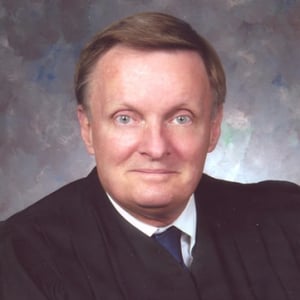
Judge, United States Court of Appeals, Fifth Circuit
Judge Smith was appointed U.S. Circuit Judge for the Fifth Circuit by President Reagan and entered on duty in January 1988. He attended public schools in Lubbock, Texas, and graduated from Yale University, receiving a B.A. in 1969 and a J.D. in 1972.
Judge Smith was a Law Clerk to U.S. District Judge Halbert Woodward, Northern District of Texas, 1972-1973; with the Houston law firm of Fulbright & Jaworski as an Associate, 1973-1981, and as Partner, 1981-1984; and as City Attorney, City of Houston, 1984-1988. He was Chairman, Civil Service Commission, City of Houston, 1982-1984; and a Director, Harris County Housing Authority, 1978-1980.
Judge Smith lives in Houston and is married to Mary Jane Smith and has four children: Ruth Ann, Clark, J.J., and Brandon. He formerly was Chair of the Advisory Committee on Federal Rules of Evidence of the Judicial Conference of the United States. He assists LexisNexis/Matthew Bender & Co. in periodic revisions of several chapters of Moore’s Federal Practice.
President, Institute for Liberty and Democracy
Mr. de Soto is currently President of the ILD —headquartered in Lima, Peru— considered byThe Economistas one of the two most important think tanks in the world.Timemagazine chose him as one of the five leading Latin American innovators of the century in its special May 1999 issue "Leaders for the New Millennium", and included him among the 100 most influential people in the world in 2004. In its 85th anniversary edition, Forbes named Mr. de Soto as one of 15 innovators “who will reinvent your future”. In January 2000,Entwicklung und Zusammenarbeit, the German development magazine, described Mr. de Soto as one of the most important development theoreticians of the last millennium. In October 2005, over 20,000 readers ofProspectmagazine of the UK andForeign Policyof the US ranked him among the top 13 “public intellectuals” in the world from the magazines’ joint list of 100.
Mr. de Soto has served as an economist for the General Agreement on Tariffs and Trade, as President of the Executive Committee of the Copper Exporting Countries Organization (CIPEC), as CEO of Universal Engineering Corporation (Continental Europe’s largest consulting engineering firm), as a principal of the Swiss Bank Corporation Consultant Group, and as a governor of Peru’s Central Reserve Bank.
Currently, Mr. de Soto, together with his colleagues at the ILD, is focused on designing and implementing capital formation programs to empower the poor in Africa, Asia, Latin America, the Middle East, and former Soviet Nations. Some 30 heads of state have invited him to carry out these ILD programs in their countries. He also co-chairs with former US Secretary of State Madeleine Albright the Commission on Legal Empowerment for the Poor,and currently serves as honorary co-chair on various boards and organizations, including the World Justice Project.
Mr. de Soto has published two books about economic and political development: The Other Path, in the mid- 1980s, and at the end of 2000, The Mystery of Capital: Why Capitalism Triumphs in the West and Fails Everywhere Else. Both books have been international bestsellers – translated into some 20 languages
Professor of Law, George Mason University School of Law
With his work in regulatory takings and other aspects of property law, professor of law Steven Eagle plays an important role in the ongoing dialogue among American legal scholars, lawyers, and judges on the proper interpretation of property rights in the Constitution. He is the author of a leading property treatise and scholarly and popular articles and teaches in programs for judges and the practicing bar.
Professor Eagle came to George Mason in 1987 and also has taught at the law schools of Vanderbilt University, the University of Toledo, and Pace University. He earned his B.B.A. from the City College of New York (1965) and his J.D. from Yale Law School (1970). Professor Eagle teaches the first-year course, Property, Land Use Planning, and an advanced constitutional law seminar on property rights.
Professor of Law, Vermont Law School
John Echeverria is a Professor of Law at Vermont Law School where he teaches Property, Public Law and a wide range of environmental and natural resource law courses. Prior to joining the Vermont Law School faculty in 2009, he served for 12 years as Executive Director of the Georgetown Environmental Law & Policy Institute at Georgetown University Law Center. He also was General Counsel of the National Audubon Society and General Counsel and Conservation Director of American Rivers, Inc., and was an Associate for four years in the Washington, D.C. office of Hughes, Hubbard & Reed. He served for one year as law clerk to the Honorable Gerhard A. Gesell of the U.S. District Court for the District of Columbia immediately after graduating from law school.
Professor Echeverria has written several books and numerous scholarly articles on environmental and natural resource law topics. He has published pieces for more general audiences in The New York Times, The Washington Post, and The Christian Science Monitor. He has represented state and local governments, environmental organizations, and planning groups in a variety of legal matters at all levels of the federal and state court systems. In 2007, Professor Echeverria received the Jefferson Fordham Advocacy Award from the American Bar Association to recognize outstanding excellence within the area of state and local government law over a lifetime of achievement. In addition to teaching at Vermont Law School, he has served as a Visiting Professor at Harvard Law School and Georgetown University Law Center.
Professor Echeverria received a JD degree from the Yale Law School. He received a Master’s degree from the Yale School of Forestry and Environmental Studies as well as a BA degree from Yale College (summa cum laude).
Professor of Law and Executive Director, Law and Economics Center, Antonin Scalia Law School, George Mason University
Donald Kochan is Professor of Law and Executive Director of the Law & Economics Center (LEC). Professor Kochan is an elected member of the American Law Institute (ALI) and serves as an Adviser to ALI's Restatement of the Law Fourth, Property project. Professor Kochan is a Nonresident Scholar at the Center for the Constitution at Georgetown University Law Center, where he was a Visiting Scholar in residence during Fall 2018. Before joining the Antonin Scalia Law School faculty, he was the Parker S. Kennedy Professor in Law at Chapman University’s Dale E. Fowler School of Law from 2004 to 2020. From 2003 to 2004, Professor Kochan was an Olin Fellow at the University of Virginia School of Law. During 2002-2003, he was a Visiting Assistant Professor of Law at George Mason’s Scalia Law School.
Professor Kochan’s scholarship focuses on areas of property law, constitutional law, administrative law, local government law, natural resources and environmental law, and law & economics. He has published several books and more than 50 scholarly articles and essays in well-regarded law journals. His work has been cited in more than a dozen state and federal court opinions, in more than 75 briefs filed in state and federal courts including more than 25 filed in the U.S. Supreme Court, in dozens of books and treatises, and in more than 800 scholarly articles.
Professor Kochan received his JD from Cornell Law School, where he was a John M. Olin Scholar in Law and Economics and managing editor of the Cornell International Law Journal. During law school, he also served as editor and executive editor of the Harvard Journal of Law & Public Policy symposium issues in 1997 and 1998. He received his BA from Western Michigan University, magna cum laude, with majors in both political science and philosophy, where he studied as the John W. Gill Medallion Scholar and was honored as the Presidential Scholar (awarded to the top graduate in the political science department).
After graduating from law school, Professor Kochan was a law clerk to The Honorable Richard F. Suhrheinrich of the United States Court of Appeals for the Sixth Circuit. Following his clerkship, Professor Kochan was an associate with the firm of Crowell & Moring LLP in Washington, D.C., where he specialized in natural resources & environmental law as well as tort, products, and consumer civil litigation & legislative affairs.
Judge, United States Court of Appeals, Fifth Circuit
Judge Smith was appointed U.S. Circuit Judge for the Fifth Circuit by President Reagan and entered on duty in January 1988. He attended public schools in Lubbock, Texas, and graduated from Yale University, receiving a B.A. in 1969 and a J.D. in 1972.
Judge Smith was a Law Clerk to U.S. District Judge Halbert Woodward, Northern District of Texas, 1972-1973; with the Houston law firm of Fulbright & Jaworski as an Associate, 1973-1981, and as Partner, 1981-1984; and as City Attorney, City of Houston, 1984-1988. He was Chairman, Civil Service Commission, City of Houston, 1982-1984; and a Director, Harris County Housing Authority, 1978-1980.
Judge Smith lives in Houston and is married to Mary Jane Smith and has four children: Ruth Ann, Clark, J.J., and Brandon. He formerly was Chair of the Advisory Committee on Federal Rules of Evidence of the Judicial Conference of the United States. He assists LexisNexis/Matthew Bender & Co. in periodic revisions of several chapters of Moore’s Federal Practice.
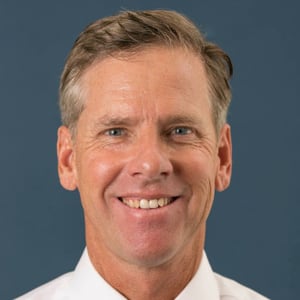
Senior Attorney, Pacific Legal Foundation
David (Dave) Breemer developed a passion for liberty while reading classics such as John Locke’s Two Treatises of Government and Thomas Paine’s The Rights of Man, as he pursued a Master’s Degree in American Political Theory at University of California, Davis. During this time, Dave began to believe that individual freedom and choice is a God-given and inviolable gift that cannot be taken away through governmental power.
Dave then traveled throughout North America for several years as an adventure tour guide, discussing American ideas of freedom with groups of young people form Europe, Australia, and Japan while rafting, skydiving, and hiking in places like Monument Valley, Las Vegas, and Alaska.
In 1998, Dave went to law school at the University of Hawaii where he studied and co-authored several property rights-oriented law reviews with Professor David L. Callies, a noted land use authority. In 2001, Dave graduated summa cum laude from law school, second in his class, and returned to California to work as an attorney for PLF.
Since joining PLF, Dave has worked as an attorney in PLF’s property rights group. In that capacity, he has litigated numerous federal and state court cases vindicating constitutional rights, particularly those related to the ability to use and enjoy private property. Examples include: Knick v. Township of Scott, U.S. Supreme Court No. 17-647; MVA v. Minnesota, U.S. Supreme Court, No. 16-1435; Levin v. City and County of San Francisco, 71 F. Supp. 3d 1072 (N.D. Cal., 2014); Sansotta v. Town of Nags Head, 724 F.3d 533 (4th Cir. 2013); Severance v. Patterson, 390 S.W.3d 705 (Tex. 2012); Severance v. Patterson, 566 F.3d 490 (5th Cir. 2009); Crown Point Dev., Inc. v. City of Sun Valley, 506 F.3d 851 (9th Cir. 2007).
In his time at PLF, Dave has also written many law review articles about the Supreme Court’s property rights jurisprudence. He continues to believe that property rights are vital to securing other rights—such as privacy, self-expression, and financial freedom—and as a result, he continues to be passionate about securing the right to use and enjoy property for all Americans in the courts of this nation.
State of California Attorney General's Office
Professor of Law and Executive Director, Law and Economics Center, Antonin Scalia Law School, George Mason University
Donald Kochan is Professor of Law and Executive Director of the Law & Economics Center (LEC). Professor Kochan is an elected member of the American Law Institute (ALI) and serves as an Adviser to ALI's Restatement of the Law Fourth, Property project. Professor Kochan is a Nonresident Scholar at the Center for the Constitution at Georgetown University Law Center, where he was a Visiting Scholar in residence during Fall 2018. Before joining the Antonin Scalia Law School faculty, he was the Parker S. Kennedy Professor in Law at Chapman University’s Dale E. Fowler School of Law from 2004 to 2020. From 2003 to 2004, Professor Kochan was an Olin Fellow at the University of Virginia School of Law. During 2002-2003, he was a Visiting Assistant Professor of Law at George Mason’s Scalia Law School.
Professor Kochan’s scholarship focuses on areas of property law, constitutional law, administrative law, local government law, natural resources and environmental law, and law & economics. He has published several books and more than 50 scholarly articles and essays in well-regarded law journals. His work has been cited in more than a dozen state and federal court opinions, in more than 75 briefs filed in state and federal courts including more than 25 filed in the U.S. Supreme Court, in dozens of books and treatises, and in more than 800 scholarly articles.
Professor Kochan received his JD from Cornell Law School, where he was a John M. Olin Scholar in Law and Economics and managing editor of the Cornell International Law Journal. During law school, he also served as editor and executive editor of the Harvard Journal of Law & Public Policy symposium issues in 1997 and 1998. He received his BA from Western Michigan University, magna cum laude, with majors in both political science and philosophy, where he studied as the John W. Gill Medallion Scholar and was honored as the Presidential Scholar (awarded to the top graduate in the political science department).
After graduating from law school, Professor Kochan was a law clerk to The Honorable Richard F. Suhrheinrich of the United States Court of Appeals for the Sixth Circuit. Following his clerkship, Professor Kochan was an associate with the firm of Crowell & Moring LLP in Washington, D.C., where he specialized in natural resources & environmental law as well as tort, products, and consumer civil litigation & legislative affairs.
Professor of Law and Executive Director, Law and Economics Center, Antonin Scalia Law School, George Mason University
Donald Kochan is Professor of Law and Executive Director of the Law & Economics Center (LEC). Professor Kochan is an elected member of the American Law Institute (ALI) and serves as an Adviser to ALI's Restatement of the Law Fourth, Property project. Professor Kochan is a Nonresident Scholar at the Center for the Constitution at Georgetown University Law Center, where he was a Visiting Scholar in residence during Fall 2018. Before joining the Antonin Scalia Law School faculty, he was the Parker S. Kennedy Professor in Law at Chapman University’s Dale E. Fowler School of Law from 2004 to 2020. From 2003 to 2004, Professor Kochan was an Olin Fellow at the University of Virginia School of Law. During 2002-2003, he was a Visiting Assistant Professor of Law at George Mason’s Scalia Law School.
Professor Kochan’s scholarship focuses on areas of property law, constitutional law, administrative law, local government law, natural resources and environmental law, and law & economics. He has published several books and more than 50 scholarly articles and essays in well-regarded law journals. His work has been cited in more than a dozen state and federal court opinions, in more than 75 briefs filed in state and federal courts including more than 25 filed in the U.S. Supreme Court, in dozens of books and treatises, and in more than 800 scholarly articles.
Professor Kochan received his JD from Cornell Law School, where he was a John M. Olin Scholar in Law and Economics and managing editor of the Cornell International Law Journal. During law school, he also served as editor and executive editor of the Harvard Journal of Law & Public Policy symposium issues in 1997 and 1998. He received his BA from Western Michigan University, magna cum laude, with majors in both political science and philosophy, where he studied as the John W. Gill Medallion Scholar and was honored as the Presidential Scholar (awarded to the top graduate in the political science department).
After graduating from law school, Professor Kochan was a law clerk to The Honorable Richard F. Suhrheinrich of the United States Court of Appeals for the Sixth Circuit. Following his clerkship, Professor Kochan was an associate with the firm of Crowell & Moring LLP in Washington, D.C., where he specialized in natural resources & environmental law as well as tort, products, and consumer civil litigation & legislative affairs.
Executive Vice President, The Federalist Society
Dean Reuter is Executive Vice President at the Federalist Society for Law and Public Policy Studies. He has served in two federal government agency Offices of the Inspector General, as Counsel to the Inspector General and Deputy Inspector General, responsible for policing the use of federal funds granted and contracted through those agencies. As such, he helped conduct and oversee criminal investigations across the country. He is the principal author of the non-fiction book, The Hidden Nazi: The Untold Story of America's Deal with the Devil, and editor of Liberty’s Nemesis: The Unchecked Expansion of the State and Confronting Terror: 9/11 and the Future of American National Security. He was appointed by the President and served as Vice-Chairman of the Board of Directors of the Corporation for National and Community Service, and recently served as an appointee on the U.S. Commission on Presidential Scholars. He is a graduate of Hood College (BA with Honors) and the University of Maryland School of Law.
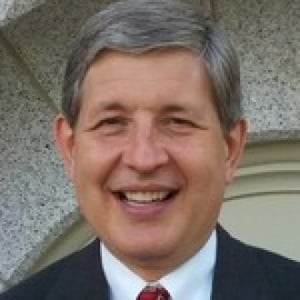
Partner, Schaerr Jaffe LLP
Gene Schaerr specializes in handling—and usually winning—civil appeals, writ proceedings and similar matters, both in appellate courts and in the law-focused proceedings at the trial-court or agency level that often determine success or failure on appeal. He has argued and won dozens of cases in a variety of forums—including the U.S. Supreme Court (where he has argued six cases), every federal circuit, and numerous federal district courts and state appellate courts. His win rate in the dozens of federal appeals he has argued in the past six years is over 75 percent.
He was a coordinator of Sidley Austin's appellate practice from 1993 until 2005, and from 2005 until 2014 was the chair of the nationwide appellate practice at Winston & Strawn—a practice he led to numerous recognitions in such publications as the Appellate Hot List. His personal practice successes have won him repeated recognition in such publications as Best Lawyers in Washington, D.C., Legal 500, D.C. Superlawyers, and Best Lawyers in America. In January 2014, Mr. Schaerr formed his own boutique litigation firm so that he could serve his clients without the conflicts and inefficiencies inherent in big-firm law practice.
Substantively, Mr. Schaerr's experience includes not only virtually every area of federal law, defamation, higher education law, immigration, insurance coverage, labor and employment, patent and trademark, privacy, product liability and warranty, statutory interpretation and tax.He has represented clients in virtually every sector, including automotive, communications, energy, financial services, health care, higher education, insurance, maritime, pharmaceuticals, technology and state and local government. He also teaches courses in Supreme Court litigation, religious freedom litigation and advanced litigation skills as an adjunct professor of law at the Brigham Young University law school.
Mr. Schaerr began law practice in 1987 following clerkships on the U.S. Supreme Court (for Chief Justice Warren Burger and Justice Antonin Scalia) and on the U.S. Court of Appeals for the D.C. Circuit (for then- Judge Kenneth Starr). He graduated in 1985 from the Yale Law School, where he was Editor-in-Chief of the Yale Journal on Regulation and Senior Editor of the Yale Law Journal. From 1991 to 1993, he served in the White House as Associate Counsel to the President, where he had responsibility for a wide range of constitutional and administrative-law issues, including those involving economic regulation, higher education, separation of powers, federalism and religious freedom. He serves as Chairman of the Constitutional Sources Project, a digital resource providing free public access to historical materials relevant to the U.S. Constitution.
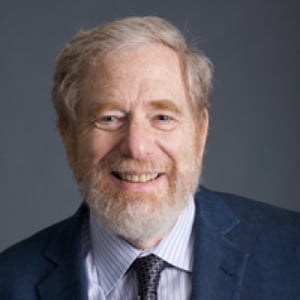
Carmack Waterhouse Professor of Constitutional Law, Georgetown Law
After graduating from Harvard Law School in 1971, Professor Seidman served as a law clerk for J. Skelly Wright of the D.C. Circuit and U.S. Supreme Court Justice Thurgood Marshall. He then was a staff attorney with the D.C. Public Defender Service until joining the Law Center faculty in 1976. He teaches a variety of courses in the fields of constitutional and criminal law. He is co-author of a constitutional law casebook and the author of many articles concerning criminal justice and constitutional law. His most recent books are Silence and Freedom (Stanford 2007), Our Unsettled Constitution: A New Defense of Constitutionalism and Judicial Review (Yale 2001) and Equal Protection of the Laws (Foundation 2002).
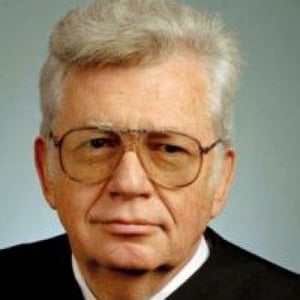
Judge, U.S. Court of Appeals, District of Columbia Circuit
Judge Sentelle was appointed United States Circuit Judge in October 1987, served as Chief Judge from February 11, 2008 until February 11, 2013, and took senior status on February 12, 2013. He is a 1968 graduate of the University of North Carolina Law School. Following law school, he practiced with the firm of Uzzell & DuMont until he became an Assistant U.S. Attorney in Charlotte, N.C. in 1970. From 1974 to 1977, he served as a North Carolina State District Judge but left the bench in 1977 to become a partner with the firm of Tucker, Hicks, Sentelle, Moon & Hodge. In 1985, Judge Sentelle joined the U.S. District Court, Western District of North Carolina, in Asheville, where he served until his appointment to the D.C. Circuit. Judge Sentelle was the Presiding Judge of the Special Division for the Purpose of Appointing Independent Counsels (1992-2006). He also served as the Chair of the U.S. Judicial Conference's Executive Committee (2010-2013). Judge Sentelle served for over 20 years as President of the Edward Bennett Williams Inn of the American Inns of Court.

Federalism, the Environment, Land Use, and Energy Independence
Tony Francois, Richard Frank, Donald J. Kochan, Jennifer Perkins, Justin Pidot, Milan D. Smith
2016 Annual Western Chapters Conference
Some states have criticized Washington overreach on a number of energy and environmental issues, from...
Public Land Controversy: The States v. The Federal Government - Podcast
Donald J. Kochan, David Garbett
Environmental Law & Property Rights and Federalism & Separation of Powers Practice Groups Podcast
Controversies over jurisdiction and management of public lands are building. Whether grazing rights disputes in...
Conservative Principles for Environmental Reform - Podcast
Christian Corrigan, Donald J. Kochan, Jonathan H. Adler
Environmental Law & Property Rights Practice Group Podcast
In his essay titled “Conservative Principles for Environmental Reform,” Professor Jonathan Adler provides a critique of...
The Future of Publicly Owned Lands - Podcast
Donald J. Kochan, David Garbett, Dean Reuter
Environmental Law & Property Rights Practice Group Podcast
Recent legislation passed by the State of Utah has demanded that the federal government extinguish...
A Legal Overview of Utah's H.B. 148
Donald J. Kochan
Federalist Society White Paper
Recent legislation passed in the State of Utah has demanded that the federal government extinguish...
PPL Montana, LLC v. Montana - Post-Argument SCOTUScast
Donald J. Kochan
SCOTUScast 12-20-11 featuring Donald Kochan
On December 7, 2011, the Supreme Court heard oral argument in PPL Montana, LLC v. Montana....
Environmental Law: Property Rights: The Forgotten Spark of the Arab Spring
Hernando de Soto, Steven J. Eagle, John D. Echeverria, Donald J. Kochan, Jerry E. Smith
2011 National Lawyers Convention
The Environmental Law & Property Rights Practice Group hosted this panel on "Property Rights: The Forgotten...
Environmental Law: Property Rights: The Forgotten Spark of the Arab Spring
Hernando de Soto, Steven J. Eagle, John D. Echeverria, Donald J. Kochan, Jerry E. Smith
2011 National Lawyers Convention
The Environmental Law & Property Rights Practice Group hosted this panel on "Property Rights: The Forgotten...
Federal Courts Standards for Ripeness and Takings Claims
J. David Breemer, Daniel L. Siegel, Donald J. Kochan
Environmental Law & Property Rights Practice Group
Justiciability doctrines, particularly ripeness, have a particularly important role in takings challenges to permitting decisions. ...
How Should the Courts Interpret Split Decisions?
Donald J. Kochan, Dean Reuter, Gene C. Schaerr, Louis Michael Seidman, David B. Sentelle
The Supreme Court occasionally renders plurality opinions, which may involve 4-1-4 decisions or any number...