
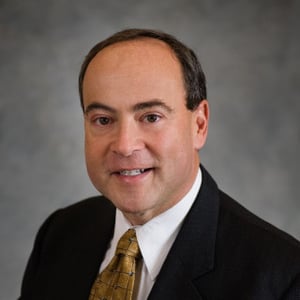
Justice, Supreme Court of Arizona
Clint Bolick was appointed by Governor Doug Ducey in January 2016 to serve on the Arizona Supreme Court and was retained by the voters in 2018 and 2024.
Prior to joining the Court, Justice Bolick litigated constitutional cases in state and federal courts from coast to coast, including the U.S. Supreme Court. Among other positions, he served as Vice President for Litigation at the Goldwater Institute and as Co-founder and Vice President for Litigation at the Institute for Justice. He has litigated in support of school choice, freedom of enterprise, private property rights, freedom of speech, and federalism, and against racial classifications and government subsidies.
Justice Bolick received his Juris Doctor degree from the University of California at Davis, where he has been recognized as a distinguished alumnus, and his Bachelor of Arts degree magna cum laude from Drew University. He serves as a research fellow with the Hoover Institution. Among other honors, he was named one of the 90 Greatest DC Lawyers in the Last 30 Years by Legal Times in 2008, received a Bradley Prize in 2006, and was recognized as one of the nation’s three lawyers of the year by American Lawyer in 2002 for his successful defense of school vouchers in Zelman v. Simmons-Harris.
Justice Bolick is a prolific author of a dozen books and hundreds of articles. Among his most recent books are Unshackled: Freeing America’s K-12 Education System: Immigration Wars: Forging an American Solution, co-authored with former Florida Governor Jeb Bush; and David’s Hammer: The Case for an Activist Judiciary. Bolick serves as an adjunct professor of constitutional law at Arizona State University’s Sandra Day O’Connor School of Law and has served as a lecturer at Harvard University’s John F. Kennedy School of Government.
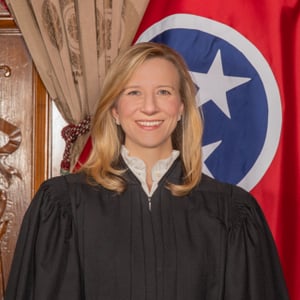
Justice, Supreme Court of Tennessee
Justice Sarah Campbell was confirmed to the Tennessee Supreme Court in 2022. She previously served as an Associate Solicitor General in the Tennessee Attorney General’s Office and as an associate at the law firm of Williams & Connolly LLP in Washington, DC. Justice Campbell earned her law degree from Duke University School of Law, a Master of Public Policy degree from Duke University, and her undergraduate degree from the University of Tennessee, where she received the Torchbearer Award. She served as a law clerk for Justice Samuel A. Alito, Jr. on the United States Supreme Court and Judge William H. Pryor Jr. on the U.S. Court of Appeals for the Eleventh Circuit.
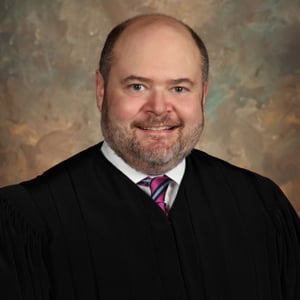
Judge, United States Court of Appeals, Eighth Circuit
David Stras became a judge on the United States Court of Appeals for the Eighth Circuit on January 31, 2018. Before serving on the Eighth Circuit, Judge Stras was an Associate Justice of the Minnesota Supreme Court, a position he occupied from July 1, 2010 until his appointment to the Eighth Circuit.
Prior to becoming a judge, Stras was a member of the faculty of the University of Minnesota Law School from 2004 through 2010. He taught and wrote in the areas of federal courts and jurisdiction, constitutional law, criminal law, and law and politics.
Judge Stras received his Bachelor of Arts degree, with highest distinction, in 1995 and his Master of Business Administration in 1999, both from the University of Kansas. He also received his law degree from the University of Kansas School of Law in 1999, where he served as Editor-in-Chief of the Criminal Procedure Edition of the Kansas Law Review.
Following law school, Stras clerked for The Honorable Melvin Brunetti of the United States Court of Appeals for the Ninth Circuit and then for The Honorable J. Michael Luttig of the United States Court of Appeals for the Fourth Circuit.
From 2001 to 2002, he practiced white-collar criminal and appellate litigation with the Washington, D.C., office of Sidley Austin Brown & Wood. Following his year in practice, he clerked for The Honorable Clarence Thomas of the Supreme Court of the United States.

Chief Judge, United States Court of Appeals, Sixth Circuit
JEFFREY S. SUTTON is the Chief Judge of the United States Court of Appeals for the Sixth Circuit. He has served as Chair of the Federal Judicial Conference Committee on Rules of Practice and Procedure, Chair of the Advisory Committee on Appellate Rules, and Chair of the Supreme Court Fellows Commission. He currently serves as Chair of the Executive Committee of the Judicial Conference of the United States. Since 1993, Chief Judge Sutton has been an adjunct professor at The Ohio State University College of Law, where he teaches seminars on State Constitutional Law, the United States Supreme Court, and Appellate Advocacy. He also teaches a class on State Constitutional Law at Harvard Law School. Among other publications, he is the author of Who Decides? States as Laboratories of Constitutional Experimentation and 51 Imperfect Solutions: States and the Making of American Constitutional Law. He is the co-author of a casebook, State Constitutional Law: The Modern Experience, as well as The Law of Judicial Precedent. He is also the co-editor of The Essential Scalia: On the Constitution, the Courts, and the Rule of Law. In 2006, Chief Judge Sutton was elected to the American Law Institute, and in 2017 he was elected to its Council.
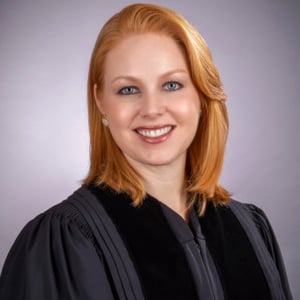
Presiding Justice, Supreme Court of Georgia
Justice Sarah Hawkins Warren was appointed to the Supreme Court of Georgia by Governor Nathan Deal and was sworn in on September 17, 2018. She previously served as Solicitor General for the State of Georgia under Attorney General Chris Carr.
Justice Warren earned a B.A. in Public Policy and Spanish, magna cum laude, from Duke University. After graduation, Justice Warren served as Deputy Press Secretary for the White House Office of Management and Budget.
Justice Warren received her J.D., magna cum laude, from Duke University School of Law, where she served as Editor in Chief of Law and Contemporary Problems and on the Executive Committee of the Federalist Society.
Following her graduation from law school, Justice Warren served as a law clerk to then-Chief Judge J.L. Edmondson of the United States Court of Appeals for the Eleventh Circuit and to the Honorable Richard J. Leon of the United States District Court for the District of Columbia. She also practiced as a litigation partner at Kirkland & Ellis LLP in Washington, D.C., where she represented clients before state and federal courts and was outside counsel to Georgia in Florida v. Georgia, No. 142 Original (United States Supreme Court).
In 2015, Justice Warren and her family returned home to Georgia, where she began service in the Office of Attorney General Sam Olens as Deputy Solicitor General and Special Counsel for Water Litigation. In January 2017, she was appointed Solicitor General by Attorney General Chris Carr, and in that role served as the chief appellate lawyer for the State of Georgia and the primary constitutional law advisor to the Attorney General. As Solicitor General, Justice Warren represented Georgia in multi-state litigation and in appeals before state and federal courts, including in an argument before the United States Supreme Court.
Justice Warren currently serves on the Duke Law School Board of Visitors, the Berry College Board of Trustees, and the Advisory Board for the Atlanta Lawyers Chapter of the Federalist Society. She lives in Atlanta with her husband, Blaise, and their three children.
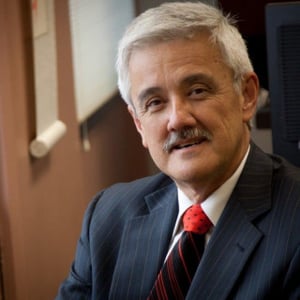
Managing Director, Accreditation and Legal Education, Section of Legal Education, American Bar Association
William E. Adams, Jr. is the Managing Director of the Section of Legal Education and Admissions to the Bar at the American Bar Association. Prior to this, he has approximately twenty-five years legal education experience having served as a dean, associate dean and professor of law. Mr. Adams also practiced law for nearly ten years in three different legal services organizations. He served as an officer in several bar organizations including as Chair of the Florida Bar Public Interest Law Section and Florida Bar Committee on the Elderly. He is a 1978 cum laude graduate of the Indiana University Maurer School of Law.
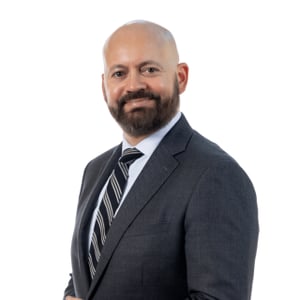
Milton R. Underwood Chair in Free Enterprise, Vanderbilt University Law School
Brian Fitzpatrick is the Milton R. Underwood Chair in Free Enterprise and Professor of Law at Vanderbilt Law School, where his research focuses on class action litigation, federal courts, judicial selection, and constitutional law. He is best known for his empirical studies of class action settlements as well as his book The Conservative Case for Class Actions (University of Chicago Press, 2019). Professor Fitzpatrick joined Vanderbilt's law faculty in 2007 after serving as the John M. Olin Fellow at New York University School of Law. He graduated first in his class from Harvard Law School and went on to clerk for Judge Diarmuid O'Scannlain on the U.S. Court of Appeals for the Ninth Circuit and Justice Antonin Scalia on the U.S. Supreme Court. After his clerkships, Professor Fitzpatrick practiced commercial and appellate litigation for several years at Sidley Austin in Washington, D.C., and served as Special Counsel for Supreme Court Nominations to U.S. Senator John Cornyn. Before earning his law degree, Fitzpatrick graduated summa cum laude with a bachelor's of science in chemical engineering from the University of Notre Dame. He has received the Hall-Hartman Outstanding Professor Award, which recognizes excellence in classroom teaching, for his Civil Procedure and Federal Courts courses.
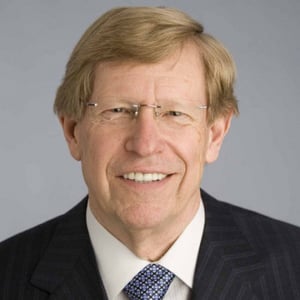
Partner, Gibson Dunn & Crutcher LLP
Theodore B. Olson is a Partner in Gibson, Dunn & Crutcher’s Washington, D.C. office; a founder of the Firm’s Crisis Management, Sports Law, and Appellate and Constitutional Law Practice Groups.
Mr. Olson was Solicitor General of the United States during the period 2001-2004. From 1981-1984, he was Assistant Attorney General in charge of the Office of Legal Counsel in the U.S. Department of Justice. Except for those two intervals, he has been a lawyer with Gibson, Dunn & Crutcher in Los Angeles and Washington, D.C. since 1965.
Selected by Time magazine in 2010 as one of the 100 most influential people in the world, Mr. Olson is one of the nation’s premier appellate and United States Supreme Court advocates. He has argued 65 cases in the Supreme Court and has prevailed in over 75% of those cases. These include the two Bush v Gore cases arising out of the 2000 presidential election; Citizens United v Federal Election Commission; Hollingsworth v Perry, the case affirming the overturning of California’s Proposition 8, banning same-sex marriages; Murphy v NCAA, overturning a federal law prohibiting states from authorizing sports betting; and U.S. Dept. of Homeland Security v Regents of the Univ. of Calif., challenging the Trump Administration’s rescission of the Deferred Action for Childhood Arrivals (“DACA”). Mr. Olson’s practice is concentrated on appellate and constitutional law, federal legislation, media and commercial disputes, and assisting clients with strategies for the containment, management and resolution of major legal crises. He has handled cases at all levels of state and federal court systems throughout the United States. Mr. Olson co-authored “Redeeming the Dream, the Case for Marriage Equality” with David Boies. Both were featured in HBO’s award-winning documentary, “The Case Against 8.”
Mr. Olson's Supreme Court arguments have included cases involving separation of powers; federalism; voting rights; the Tenth Amendment; the First Amendment; the Equal Protection and Due Process Clauses; jury trial rights; punitive damages; takings of property; the Commerce Clause; administrative law; taxation; criminal law; sports wagering; copyright, patent and antitrust; securities; campaign finance; foreign sovereign immunities; telecommunications; the environment; the internet; the Supremacy Clause; and other federal constitutional and statutory questions. As Solicitor General, during the presidency of George W. Bush, Mr. Olson was the Government's principal advocate in the United States Supreme Court, responsible for supervising and coordinating all appellate litigation of the United States, and a legal adviser to the President and the Attorney General. As Assistant Attorney General for the Office of Legal Counsel during the Reagan Administration, Mr. Olson was the Executive Branch's principal legal adviser, rendering legal guidance to the President and to the heads of the Executive Branch departments on a wide range of constitutional and federal statutory questions, and assisting in formulating and articulating the Executive Branch's position on constitutional issues.
Mr. Olson has served as private counsel to two Presidents, Ronald W. Reagan and George W. Bush, in addition to serving those two Presidents in high-level positions in the Department of Justice. He has twice been awarded the United States Department of Justice's Edmund J. Randolph Award, its highest award for public service and leadership, and also received the Department of Defense's Distinguished Public Service Award, its highest civilian award, for his advocacy in the courts of the United States, including the Supreme Court. He also received the American Bar Association Medal, its highest award for “exceptionally distinguished service by a lawyer or lawyers to the cause of American jurisprudence.” Mr. Olson is to receive the 2021 Jack Valenti Friend of the White House Fellows Award in the Fall of 2021 to be presented by the White House Fellows Foundation and Association.
Mr. Olson is a member of the Commission on White House Fellowships; a member of the Board of Trustees of the Ronald Reagan Presidential Foundation; a member of the Board of Visitors of the Federalist Society; the Board of Directors of the Knight First Amendment Institute at Columbia University; and the 9/11 Pentagon Memorial Foundation. He was a visiting scholar at the National Constitution Center in 2007. He served on the President's Privacy and Civil Liberties Oversight Board from 2006 to 2008; and of the Council of the Administrative Conference of the United States from 2010 to 2020. He was Co-Chair of the Knight Commission on the Information Needs of Communities in a Democracy from 2008-2009, and served two terms on the Board of Directors of the National Center for State Courts.
Mr. Olson is a Fellow of both the American College of Trial Lawyers and the American Academy of Appellate Lawyers. He has been repeatedly listed in legal publications as one of the nation’s leading appellate lawyers. The late New York Times columnist William Safire described Mr. Olson as his generation's "most persuasive advocate" before the Supreme Court and "the most effective Solicitor General in decades.”
Mr. Olson received his law degree in 1965 from the University of California at Berkeley (Boalt Hall) where he was a member of the California Law Review and Order of the Coif. He received his bachelor's degree from the University of the Pacific, where he was recognized as the outstanding graduating student in both forensics and journalism. He has written and lectured extensively on appellate advocacy, oral communication in the courtroom, civil justice reform, and constitutional and administrative law.
Judge, United States Court of Appeals, Eighth Circuit
David Stras became a judge on the United States Court of Appeals for the Eighth Circuit on January 31, 2018. Before serving on the Eighth Circuit, Judge Stras was an Associate Justice of the Minnesota Supreme Court, a position he occupied from July 1, 2010 until his appointment to the Eighth Circuit.
Prior to becoming a judge, Stras was a member of the faculty of the University of Minnesota Law School from 2004 through 2010. He taught and wrote in the areas of federal courts and jurisdiction, constitutional law, criminal law, and law and politics.
Judge Stras received his Bachelor of Arts degree, with highest distinction, in 1995 and his Master of Business Administration in 1999, both from the University of Kansas. He also received his law degree from the University of Kansas School of Law in 1999, where he served as Editor-in-Chief of the Criminal Procedure Edition of the Kansas Law Review.
Following law school, Stras clerked for The Honorable Melvin Brunetti of the United States Court of Appeals for the Ninth Circuit and then for The Honorable J. Michael Luttig of the United States Court of Appeals for the Fourth Circuit.
From 2001 to 2002, he practiced white-collar criminal and appellate litigation with the Washington, D.C., office of Sidley Austin Brown & Wood. Following his year in practice, he clerked for The Honorable Clarence Thomas of the Supreme Court of the United States.
Shareholder, Webber & Thies PC
Mr. Thies has litigated complex commercial disputes and defended class actions throughout the state of Illinois, and in federal courts across the country, including the First, Second, Seventh, and Tenth Circuits. He has represented clients in numerous trials and arbitrations, including serving as part of a trial team winning a $64 million judgment after a jury verdict in the Northern District of New York.
Prior to joining Webber & Thies, Mr. Thies was an associate at Sidley Austin LLP (2013-2018) and clerked for Chief Judge James F. Holderman of the United States District Court for the Northern District of Illinois (2011-2013) and for Judge Jerry Smith of the United States Court of Appeals for the Fifth Circuit (2010-2011).
Managing Director, Accreditation and Legal Education, Section of Legal Education, American Bar Association
William E. Adams, Jr. is the Managing Director of the Section of Legal Education and Admissions to the Bar at the American Bar Association. Prior to this, he has approximately twenty-five years legal education experience having served as a dean, associate dean and professor of law. Mr. Adams also practiced law for nearly ten years in three different legal services organizations. He served as an officer in several bar organizations including as Chair of the Florida Bar Public Interest Law Section and Florida Bar Committee on the Elderly. He is a 1978 cum laude graduate of the Indiana University Maurer School of Law.
Milton R. Underwood Chair in Free Enterprise, Vanderbilt University Law School
Brian Fitzpatrick is the Milton R. Underwood Chair in Free Enterprise and Professor of Law at Vanderbilt Law School, where his research focuses on class action litigation, federal courts, judicial selection, and constitutional law. He is best known for his empirical studies of class action settlements as well as his book The Conservative Case for Class Actions (University of Chicago Press, 2019). Professor Fitzpatrick joined Vanderbilt's law faculty in 2007 after serving as the John M. Olin Fellow at New York University School of Law. He graduated first in his class from Harvard Law School and went on to clerk for Judge Diarmuid O'Scannlain on the U.S. Court of Appeals for the Ninth Circuit and Justice Antonin Scalia on the U.S. Supreme Court. After his clerkships, Professor Fitzpatrick practiced commercial and appellate litigation for several years at Sidley Austin in Washington, D.C., and served as Special Counsel for Supreme Court Nominations to U.S. Senator John Cornyn. Before earning his law degree, Fitzpatrick graduated summa cum laude with a bachelor's of science in chemical engineering from the University of Notre Dame. He has received the Hall-Hartman Outstanding Professor Award, which recognizes excellence in classroom teaching, for his Civil Procedure and Federal Courts courses.
Partner, Gibson Dunn & Crutcher LLP
Theodore B. Olson is a Partner in Gibson, Dunn & Crutcher’s Washington, D.C. office; a founder of the Firm’s Crisis Management, Sports Law, and Appellate and Constitutional Law Practice Groups.
Mr. Olson was Solicitor General of the United States during the period 2001-2004. From 1981-1984, he was Assistant Attorney General in charge of the Office of Legal Counsel in the U.S. Department of Justice. Except for those two intervals, he has been a lawyer with Gibson, Dunn & Crutcher in Los Angeles and Washington, D.C. since 1965.
Selected by Time magazine in 2010 as one of the 100 most influential people in the world, Mr. Olson is one of the nation’s premier appellate and United States Supreme Court advocates. He has argued 65 cases in the Supreme Court and has prevailed in over 75% of those cases. These include the two Bush v Gore cases arising out of the 2000 presidential election; Citizens United v Federal Election Commission; Hollingsworth v Perry, the case affirming the overturning of California’s Proposition 8, banning same-sex marriages; Murphy v NCAA, overturning a federal law prohibiting states from authorizing sports betting; and U.S. Dept. of Homeland Security v Regents of the Univ. of Calif., challenging the Trump Administration’s rescission of the Deferred Action for Childhood Arrivals (“DACA”). Mr. Olson’s practice is concentrated on appellate and constitutional law, federal legislation, media and commercial disputes, and assisting clients with strategies for the containment, management and resolution of major legal crises. He has handled cases at all levels of state and federal court systems throughout the United States. Mr. Olson co-authored “Redeeming the Dream, the Case for Marriage Equality” with David Boies. Both were featured in HBO’s award-winning documentary, “The Case Against 8.”
Mr. Olson's Supreme Court arguments have included cases involving separation of powers; federalism; voting rights; the Tenth Amendment; the First Amendment; the Equal Protection and Due Process Clauses; jury trial rights; punitive damages; takings of property; the Commerce Clause; administrative law; taxation; criminal law; sports wagering; copyright, patent and antitrust; securities; campaign finance; foreign sovereign immunities; telecommunications; the environment; the internet; the Supremacy Clause; and other federal constitutional and statutory questions. As Solicitor General, during the presidency of George W. Bush, Mr. Olson was the Government's principal advocate in the United States Supreme Court, responsible for supervising and coordinating all appellate litigation of the United States, and a legal adviser to the President and the Attorney General. As Assistant Attorney General for the Office of Legal Counsel during the Reagan Administration, Mr. Olson was the Executive Branch's principal legal adviser, rendering legal guidance to the President and to the heads of the Executive Branch departments on a wide range of constitutional and federal statutory questions, and assisting in formulating and articulating the Executive Branch's position on constitutional issues.
Mr. Olson has served as private counsel to two Presidents, Ronald W. Reagan and George W. Bush, in addition to serving those two Presidents in high-level positions in the Department of Justice. He has twice been awarded the United States Department of Justice's Edmund J. Randolph Award, its highest award for public service and leadership, and also received the Department of Defense's Distinguished Public Service Award, its highest civilian award, for his advocacy in the courts of the United States, including the Supreme Court. He also received the American Bar Association Medal, its highest award for “exceptionally distinguished service by a lawyer or lawyers to the cause of American jurisprudence.” Mr. Olson is to receive the 2021 Jack Valenti Friend of the White House Fellows Award in the Fall of 2021 to be presented by the White House Fellows Foundation and Association.
Mr. Olson is a member of the Commission on White House Fellowships; a member of the Board of Trustees of the Ronald Reagan Presidential Foundation; a member of the Board of Visitors of the Federalist Society; the Board of Directors of the Knight First Amendment Institute at Columbia University; and the 9/11 Pentagon Memorial Foundation. He was a visiting scholar at the National Constitution Center in 2007. He served on the President's Privacy and Civil Liberties Oversight Board from 2006 to 2008; and of the Council of the Administrative Conference of the United States from 2010 to 2020. He was Co-Chair of the Knight Commission on the Information Needs of Communities in a Democracy from 2008-2009, and served two terms on the Board of Directors of the National Center for State Courts.
Mr. Olson is a Fellow of both the American College of Trial Lawyers and the American Academy of Appellate Lawyers. He has been repeatedly listed in legal publications as one of the nation’s leading appellate lawyers. The late New York Times columnist William Safire described Mr. Olson as his generation's "most persuasive advocate" before the Supreme Court and "the most effective Solicitor General in decades.”
Mr. Olson received his law degree in 1965 from the University of California at Berkeley (Boalt Hall) where he was a member of the California Law Review and Order of the Coif. He received his bachelor's degree from the University of the Pacific, where he was recognized as the outstanding graduating student in both forensics and journalism. He has written and lectured extensively on appellate advocacy, oral communication in the courtroom, civil justice reform, and constitutional and administrative law.
Judge, United States Court of Appeals, Eighth Circuit
David Stras became a judge on the United States Court of Appeals for the Eighth Circuit on January 31, 2018. Before serving on the Eighth Circuit, Judge Stras was an Associate Justice of the Minnesota Supreme Court, a position he occupied from July 1, 2010 until his appointment to the Eighth Circuit.
Prior to becoming a judge, Stras was a member of the faculty of the University of Minnesota Law School from 2004 through 2010. He taught and wrote in the areas of federal courts and jurisdiction, constitutional law, criminal law, and law and politics.
Judge Stras received his Bachelor of Arts degree, with highest distinction, in 1995 and his Master of Business Administration in 1999, both from the University of Kansas. He also received his law degree from the University of Kansas School of Law in 1999, where he served as Editor-in-Chief of the Criminal Procedure Edition of the Kansas Law Review.
Following law school, Stras clerked for The Honorable Melvin Brunetti of the United States Court of Appeals for the Ninth Circuit and then for The Honorable J. Michael Luttig of the United States Court of Appeals for the Fourth Circuit.
From 2001 to 2002, he practiced white-collar criminal and appellate litigation with the Washington, D.C., office of Sidley Austin Brown & Wood. Following his year in practice, he clerked for The Honorable Clarence Thomas of the Supreme Court of the United States.
Shareholder, Webber & Thies PC
Mr. Thies has litigated complex commercial disputes and defended class actions throughout the state of Illinois, and in federal courts across the country, including the First, Second, Seventh, and Tenth Circuits. He has represented clients in numerous trials and arbitrations, including serving as part of a trial team winning a $64 million judgment after a jury verdict in the Northern District of New York.
Prior to joining Webber & Thies, Mr. Thies was an associate at Sidley Austin LLP (2013-2018) and clerked for Chief Judge James F. Holderman of the United States District Court for the Northern District of Illinois (2011-2013) and for Judge Jerry Smith of the United States Court of Appeals for the Fifth Circuit (2010-2011).
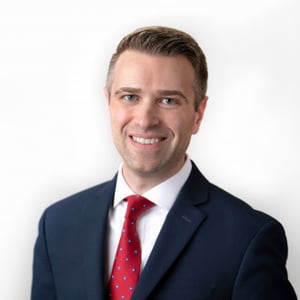
Managing Partner, Cramer Multhauf LLP
Attorney Matthew Fernholz focuses his practice on commercial litigation, trust and fiduciary disputes, business torts, trade secrets, non-compete agreements, defamation, and appellate work. In addition, he has developed one of the preeminent political and election law practices in the State of Wisconsin, and has handled several high-profile matters, from representing candidates for statewide office, successfully challenging the Governor’s emergency powers, arguing before the Wisconsin Elections Commission, and representing the Speaker of the Assembly.
Matthew frequently and successfully tries cases to verdict, and believes a lawyer unwilling to try a case should not take on a client in a litigation matter. In addition to this trial work, he has handled dozens of appeals, and countless dispositive motions.
His work has also been published in law review journals and newspapers alike.
Judge, United States Court of Appeals, Eighth Circuit
David Stras became a judge on the United States Court of Appeals for the Eighth Circuit on January 31, 2018. Before serving on the Eighth Circuit, Judge Stras was an Associate Justice of the Minnesota Supreme Court, a position he occupied from July 1, 2010 until his appointment to the Eighth Circuit.
Prior to becoming a judge, Stras was a member of the faculty of the University of Minnesota Law School from 2004 through 2010. He taught and wrote in the areas of federal courts and jurisdiction, constitutional law, criminal law, and law and politics.
Judge Stras received his Bachelor of Arts degree, with highest distinction, in 1995 and his Master of Business Administration in 1999, both from the University of Kansas. He also received his law degree from the University of Kansas School of Law in 1999, where he served as Editor-in-Chief of the Criminal Procedure Edition of the Kansas Law Review.
Following law school, Stras clerked for The Honorable Melvin Brunetti of the United States Court of Appeals for the Ninth Circuit and then for The Honorable J. Michael Luttig of the United States Court of Appeals for the Fourth Circuit.
From 2001 to 2002, he practiced white-collar criminal and appellate litigation with the Washington, D.C., office of Sidley Austin Brown & Wood. Following his year in practice, he clerked for The Honorable Clarence Thomas of the Supreme Court of the United States.

Attorney, Institute for Justice
Anya Bidwell (née Cherkasova) leads IJ’s Project on Immunity and Accountability (“PIA”). Through this project, Anya works to promote judicial engagement and ensure that government officials are held to account when they violate individuals’ constitutional rights. Anya also serves as an adviser on the American Law Institute’s Restatement of the Law, Constitutional Torts project.
One of Anya’s PIA cases—Gonzalez v. Trevino—was heard by the United States Supreme Court on March 20, 2024. She argued the case for the petitioner, with the goal of convincing the Justices that retaliatory arrests not involving on-the-spot decisions by police officers should be actionable under the First Amendment regardless of probable cause. The decision is expected in June.
This was Anya’s third appearance before the U.S. Supreme Court. She second-chaired Brownback v. King (an excessive force case) and Tennessee Wine & Spirits Retailers Association v. Thomas (a commerce clause case) in November 2020 and January 2019 respectfully.
Before joining IJ, Anya worked for a top national law firm, handling cases in trial and appellate courts. She earned her J.D. with honors from the University of Texas. Two years prior to entering law school, Anya received a master’s degree in Global Policy Studies, also from the University of Texas, and wrote a thesis on asymmetric warfare.
Anya spent her childhood in Ukraine and Kyrgyzstan. At 16, she left her family behind and came to America on a university scholarship. Her upbringing motivated her to study law and become an advocate for a strong, independent judiciary.
Anya’s work has been featured in numerous publications, including the Washington Post, the Wall Street Journal, the New York Times, USA Today, and the Guardian. She is also the host of live recordings of our Short Circuit podcast and a co-producer of our documentary-style podcast Bound by Oath.
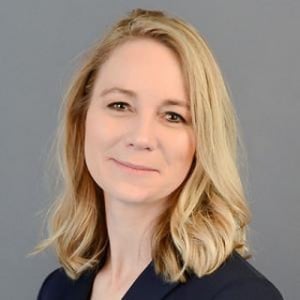
Supreme Court & Appellate Litigation Chair, Lex Politica; Of Counsel, Alliance Defending Freedom
Erin Morrow Hawley serves as Chair of Lex Politica's Supreme Court and Appellate Practice overseeing the firm’s strategic appellate litigation and critical motions practice in the trial courts. Erin is an experienced litigator who represents clients in constitutional, regulatory, and appellate matters in federal and state courts throughout the country.
Erin has represented dozens of clients before the Supreme Court of the United States, served as lead counsel in high-profile cases raising novel constitutional and statutory issues, and authored numerous successful petitions for certiorari and briefs in opposition. She has argued in state and federal appellate and trial courts throughout the country, including the Supreme Court of the United States. Erin represents diverse clients in high-stakes litigation from state governments to faith-based nonprofits to Fortune 100 companies. She possesses expertise on a wide range of subject matters including administrative law, the First Amendment, religious liberty, federal jurisdiction, federal preemption, equitable jurisdiction, tax law, the Affordable Care Act, and Title IX.
Erin represents clients in cases where public communications strategy is paramount. She is a sought-after speaker and writer, has testified multiple times before Congress, and is a frequent presenter on constitutional and administrative law issues, including at the Oxford Union, the National Federalist Society Convention, and university campuses across the country. She is a frequent commentator to media outlets, including Fox News, MSNBC, the Wall Street Journal, WORLD, USA Today, the Federalist, and the Hill.
Erin previously oversaw Alliance Defending Freedom’s--where she still serves as Of Counsel--litigation strategies to empower women and protect the dignity of life, defend pregnancy centers’ First Amendment rights from government overreach, and safeguard Americans’ freedoms from the ever-encroaching administrative state.
Judge, United States Court of Appeals, Eighth Circuit
David Stras became a judge on the United States Court of Appeals for the Eighth Circuit on January 31, 2018. Before serving on the Eighth Circuit, Judge Stras was an Associate Justice of the Minnesota Supreme Court, a position he occupied from July 1, 2010 until his appointment to the Eighth Circuit.
Prior to becoming a judge, Stras was a member of the faculty of the University of Minnesota Law School from 2004 through 2010. He taught and wrote in the areas of federal courts and jurisdiction, constitutional law, criminal law, and law and politics.
Judge Stras received his Bachelor of Arts degree, with highest distinction, in 1995 and his Master of Business Administration in 1999, both from the University of Kansas. He also received his law degree from the University of Kansas School of Law in 1999, where he served as Editor-in-Chief of the Criminal Procedure Edition of the Kansas Law Review.
Following law school, Stras clerked for The Honorable Melvin Brunetti of the United States Court of Appeals for the Ninth Circuit and then for The Honorable J. Michael Luttig of the United States Court of Appeals for the Fourth Circuit.
From 2001 to 2002, he practiced white-collar criminal and appellate litigation with the Washington, D.C., office of Sidley Austin Brown & Wood. Following his year in practice, he clerked for The Honorable Clarence Thomas of the Supreme Court of the United States.
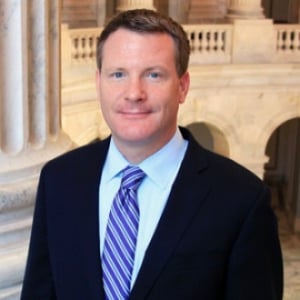
Founder, Article III Project
Mike Davis, the former Chief Counsel for Nominations to Senate Judiciary Chairman Chuck Grassley, is the founder and president of the Article III Project (A3P). A3P defends constitutionalist judges and the rule of law. Davis also leads the Internet Accountability Project (IAP), an advocacy organization fighting to rein in Big Tech, along with the Unsilenced Majority, an organization dedicated to opposing Cancel Culture and fighting back against the woke mob and their enablers.
As Chief Counsel for Nominations, Davis advised Chairman Grassley and other senators on the confirmation of federal judges and senior Executive Branch appointees, serving as staff lead for 30 hearings and 41 markup meetings. He oversaw the floor votes for 278 nominees, including the confirmations of Justice Brett Kavanaugh and the record number of circuit judges confirmed during President Trump’s first two years in office.
Davis has served in all three branches of the federal government, including for President George W. Bush, the Justice Department, House Speaker Newt Gingrich, and current Supreme Court Justice Neil Gorsuch. Davis also led the outside support team for Justice Gorsuch’s successful confirmation to the Supreme Court.
Before returning to public service in 2017, Davis spent nearly ten years as a civil litigator in Denver, working at one of the largest law firms in the world and one of the top-ranked law firms in Colorado before running his own law practice for more than five years.
Davis is from Des Moines, Iowa. He received his Bachelor of Arts in 2000 and Juris Doctor in 2004, both from the University of Iowa. In 2017, Davis received Iowa Law’s “Emerging Leader Award.” Davis also serves on the University of Iowa Political Science Advisory Board.
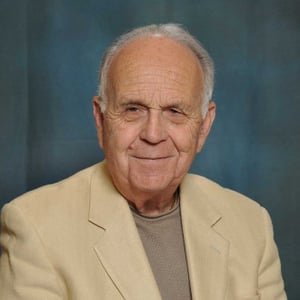
Presidential Scholar in Residence, New College of Florida
Professor Fish comes to the College of Law from Chicago, where he most recently served as Dean of the College of Liberal Arts and Sciences at the University of Illinois at Chicago. He holds a B.A. from the University of Pennsylvania (1959) and an M.A. and Ph.D. from Yale University (1960; 1962). He has previously taught at the University of California at Berkeley (1962-74); Johns Hopkins University (1974-85), where he was the Kenan Professor of English and Humanities; and Duke University, where he was Arts and Sciences Professor of English and Professor of Law (1986-1998). From 1993 through 1998 he served as Executive Director of Duke University Press. Dr. Fish served as a Distinguished Visiting Professor at The John Marshall Law School from 2000 through 2002.
In addition to being one of the country’s leading public intellectuals, Professor Fish is an extraordinarily prolific author whose works include over 200 scholarly publications and books. While his research covers a variety of fields, Professor Fish has written for many of the country’s leading law journals. including Stanford Law Review, Duke Law Journal, Yale Law Journal, University of Chicago Law Review, Columbia Law Review, and Texas Law Review. His exemplary work also includes the following books: John Skelton’s Poetry (1965); Surprised by Sin: The Reader in Paradise Lost (1967) and a Thirtieth Anniversary Edition (1997); Self-Consuming Artifacts: The Experience of Seventeenth-Century Literature (1972); The Living Temple: George Herbert and Catechizing (1978); Is there a Text in This Class? Interpretive Communities and the Sources of Authority (1980); Doing What Comes Naturally: Change, Rhetoric, and the Practice of Theory in Literary and Legal Studies (1989); There’s No Such Thing as Free Speech, and It’s a Good Thing, Too (1994); Professional Correctness: Literary Studies and Political Change (1995); The Trouble with Principle (1999); and How Milton Works (2001). The Stanley Fish Reader, edited by H. Aram Veeser, was published in 1999. He has also had five books written about his books.
Currently, Professor Fish is working on several publications, including There is No Textualist Position, San Diego Law Review (Spring 2005), Intentional Neglect, New York Times (July 2005), and Academic Cross Dressing: How Intelligent Design Gets Its Arguments from the Left, Harper’s Magazine. Professor Fish will teach a Law & Religion seminar Spring 2006.
Professor of Law, Brooklyn Law School
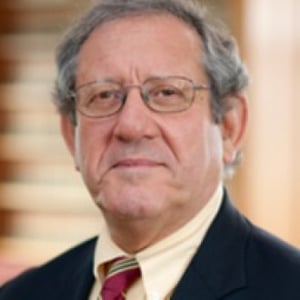
Joel Gora has been a professor at Brooklyn Law School since 1978, teaching constitutional law, civil procedure and a number of other related courses. He also served as Associate Dean for Academic Affairs from 1993-1997 and again from 2002 through 2006. He is the author of a number of books and articles dealing with First Amendment and other constitutional law issues. He is also an expert on campaign finance law matters, working in the field as both an advocate and an academic. Prior to joining the Brooklyn Law School faculty, Professor Gora was a law clerk at the United States Court of Appeals for the Second Circuit for two years after he graduated from law school, and then a full-time lawyer with the American Civil Liberties Union for almost ten years. During his ACLU career, he worked on dozens of United States Supreme Court cases, including many landmark rulings. Chief among them was the case of Buckley v. Valeo, the Court’s historic 1976 decision on the relationship between campaign finance restrictions and First Amendment rights. He has worked, on behalf of the ACLU, on almost every one of the important campaign finance cases to come before the Court. He also served for more than 25 years on the board of directors of the New York Civil Liberties Union, and as one of its general counsel. He has served as well on a number of policy committees of the New York City Bar, and was also a member of the board of the Federal Bar Council. Professor Gora received his B.A. from Pomona College and LL.B. from Columbia Law School.
President, Defending Education
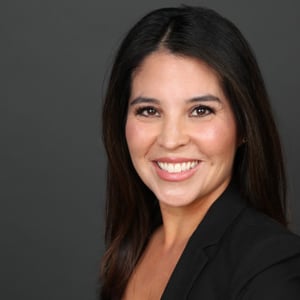
Nicole Neily is the president and founder of Defending Education, a national membership organization that gives parents, students, and others the resources and support they need to advocate for their children’s education. She is also the executive director of PDE Action, a 501(c)4 advocacy organization.
Defending Education champions equal protection and combats race and sex-based discrimination in both the court of law and the court of public opinion, and has successfully sued school districts and the US Department of Education in federal court; facilitated tens of thousands of comments submitted to the Federal Register; filed dozens of federal OCR and EEOC complaints, as well as over two thousand public records requests since its launch in 2021. The organization regularly releases deep-dive education investigations, recently covering political spending by teachers’ unions, biased accreditation agencies, and ethnic studies curriculum in both K-12 and universities.
Prior to launching Defending Education, Nicole created Speech First, a campus free speech organization that sued 6 public universities under her leadership; she has also worked as president of the Franklin Center for Government & Public Integrity; as executive director and senior fellow at the Independent Women’s Forum; and at the Cato Institute. She is the mother of two school-aged children and serves on the board of a public university.
Judge, United States Court of Appeals, Eighth Circuit
David Stras became a judge on the United States Court of Appeals for the Eighth Circuit on January 31, 2018. Before serving on the Eighth Circuit, Judge Stras was an Associate Justice of the Minnesota Supreme Court, a position he occupied from July 1, 2010 until his appointment to the Eighth Circuit.
Prior to becoming a judge, Stras was a member of the faculty of the University of Minnesota Law School from 2004 through 2010. He taught and wrote in the areas of federal courts and jurisdiction, constitutional law, criminal law, and law and politics.
Judge Stras received his Bachelor of Arts degree, with highest distinction, in 1995 and his Master of Business Administration in 1999, both from the University of Kansas. He also received his law degree from the University of Kansas School of Law in 1999, where he served as Editor-in-Chief of the Criminal Procedure Edition of the Kansas Law Review.
Following law school, Stras clerked for The Honorable Melvin Brunetti of the United States Court of Appeals for the Ninth Circuit and then for The Honorable J. Michael Luttig of the United States Court of Appeals for the Fourth Circuit.
From 2001 to 2002, he practiced white-collar criminal and appellate litigation with the Washington, D.C., office of Sidley Austin Brown & Wood. Following his year in practice, he clerked for The Honorable Clarence Thomas of the Supreme Court of the United States.
Founder, Article III Project
Mike Davis, the former Chief Counsel for Nominations to Senate Judiciary Chairman Chuck Grassley, is the founder and president of the Article III Project (A3P). A3P defends constitutionalist judges and the rule of law. Davis also leads the Internet Accountability Project (IAP), an advocacy organization fighting to rein in Big Tech, along with the Unsilenced Majority, an organization dedicated to opposing Cancel Culture and fighting back against the woke mob and their enablers.
As Chief Counsel for Nominations, Davis advised Chairman Grassley and other senators on the confirmation of federal judges and senior Executive Branch appointees, serving as staff lead for 30 hearings and 41 markup meetings. He oversaw the floor votes for 278 nominees, including the confirmations of Justice Brett Kavanaugh and the record number of circuit judges confirmed during President Trump’s first two years in office.
Davis has served in all three branches of the federal government, including for President George W. Bush, the Justice Department, House Speaker Newt Gingrich, and current Supreme Court Justice Neil Gorsuch. Davis also led the outside support team for Justice Gorsuch’s successful confirmation to the Supreme Court.
Before returning to public service in 2017, Davis spent nearly ten years as a civil litigator in Denver, working at one of the largest law firms in the world and one of the top-ranked law firms in Colorado before running his own law practice for more than five years.
Davis is from Des Moines, Iowa. He received his Bachelor of Arts in 2000 and Juris Doctor in 2004, both from the University of Iowa. In 2017, Davis received Iowa Law’s “Emerging Leader Award.” Davis also serves on the University of Iowa Political Science Advisory Board.
Presidential Scholar in Residence, New College of Florida
Professor Fish comes to the College of Law from Chicago, where he most recently served as Dean of the College of Liberal Arts and Sciences at the University of Illinois at Chicago. He holds a B.A. from the University of Pennsylvania (1959) and an M.A. and Ph.D. from Yale University (1960; 1962). He has previously taught at the University of California at Berkeley (1962-74); Johns Hopkins University (1974-85), where he was the Kenan Professor of English and Humanities; and Duke University, where he was Arts and Sciences Professor of English and Professor of Law (1986-1998). From 1993 through 1998 he served as Executive Director of Duke University Press. Dr. Fish served as a Distinguished Visiting Professor at The John Marshall Law School from 2000 through 2002.
In addition to being one of the country’s leading public intellectuals, Professor Fish is an extraordinarily prolific author whose works include over 200 scholarly publications and books. While his research covers a variety of fields, Professor Fish has written for many of the country’s leading law journals. including Stanford Law Review, Duke Law Journal, Yale Law Journal, University of Chicago Law Review, Columbia Law Review, and Texas Law Review. His exemplary work also includes the following books: John Skelton’s Poetry (1965); Surprised by Sin: The Reader in Paradise Lost (1967) and a Thirtieth Anniversary Edition (1997); Self-Consuming Artifacts: The Experience of Seventeenth-Century Literature (1972); The Living Temple: George Herbert and Catechizing (1978); Is there a Text in This Class? Interpretive Communities and the Sources of Authority (1980); Doing What Comes Naturally: Change, Rhetoric, and the Practice of Theory in Literary and Legal Studies (1989); There’s No Such Thing as Free Speech, and It’s a Good Thing, Too (1994); Professional Correctness: Literary Studies and Political Change (1995); The Trouble with Principle (1999); and How Milton Works (2001). The Stanley Fish Reader, edited by H. Aram Veeser, was published in 1999. He has also had five books written about his books.
Currently, Professor Fish is working on several publications, including There is No Textualist Position, San Diego Law Review (Spring 2005), Intentional Neglect, New York Times (July 2005), and Academic Cross Dressing: How Intelligent Design Gets Its Arguments from the Left, Harper’s Magazine. Professor Fish will teach a Law & Religion seminar Spring 2006.
Professor of Law, Brooklyn Law School
Joel Gora has been a professor at Brooklyn Law School since 1978, teaching constitutional law, civil procedure and a number of other related courses. He also served as Associate Dean for Academic Affairs from 1993-1997 and again from 2002 through 2006. He is the author of a number of books and articles dealing with First Amendment and other constitutional law issues. He is also an expert on campaign finance law matters, working in the field as both an advocate and an academic. Prior to joining the Brooklyn Law School faculty, Professor Gora was a law clerk at the United States Court of Appeals for the Second Circuit for two years after he graduated from law school, and then a full-time lawyer with the American Civil Liberties Union for almost ten years. During his ACLU career, he worked on dozens of United States Supreme Court cases, including many landmark rulings. Chief among them was the case of Buckley v. Valeo, the Court’s historic 1976 decision on the relationship between campaign finance restrictions and First Amendment rights. He has worked, on behalf of the ACLU, on almost every one of the important campaign finance cases to come before the Court. He also served for more than 25 years on the board of directors of the New York Civil Liberties Union, and as one of its general counsel. He has served as well on a number of policy committees of the New York City Bar, and was also a member of the board of the Federal Bar Council. Professor Gora received his B.A. from Pomona College and LL.B. from Columbia Law School.
President, Defending Education
Nicole Neily is the president and founder of Defending Education, a national membership organization that gives parents, students, and others the resources and support they need to advocate for their children’s education. She is also the executive director of PDE Action, a 501(c)4 advocacy organization.
Defending Education champions equal protection and combats race and sex-based discrimination in both the court of law and the court of public opinion, and has successfully sued school districts and the US Department of Education in federal court; facilitated tens of thousands of comments submitted to the Federal Register; filed dozens of federal OCR and EEOC complaints, as well as over two thousand public records requests since its launch in 2021. The organization regularly releases deep-dive education investigations, recently covering political spending by teachers’ unions, biased accreditation agencies, and ethnic studies curriculum in both K-12 and universities.
Prior to launching Defending Education, Nicole created Speech First, a campus free speech organization that sued 6 public universities under her leadership; she has also worked as president of the Franklin Center for Government & Public Integrity; as executive director and senior fellow at the Independent Women’s Forum; and at the Cato Institute. She is the mother of two school-aged children and serves on the board of a public university.
Judge, United States Court of Appeals, Eighth Circuit
David Stras became a judge on the United States Court of Appeals for the Eighth Circuit on January 31, 2018. Before serving on the Eighth Circuit, Judge Stras was an Associate Justice of the Minnesota Supreme Court, a position he occupied from July 1, 2010 until his appointment to the Eighth Circuit.
Prior to becoming a judge, Stras was a member of the faculty of the University of Minnesota Law School from 2004 through 2010. He taught and wrote in the areas of federal courts and jurisdiction, constitutional law, criminal law, and law and politics.
Judge Stras received his Bachelor of Arts degree, with highest distinction, in 1995 and his Master of Business Administration in 1999, both from the University of Kansas. He also received his law degree from the University of Kansas School of Law in 1999, where he served as Editor-in-Chief of the Criminal Procedure Edition of the Kansas Law Review.
Following law school, Stras clerked for The Honorable Melvin Brunetti of the United States Court of Appeals for the Ninth Circuit and then for The Honorable J. Michael Luttig of the United States Court of Appeals for the Fourth Circuit.
From 2001 to 2002, he practiced white-collar criminal and appellate litigation with the Washington, D.C., office of Sidley Austin Brown & Wood. Following his year in practice, he clerked for The Honorable Clarence Thomas of the Supreme Court of the United States.
Boochever and Bird Distinguished Professor of Law, UC Davis School of Law
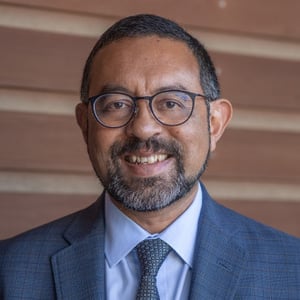
Ash Bhagwat joined the UC Davis School of Law faculty in 2011. Prior to joining UC Davis, he taught at UC Hastings College of the Law for seventeen years. Bhagwat is the author of The Myth of Rights, published by the Oxford University Press in 2010, as well as numerous books, articles, and book chapters on a wide variety of subjects, ranging from the structure of constitutional rights, to free speech law, to the California Electricity Crisis. Journals his articles have appeared in include the Yale Law Journal, the Supreme Court Review, the California Law Review, the Administrative Law Review, and the University of Illinois Law Review.
Bhagwat is a summa cum laude graduate of Yale University, where he received a B.A. with Honors in History. He is also a graduate of The University of Chicago Law School, where he served as Articles Editor of the University of Chicago Law Review. He then completed clerkships with Judge Richard A. Posner of the United States Court of Appeals for the Seventh Circuit, and Associate Justice Anthony M. Kennedy of the United States Supreme Court. Prior to joining the Hastings faculty, Bhagwat practiced appellate and regulatory law for two years in the Washington, D.C. offices of the Sidley & Austin law firm.
In May of 2011, Governor Jerry Brown appointed Bhagwat to serve on the Board of Governors of the California Independent System Operator, a public benefit corporation responsible for running the high-voltage electricity grid in California. In 2003, he was awarded the Rutter Award for Teaching Excellence at UC Hastings. Bhagwat is a member of the American Law Institute.
Professor of Law, Herbert and Marjorie Fried Teaching Scholar, University of Chicago Law School
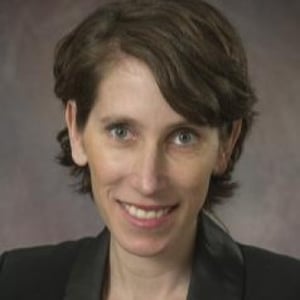
Genevieve Lakier’s research explores the connections between culture and law. She is currently engaged in a long-term project exploring the cultural history of the First Amendment, and another project exploring the changing role of the state in the regulation of sex.
Genevieve has an AB from Princeton University, a JD from New York University School of Law, and an MA and PhD in anthropology from the University of Chicago. Between 2006 and 2008, she was an Academy Scholar at the Weatherhead Center for International and Area Studies at Harvard University. After law school, she clerked for Judge Leonard B. Sand of the Southern District of New York and Judge Martha C. Daughtrey of the Sixth Circuit Court of Appeals. Before joining the faculty, Genevieve taught at the Law School as a Bigelow Fellow and Lecturer in Law.

Professor of Law, Georgetown University Law Center
Nicholas Quinn Rosenkranz teaches constitutional law and federal jurisdiction, and he writes articles for the Harvard Law Review and the Stanford Law Review.
He is currently developing a new theory of constitutional interpretation and judicial review. The first installment, entitledThe Subjects of the Constitution, was published in the Stanford Law Review in May of 2010, and it is among the most downloaded articles about constitutional interpretation, judicial review, and/or federal courts in the history of SSRN. The second installment, The Objects of the Constitution, was published in May of 2011, also in the Stanford Law Review. And the comprehensive version is forthcoming as a book by Oxford University Press.
Rosenkranz has served and advised the federal government in a variety of capacities. He clerked for Judge Frank H. Easterbrook on the U.S. Court of Appeals for the Seventh Circuit (1999-2000) and for Justice Anthony M. Kennedy at the U.S. Supreme Court (October Term 2001). He served as an Attorney-Advisor at the Office of Legal Counsel in the U.S. Department of Justice (November 2002 - July 2004). He often testifies before Congress as a constitutional expert—most recently before the House Financial Services Oversight Subcommittee, regarding the Obama Administration's use of bank settlement agreements to circumvent the Appropriations Clause. He has also filed briefs and presented oral argument before the U.S. Supreme Court. His most recent Supreme Court brief, in Los Angeles v. Patel, was cited by Justice Alito in dissent.
Rosenkranz is a member of the New York Bar and the U.S. Supreme Court Bar. He is a Senior Fellow at the Cato Institute. He serves on the Board of Directors of the Foundation for Individual Rights in Education (FIRE). He is a founding member of Heterodox Academy and a member of its Executive Committee. He also serves on the Board of Directors of the Federalist Society and as the faculty advisor to the Georgetown chapter.
Judge, United States Court of Appeals, Eighth Circuit
David Stras became a judge on the United States Court of Appeals for the Eighth Circuit on January 31, 2018. Before serving on the Eighth Circuit, Judge Stras was an Associate Justice of the Minnesota Supreme Court, a position he occupied from July 1, 2010 until his appointment to the Eighth Circuit.
Prior to becoming a judge, Stras was a member of the faculty of the University of Minnesota Law School from 2004 through 2010. He taught and wrote in the areas of federal courts and jurisdiction, constitutional law, criminal law, and law and politics.
Judge Stras received his Bachelor of Arts degree, with highest distinction, in 1995 and his Master of Business Administration in 1999, both from the University of Kansas. He also received his law degree from the University of Kansas School of Law in 1999, where he served as Editor-in-Chief of the Criminal Procedure Edition of the Kansas Law Review.
Following law school, Stras clerked for The Honorable Melvin Brunetti of the United States Court of Appeals for the Ninth Circuit and then for The Honorable J. Michael Luttig of the United States Court of Appeals for the Fourth Circuit.
From 2001 to 2002, he practiced white-collar criminal and appellate litigation with the Washington, D.C., office of Sidley Austin Brown & Wood. Following his year in practice, he clerked for The Honorable Clarence Thomas of the Supreme Court of the United States.

Thomas M. Siebel Senior Fellow, The Hoover Institution, Stanford University; Gary T. Schwartz Distinguished Professor of Law Emeritus, UCLA School of Law
Eugene Volokh is the Thomas M. Siebel Senior Fellow at the Hoover Institution (Stanford), as well as the Gary T. Schwartz Distinguished Professor of Law Emeritus and Distinguished Research Professor at UCLA School of Law. He recently retired from teaching at UCLA, after 30 years there, and is now focusing on research.
Volokh is the author of the textbooks The First Amendment and Related Statutes (8th ed. 2023), and Academic Legal Writing (5th ed. 2016), as well as over 100 academic law journal articles, mostly on First Amendment law. He is a member of The American Law Institute; the editor-in-chief of the Journal of Free Speech Law; and the creator and coauthor of The Volokh Conspiracy, a leading legal blog founded in 2002 (hosted at the Washington Post from 2014 to 2017 and now at Reason Magazine).

Executive Vice President, The Federalist Society
Dean Reuter is Executive Vice President at the Federalist Society for Law and Public Policy Studies. He has served in two federal government agency Offices of the Inspector General, as Counsel to the Inspector General and Deputy Inspector General, responsible for policing the use of federal funds granted and contracted through those agencies. As such, he helped conduct and oversee criminal investigations across the country. He is the principal author of the non-fiction book, The Hidden Nazi: The Untold Story of America's Deal with the Devil, and editor of Liberty’s Nemesis: The Unchecked Expansion of the State and Confronting Terror: 9/11 and the Future of American National Security. He was appointed by the President and served as Vice-Chairman of the Board of Directors of the Corporation for National and Community Service, and recently served as an appointee on the U.S. Commission on Presidential Scholars. He is a graduate of Hood College (BA with Honors) and the University of Maryland School of Law.
Boochever and Bird Distinguished Professor of Law, UC Davis School of Law
Ash Bhagwat joined the UC Davis School of Law faculty in 2011. Prior to joining UC Davis, he taught at UC Hastings College of the Law for seventeen years. Bhagwat is the author of The Myth of Rights, published by the Oxford University Press in 2010, as well as numerous books, articles, and book chapters on a wide variety of subjects, ranging from the structure of constitutional rights, to free speech law, to the California Electricity Crisis. Journals his articles have appeared in include the Yale Law Journal, the Supreme Court Review, the California Law Review, the Administrative Law Review, and the University of Illinois Law Review.
Bhagwat is a summa cum laude graduate of Yale University, where he received a B.A. with Honors in History. He is also a graduate of The University of Chicago Law School, where he served as Articles Editor of the University of Chicago Law Review. He then completed clerkships with Judge Richard A. Posner of the United States Court of Appeals for the Seventh Circuit, and Associate Justice Anthony M. Kennedy of the United States Supreme Court. Prior to joining the Hastings faculty, Bhagwat practiced appellate and regulatory law for two years in the Washington, D.C. offices of the Sidley & Austin law firm.
In May of 2011, Governor Jerry Brown appointed Bhagwat to serve on the Board of Governors of the California Independent System Operator, a public benefit corporation responsible for running the high-voltage electricity grid in California. In 2003, he was awarded the Rutter Award for Teaching Excellence at UC Hastings. Bhagwat is a member of the American Law Institute.
Professor of Law, Herbert and Marjorie Fried Teaching Scholar, University of Chicago Law School
Genevieve Lakier’s research explores the connections between culture and law. She is currently engaged in a long-term project exploring the cultural history of the First Amendment, and another project exploring the changing role of the state in the regulation of sex.
Genevieve has an AB from Princeton University, a JD from New York University School of Law, and an MA and PhD in anthropology from the University of Chicago. Between 2006 and 2008, she was an Academy Scholar at the Weatherhead Center for International and Area Studies at Harvard University. After law school, she clerked for Judge Leonard B. Sand of the Southern District of New York and Judge Martha C. Daughtrey of the Sixth Circuit Court of Appeals. Before joining the faculty, Genevieve taught at the Law School as a Bigelow Fellow and Lecturer in Law.
Executive Vice President, The Federalist Society
Dean Reuter is Executive Vice President at the Federalist Society for Law and Public Policy Studies. He has served in two federal government agency Offices of the Inspector General, as Counsel to the Inspector General and Deputy Inspector General, responsible for policing the use of federal funds granted and contracted through those agencies. As such, he helped conduct and oversee criminal investigations across the country. He is the principal author of the non-fiction book, The Hidden Nazi: The Untold Story of America's Deal with the Devil, and editor of Liberty’s Nemesis: The Unchecked Expansion of the State and Confronting Terror: 9/11 and the Future of American National Security. He was appointed by the President and served as Vice-Chairman of the Board of Directors of the Corporation for National and Community Service, and recently served as an appointee on the U.S. Commission on Presidential Scholars. He is a graduate of Hood College (BA with Honors) and the University of Maryland School of Law.
Professor of Law, Georgetown University Law Center
Nicholas Quinn Rosenkranz teaches constitutional law and federal jurisdiction, and he writes articles for the Harvard Law Review and the Stanford Law Review.
He is currently developing a new theory of constitutional interpretation and judicial review. The first installment, entitledThe Subjects of the Constitution, was published in the Stanford Law Review in May of 2010, and it is among the most downloaded articles about constitutional interpretation, judicial review, and/or federal courts in the history of SSRN. The second installment, The Objects of the Constitution, was published in May of 2011, also in the Stanford Law Review. And the comprehensive version is forthcoming as a book by Oxford University Press.
Rosenkranz has served and advised the federal government in a variety of capacities. He clerked for Judge Frank H. Easterbrook on the U.S. Court of Appeals for the Seventh Circuit (1999-2000) and for Justice Anthony M. Kennedy at the U.S. Supreme Court (October Term 2001). He served as an Attorney-Advisor at the Office of Legal Counsel in the U.S. Department of Justice (November 2002 - July 2004). He often testifies before Congress as a constitutional expert—most recently before the House Financial Services Oversight Subcommittee, regarding the Obama Administration's use of bank settlement agreements to circumvent the Appropriations Clause. He has also filed briefs and presented oral argument before the U.S. Supreme Court. His most recent Supreme Court brief, in Los Angeles v. Patel, was cited by Justice Alito in dissent.
Rosenkranz is a member of the New York Bar and the U.S. Supreme Court Bar. He is a Senior Fellow at the Cato Institute. He serves on the Board of Directors of the Foundation for Individual Rights in Education (FIRE). He is a founding member of Heterodox Academy and a member of its Executive Committee. He also serves on the Board of Directors of the Federalist Society and as the faculty advisor to the Georgetown chapter.
Judge, United States Court of Appeals, Eighth Circuit
David Stras became a judge on the United States Court of Appeals for the Eighth Circuit on January 31, 2018. Before serving on the Eighth Circuit, Judge Stras was an Associate Justice of the Minnesota Supreme Court, a position he occupied from July 1, 2010 until his appointment to the Eighth Circuit.
Prior to becoming a judge, Stras was a member of the faculty of the University of Minnesota Law School from 2004 through 2010. He taught and wrote in the areas of federal courts and jurisdiction, constitutional law, criminal law, and law and politics.
Judge Stras received his Bachelor of Arts degree, with highest distinction, in 1995 and his Master of Business Administration in 1999, both from the University of Kansas. He also received his law degree from the University of Kansas School of Law in 1999, where he served as Editor-in-Chief of the Criminal Procedure Edition of the Kansas Law Review.
Following law school, Stras clerked for The Honorable Melvin Brunetti of the United States Court of Appeals for the Ninth Circuit and then for The Honorable J. Michael Luttig of the United States Court of Appeals for the Fourth Circuit.
From 2001 to 2002, he practiced white-collar criminal and appellate litigation with the Washington, D.C., office of Sidley Austin Brown & Wood. Following his year in practice, he clerked for The Honorable Clarence Thomas of the Supreme Court of the United States.
Thomas M. Siebel Senior Fellow, The Hoover Institution, Stanford University; Gary T. Schwartz Distinguished Professor of Law Emeritus, UCLA School of Law
Eugene Volokh is the Thomas M. Siebel Senior Fellow at the Hoover Institution (Stanford), as well as the Gary T. Schwartz Distinguished Professor of Law Emeritus and Distinguished Research Professor at UCLA School of Law. He recently retired from teaching at UCLA, after 30 years there, and is now focusing on research.
Volokh is the author of the textbooks The First Amendment and Related Statutes (8th ed. 2023), and Academic Legal Writing (5th ed. 2016), as well as over 100 academic law journal articles, mostly on First Amendment law. He is a member of The American Law Institute; the editor-in-chief of the Journal of Free Speech Law; and the creator and coauthor of The Volokh Conspiracy, a leading legal blog founded in 2002 (hosted at the Washington Post from 2014 to 2017 and now at Reason Magazine).
Harry Kalven, Jr. Professor of Law & Faculty Director, Constitutional Law Institute, University of Chicago Law School
William Baude is a Professor of Law and the Faculty Director of the Constitutional Law Institute at the University of Chicago Law School, where he teaches federal courts, constitutional law, and conflict of laws. His current research interests include different aspects of the Fourteenth Amendment (particularly both Section One and Section Three) and the nature of judicial discretion.
Among his other activities Baude is: the co-editor of two textbooks, The Constitution of the United States and Hart & Wechsler's Federal Courts in the Federal System; an Affiliated Scholar at the Center for the Study of Constitutional Originalism; a founding member of the Academic Freedom Alliance; a member of the American Law Institute; an occasional blogger at The Volokh Conspiracy; and a podcaster on Divided Argument. He also recently served on the Presidential Commission on the Supreme Court of the United States.
Professor Baude received his BS in Mathematics from the University of Chicago and his JD from Yale Law School. He then clerked for then-Judge Michael McConnell on the United States Court of Appeals, and Chief Justice John Roberts on the United States Supreme Court. Before joining the Chicago faculty, he was a fellow at the Stanford Constitutional Law Center, and a lawyer in Washington, DC.
Robert E. Scott Distinguished Professor of Law Emeritus, University of Virginia School of Law; Alice McKean Young Regents Chair in Law Emeritus, University of Texas
Douglas Laycock is perhaps the nation’s leading authority on the law of religious liberty and also on the law of remedies. He has taught and written about these topics for more than four decades at the University of Chicago, the University of Texas, the University of Michigan and the University of Virginia. He retired from teaching at UVA Law School in May 2023.
Laycock has testified frequently before Congress and has argued many cases in the courts, including the U.S. Supreme Court, where he has served as lead counsel in six cases and has also filed influential amicus briefs. He is the author (co-author in the most recent edition) of the leading casebook Modern American Remedies, the award-winning monograph The Death of the Irreparable Injury Rule and many articles in leading law reviews. He co-edited a collection of essays, Same-Sex Marriage and Religious Liberty.
His many writings on religious liberty have been republished in a five-volume collection:
Laycock resigned from the council and as first vice president of the American Law Institute to become co-reporter for the Restatement (Third) of Torts: Remedies. He is a fellow of the American Academy of Arts and Sciences. He earned his B.A. from Michigan State University and his J.D. from the University of Chicago.
Antonin Scalia Professor of Law, Harvard Law School
Stephen E. Sachs is the Antonin Scalia Professor of Law at Harvard Law School, where he teaches civil procedure, conflict of laws, and seminars on constitutional law. His research focuses on the law and theory of constitutional interpretation, the jurisdiction of state and federal courts, the history of procedure and private law, and the role of the general common law in the U.S. legal system.
Sachs has authored numerous articles, essays, and book chapters. He is an elected member of the American Law Institute, an adviser to the ALI’s project on the Restatement of the Law (Third), Conflict of Laws, a former member of the Judicial Conference’s Advisory Committee on Appellate Rules, and a founding member of the Academic Freedom Alliance.
In 2020, Sachs received the Federalist Society’s Joseph Story Award, which recognizes a young academic who has demonstrated excellence in legal scholarship, a commitment to teaching, a concern for students, and who has made a significant public impact in a manner that advances the rule of law in a free society.
Sachs previously taught at Duke University School of Law and as a visiting professor at the University of Chicago Law School. Before entering academia, he practiced in the Washington, D.C., litigation group of Mayer Brown LLP, and he clerked for Chief Justice John G. Roberts Jr. as well as for Judge Stephen F. Williams of the U.S. Court of Appeals for the D.C. Circuit.
Sachs received his J.D. from Yale Law School, where he was executive editor of the Yale Law Journal and served both as executive editor and articles editor of the Yale Law & Policy Review. A Rhodes Scholar, he graduated from Oxford University with a first-class BA (Hons) degree in philosophy, politics, and economics. He received his A.B. degree summa cum laude in history from Harvard University, earning the Sophia Freund Prize.
Sachs is a licensed attorney in Massachusetts and the District of Columbia, and he is authorized to practice before the D.C. Circuit, the Second Circuit, the Seventh Circuit, and the Supreme Court of the United States.
Judge, United States Court of Appeals, Eighth Circuit
David Stras became a judge on the United States Court of Appeals for the Eighth Circuit on January 31, 2018. Before serving on the Eighth Circuit, Judge Stras was an Associate Justice of the Minnesota Supreme Court, a position he occupied from July 1, 2010 until his appointment to the Eighth Circuit.
Prior to becoming a judge, Stras was a member of the faculty of the University of Minnesota Law School from 2004 through 2010. He taught and wrote in the areas of federal courts and jurisdiction, constitutional law, criminal law, and law and politics.
Judge Stras received his Bachelor of Arts degree, with highest distinction, in 1995 and his Master of Business Administration in 1999, both from the University of Kansas. He also received his law degree from the University of Kansas School of Law in 1999, where he served as Editor-in-Chief of the Criminal Procedure Edition of the Kansas Law Review.
Following law school, Stras clerked for The Honorable Melvin Brunetti of the United States Court of Appeals for the Ninth Circuit and then for The Honorable J. Michael Luttig of the United States Court of Appeals for the Fourth Circuit.
From 2001 to 2002, he practiced white-collar criminal and appellate litigation with the Washington, D.C., office of Sidley Austin Brown & Wood. Following his year in practice, he clerked for The Honorable Clarence Thomas of the Supreme Court of the United States.

Lockstep or Step Alone: Considering Interpretations of the Federal Constitution When Interpreting State Constitutions
Clint Bolick, Sarah Keeton Campbell, David R. Stras, Jeffrey S. Sutton, Sarah Hawkins Warren
Many state constitutional provisions are worded similarly to provisions of the federal Constitution. At times,...
Showcase Panel IV: The Regulatory Power of Bar Associations
William E. Adams, Brian T. Fitzpatrick, Theodore B. Olson, David R. Stras, Daniel R. Thies
2022 National Lawyers Convention
The reach of bar associations, including the ABA, extends further than many realize. From evaluating...
Showcase Panel IV: The Regulatory Power of Bar Associations
William E. Adams, Brian T. Fitzpatrick, Theodore B. Olson, David R. Stras, Daniel R. Thies
2022 National Lawyers Convention
The reach of bar associations, including the ABA, extends further than many realize. From evaluating...
Luncheon and Keynote Address
Matthew M. Fernholz, David R. Stras
"What My Grandparents’ Experiences in the Holocaust Taught me about the First Amendment" Lunch will...
Courthouse Steps Oral Argument: Egbert v. Boule
Anya Bidwell, Erin M. Hawley, David R. Stras
A federal statute allows citizens to sue state and local officers for violating constitutional rights,...
Is Anyone Still Committed to Free Speech?
Mike Davis, Stanley Fish, Joel M. Gora, Nicole Neily, David R. Stras
2021 National Lawyers Convention
The 2021 National Lawyers Convention took place November 11-13, 2021 at the Mayflower Hotel in...
Is Anyone Still Committed to Free Speech?
Mike Davis, Stanley Fish, Joel M. Gora, Nicole Neily, David R. Stras
2021 National Lawyers Convention
The 2021 National Lawyers Convention took place November 11-13, 2021 at the Mayflower Hotel in...
Free Speech & Election Law: Rule of Law, or Just Making it Up? First Amendment Tiered Scrutiny
Ashutosh Bhagwat, Genevieve Lakier, Nicholas Quinn Rosenkranz, David R. Stras, Eugene Volokh, Dean Reuter
2020 National Lawyers Convention
On November 10, 2020, The Federalist Society's Free Speech & Election Law Practice Group hosted...
Free Speech & Election Law: Rule of Law, or Just Making it Up? First Amendment Tiered Scrutiny
Ashutosh Bhagwat, Genevieve Lakier, Dean Reuter, Nicholas Quinn Rosenkranz, David R. Stras, Eugene Volokh
2020 National Lawyers Convention
On November 10, 2020, The Federalist Society's Free Speech & Election Law Practice Group hosted...
Panel IV: Originalism and Interstate Relations
William Baude, Douglas Laycock, Stephen E. Sachs, David R. Stras
2020 National Student Symposium
On March 14, 2020, the Federalist Society held its 39th National Student Symposium. The Symposium...