

Co-Founder, Able Lending
Evan Baehr is the cofounder of Able, an online lender to small businesses. It launched June 2014 with the Wall Street Journal'sWeekend Interview and on TechCrunch. His passion at Able is to serve the Fortune 5 Million – the 5.8 million small businesses that represent the backbone of the American economy. His previous startup was Outbox, a consumer internet company aiming to takeover the US Postal Service and backed by venture capitalists Peter Thiel and Mike Maples, featured on Fox News, CNN, TechCrunch, FastCompany, Wall Street Journal, INC, the New York Times, and on Jay Leno.
He has worked on the Facebook platform under Sheryl Sandberg, helping shape a vision to make life better by making it social, and for Peter Thiel building a political data company. He’s an honors graduate of Princeton’s Woodrow Wilson School, Yale Divinity School, and Harvard Business School.
He has worked for the American Enterprise Institute’s Charles Murray, the Ethics and Public Policy Center, the Becket Fund for Religious Liberty, and the White House Office of Faith-Based Initiatives, served as a legislative aid on the House Appropriations Committee under Rep. Frank Wolf, was Chief of Staff on the Congressional Human Rights Caucus, under which he wrote the International Marriage Broker Regulation Act, and was the failed candidate for Princeton’s City Council, despite receiving more votes than George W. Bush.
He has served on the board of the Manhattan Institute’s Adam Smith Society, the New Canaan Society, the Rivendell Institute, and Harvard Business School's FIELD Program, and is a mentor with First Round Capital's Dorm Room Fund. He cofounded the Hoover Institute’s Rising Fellows Program, Harvard Business School’s Ideas@Work, Princetonians in the Nation’s Service, and the Yale Forum on Faith and Politics. He is the recipient of the Lily Endowment Thesis Prize, the Blackstone Legal Fellowship, and Princeton’s James Madison Fellowship. He lives in Austin, TX, with his wife, Kristina Scurry Baehr, a patent litigator, and children Cooper and Madeleine.
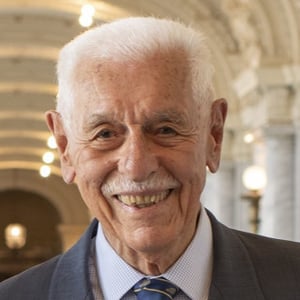
Judge, United States Court of Appeals, Ninth Circuit
Judge Carlos Bea serves as a judge on the United States Court of Appeals for the Ninth Circuit. He received his Bachelor's Degree from Stanford University in 1956 and his J.D. from Stanford Law School in 1958. Judge Bea was born in San Sebastian, Spain, and immigrated with his family to Cuba in 1939. In 1952, he represented Cuba on the Cuban National basketball team in the Helsinki Olympics. Judge Bea became a naturalized citizen of the United States in 1958. He engaged in private practice in San Francisco, principally in the area of civil trials (jury and non-jury), from 1959-75 at Dunne, Phelps & Mills and from 1975-90 at Carlos Bea, A Law Corporation. He taught courses in civil litigation advocacy at Hastings College of Law and Stanford Law School. From 1990 to 2003, Judge Bea served as a judge of the San Francisco Superior Court. He was nominated by President George W. Bush to the United States Court of Appeals for the Ninth Circuit and was confirmed in 2003.
Judge Bea and his wife Louise reside in San Francisco, where they raised their four sons, Sebastian, Alexander, Nicholas, and Dominic.

Chief Legal Officer, Paradigm
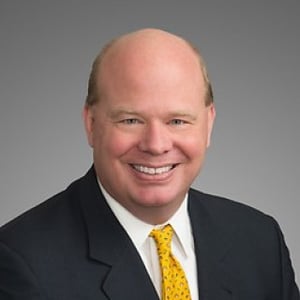
Principal, DeGroot Legal
Mr. DeGroot represents businesses in complex litigation, focusing on licensing, insurance, intellectual property, contract disputes, and toxic torts. He has experience in cases involving fraud, breach of contract, unfair competition, patents, business torts, mergers and acquisitions, creditors’ rights, and bankruptcy. He has extensive experience in all aspects of civil litigation, both in federal and state courts, including prejudgment remedies, discovery, trial, appeals, arbitration and mediation.
Mr. DeGroot works with clients in a variety of industries, including financial institutions, insurance, software, construction, semiconductors, and real estate.
Policy Counsel, Lyft

Associate Professor, University of Idaho College of Law
Stephen R. Miller joined the faculty of the University of Idaho College of Law in 2011. Prof. Miller received his undergraduate degree from Brown University, a master’s degree in city and regional planning from the University of California, Berkeley, and his J.D. from the University of California, Hastings College of Law. While in law school, Prof. Miller was senior articles editor of the Constitutional Law Quarterly. Prof. Miller also worked for a land use and environmental law firm in San Francisco, California prior to joining the faculty. His research interests include economic development, sustainable development, land use, environmental law, and local government law.
His academic works have been published by or are forthcoming from Cambridge University Press, Harvard Environmental Law Review, and a number of other law reviews and professional journals. In 2013, he was named Faculty Advisor of the Year by the Idaho Law Review and also received the Alumni Award for Faculty Excellence. In addition to his academic writings, Prof. Miller also blogs at Land Use Prof Blog, and writes an occasional column for the Idaho Statesman Business Insider.
Prof. Miller also runs the College of Law's Economic Development Clinic, which maintains the student-written blog Idaho NEXT. In 2013, the Clinic received the Planning Excellence Award for Best Practice from the Idaho chapter of the American Planning Association for Area of City Impact Agreements in Idaho. In 2014, the Clinic released Agritourism at the Rural-Urban Interface: A National Overview of Legal Issues with 20 Proposals for Idaho. In addition, the Clinic has been credited by state officials with popularizing the use of New Markets Tax Credits financing in Idaho, a financing tool that has already helped fund $50 million in investment in low income communities throughout the state.
Prof. Miller is also active in the community. He presently serves as a commissioner on the Boise City Planning and Zoning Commission and as a board member of the Joyce Ivy Foundation, which provides educational opportunities for talented high school students.
Partner, Covington & Burling LLP
Thomas Barnett is a partner in the Washington, DC office and co-chair of the firm's Antitrust & Consumer Law Practice Group. He specializes in global antitrust and competition law practice and works closely with the firm’s white collar practice on criminal antitrust enforcement and investigative matters.
Mr. Barnett recently served as Assistant Attorney General in charge of the Justice Department’s Antitrust Division. He headed the Antitrust Division from 2005 to 2008, having previously served in the Division as Deputy Assistant Attorney General for Civil Enforcement from 2004 to 2005. During his tenure, Mr. Barnett was involved in some of the largest and most complicated criminal matters in the Division’s history, including investigations and prosecutions that involved coordination with multiple competition authorities in other jurisdictions. In the merger area, Mr. Barnett oversaw the review of all mergers investigated by the Division and supervised more than 30 cases filed in federal district court. He also oversaw an active competition advocacy program that included numerousamicusbriefs filed with the U.S. Supreme Court on antitrust issues and comments to a wide range of federal and state agencies. He argued before the U.S. Supreme Court asamicuson behalf of the United States inBell Atlantic Corp. v. Twomblyand testified several times before Congressional committees.
While at the Antitrust Division, Mr. Barnett worked with international antitrust authorities throughout the world and served in leadership positions in key international competition organizations, such as chairing the Working Party on International Cooperation and Enforcement of the OECD Competition Committee and serving on the Steering Committee of the International Competition Network.
Mr. Barnett received the Edmund Randolph Award, the U.S. Department of Justice’s highest honor, for his service in the Division.
Prior to 2004, Mr. Barnett was a leader in the firm’s Antitrust & Consumer Law Practice Group. He counseled Fortune 500 companies on all aspects of antitrust law and was involved in mergers and acquisitions, government antitrust investigations, and antitrust litigation involving a wide range of industries. He served as an adjunct professor at Georgetown University Law Center, teaching a course on antitrust and intellectual property issues in sports in 2001 and 2003, and as a co-teacher of an advanced antitrust seminar at the University of Virginia Law School multiple times between 1991 and 2004.
Judge, United States Court of Appeals, Ninth Circuit
Judge Carlos Bea serves as a judge on the United States Court of Appeals for the Ninth Circuit. He received his Bachelor's Degree from Stanford University in 1956 and his J.D. from Stanford Law School in 1958. Judge Bea was born in San Sebastian, Spain, and immigrated with his family to Cuba in 1939. In 1952, he represented Cuba on the Cuban National basketball team in the Helsinki Olympics. Judge Bea became a naturalized citizen of the United States in 1958. He engaged in private practice in San Francisco, principally in the area of civil trials (jury and non-jury), from 1959-75 at Dunne, Phelps & Mills and from 1975-90 at Carlos Bea, A Law Corporation. He taught courses in civil litigation advocacy at Hastings College of Law and Stanford Law School. From 1990 to 2003, Judge Bea served as a judge of the San Francisco Superior Court. He was nominated by President George W. Bush to the United States Court of Appeals for the Ninth Circuit and was confirmed in 2003.
Judge Bea and his wife Louise reside in San Francisco, where they raised their four sons, Sebastian, Alexander, Nicholas, and Dominic.

President, Cass & Associates, PC
Ronald A. Cass is Dean Emeritus of Boston University School of Law (where he was Dean from 1990-2004), President of Cass & Associates, PC, former Vice-Chairman and Commissioner of the U.S. International Trade Commission, former faculty member at Boston University School of Law and the University of Virginia Law School, and Distinguished Senior Fellow at the C. Boyden Gray Center for the Study of the Administrative State. Dean Cass also sits as an arbitrator for commercial, international, and intellectual property rights disputes, and is a former United States member of the Panel of Conciliators of the International Centre for Settlement of Investment Disputes. He is a member of the Council of the Administrative Conference of the United States and has received seven presidential appointments, spanning Presidents Ronald Reagan to Donald J. Trump.
As a law professor, lecturer, and scholar, Dean Cass has been teaching and writing about a wide array of legal issues on topics such as administrative law and regulation, antitrust, constitutional law, communications, intellectual property, international trade, separation of powers, and legal process. He has published more than 160 scholarly books, chapters, articles, and papers, including a leading casebook on administrative law. Dean Cass has taught judges as well as students in schools of law, economics, business, and public policy and has held academic appointments in the United States, Europe, and Latin America.
In addition to his academic work, Dean Cass has participated in numerous important legal cases as an amicus, consultant, or expert, and has advised businesses, law firms, investment funds, and government agencies on a range of trade, antitrust, intellectual property, and regulatory issues. He has a broad range of affiliations with professional groups, and has received numerous honors, fellowships and awards.
Dean Cass is a graduate of the University of Virginia and the University of Chicago Law School.
Principal, DeGroot Legal
Mr. DeGroot represents businesses in complex litigation, focusing on licensing, insurance, intellectual property, contract disputes, and toxic torts. He has experience in cases involving fraud, breach of contract, unfair competition, patents, business torts, mergers and acquisitions, creditors’ rights, and bankruptcy. He has extensive experience in all aspects of civil litigation, both in federal and state courts, including prejudgment remedies, discovery, trial, appeals, arbitration and mediation.
Mr. DeGroot works with clients in a variety of industries, including financial institutions, insurance, software, construction, semiconductors, and real estate.
Partner, Covington & Burling LLP
Thomas Barnett is a partner in the Washington, DC office and co-chair of the firm's Antitrust & Consumer Law Practice Group. He specializes in global antitrust and competition law practice and works closely with the firm’s white collar practice on criminal antitrust enforcement and investigative matters.
Mr. Barnett recently served as Assistant Attorney General in charge of the Justice Department’s Antitrust Division. He headed the Antitrust Division from 2005 to 2008, having previously served in the Division as Deputy Assistant Attorney General for Civil Enforcement from 2004 to 2005. During his tenure, Mr. Barnett was involved in some of the largest and most complicated criminal matters in the Division’s history, including investigations and prosecutions that involved coordination with multiple competition authorities in other jurisdictions. In the merger area, Mr. Barnett oversaw the review of all mergers investigated by the Division and supervised more than 30 cases filed in federal district court. He also oversaw an active competition advocacy program that included numerousamicusbriefs filed with the U.S. Supreme Court on antitrust issues and comments to a wide range of federal and state agencies. He argued before the U.S. Supreme Court asamicuson behalf of the United States inBell Atlantic Corp. v. Twomblyand testified several times before Congressional committees.
While at the Antitrust Division, Mr. Barnett worked with international antitrust authorities throughout the world and served in leadership positions in key international competition organizations, such as chairing the Working Party on International Cooperation and Enforcement of the OECD Competition Committee and serving on the Steering Committee of the International Competition Network.
Mr. Barnett received the Edmund Randolph Award, the U.S. Department of Justice’s highest honor, for his service in the Division.
Prior to 2004, Mr. Barnett was a leader in the firm’s Antitrust & Consumer Law Practice Group. He counseled Fortune 500 companies on all aspects of antitrust law and was involved in mergers and acquisitions, government antitrust investigations, and antitrust litigation involving a wide range of industries. He served as an adjunct professor at Georgetown University Law Center, teaching a course on antitrust and intellectual property issues in sports in 2001 and 2003, and as a co-teacher of an advanced antitrust seminar at the University of Virginia Law School multiple times between 1991 and 2004.
Judge, United States Court of Appeals, Ninth Circuit
Judge Carlos Bea serves as a judge on the United States Court of Appeals for the Ninth Circuit. He received his Bachelor's Degree from Stanford University in 1956 and his J.D. from Stanford Law School in 1958. Judge Bea was born in San Sebastian, Spain, and immigrated with his family to Cuba in 1939. In 1952, he represented Cuba on the Cuban National basketball team in the Helsinki Olympics. Judge Bea became a naturalized citizen of the United States in 1958. He engaged in private practice in San Francisco, principally in the area of civil trials (jury and non-jury), from 1959-75 at Dunne, Phelps & Mills and from 1975-90 at Carlos Bea, A Law Corporation. He taught courses in civil litigation advocacy at Hastings College of Law and Stanford Law School. From 1990 to 2003, Judge Bea served as a judge of the San Francisco Superior Court. He was nominated by President George W. Bush to the United States Court of Appeals for the Ninth Circuit and was confirmed in 2003.
Judge Bea and his wife Louise reside in San Francisco, where they raised their four sons, Sebastian, Alexander, Nicholas, and Dominic.
President, Cass & Associates, PC
Ronald A. Cass is Dean Emeritus of Boston University School of Law (where he was Dean from 1990-2004), President of Cass & Associates, PC, former Vice-Chairman and Commissioner of the U.S. International Trade Commission, former faculty member at Boston University School of Law and the University of Virginia Law School, and Distinguished Senior Fellow at the C. Boyden Gray Center for the Study of the Administrative State. Dean Cass also sits as an arbitrator for commercial, international, and intellectual property rights disputes, and is a former United States member of the Panel of Conciliators of the International Centre for Settlement of Investment Disputes. He is a member of the Council of the Administrative Conference of the United States and has received seven presidential appointments, spanning Presidents Ronald Reagan to Donald J. Trump.
As a law professor, lecturer, and scholar, Dean Cass has been teaching and writing about a wide array of legal issues on topics such as administrative law and regulation, antitrust, constitutional law, communications, intellectual property, international trade, separation of powers, and legal process. He has published more than 160 scholarly books, chapters, articles, and papers, including a leading casebook on administrative law. Dean Cass has taught judges as well as students in schools of law, economics, business, and public policy and has held academic appointments in the United States, Europe, and Latin America.
In addition to his academic work, Dean Cass has participated in numerous important legal cases as an amicus, consultant, or expert, and has advised businesses, law firms, investment funds, and government agencies on a range of trade, antitrust, intellectual property, and regulatory issues. He has a broad range of affiliations with professional groups, and has received numerous honors, fellowships and awards.
Dean Cass is a graduate of the University of Virginia and the University of Chicago Law School.
Principal, DeGroot Legal
Mr. DeGroot represents businesses in complex litigation, focusing on licensing, insurance, intellectual property, contract disputes, and toxic torts. He has experience in cases involving fraud, breach of contract, unfair competition, patents, business torts, mergers and acquisitions, creditors’ rights, and bankruptcy. He has extensive experience in all aspects of civil litigation, both in federal and state courts, including prejudgment remedies, discovery, trial, appeals, arbitration and mediation.
Mr. DeGroot works with clients in a variety of industries, including financial institutions, insurance, software, construction, semiconductors, and real estate.
Principal, DeGroot Legal
Mr. DeGroot represents businesses in complex litigation, focusing on licensing, insurance, intellectual property, contract disputes, and toxic torts. He has experience in cases involving fraud, breach of contract, unfair competition, patents, business torts, mergers and acquisitions, creditors’ rights, and bankruptcy. He has extensive experience in all aspects of civil litigation, both in federal and state courts, including prejudgment remedies, discovery, trial, appeals, arbitration and mediation.
Mr. DeGroot works with clients in a variety of industries, including financial institutions, insurance, software, construction, semiconductors, and real estate.
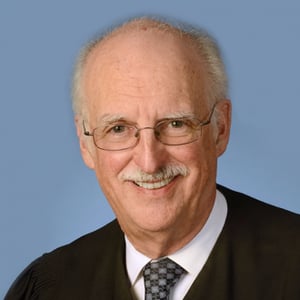
Senior Judge, United States Court of Appeals, District of Columbia Circuit
Circuit Judge Douglas H. Ginsburg was appointed to the United States Court of Appeals for the District of Columbia in 1986. After receiving his B.S. from Cornell University in 1970, and his J.D. from the University of Chicago Law School in 1973, he clerked on the D.C. Circuit and for Justice Thurgood Marshall on the United States Supreme Court. Thereafter, Judge Ginsburg was a professor at the Harvard Law School, the Deputy Assistant and then Assistant Attorney General for the Antitrust Division of the Department of Justice, as well as the Administrator of the Office of Information and Regulatory Affairs in the Office of Management and Budget. Concurrent with his service as a federal judge, Judge Ginsburg has taught at the University of Chicago Law School and the New York University School of Law. Judge Ginsburg is currently a Professor of Law at the George Mason University and a visiting professor at University College London, Faculty of Laws.
Judge Ginsburg is the Chairman of the International Advisory Board of the Global Antitrust Institute at the Law and Economics Center of the George Mason University School of Law. He also serves on the Advisory Boards of: Competition Policy International; the Harvard Journal of Law and Public Policy; the Journal of Competition Law and Economics; the Journal of Law, Economics & Policy; the Supreme Court Economic Review; the University of Chicago Law Review; the New York University Journal of Law and Liberty; and, at University College London, both the Centre for Law, Economics and Society and the Jevons Institute for Competition Law and Economics.
In 2020, Judge Ginsburg was the 11th recipient of the John Sherman Award, presented by the Antitrust Division of the Department of Justice in recognition of the awardee’s Lifetime Contributions to Antitrust Law and Policy.
In 2014, Judge Ginsburg received the Lifetime Achievement Award given annually by the Global Competition Review.
He is the author or co-author of several books and more than 100 articles on competition and regulation, including, most recently, Growing Convergence: The Limited Role of Antitrust in Standard Essential Patent Disputes, in CPI Antitrust Chronicle, Summer 2021, Vol. 1, No. 2.

Clinical Co-Director and Senior Fellow, Berkman Center for Inter, Harvard Law School
Phil Malone is a Clinical Professor of Law at Harvard Law School and the Director of the Law School’s Cyberlaw Clinic at the Berkman Center. Phil joined the Center in September, 2004 as a co-director of the Clinical Program; in the years since, he and his clinical colleagues have built the Clinic into one of the leading entities of its kind in the country.
Phil came to the Berkman Center after a little over 20 years as a federal prosecutor with theAntitrust Divisionof the U.S. Department of Justice, where he directed numerous civil and criminal investigations and prosecutions. Most of his DOJ experience over the past 10 years focused on high-technology industries, the Internet and computer software and hardware. Beginning in 1996 Phil was lead counsel in the DOJ's investigations of Microsoft, and he was the primary career counsel, along with outside counsel David Boies, in the trial ofU.S. v. Microsoft Corp.(D.D.C). Before leaving the Justice Department he was one of the lead lawyers in the government's antitrust case against Oracle Corp. Phil first became involved with the Berkman Center during the 2001-2003 academic years when he was the Victor H. Kramer Fellow at HLS. His research then focused on legal approaches to encouraging and preserving innovation in high-tech industries, evolving competition policy in the computer industry, and the use of technology in discovery and litigation.
Phil graduated long ago fromHarvard Collegeand the University of Arizona College of Law. When he is not at the Berkman Center he can often be found around Harvard'sQuincy House, where he and his wife Luci are resident tutors and kids Celia and Zulie are resident entertainment.
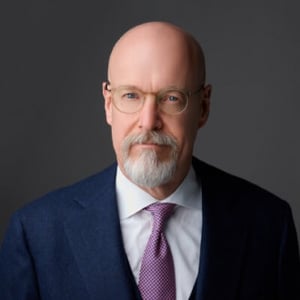
Partner, Rule Garza Howley LLP
Rick began his career in the 1980s in the Antitrust Division of the U.S. Department of Justice, becoming the Assistant Attorney General in charge of the Division from 1986-89 – the youngest person ever to be confirmed by the Senate to that position. Over the last 30+ years since leaving the Division, Rick has led the antitrust practices at several leading D.C. and New York firms including Covington & Burling and Paul, Weiss.
During his time in private practice, Rick has represented major multi-national companies and executives in virtually every industry – from, among others, agricultural and animal health (Monsanto, Elanco) to energy (ExxonMobil) to defense contractors (Northrop Grumman, United Technologies) to professional sports (NFL, NBA, MLB) to technology platforms (Microsoft, Nuance) to pharmaceutical manufacturers (Eli Lilly, Pfizer) to health insurers (Cigna). (For a complete list of industry experience, click here.)
Rick has represented his clients before the Antitrust Division, the Federal Trade Commission, State Attorneys General and major foreign antitrust regulators in connection with many of the most notable merger investigations, including Exxon’s merger with Mobil, US Airways’ merger with American Airlines, and Cigna’s acquisition of Express Scripts. At the same time, Rick has represented clients in some of most prominent government investigations of the last quarter century, including leading the team that settled the Government’s monopolization case against Microsoft and defending international companies and executives in major antitrust criminal investigations.
For four decades, Rick has been at the forefront of antitrust law and is uniquely capable of advising clients on the antitrust regulatory environment affecting the way they do business globally. As agencies and rules have evolved, he has helped clients to understand the dynamic legal framework, to assess the legal risk and rewards associated with a range of competitive strategies, and to work with government bodies to take advantage of, and ensure appropriate compliance with, the regulations governing the clients’ chosen strategy.
Principal, DeGroot Legal
Mr. DeGroot represents businesses in complex litigation, focusing on licensing, insurance, intellectual property, contract disputes, and toxic torts. He has experience in cases involving fraud, breach of contract, unfair competition, patents, business torts, mergers and acquisitions, creditors’ rights, and bankruptcy. He has extensive experience in all aspects of civil litigation, both in federal and state courts, including prejudgment remedies, discovery, trial, appeals, arbitration and mediation.
Mr. DeGroot works with clients in a variety of industries, including financial institutions, insurance, software, construction, semiconductors, and real estate.
Senior Judge, United States Court of Appeals, District of Columbia Circuit
Circuit Judge Douglas H. Ginsburg was appointed to the United States Court of Appeals for the District of Columbia in 1986. After receiving his B.S. from Cornell University in 1970, and his J.D. from the University of Chicago Law School in 1973, he clerked on the D.C. Circuit and for Justice Thurgood Marshall on the United States Supreme Court. Thereafter, Judge Ginsburg was a professor at the Harvard Law School, the Deputy Assistant and then Assistant Attorney General for the Antitrust Division of the Department of Justice, as well as the Administrator of the Office of Information and Regulatory Affairs in the Office of Management and Budget. Concurrent with his service as a federal judge, Judge Ginsburg has taught at the University of Chicago Law School and the New York University School of Law. Judge Ginsburg is currently a Professor of Law at the George Mason University and a visiting professor at University College London, Faculty of Laws.
Judge Ginsburg is the Chairman of the International Advisory Board of the Global Antitrust Institute at the Law and Economics Center of the George Mason University School of Law. He also serves on the Advisory Boards of: Competition Policy International; the Harvard Journal of Law and Public Policy; the Journal of Competition Law and Economics; the Journal of Law, Economics & Policy; the Supreme Court Economic Review; the University of Chicago Law Review; the New York University Journal of Law and Liberty; and, at University College London, both the Centre for Law, Economics and Society and the Jevons Institute for Competition Law and Economics.
In 2020, Judge Ginsburg was the 11th recipient of the John Sherman Award, presented by the Antitrust Division of the Department of Justice in recognition of the awardee’s Lifetime Contributions to Antitrust Law and Policy.
In 2014, Judge Ginsburg received the Lifetime Achievement Award given annually by the Global Competition Review.
He is the author or co-author of several books and more than 100 articles on competition and regulation, including, most recently, Growing Convergence: The Limited Role of Antitrust in Standard Essential Patent Disputes, in CPI Antitrust Chronicle, Summer 2021, Vol. 1, No. 2.
Clinical Co-Director and Senior Fellow, Berkman Center for Inter, Harvard Law School
Phil Malone is a Clinical Professor of Law at Harvard Law School and the Director of the Law School’s Cyberlaw Clinic at the Berkman Center. Phil joined the Center in September, 2004 as a co-director of the Clinical Program; in the years since, he and his clinical colleagues have built the Clinic into one of the leading entities of its kind in the country.
Phil came to the Berkman Center after a little over 20 years as a federal prosecutor with theAntitrust Divisionof the U.S. Department of Justice, where he directed numerous civil and criminal investigations and prosecutions. Most of his DOJ experience over the past 10 years focused on high-technology industries, the Internet and computer software and hardware. Beginning in 1996 Phil was lead counsel in the DOJ's investigations of Microsoft, and he was the primary career counsel, along with outside counsel David Boies, in the trial ofU.S. v. Microsoft Corp.(D.D.C). Before leaving the Justice Department he was one of the lead lawyers in the government's antitrust case against Oracle Corp. Phil first became involved with the Berkman Center during the 2001-2003 academic years when he was the Victor H. Kramer Fellow at HLS. His research then focused on legal approaches to encouraging and preserving innovation in high-tech industries, evolving competition policy in the computer industry, and the use of technology in discovery and litigation.
Phil graduated long ago fromHarvard Collegeand the University of Arizona College of Law. When he is not at the Berkman Center he can often be found around Harvard'sQuincy House, where he and his wife Luci are resident tutors and kids Celia and Zulie are resident entertainment.
Partner, Rule Garza Howley LLP
Rick began his career in the 1980s in the Antitrust Division of the U.S. Department of Justice, becoming the Assistant Attorney General in charge of the Division from 1986-89 – the youngest person ever to be confirmed by the Senate to that position. Over the last 30+ years since leaving the Division, Rick has led the antitrust practices at several leading D.C. and New York firms including Covington & Burling and Paul, Weiss.
During his time in private practice, Rick has represented major multi-national companies and executives in virtually every industry – from, among others, agricultural and animal health (Monsanto, Elanco) to energy (ExxonMobil) to defense contractors (Northrop Grumman, United Technologies) to professional sports (NFL, NBA, MLB) to technology platforms (Microsoft, Nuance) to pharmaceutical manufacturers (Eli Lilly, Pfizer) to health insurers (Cigna). (For a complete list of industry experience, click here.)
Rick has represented his clients before the Antitrust Division, the Federal Trade Commission, State Attorneys General and major foreign antitrust regulators in connection with many of the most notable merger investigations, including Exxon’s merger with Mobil, US Airways’ merger with American Airlines, and Cigna’s acquisition of Express Scripts. At the same time, Rick has represented clients in some of most prominent government investigations of the last quarter century, including leading the team that settled the Government’s monopolization case against Microsoft and defending international companies and executives in major antitrust criminal investigations.
For four decades, Rick has been at the forefront of antitrust law and is uniquely capable of advising clients on the antitrust regulatory environment affecting the way they do business globally. As agencies and rules have evolved, he has helped clients to understand the dynamic legal framework, to assess the legal risk and rewards associated with a range of competitive strategies, and to work with government bodies to take advantage of, and ensure appropriate compliance with, the regulations governing the clients’ chosen strategy.

Government Regulation in the Sharing Economy
Evan Baehr, Carlos T. Bea, Katie Biber, David DeGroot, Andrea Ambrose Lobato, Stephen R. Miller
2015 Annual Western Chapters Conference
In the innovation economy, entrants often confront increased regulatory hurdles, particularly on a state level, as...
Internet Search, Antitrust and Speech
Thomas O. Barnett, Carlos T. Bea, Ronald A. Cass, David DeGroot
The Corporations, Securities & Antitrust Practice Group, the Free Speech & Election Law Practice Group, and the San Francisco Lawyers Chapter
As the technology sector continues to thrive, scrutiny of internet search engine results also continues....
Internet Search, Antitrust and Speech
Thomas O. Barnett, Carlos T. Bea, Ronald A. Cass, David DeGroot
The Corporations, Securities & Antitrust Practice Group, the Free Speech & Election Law Practice Group, and the San Francisco Lawyers Chapter
As the technology sector continues to thrive, scrutiny of internet search engine results also continues....
U.S. v. Microsoft, 10 Years Later: Who Won, Who Lost, and Did It Matter?
David DeGroot, Douglas H. Ginsburg, Phil Malone, Charles "Rick" Rule
San Francisco Lawyers Chapter
Ten years ago, Microsoft dominated the personal computer market with its ever-expanding operating system. Today,...
U.S. v. Microsoft, 10 Years Later: Who Won, Who Lost, and Did It Matter?
David DeGroot, Douglas H. Ginsburg, Phil Malone, Charles "Rick" Rule
San Francisco Lawyers Chapter
Ten years ago, Microsoft dominated the personal computer market with its ever-expanding operating system. Today,...