
Professor, Gonzaga University School of Law
Law clerk for Justice Stephen Bistline, Idaho Supreme Court, 1979-80; in private practice with Lukins & Annis, P.S., Spokane, (1980-84); assistant professor, Oklahoma City University (1984-87); Senior Fellow, Discovery Institute, Seattle, Washington.
University of Washington School of Law
Professor Jay has taught at the UW law school since 1980. Prior to coming to Washington he taught at the University of North Carolina for two years. Before entering teaching, Professor Jay clerked for two years, first with the U.S. District Court for the District of Columbia and then for U.S. Supreme Court Justice Warren E. Burger. His teaching and research interests include constitutional law and constitutional history. Professor Jay is the author of Most Humble Servants: The Advisory Role of Early Judges (Yale 1997). He has worked extensively to assure the reproductive rights of women, particularly access to safe and legal abortions. During 1984-85 he was a visiting professor at Georgetown University Law Center.
Washington State Supreme Court
Richard B. Sanders was elected to the Washington Supreme Court in 1995. During his 26 years of legal practice prior to becoming a Justice of the Supreme Court, Justice Sanders litigated more than 100 appeals (no fewer than 60 of which resulted in published opinions). Since coming to the Supreme Court he has become one of its most prolific authors and is recognized nationally for his published opinions and other writings. See www.JusticeSanders.com.
As a private practitioner he championed the civil rights of his clients and as a Justice he regards protecting our constitutionally guaranteed liberties as the first duty of our highest court. Justice Sanders believes the court must protect all the legal rights of all the citizens who come before it all the time. "We have no second class citizens," he adds. His special interest is the Washington State Constitution, and he often quotes his favorite passage: "[G]overnments . . . are established to protect and maintain individual rights." Const. art. I, § 1.
Justice Sanders is a native of Tacoma and spent the best years of his childhood there. He moved to Seattle where he graduated from Highline High School. While at Highline High he was elected president of the school's debate club, and he earned the rank of Eagle Scout. Justice Sanders received his Bachelor of Arts degree from the University of Washington after participating in the political science honors program and playing[1] in the Rose Bowl. He thereafter earned his J.D. in 1969 from the University of Washington School of Law. During his years at the University, Justice Sanders wrote "The Devil's Advocate," a weekly column of opinion in The Daily, the student newspaper.
Since taking his seat on the Supreme Court, Justice Sanders has served as an adjunct professor teaching appellate advocacy at the UW School of Law; has written articles for professional journals and texts; and has presented lectures to local, state, and national organizations on diverse topics including civil liberties, land use, the Washington State Constitution, legal ethics, and Abraham Lincoln, among others.
Justice Sanders enjoys inviting students and community groups to tour the Temple of Justice to visit with him. He is the father of Laura Sanders, a 2009 summa cum laude graduate of the University of San Francisco. Laura is enthusiastic in all her endeavors and is the light of her daddy's life.
Wake County District Court Judge, North Carolina
Appeals Referee, North Carolina Employment Security Commission
North Carolina Court of Appeals
Senior Research Assistant, Supreme Court of North Carolina
Member, Moore & Van Allen PLLC
A former North Carolina state representative and senator, as well as Supreme Court justice and law school dean, Bill Whichard applies his extensive judicial and legislative experience in advising and mentoring MVA litigation attorneys, focusing on appellate litigation for Moore & Van Allen clients.
He also assists with evaluating new matters, developing arguments, reviewing pleadings and documents, and supplying other trial support, giving MVA clients seasoned counsel that can materially affect dispute outcomes.
He has also served as a mediator and arbitrator in major, multimillion-dollar litigation.
Mr. Whichard has lectured and written extensively on North Carolina politics, law and history. Further, his commitment to public service and community betterment has earned him numerous honors and recognitions during his distinguished career.
North Carolina Court of Appeals
Wake County District Court Judge, North Carolina
Appeals Referee, North Carolina Employment Security Commission
North Carolina Court of Appeals
Senior Research Assistant, Supreme Court of North Carolina
Member, Moore & Van Allen PLLC
A former North Carolina state representative and senator, as well as Supreme Court justice and law school dean, Bill Whichard applies his extensive judicial and legislative experience in advising and mentoring MVA litigation attorneys, focusing on appellate litigation for Moore & Van Allen clients.
He also assists with evaluating new matters, developing arguments, reviewing pleadings and documents, and supplying other trial support, giving MVA clients seasoned counsel that can materially affect dispute outcomes.
He has also served as a mediator and arbitrator in major, multimillion-dollar litigation.
Mr. Whichard has lectured and written extensively on North Carolina politics, law and history. Further, his commitment to public service and community betterment has earned him numerous honors and recognitions during his distinguished career.
North Carolina Court of Appeals
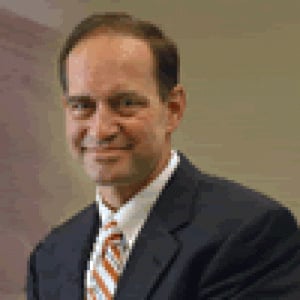
Frank L. Maraist Professor of Law, Louisiana State University Law Center
Professor Corbett teaches and writes primarily in the area of labor and employment law. He joined the law faculty of the LSU Law Center in 1991, after practicing in Birmingham, Alabama with Burr & Forman. Professor Corbett has been a visiting faculty member at two law schools: William & Mary spring semester 1996, and the University of Georgia fall semester 2004. He served as Interim Vice Chancellor and then Vice Chancellor for Academic Affairs at the LSU Law Center May 1997 to January 2000. Professor Corbett served as Executive Director of the Louisiana Judicial College 1998-2000. He has served as Executive Director of the Louisiana Association of Defense Counsel since January 2001.
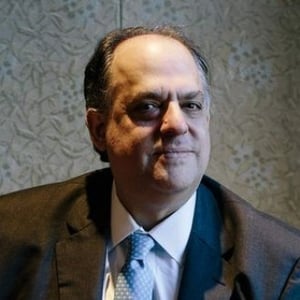
Director of Litigation and Senior Attorney, Hamilton Lincoln Law Institute
Theodore H. Frank is director at the Hamilton Lincoln Law Institute and the Center for Class Action Fairness. Frank founded and ran CCAF as a non-profit, public interest law firm in 2009.
Frank has won several landmark appeals and tens of millions of dollars for consumers and other plaintiffs through his class action work. Adam Liptak of The New York Times calls Frank “the leading critic of abusive class action settlements” and the American Lawyer Litigation Daily referred to him as “the indefatigable scourge of underwhelming class action settlements.”
Previously, Frank clerked for the Honorable Frank H. Easterbrook on the Seventh Circuit Court of Appeals, and was a litigator at firms in Washington and Los Angeles and a resident fellow at the American Enterprise Institute. Frank is a frequent public speaker and has testified before Congress multiple times on legal issues. He has been profiled by The Wall Street Journal, Forbes, GQ, and the ABA Journal, among other publications.
In 2008, Frank was elected to membership in the American Law Institute. He also serves on the Executive Committee of the Federalist Society Litigation Practice Group. Frank graduated from The University of Chicago Law School in 1994 with high honors and as a member of the Order of the Coif and the Law Review. He is a member of the District of Columbia Bar and the state bars of California and Illinois.
Frank L. Maraist Professor of Law, Louisiana State University Law Center
Professor Corbett teaches and writes primarily in the area of labor and employment law. He joined the law faculty of the LSU Law Center in 1991, after practicing in Birmingham, Alabama with Burr & Forman. Professor Corbett has been a visiting faculty member at two law schools: William & Mary spring semester 1996, and the University of Georgia fall semester 2004. He served as Interim Vice Chancellor and then Vice Chancellor for Academic Affairs at the LSU Law Center May 1997 to January 2000. Professor Corbett served as Executive Director of the Louisiana Judicial College 1998-2000. He has served as Executive Director of the Louisiana Association of Defense Counsel since January 2001.
Director of Litigation and Senior Attorney, Hamilton Lincoln Law Institute
Theodore H. Frank is director at the Hamilton Lincoln Law Institute and the Center for Class Action Fairness. Frank founded and ran CCAF as a non-profit, public interest law firm in 2009.
Frank has won several landmark appeals and tens of millions of dollars for consumers and other plaintiffs through his class action work. Adam Liptak of The New York Times calls Frank “the leading critic of abusive class action settlements” and the American Lawyer Litigation Daily referred to him as “the indefatigable scourge of underwhelming class action settlements.”
Previously, Frank clerked for the Honorable Frank H. Easterbrook on the Seventh Circuit Court of Appeals, and was a litigator at firms in Washington and Los Angeles and a resident fellow at the American Enterprise Institute. Frank is a frequent public speaker and has testified before Congress multiple times on legal issues. He has been profiled by The Wall Street Journal, Forbes, GQ, and the ABA Journal, among other publications.
In 2008, Frank was elected to membership in the American Law Institute. He also serves on the Executive Committee of the Federalist Society Litigation Practice Group. Frank graduated from The University of Chicago Law School in 1994 with high honors and as a member of the Order of the Coif and the Law Review. He is a member of the District of Columbia Bar and the state bars of California and Illinois.
North Carolina Court of Appeals
Wake County District Court Judge, North Carolina
Appeals Referee, North Carolina Employment Security Commission
North Carolina Court of Appeals
Senior Research Assistant, Supreme Court of North Carolina
North Carolina Court of Appeals
Wake County District Court Judge, North Carolina
Appeals Referee, North Carolina Employment Security Commission
North Carolina Court of Appeals
Senior Research Assistant, Supreme Court of North Carolina
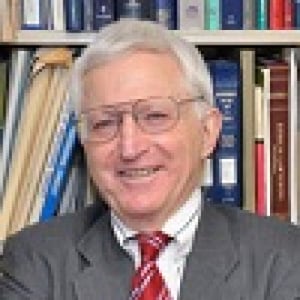
Professor of Law, Yeshiva University Benjamin N. Cardozo School of Law
Professor Brickman teaches Contracts, Professional Responsibility, and Land Use, among other courses. His areas of expertise include legal ethics, contingency fees, mass torts, and asbestos litigation. His writings on these and other subjects are widely cited and he is frequently quoted in the press.
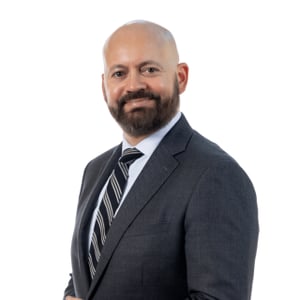
Milton R. Underwood Chair in Free Enterprise, Vanderbilt University Law School
Brian Fitzpatrick is the Milton R. Underwood Chair in Free Enterprise and Professor of Law at Vanderbilt Law School, where his research focuses on class action litigation, federal courts, judicial selection, and constitutional law. He is best known for his empirical studies of class action settlements as well as his book The Conservative Case for Class Actions (University of Chicago Press, 2019). Professor Fitzpatrick joined Vanderbilt's law faculty in 2007 after serving as the John M. Olin Fellow at New York University School of Law. He graduated first in his class from Harvard Law School and went on to clerk for Judge Diarmuid O'Scannlain on the U.S. Court of Appeals for the Ninth Circuit and Justice Antonin Scalia on the U.S. Supreme Court. After his clerkships, Professor Fitzpatrick practiced commercial and appellate litigation for several years at Sidley Austin in Washington, D.C., and served as Special Counsel for Supreme Court Nominations to U.S. Senator John Cornyn. Before earning his law degree, Fitzpatrick graduated summa cum laude with a bachelor's of science in chemical engineering from the University of Notre Dame. He has received the Hall-Hartman Outstanding Professor Award, which recognizes excellence in classroom teaching, for his Civil Procedure and Federal Courts courses.
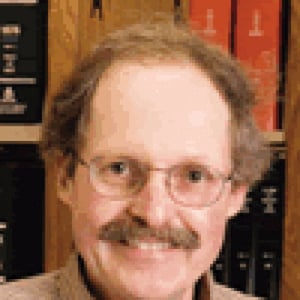
Professor of Law, Western New England College School of Law
Prior to coming to Western New England College in 1980, Professor Miller worked for the National Senior Citizens Law Center, Los Angeles, California, specializing in social security and private pension litigation in the federal courts. Before that, he was an attorney with the U.S. Department of Health, Education, and Welfare. He teaches constitutional law and other public law and litigation related subjects. Professor Miller's primary areas of interest focus on the challenges to the rule of law that have emerged as a result of the attacks of September 11, 2001, and on legal issues that especially affect poor people. He is president of No More Guantanamos, a non-profit advocacy group, and serves on the board of the Rosenberg Fund for Children.
Professor of Law, Yeshiva University Benjamin N. Cardozo School of Law
Professor Brickman teaches Contracts, Professional Responsibility, and Land Use, among other courses. His areas of expertise include legal ethics, contingency fees, mass torts, and asbestos litigation. His writings on these and other subjects are widely cited and he is frequently quoted in the press.
Milton R. Underwood Chair in Free Enterprise, Vanderbilt University Law School
Brian Fitzpatrick is the Milton R. Underwood Chair in Free Enterprise and Professor of Law at Vanderbilt Law School, where his research focuses on class action litigation, federal courts, judicial selection, and constitutional law. He is best known for his empirical studies of class action settlements as well as his book The Conservative Case for Class Actions (University of Chicago Press, 2019). Professor Fitzpatrick joined Vanderbilt's law faculty in 2007 after serving as the John M. Olin Fellow at New York University School of Law. He graduated first in his class from Harvard Law School and went on to clerk for Judge Diarmuid O'Scannlain on the U.S. Court of Appeals for the Ninth Circuit and Justice Antonin Scalia on the U.S. Supreme Court. After his clerkships, Professor Fitzpatrick practiced commercial and appellate litigation for several years at Sidley Austin in Washington, D.C., and served as Special Counsel for Supreme Court Nominations to U.S. Senator John Cornyn. Before earning his law degree, Fitzpatrick graduated summa cum laude with a bachelor's of science in chemical engineering from the University of Notre Dame. He has received the Hall-Hartman Outstanding Professor Award, which recognizes excellence in classroom teaching, for his Civil Procedure and Federal Courts courses.
Professor of Law, Western New England College School of Law
Prior to coming to Western New England College in 1980, Professor Miller worked for the National Senior Citizens Law Center, Los Angeles, California, specializing in social security and private pension litigation in the federal courts. Before that, he was an attorney with the U.S. Department of Health, Education, and Welfare. He teaches constitutional law and other public law and litigation related subjects. Professor Miller's primary areas of interest focus on the challenges to the rule of law that have emerged as a result of the attacks of September 11, 2001, and on legal issues that especially affect poor people. He is president of No More Guantanamos, a non-profit advocacy group, and serves on the board of the Rosenberg Fund for Children.
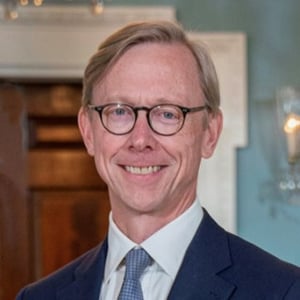
Founder, Latitude, LLC
Brian Hook is the founder of Latitude, LLC, an international strategic consulting firm based in Washington, DC.
Mr. Hook worked on the Romney campaign as senior advisor on foreign policy. He chaired the foreign policy and national security task forces of the Romney Readiness Project. From 2010-2011, he was the foreign policy director of Governor Tim Pawlenty’s presidential campaign.
Mr. Hook served in a number of positions during the Bush Administration, including Assistant Secretary of State for International Organizations; Senior Advisor to the U.S. Ambassador to the United Nations; Special Assistant to the President for Policy, Office of the Chief of Staff; and Counsel, Office of Legal Policy, at the Justice Department.
From 1999-2003, he practiced corporate law at Hogan & Hartson in Washington, D.C.
Before practicing law, he served as a policy advisor to Iowa Governor Terry Branstad and to U.S. Congressman James Leach.
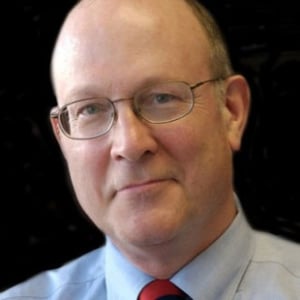
Professor Emeritus of Law, Antonin Scalia Law School, George Mason University
Jeremy A. Rabkin is a Professor Emeritus of Law at the Antonin Scalia Law School, George Mason University. Before joining the faculty in June 2007, he was for over two decades a professor in the Department of Government at Cornell University. Professor Rabkin serves on the board of directors of the Center for Individual Rights, a public interest law firm based in Washington, D.C. Previously he was a board member of the U.S. Institute of Peace and the board of academic advisors of the American Enterprise Institute.
Professor Rabkin’s books include Law Without Nations? (Princeton University Press, 2005). He authored “If You Need a Friend, Don’t Call a Cosmopolitan,” a chapter in Varieties of Sovereignty and Citizenship (Sigal R. Ben-Porath & Rogers M. Smith eds., University of Pennsylvania Press, 2012). His articles have appeared in major law reviews and political science journals and his journalistic contributions in a range of magazines and newspapers, including the Washington Post and the Wall Street Journal.
Professor of Law, Case Western Reserve University School of Law
Michael Scharf is Professor of Law and Director of the Frederick K. Cox International Law Center at Case Western Reserve University School of Law. From October 2004-March 2005, Professor Scharf served as a member of the elite international team of experts which provided training to the judges and prosecutors of the Iraqi Special Tribunal. In February 2005, Professor Scharf and the Public International Law and Policy Group, a Non-Governmental Organization he co-founded, were nominated for the Nobel Peace Prize by six governments and the Prosecutor of an International Criminal Tribunal for the work they have done to help in the prosecution of major war criminals, such as Slobodan Milosevic, Charles Taylor, and Saddam Hussein.
During the first Bush and Clinton Administrations, Professor Scharf served in the Office of the Legal Adviser of the U.S. Department of State, where he held the positions of Counsel to the Counter-Terrorism Bureau, Attorney-Adviser for Law Enforcement and Intelligence, Attorney-Adviser for United Nations Affairs, and delegate to the United Nations General Assembly and to the United Nations Human Rights Commission. In 1993, he was awarded the State Department's Meritorious Honor Award "in recognition of superb performance and exemplary leadership" in relation to his role in the establishment of the International Criminal Tribunal for the former Yugoslavia.
A graduate of Duke University School of Law, Professor Scharf is the author of over fifty scholarly articles and seven books, including Balkan Justice, which was nominated for the Pulitzer Prize in 1998, The International Criminal Tribunal for Rwanda, which was awarded the American Society of International Law's Certificate of Merit for the Outstanding book in International Law in 1999, Peace with Justice, which won the International Association of Penal Law Book of the Year Award for 2003, and casebooks on The Law of International Organizations and International Criminal Law.
Professor Scharf has testified as an expert before the U.S. Senate Foreign Relations Committee; his Op Eds have been published by the Washington Post, Los Angeles Times, Boston Globe, Christian Science Monitor, and International Herald Tribune; and he has appeared on ABC World News Tonight with Peter Jennings, Nightline with Ted Koppel, The O'Reilly Factor, The NewsHour with Jim Lehrer, The Charlie Rose Show, the BBC's The World, CNN, and National Public Radio.
In 2002, Professor Scharf established the War Crimes Research Office at Case Western Reserve University School of Law, which provides research assistance to the Prosecutors of the International Criminal Tribunal for Rwanda, the Special Court for Sierra Leone, the International Criminal Court, and the Iraqi Special Tribunal on issues pending before those international tribunals. Copies of over seventy of these research memos are available on the Frederick K. Cox International Law Center War Crimes Research Portal, at: http://law.case.edu/war-crimes-research-portal.
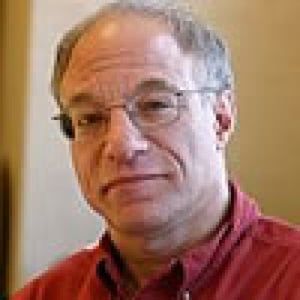
Director, International Justice Program, Human Rights Watch
Richard Dicker, director of Human Rights Watch's international justice program since it was founded in 2001, has worked at Human Rights Watch since 1991. He started working on international justice issues in 1994 when Human Rights Watch attempted to bring a case before the International Court of Justice charging the government of Iraq with genocide against the Kurds. Dicker later led the Human Rights Watch multi-year campaign to establish the International Criminal Court (ICC). He continues to be closely involved on issues that are important at the ICC. He has also spent the past few years leading advocacy efforts urging the creation of effective accountability mechanisms. He monitored the Slobodan Milosevic trial in The Hague and made many trips to Iraq before and at the start of Saddam Hussein's trial. A former civil rights attorney in New York, Dicker graduated from New York University Law School and received his LLM from Columbia University.
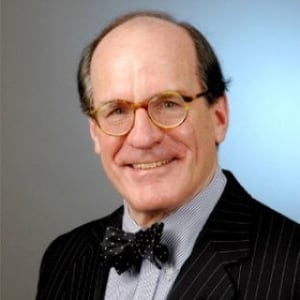
Retired Partner, Sullivan & Cromwell LLP
Upon his resignation as the Legal Adviser of the U.S. Department of State in January 1993, Mr. Williamson rejoined Sullivan & Cromwell's Washington, D.C. office. He originally joined the Firm in 1964 after graduating from New York University School of Law, where he was an editor of the Law Review. He became a partner of the Firm in 1971, moved to its London office in 1976, returned to its New York office in 1979, moved to its Washington, D.C. office in 1988 and became Of Counsel in 2007. In 2018, he retired from the firm.
At Sullivan & Cromwell, Mr. Williamson engaged in a broad and wide-ranging domestic and international financing and transactions practice, as well as advice with respect to corporate governance issues, the United States’ economic sanctions laws, the ethics rules applicable to government officials and the immunities of foreign sovereigns and international organizations.
Mr. Williamson has been an active participant on panels and other forums involving public international law and national security issues, such as the domestic and international bases for the use of force, the role of the United States with respect to the International Criminal Court, the law of the sea and the application of international legal principles in the war against terrorism.
Mr. Williamson is a member of the Council on Foreign Relations and a former member of the Executive Council of the American Society of International Law, the Executive Committees of the Business and Advisory Committee (BIAC) to the OECD and the U.S. Council for International Business, the United States Advisory Board of NTT DoCoMo, Inc. and the Board of Directors of Triton Oil & Gas Limited.
Mr. Williamson has served on the Boards of Regents and Trustees of the University of the South and as chair of the Board of Regents. He is currently a member of the Board of Directors of the American Council of Trustees and Alumni, a higher education watchdog.

Washington Supreme Court Position 6: A Debate
Peter Callaghan, David K. DeWolf, Stewart Jay, Richard B. Sanders, Charlie Wiggins
Puget Sound Lawyers Chapter
Candidates for the Washington State Supreme Court answered questions from a panel of experts and the...
North Carolina Appellate Judicial Candidates Forum
Rick Elmore, Martha Geer, Jane Gray, Barbara Jackson, Dean R. Poirier, Robert W. Shaw, Sanford Steelman, Steven Walker, Willis Whichard, Ann Marie Calabria
Triangle Lawyers Chapter
Candidates for the North Carolina Supreme Court and Court of Appeals answered questions from the...
North Carolina Appellate Judicial Candidates Forum
Rick Elmore, Martha Geer, Jane Gray, Barbara Jackson, Dean R. Poirier, Robert W. Shaw, Sanford Steelman, Steven Walker, Willis Whichard, Ann Marie Calabria
Triangle Lawyers Chapter
Candidates for the North Carolina Supreme Court and Court of Appeals answered questions from the...
The Law of McDonald's: Spilled Coffee, Obesity Laws, and Prank Phone Calls
William Corbett, Theodore "Ted" Frank, Mark Andrew Hill
Louisiana State Student Chapter
On September 9, 2010, the Louisiana State Student Chapter of the Federalist Society hosted this...
The Law of McDonald's: Spilled Coffee, Obesity Laws, and Prank Phone Calls
William Corbett, Theodore "Ted" Frank, Mark Andrew Hill
Louisiana State Student Chapter
On September 9, 2010, the Louisiana State Student Chapter of the Federalist Society hosted this...
North Carolina Judicial Candidate Forum
Bob Buckley, Ann Marie Calabria, Rick Elmore, Martha Geer, Jane Gray, Barbara Jackson, Dean R. Poirier, Sanford Steelman, Steven Walker
Piedmont Triad Lawyers Chapter
Candidates for the North Carolina Supreme Court and Court of Appeals answered questions from moderator...
North Carolina Judicial Candidate Forum
Bob Buckley, Ann Marie Calabria, Rick Elmore, Martha Geer, Jane Gray, Barbara Jackson, Dean R. Poirier, Sanford Steelman, Steven Walker
Piedmont Triad Lawyers Chapter
Candidates for the North Carolina Supreme Court and Court of Appeals answered questions from moderator...
Do Class Action Lawyers Make Too Much Money?
Lester Brickman, Brian T. Fitzpatrick, Isaac Mass, Bruce K. Miller
Western New England Student Chapter
On September 1, 2010, the Western New England Student Chapter of the Federalist Society hosted...
Do Class Action Lawyers Make Too Much Money?
Lester Brickman, Brian T. Fitzpatrick, Isaac Mass, Bruce K. Miller
Western New England Student Chapter
On September 1, 2010, the Western New England Student Chapter of the Federalist Society hosted...
The International Criminal Court After Kampala: Should the United States Change its Relationship with the ICC? - Audio/Video
Brian H. Hook, Jeremy A. Rabkin, Michael Scharf, Richard Dicker, Edwin D. Williamson
International & National Security Law Practice Group
The Assembly of States Parties to the Rome Statute (which created the International Criminal Court)...