Cutting Through Government Action in COVID-19: Reasonable or Arbitrary?
A Regulatory Transparency Project Fourth Branch Video

A Regulatory Transparency Project Fourth Branch Video
In March of 2020, governors across the United States implemented "lockdowns" to combat the COVID-19 pandemic, limiting the operation of many businesses in an attempt to slow the spread of the virus. Many of these measures have been relaxed or eliminated over the last year, but most states still have restrictions of some kind in place.
These restrictions have drawn criticism on both substantive and procedural grounds – is it reasonable to force many businesses to close (some permanently) rather than allow them to attempt to operate in a virus-safe manner? And, even if the restrictions are good policy, should governors have the power to enact them unilaterally without input from state legislatures?
On the flip side, many argue that despite their immediate economic costs, the lockdowns were necessary to stem the spread of a virus that has claimed more than 550,000 American lives. Additionally, many contend that governors are uniquely positioned to respond rapidly to the ever-changing landscape of a pandemic.
In this Fourth Branch video, legal experts and business owners affected by the restrictions weigh in on the debate.
Visit our website – https://www.RegProject.org – to learn more, view all of our content, and connect with us on social media.
* * * * *
As always, the Federalist Society takes no position on particular legal or public policy issues; all expressions of opinion are those of the speaker.

Co-Owner, Salon Benders
Jessie has been working in the beauty and wellness industry since 2003 as a teacher and stylist alongside some of the industry's finest (Paul Mitchell, "THE SCHOOL," and The Aveda Institute, Los Angeles). She established a strong foundation and practice, specializing in curly hair, color, and natural hair textures. She is an excellent craftswoman who also loves shags, razor cuts, and “lived-in” easy to style hair. Some call her a “hair healer” for her intuitive ability to know exactly what your hair needs to be in optimal shape. Jessie also studied special effects makeup in 2008. That experience opened her eyes to the infinite possibilities of human presentation. She can tell you exactly what color palette will be flattering on you. Whether its clothes, makeup, or hair, she’s got your back. In 2018, Jessie opened Salon Benders allowing her to incorporate her knowledge of hair, makeup, abstract painting, reiki, and LGBTQ/POC matters to create a one of a kind salon experience.
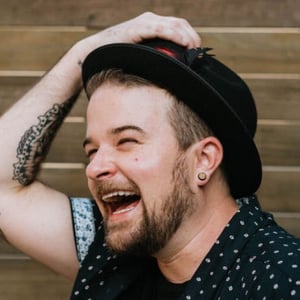
Owner/Organizer, Salon Benders
Cal uses his background in education, innovation, and community building to influence and disrupt.
He thrives in collaborative environments that value equity, efficiency, and strong communication. With a knack for problem solving and project management, Cal brings a growth-oriented mindset and enjoy working toward goals. His background is in education and leading teams of educators, and he has developed and implemented training on operations, inclusivity, and more–building and guiding teams that are healthy and effective.
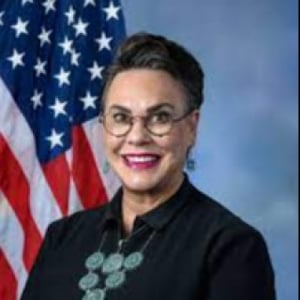
U.S. Representative, Wyoming
Congresswoman Harriet Hageman represents the state of Wyoming in the U.S. House of Representatives. She grew up on a ranch, attended Casper College on a livestock judging scholarship and earned both her bachelor's degree and law degree from the University of Wyoming. A litigator for 34 years, Harriet is nationally known for challenging federal overreach, for protecting water and property rights, for exposing federal land and wildlife mismanagement, and for fighting back against the unconstitutional and unlawful acts of unelected bureaucrats. Harriet has extensive experience engaging in complex trials against federal agencies and has been admitted to practice in several states as well as the United States Supreme Court.
In her freshman term in the 118th Congress, Harriet has been selected to serve on the House Natural Resources committee where she is Chair of the Subcommittee on Indian and Insular Affairs, and also serves on the Subcommittee on Water, Wildlife, and Fisheries. Representative Hageman also serves on the Judiciary Committee and Subcommittees on the Constitution and Limited Government; the Subcommittee on the Administrative State, Regulatory Reform, and Antitrust; and the Select Committee on the Weaponization of the Federal Government. She has shown her support for American energy independence by serving as Co-Chair of the Congressional Coal Caucus.
Legislation sponsored by Representative Hageman has been focused on reining in the regulatory state, ending the weaponization of our federal government and its proxies against American citizens, and ending the de facto moratorium on American energy production.
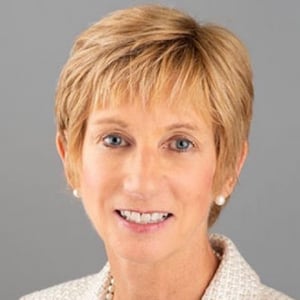
Director, Capital Center for Law & Policy Justice and Anthony M. Kennedy Professor of Law, University of the Pacific
Professor Jacobs has been a Professor at McGeorge since 1993. During this time, she has authored a substantial and important body of scholarship on constitutional doctrine, governance and national security, and particularly on government speech. Professor Jacobs' articles have appeared in law journals at Yale, Michigan, Illinois, Ohio State, UC Davis, Rutgers, Tulane, Florida and Indiana. Her separate pieces of scholarship on bioterrorism and national security have appeared as invited submissions to Homeland Security: Law and Policy (William Nicholson, ed. 2005), Encyclopedia of Bioterrorism Defense (J. Wiley, 2005), the Journal of National Security Law & Policy, and the interdisciplinary journal, Biosecurity & Bioterrorism: Biodefense Strategy, Practice & Science. Professor Jacobs is co-author of law review pieces addressing law reform in Indonesia and two volumes in the McGeorge Global Issues series designed to bring international and comparative law into core law school classes, Global Issues in Constitutional Law and Global Issues in Freedom of Speech and Religion.
Currently, Professor Jacobs serves as Director of the McGeorge Capital Center for Law & Policy, dedicated to studying issues of federalism and government structure and aiding government policymakers who must navigate their complexities. Before this appointment, Professor Jacobs served as Director of McGeorge's Institute for Development of Legal Infrastructure. Located within the McGeorge Center for Global Business and Development, the Institute generates scholarship on development issues and provides service to developing nations seeking to strengthen their legal systems. In February 2008, Professor Jacobs taught a course at Zhejiang Gongshang University in Hangzhou, China, as part of a USAID legal education grant administered by the Institute. Professor Jacobs has also led the McGeorge Bioterrorism and Public Health Initiative, which focused on introducing issues related to those topics into the law school curriculum. Professor Jacobs received her BA from Wesleyan University, graduated magna cum laude from the University of Michigan Law School, and served as a law clerk to United States Supreme Court Justice Lewis F. Powell, Jr.