
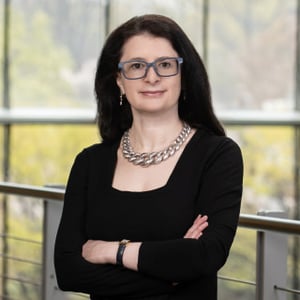
Senior Associate General Counsel/Senior Legal Advisor, Office of Management and Budget/CFPB
Victoria Dorfman is a Senior Associate General Counsel at the Office of Management and Budget and is a Senior Legal Advisor at the Consumer Financial Protection Bureau. At the OMB, she advises on constitutional and statutory issues. At the CFPB, she is primarily responsible for Enforcement, Supervision, Fair Lending, Oversight, and the Bureau’s litigation.
Prior to entering government service, Victoria was a partner at Jones Day, in Washington, D.C. and in New York, where she represented clients in appellate and complex commercial litigation in U.S. courts and in international arbitration. She has successfully briefed cases at all stages of litigation and argued before federal and state courts of appeals.
Victoria's areas of in-depth experience include jurisdiction and civil procedure, arbitration, bankruptcy, antitrust, and general commercial litigation. She maintained an active First Amendment Establishment and Free Exercise practice and represents religious institutions. Victoria's representations included obtaining unanimous victories in intergovernmental tax immunity and forum non conveniens cases in the U.S. Supreme Court; bankruptcy confirmations, including in appellate and Supreme Court proceedings, of Chrysler, the City of Detroit, Caesar's, Adelphia, and Relativity Media; UNCITRAL and BIT arbitrations; victories for Bayer in antitrust patent challenges to agreements regarding a blockbuster drug's production; and a damages award for Chevron against the government, including a sanction for bad faith litigation conduct.
Prior to joining Jones Day, Victoria clerked for Justice Clarence Thomas of the United States Supreme Court and Judge Michael J. Luttig of the Fourth Circuit Court of Appeals. Victoria received her A.B. from Harvard College (cum laude) and J.D. from Harvard Law School (magna cum laude), where she was Articles, Books and Commentaries editor on Harvard Law Review.
Victoria is a native speaker of Russian, and is proficient in French and Portuguese. She published articles on Religion Clauses, bankruptcy, federal jurisdiction and statutory interpretation, and is a contributing author and editor of The Practitioner's Guide to Appellate Advocacy.
Litigation Associate, Winston & Strawn LLP
Jacob R. Loshin is a litigation associate in Winston & Strawn's Washington, D.C. office and a member of the firm’s nationwide appellate and critical motions practice.
Before joining Winston & Strawn, Mr. Loshin served as a law clerk to the Hon. Jerry E. Smith of the U.S. Court of Appeals for the Fifth Circuit. He has also worked in business strategy and development for an education technology company.
While at Yale Law School, Mr. Loshin was senior editor of the Yale Law Journal and editor-in-chief of the Yale Journal on Regulation.
B.A., magna cum laude, in Philosophy, Politics, and Economics, Claremont McKenna College
J.D., Yale Law School
San Diego Councilman, District 5
On June 3, 2008 Carl DeMaio was elected to the San Diego City Council to represent District 5. DeMaio made history as a non-incumbent taking a Council seat by the widest margin in a primary-winning 66% of the vote.
Prior to winning his seat on the City Council, DeMaio was best known in San Diego as the City Hall Watchdog. He helped uncover the city's financial and ethical problems. After years of prodding city leaders to enact reforms, a frustrated DeMaio decided to run for City Council.
DeMaio's pledge to the voters was simple: Clean Up City Hall. His platform includes balancing the budget, reforming the pension system, fixing crumbling infrastructure, and restoring ethics and accountability to every level of city government.
Refusing to shed his watchdog roots, DeMaio pledges "to continue to serve as the eyes and ears of the taxpayers on the City Council."
Outside of his work as a local government watchdog, DeMaio was a businessman who founded two multi-million dollar companies by the age of 30. In 2000, he founded the Performance Institute, a non-partisan, private think tank dedicated to reforming government through the principles of performance, transparency, competition and accountability. DeMaio built the organization into the largest government reform think tank in the nation and the leading authority on performance-based management in government, law enforcement, non-profits and schools.
In 2003, DeMaio founded the American Strategic Management Institute (ASMI), which provides training and education in corporate financial and performance management. DeMaio sold both companies to Thompson Publishing Group in late 2007 so he could focus his efforts on turning the City of San Diego around.
Carl DeMaio is an active member of the community helping with numerous non-profit organizations in San Diego. He serves as Chairman of San Diego Citizens for Accountable Government, helping sponsor ballot initiatives and voter education efforts each election.
DeMaio also serves on the Board of Directors of the SAFENOWProject - a non-profit dedicated to creating, promoting and advocating for community-based strategies and resources to eliminate child sexual abuse. DeMaio also is active in raising money for a number of charitable causes, including Rotary, Mama's Kitchen, and the Susan G. Komen Breast Cancer Foundation.
DeMaio has put constituent service as a top priority in his Council office and is working to improve the quality of neighborhoods in his District, which include Rancho Bernardo, Carmel Mountain Ranch, Sabre Springs, Mira Mesa, Scripps Ranch, San Pasqual Valley, and Sorrento Mesa.

Dr. John Eastman is the former Henry Salvatori Professor of Law & Community Service and former Dean at Chapman University's Dale E. Fowler School of Law, where he had been a member of the faculty since 1999, specializing in Constitutional Law, Legal History, and Property. He is a founding director of the Center for Constitutional Jurisprudence, a public interest law firm affiliated with the Claremont Institute that he founded in 1999. He has a Ph.D. in Government from the Claremont Graduate School and a J.D. from the University of Chicago Law School, and a B.A. in Politics and Economics from the University of Dallas. He serves as the Chairman of the Board of the National Organization for Marriage.
Prior to joining the Chapman law faculty, Dr. Eastman served as a law clerk to the Honorable Clarence Thomas, Associate Justice, Supreme Court of the United States, and to the Honorable J. Michael Luttig, Judge, United States Court of Appeals for the Fourth Circuit and practiced law with the national law firm of Kirkland & Ellis. Dr. Eastman has also represented numerous clients in important constitutional law matters and has argued before the Supreme Court. On behalf of the Claremont Institute Center for Constitutional Jurisprudence, he has participated as amicus curiae before the Supreme Court of the United States, U.S. Courts of Appeals, and State Supreme Courts in more than one hundred cases of constitutional significance, including Boy Scouts of America v. Dale, Zelman v. Simmons-Harris (the school vouchers case), Kelo v. New London, Ct. (eminent domain), and Van Orden v. Perry (the 10 Commandments case). He has also appeared as an expert legal commentator on numerous television and radio programs, including C-SPAN, Fox News, PBS, NewsHour, and The O'Reilly Factor.
San Diego City Attorney
Jan Goldsmith has been an attorney since 1976 specializing in business litigation. He was appointed San Diego Superior Court Judge in 1998 and retired in December of 2008 to assume the office of San Diego City Attorney. Mr. Goldsmith spent his first 6 years on the Bench handling criminal and civil trials and his final years assigned to an independent civil calendar.
Prior to his appointment, Mr. Goldsmith served three terms in the California State Assembly representing the Northern San Diego City District stretching from Mira Mesa to the Escondido border. During his career in the Assembly, he held various leadership positions including Majority Floor Leader, Member of Rules Committee, Chairman of the Banking and Finance Committee and Vice Chairman of Judiciary. Jan has taught as Adjunct Professor of Law at three San Diego law schools on subjects including municipal government law and prosecution of political crimes. He also served as Mayor of Poway.
Mr. Goldsmith graduated magna cum laude from University of San Diego in 1976. He is married to Christine, and they have raised three children, now ages 28, 25 and 20.
Former San Diego Superior Court Judge
Hon. Michael B. Orfield (Ret.) was a jurist for 20 years, mostly as a civil independent calendar judge. His experience and expertise as a civil judge spread widely across such diverse areas as catastrophic personal injury, medical and legal malpractice, product and construction defects, breach of warranties, easements, breach of contract, wrongful death and a variety of business disputes. His strength as a mediator "...comes from being able to call upon a broad plain of knowledge, coupled with an attention to detail, empathy for the participants, and a conviction that the resolution should be their own."
Judge Orfield retired as a member of the statewide Continuing Judicial Education Committee, and still has a passion for teaching. He currently teaches "Trying the Complicated Case: From Trial Readiness to Verdict" as well as the LexisNexis Jury Instruction computer program for both civil and criminal jury instructions. He has also taught "Leading Organizational Change" as well as the week long "Civil Overview for Judges".
Judge Orfield was appointed by Chief Justice Ronald George to the original Task Force on Civil Jury Instructions and then to the Advisory Committee on Civil Jury Instructions. Justice George also appointed him a member of the prestigious Judicial Council of the State of California. Judge Orfield has served as a member of the Judicial Council Presiding Judges and Court Executives Advisory Committee and the Judicial Needs Advisory Committee.
Judge Orfield has served on the Board of the San Diego Humane Society and chaired the North County "Bridging the Gap" program for new lawyers. Before transferring to the Vista Courthouse, he co-moderated the San Diego County Bar Association Bridging the Gap program.
In 1972, Judge Orfield earned his Bachelor of Arts degree in Biology from the University of California at San Diego, and obtained his law degree from California Western School of Law in 1977. Judge Orfield also completed one year of graduate study in Microbiology and Immunology at Duke University in 1974.
General Manager, San Diego Municipal Employees Association
Mike joined MEA in 2009 as a negotiations consultant, and became General Manager in October 2009. Mike implements policies as directed by MEA's Officers, Executive Committee and Board of Directors. He also helps develop legal, political and strategic direction for the organization. In addition, Mike oversees staff, works with MEA's legal counsel on legal and negotiation matters and communicates with the City Council and other City officials regarding MEA business.
From 1998-2002, Mike worked as the Government Affairs Director for the San Diego City Fire Fighters Union. Mike then served as the San Diego City Councilmember for the Second District from 2002 to 2005.
Mike graduated from UCSB with degrees in business economics and environmental studies in 1992. He then completed his master's in Environmental Economics at Duke University in 1994.
San Diego Councilman, District 5
On June 3, 2008 Carl DeMaio was elected to the San Diego City Council to represent District 5. DeMaio made history as a non-incumbent taking a Council seat by the widest margin in a primary-winning 66% of the vote.
Prior to winning his seat on the City Council, DeMaio was best known in San Diego as the City Hall Watchdog. He helped uncover the city's financial and ethical problems. After years of prodding city leaders to enact reforms, a frustrated DeMaio decided to run for City Council.
DeMaio's pledge to the voters was simple: Clean Up City Hall. His platform includes balancing the budget, reforming the pension system, fixing crumbling infrastructure, and restoring ethics and accountability to every level of city government.
Refusing to shed his watchdog roots, DeMaio pledges "to continue to serve as the eyes and ears of the taxpayers on the City Council."
Outside of his work as a local government watchdog, DeMaio was a businessman who founded two multi-million dollar companies by the age of 30. In 2000, he founded the Performance Institute, a non-partisan, private think tank dedicated to reforming government through the principles of performance, transparency, competition and accountability. DeMaio built the organization into the largest government reform think tank in the nation and the leading authority on performance-based management in government, law enforcement, non-profits and schools.
In 2003, DeMaio founded the American Strategic Management Institute (ASMI), which provides training and education in corporate financial and performance management. DeMaio sold both companies to Thompson Publishing Group in late 2007 so he could focus his efforts on turning the City of San Diego around.
Carl DeMaio is an active member of the community helping with numerous non-profit organizations in San Diego. He serves as Chairman of San Diego Citizens for Accountable Government, helping sponsor ballot initiatives and voter education efforts each election.
DeMaio also serves on the Board of Directors of the SAFENOWProject - a non-profit dedicated to creating, promoting and advocating for community-based strategies and resources to eliminate child sexual abuse. DeMaio also is active in raising money for a number of charitable causes, including Rotary, Mama's Kitchen, and the Susan G. Komen Breast Cancer Foundation.
DeMaio has put constituent service as a top priority in his Council office and is working to improve the quality of neighborhoods in his District, which include Rancho Bernardo, Carmel Mountain Ranch, Sabre Springs, Mira Mesa, Scripps Ranch, San Pasqual Valley, and Sorrento Mesa.
Dr. John Eastman is the former Henry Salvatori Professor of Law & Community Service and former Dean at Chapman University's Dale E. Fowler School of Law, where he had been a member of the faculty since 1999, specializing in Constitutional Law, Legal History, and Property. He is a founding director of the Center for Constitutional Jurisprudence, a public interest law firm affiliated with the Claremont Institute that he founded in 1999. He has a Ph.D. in Government from the Claremont Graduate School and a J.D. from the University of Chicago Law School, and a B.A. in Politics and Economics from the University of Dallas. He serves as the Chairman of the Board of the National Organization for Marriage.
Prior to joining the Chapman law faculty, Dr. Eastman served as a law clerk to the Honorable Clarence Thomas, Associate Justice, Supreme Court of the United States, and to the Honorable J. Michael Luttig, Judge, United States Court of Appeals for the Fourth Circuit and practiced law with the national law firm of Kirkland & Ellis. Dr. Eastman has also represented numerous clients in important constitutional law matters and has argued before the Supreme Court. On behalf of the Claremont Institute Center for Constitutional Jurisprudence, he has participated as amicus curiae before the Supreme Court of the United States, U.S. Courts of Appeals, and State Supreme Courts in more than one hundred cases of constitutional significance, including Boy Scouts of America v. Dale, Zelman v. Simmons-Harris (the school vouchers case), Kelo v. New London, Ct. (eminent domain), and Van Orden v. Perry (the 10 Commandments case). He has also appeared as an expert legal commentator on numerous television and radio programs, including C-SPAN, Fox News, PBS, NewsHour, and The O'Reilly Factor.
San Diego City Attorney
Jan Goldsmith has been an attorney since 1976 specializing in business litigation. He was appointed San Diego Superior Court Judge in 1998 and retired in December of 2008 to assume the office of San Diego City Attorney. Mr. Goldsmith spent his first 6 years on the Bench handling criminal and civil trials and his final years assigned to an independent civil calendar.
Prior to his appointment, Mr. Goldsmith served three terms in the California State Assembly representing the Northern San Diego City District stretching from Mira Mesa to the Escondido border. During his career in the Assembly, he held various leadership positions including Majority Floor Leader, Member of Rules Committee, Chairman of the Banking and Finance Committee and Vice Chairman of Judiciary. Jan has taught as Adjunct Professor of Law at three San Diego law schools on subjects including municipal government law and prosecution of political crimes. He also served as Mayor of Poway.
Mr. Goldsmith graduated magna cum laude from University of San Diego in 1976. He is married to Christine, and they have raised three children, now ages 28, 25 and 20.
Former San Diego Superior Court Judge
Hon. Michael B. Orfield (Ret.) was a jurist for 20 years, mostly as a civil independent calendar judge. His experience and expertise as a civil judge spread widely across such diverse areas as catastrophic personal injury, medical and legal malpractice, product and construction defects, breach of warranties, easements, breach of contract, wrongful death and a variety of business disputes. His strength as a mediator "...comes from being able to call upon a broad plain of knowledge, coupled with an attention to detail, empathy for the participants, and a conviction that the resolution should be their own."
Judge Orfield retired as a member of the statewide Continuing Judicial Education Committee, and still has a passion for teaching. He currently teaches "Trying the Complicated Case: From Trial Readiness to Verdict" as well as the LexisNexis Jury Instruction computer program for both civil and criminal jury instructions. He has also taught "Leading Organizational Change" as well as the week long "Civil Overview for Judges".
Judge Orfield was appointed by Chief Justice Ronald George to the original Task Force on Civil Jury Instructions and then to the Advisory Committee on Civil Jury Instructions. Justice George also appointed him a member of the prestigious Judicial Council of the State of California. Judge Orfield has served as a member of the Judicial Council Presiding Judges and Court Executives Advisory Committee and the Judicial Needs Advisory Committee.
Judge Orfield has served on the Board of the San Diego Humane Society and chaired the North County "Bridging the Gap" program for new lawyers. Before transferring to the Vista Courthouse, he co-moderated the San Diego County Bar Association Bridging the Gap program.
In 1972, Judge Orfield earned his Bachelor of Arts degree in Biology from the University of California at San Diego, and obtained his law degree from California Western School of Law in 1977. Judge Orfield also completed one year of graduate study in Microbiology and Immunology at Duke University in 1974.
General Manager, San Diego Municipal Employees Association
Mike joined MEA in 2009 as a negotiations consultant, and became General Manager in October 2009. Mike implements policies as directed by MEA's Officers, Executive Committee and Board of Directors. He also helps develop legal, political and strategic direction for the organization. In addition, Mike oversees staff, works with MEA's legal counsel on legal and negotiation matters and communicates with the City Council and other City officials regarding MEA business.
From 1998-2002, Mike worked as the Government Affairs Director for the San Diego City Fire Fighters Union. Mike then served as the San Diego City Councilmember for the Second District from 2002 to 2005.
Mike graduated from UCSB with degrees in business economics and environmental studies in 1992. He then completed his master's in Environmental Economics at Duke University in 1994.
Founder and President, American Civil Rights Institute
Ward Connerly is founder and President of the American Civil Rights Institute – a national, not-for-profit organization aimed at educating the public about the need to move beyond race and, specifically, racial and gender preferences. Mr. Connerly has gained national attention as an outspoken advocate of equal opportunity for all Americans, regardless of race, sex, or ethnic background.
Mr. Connerly is author of Creating Equal: My Fight Against Race Preferences and his new release Lessons from My Uncle James: Beyond Skin Color to the Content of Our Character. One part memoir, one part moral guide, Lessons from My Uncle James is a touching, funny and ultimately a philosophical book about living a principled and productive life regardless of skin color. Lessons illustrates how Mr. Connerly arrived at the ethics that have guided his life and is a new starting point for the discussion about character that America must have in order to move beyond race for good.
As a member of the University of California Board of Regents, Mr. Connerly focused the attention of the nation on the University's race-based system of preferences in its admissions policy. On July 20, 1995, following Mr. Connerly's lead, a majority of the Regents voted to end the University's use of race as a means for admissions. He was appointed to a 12-year term as UC Regent in March 1993.
In 1995, Mr. Connerly accepted chairmanship of the California Civil Rights Initiative (Proposition 209) campaign. Under his leadership, the campaign successfully obtained more than 1 million signatures and qualified for the November 1996 ballot. California voters passed Proposition 209 by a 55 percent to 45 percent margin.
Mr. Connerly also led the efforts to pass initiatives in the States of Washington, Michigan, Nebraska and Arizona that were patterned after California's Proposition 209, to require equal treatment under the law for all residents in public education, public employment and public contracting.
Mr. Connerly has been profiled on 60 Minutes, the cover of Parade magazine, the New York Times, Wall Street Journal, Newsweek magazine, and virtually every major news magazine in America. He has also appeared on The NewsHour with Jim Lehrer, Crossfire, Hannity & Colmes, Meet the Press, Dateline, NBC Nightly News, CNN, and C-SPAN.
Mr. Connerly is President and Chief Executive Officer of Connerly & Associates, Inc., a Sacramento-based association management and land development consulting firm founded in 1973. He is regarded as one of the housing industry's top experts, possessing a comprehensive knowledge of housing and development issues. He has been inducted as a lifetime member into the California Building Industry Hall of Fame and has been a member of the Rotary Club of Sacramento for over 15 years.
Adjunct Professor of Law, California Western School of Law
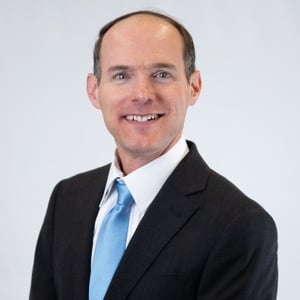
Associate Professor & Director, Constitutional Government Initiative, Wheatley Institute, Brigham Young University
James C. Phillips is the Constitutional Government Initiative Director and an associate professor at BYU’s Wheatley Institute. He is also a fellow with the UC-Berkeley School of Law’s Public Law and Policy Program and an academic affiliate with the D.C.-based law firm Schaerr|Jaffe. His scholarship has been cited by judges around the country, including at the U.S. Supreme Court, and has been covered in various media outlets, including the New York Times Magazine, USA Today, Reuters, CNN, and Fox News. He is a member of the Executive Committee of the Federalist Society's Religious Liberty Practice Group and the J. Reuben Clark Law Society Religious Liberty Committee.
Prior to joining Wheatley, Phillips was associate professor of law at Chapman University’s Fowler School of Law, where he taught Constitutional Law, Religion and the Constitution, Civil Procedure, Family Law, and Professional Responsibility and was named 1L Professor of the Year. Dr. Phillips has taught Administrative Law at BYU’s J. Reuben Clark Law School, where he also helped conceive and design the Corpus of Founding-Era American English. He was also a Non-resident Fellow with Stanford Law School’s Constitutional Law Center.
Dr. Phillips has published dozens of academic articles, primarily in law journals, but also communications, business, and history journals. His longer pieces have been published in, for example, the University of Pennsylvania Law Review, the Southern California Law Review, and the Harvard Journal of Law and Public Policy, and his shorter articles have been published in journals such as the Yale Law Journal Forum and the Duke Law Journal Online. Dr. Phillips has also written op-eds on constitutional issues for Newsweek, The Atlantic, the Los Angeles Times, the Orange County Register, Deseret News, and National Review.
Prior to his university posts, Dr. Phillips practiced law as a Constitutional Law Fellow for the Becket Fund for Religious Liberty and an associate for Kirton | McConkie. He has worked on dozens of cases at the U.S. Supreme Court, as well as cases in federal and state courts throughout the country. He is a member of the bar in Utah and D.C. He clerked for Judge Thomas B. Griffith on the U.S. Court of Appeal for the D.C. Circuit and for Justice Thomas R. Lee on the Utah Supreme Court. Dr. Phillips earned his JD, Order of the Coif, from UC-Berkeley’s School of Law, where he was a member of the California Law Review. He also has a PhD in Jurisprudence & Social Policy from UC-Berkeley, an M.A. in Mass Communication from BYU, and a B.A. in History from Arizona State University.

Senior Fellow and Director of Constitutional Studies, Manhattan Institute
Ilya Shapiro is a senior fellow and director of constitutional studies at the Manhattan Institute and a contributing editor of City Journal. Previously he was executive director and senior lecturer at the Georgetown Center for the Constitution, and before that a vice president of the Cato Institute.
Shapiro is the author of Lawless: The Miseducation of America’s Elites (2025) and Supreme Disorder: Judicial Nominations and the Politics of America’s Highest Court (2020), coauthor of Religious Liberties for Corporations? (2014), and editor of 11 volumes of the Cato Supreme Court Review (2008-18). He has contributed to a variety of academic, popular, and professional publications, including the Wall Street Journal, Harvard Journal of Law & Public Policy, Washington Post, Los Angeles Times, USA Today, National Review, and Newsweek. He also regularly provides commentary for various media outlets, writes the Shapiro’s Gavel newsletter on Substack, and once appeared on the Colbert Report.
Shapiro has testified many times before Congress and state legislatures and has filed more than 500 amicus curiae “friend of the court” briefs in the Supreme Court. He lectures regularly on behalf of the Federalist Society, is a member of the board of fellows of the Jewish Policy Center, was an inaugural Washington Fellow at the National Review Institute, and has been an adjunct law professor at the George Washington University and University of Mississippi. He is also the chairman of the board of advisers of the Mississippi Justice Institute, a barrister in the Edward Coke Appellate Inn of Court, and a former member of the Virginia Advisory Committee to the U.S. Commission on Civil Rights.
Earlier in his career, Shapiro was a special assistant/adviser to the Multi-National Force in Iraq on rule-of-law issues and practiced at Patton Boggs and Cleary Gottlieb. Before entering private practice, he clerked for Judge E. Grady Jolly of the U.S. Court of Appeals for the Fifth Circuit. He holds an AB from Princeton University, an MSc from the London School of Economics, and a JD from the University of Chicago Law School.
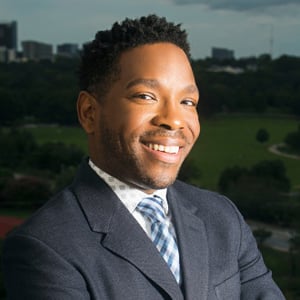
Associate Professor of Law, Emory Law
Fred Smith Jr. is associate professor at Emory University School of Law. He is a scholar of the federal judiciary, constitutional law, and local government. In 2019, he was named Emory Law's Outstanding Professor of the Year.
Smith clerked for Judge Myron Thompson of the Middle District of Alabama; Judge Barrington D. Parker Jr. of the United States Court of Appeals for the Second Circuit; and Justice Sonia Sotomayor of the United States Supreme Court. Prior to teaching, he also worked for Bondurant, Mixson & Elmore LLP in Atlanta.
Smith's research focuses on accountability, federal jurisdiction, and state sovereignty. His work has appeared, or will appear, in Columbia Law Review, Harvard Law Review, Michigan Law Review, New York University Law Review, Notre Dame Law Review, Stanford Law Review, Vanderbilt Law Review, among other academic journals. Notable articles include: “On Time, (In)equality, and Death,” 120 Mich. L. Rev. ___ (2021) (forthcoming); “The Constitution After Death,” 121 Colum. L. Rev. 1471 (2020); “Abstention in the Time of Ferguson,” 131 Harv. L. Rev. 2283 (2018); "Undemocratic Restraint," 69 Vand. L. Rev. 845 (2017); "Local Sovereign Immunity," 116 Colum. L. Rev. 409 (2016), and "Due Process, Republicanism, and Direct Democracy," 89 N.Y.U. L. Rev. 582 (2014). He has given lectures on related topics across the United States and internationally, including in Istanbul, Shanghai, and Warsaw. He also has been interviewed as an expert by major media outlets, including the New York Times, the Washington Post, the Atlanta Journal-Constitution, and various affiliates of National Public Radio.
In a range of volunteer capacities, Smith promotes equity and social justice. He serves on the board of Invest Atlanta, which serves as the economic and community development authority of City of Atlanta. He also serves the national board of Lambda Legal; the national board of Civil Rights Corps; and the LGBT Advisory Board of Historic Atlanta. He served as an inaugural member of Atlanta’s Mayoral LGBTQ Advisory Board. He also served as an inaugural advisory board member for the Harvard Debate Council Diversity Project, which annually trains black Atlanta youth in critical thinking and public speaking.
Associate Professor & Director, Constitutional Government Initiative, Wheatley Institute, Brigham Young University
James C. Phillips is the Constitutional Government Initiative Director and an associate professor at BYU’s Wheatley Institute. He is also a fellow with the UC-Berkeley School of Law’s Public Law and Policy Program and an academic affiliate with the D.C.-based law firm Schaerr|Jaffe. His scholarship has been cited by judges around the country, including at the U.S. Supreme Court, and has been covered in various media outlets, including the New York Times Magazine, USA Today, Reuters, CNN, and Fox News. He is a member of the Executive Committee of the Federalist Society's Religious Liberty Practice Group and the J. Reuben Clark Law Society Religious Liberty Committee.
Prior to joining Wheatley, Phillips was associate professor of law at Chapman University’s Fowler School of Law, where he taught Constitutional Law, Religion and the Constitution, Civil Procedure, Family Law, and Professional Responsibility and was named 1L Professor of the Year. Dr. Phillips has taught Administrative Law at BYU’s J. Reuben Clark Law School, where he also helped conceive and design the Corpus of Founding-Era American English. He was also a Non-resident Fellow with Stanford Law School’s Constitutional Law Center.
Dr. Phillips has published dozens of academic articles, primarily in law journals, but also communications, business, and history journals. His longer pieces have been published in, for example, the University of Pennsylvania Law Review, the Southern California Law Review, and the Harvard Journal of Law and Public Policy, and his shorter articles have been published in journals such as the Yale Law Journal Forum and the Duke Law Journal Online. Dr. Phillips has also written op-eds on constitutional issues for Newsweek, The Atlantic, the Los Angeles Times, the Orange County Register, Deseret News, and National Review.
Prior to his university posts, Dr. Phillips practiced law as a Constitutional Law Fellow for the Becket Fund for Religious Liberty and an associate for Kirton | McConkie. He has worked on dozens of cases at the U.S. Supreme Court, as well as cases in federal and state courts throughout the country. He is a member of the bar in Utah and D.C. He clerked for Judge Thomas B. Griffith on the U.S. Court of Appeal for the D.C. Circuit and for Justice Thomas R. Lee on the Utah Supreme Court. Dr. Phillips earned his JD, Order of the Coif, from UC-Berkeley’s School of Law, where he was a member of the California Law Review. He also has a PhD in Jurisprudence & Social Policy from UC-Berkeley, an M.A. in Mass Communication from BYU, and a B.A. in History from Arizona State University.
Senior Fellow and Director of Constitutional Studies, Manhattan Institute
Ilya Shapiro is a senior fellow and director of constitutional studies at the Manhattan Institute and a contributing editor of City Journal. Previously he was executive director and senior lecturer at the Georgetown Center for the Constitution, and before that a vice president of the Cato Institute.
Shapiro is the author of Lawless: The Miseducation of America’s Elites (2025) and Supreme Disorder: Judicial Nominations and the Politics of America’s Highest Court (2020), coauthor of Religious Liberties for Corporations? (2014), and editor of 11 volumes of the Cato Supreme Court Review (2008-18). He has contributed to a variety of academic, popular, and professional publications, including the Wall Street Journal, Harvard Journal of Law & Public Policy, Washington Post, Los Angeles Times, USA Today, National Review, and Newsweek. He also regularly provides commentary for various media outlets, writes the Shapiro’s Gavel newsletter on Substack, and once appeared on the Colbert Report.
Shapiro has testified many times before Congress and state legislatures and has filed more than 500 amicus curiae “friend of the court” briefs in the Supreme Court. He lectures regularly on behalf of the Federalist Society, is a member of the board of fellows of the Jewish Policy Center, was an inaugural Washington Fellow at the National Review Institute, and has been an adjunct law professor at the George Washington University and University of Mississippi. He is also the chairman of the board of advisers of the Mississippi Justice Institute, a barrister in the Edward Coke Appellate Inn of Court, and a former member of the Virginia Advisory Committee to the U.S. Commission on Civil Rights.
Earlier in his career, Shapiro was a special assistant/adviser to the Multi-National Force in Iraq on rule-of-law issues and practiced at Patton Boggs and Cleary Gottlieb. Before entering private practice, he clerked for Judge E. Grady Jolly of the U.S. Court of Appeals for the Fifth Circuit. He holds an AB from Princeton University, an MSc from the London School of Economics, and a JD from the University of Chicago Law School.
Associate Professor of Law, Emory Law
Fred Smith Jr. is associate professor at Emory University School of Law. He is a scholar of the federal judiciary, constitutional law, and local government. In 2019, he was named Emory Law's Outstanding Professor of the Year.
Smith clerked for Judge Myron Thompson of the Middle District of Alabama; Judge Barrington D. Parker Jr. of the United States Court of Appeals for the Second Circuit; and Justice Sonia Sotomayor of the United States Supreme Court. Prior to teaching, he also worked for Bondurant, Mixson & Elmore LLP in Atlanta.
Smith's research focuses on accountability, federal jurisdiction, and state sovereignty. His work has appeared, or will appear, in Columbia Law Review, Harvard Law Review, Michigan Law Review, New York University Law Review, Notre Dame Law Review, Stanford Law Review, Vanderbilt Law Review, among other academic journals. Notable articles include: “On Time, (In)equality, and Death,” 120 Mich. L. Rev. ___ (2021) (forthcoming); “The Constitution After Death,” 121 Colum. L. Rev. 1471 (2020); “Abstention in the Time of Ferguson,” 131 Harv. L. Rev. 2283 (2018); "Undemocratic Restraint," 69 Vand. L. Rev. 845 (2017); "Local Sovereign Immunity," 116 Colum. L. Rev. 409 (2016), and "Due Process, Republicanism, and Direct Democracy," 89 N.Y.U. L. Rev. 582 (2014). He has given lectures on related topics across the United States and internationally, including in Istanbul, Shanghai, and Warsaw. He also has been interviewed as an expert by major media outlets, including the New York Times, the Washington Post, the Atlanta Journal-Constitution, and various affiliates of National Public Radio.
In a range of volunteer capacities, Smith promotes equity and social justice. He serves on the board of Invest Atlanta, which serves as the economic and community development authority of City of Atlanta. He also serves the national board of Lambda Legal; the national board of Civil Rights Corps; and the LGBT Advisory Board of Historic Atlanta. He served as an inaugural member of Atlanta’s Mayoral LGBTQ Advisory Board. He also served as an inaugural advisory board member for the Harvard Debate Council Diversity Project, which annually trains black Atlanta youth in critical thinking and public speaking.

Professor Emeritus, Paul M. Hebert Law Center, Louisiana State University
In memoriam
Dr. John Baker is Professor Emeritus of Law, and previously the Dale E. Bennett Professor of Law, at Louisiana State University Law School. He is currently Visiting Professor at Peking University School of Transnational Law (via Zoom) and has been Visiting Professor at The Center for the Constitution, Georgetown Law School (2013-2020). He has also been a Visiting Fellow at Oriel College, the University of Oxford (2012-2014) and taught at Blackfriars Hall, Oxford in 2014. Dr. Baker has also been an adjunct Fellow at the Heritage Foundation (Spring, 2008) and a Distinguished Scholar at the Catholic University of America Law School (2011-12). He has taught at Tulane Law School, George Mason Law School, Pepperdine Law School, New York Law School, Hong Kong University, and the University of Dallas, School of Management and also taught and/or lectured in 17 foreign countries. Notable among his foreign visits are the
following: Visiting Professor at the University of Lyon III (France) (1999-2011); Visiting Professor at the Universidad de los Andes, Chile (2012), as a Fulbright Specialist (2006); and a Fulbright Scholar at various universities in the Philippines. Dr. Baker received his J.D., with honors, from the University of Michigan Law School and his B.A., magna cum laude, from the University of Dallas. He also earned a Ph.D. in Political Thought from the University of London. Baker has taught over a dozen different subjects, mostly courses in public law. His main areas of interest are Constitutional Law (particularly federalism and separation of powers), Criminal Law, Anti-Terrorism Law, International Law, Health Care Law, Mediation, and Comparative Law.
In addition to law review articles and book chapters, Dr. Baker’s academic publications include Hall's Criminal Law: Cases and Materials (with Benson, Force and George; 5th ed. Michie, 1993); An Introduction to the Law of the United States (ed. with Levasseur; University Press of America, 1992). He has also published on Forbes.com, FoxNews.com, in The Washington Times, and a number of times in The Wall Street Journal. He argues in federal court, including two oral arguments in the U.S. Supreme Court. For many years, he co-taught courses for the Federalist Society on separation of powers with the late Supreme Court Justice Antonin Scalia. In September 2016, he co-taught a Supreme Court seminar in China with Justice Samuel Alito. Following law school, he served as a law clerk in federal district court and as an assistant district attorney in New Orleans before joining LSU in 1975. While a professor, he has been as a consultant to USAID, USIA (since rolled into the State Department), the Justice Department, the U.S. Senate Judiciary Subcommittee on Separation of Powers, and the Office of Planning in the White House. He served on an ABA Task Force which issued the report, The Federalization of Crime (1998) and later as a consultant to the “Bi-Partisan Task Force on the Over- federalization of Crime” (2012-2014) created by the U.S. House Judiciary Subcommittee on Crime. Dr. Baker was a co-founder of the first iteration (1995) of Stratfor Inc., a global intelligence agency. He co-authored its first book: The Intelligence Edge (with Friedman, Friedman and Chapman; Crown Books/Random House 1997). In 2022, he began a short, weekly video podcast available on YouTube and Rumble, The Baker Brief.
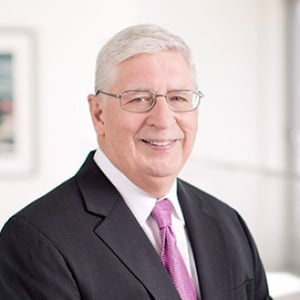
Partner, O'Melveny & Myers LLP
Walter Dellinger is an influential authority on appellate and Supreme Court decisions, lending his experience as a former Solicitor General and decades of legal knowledge to amicus briefs, a multitude of pro bono clients, and public and private companies involved in bet-the-company litigation. A frequent commentator for the Wall Street Journal, Slate, and major television networks, Walter holds the designation of the Douglas B. Maggs Emeritus Professor of Law at Duke University. He was named one of the 100 Most Influential Lawyers in America by the National Law Journal and recognized with a Lifetime Achievement Award from the American Lawyer.
Walter, who formerly served as O’Melveny’s Diversity and Inclusion Partner, helped convince the US Supreme Court that proponents of Proposition 8, California's ban on same-sex marriage, did not have standing to appeal a court order invalidating it. That ruling, Hollingsworth v. Perry, cleared the way for marriage equality in California and eventually nationwide.
Walter served as Assistant Attorney General and head of the Office of Legal Counsel (OLC) from 1993 to 1996. He was acting Solicitor General for the 1996-97 Term of the US Supreme Court. During that time, Walter argued nine cases before the Court, the most by any Solicitor General in more than 20 years. His arguments included cases dealing with physician-assisted suicide, the line item veto, the cable television act, the Brady Act, the Religious Freedom Restoration Act, and the constitutionality of remedial services for parochial school children.
Walter has served as Special Counsel to the Board of Directors of the New York Stock Exchange in connection with the NYSE’s transformation into a publicly held company and its acquisition of an electronic trading company.
After serving in early 1993 in the White House as an advisor to the President on constitutional issues, Walter was nominated by the President to be Assistant Attorney General. He was confirmed by the Senate in October 1993 and served for three years. As head of the OLC, Walter issued opinions on a wide variety of issues, including: the President's authority to deploy United States forces in Haiti and Bosnia; whether the trade agreements required treaty ratification; and a major review of separation of powers questions. He provided extensive legal advice on questions arising out of the shutdown of the federal government, on national debt ceiling issues, and on loan guarantees for Mexico.
Walter has published articles on constitutional issues for scholarly journals including the Harvard Law Review, the Yale Law Journal, and the Duke Law Journal, and has written for the New York Times, the Washington Post, Newsweek, the New Republic, and the London Times. He has been a visiting professor at the Catholic University of Belgium and has given lectures to university faculties in Florence, Siena, Nuremberg, Copenhagen, Leiden, Utrecht, Tilburg, Mexico, and Rio de Janeiro, and has delivered major lectures at Stanford, Yale, Harvard, Michigan, Berkeley, Penn, Duke, Chicago, and other US law schools. He has testified more than 25 times before committees of Congress.
In private practice, Walter’s arguments before the United States Supreme Court have included Exxon Shipping Co. v. Baker, Morgan Stanley Capital Group Inc. v. Public Utility District No. 1 of Snohomish County, Alabama v. North Carolina, Hosanna-Tabor v. EEOC, Heller v. District of Columbia, Jackson v. Birmingham School District, Brown v. Legal Foundation of Washington, US Airways v. Barnett, Utah v. Evans, Hunt v. Cromartie, and Hunt v. Easley. His most notable Court of Appeals and state supreme court arguments include Martha Stewart v. United States, Whiteside v. United States, and Exxon v. Alabama, LCI v. Phillips.
Dr. John Eastman is the former Henry Salvatori Professor of Law & Community Service and former Dean at Chapman University's Dale E. Fowler School of Law, where he had been a member of the faculty since 1999, specializing in Constitutional Law, Legal History, and Property. He is a founding director of the Center for Constitutional Jurisprudence, a public interest law firm affiliated with the Claremont Institute that he founded in 1999. He has a Ph.D. in Government from the Claremont Graduate School and a J.D. from the University of Chicago Law School, and a B.A. in Politics and Economics from the University of Dallas. He serves as the Chairman of the Board of the National Organization for Marriage.
Prior to joining the Chapman law faculty, Dr. Eastman served as a law clerk to the Honorable Clarence Thomas, Associate Justice, Supreme Court of the United States, and to the Honorable J. Michael Luttig, Judge, United States Court of Appeals for the Fourth Circuit and practiced law with the national law firm of Kirkland & Ellis. Dr. Eastman has also represented numerous clients in important constitutional law matters and has argued before the Supreme Court. On behalf of the Claremont Institute Center for Constitutional Jurisprudence, he has participated as amicus curiae before the Supreme Court of the United States, U.S. Courts of Appeals, and State Supreme Courts in more than one hundred cases of constitutional significance, including Boy Scouts of America v. Dale, Zelman v. Simmons-Harris (the school vouchers case), Kelo v. New London, Ct. (eminent domain), and Van Orden v. Perry (the 10 Commandments case). He has also appeared as an expert legal commentator on numerous television and radio programs, including C-SPAN, Fox News, PBS, NewsHour, and The O'Reilly Factor.

Executive Vice President, The Federalist Society
Dean Reuter is Executive Vice President at the Federalist Society for Law and Public Policy Studies. He has served in two federal government agency Offices of the Inspector General, as Counsel to the Inspector General and Deputy Inspector General, responsible for policing the use of federal funds granted and contracted through those agencies. As such, he helped conduct and oversee criminal investigations across the country. He is the principal author of the non-fiction book, The Hidden Nazi: The Untold Story of America's Deal with the Devil, and editor of Liberty’s Nemesis: The Unchecked Expansion of the State and Confronting Terror: 9/11 and the Future of American National Security. He was appointed by the President and served as Vice-Chairman of the Board of Directors of the Corporation for National and Community Service, and recently served as an appointee on the U.S. Commission on Presidential Scholars. He is a graduate of Hood College (BA with Honors) and the University of Maryland School of Law.
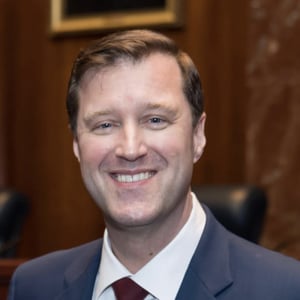
Justice, Texas Supreme Court
Evan Young is a Justice of the Supreme Court of Texas. Governor Greg Abbott, who appointed Young to fill an unexpired term, swore him into office on November 10, 2021. Justice Young was elected to a full term in November 2022.
Young graduated summa cum laude from Duke University in 1999, where he was inducted into Phi Beta Kappa. He was a British Marshall Scholar at Oxford University, where he completed his studies in 2001 and earned a First Class Honours degree in Modern History, focusing on British constitutional history. He earned his law degree from Yale Law School in 2004.
Young then worked as a lawyer in the judicial and executive branches of the federal government. He first served as a law clerk to Judge J. Harvie Wilkinson III of the U.S. Court of Appeals for the Fourth Circuit, and then to Justice Antonin Scalia at the U.S. Supreme Court. In 2006, after his clerkship with Justice Scalia ended, Justice Young became Counsel to the Attorney General at the U.S. Department of Justice, serving in the Office of the Attorney General under Attorneys General Alberto R. Gonzales and Michael B. Mukasey. While on the Attorney General’s staff, he accepted a detail to the U.S. Embassy in Baghdad, Iraq, where he was the Deputy Rule of Law Coordinator. In that position he worked to assist the Iraqi government in its efforts to strengthen its legal regime, including, for example, its courts and prison system.
Young returned to Texas and joined the Austin office of Baker Botts L.L.P. in 2009. His practice focused on trial and appellate litigation. He argued cases before both the Supreme Court of the United States and the Supreme Court of Texas, as well as many federal and state appellate courts. He represented clients across the country before every level of the state and federal judiciary.
Before joining the Texas Supreme Court, Young was appointed in 2017 by Governor Abbott and confirmed by the Texas Senate to serve as a member of the Texas Judicial Council, which is the policy-making body for the Texas Judiciary. In 2015, the Texas Supreme Court appointed him to the Supreme Court Advisory Committee, which assists the Court in drafting the rules that govern litigation in Texas courts. He served on both until his elevation to the bench.
Justice Young is an elected member of the American Law Institute and a member of the Texas Philosophical Society. He has been an adjunct law professor for many years at the University of Texas School of Law, where he has frequently taught the Federal Courts and Religious Liberty courses. He also has been an adjunct professor at the University of Mississippi School of Law, where he has taught multiple courses involving U.S. Supreme Court history. He served as Chair of the State Bar of Texas Business Law Section, Chair of the National Center for Missing and Exploited Children's Texas Regional Office, and Trustee of the Texas Supreme Court Historical Society.
Justice Young and his wife, Tobi, live in Austin with their daughter.
Professor of Law, Western New England College School of Law
Professor Gouvin has been a member of the Western New England College School of Law faculty since 1991. He was tenured and promoted to full professor in 1996. He served as Associate Dean for External Affairs during the 2003-2004 academic year and as Associate Dean for Academic Affairs from 2004-2009. He is currently the Director of the Law and Business Center for Advancing Entrepreneurship.
During his time on the faculty he has taught contracts, business organizations, banking regulation, secured transactions, and other business-related courses. In 2002 he founded the Small Business Clinicat Western New England College School of Law and was the moving force behind the creation of the Law and Business Center for Advancing Entrepreneurship, a collaborative effort with the Western New England College School of Business.
Prior to 1991, Professor Gouvin practiced corporate, banking, and commercial law with the firm of Bernstein, Shur, Sawyer and Nelson in Portland, Maine. At the firm Professor Gouvin helped to represent a diverse array of clients, from Fortune 500 companies to closely held businesses.
Professor Gouvin holds a bachelor’s degree from Cornell University, a master’s degree from Harvard’s Kennedy School of Government, and J.D. and LL.M. degrees from the Boston University School of Law. His scholarly writings focus on the intersection of corporate law and banking law. He is a co-author of the treatiseBlumberg on Corporate Groupswith Phillip Blumberg and Kurt Strasser at the University of Connecticut School of Law and Nicholas Georgakopoulos at the Indiana University (Indianapolis) School of Law. His contributions dealt primarily with corporate groups in the financial services sector. He has written numerous law review articles on a range of topics affecting financial services.
Vice President & Legal Director, National Right To Work Legal Defense Foundation
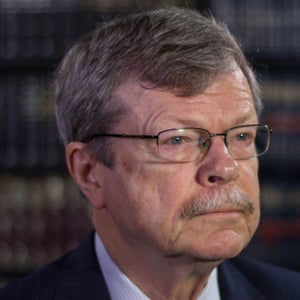
Raymond J. LaJeunesse, Jr., is Vice President and Legal Director of the National Right to Work Legal Defense Foundation, a non-profit legal aid organization. He was the first Staff Attorney employed by the Foundation and has more than forty-five years of experience helping workers in litigation in federal and state courts and administrative agencies over the abuses of compulsory unionism.
Mr. LaJeunesse has argued four cases in the United States Supreme Court. Those cases include Lehnert v. Ferris Faculty Ass’n, 500 U.S. 507 (1991), which limited the purposes for which compulsory union fees collected from public employees may lawfully be spent; Air Line Pilots Ass’n v. Miller, 523 U.S. 866 (1998), which established that unions cannot compel nonmembers to exhaust union-established remedies before going to court to challenge compulsory union fees; and Marquez v. Screen Actors Guild, 525 U.S. 33 (1998), in which the Court recognized that unions must notify employees that they can satisfy the “membership” requirement of “union shop” agreements by just paying fees for union bargaining activities and need not join and pay full dues to keep their jobs. He also was lead attorney in Hohe v. Casey, 956 F.2d 399 (3d Cir. 1992), in which more than $8.3 million in compulsory agency fees was recovered from the American Federation of State, County and Municipal Employees for a class of 57,000 nonmembers.
Mr. LaJeunesse is the author of several published articles about labor law, has testified before Congressional committees several times, and was an Advisor on the Transition Team for Labor- Related Agencies, Office of the President-Elect, in 1980-81 and a legislative aide to a member of the Virginia state legislature. He is a Vice Chairman of the Federalist Society’s Labor and Employment Law Practice Group and has spoken or debated at the Society’s National Lawyers Convention and at many Lawyers and Student Chapters on such topics as Right to Work laws, compulsory unionism arrangements, the misuse of union dues for politics, union organizing tactics (“card check” vs. secret-ballot elections), and the future of the union movement.
President, UAW 2322
Ron moved to Springfield 35 years ago after graduating high school and has lived in western Massachusetts ever since. Starting a pottery and stained glass business in 1986 at his home in the Maple High-Six Corners neighborhood and working in the hospitality industry he still made time to be involved in city politics. Ron was a member of his Neighbor Council and the Neighborhood Watch.
In 1993 Ron went to work in the healthcare field working at an area hospital as an alcohol and substance abuse counselor and mental health counselor, spending the next 12 years helping people learn to help themselves.
When their employer tried to cut their wages, increase their health insurance costs and make other changes to their wages, benefits and working conditions, Ron joined his coworkers and helped lead and win a campaign to join UAW 2322. He spent the next 6 years fighting for and winning better wages and benefits for his coworkers as chief steward of the union.
In 2004 Ron ran for and won the position of President of UAW Local 2322 and has worked tirelessly with the 3,200 workers they represent to fight for and win better wages, benefits and working conditions, so they and their families can enjoy a better life.
In 2006 Ron won the Pioneer Valley Labor Leader of the Year award for his efforts on behalf of working people and the community. Later that year Ron and the UAW worked on the campaign to elect Deval Patrick, Governor of the Commonwealth. The UAW was the second major union to endorse Deval due in no small part to Ron’s efforts. In recognition of Ron’s efforts for workers, Governor Patrick appointed him to the Commonwealth Corporation Board of Directors which oversees over $34 million annually in funding for job training in the Commonwealth.

Staub v. Proctor Hospital - Post-Argument SCOTUScast
Victoria Dorfman
SCOTUScast 11-10-10 featuring Victoria Dorfman
On November 2, 2010, the Supreme Court heard oral argument in Staub v. Proctor Hospital....
Sossamon v. Texas - Post-Argument SCOTUScast
Jacob R. Loshin
SCOTUScast 11-09-10 featuring Jacob R. Loshin
On November 2, 2010, the Supreme Court heard oral argument in Sossamon v. Texas. The...
The Public Pension Crisis: Legal Updates on the Challenges and Potential Solutions for the City of San Diego
Carl DeMaio, John C. Eastman, Jan Goldsmith, Michael Orfield, Adam Van Susteren, Michael Zucchet
San Diego Chapter
The San Diego Lawyers Chapter hosted this panel discussion on "The Public Pension Crisis" on...
The Public Pension Crisis: Legal Updates on the Challenges and Potential Solutions for the City of San Diego
Carl DeMaio, John C. Eastman, Jan Goldsmith, Michael Orfield, Adam Van Susteren, Michael Zucchet
San Diego Chapter
The San Diego Lawyers Chapter hosted this panel discussion on "The Public Pension Crisis" on...
Affirmative Action
Ward Connerly, James Jeffries
California Western Student Chapter
On November 4, 2010, the California Western Student Chapter of the Federalist Society hosted this event featuring Mr....
The Impact of Judicial Activism on the Moral Character of Citizens
James C. Phillips, Ilya Shapiro, Fred Smith
UC Berkeley Student Chapter
On October 28, 2010, the UC Berkeley Student Chapter of the Federalist Society hosted this debate...
The Impact of Judicial Activism on the Moral Character of Citizens
James C. Phillips, Ilya Shapiro, Fred Smith
UC Berkeley Student Chapter
On October 28, 2010, the UC Berkeley Student Chapter of the Federalist Society hosted this debate...
The Government’s Duty to Defend the Law in Court
John S. Baker, Walter E. Dellinger, John C. Eastman, Dean Reuter
Federalism & Separation of Powers Practice Group Podcast
Several cases have brought to the fore the duty of the executive branch of government,...
Skinner v. Switzer - Post-Argument SCOTUScast
Evan A. Young
SCOTUScast 10-27-10 featuring Evan A. Young
October 13, 2010, the Supreme Court heard oral argument in Skinner v. Switzer. The question...
Forced Unionism and the 1st Amendment
Eric J. Gouvin, Raymond J. LaJeunesse, Isaac Mass, Ron Patenaude
Western New England Student Chapter
On October 13, 2010, the Western New England Student Chapter of the Federalist Society hosted...