

Partner, King & Spalding
John Richter is a trial and investigations partner in the Special Matters and Investigations Practice Group, and represents and defends companies, Boards of Directors, Board committees, and individuals facing a variety of white-collar criminal and regulatory enforcement matters, parallel civil litigation, and internal corporate investigations. John previously served as the Acting Assistant Attorney General in charge of the Criminal Division at the U.S. Department of Justice and as the U.S. Attorney for the Western District of Oklahoma, having been nominated by President George W. Bush and confirmed by unanimous consent of the U.S. Senate.

Clinical Professor and Senior Scholar and Senior Fellow for Copyright Research and Policy of C-IP2, Antonin Scalia Law School, George Mason University
Sandra Aistars is Senior Fellow for Copyright Research and Policy and a Senior Scholar at the Center for Intellectual Property x Innovation Policy (C-IP2). She also leads the law school’s Arts & Entertainment Advocacy Program. Professor Aistars has over twenty years of advocacy experience on behalf of copyright and other intellectual property owners. She has served on trade missions and been an industry advisor to the Department of Commerce on intellectual property implications for international trade negotiations; worked on legislative and regulatory matters worldwide; frequently testified before Congress and federal agencies regarding intellectual property matters; chaired cross-industry coalitions and technology standards efforts; and is regularly tapped by government agencies to lecture in U.S. government-sponsored study tours for visiting legislators, judges, prosecutors, and regulators.
Immediately prior to joining Scalia Law, Professor Aistars was the Chief Executive Officer of the Copyright Alliance – a nonprofit, public interest organization that represents the interests of artists and creators across the creative spectrum. While at Scalia Law, she continues to collaborate with the Copyright Alliance as a member of its Academic Advisory Board. Professor Aistars currently serves on the boards of the Washington Area Lawyers for the Arts (WALA) and the Howard Intellectual Property Program (HIPP), and she has previously served as trustee of the Copyright Society of the USA (CSUSA). Professor Aistars has also previously served as Vice President and Associate General Counsel at Time Warner Inc. She began her legal career in private practice at Weil, Gotshal and Manges LLP.
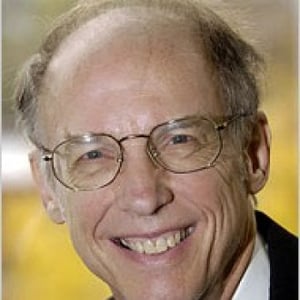
United States Court of Appeals, Fourth Circuit
James Harvie Wilkinson III is an Article III federal judge on the United States Court of Appeals for the Fourth Circuit. He joined the Court in 1984 after being nominated by President Ronald Reagan.
Born in New York City, New York, Wilkinson graduated from Yale University with his Bachelor's degree in 1967. Wilkinson served in the United States Army from 1968 to 1969 and received his Juris Doctor degree from the University of Virginia School of Law in 1972.
On the recommendation of Virginia U.S. Senator John Warner, Wilkinson was nominated to the United States Court of Appeals for the Fourth Circuit by President Ronald Reagan on January 30, 1984 to a seat vacated by John Butzner, Jr.,. Wilkinson was confirmed by the Senate on August 9, 1984 on a Senate vote and received commission on August 13, 1984. Wilkinson served as the Chief Judge of the Court from 1996 to 2003.
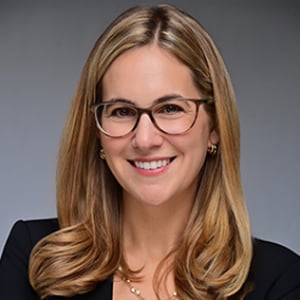
Partner, Clement & Murphy
A seasoned trial and appellate advocate, Danielle Sassoon represents individuals and corporations in high-stakes white-collar, appellate, and commercial matters. Danielle joined the firm after serving as interim United States Attorney for the Southern District of New York, following over eight years as an Assistant United States Attorney. During her time at the SDNY, Danielle handled some of the Office’s most sensitive and consequential cases. As Chief of Appeals for the Criminal Division, Danielle supervised and argued dozens of appeals before the U.S. Court of Appeals for the Second Circuit. As a leader in the SDNY, Danielle oversaw hundreds of cases, advised on complex legal and strategic issues, and managed over 200 lawyers across the SDNY’s civil and criminal divisions.
As a prosecutor, Danielle handled high-profile investigations and criminal trials, including against Samuel Bankman-Fried, for perpetrating a multi-billion-dollar cryptocurrency fraud, and against Lawrence Ray, for racketeering conspiracy, sex trafficking, and other offenses related to his abuse and exploitation of his daughter’s college roommates. As a prosecutor, Danielle was awarded the FBI Director’s Award for Outstanding Criminal Investigation and the Women in Federal Law Enforcement Top Prosecutor Award.
Following law school, Danielle clerked for Judge J. Harvie Wilkinson III of the U.S. Court of Appeals for the Fourth Circuit and for Associate Justice Antonin Scalia of the U.S. Supreme Court.
Danielle serves as a Senior Fellow at the Manhattan Institute.

Professor of Law, Fordham University School of Law
Howard Erichson is one of the nation's leading experts on the procedure and ethics of complex litigation. Professor Erichson teaches Civil Procedure, Complex Litigation, Professional Responsibility, and Torts. He has published widely on such topics as class actions, mass tort litigation, aggregate settlements, and coordination among lawyers. He is the past chair of the Civil Procedure Section of the Association of American Law Schools and was an Advisor to the American Law Institute’s Principles of the Law of Aggregate Litigation. He is the author of the book Inside Civil Procedure and co-author of Complex Litigation. His articles have appeared in the Cornell Law Review, Michigan Law Review, University of Pennsylvania Law Review, and many other leading publications. Professor Erichson graduated from Harvard University and from New York University School of Law, where he was editor-in-chief of the Law Review. After law school, he clerked for the New Jersey Supreme Court and for the U.S. Court of Appeals for the Second Circuit, and he practiced as a litigator with Cleary Gottlieb Steen and Hamilton in New York City. In 1995, he joined the faculty of Seton Hall Law School, where he was elected Professor of the Year and was named the John J. Gibbons Professor of Law. He has been a Visiting Professor at Columbia Law School and a Visiting Scholar at NYU Law School. He joined the Fordham Law School faculty as Professor of Law in 2008, and was elected Teacher of the Year in 2012.
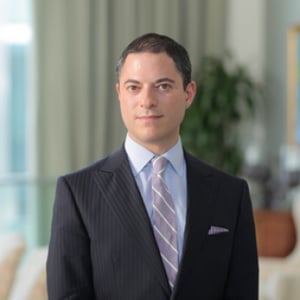
Partner, BakerHostetler, Adjunct Fellow, The Manhattan Institute
Andrew Grossman leads BakerHostetler’s Appellate and Major Motion team. He has appeared before the U.S. Supreme Court, nearly all the federal courts of appeals, as well as some state appellate courts, litigating high-profile and complex commercial, administrative and constitutional issues.
Andrew works with practice groups across BakerHostetler to identify and tackle complex issues, advise on administrative law and strategy, tee up issues for appeal and tackle appeals. He has developed and implemented litigation and administrative strategies for clients in several fields and industries.
In addition to his practice, Andrew advises members of Congress on matters of constitutional and administrative law, having testified more than a dozen times before the House and Senate Judiciary Committees. He has been a frequent legal commentator on radio and television, having appeared on Fox News, CNN, MSNBC, CNBC, NPR and its affiliates, CBN and elsewhere. His legal commentary has also appeared in dozens of magazines and newspapers, including The Wall Street Journal, USA Today, The Washington Post, The Washington Times and many others.
Andrew is a Senior Legal Fellow at the Buckeye Institute, an Adjunct Fellow the Manhattan Institute and a member of the leadership of the Federalist Society. He previously served as an adjunct scholar at the Cato Institute’s Robert A. Levy Center for Constitutional Studies and a legal fellow at the Heritage Foundation’s Meese Center for Legal and Judicial Studies. He clerked for Judge Edith H. Jones on the U.S. Court of Appeals for the Fifth Circuit.
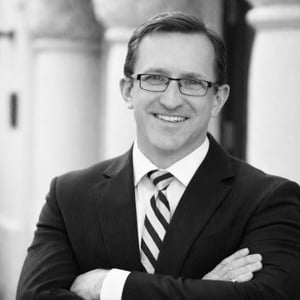
VP and Senior Counsel, Becket Fund
Eric Baxter joined The Becket Fund as Senior Counsel in 2011. Since then he has represented religious organizations and individuals in a wide array of religious liberty disputes at both the trial and appellate level. Recent victories including a Ninth Circuit ruling upholding the “Big Mountain Jesus” statue that has stood on Forest Service land near Kalispell, Montana, for more than sixty years, and a rare Pentagon decision allowing a Sikh soldier to maintain his full beard and turban while serving in the Army. Mr. Baxter has extensive experience fighting efforts under state Blaine amendments to exclude religious organizations and individuals from participating on equal terms in the public square. He also regularly advises religious institutions of higher education in defending their religious missions against government encroachment.
Mr. Baxter has frequently appeared in the national media to discuss religious liberty issues, including appearances on Fox News (Kelly File, Fox & Friends), WSJ Live, CBS New York, Christian Broadcasting Network, Newsmax TV, and Al Jazeera. He has also written op-eds and been quoted in many major newspapers and other print media, including the New York Times, Washington Post, LA Times, Fox News, New York Post, Washington Times, and New Boston Post.
Before joining the Becket Fund, Mr. Baxter was a partner at Arent Fox LLP in Washington, DC, where he maintained a commercial complex litigation practice representing clients primarily in employment, intellectual property, and biotechnology disputes. He also served for many years as outside counsel to a DC church and its affiliated school. In 2007, he was awarded the Albert E. Arent Pro Bono Award for his work representing several parents adopting a total of seven children from foster care.
From 2000 to 2002, Mr. Baxter clerked for the Honorable Robert H. Cleland in the United States District Court for the Eastern District of Michigan (Detroit). Mr. Baxter received a B.A. in Russian Literature and Linguistics from Brigham Young University and graduated magna cum laude from the J. Reuben Clark Law School at BYU, where he served as Executive Editor of the Law Review and was elected to the Order of the Coif. Eric speaks Russian and some Spanish. He and his wife have seven children and an amateur family bluegrass band.
Mr. Baxter has been featured on the Kelly File, Al Jazeera, WSJ Video, and NewsmaxTV.

Professor of the Practice of Economics, Duke University
Michelle P. Connolly is Professor of the Practice in the Economics Department at Duke University. She was the Economics Director of Duke in New York: Financial Markets and Institutions Program for 2007-2009 and the Director of EcoTeach for several years. She currently serves as the Director of the Honors Program in Economics and a member of the Duke Alumni Association Board.
In 2011, Professor Connolly won the Howard D. Johnson Trinity College Teaching Prize and was named among the top five percent of Duke University Undergraduate Instructors in 2009, 2010 and 2011.
Professor Connolly previously served as Chief Economist of the Federal Communications Commission in 2006-2007 and 2008-2009, and as an Economist for the International Research Function for the Federal Reserve Bank of New York from 1996 to 1997. She graduated Phi Beta Kappa and Summa Cum Laude from Yale University in 1990, and went on to earn her M.A. and M.Phil in economics. Professor Connolly received her Ph.D. in economics from Yale University in 1996.
Professor Connolly’s research and teaching focus specifically on international trade, telecommunications policy, media policy, education, growth, and development. She has received funding for her research from the National Science Foundation, the Duke Arts and Sciences Research Council Grants, the Spencer Grant, and the Teagle Grant.
Professor Connolly has published in numerous journals, including the American Economic Review, the American Economic Journal: Macroeconomics, the Journal of Development Economics, the Journal of Economic History, the Journal of Economic Growth, the Review of Industrial Organization, and Current Issues in Economics and Finance.
In 2011, Professor Connolly testified before Congress and participated in a White House panel on Spectrum Issues. She has been presenting her work at university seminars and international conferences since 1996. Some of her appearances were at the ACLP Advanced Communications 2009 Summit, where she was a panelist and moderator, at the conference on “Wireless Technologies: Enabling Innovation and Economic Growth”, where she served as a keynote panelist, and at the Martin H. Crego Lecture in Economics, an all college Lecture at Vassar College. In 2013 Professor Connolly was awarded a National Science Foundation Secure and Trustworthy Cyberspace Grant, “Dollars for Hertz: Making Trustworthy Spectrum Sharing Technically and Economically Viable.”
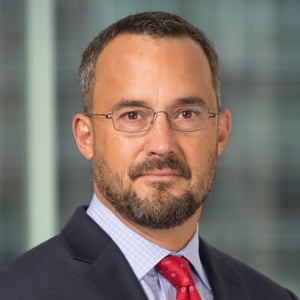
Senior Vice President for Legal Studies, Cato Institute
Clark Neily is senior vice president for legal studies at the Cato Institute. His areas of interest include constitutional law, overcriminalization, civil forfeiture, police accountability, and gun rights. Neily is the author of Terms of Engagement: How Our Courts Should Enforce the Constitution’s Promise of Limited Government. His writing has appeared in the Wall Street Journal, Forbes, and National Review Online, as well as various law reviews, including the Harvard Journal of Law and Public Policy, George Mason Law Review, Georgetown Journal of Law and Public Policy, NYU Journal of Law and Liberty, and Texas Review of Law and Politics. Neily is a frequent guest speaker and lecturer for the Federalist Society, Institute for Humane Studies, and American Constitution Society.
Before joining Cato in 2017, Neily was a senior attorney and constitutional litigator at the Institute for Justice and director of the Institute’s Center for Judicial Engagement. He is also an adjunct professor at the University of Texas School of Law, where he teaches constitutional litigation and public-interest law.
Neily served as co-counsel in District of Columbia v. Heller, the historic case in which the Supreme Court held for the first time that the Second Amendment protects an individual right to own a gun for self-defense.
Neily began his legal career as a law clerk to Judge Royce Lamberth on the U.S. District Court for the District of Columbia. After that he spent four years in the trial department of the Dallas-based firm Thompson & Knight. Neily received his undergraduate and law degrees from the University of Texas, where he was Chief Articles Editor of the Texas Law Review.
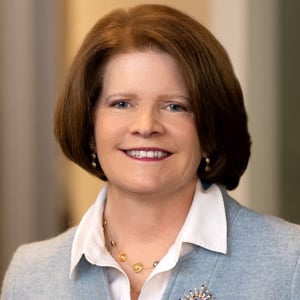
Partner, Antitrust and Competition, Wilson Sonsini Goodrich & Rosati
Maureen Ohlhausen is a partner in the Washington, D.C., office of Wilson Sonsini Goodrich & Rosati, where she advises industry-leading clients on complex antitrust and litigation matters, with a focus on high-profile cases. Sought after for her depth of experience on antitrust and Federal Trade Commission (FTC)-related issues, Maureen is known for her relationships with officials in the U.S. and abroad.
After finishing law school and clerking at the U.S. Court of Appeals for the D.C. Circuit, Maureen joined the FTC in 1997. She held a series of roles at the agency over the next 12 years, rising to the position of Director of the FTC Office of Policy Planning, where she led the agency’s work on e-commerce and headed the FTC’s Internet Access Task Force, which produced an influential report analyzing competition and consumer protection legal issues in the broadband and internet sectors. She then went into private practice at a leading telecommunications law firm, where she headed the FTC practice group.
In 2012, Maureen was confirmed by the Senate as a Commissioner of the FTC and was appointed Acting Chairman in January 2017, a role she held until May 2018. As Acting Chairman, Maureen directed all aspects of the agency’s antitrust work, including merger review, conduct enforcement, and all consumer protection enforcement, with an emphasis on privacy and technology issues. Under her leadership, the FTC won several influential merger challenges in court and reached a number of key digital privacy settlements.
To date, Maureen is the only FTC Commissioner to have received the Robert Pitofsky Lifetime Achievement Award in recognition of her contributions to the FTC.
Following the end of her term at the FTC, and immediately prior to joining Wilson Sonsini, Maureen was chair of the global antitrust and competition practice at Baker Botts, based in that firm’s Washington, D.C., office.
A recognized thought leader, Maureen is a frequent author and speaker, and is often quoted by leading print and broadcast media on antitrust, FTC, and privacy and data security matters. She has published dozens of articles on antitrust, privacy, intellectual property, regulation, FTC litigation, telecommunications, and international law issues in prestigious publications. During her tenure at the FTC and in private practice, she testified more than two dozen times before Congress, including before the Senate Commerce Committee and the House Energy and Commerce Antitrust Sub-Committee. She also testified before the Antitrust Modernization Commission.

Executive Vice President, The Federalist Society
Dean Reuter is Executive Vice President at the Federalist Society for Law and Public Policy Studies. He has served in two federal government agency Offices of the Inspector General, as Counsel to the Inspector General and Deputy Inspector General, responsible for policing the use of federal funds granted and contracted through those agencies. As such, he helped conduct and oversee criminal investigations across the country. He is the principal author of the non-fiction book, The Hidden Nazi: The Untold Story of America's Deal with the Devil, and editor of Liberty’s Nemesis: The Unchecked Expansion of the State and Confronting Terror: 9/11 and the Future of American National Security. He was appointed by the President and served as Vice-Chairman of the Board of Directors of the Corporation for National and Community Service, and recently served as an appointee on the U.S. Commission on Presidential Scholars. He is a graduate of Hood College (BA with Honors) and the University of Maryland School of Law.
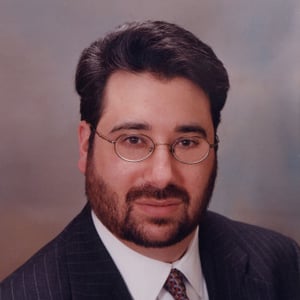
President, Phoenix Center for Advanced Legal and Economic Public Policy Studies
Lawrence J. Spiwak is President of the Phoenix Center for Advanced Legal & Economic Public Policy Studies, a non-profit 501(c)(3) organization that studies broad public-policy issues related to governance, social and economic conditions, with a particular emphasis on the law and economics of the digital age. Mr. Spiwak is a prolific scholar whose work is frequently cited by policymakers, major news media and academic journals around the world, and is in the top 1.3%of authors downloaded on the Social Science Research Network. Mr. Spiwak currently serves as the co-chair of the Federal Communications Bar Association’s (FCBA) committee responsible for overseeing the FEDERAL COMMUNICATIONS LAW JOURNAL and is a member of the program committee of the Telecommunications Policy Research Conference (“TPRC”). Mr. Spiwak is also the recipient of the FCBA’s Distinguished Service Award. Prior to joining the Phoenix Center, Mr. Spiwak was a Senior Attorney with the Competition Division in the FCC’s Office of General Counsel from 1994-1998. While in college, Mr. Spiwak was accepted into the Presidential Stay-In School program where he was responsible for delivering classified and confidential material among senior White House and Reagan Administration officials and received a full FBI security clearance. Mr. Spiwak received his B.A. with Special Honors from the George Washington University and his J.D. from the Benjamin N. Cardozo School of Law. Mr. Spiwak is a member in good standing of the bars of New York, Massachusetts, the District of Columbia, and the U.S. Court of Appeals for the D.C. Circuit.
Professor of the Practice of Economics, Duke University
Michelle P. Connolly is Professor of the Practice in the Economics Department at Duke University. She was the Economics Director of Duke in New York: Financial Markets and Institutions Program for 2007-2009 and the Director of EcoTeach for several years. She currently serves as the Director of the Honors Program in Economics and a member of the Duke Alumni Association Board.
In 2011, Professor Connolly won the Howard D. Johnson Trinity College Teaching Prize and was named among the top five percent of Duke University Undergraduate Instructors in 2009, 2010 and 2011.
Professor Connolly previously served as Chief Economist of the Federal Communications Commission in 2006-2007 and 2008-2009, and as an Economist for the International Research Function for the Federal Reserve Bank of New York from 1996 to 1997. She graduated Phi Beta Kappa and Summa Cum Laude from Yale University in 1990, and went on to earn her M.A. and M.Phil in economics. Professor Connolly received her Ph.D. in economics from Yale University in 1996.
Professor Connolly’s research and teaching focus specifically on international trade, telecommunications policy, media policy, education, growth, and development. She has received funding for her research from the National Science Foundation, the Duke Arts and Sciences Research Council Grants, the Spencer Grant, and the Teagle Grant.
Professor Connolly has published in numerous journals, including the American Economic Review, the American Economic Journal: Macroeconomics, the Journal of Development Economics, the Journal of Economic History, the Journal of Economic Growth, the Review of Industrial Organization, and Current Issues in Economics and Finance.
In 2011, Professor Connolly testified before Congress and participated in a White House panel on Spectrum Issues. She has been presenting her work at university seminars and international conferences since 1996. Some of her appearances were at the ACLP Advanced Communications 2009 Summit, where she was a panelist and moderator, at the conference on “Wireless Technologies: Enabling Innovation and Economic Growth”, where she served as a keynote panelist, and at the Martin H. Crego Lecture in Economics, an all college Lecture at Vassar College. In 2013 Professor Connolly was awarded a National Science Foundation Secure and Trustworthy Cyberspace Grant, “Dollars for Hertz: Making Trustworthy Spectrum Sharing Technically and Economically Viable.”
Senior Vice President for Legal Studies, Cato Institute
Clark Neily is senior vice president for legal studies at the Cato Institute. His areas of interest include constitutional law, overcriminalization, civil forfeiture, police accountability, and gun rights. Neily is the author of Terms of Engagement: How Our Courts Should Enforce the Constitution’s Promise of Limited Government. His writing has appeared in the Wall Street Journal, Forbes, and National Review Online, as well as various law reviews, including the Harvard Journal of Law and Public Policy, George Mason Law Review, Georgetown Journal of Law and Public Policy, NYU Journal of Law and Liberty, and Texas Review of Law and Politics. Neily is a frequent guest speaker and lecturer for the Federalist Society, Institute for Humane Studies, and American Constitution Society.
Before joining Cato in 2017, Neily was a senior attorney and constitutional litigator at the Institute for Justice and director of the Institute’s Center for Judicial Engagement. He is also an adjunct professor at the University of Texas School of Law, where he teaches constitutional litigation and public-interest law.
Neily served as co-counsel in District of Columbia v. Heller, the historic case in which the Supreme Court held for the first time that the Second Amendment protects an individual right to own a gun for self-defense.
Neily began his legal career as a law clerk to Judge Royce Lamberth on the U.S. District Court for the District of Columbia. After that he spent four years in the trial department of the Dallas-based firm Thompson & Knight. Neily received his undergraduate and law degrees from the University of Texas, where he was Chief Articles Editor of the Texas Law Review.
Partner, Antitrust and Competition, Wilson Sonsini Goodrich & Rosati
Maureen Ohlhausen is a partner in the Washington, D.C., office of Wilson Sonsini Goodrich & Rosati, where she advises industry-leading clients on complex antitrust and litigation matters, with a focus on high-profile cases. Sought after for her depth of experience on antitrust and Federal Trade Commission (FTC)-related issues, Maureen is known for her relationships with officials in the U.S. and abroad.
After finishing law school and clerking at the U.S. Court of Appeals for the D.C. Circuit, Maureen joined the FTC in 1997. She held a series of roles at the agency over the next 12 years, rising to the position of Director of the FTC Office of Policy Planning, where she led the agency’s work on e-commerce and headed the FTC’s Internet Access Task Force, which produced an influential report analyzing competition and consumer protection legal issues in the broadband and internet sectors. She then went into private practice at a leading telecommunications law firm, where she headed the FTC practice group.
In 2012, Maureen was confirmed by the Senate as a Commissioner of the FTC and was appointed Acting Chairman in January 2017, a role she held until May 2018. As Acting Chairman, Maureen directed all aspects of the agency’s antitrust work, including merger review, conduct enforcement, and all consumer protection enforcement, with an emphasis on privacy and technology issues. Under her leadership, the FTC won several influential merger challenges in court and reached a number of key digital privacy settlements.
To date, Maureen is the only FTC Commissioner to have received the Robert Pitofsky Lifetime Achievement Award in recognition of her contributions to the FTC.
Following the end of her term at the FTC, and immediately prior to joining Wilson Sonsini, Maureen was chair of the global antitrust and competition practice at Baker Botts, based in that firm’s Washington, D.C., office.
A recognized thought leader, Maureen is a frequent author and speaker, and is often quoted by leading print and broadcast media on antitrust, FTC, and privacy and data security matters. She has published dozens of articles on antitrust, privacy, intellectual property, regulation, FTC litigation, telecommunications, and international law issues in prestigious publications. During her tenure at the FTC and in private practice, she testified more than two dozen times before Congress, including before the Senate Commerce Committee and the House Energy and Commerce Antitrust Sub-Committee. She also testified before the Antitrust Modernization Commission.
Executive Vice President, The Federalist Society
Dean Reuter is Executive Vice President at the Federalist Society for Law and Public Policy Studies. He has served in two federal government agency Offices of the Inspector General, as Counsel to the Inspector General and Deputy Inspector General, responsible for policing the use of federal funds granted and contracted through those agencies. As such, he helped conduct and oversee criminal investigations across the country. He is the principal author of the non-fiction book, The Hidden Nazi: The Untold Story of America's Deal with the Devil, and editor of Liberty’s Nemesis: The Unchecked Expansion of the State and Confronting Terror: 9/11 and the Future of American National Security. He was appointed by the President and served as Vice-Chairman of the Board of Directors of the Corporation for National and Community Service, and recently served as an appointee on the U.S. Commission on Presidential Scholars. He is a graduate of Hood College (BA with Honors) and the University of Maryland School of Law.
President, Phoenix Center for Advanced Legal and Economic Public Policy Studies
Lawrence J. Spiwak is President of the Phoenix Center for Advanced Legal & Economic Public Policy Studies, a non-profit 501(c)(3) organization that studies broad public-policy issues related to governance, social and economic conditions, with a particular emphasis on the law and economics of the digital age. Mr. Spiwak is a prolific scholar whose work is frequently cited by policymakers, major news media and academic journals around the world, and is in the top 1.3%of authors downloaded on the Social Science Research Network. Mr. Spiwak currently serves as the co-chair of the Federal Communications Bar Association’s (FCBA) committee responsible for overseeing the FEDERAL COMMUNICATIONS LAW JOURNAL and is a member of the program committee of the Telecommunications Policy Research Conference (“TPRC”). Mr. Spiwak is also the recipient of the FCBA’s Distinguished Service Award. Prior to joining the Phoenix Center, Mr. Spiwak was a Senior Attorney with the Competition Division in the FCC’s Office of General Counsel from 1994-1998. While in college, Mr. Spiwak was accepted into the Presidential Stay-In School program where he was responsible for delivering classified and confidential material among senior White House and Reagan Administration officials and received a full FBI security clearance. Mr. Spiwak received his B.A. with Special Honors from the George Washington University and his J.D. from the Benjamin N. Cardozo School of Law. Mr. Spiwak is a member in good standing of the bars of New York, Massachusetts, the District of Columbia, and the U.S. Court of Appeals for the D.C. Circuit.
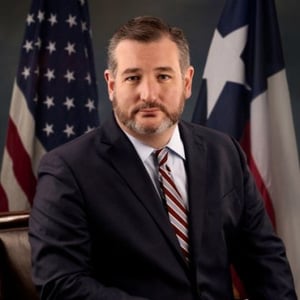
United States Senator, Texas
Ted Cruz represents 28 million Texans in the U.S. Senate as a passionate fighter for limited government and economic growth. He has authored 39 legislative measures signed into law. Recent victories include expanding 529 college savings accounts to allow parents to save for K–12 public, private, and religious education, leading the effort to repeal Obamacare’s individual mandate, imposing sanctions on terrorists who use civilians as human shields, designating North Korea as a state sponsor of terrorism, reauthorizing and reforming NASA, ensuring the availability of additional records to help solve civil rights cold cases, supporting thousands of Texas jobs, and leading the fight to confirm principled constitutionalists to our courts.
Senator Cruz is a graduate of Princeton University and Harvard Law School, a former law clerk to Chief Justice William Rehnquist, and former solicitor general of Texas. He has argued nine cases before the Supreme Court. In November of 2018, he was re-elected to the Senate by the people of Texas.
Executive Vice President, The Federalist Society
Dean Reuter is Executive Vice President at the Federalist Society for Law and Public Policy Studies. He has served in two federal government agency Offices of the Inspector General, as Counsel to the Inspector General and Deputy Inspector General, responsible for policing the use of federal funds granted and contracted through those agencies. As such, he helped conduct and oversee criminal investigations across the country. He is the principal author of the non-fiction book, The Hidden Nazi: The Untold Story of America's Deal with the Devil, and editor of Liberty’s Nemesis: The Unchecked Expansion of the State and Confronting Terror: 9/11 and the Future of American National Security. He was appointed by the President and served as Vice-Chairman of the Board of Directors of the Corporation for National and Community Service, and recently served as an appointee on the U.S. Commission on Presidential Scholars. He is a graduate of Hood College (BA with Honors) and the University of Maryland School of Law.
United States Senator, Texas
Ted Cruz represents 28 million Texans in the U.S. Senate as a passionate fighter for limited government and economic growth. He has authored 39 legislative measures signed into law. Recent victories include expanding 529 college savings accounts to allow parents to save for K–12 public, private, and religious education, leading the effort to repeal Obamacare’s individual mandate, imposing sanctions on terrorists who use civilians as human shields, designating North Korea as a state sponsor of terrorism, reauthorizing and reforming NASA, ensuring the availability of additional records to help solve civil rights cold cases, supporting thousands of Texas jobs, and leading the fight to confirm principled constitutionalists to our courts.
Senator Cruz is a graduate of Princeton University and Harvard Law School, a former law clerk to Chief Justice William Rehnquist, and former solicitor general of Texas. He has argued nine cases before the Supreme Court. In November of 2018, he was re-elected to the Senate by the people of Texas.
Executive Vice President, The Federalist Society
Dean Reuter is Executive Vice President at the Federalist Society for Law and Public Policy Studies. He has served in two federal government agency Offices of the Inspector General, as Counsel to the Inspector General and Deputy Inspector General, responsible for policing the use of federal funds granted and contracted through those agencies. As such, he helped conduct and oversee criminal investigations across the country. He is the principal author of the non-fiction book, The Hidden Nazi: The Untold Story of America's Deal with the Devil, and editor of Liberty’s Nemesis: The Unchecked Expansion of the State and Confronting Terror: 9/11 and the Future of American National Security. He was appointed by the President and served as Vice-Chairman of the Board of Directors of the Corporation for National and Community Service, and recently served as an appointee on the U.S. Commission on Presidential Scholars. He is a graduate of Hood College (BA with Honors) and the University of Maryland School of Law.

Senior Fellow and Director of Constitutional Studies, Manhattan Institute
Ilya Shapiro is a senior fellow and director of constitutional studies at the Manhattan Institute and a contributing editor of City Journal. Previously he was executive director and senior lecturer at the Georgetown Center for the Constitution, and before that a vice president of the Cato Institute.
Shapiro is the author of Lawless: The Miseducation of America’s Elites (2025) and Supreme Disorder: Judicial Nominations and the Politics of America’s Highest Court (2020), coauthor of Religious Liberties for Corporations? (2014), and editor of 11 volumes of the Cato Supreme Court Review (2008-18). He has contributed to a variety of academic, popular, and professional publications, including the Wall Street Journal, Harvard Journal of Law & Public Policy, Washington Post, Los Angeles Times, USA Today, National Review, and Newsweek. He also regularly provides commentary for various media outlets, writes the Shapiro’s Gavel newsletter on Substack, and once appeared on the Colbert Report.
Shapiro has testified many times before Congress and state legislatures and has filed more than 500 amicus curiae “friend of the court” briefs in the Supreme Court. He lectures regularly on behalf of the Federalist Society, is a member of the board of fellows of the Jewish Policy Center, was an inaugural Washington Fellow at the National Review Institute, and has been an adjunct law professor at the George Washington University and University of Mississippi. He is also the chairman of the board of advisers of the Mississippi Justice Institute, a barrister in the Edward Coke Appellate Inn of Court, and a former member of the Virginia Advisory Committee to the U.S. Commission on Civil Rights.
Earlier in his career, Shapiro was a special assistant/adviser to the Multi-National Force in Iraq on rule-of-law issues and practiced at Patton Boggs and Cleary Gottlieb. Before entering private practice, he clerked for Judge E. Grady Jolly of the U.S. Court of Appeals for the Fifth Circuit. He holds an AB from Princeton University, an MSc from the London School of Economics, and a JD from the University of Chicago Law School.

Pena-Rodriguez v. Colorado - Post-Decision SCOTUScast
John C. Richter
SCOTUScast 4-6-17 featuring John C. Richter
On March 6, 2017, the Supreme Court decided Pena-Rodriguez v. Colorado. Miguel Angel Pena-Rodriguez was...
Courthouse Steps: Fashionable Copyright Law in the U.S. Supreme Court - Podcast
Sandra Aistars
Intellectual Property Practice Group Podcast
Last Wednesday the Supreme Court handed down a 6-2 opinion resolving a long mystifying test...
All Falling Faiths: Reflections on the Promise and Failure of the 1960s - Podcast
J. Harvie Wilkinson, Danielle Sassoon
Practice Group Podcast
In this warm and intimate memoir, Judge Wilkinson of the United States Court of Appeals...
Fairness in Class Litigation Act - Podcast
Howard M. Erichson, Andrew Grossman
Litigation Practice Group Podcast
On Saturday, March 11 the House passed the Fairness in Class Litigation Act by a...
Courthouse Steps: Saint Peter’s Healthcare System v. Kaplan - Podcast
Eric Baxter
Religious Liberties Practice Group Podcast
This case is a combination of three cases, Advocate Health Care v. Stapleton, St. Peter’s...
The Role of Economic Liberty in the United States
Michelle P. Connolly, Clark Neily, Maureen K. Ohlhausen, Dean Reuter, Lawrence J. Spiwak
Administrative Law & Regulation and Telecommunications & Electronic Media Practice Groups
The Federalist Society hosted a lunch and discussion on the role of Economic Liberty in...
The Role of Economic Liberty in the United States
Michelle P. Connolly, Clark Neily, Maureen K. Ohlhausen, Dean Reuter, Lawrence J. Spiwak
Administrative Law & Regulation and Telecommunications & Electronic Media Practice Groups
The Federalist Society hosted a lunch and discussion on the role of Economic Liberty in...
Keynote Address by Sen. Ted Cruz
Ted Cruz, Dean Reuter
The Role of Economic Liberty in the United States
Senator Ted Cruz gives the keynote address to open the Federalist Society's lunch and discussion...
Keynote Address by Sen. Ted Cruz
Ted Cruz, Dean Reuter
The Role of Economic Liberty in the United States
Senator Ted Cruz gives the keynote address to open the Federalist Society's lunch and discussion...
Packingham v. North Carolina - Post-Argument SCOTUScast
Ilya Shapiro
SCOTUScast 3-30-17 featuring Ilya Shapiro
On February 27, 2017, the Supreme Court heard oral argument in Packingham v. North Carolina....