
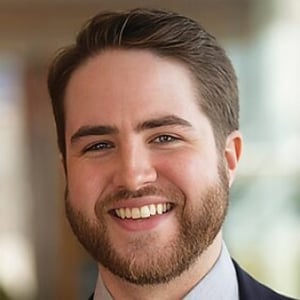
Nicholas Anthony is a policy analyst at the Cato Institute’s Center for Monetary and Financial Alternatives, a fellow at the Human Rights Foundation (HRF), and a member of the Economic Inclusion Group’s Advisory Board. Anthony’s research covers a wide range of topics within the field of monetary and financial economics, including central bank digital currency (CBDC), financial privacy, cryptocurrency, and the use of money in society. Anthony is the author of Digital Currency or Digital Control? Decoding CBDC and the Future of Money and his work has been published in the Wall Street Journal, MarketWatch, Business Insider, and numerous other outlets. Anthony has testified before Congress and maintains the HRF CBDC Tracker, which documents CBDC development and civil liberties concerns around the world.
Senior Attorney, Institute for Justice
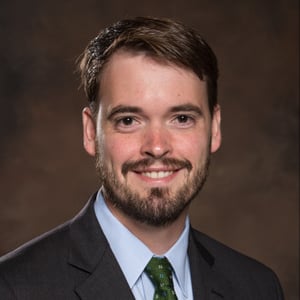
Rob Johnson is a senior attorney at the Institute for Justice, where he litigates to protect private property, free speech, and other individual rights. Rob is a nationally-recognized expert on civil forfeiture. He previously represented a series of small business owners who had their entire bank accounts seized by the IRS, and he launched an initiative that resulted in the IRS reopening hundreds of closed forfeiture cases and returning millions of dollars. He has also litigated cases challenging the constitutionality of civil forfeiture procedures, and he scored a victory striking down a forfeiture program as a violation of due process.
Beyond civil forfeiture, Rob has litigated cases defending a range of constitutional rights. He was part of teams that successfully challenged occupational licensing requirements for tour guides in Savannah and Charleston. He also developed a class action lawsuit fighting the NYPD’s use of a draconian “no-fault eviction” statute to coerce residents to waive their constitutional rights, which led New York City to reform the challenged law.
Rob’s writing has been published in the Wall Street Journal, Washington Post, Politico, and Reason, among other venues. Rob has testified about occupational licensing before the House and Senate Judiciary Committees and has twice testified about civil forfeiture before the House Ways & Means Oversight Subcommittee. He has also testified before state legislatures across the country.
From 2014-2017, Rob served as IJ’s first Elfie Gallun Fellow for Freedom and the Constitution. In that role, Rob wrote and spoke about the vital role the U.S. Constitution plays in protecting our most precious freedoms. He is currently at work on a book about the Fourteenth Amendment.
Rob studied literature and anthropology at Columbia University, and he studied law at Harvard Law School. Upon graduation, he clerked for Chief Judge Alex Kozinski on the Ninth Circuit and for Justice Anthony Kennedy on the Supreme Court.
Rob lives in Cleveland with his wife and two daughters—all named after characters in Shakespeare plays—and is an amateur large format photographer.
Consultant, American Edge Project and U.S. Chamber of Commerce
Senior Fellow, Technology Policy, Cato Institute
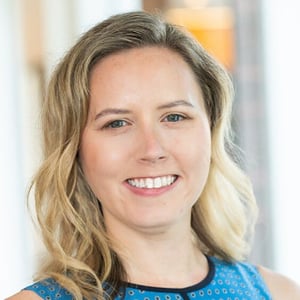
Jennifer’s research focuses on the intersection of emerging technology and law with a particular interest in the interactions between technology and the administrative state. Her work covers topics including judicial deference, liability protection for Internet platforms, autonomous vehicles and other disruptive transportation technologies, the regulation of data privacy, and the benefits of technology and innovation. Her work has appeared in USA Today, the Chicago Tribune, the New York Daily News, the Sacramento Bee, the Washington Times, Real Clear Policy, and U.S. News and World Report. Jennifer has a JD from the University of Alabama School of Law and a BA in political science at Wellesley College.
Counsel, Cadwalader, Wickersham & Taft LLP; Senior Competition Counsel, TechFreedom
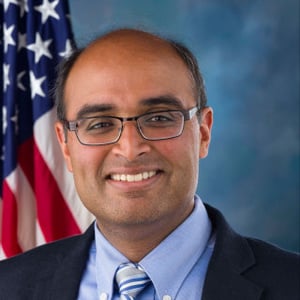
Bilal Sayyed represents clients before the Federal Trade Commission (FTC) and Department of Justice (DOJ) in significant merger, civil and criminal antitrust matters. A significant portion of his practice involves representing investment funds on antitrust and Hart-Scott-Rodino (HSR) Act compliance matters; he has also provided expert witness services related to HSR compliance. Bilal also counsels clients before the FTC in consumer protection and privacy investigations. He maintains an active amicus and appellate brief writing practice in antitrust litigation and antitrust merger matters.
Prior to joining Cadwalader, Bilal was the Director of the FTC’s Office of Policy Planning (OPP) (2018-2021). In that role, he provided legal and policy advice to the Chairman and Commissioners on antitrust and consumer protection matters and worked closely with the senior and career leadership of the FTC’s Bureaus of Competition, Consumer Protection, and Economics. Bilal previously served as an Attorney Advisor to FTC Chairman Timothy J. Muris from 2001 to 2004. In that role, Bilal advised the Chairman on matters involving a wide spectrum of industries, including chemical and mining, petroleum and natural gas, health care and pharmaceutical, defense and transportation, gaming, various consumer products and retail operations, and professional associations and standard-setting organizations.
Bilal has taught antitrust and competition law at the George Mason University School of Law since 2011.
Bilal received his B.A. from Case Western Reserve University, and a J.D. from George Mason University School of Law. He is admitted to practice in the District of Columbia and the State of New York, as well as before the U.S. District Courts for the District of Colorado and the District of Columbia, the U.S. Court of Appeals for the District of Columbia Circuit, the Fifth Circuit, the Ninth Circuit, and the U.S. Supreme Court.
Bilal is the host of Rethinking Antitrust, a podcast published by TechFreedom that examines the economics, institutions, law, legislation, and policy goals of antitrust enforcement.
President, Center for American Rights
Daniel Suhr serves as president of the Center for American Rights, where he spends every day on the front lines of the fight to preserve our rights and liberties. The Center's mission is to advance free speech, free enterprise, and parental freedom in education through strategic, precedent-setting litigation.
Daniel formerly worked as policy director for Wisconsin Governor Scott Walker, as chief of staff for Wisconsin Lieutenant Governor Rebecca Kleefisch, and as a law clerk for Judge Diane Sykes of the U.S. Court of Appeals for the Seventh Circuit. He holds a B.A. and J.D. from Marquette University, and master’s degrees from Georgetown and the University of Missouri.
Shareholder, Kirton McConkie
Christopher Bates is co-chair of the firm’s Appellate section and a member of the Litigation and First Amendment and Religious Organizations sections. His practice focuses on appeals and critical motions in complex cases. He has argued dozens of cases in courts across the country, including the Utah Supreme Court, Utah Court of Appeals, and eleven of the thirteen federal circuits. He has also handled a variety of dispositive motions in both state and federal court. Chris’s subject matter experience includes a range of constitutional, regulatory, and commercial issues.
Chris has significant experience in senior positions in both state and federal government. Before joining Kirton McConkie, Chris served as deputy solicitor general for Utah. In that position, he managed complex ligation for the state on a range of topics and routinely appeared in both appellate and trial courts. He also led the state’s amicus efforts in the U.S. Supreme Court and federal courts of appeals. Prior to that, Chris served as senior counsel to the Assistant Attorney General for the Civil Division at the U.S. Department of Justice, where he defended agency rulemakings and other administrative actions against statutory and constitutional challenges.
Earlier in his career, Chris was chief counsel to U.S. Senator Orrin G. Hatch on the Senate Judiciary Committee. In that role, he served as Senator Hatch’s chief legal advisor on intellectual property, antitrust, and criminal law. He led introduction and passage of several key pieces of legislation and staffed the senator at two Supreme Court confirmation hearings. He brings this legislative experience to bear in analyzing complex statutes and building coalitions in multiparty litigation.
Chris began his career by serving as a law clerk to Judge Thomas B. Griffith on the U.S. Court of Appeals for the D.C. Circuit. He was then a litigation associate in Sidley Austin’s Supreme Court and Appellate Practice in Washington, DC. He has also taught college-level courses on constitutional law and legal studies.
Principal, Spero Law LLC
Christopher Mills is the founder of Spero Law LLC. He was previously a partner at a national law firm and a Constitutional Law Fellow at the Becket Fund for Religious Liberty. He served as a law clerk to Justice Clarence Thomas on the U.S. Supreme Court during October Term 2018. He also clerked for the Honorable David B. Sentelle, then-Chief Judge of the U.S. Court of Appeals for the D.C. Circuit. He has authored briefs and motions in the Supreme Court, courts of appeals, and trial courts, and successfully argued before the D.C. Circuit. He has served as special counsel to South Carolina Governor Henry McMaster, and is an Adjunct Professor at the Charleston School of Law.
A 2012 magna cum laude graduate of Harvard Law School, Christopher was a senior editor of the Harvard Law Review, an editor of the Harvard Journal of Law and Public Policy, and served on the Executive Board of the Harvard Federalist Society. In 2009, he graduated Phi Beta Kappa and summa cum laude with a degree in economics from Furman University.
Christopher lives in Charleston, South Carolina with his wife, children, and golden retriever.
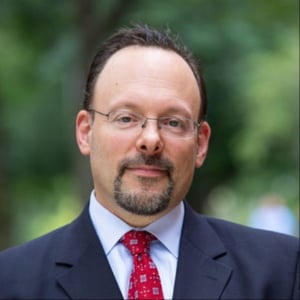
Tazewell Taylor Professor of Law and William H. Cabell Research Professor, William & Mary Law School
Jonathan H. Adler joined the William & Mary law faculty as the Tazwell Taylor Professor of Law and William H. Cabell Research Professor in 2025. Prior to joining the faculty, he was the inaugural Johan Verheij Memorial Professor of Law and the founding Director of the Coleman P. Burke Center for Environmental Law at the Case Western Reserve University School of Law.
Professor Adler is the author or editor of seven books, including Climate Liberalism: Perspectives on Liberty, Property and Pollution (Palgrave, 2023), Marijuana Federalism: Uncle Sam and Mary Jane (Brookings Institution Press, 2020), Business and the Roberts Court (Oxford University Press, 2016) and Rebuilding the Ark: New Perspectives on Endangered Species Act Reform (AEI Press, 2011).
His articles have appeared in publications ranging from the Harvard Environmental Law Review and Yale Journal on Regulation to the Wall Street Journal, New York Times, and Washington Post. He has testified before Congress a dozen times, and his work has been cited in the U.S. Supreme Court. A 2024 study identified Professor Adler as the seventh most cited legal academic in administrative and environmental law from 2019 to 2023.
Professor Adler is a contributing editor to Civitas Outlook and a regular contributor to the popular legal blog, The Volokh Conspiracy. A regular commentator on constitutional and regulatory issues, he has appeared on numerous radio and television programs, ranging from the PBS Newshour and National Public Radio to the Fox News Channel and Entertainment Tonight.
Professor Adler is a senior fellow at the Property & Environment Research Center in Bozeman, Montana. In 2018, Professor Adler was elected to membership in the American Law Institute and helped co-found the organization Checks and Balances. In 2024, Professor Adler was appointed a public member of the Administrative Conference of the United States.
Professor Adler clerked for the Honorable David B. Sentelle on the U.S. Court of Appeals for the District of Columbia Circuit.

Laurence H. Silberman Chair in Constitutional Governance, American Enterprise Institute; Executive Director, Antonin Scalia Law School’s C. Boyden Gray Center for the Study of the Administrative State
Adam J. White is the Laurence H. Silberman Chair in Constitutional Governance and senior fellow at the American Enterprise Institute, where he focuses on the Supreme Court and the administrative state. He also directs the Antonin Scalia Law School’s C. Boyden Gray Center for the Study of the Administrative State.
He writes on regulation and constitutional government for a variety of publications. He practiced law in Washington, D.C., after clerking for the D.C. Circuit's Judge David Sentelle. He also has been chairman of the ABA's Administrative Law Section.
In 2021, he served on the Presidential Commission on the Supreme Court of the United States, where he criticized “Court packing” and other efforts to restructure the Supreme Court.
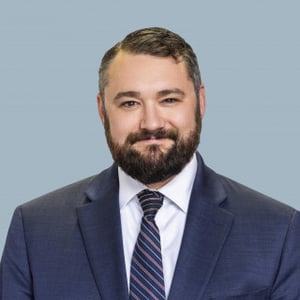
Partner, Ashbrook Byrne Kresge Flowers LLC
Ben Flowers, a partner at Ashbrook Byrne Kresge Flowers LLC, is an accomplished litigator with experience briefing, arguing, and winning high-stakes cases in courts throughout the country.
Before joining the law firm, Ben served as Ohio's 10th Solicitor General. In that role he regularly represented the State of Ohio before the Supreme Court of the United States, the United States Court of Appeals for the Sixth Circuit, and the Supreme Court of Ohio. Most prominently, in National Federation of Independent Business v. Department of Labor, Ben led a multi-state challenge to OSHA's vaccine mandate, ultimately prevailing before the Supreme Court.
Ben is a graduate of The Ohio State University and the University of Chicago Law School. Following law school, Ben clerked for Judge Sandra Ikuta of the U.S. Court of Appeals for the Ninth Circuit and for Justice Antonin Scalia of the Supreme Court of this United States. Ben lives in Upper Arlington, Ohio with his wife Denise and their three very active children.
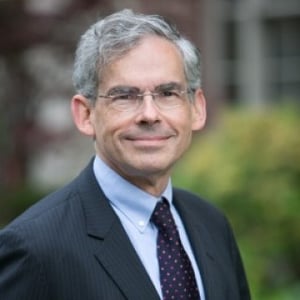
Andrew Sabin Professor of Professional Practice and Founder and Faculty Director of the Sabin Center for Climate Change Law, Columbia University Law School
The founder and faculty director of the groundbreaking Sabin Center for Climate Change Law and one of the foremost environmental lawyers in the nation, Michael Gerrard is an advocate, litigator, teacher, and scholar who has pioneered cutting-edge legal tools and strategies for addressing climate change. He writes and teaches courses on environmental law, climate change law, and energy regulation. He was the chair of the faculty of Columbia University’s renowned Earth Institute from 2015 to 2018 and now holds a joint appointment to the faculty of its successor, the Columbia Climate School.
For three decades, before joining the Columbia Law School faculty in 2009, Gerrard practiced law in New York, most recently as the partner in charge of the New York office of Arnold & Porter. As an environmental lawyer, he tried numerous cases and argued many appeals in federal and state courts and administrative tribunals. He also handled the environmental aspects of diverse transactions and development projects and provided regulatory compliance advice to an array of clients in the private and public sectors. Several publications rated him the leading environmental lawyer in New York and one of the leaders in the world.
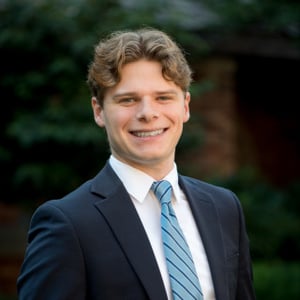
President, Yale Student Chapter
David Haungs is a student at Yale Law School, where he serves as President of the Yale Federalist Society chapter.
Senior Attorney, Institute for Justice
Rob Johnson is a senior attorney at the Institute for Justice, where he litigates to protect private property, free speech, and other individual rights. Rob is a nationally-recognized expert on civil forfeiture. He previously represented a series of small business owners who had their entire bank accounts seized by the IRS, and he launched an initiative that resulted in the IRS reopening hundreds of closed forfeiture cases and returning millions of dollars. He has also litigated cases challenging the constitutionality of civil forfeiture procedures, and he scored a victory striking down a forfeiture program as a violation of due process.
Beyond civil forfeiture, Rob has litigated cases defending a range of constitutional rights. He was part of teams that successfully challenged occupational licensing requirements for tour guides in Savannah and Charleston. He also developed a class action lawsuit fighting the NYPD’s use of a draconian “no-fault eviction” statute to coerce residents to waive their constitutional rights, which led New York City to reform the challenged law.
Rob’s writing has been published in the Wall Street Journal, Washington Post, Politico, and Reason, among other venues. Rob has testified about occupational licensing before the House and Senate Judiciary Committees and has twice testified about civil forfeiture before the House Ways & Means Oversight Subcommittee. He has also testified before state legislatures across the country.
From 2014-2017, Rob served as IJ’s first Elfie Gallun Fellow for Freedom and the Constitution. In that role, Rob wrote and spoke about the vital role the U.S. Constitution plays in protecting our most precious freedoms. He is currently at work on a book about the Fourteenth Amendment.
Rob studied literature and anthropology at Columbia University, and he studied law at Harvard Law School. Upon graduation, he clerked for Chief Judge Alex Kozinski on the Ninth Circuit and for Justice Anthony Kennedy on the Supreme Court.
Rob lives in Cleveland with his wife and two daughters—all named after characters in Shakespeare plays—and is an amateur large format photographer.
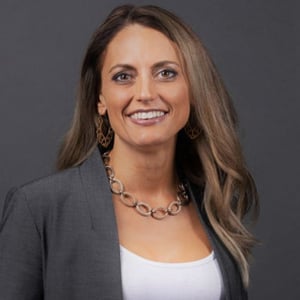
Judge, U.S. Court of Appeals for the Third Circuit
Hon. Jennifer Mascott served as Associate Professor of Law and Director of the Separation of Powers Institute at The Catholic University of America’s Columbus School of Law before her appointment to the federal bench. On July 16, 2025, President Donald J. Trump nominated her to the U.S. Court of Appeals for the Third Circuit (Delaware), and she was confirmed on October 9, 2025.
Prior to her confirmation, Judge Mascott wrote extensively in administrative and constitutional law, statutory interpretation, and the separation of powers. Her scholarship—published in leading journals including the Stanford Law Review, Notre Dame Law Review, and Supreme Court Review—was cited by the U.S. Supreme Court and multiple federal courts. She also contributed Supreme Court commentary for NBC Universal.
Before joining Catholic Law, she was an Assistant Professor and Co-Director of The C. Boyden Gray Center at George Mason University’s Antonin Scalia Law School. In 2022 she became co-author of Beermann, Cass & Diver’s Administrative Law: Cases and Materials (9th ed.). In 2023 she received the Justice Joseph Story Award for excellence in scholarship, teaching, and advancing the rule of law.
Judge Mascott also served as a Council Member of the ABA’s Administrative Law Section and as a Public Member of the Administrative Conference of the United States. She frequently testified before Congress on executive power, regulatory reform, and judicial jurisdiction, and participated in multiple Supreme Court confirmation hearings.
From 2019 to 2021, she took leave from academia to serve as Deputy Assistant Attorney General in the Department of Justice’s Office of Legal Counsel and later as Associate Deputy Attorney General, where she argued federal cases and assisted with Justice Amy Coney Barrett’s confirmation. Earlier in her career, she clerked for Justice Clarence Thomas and for then-Judge Brett M. Kavanaugh on the D.C. Circuit.
Judge Mascott earned her J.D. summa cum laude from the George Washington University Law School and her B.A. from the same institution.
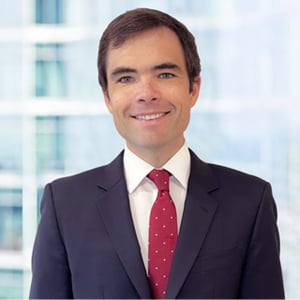
Partner, Keller Postman LLP
JJ Snidow is a Partner at Keller Postman where he specializes in civil litigation in the trial courts. His area of practice focuses on product liability, consumer protection, and antitrust. Before joining Keller Postman, he practiced in DC at Wilkinson Stekloff, a defense-side trial firm. He clerked for Judge Raymond M. Kethledge on the Sixth Circuit, Judge Amul R. Thapar on the Eastern District of Kentucky, and Justice Anthony M. Kennedy on the Supreme Court. He was formerly chairman of the Federalist Society's emerging leaders council, and in law school he served as president of the Yale chapter.
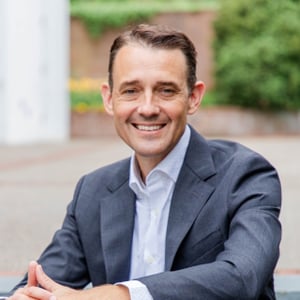
Senior Vice President, Strategic Initiatives & Special Counsel to the President, Alliance Defending Freedom
Ryan Bangert serves as senior vice president for strategic initiatives and special counsel to the president at Alliance Defending Freedom. He oversees ADF’s regulatory practice, government relations, and corporate engagement teams. He also advises executive leadership with strategic initiatives and appears as counsel for ADF clients.
Before joining ADF, Bangert served as deputy first assistant attorney general and deputy for legal counsel in the office of the Texas attorney general. In those roles, he oversaw the state’s Special Litigation Unit, which handled critical litigation against the federal government, and oversaw multiple divisions within the office. Prior to that, he served as deputy for civil litigation for Missouri Attorney General Josh Hawley, overseeing the state’s civil litigation divisions, including the consumer protection and antitrust divisions, with over 200 attorneys and staff. During his time in government service, Bangert handled a diverse array of matters involving Big Tech, election law, civil rights, multistate antitrust and consumer protection investigations, and many other issues.
Prior to his government service, Bangert was a litigation partner at Baker Botts L.L.P., where he was a member of the firm’s commercial litigation and appellate practice sections. A seasoned trial attorney, The Texas Lawyer ranked the verdict Bangert achieved in the Janvey v. Maldonado case as the #1 verdict in the securities category for 2015-2019, and The National Law Journal ranked it in its “Top 100 Verdicts of 2015.” He was named a “Texas Rising Star” for multiple years by Texas Lawyer and Law and Politics magazines. While at Baker Botts, he was a volunteer attorney for ADF and served as amicus counsel in numerous cases, including Trinity Lutheran v. Comer and Salazar v. Buono, receiving the firm’s Opus Justitae Award in recognition of his outstanding commitment to pro bono service.
Bangert earned his J.D. from Southern Methodist University, where he was a Hatton Sumner’s scholar and graduated first in his class. He also participated in ADF’s Blackstone program and is a Blackstone Fellow. Following law school, he clerked for the Honorable Patrick E. Higginbotham on the Fifth Circuit Court of Appeals.
Bangert is a member of the Philadelphia Society and Federalist Society. He is admitted to practice law in Texas, California (inactive), Missouri (inactive), the U.S. Supreme Court and numerous federal district and appellate courts. A frequent op-ed contributor, his work has appeared in National Review, Daily Wire, The Hill, Washington Examiner, The Federalist, Fox News, and RealClear Religion. He speaks nationally on constitutional, cultural, and religious liberty issues.
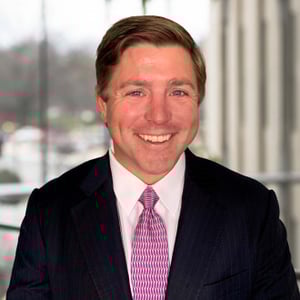
General Counsel, xAI and X
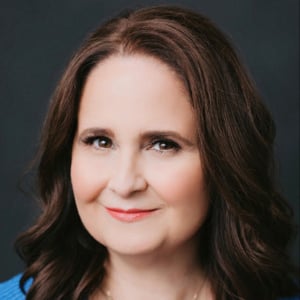
Chief Judge, United States Court of Appeals, Fifth Circuit
Jennifer Walker Elrod is the Chief Judge of the United States Court of Appeals for the Fifth Circuit. She was nominated to the Fifth Circuit in 2007, and she served as a Circuit Judge on the court until assuming the role of Chief Judge in October 2024. Prior to serving as a Circuit Judge, Chief Judge Elrod was appointed and then twice elected Judge of the 190th District Court of Harris County, Texas, where she spent over five years presiding over more than 200 jury and non-jury trials.
Chief Judge Elrod graduated cum laude from Harvard Law School, where she was an active member of the Harvard Federalist Society, an Ames Moot Court finalist, and a Senior Editor of the Harvard Journal of Law & Public Policy. She clerked for the Honorable Sim Lake in the Southern District of Texas. Before serving as a judge, Chief Judge Elrod worked in private practice, focusing on civil litigation, antitrust, and employment matters.
She has been repeatedly recognized for her work as a jurist, as well as for her pro bono work and contributions to the community. She has been named the 2022 Texas Review of Law & Politics’ Jurist of the Year, the 2018 Harvard Federalist Society’s Alumni of the Year, the 2016–17 Texas Association of Civil Trial and Appellate Specialists’ Appellate Judge of the Year, and the 2008 Mexican-American Bar Association of Texas’s Judge of the Year.
Chief Judge Elrod is actively engaged in the academic and legal communities. Chief Judge Elrod currently serves on the Board of Directors and as the Jurist-in-Residence at the South Texas College of Law, where she teaches civil procedure and First Amendment law. She is also a member of the American Law Institute and of the Board of Advisors for the Harvard Journal of Law & Public Policy, and she is a former member of the Board of Regents of her alma mater, Baylor University, and the Board of Visitors at Brigham Young University Law School. She previously served as the Chair of the Codes of Conduct Committee for the Judicial Conference of the United States. She has also served as the M.D. Anderson Visiting Public Service Professor at the Texas Tech University School of Law and as Jurist-in-Residence at Brigham Young University Law School, and she has taught legal writing at the University of Houston Law Center. She presented the Lewis F. Powell, Jr. Distinguished Lecture at the Washington and Lee University School of Law and is a frequent speaker on the topics of trial and appellate procedure, ethics, employment law, and constitutional law. Chief Judge Elrod also serves on the board of the Garland R. Walker Inn of Court, and co-produces an annual musical CLE, for which her pupilage group has won multiple national awards.
Chief Judge Elrod’s publications include: Trial by Siri: AI Comes to the Courtroom; Don’t Mess with Texas Judges: In Praise of the State Judiciary; For Good: Enriching Your Practice and Your Life Through Pro Bono and Community Service; Is the Jury Still Out?: A Case for the Continued Viability of the American Jury; and W(h)ither the Jury? The Diminishing Role of the Jury Trial in our Legal System.
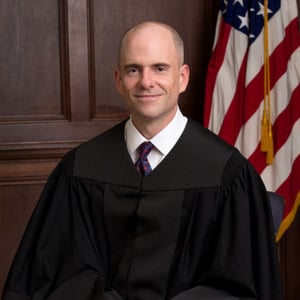
Judge, United States Court of Appeals, Eleventh Circuit
Judge Kevin C. Newsom is a member of the United States Court of Appeals for the Eleventh Circuit. He sits in Birmingham, Alabama.
Before his appointment to the bench, Judge Newsom was the head of the appellate practice group at Bradley Arant Boult Cummings LLP and, before that, the Solicitor General of Alabama. As a practicing lawyer, Judge Newsom argued four cases in the Supreme Court of the United States, and nearly 40 more in the United States Courts of Appeals and state supreme and appellate courts.
Judge Newsom graduated summa cum laude from Samford University and magna cum laude from Harvard Law School, where he was an articles editor on the Harvard Law Review. Following law school, Judge Newsom clerked for Judge Diarmuid F. O’Scannlain of the United States Court of Appeals for the Ninth Circuit and Justice David H. Souter of the Supreme Court of the United States.
Judge Newsom teaches at Harvard Law School, Yale Law School, Stanford Law School, and the University of Chicago Law School. His published work has appeared in the Yale Law Journal and the Harvard Law Review.
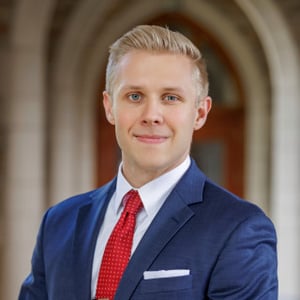
President, Notre Dame Student Chapter
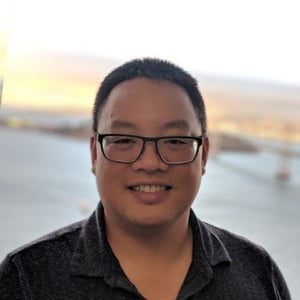
Associate General Counsel, OpenAI
Michael Trinh is currently Associate General Counsel at OpenAI working on litigation and regulatory matters. He was formerly Head of Litigation Advance at Google where he led a team handling a broad portfolio of litigation strategy, research, amici briefs, and proactive/enforcement litigation across the company’s product areas.
In prior roles over 14 years at Google, Mike managed a group defending patent litigation worldwide, and also served as product counsel at Google X for emerging ‘moonshots’ (innovation projects primarily in developing economies). He guided experimental aviation projects as they evolved from research concept towards market introduction, handling the legal/regulatory issues arising from high altitude balloon-mounted telecommunication networks, drone delivery of burritos, kite-generated electricity, and cargo airships. Before this science fiction, he was Litigation Counsel at Google, managing a team handling a fast-growing docket of 100+ patent litigation cases in courts worldwide.
Previously, he was a technology/IP litigation associate at Orrick, Herrington and Sutcliffe in San Francisco. He also handled national security issues while representing, pro bono, Guantanamo Bay detainees challenging their indefinite incarceration without ever being charged. Mike graduated from the Georgetown University Law Center (2005) and the University of North Carolina at Chapel Hill (2002, B.S. Comp Sci). While he grew up in Raleigh, NC, he now lives in the San Francisco Bay Area with his wife and a string cheese-seeking dog (who was once featured in the Financial Times).
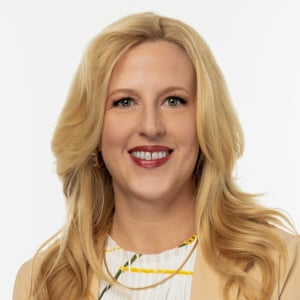
General Counsel, Saronic Technologies
Tobi Young is the General Counsel of Saronic Technologies. Her responsibilities include managing global legal affairs, regulatory compliance, litigation, risk management, and government security, and corporate governance.
Tobi brings over 20 years of experience with sophisticated legal, regulatory, and compliance issues through leadership roles in all three branches of the federal government and in Fortune 500 companies. Among other governmental positions, she has been an attorney in the U.S. Department of Justice and in the Office of the White House Counsel; a law clerk to U.S. Supreme Court Justice Neil M. Gorsuch; and a press secretary for Congressman J.C. Watts. Tobi also currently serves as the Chair of the Nominating and Governance Committee on the Halliburton Board of Directors (NYSE: HAL).
Tobi grew up in Oklahoma and is a proud member of the Chickasaw Nation. She recently became the youngest inductee into the Chickasaw Hall of Fame. Tobi now lives in Austin with her husband Evan, a Justice on the Texas Supreme Court, and their daughter Romilly.
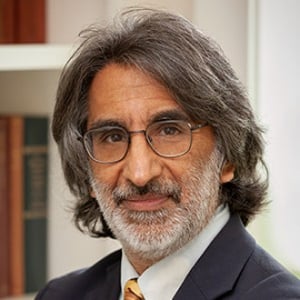
Sterling Professor of Law, Yale Law School
Akhil Reed Amar is Sterling Professor of Law and Political Science at Yale University, where he teaches constitutional law in both Yale College and Yale Law School. After graduating from Yale College, summa cum laude, in 1980 and from Yale Law School in 1984, and clerking for Judge (later Justice) Stephen Breyer, Amar joined the Yale faculty in 1985 at the age of 26. He is Yale’s only living professor to have won the University’s unofficial triple crown — the Sterling Chair for scholarship, the DeVane Medal for teaching, and the Lamar Award for alumni service.
Amar’s work has won awards from both the American Bar Association and the Federalist Society, and he has been cited by Supreme Court justices across the spectrum in more than 50 cases — tops among scholars under age 70. According to both Fred Shapiro’s landmark 2021 study of lifetime scholarly citations and Heinonline’s most recent tabulation of lifetime law-review citations, Amar is America’s second most-cited legal scholar still under age 70. He is a member of the American Academy of Arts and Sciences and has written widely for popular publications, including The New York Times, The Washington Post, The Wall Street Journal, Time, and The Atlantic. He was an informal consultant to the popular TV show The West Wing and his scholarship has been showcased on many broadcasts, including The Colbert Report, Morning Joe, AC360, Velshi, Fox News @ Night with Shannon Bream, Fareed Zakaria GPS, Erin Burnett Outfront, and Constitution USA with Peter Sagal.
He is the author of more than a hundred law review articles and several books, including The Bill of Rights (1998 — winner of the Yale University Press Governors’ Award), America’s Constitution (2005 — winner of the ABA’s Silver Gavel Award), America’s Unwritten Constitution (2012 — named one of the year’s 100 best nonfiction books by The Washington Post), and The Constitution Today (2016 — named one of the year’s top ten nonfiction books by Time magazine). The first volume of his ambitious trilogy on American constitutional history from the Founding to the present, The Words That Made Us: America’s Constitutional Conversation, 1760-1840, came out in May 2021. The second volume, Born Equal: Remaking America’s Constitution, 1840-1920, will be published in September 2025 and is already available for pre-order. All together, his nonfiction books have won two starred reviews from Publishers Weekly and three starred reviews from Kirkus—tops, it is believed, among legal scholars under age 70. Together with Vikram David Amar (YLS ’88), he has a bi-weekly column on the Supreme Court on the distinguished website SCOTUSblog. Along with Andy Lipka, he co-hosts a popular and free weekly podcast, Amarica’s Constitution, whose listeners are eligible for CLE credit in most American jurisdictions. A wide assortment of his articles and op-eds and video links to many of his public lectures and free online courses may be found at akhilamar.com.
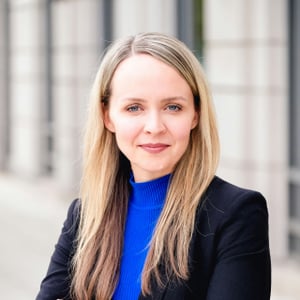
Professor of Law and Faculty Director for the Georgetown Center for the Constitution, Georgetown University Law Center
Stephanie Barclay is a Professor of Law at Georgetown Law School, and the Faculty Director of the Georgetown Center for the Constitution. Her research focuses on the role our different democratic institutions play in protecting minority rights, particularly at the intersection of free speech and religious exercise. Barclay‘s work is published or is forthcoming in leading journals such as the Harvard Law Review, the Chicago Law Review, the University of Pennsylvania Law Review, and the Yale Law Journal Forum. One of her articles was also selected for the 2020 Stanford/Harvard/Yale Junior Faculty Forum. Her work has been featured in many media outlets, including The New York Times, The Wall Street Journal, The Washington Post, USA Today, Bloomberg BNA, The Hill, and Law 360. And her work has also been cited by the U.S. Supreme Court.
Prior to joining Georgetown, Barclay was twice voted Professor of the Year. Barclay has also litigated constitutional cases at both the trial and appellate level, including before the U.S. Supreme Court. Barclay served as a law clerk to Judge N. Randy Smith on the U.S. Court of Appeals for the Ninth Circuit, and to Justice Neil M. Gorsuch of the U.S. Supreme Court.
Barclay is a Faculty Affiliate at the Constitutional Law Center at Stanford Law School; and she is a Nootbaar Fellow at the Nootbaar Institute on Law, Religion, and Ethics at Pepperdine University. She currently serves as the Chair for the AALS Law and Religion Section and as a Member of the Executive Committee for the AALS Constitutional Law Section. She graduated summa cum laude from BYU Law School, where she was elected to the Order of the Coif. She is completing a Ph.D. in Law at Oxford University as a Clarendon Scholar and a Tang Scholar.
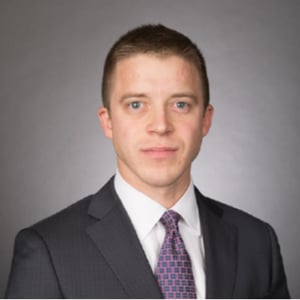
Deputy General Counsel, Office of Texas Governor Greg Abbott
Trevor serves as General Counsel to Governor Greg Abbott. In that role he provides strategic counseling to the State’s Chief Executive Officer on a range of issues under both state and federal law, including litigation involving the Governor, appointments to state courts, clemency applications and executive orders, and draft legislation and administrative rules.
Before joining the Governor’s Office, Trevor litigated complex cases at every level of the state and federal judiciaries, both in private practice at Clement & Murphy in Washington, D.C., and in government service as an Assistant Attorney General for the State of Texas. He twice clerked for Justice Neil Gorsuch on the Supreme Court of the United States. He also clerked for Judge Andrew Oldham on the U.S. Court of Appeals for the Fifth Circuit and now-Chief Judge Jeffrey Sutton on the U.S. Court of Appeals for the Sixth Circuit. For several years, Trevor taught as an adjunct professor a course on the writ of habeas corpus, with material covering the Suspension Clause, wartime detention, immigration, and post-conviction review.
He is a graduate of Stanford Law School and Kenyon College. He and his wife Khina live in Austin, Texas, with their son Ransom.
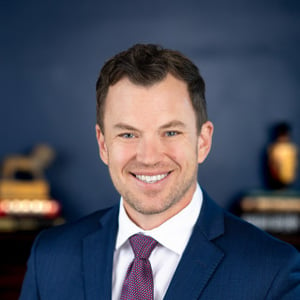
President and Co-Founder, America First Legal Foundation
Gene Hamilton is the President of America First Legal, which he co-founded, and where he was previously the Executive Director, Executive Vice President, and General Counsel. He most recently served as Deputy White House Counsel to President Donald Trump. Earlier in his career, Gene served as Counselor to Attorney General at the U.S. Department of Justice and as Senior Counselor to the Secretary of Homeland Security. He also served as General Counsel on the Senate Judiciary Committee and held several roles at the Department of Homeland Security, including with U.S. Immigration Enforcement, U.S. Customs and Border Protection and the Office of the General Counsel. He holds a B.A. from the University of Georgia and a J.D. from Washington and Lee University School of Law.
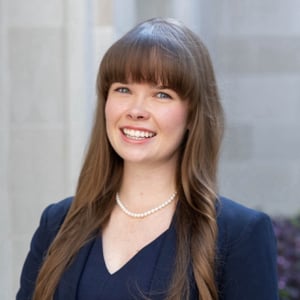
Editor in Chief, Texas Review of Law & Politics, The University of Texas School of Law
Jordan Lamb is a third-year law student at the University of Texas School of Law and the Editor in Chief of the Texas Review of Law & Politics. She previously served as President of the Texas Law Federalist Society.
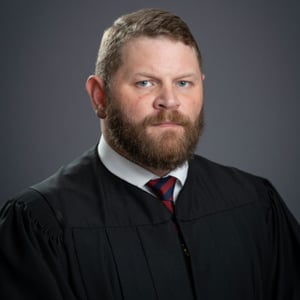
Justice, Texas Supreme Court
James P. Sullivan was appointed to the Texas Supreme Court by Governor Greg Abbott on January 7, 2025, after serving as his General Counsel. He is the proud husband of Alithea and father of Conan. Growing up in Austin, Judge Sully was an extra in the movie "Dazed & Confused." He was a highly unrecruited walk-on at Rice University, until an injury turned him into a debater. Once in law school, he met his wife, Alithea, on the Harvard Law Review. After graduating, he clerked on the D.C. Circuit for Judge Thomas B. Griffith. He also worked under then-Attorney General Abbott in the Office of the Solicitor General, in addition to stints as an adjunct professor at George Mason University and an appellate litigator in private practice.
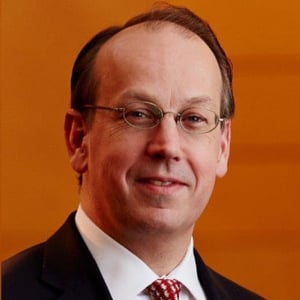
Partner, Clement & Murphy, PLLC
Paul served as the 43rd Solicitor General of the United States from June 2005 until June 2008. Before his confirmation as Solicitor General, he served as Acting Solicitor General for nearly a year and as Principal Deputy Solicitor General for over three years.
Paul has argued over 100 cases before the United States Supreme Court, including McConnell v. FEC, Tennessee v. Lane, United States v. Booker, MGM v. Grokster, Hobby Lobby v. Burwell, Epic Systems Corp. v. Lewis, Rucho v. Common Cause, Facebook v. Duguid, and TransUnion v. Ramirez. Paul has argued more Supreme Court cases since 2000 than any lawyer in or out of government. He has also argued many important cases in the lower courts, including Walker v. Cheney, United States v. Moussaoui and NFL v. Brady.
Paul’s practice focuses on appellate matters, constitutional litigation and strategic counseling. He represents a broad array of clients in the Supreme Court and in federal and state appellate courts. Last year, for example, he successfully argued Supreme Court cases involving significant issues of energy regulation, statutory interpretation, state sovereign immunity and Article III standing, and successfully argued a trademark appeal in the Fourth Circuit, and a constitutional appeal before the en banc Eleventh Circuit.
Paul focuses on high-stakes appeals. In recent years, he successfully defended a $1.2 billion jury verdict for clients in a Tenth Circuit case, while securing the reversal of an over $2 billion jury verdict for another client in the Seventh Circuit and the approval of a nearly $1 billion dollar class action settlement in the Third Circuit. He has initiated major administrative law challenges and constitutional litigation against the federal government, such as the successful challenge to the HHS drug-pricing rule and threatened challenges that led to the withdrawal of the Treasury Department’s proposed cryptocurrency regulations. He also counsels clients on a variety of strategic legal questions, whether arising from pending legislation, government inquiries or ongoing litigation.
Paul has undertaken substantial pro bono engagements in the Supreme Court, such as twice successfully representing the defendant in Bond v. United States and successfully representing the Omaha Tribe in Nebraska v. Parker, the guardian ad litem in Adoptive Couple v. Baby Girl, the defendant in Sekhar v. United States, a high school football coach in Kennedy v. Bremerton, and the Little Sisters of the Poor. Paul’s pro bono representation also precipitated the federal government’s confession of error in United States v. Rojas.
Following law school, Paul clerked for Judge Laurence H. Silberman of the U.S. Court of Appeals for the D.C. Circuit and for Associate Justice Antonin Scalia of the U.S. Supreme Court. After his clerkships, he went on to serve as Chief Counsel of the U.S. Senate Subcommittee on the Constitution, Federalism and Property Rights.
Paul is a Distinguished Lecturer in Law at the Georgetown University Law Center, where he has taught in various capacities since 1998. He also serves as a Senior Fellow of the Law Center’s Supreme Court Institute. He is the Justice Joseph Story Distinguished Practitioner in Residence at the Gray Center at Scalia Law School.
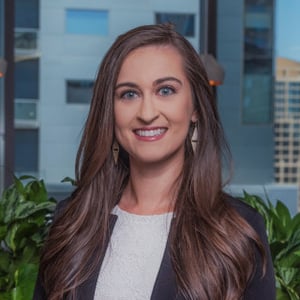
President, Arizona State Student Chapter
Morgan N. Larson is a J.D. candidate at the Sandra Day O’Connor College of Law at Arizona State University, where she serves as President of the Federalist Society and Business Editor of the Arizona State Law Journal. She has received multiple CALI Excellence for the Future Awards, given to the student earning the highest grade in a course, in Statutory Interpretation, Legal Method & Writing, and Public Interest Litigation, and is a four-time Pedrick Scholar.
Before attending law school, Morgan worked for seven years in the Financial Services Tax practice at Ernst & Young LLP in Phoenix, advising national banking and capital-markets clients on complex federal tax issues, IRS controversies, and accounting-method changes.
Morgan’s legal experience includes serving as a judicial extern to the Honorable Jennifer M. Perkins on the Arizona Court of Appeals and as a Summer Associate at Skadden, Arps, Slate, Meagher & Flom LLP in Washington, D.C., where she will return post-graduation to join the firm’s Tax Controversy & Litigation Group. She is also a Ronald Reagan Fellow at the Goldwater Institute and a Blackstone Legal Fellow.
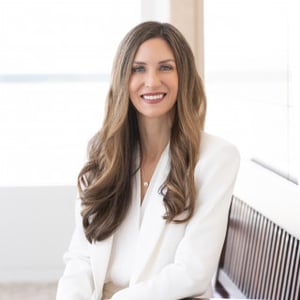
United States District Judge, United States District Court for the Middle District of Florida
In November 2020, the Senate confirmed Kathryn Kimball Mizelle as a United States District Judge for the Middle District of Florida. At age 33, she became the youngest Article III judge in the country. Prior to her confirmation, Judge Mizelle was in private practice at Jones Day, where she focused on complex civil and criminal litigation and appeals. Judge Mizelle previously served at the United States Department of Justice in the Office of the Associate Attorney General, in the Southern Criminal Enforcement Section of the Tax Division, and in the United States Attorney’s Office for the Eastern District of Virginia. Judge Mizelle has also taught as an adjunct professor of law at the University of Florida Levin College of Law and at George Mason University’s Antonin Scalia Law School.
Judge Mizelle earned her B.A., summa cum laude, from Covenant College, and her J.D., summa cum laude, from the University of Florida Levin College of Law. After graduation, Judge Mizelle served as a law clerk at every level of the federal judiciary: at the Supreme Court for Justice Clarence Thomas, at the D.C. Circuit for Judge Gregory G. Katsas, at the Eleventh Circuit for Chief Judge William H. Pryor Jr., and at the Middle District of Florida for Judge James S. Moody Jr.
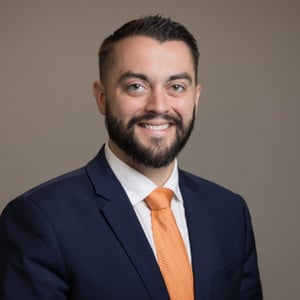
Partner, Consovoy McCarthy PLLC
Mr. Norris helps clients win important questions of federal law in trial and appellate courts across the country. He has represented prominent nonprofits, many States, the Republican Party, and the former President of the United States. He has argued in eight of the twelve federal circuits and twice at the U.S. Supreme Court, including the landmark case Students for Fair Admissions v. Harvard.
Mr. Norris is barred in Tennessee and Virginia, and is an elected member of the American Law Institute. Mr. Norris lives with his family in Knoxville, Tennessee.
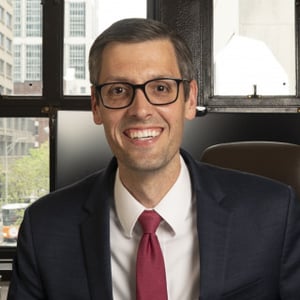
Solicitor General, Tennessee Attorney General's Office
Matt Rice serves as the Solicitor General of Tennessee. Before joining the State, Matt worked in private practice at Williams & Connolly LLP. He clerked for Justice Clarence Thomas on the United States Supreme Court as well as Judge Sandra Ikuta on the United States Court of Appeals for the Ninth Circuit. Before his legal career, Matt played professional baseball in the Tampa Bay Rays organization.
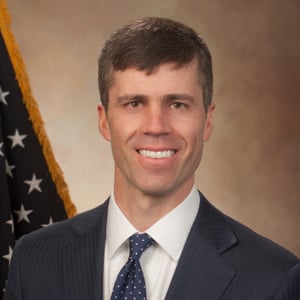
Solicitor General, Mississippi Attorney General's Office
Scott G. Stewart is the Solicitor General of Mississippi. He has litigated and presented oral argument in the U.S. Supreme Court, in all regional federal courts of appeals, and in trial-level courts across the country. Stewart previously served as a Deputy Assistant Attorney General in the U.S. Department of Justice and worked in private practice as a litigator. He served as a law clerk to Justice Clarence Thomas of the Supreme Court of the United States and to Judge Diarmuid F. O’Scannlain of the U.S. Court of Appeals for the Ninth Circuit. Stewart graduated from Princeton University and Stanford Law School.
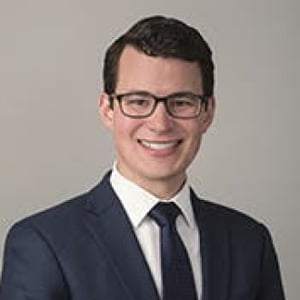
Associate Attorney, Gibson Dunn
David Casazza is an associate in the Washington, D.C. office of Gibson, Dunn & Crutcher. He practices in the firm’s Appellate and Constitutional Law, and Administrative Law and Regulatory Practice groups.
Mr. Casazza has represented clients in appellate and regulatory litigation before the Supreme Court of the United States, federal appellate courts, and federal district courts. These cases have involved a wide range of subjects including separation of powers, federal rulemaking challenges, data privacy protections, anti-terrorism claims and foreign sovereign immunity, energy infrastructure permitting, and a variety of First Amendment speech and religious liberty claims. He has also represented clients in complex litigation, obtaining dismissal with prejudice of consumer class actions attacking major brand names. He has been named by Best Lawyers as a 2021 and 2022 “One to Watch” in Appellate Practice.
He graduated magna cum laude from Harvard Law School, where he served as a Managing Editor for the Harvard Journal of Law and Public Policy and as Executive Vice President of the Harvard Federalist Society. Mr. Casazza received an A.B. magna cum laude in history from Princeton and an M.A. in history from the Johns Hopkins University.
Mr. Casazza served as a law clerk to Justice Samuel Alito on the Supreme Court of the United States and for Judge Jennifer Walker Elrod on the United States Court of Appeals for the Fifth Circuit.
He is a member of the bars of New York and the District of Columbia and is admitted to practice in the United States Courts of Appeals for the Third, Fourth, Fifth, and Ninth Circuits and in the United States District Court for the District of Columbia.
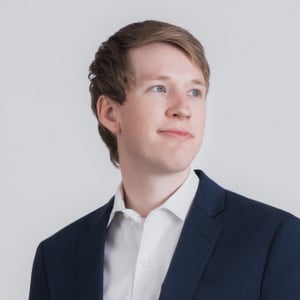
Associate, Wiley Rein LLP
Boyd litigates and provides regulatory advice for a wide variety of telecommunications and technology clients.

Litigation Associate, Weil, Gotshal & Manges LLP
Jill Jacobson is an Appeals and Strategic Counseling and Complex Commercial Litigation associate at Weil, Gotshal & Manges LLP. She is a former law clerk to Judge Aileen M. Cannon on the District Court for the Southern District of Florida and a future law clerk to Judge Elizabeth L. Branch on the Court of Appeals for the Eleventh Circuit.
Jill a fellow emeritus at the Independent Women's Law Center and a Senior Contributor at Young Voices. She has also been a Litigation Contractor at the Institute for Justice. She holds a J.D. from Boston College Law School and a Masters from Northeastern University.
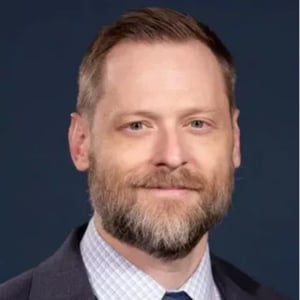
Litigation Director, Center for Individual Rights
Caleb Kruckenberg is CIR’s Litigation Director.
Caleb previously worked as a prosecutor, a public defender, a lobbyist for a national advocacy organization and, most recently, an impact litigator protecting the separation of powers at both the Pacific Legal Foundation and the New Civil Liberties Alliance. He has won major victories against numerous federal agencies, including the U.S. Department of Justice, Department of Labor, Bureau of Alcohol Tobacco and Firearms, and the Securities and Exchange Commission. He is also proud to have sued every U.S. attorney general, eight so far, since he has been litigating against the government on behalf of liberty-minded clients. Caleb has also argued more than 20 times in the U.S. Courts of Appeals, winning cases in 8 of the 12 regional circuit courts.
He graduated cum laude from Temple University Beasley School of Law in Philadelphia, where he was the lead articles editor for the Temple Law Review. Caleb also attended the Pennsylvania Academy of the Fine Arts, where he studied figurative painting.
Sheila M. McDevitt Professor of Law and Faculty Director of the Election Law Center, Florida State University College of Law
Professor Morley joined FSU Law in 2018, and teaches and writes in the areas of election law, constitutional law, remedies, and the federal courts. He is best known for his work on election emergencies and post-election litigation, nationwide and other defendant-oriented injunctions, the jurisdiction of the federal courts and their equitable powers more generally. He has testified before congressional committees, made presentations to election officials for the U.S. Election Assistance Commission and participated in bipartisan blue-ribbon groups to develop election reforms. The governor of Florida also appointed Professor Morley to the Criminal Punishment Code Task Force, to propose potential revisions to the legislature.
The U.S. Supreme Court has cited several of his articles, and he was counsel of record for the successful Petitioner in a landmark campaign finance case. Professor Morley has appeared on C-SPAN, Court TV, Fox News and numerous local news programs, and has been quoted in the Washington Post, Los Angeles Times, Roll Call, Politico, U.S. News and World Report, and a wide range of other national publications. His work has been published in many of the nation’s top law reviews, including the Georgetown Law Journal, Northwestern University Law Review, Boston University Law Review and Emory Law Journal.
Before joining FSU Law, Professor Morley was a Climenko Fellow and Lecturer in Law at Harvard Law School. Prior to his experience in academia, he served in government as special assistant to the General Counsel of the Army at the Pentagon, as well as a law clerk for Judge Gerald B. Tjoflat of the U.S. Court of Appeals for the Eleventh Circuit. During his tenure with the Army General Counsel’s office, he was awarded the Meritorious Civilian Service Award and the Army Staff Lapel Pin. He also worked as an associate at Williams & Connolly LLP and the Supreme Court & Appellate group of Winston & Strawn, LLP, both in Washington, D.C.
Professor Morley earned his J.D. from Yale Law School in 2003, where he was a senior editor on the Yale Law Journal; served on the moot court board; and received the Thurman Arnold Prize for Best Oralist in the Morris Tyler Moot Court of Appeals.

Associate, Wiley Rein LLP
Joel S. Nolette is an associate at Wiley Rein LLP, where he advocates on behalf of corporate and individual clients in a broad spectrum of complex litigation matters. In 2017, Joel graduated cum laude from the Georgetown University Law Center, where he served as the Editor in Chief of Volume 15 of the Georgetown Journal of Law and Public Policy. From 2019 to 2021, Joel clerked for the Honorable Raymond W. Gruender of the U.S. Court of Appeals for the Eighth Circuit; and from 2021 to 2022, he clerked for the Honorable Timothy J. Kelly of the U.S. District Court for the District of Columbia. Before attending law school, Joel graduated summa cum laude from Gordon College in Wenham, MA, with his Bachelor of Arts in Biblical Studies and worked as a letter carrier with the U.S. Postal Service.
Associate Professor, UNH Franklin Pierce School of Law
Zvi S. Rosen is an Associate Professor at UNH Franklin Pierce School of Law and the Faculty Director of the Franklin Pierce Society for Intellectual Property. He has served as a Assistant Professor at the Southern Illinois University School of Law, as a Visiting Assistant Professor at the Maurice A. Deane School of Law at Hofstra University, and as a Visiting Scholar and Professorial Lecturer in Law at George Washington University School of Law.
In 2015-2016, he was the Abraham L. Kaminstein Scholar in Residence at the U.S. Copyright Office. Mr. Rosen received his J.D. from Northwestern University School of Law in 2005 and LLM in Intellectual Property in 2006 from the George Washington University Law School. He has practiced at Fried, Frank, Harris, Shriver & Jacobson LLP as well as smaller firms and his own practice, and clerked for the Hon. Thomas B. Bennett of the U.S. Bankruptcy Court for the Northern District of Alabama. He has written extensively on the development of modern copyright and trademark law, as well as on bankruptcy law.
Sterling Professor of Law, Yale Law School
Akhil Reed Amar is Sterling Professor of Law and Political Science at Yale University, where he teaches constitutional law in both Yale College and Yale Law School. After graduating from Yale College, summa cum laude, in 1980 and from Yale Law School in 1984, and clerking for Judge (later Justice) Stephen Breyer, Amar joined the Yale faculty in 1985 at the age of 26. He is Yale’s only living professor to have won the University’s unofficial triple crown — the Sterling Chair for scholarship, the DeVane Medal for teaching, and the Lamar Award for alumni service.
Amar’s work has won awards from both the American Bar Association and the Federalist Society, and he has been cited by Supreme Court justices across the spectrum in more than 50 cases — tops among scholars under age 70. According to both Fred Shapiro’s landmark 2021 study of lifetime scholarly citations and Heinonline’s most recent tabulation of lifetime law-review citations, Amar is America’s second most-cited legal scholar still under age 70. He is a member of the American Academy of Arts and Sciences and has written widely for popular publications, including The New York Times, The Washington Post, The Wall Street Journal, Time, and The Atlantic. He was an informal consultant to the popular TV show The West Wing and his scholarship has been showcased on many broadcasts, including The Colbert Report, Morning Joe, AC360, Velshi, Fox News @ Night with Shannon Bream, Fareed Zakaria GPS, Erin Burnett Outfront, and Constitution USA with Peter Sagal.
He is the author of more than a hundred law review articles and several books, including The Bill of Rights (1998 — winner of the Yale University Press Governors’ Award), America’s Constitution (2005 — winner of the ABA’s Silver Gavel Award), America’s Unwritten Constitution (2012 — named one of the year’s 100 best nonfiction books by The Washington Post), and The Constitution Today (2016 — named one of the year’s top ten nonfiction books by Time magazine). The first volume of his ambitious trilogy on American constitutional history from the Founding to the present, The Words That Made Us: America’s Constitutional Conversation, 1760-1840, came out in May 2021. The second volume, Born Equal: Remaking America’s Constitution, 1840-1920, will be published in September 2025 and is already available for pre-order. All together, his nonfiction books have won two starred reviews from Publishers Weekly and three starred reviews from Kirkus—tops, it is believed, among legal scholars under age 70. Together with Vikram David Amar (YLS ’88), he has a bi-weekly column on the Supreme Court on the distinguished website SCOTUSblog. Along with Andy Lipka, he co-hosts a popular and free weekly podcast, Amarica’s Constitution, whose listeners are eligible for CLE credit in most American jurisdictions. A wide assortment of his articles and op-eds and video links to many of his public lectures and free online courses may be found at akhilamar.com.
Laurence H. Silberman Chair in Constitutional Governance, American Enterprise Institute; Executive Director, Antonin Scalia Law School’s C. Boyden Gray Center for the Study of the Administrative State
Adam J. White is the Laurence H. Silberman Chair in Constitutional Governance and senior fellow at the American Enterprise Institute, where he focuses on the Supreme Court and the administrative state. He also directs the Antonin Scalia Law School’s C. Boyden Gray Center for the Study of the Administrative State.
He writes on regulation and constitutional government for a variety of publications. He practiced law in Washington, D.C., after clerking for the D.C. Circuit's Judge David Sentelle. He also has been chairman of the ABA's Administrative Law Section.
In 2021, he served on the Presidential Commission on the Supreme Court of the United States, where he criticized “Court packing” and other efforts to restructure the Supreme Court.

Litigation Update: Texas Association of Money Services Businesses v. Bondi
Nicholas Anthony, Robert E. Johnson
On April 1, 2025, the Texas Association of Money Services Businesses filed suit in the...
FTC v. Meta: Requiem for the “War on Tech”?
Asheesh Agarwal, Jennifer Huddleston, Bilal Sayyed, Daniel Suhr
What does the district court’s recent decision in FTC v. Meta portend for the future...
Courthouse Steps Oral Argument: First Choice Women’s Resource Centers, Inc. v. Platkin
Christopher Bates, Christopher E. Mills
In First Choice Women’s Resource Centers, Inc. v. Platkin, the New Jersey Attorney General, Matthew...
Courthouse Steps Oral Argument: Learning Resources v. Trump
Jonathan H. Adler, Adam White
The Supreme Court recently heard oral argument in Learning Resources v. Trump, a case examining the...
Showcase Panel 4: Science in the Courts After COVID and Skrmetti
Benjamin M. Flowers, Michael Gerrard, David Andrew Haungs, Robert E. Johnson, Jenn L. Mascott, J.J. James Snidow
2025 National Lawyers Convention
CLE credit for this event is available at On-Demand CLE. From litigation challenging COVID regulations to...
Showcase Panel 3: AI for the Law, and Law for AI
Ryan L. Bangert, James M. Burnham, Jennifer Walker Elrod, Kevin C. Newsom, Gabriel S. Powell, Mike Trinh, Tobi Young
2025 National Lawyers Convention
CLE credit for this event is available at On-Demand CLE. The advent and rise of AI...
Showcase Panel 2: Immigration and Originalism
Akhil Reed Amar, Stephanie Barclay, Trevor W. Ezell, Gene P. Hamilton, Jordan J. Lamb, James P. Sullivan
2025 National Lawyers Convention
CLE credit for this event is available at On-Demand CLE. What do the tools of originalism...
Showcase Panel 1: Landmark SCOTUS Decisions of the 2020s
Paul D. Clement, Morgan Larson, Kathryn Kimball Mizelle, Cameron T. Norris, Matt Rice, Scott G. Stewart
2025 National Lawyers Convention
CLE credit for this event is available at On-Demand CLE. This year marks the 20th anniversary...
A Seat at the Sitting - December 2025
David W. Casazza, Boyd Garriott, Jill Jacobson, Caleb Kruckenberg, Michael T. Morley, Joel S. Nolette, Zvi Rosen
The December Docket in 90 Minutes or Less
Each month, a panel of constitutional experts convenes to discuss the Court’s upcoming docket sitting...
Talks with Authors: Born Equal: Remaking America's Constitution, 1840–1920
Akhil Reed Amar, Adam White
In Born Equal: Remaking America’s Constitution, 1840–1920, Prof. Akhil Reed Amar traces the arc of...