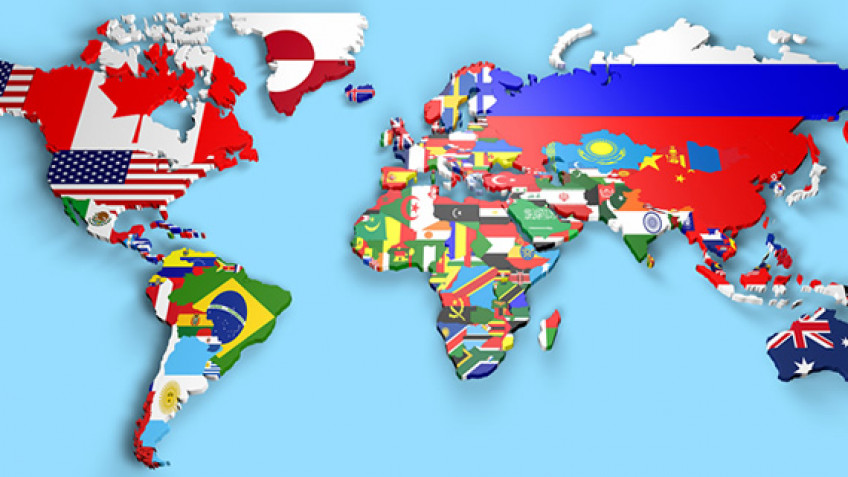
President Biden’s Trade Policy Agenda
Note from the Editor: The Federalist Society takes no positions on particular legal and public policy matters. Any expressions of opinion are those of the author. We welcome responses to the views presented here. To join the debate, please email us at [email protected].
The Office of the United States Trade Representative recently delivered President Biden’s 2021 Trade Agenda and 2020 Annual Report to Congress. The report identifies the following trade policy priorities: (1) Tackling the COVID-19 Pandemic and Restoring the Economy; (2) Putting Workers at the Center of Trade Policy; (3) Putting the World on a Sustainable Environment and Climate Path; (4) Advancing Racial Equity and Supporting Underserved Communities; (5) Addressing China’s Coercive and Unfair Economic Trade Practices Through a Comprehensive Strategy; (6) Partnering with Friends and Allies; (7) Standing Up for American Farmers, Ranchers, Food Manufacturers, and Fishers; (8) Promoting Equitable Economic Growth Around the World; and (9) Making the Rules Count.
In regard to China, the Report recognizes that “China’s coercive and unfair trade practices harm American workers, threaten our technological edge, weaken our supply chain resiliency, and undermine our national interests.” Specific unfair trade actions that are called out in the report include tariff and non-tariff barriers to market access, forced labor, unfair subsidies (including export subsidies), coercive technology transfers, and illicit acquisition of American intellectual property.
The 2021 Trade Policy Agenda and 2020 Annual Report of the President of the United States on the Trade Agreements Program are submitted to the Congress pursuant to Section 163 of the Trade Act of 1974, as amended.

Chair, International Trade & National Security Practice Group, Buchanan Ingersoll & Rooney
Mr. Pickard counsels U.S. and international clients on the laws and regulations governing international trade, with particular emphasis on import remedy, anti-bribery, national security, and export control issues. He represents and advises clients in matters related to trade remedy investigations (including antidumping, countervailing duty, and safeguard cases), U.S. economic sanctions, export controls, anti-boycott measures, and the Foreign Corrupt Practices Act (FCPA). Mr. Pickard provides comprehensive international trade law compliance guidance, including assessing and resolving sensitive national security matters; developing corporate compliance programs; establishing compliance with the National Industrial Security Program (NISP) and mitigating Foreign Ownership, Control, or Influence (FOCI) issues; conducting internal investigations relating to potential violations; and appearing before the relevant agencies in connection with investigations, licensing, and enforcement actions. He also teams with the firm’s Election Law & Government Ethics Group to provide guidance pertaining to the Foreign Agents Registration Act (FARA).
Mr. Pickard represents clients before the U.S. International Trade Commission (ITC), the U.S. Department of the Treasury’s Office of Foreign Assets Control (OFAC), the U.S. Department of Justice (DOJ), the U.S. Department of State’s Directorate of Defense Trade Controls (DDTC), the U.S. Department of Commerce’s Bureau of Industry and Security (BIS) and International Trade Administration (ITA), the U.S. Department of Defense’s Defense Security Service (DSS), the Committee on Foreign Investment in the United States (CFIUS), the U.S. Court of International Trade, and the U.S. Court of Appeals for the Federal Circuit.