Note from the Editor: The Federalist Society takes no positions on particular legal and public policy matters. Any expressions of opinion are those of the author. We welcome responses to the views presented here. To join the debate, please email us at info@fedsoc.org.
The Arizona Supreme Court has before it a Petition by the National Lawyers Guild, Central Arizona Chapter, asking the Court to add ABA Model Rule 8.4(g) to its rules regulating Arizona lawyers. The comment period ends May 21.
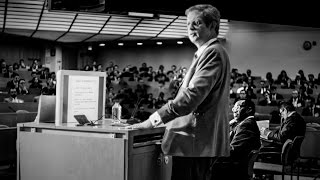
As Professor Eugene Volokh of UCLA School of Law explains in a Federalist Society video, many practitioners and scholars view ABA Model Rule 8.4(g) as a speech code for lawyers.
Christian Legal Society recently filed a comment letter, urging the Court not to adopt ABA Model Rule 8.4(g), and released a succinct backgrounder on several states’ consideration of the rule, including Arizona. Christian Legal Society also hosts a webpage as a resource for those who wish to file a comment with the Arizona Supreme Court.
Andrew Halaby, an Arizona attorney and expert on ABA Model Rule 8.4(g), wrote a short piece in response to an article in the Arizona Attorney, in which Arizona state bar ethics counsel stated that, if ABA Model Rule 8.4(g) were adopted, an attorney could be disciplined for telling an offensive joke at a law firm dinner.
Mr. Halaby and Ms. Brianna Long, also an Arizona attorney, co-authored a scholarly examination of the legislative history of ABA Model Rule 8.4(g), concluding that:
“[The rule] is riddled with unanswered questions, including but not limited to uncertainties as to the meaning of key terms, how it interplays with other provisions of the Model Rules, and what disciplinary sanctions should apply to a violation; as well as due process and First Amendment free expression infirmities.”