Ambition Counteracting Ambition: Enduring Principle or Failed Experiment?
Article I Initiative Writing Contest Winner - Deion Kathawa
Note from the Editor: The Federalist Society takes no positions on particular legal and public policy matters. Any expressions of opinion are those of the author. We welcome responses to the views presented here. To join the debate, please email us at info@fedsoc.org.
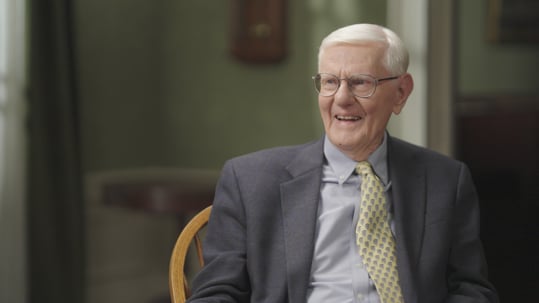
For the second year, myself and fellow contest Judges, Lillian BeVier and Chris DeMuth have had the pleasure of reviewing submissions to the Federalist Society's Article I Initiative Writing Contest. This season, Federalist Society sought submissions from across the country with the theme, “Ambition Counteracting Ambition: Enduring Principle or Failed Experiment?” After careful consideration and discussion, we selected Deion Kathawa’s excellent paper titled, “Ambition Can Still Be Made to Counteract Ambition—Just Not in the Way Madison Envisioned” as the first-place winner. Deion’s essay perceptively and methodically catalogs the historical and more recent causes of the breakdown of our constitutional system as our Founders imagined it. He includes instances where the Founder’s predictions of how their system would act as a check on itself and its component parts has failed.
Deion begins with the observation that Congress’ effectiveness, popularity, and power seem to be in inexorable decline over the last century. From there he builds an insightful outline of the social, legal, and cultural changes that have contributed to that branches’ current lethargy. Lastly, he lays out a vision for using the judicial branches’ self-interest to force Congress to reassert itself and maintain its constitutional duties.
Deion’s analysis and his central thesis are well crafted and worthy of serious consideration; we congratulate him. We also congratulate the other writing contest winners and look forward to a continued discussion within the Article I Initiative on how cognizance of the ambitions of individuals and organizations within government can be utilized to restore and maintain a working system.
When Deion's paper is published, we will link to it on the blog. We look forward to sharing it with you.

Founding Partner, Boyden Gray & Associates
Ambassador C. Boyden Gray is the founding partner of Boyden Gray & Associates, a law and strategy firm in Washington, D.C., focused on constitutional and regulatory issues.
Mr. Gray worked in the White House for twelve years, first as counsel to the Vice President during the Reagan administration and then as White House Counsel to President George H.W. Bush. In the Reagan administration, he was Counsel to the Presidential Task Force on Regulatory Relief, for which he wrote the original Executive Order 12291 requiring cost-benefit analysis and White House review of regulations (later renumbered as current EO 12866). In the George H.W. Bush Administration, Mr. Gray was in charge of judicial selection and was also instrumental in the enactment of the Clean Air Act Amendments of 1990, the Energy Policy Act of 1992, and a cap-and-trade system for acid rain emissions. In 1993, he received the Presidential Citizens Medal. Under President George W. Bush, Mr. Gray was U.S. Ambassador to the European Union and U.S. Special Envoy to Europe for Eurasian Energy.
Mr. Gray practiced law for 25 years at the law firm of Wilmer, Cutler & Pickering and was chairman of the Administrative Law and Regulatory Practice Section of the American Bar Association from 2000 to 2002. Early in his career, Mr. Gray helped to develop the Business Roundtable and served as its first counsel. He is an adjunct professor at Antonin Scalia Law School and a former adjunct professor at NYU Law School (teaching energy and environmental law). Mr. Gray is on the Board of Directors of the Atlantic Council, the Federalist Society, Reason Foundation, and the Trust for the National Mall.
Mr. Gray earned his A.B. magna cum laude from Harvard, where he was an editor of the Crimson, and his J.D. with high honors from the University of North Carolina at Chapel Hill, where he was editor-in-chief of the Law Review. Mr. Gray served in the United States Marine Corps, and after law school, he clerked for Earl Warren, Chief Justice of the United States Supreme Court.