Facts of the Case
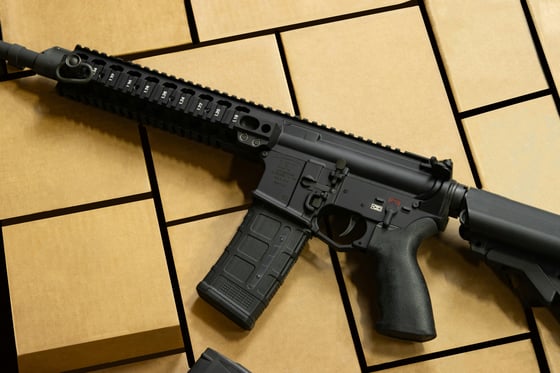
In 2023, Hawaii and California enacted new laws, Act 52 and Senate Bill 2, respectively, that significantly restrict the public carry of firearms. Both laws prohibit individuals with carry permits from bringing firearms into numerous specified “sensitive places.” Hawaii’s list includes fifteen categories, such as bars, restaurants serving alcohol, parks, beaches, and banks. California’s list is broader, covering more than two dozen types of property, including hospitals, public transit, playgrounds, libraries, museums, places of worship, and casinos.
Both states also changed the default rule for private property open to the public, generally banning firearms unless the property owner expressly permits them. Hawaii allows owners to consent verbally, in writing, or via a posted sign. California’s rule is stricter, permitting consent only through the posting of a specific, state-mandated sign. Plaintiffs in both states include individuals who hold concealed-carry permits and various gun-rights organizations. They filed lawsuits alleging that these new restrictions violate their Second Amendment right to keep and bear arms.
Plaintiffs in both actions sued their respective state attorneys general, and federal district courts issued preliminary injunctions blocking enforcement of many of the new provisions. On appeal, the U.S. Court of Appeals for the Ninth Circuit consolidated the cases, affirming the injunctions in part but reversing them in large part. The Ninth Circuit’s ruling allowed many of the challenged restrictions to remain in effect but agreed with the district courts that the states could not, for example, ban firearms in banks or hospitals.
Questions
Does a law that makes it a crime for a licensed concealed carry permit holder to bring a handgun onto private property open to the public—such as a store or restaurant—unless the property owner gives “express authorization” violate the Second Amendment?
Conclusions
-
The Second and Fourteenth Amendments bar a state from requiring licensed gun carriers to obtain explicit permission from property owners before entering private property open to the public — a rule that flips the traditional common-law default allowing anyone to enter open businesses unless specifically turned away. Justice Samuel Alito authored the 6-3 majority opinion.
The Bruen framework (2022) governs Second Amendment challenges through a two-step test. First, a court asks whether a challenged law restricts conduct that the Second Amendment's plain text covers — meaning it applies to "the people," limits the "keeping" (possessing) or "bearing" (carrying) of "arms" (weapons used for offense or defense). Hawaii's law easily clears this threshold: the permit holders are members of "the people," they seek to carry handguns, and the law restricts that activity. That makes the law presumptively unconstitutional, shifting the burden to the government to justify the restriction by showing it is consistent with the historical understanding of the Second Amendment right. The Second Amendment carries a uniform meaning across every state, so Hawaii's long tradition of hostility to firearms and claims about local custom cannot shrink the right.
At the second step, Hawaii fails to produce adequate historical analogues. The state's primary evidence consists of colonial-era anti-poaching laws from Pennsylvania, New Jersey, Maryland, and New York that barred armed entry onto farmland without the owner's permission. Those laws targeted unauthorized hunting, applied to land where game could be found, and aimed to prevent the specific harms of poaching — property theft, stray gunfire, and livestock damage — not to restrict everyday self-defense carry. The gap between an anti-poaching rule and a blanket prohibition on carrying into gas stations, grocery stores, and restaurants is too wide to support Hawaii's law as a valid analogue. Hawaii's remaining historical evidence fares worse: a single 1893 Oregon statute likely applied to hunting land rather than commercial establishments, and one late-enacted law cannot define a constitutional tradition. Finally, an 1865 Louisiana law — part of that state's Black Codes designed to disarm freed Black people — carries no persuasive weight because it was neither widespread nor widely accepted, and laws enacted to perpetuate racial subordination cannot illuminate the original understanding of the Second Amendment right.
Justice Amy Coney Barrett concurred (joined by Justices Clarence Thomas and Neil Gorsuch as to Part II-B), arguing that a state's property law receives no special exemption from Second Amendment scrutiny — any state regulation of arms-bearing conduct triggers the Second Amendment regardless of how it is framed — and that the antipoaching analogues fail because they targeted specific, localized firearms abuses rather than general public opposition to armed carry.
Justice Elena Kagan dissented, arguing that the historical analogues satisfy the Bruen test because both the old laws and Hawaii's law share the same mechanism (a default rule requiring affirmative consent for armed entry onto private property) and a sufficiently close purpose (preventing dangers caused by armed persons on another's property), with the difference between poaching harms and modern risks being legally irrelevant to the analysis.
Justice Ketanji Brown Jackson dissented (joined by Justice Sonia Sotomayor), arguing that this case is fundamentally about property rights rather than gun rights, that the Second Amendment has never protected a right to carry firearms onto private property without the owner's consent, that Hawaii's analogues are adequate when read at the proper level of generality, and that the majority's approach transforms Bruen into an unprincipled tool that consistently operates to strike down gun regulations.
From the Courthouse Steps: Wolford v. Lopez
In Wolford v. Lopez, the Supreme Court held that Hawaii’s law prohibiting licensed concealed-carry permit...
From the Courthouse Steps: Wolford v. Lopez
In Wolford v. Lopez, the Supreme Court held that Hawaii’s law prohibiting licensed concealed-carry permit...