Facts of the Case
In addition to being funded through a state-funded program designed to establish a minimum educational threshold in every school, Texas public elementary and secondary schools rely on local property taxes for supplemental revenue. Rodriguez, acting on behalf of students whose families reside in poor districts, challenged this funding scheme by arguing that it underprivileged such students because their schools lacked the vast property tax base that other districts utilized. The reliance on assessable property, the school districts claimed, caused severe inter-district disparities in per-pupil expenditures.
Questions
Did Texas' public education finance system violate the Fourteenth Amendment's Equal Protection Clause by failing to distribute funding equally among its school districts?
Conclusions
-
No. The Court refused to examine the system with strict scrutiny since there is no fundamental right to education in the Constitution and since the system did not systematically discriminate against all poor people in Texas. Given the similarities between Texas' system and those in other states, it was clear to the Court that the funding scheme was not "so irrational as to be invidiously discriminatory." Justice Powell argued that on the question of wealth and education, "the Equal Protection Clause does not require absolute equality or precisely equal advantages."
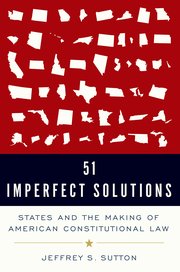
Protecting Individual Liberty Through State Constitutional Law: Judge Sutton’s Plea for Federalism in Judicial Decisionmaking
Federalist Society Review, Volume 20
A review of 51 Imperfect Solutions: States and the Making of American Constitutional Law, by...

The Kudzu of Civil Rights Law: Disparate Impact Spreads Into Educational “Resource Comparability”
Engage Volume 16, Issue 2
Note from the Editor: This article is about a Dear Colleague letter from the Department...