Facts of the Case
The City of Jeannette, Pennsylvania mandated that all solicitors that sold goods within the borough purchase a solicitation license. Robert Murdock was a Jehovah's Witness who canvassed door to door within Jeannette, offering religious texts in exchange for donations. He and other Jehovah's Witnesses were arrested, convicted, and fined for violating the ordinance. The Jehovah's Witnesses appealed to the Superior Court of Pennsylvania, alleging that the ordinance violated the Free Speech, Free Press, and Free Exercise of Religion clauses of the First Amendment. The Superior Court upheld the ordinance and their convictions, and the Supreme Court of Pennsylvania declined to hear their appeal.
Questions
Is it unconstitutional for a state to tax people selling religious merchandise?
Conclusions
-
In a 5-4 decision, the Court held the ordinance was unconstitutional. Writing for the majority, Justice William O. Douglas equated the power to impose a tax on First Amendment freedoms, such as the free exercise of religion, with the power of censorship. The tax did not just apply to the sale of books or religious pamphlets, but also to door-to-door preaching done in connection with solicitation of funds necessary for a religious sect to sustain itself. According to the Court, the requirement that individuals pay a fee in order to exercise their freedoms will inevitably lead to their suppression. Thus, the Court declared the license tax unconstitutional as applied to religious activities.
Justices Frankfurter, Jackson, Reed, and Roberts dissented.
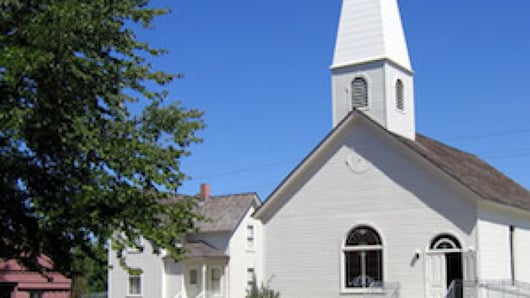
When a Pastor’s House Is a Church Home: Why the Parsonage Allowance Is Desirable Under the Establishment Clause
Federalist Society Review, Volume 18
Note from the Editor: This article discusses the parsonage allowance, whereby the value of a...