Facts of the Case
The petitioners, a class of female employees of the Department of Social Services and the Board of Education of the City of New York, sued their employers for depriving them of their constitutional rights. The employers required pregnant women to take unpaid leaves of absence before there was any medical reason to do so. The plaintiffs sought an injunction against the forced leaves of absence in the future, as well as back pay for those that had already occurred.
The district court found that such policies were unconstitutional but held that the city had immunity from paying the back wages. The district court also held that the motion for an injunction was moot because the organizations removed the policy in the intervening time. The Court of Appeals affirmed.
Questions
If sued in their official capacity, are local government officials and organizations such as a school board considered “persons” for the purpose of liability for back wages?
Conclusions
-
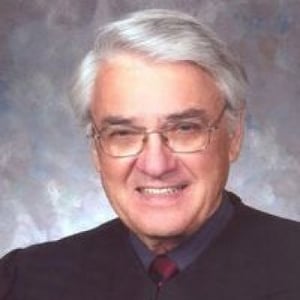
Yes. Justice William J. Brennan, Jr. delivered the opinion of the 7-2 majority. The Court held that the legislative history of the Civil Rights Act of 1871, and specifically the Sherman Amendment, indicated that municipalities could be liable for the infringement of constitutional rights. Additionally, by 1871 there was a clear legislative and precedent-based history for municipal corporations — such as a school board — to be considered a “person” for the purpose of lawsuits and liability. The Court held that this liability only existed when the constitutional infringement was the direct result of an official policy.
In his concurring opinion, Justice Lewis F. Powell, Jr. wrote that the Court’s decision to overrule Monroe v. Pape was an unusual but crucial one. The Court was able to rely on the precedents that established the liability of school boards for suits dealing with civil rights issues such as segregation. Given these precedents, the decision in this case allowed the Court to correct an error and create a more consistent stance on municipal liability.
Justice John Paul Stevens concurred in the sections of the Court’s opinion that explain the decision and not in those that serve purely as background.
Justice William H. Rehnquist wrote a dissenting opinion where he argued that there were too many precedents that supported the immunity of municipalities to summarily dismiss with this decision. Since this decision represents such a huge departure from the previous understanding of municipal immunity under the Civil Rights Act of 1871, the Court should require evidence “beyond doubt” that the previous decision was incorrect. The majority based its decision primarily on the debate surrounding a rejected amendment to the Act, which he argued is not strong enough evidence to overrule Monroe v. Pape. Chief Justice Warren E. Burger joined in the dissent.
Courthouse Steps Preview: Culley v. Marshall
Which Test is it Anyway? Civil Asset Forfeiture and the Right to a Prompt Post-Seizure...

Criminal Justice 2021 and The Rule of Law
2021 National Lawyers Convention
The 2021 National Lawyers Convention took place November 11-13, 2021 at the Mayflower Hotel in...
Panel V: The Conflict Between Text and Precedent in Constitutional Adjudication [Archive Collection]
1987 National Student Symposium
On April 3-5, 1987, the Federalist Society's Chicago Student Chapter hosted the sixth annual National...