Facts of the Case
Several employes of a discount department store sold a few items, such as floor wax and loose-leaf notebooks, to customers on a Sunday. By doing so, they violated Maryland's blue laws which only allow certain items, such as drugs, tobacco, newspapers and some foodstuffs, to be sold on Sundays.
Questions
Do Maryland's blue laws violate the Free Exercise and Religious Establishment clauses of the First Amendment?
Conclusions
-
No. The Court found that the blue laws did not violate the Free Exercise Clause because the employees allege only economic injury and not infringement on their own religious practices. The Court also found that the blue laws did not violate the division between church and state. Sunday closing laws started out to facilitate church attendance in colonial America; however, the present Maryland laws are based on secular rather than religious state interests. The laws are to improve the "health, safety, recreation, and general well-being" of citizens. The present purpose of the laws is to provide a uniform day of rest for all. The fact that this day is of particular significance for various Christian sects does not bar the State from achieving its secular goals.
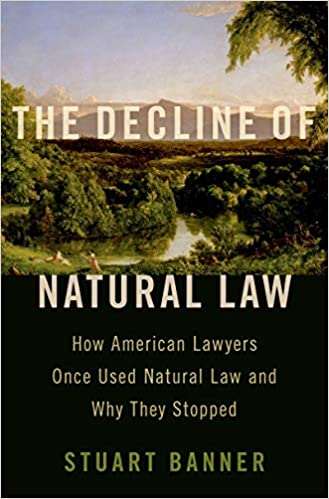
What Happened to Natural Law in American Jurisprudence?
Federalist Society Review, Volume 22
A Review of The Decline of Natural Law: How American Lawyers Once Used Natural Law and...
After Espinoza, What’s Left of the Establishment Clause?
Federalist Society Review, Volume 21
Note from the Editor: The Federalist Society takes no positions on particular legal and public...

The Bladensburg WWI Memorial Cross
Government Expression of Religious Content and the Establishment Clause
On February 27, 2019, the Supreme Court of the United States heard oral argument in...