Facts of the Case
Panel: The Future of Administrative Statutes
This panel will explore the Court’s recent decision in Loper Bright as well as its...
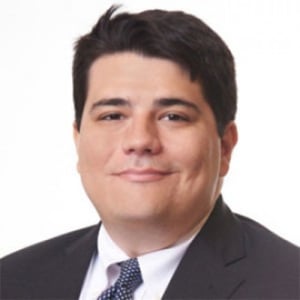
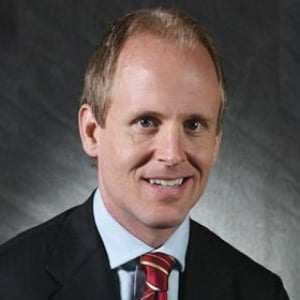
Eric R. Bolinder, Tara Leigh Grove, Joshua Kleinfeld, Brian Gary Slocum, Ilan Wurman
This panel will explore the Court’s recent decision in Loper Bright as well as its...

Assistant Professor of Law, Liberty University School of Law
Eric Bolinder joined Liberty University as an Assistant Professor of Law after a 10-year career in public interest litigation, working both as counsel at Cause of Action Institute and managing policy counsel at Americans for Prosperity Foundation.
Most notably, Professor Bolinder argued Loper Bright at the D.C. Circuit and was part of the team that took it from the district court to the Supreme Court. In 2024, the Supreme Court decided Loper Bright, overturning the 40-year precedent of Chevron deference. Professor Bolinder was also part of a team that successfully defended an FTC claim for equitable relief at trial, resulting in no monetary judgment against his clients.
At Cause of Action Institute, Professor Bolinder litigated exclusively against the federal government on both plaintiff actions challenging government regulations and as defense counsel in an agency enforcement proceeding.
At Americans for Prosperity Foundation, Professor Bolinder drove community efforts to plan engagement with strategic litigation opportunities. He also led a team dedicated to government oversight: filing FOIA requests and litigation, connecting with Hill staff, and producing investigative reports.
Vinson & Elkins Chair in Law, University of Texas at Austin School of Law
Tara Leigh Grove is the Vinson & Elkins Chair in Law at the University of Texas School of Law. Grove graduated summa cum laude from Duke University and magna cum laude from Harvard Law School, where she served as the Supreme Court Chair of the Harvard Law Review. Grove clerked for Judge Emilio Garza on the U.S. Court of Appeals for the Fifth Circuit, and then spent four years as an attorney for the U.S. Department of Justice, Civil Division, Appellate Staff, where she argued fifteen cases in the courts of appeals.
Grove’s research focuses on the federal judiciary, interpretive theory, and the constitutional separation of powers. She has published with such prestigious law journals as the Harvard Law Review, the Yale Law Journal, the Columbia Law Review, the University of Pennsylvania Law Review, the New York University Law Review, the University of Chicago Law Review, the Virginia Law Review, the Texas Law Review, the Cornell Law Review, the Northwestern University Law Review, and the Vanderbilt Law Review. Grove has received awards for both her research and her teaching.
In 2021, Grove served on the Presidential Commission on the Supreme Court of the United States, a bipartisan commission created by President Biden and charged with examining proposals for Supreme Court reform. Since 2022, Grove has worked on the Princeton Initiative on Reclaiming the Constitutional Powers of Congress, which brings together former members of Congress, political scientists, and law professors. Grove serves as the Co-Chair of the section on the Appointments Process for the Princeton Initiative. Grove is a co-author of Low & Jeffries' Federal Courts and the Law of Federal-State Relations, a leading federal courts casebook, and she has served as the Chair of the Federal Courts Section of the Association of American Law Schools. Grove has been a visiting professor at both Harvard Law School and Northwestern Pritzker School of Law.
Professor of Law, Northwestern University Pritzker School of Law
Joshua Kleinfeld teaches and writes about political, legal, and moral philosophy, criminal law, and criminal procedure. He also practices law in Northwestern's Juvenile Criminal Defense Clinic. He is a full professor with tenure at the Northwestern Pritzker School of the Law and (by courtesy) in Northwestern’s philosophy department. In 2017-18, he was a visiting professor at Harvard and Stanford Law Schools. He is the recipient of the Bator Award, given annually to one American law professor under the age of 40 who has demonstrated "excellence in legal scholarship, a commitment to teaching, a concern for students, and who has made a significant public impact."
In philosophy, Kleinfeld's research focuses on the idea of "embodied ethical life," as developed in the socio-theoretic tradition of Hegel, Weber, and Durkheim. This tradition aims to understand and critique social life by bringing to light the normative ideas implicit in social practices and institutions. In law, this means that the most interesting philosophical concepts are often those reflected or actualized in legal practice – in the law as judges and lawyers think of it and wield it.
In criminal law and procedure, Kleinfeld has developed a theory known as "reconstructivism," which holds that the chief office of criminal law is not to dole out retributive justice, nor to optimize crime and cost control, but to reconstruct a violated normative order in the wake of a crime. This work, which draws on the thought of Hegel, Durkheim, Jean Hampton, and Antony Duff, develops an alternative to retributive and utilitarian theories of criminal law by focusing on the distinctive social function and sense of justice at work in the criminal system.
Kleinfeld is also involved in practical criminal justice reform. In this vein, he defends children accused of homicide in the Northwestern Juvenile Criminal Defense clinic and assists in litigation efforts meant to reform American criminal law through the courts. He has also developed a view of criminal justice reform known as "democratization," which holds that the root of the American criminal justice crisis is a set of bureaucratic attitudes, structures, and incentives divorced from the American public’s concerns and sense of justice, and that the primary solution is to make criminal justice more community-focused and responsive to lay influences. Working with others, he has developed a number of policy proposals meant to reform American criminal justice in a democratic direction.
Kleinfeld holds a JD from Yale Law School, a PhD in philosophy from the Goethe University of Frankfurt (supervised by Axel Honneth, Klaus Günther, and Rainer Forst), and a BA in philosophy from Yale College. He clerked for Judge J. Harvie Wilkinson on the United States Court of Appeals for the Fourth Circuit; Judge Janice Rogers Brown on the United States Court of Appeals for the D.C. Circuit; and President (chief justice) Aharon Barak of the Supreme Court of Israel. He worked as an Associate at Debevoise & Plimpton LLP in Frankfurt, Germany, in the area of corporate criminal law. Before law school, he worked as a Senior Research Analyst at the White House’s Council on Bioethics.
Stearns Weaver Miller Professor, Florida State University College of Law
Brian G. Slocum joined the FSU College of Law faculty during the summer of 2023, and he will teach Language and Legal Interpretation in the fall. Slocum’s research and teaching experience lie in legislation/statutory interpretation, language and law, administrative law, and contracts. He comes to FSU Law from the University of the Pacific McGeorge School of Law, where he held the titles of distinguished professor of law and associate dean for scholarship. He has also served as a visiting professor at Stanford Law School, University of California Berkeley School of Law, and University of California Davis School of Law. Slocum has won numerous awards for his teaching and scholarship.
Slocum is the author of “Ordinary Meaning: A Theory of the Most Fundamental Principle of Legal Interpretation" (University of Chicago Press 2015), the editor of "Inference, Intention and 'Ordinary Meaning': What jurists can learn about legal interpretation from linguistics and philosophy" (University of Chicago Press 2017), and a co-editor of “Justice Scalia: Rhetoric and the Rule of Law” (University of Chicago Press 2019). He also has published numerous articles in top law journals, including the Columbia Law Review, Georgetown Law Journal, University of Pennsylvania Law Review, Yale Journal of International Law, and New York University Law Review. Prior to entering academia, Slocum worked at the U.S. Department of Justice and clerked for the Honorable Frank Magill, of the U.S. Court of Appeals for the Eighth Circuit.
Julius E. Davis Professor of Law, University of Minnesota Law School
Ilan Wurman is the Julius E. Davis Professor of Law at the University of Minnesota, where he teaches administrative law and constitutional law. He previously taught at Arizona State University. He writes primarily on the Fourteenth Amendment, administrative law, separation of powers, and constitutionalism. His academic writing has appeared in the Yale Law Journal, the Stanford Law Review, the University of Chicago Law Review, the University of Pennsylvania Law Review, the Virginia Law Review, the Duke Law Journal, the Minnesota Law Review, the Notre Dame Law Review, and the Texas Law Review among other journals.
Professor Wurman is the author of the new book The Constitution of 1789: A New Introduction (Cambridge 2026). His previous books include A Debt Against the Living: An Introduction to Originalism (Cambridge 2017), and The Second Founding: An Introduction to the Fourteenth Amendment (Cambridge 2020). He is also the author of the casebook, Administrative Law Theory and Fundamentals: An Integrated Approach (Foundation Press 3d ed. 2025).
Professor Wurman practices law with the firm Tully Bailey. He has litigated a variety of administrative law and constitutional law cases, including cases involving COVID-19 restrictions, transmission lines, and Appointments Clause challenges. He also devised winning public nuisance theories to force city governments to address the increasingly challenging public camping crises throughout the country.