Facts of the Case
In the wake of the Japanese attack on Pearl Harbor, President Roosevelt acted to prevent incidents of subversion and espionage from individuals of Japanese descent living in the United States. He issued two executive orders which were quickly enacted into law. One gave the Secretary of War the power to designate certain parts of the country "military areas" and exclude certain persons from them. The second established the War Relocation Authority which had the power to remove, maintain, and supervise persons who were excluded from the military areas. Gordon Kiyoshi Hirabayashi, a student at the University of Washington, was convicted of violating a curfew and relocation order.
Questions
Did the President's executive orders and the power delegated to the military authorities discriminate against Americans and resident aliens of Japanese descent in violation of the Fifth Amendment?
Conclusions
-
The Court found the President's orders and the implementation of the curfew to be constitutional. Chief Justice Stone, writing for the unanimous Court, took into account the great importance of military installations and weapons production that occurred on the West Coast and the "solidarity" that individuals of Japanese descent felt with their motherland. He reasoned that restrictions on Japanese actions served an important national interest. The Court ducked the thorny relocation issue and focused solely on the curfew, which the Court viewed as a necessary "protective measure." Stone argued that racial discrimination was justified since "in time of war residents having ethnic affiliations with an invading enemy may be a greater source of danger than those of a different ancestry."
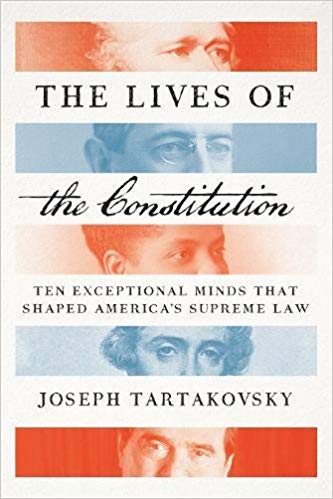
Giving Credit for Shaping the Constitution
Federalist Society Review, Volume 19
A review of: The Lives of the Constitution: Ten Exceptional Minds That Shaped America’s Supreme Law,...

Racial Profiling, Equal Protection, and the War Against Terrorism
by Roger Clegg, Center for Equal Opportunity and Keith Noreika, Covington & Burling SummaryIn this...