Facts of the Case
A provision in the District of Columbia Code prohibited the display of signs within 500 feet of a foreign embassy which tended to "bring that government into public odium or public disrepute." Congregations of three or more persons within the 500 feet limit were prohibited as well. Boos and others were denied permission to display signs criticizing the Soviet Union in front of that country's embassy.
Questions
Did the District of Columbia Code violate the First Amendment of the Constitution?
Conclusions
-
The Court found that the Code's restriction on sign displays violated the First Amendment while the ban on congregations did not. First, Justice O'Connor argued that the prohibition on signs failed to meet the high standards that the Court uses when evaluating the content-based regulation of political speech in a public forum. The "dignity" standard that the Code used was similar to the "outrageousness" standard which the Court found unconstitutional in Hustler Magazine v. Falwell (1988) because it was too subjective. Second, O'Connor reasoned that since the language of the ban on congregations was narrowly drawn and could only be acted upon by the police in situations where a threat to security or peace were present, it did not prohibit peaceful gatherings.
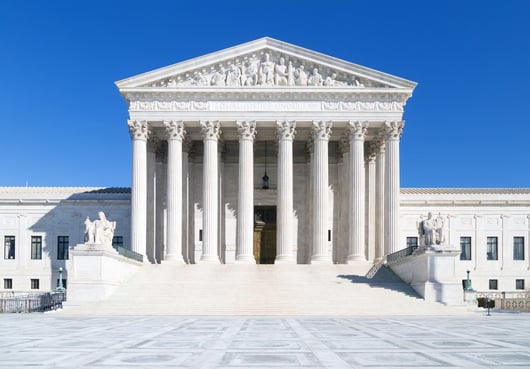
Compelled Speech in Masterpiece Cakeshop: What the Supreme Court’s June 2018 Decisions Tell Us About the Unresolved Questions
Federalist Society Review, Volume 19
Note from the Editor: This article discusses the unresolved compelled-speech questions in Masterpiece Cakeshop v....
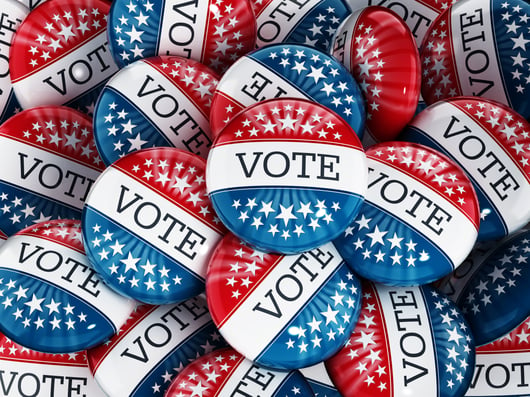
Minnesota Voters Alliance v. Mansky Strikes Down a Vague Ban on Speech in Polling Places, But Future Bans May Be Upheld
Federalist Society Review, Volume 19
Note from the Editor: This article discusses the Supreme Court’s opinion in Minnesota Voters Alliance...
Free Speech and Hostile Environment "Harassment"
Free Speech & Election Law Practice Group Newsletter - Volume 1, Issue 2, Spring 1997
Harassment claims are often based primarily on speech, such as allegedly racist or sexist comments,...