
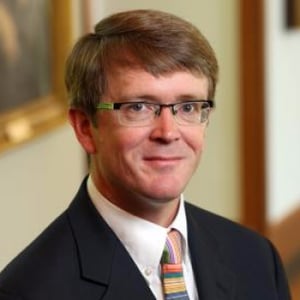
Samuel H. McCoy II Professor of Law, University of Virginia School of Law
John F. Duffy is the Samuel H. McCoy II Professor of Law and Class of 1966 Research Professor of Law at the University of Virginia School of Law, where he teaches administrative law, torts and intellectual property. Professor Duffy has published articles on a wide range of administrative law and regulatory issues in journals such as University of Chicago Law Review, Yale Law Journal, Stanford Law Review, Virginia Law Review, Columbia Law Review, Texas Law Review, Northwestern University Law Review, NYU Law Review, University of Pennsylvania Law Review and the Supreme Court Review. His 1998 article Administrative Common Law in Judicial Review, 77 Tex. L. Rev. 113 (1998), was one of the first articles to criticize the Chevron doctrine as being irreconcilable with § 706 of the APA; it won the American Bar Association’s Scholarship Award in Administrative Law. His 2008 article “Are Administrative Patent Judges Unconstitutional?” was covered on National Public Radio), in the New York Times (Adam Liptak, In One Flaw, Questions on Validity of 46 Judges, May 6, 2008), and in the Wall Street Journal (Dan Slater, Patently Unconstitutional, May 6, 2008). The NYT and WSJ agreed that he was “a different kind of law professor,” “one of the lucky few” whose “writings actually wind up changing the law.”
As an attorney in the courts, Duffy has twice successfully convinced the Supreme Court to overturn lower court doctrines that had been applied in many cases over decades but that were unanimously held to be irreconcilable with Supreme Court precedents. See TC Heartland v. Kraft Foods Group Brands, 581 U.S. 258 (2017); KSR v. Teleflex, 550 U.S. 398 (2007).
Prior to entering legal academics, Duffy clerked on the D.C. Circuit for Stephen Williams and on the Supreme Court for Antonin Scalia. While clerking, he became known as Justice Scalia’s “hapless law clerk,” who had been tasked with unearthing three-quarters of a century of legislative history that made “no difference” to the outcome in an otherwise forgettable case. See Conroy v. Aniskoff, 507 U.S. 511, 527-28 (1993) (Scalia, J., concurring in the judgment).
In earlier days, Duffy enjoyed being a professional blackjack player unwelcome in all Atlantic City casinos and a semi-professional road runner (best marathon time 2:24:33). He holds an A.B. in physics from Harvard and a J.D. from the University of Chicago.

Maurice and Hilda Friedman Professor of Law, Columbia Law School; CEO, New Civil Liberties Alliance
Philip Hamburger is the Maurice and Hilda Friedman Professor of Law at Columbia Law School, and Chief Executive Officer at the New Civil Liberties Alliance. Before coming to Columbia, he was the John P. Wilson Professor at the University of Chicago Law School.
He writes on constitutional law and its history—with particular emphasis on religious liberty, freedom of speech and the press, judicial office, administrative power, and unconstitutional conditions.
His books are Separation of Church and State (Harvard 2002), Law and Judicial Duty (Harvard 2008), Is Administrative Law Unlawful? (Chicago 2014), The Administrative Threat (Encounter 2017), and Liberal Suppression: Section 501(c)(3) and the Taxation of Speech (Chicago 2018). A forthcoming book is Purchasing Submission: Conditions, Power, and Freedom (Harvard 2021).
He is a member of the American Academy of Arts and Sciences, and he has served on the board of directors of the American Society for Legal History. He has twice received the Sutherland Prize for the most significant contribution to English legal history, and has been awarded the Henry Paolucci - Walter Bagehot Book Award, the Hayek Book Prize, and the Bradley Prize.
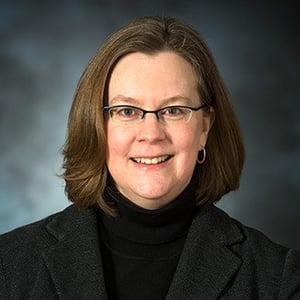
Associate Dean for Research and Intellectual Life, McKnight Presidential Professor in Law, Distinguished McKnight University Professor, Harlan Albert Rogers Professor in Law, Associate Director, Corporate Institute, University of Minnesota Law School
Professor Kristin E. Hickman is the McKnight Presidential Professor in Law, a Distinguished McKnight University Professor, and Harlan Albert Rogers Professor in Law at the University of Minnesota Law School. She also has taught at Harvard Law School and Northwestern University School of Law. Professor Hickman teaches and writes primarily in the areas of administrative law, tax administration, and statutory interpretation. Her articles on these topics have appeared in the Columbia Law Review, Cornell Law Review, Virginia Law Review, Duke Law Journal, and other publications. She also co-authors the Administrative Law Treatise with Richard J. Pierce, Jr., and a casebook on federal administrative law with Pierce and Christopher J. Walker. Her scholarly work has been cited several times in opinions of the United States Supreme Court as well as regularly in lower court judicial opinions and court briefs.
In 2018-19, Professor Hickman served as Special Adviser to the Administrator of the Office of Information and Regulatory Affairs in Washington, D.C. She presently serves as a Senior Fellow, and previously served as a public member and chair of the judicial review committee, for the Administrative Conference of the United States. She also is a Fellow of the American College of Tax Counsel.
Professor Hickman received her B.S. degree in business administration with a concentration in accounting and a secondary major in history from Trinity University in San Antonio, Texas. After practicing for several years as a certified public accountant, Professor Hickman earned her J.D. degree, magna cum laude, from Northwestern University School of Law, where she was awarded the Raoul Berger Prize and the Lowden Wigmore Prize for her scholarly writings. Following law school, Professor Hickman clerked for The Honorable David B. Sentelle of the United States Court of Appeals for the District of Columbia Circuit and practiced law as an associate with the Chicago office of Skadden, Arps, Slate, Meagher & Flom, concentrating on corporate and international tax transactions and matters.
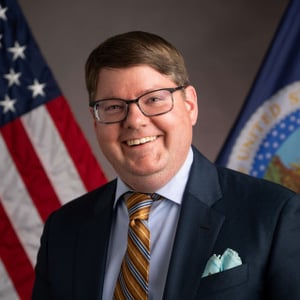
Deputy Secretary of Agriculture, U.S. Department of Agriculture
Judge Stephen Alexander Vaden was appointed as the Deputy Secretary of the U.S. Department of Agriculture on July 7, 2025. Alongside Secretary Brooke L. Rollins, Deputy Secretary Vaden leads the Department’s operations and implements policies that support America’s food and farm systems. A native of Union City, Tennessee, Deputy Secretary Vaden brings expertise in agricultural policy, law, and rural development. Previously, he served as a judge on the U.S. Court of International Trade and as General Counsel of USDA. Throughout Deputy Secretary Vaden’s time as General Counsel, he led successful Supreme Court litigation, advanced regulatory reform, and supported the implementation of the 2018 Farm Bill. He is a graduate of Yale Law School and Vanderbilt University. A public servant with strong agricultural roots, Deputy Secretary Vaden is committed to revitalizing rural America and ensuring an abundant, affordable, and safe U.S. food supply.
Samuel H. McCoy II Professor of Law, University of Virginia School of Law
John F. Duffy is the Samuel H. McCoy II Professor of Law and Class of 1966 Research Professor of Law at the University of Virginia School of Law, where he teaches administrative law, torts and intellectual property. Professor Duffy has published articles on a wide range of administrative law and regulatory issues in journals such as University of Chicago Law Review, Yale Law Journal, Stanford Law Review, Virginia Law Review, Columbia Law Review, Texas Law Review, Northwestern University Law Review, NYU Law Review, University of Pennsylvania Law Review and the Supreme Court Review. His 1998 article Administrative Common Law in Judicial Review, 77 Tex. L. Rev. 113 (1998), was one of the first articles to criticize the Chevron doctrine as being irreconcilable with § 706 of the APA; it won the American Bar Association’s Scholarship Award in Administrative Law. His 2008 article “Are Administrative Patent Judges Unconstitutional?” was covered on National Public Radio), in the New York Times (Adam Liptak, In One Flaw, Questions on Validity of 46 Judges, May 6, 2008), and in the Wall Street Journal (Dan Slater, Patently Unconstitutional, May 6, 2008). The NYT and WSJ agreed that he was “a different kind of law professor,” “one of the lucky few” whose “writings actually wind up changing the law.”
As an attorney in the courts, Duffy has twice successfully convinced the Supreme Court to overturn lower court doctrines that had been applied in many cases over decades but that were unanimously held to be irreconcilable with Supreme Court precedents. See TC Heartland v. Kraft Foods Group Brands, 581 U.S. 258 (2017); KSR v. Teleflex, 550 U.S. 398 (2007).
Prior to entering legal academics, Duffy clerked on the D.C. Circuit for Stephen Williams and on the Supreme Court for Antonin Scalia. While clerking, he became known as Justice Scalia’s “hapless law clerk,” who had been tasked with unearthing three-quarters of a century of legislative history that made “no difference” to the outcome in an otherwise forgettable case. See Conroy v. Aniskoff, 507 U.S. 511, 527-28 (1993) (Scalia, J., concurring in the judgment).
In earlier days, Duffy enjoyed being a professional blackjack player unwelcome in all Atlantic City casinos and a semi-professional road runner (best marathon time 2:24:33). He holds an A.B. in physics from Harvard and a J.D. from the University of Chicago.
Maurice and Hilda Friedman Professor of Law, Columbia Law School; CEO, New Civil Liberties Alliance
Philip Hamburger is the Maurice and Hilda Friedman Professor of Law at Columbia Law School, and Chief Executive Officer at the New Civil Liberties Alliance. Before coming to Columbia, he was the John P. Wilson Professor at the University of Chicago Law School.
He writes on constitutional law and its history—with particular emphasis on religious liberty, freedom of speech and the press, judicial office, administrative power, and unconstitutional conditions.
His books are Separation of Church and State (Harvard 2002), Law and Judicial Duty (Harvard 2008), Is Administrative Law Unlawful? (Chicago 2014), The Administrative Threat (Encounter 2017), and Liberal Suppression: Section 501(c)(3) and the Taxation of Speech (Chicago 2018). A forthcoming book is Purchasing Submission: Conditions, Power, and Freedom (Harvard 2021).
He is a member of the American Academy of Arts and Sciences, and he has served on the board of directors of the American Society for Legal History. He has twice received the Sutherland Prize for the most significant contribution to English legal history, and has been awarded the Henry Paolucci - Walter Bagehot Book Award, the Hayek Book Prize, and the Bradley Prize.
Associate Dean for Research and Intellectual Life, McKnight Presidential Professor in Law, Distinguished McKnight University Professor, Harlan Albert Rogers Professor in Law, Associate Director, Corporate Institute, University of Minnesota Law School
Professor Kristin E. Hickman is the McKnight Presidential Professor in Law, a Distinguished McKnight University Professor, and Harlan Albert Rogers Professor in Law at the University of Minnesota Law School. She also has taught at Harvard Law School and Northwestern University School of Law. Professor Hickman teaches and writes primarily in the areas of administrative law, tax administration, and statutory interpretation. Her articles on these topics have appeared in the Columbia Law Review, Cornell Law Review, Virginia Law Review, Duke Law Journal, and other publications. She also co-authors the Administrative Law Treatise with Richard J. Pierce, Jr., and a casebook on federal administrative law with Pierce and Christopher J. Walker. Her scholarly work has been cited several times in opinions of the United States Supreme Court as well as regularly in lower court judicial opinions and court briefs.
In 2018-19, Professor Hickman served as Special Adviser to the Administrator of the Office of Information and Regulatory Affairs in Washington, D.C. She presently serves as a Senior Fellow, and previously served as a public member and chair of the judicial review committee, for the Administrative Conference of the United States. She also is a Fellow of the American College of Tax Counsel.
Professor Hickman received her B.S. degree in business administration with a concentration in accounting and a secondary major in history from Trinity University in San Antonio, Texas. After practicing for several years as a certified public accountant, Professor Hickman earned her J.D. degree, magna cum laude, from Northwestern University School of Law, where she was awarded the Raoul Berger Prize and the Lowden Wigmore Prize for her scholarly writings. Following law school, Professor Hickman clerked for The Honorable David B. Sentelle of the United States Court of Appeals for the District of Columbia Circuit and practiced law as an associate with the Chicago office of Skadden, Arps, Slate, Meagher & Flom, concentrating on corporate and international tax transactions and matters.
Deputy Secretary of Agriculture, U.S. Department of Agriculture
Judge Stephen Alexander Vaden was appointed as the Deputy Secretary of the U.S. Department of Agriculture on July 7, 2025. Alongside Secretary Brooke L. Rollins, Deputy Secretary Vaden leads the Department’s operations and implements policies that support America’s food and farm systems. A native of Union City, Tennessee, Deputy Secretary Vaden brings expertise in agricultural policy, law, and rural development. Previously, he served as a judge on the U.S. Court of International Trade and as General Counsel of USDA. Throughout Deputy Secretary Vaden’s time as General Counsel, he led successful Supreme Court litigation, advanced regulatory reform, and supported the implementation of the 2018 Farm Bill. He is a graduate of Yale Law School and Vanderbilt University. A public servant with strong agricultural roots, Deputy Secretary Vaden is committed to revitalizing rural America and ensuring an abundant, affordable, and safe U.S. food supply.
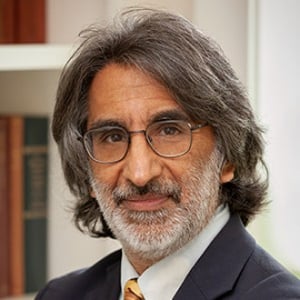
Sterling Professor of Law, Yale Law School
Akhil Reed Amar is Sterling Professor of Law and Political Science at Yale University, where he teaches constitutional law in both Yale College and Yale Law School. After graduating from Yale College, summa cum laude, in 1980 and from Yale Law School in 1984, and clerking for Judge (later Justice) Stephen Breyer, Amar joined the Yale faculty in 1985 at the age of 26. He is Yale’s only living professor to have won the University’s unofficial triple crown — the Sterling Chair for scholarship, the DeVane Medal for teaching, and the Lamar Award for alumni service.
Amar’s work has won awards from both the American Bar Association and the Federalist Society, and he has been cited by Supreme Court justices across the spectrum in more than 50 cases — tops among scholars under age 70. According to both Fred Shapiro’s landmark 2021 study of lifetime scholarly citations and Heinonline’s most recent tabulation of lifetime law-review citations, Amar is America’s second most-cited legal scholar still under age 70. He is a member of the American Academy of Arts and Sciences and has written widely for popular publications, including The New York Times, The Washington Post, The Wall Street Journal, Time, and The Atlantic. He was an informal consultant to the popular TV show The West Wing and his scholarship has been showcased on many broadcasts, including The Colbert Report, Morning Joe, AC360, Velshi, Fox News @ Night with Shannon Bream, Fareed Zakaria GPS, Erin Burnett Outfront, and Constitution USA with Peter Sagal.
He is the author of more than a hundred law review articles and several books, including The Bill of Rights (1998 — winner of the Yale University Press Governors’ Award), America’s Constitution (2005 — winner of the ABA’s Silver Gavel Award), America’s Unwritten Constitution (2012 — named one of the year’s 100 best nonfiction books by The Washington Post), and The Constitution Today (2016 — named one of the year’s top ten nonfiction books by Time magazine). The first volume of his ambitious trilogy on American constitutional history from the Founding to the present, The Words That Made Us: America’s Constitutional Conversation, 1760-1840, came out in May 2021. The second volume, Born Equal: Remaking America’s Constitution, 1840-1920, will be published in September 2025 and is already available for pre-order. All together, his nonfiction books have won two starred reviews from Publishers Weekly and three starred reviews from Kirkus—tops, it is believed, among legal scholars under age 70. Together with Vikram David Amar (YLS ’88), he has a bi-weekly column on the Supreme Court on the distinguished website SCOTUSblog. Along with Andy Lipka, he co-hosts a popular and free weekly podcast, Amarica’s Constitution, whose listeners are eligible for CLE credit in most American jurisdictions. A wide assortment of his articles and op-eds and video links to many of his public lectures and free online courses may be found at akhilamar.com.

Professor of Law, University of San Diego School of Law (Retired)
Gail Heriot is a recently retired law professor from the University of San Diego. She also served as a member of the U.S. Commission on Civil Rights from 2007 to 2025. She is also the chairman of the board of the American Civil Rights Project and the chair emerita of the Civil Rights practice group at the Federalist Society for Law & Public Policy.
Professor Heriot is a prolific writer in the area of civil rights. She is the author of many law review articles. She is also the editor (along with Maimon Schwarzschild) of the 2021 anthology, A Dubious Expediency: How Race Preferences Damage Higher Education. Her upcoming book is entitled, Why We Walk on Eggshell: How Our Civil Rights Laws Helped Bring About the Woke Era—And the Trump Era, Too.
Her writings for a general audience have appeared in the Wall Street Journal, the San Diego Union-Tribune, the National Review and many other newspapers and magazines.
In 1996, she co-chaired the successful “Yes on Proposition 209” campaign, which amended the California Constitution to prohibit state-sponsored discrimination or preferential treatment based on race, sex, color, ethnicity or national origin. In 2020, she co-chaired the “No on Proposition 16” campaign, which successfully prevented Proposition 209’s repeal.
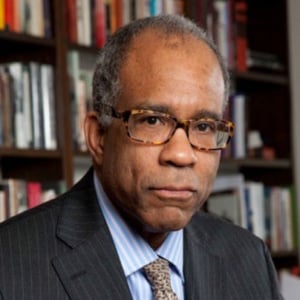
Michael R. Klein Professor of Law, Harvard Law School
Randall Kennedy is Michael R. Klein Professor at Harvard Law School where he teaches courses on contracts, criminal law, and the regulation of race relations. He was born in Columbia, South Carolina. For his education he attended St. Albans School, Princeton University, Oxford University, and Yale Law School. He served as a law clerk for Judge J. Skelly Wright of the United States Court of Appeals and for Justice Thurgood Marshall of the United States Supreme Court. He is a member of the bar of the District of Columbia and the Supreme Court of the United States. Awarded the 1998 Robert F. Kennedy Book Award for Race, Crime, and the Law, Mr Kennedy writes for a wide range of scholarly and general interest publications. His other books are For Discrimination: Race, Affirmative Action, and the Law (2013), The Persistence of the Color Line: Racial Politics and the Obama Presidency (2011), Sellout: The Politics of Racial Betrayal (2008), Interracial Intimacies: Sex, Marriage, Identity, and Adoption (2003), and Nigger: The Strange Career of a Troublesome Word (2002). A member of the American Law Institute, the American Academy of Arts and Sciences, and the American Philosophical Association, Mr. Kennedy is also a Trustee emeritus of Princeton University.
Deputy Secretary of Agriculture, U.S. Department of Agriculture
Judge Stephen Alexander Vaden was appointed as the Deputy Secretary of the U.S. Department of Agriculture on July 7, 2025. Alongside Secretary Brooke L. Rollins, Deputy Secretary Vaden leads the Department’s operations and implements policies that support America’s food and farm systems. A native of Union City, Tennessee, Deputy Secretary Vaden brings expertise in agricultural policy, law, and rural development. Previously, he served as a judge on the U.S. Court of International Trade and as General Counsel of USDA. Throughout Deputy Secretary Vaden’s time as General Counsel, he led successful Supreme Court litigation, advanced regulatory reform, and supported the implementation of the 2018 Farm Bill. He is a graduate of Yale Law School and Vanderbilt University. A public servant with strong agricultural roots, Deputy Secretary Vaden is committed to revitalizing rural America and ensuring an abundant, affordable, and safe U.S. food supply.
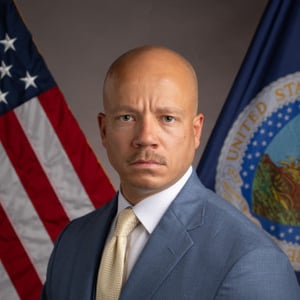
Assistant Secretary for Civil Rights, U.S. Department of Agriculture
Devon Westhill is the Assistant Secretary for Civil Rights at the U.S. Department of Agriculture. The U.S. Senate confirmed President Donald Trump’s nomination of Westhill on October 7, 2025.
Westhill returns to the USDA where he previously headed the civil rights office as Deputy Assistant Secretary in President Trump’s first term. His previous government appointments also include service at the U.S. Department of Labor, liaison to the Administrative Conference of the U.S., and liaison to the White House Initiative on Historically Black Colleges and Universities. Prior to returning to government service, Westhill was President and General Counsel of a nonprofit civil rights organization.
Westhill has testified on civil rights matters before Congress, federal agencies, and as an expert witness in federal court. He has spoken hundreds of times at college campuses, conferences, and on radio and TV programs, and he is frequently quoted in print publications, and his writing has appeared in numerous national outlets. A U.S. Navy veteran, Westhill earned his BA from the University of North Carolina at Chapel Hill and his JD from the University of Florida.
Sterling Professor of Law, Yale Law School
Akhil Reed Amar is Sterling Professor of Law and Political Science at Yale University, where he teaches constitutional law in both Yale College and Yale Law School. After graduating from Yale College, summa cum laude, in 1980 and from Yale Law School in 1984, and clerking for Judge (later Justice) Stephen Breyer, Amar joined the Yale faculty in 1985 at the age of 26. He is Yale’s only living professor to have won the University’s unofficial triple crown — the Sterling Chair for scholarship, the DeVane Medal for teaching, and the Lamar Award for alumni service.
Amar’s work has won awards from both the American Bar Association and the Federalist Society, and he has been cited by Supreme Court justices across the spectrum in more than 50 cases — tops among scholars under age 70. According to both Fred Shapiro’s landmark 2021 study of lifetime scholarly citations and Heinonline’s most recent tabulation of lifetime law-review citations, Amar is America’s second most-cited legal scholar still under age 70. He is a member of the American Academy of Arts and Sciences and has written widely for popular publications, including The New York Times, The Washington Post, The Wall Street Journal, Time, and The Atlantic. He was an informal consultant to the popular TV show The West Wing and his scholarship has been showcased on many broadcasts, including The Colbert Report, Morning Joe, AC360, Velshi, Fox News @ Night with Shannon Bream, Fareed Zakaria GPS, Erin Burnett Outfront, and Constitution USA with Peter Sagal.
He is the author of more than a hundred law review articles and several books, including The Bill of Rights (1998 — winner of the Yale University Press Governors’ Award), America’s Constitution (2005 — winner of the ABA’s Silver Gavel Award), America’s Unwritten Constitution (2012 — named one of the year’s 100 best nonfiction books by The Washington Post), and The Constitution Today (2016 — named one of the year’s top ten nonfiction books by Time magazine). The first volume of his ambitious trilogy on American constitutional history from the Founding to the present, The Words That Made Us: America’s Constitutional Conversation, 1760-1840, came out in May 2021. The second volume, Born Equal: Remaking America’s Constitution, 1840-1920, will be published in September 2025 and is already available for pre-order. All together, his nonfiction books have won two starred reviews from Publishers Weekly and three starred reviews from Kirkus—tops, it is believed, among legal scholars under age 70. Together with Vikram David Amar (YLS ’88), he has a bi-weekly column on the Supreme Court on the distinguished website SCOTUSblog. Along with Andy Lipka, he co-hosts a popular and free weekly podcast, Amarica’s Constitution, whose listeners are eligible for CLE credit in most American jurisdictions. A wide assortment of his articles and op-eds and video links to many of his public lectures and free online courses may be found at akhilamar.com.
Professor of Law, University of San Diego School of Law (Retired)
Gail Heriot is a recently retired law professor from the University of San Diego. She also served as a member of the U.S. Commission on Civil Rights from 2007 to 2025. She is also the chairman of the board of the American Civil Rights Project and the chair emerita of the Civil Rights practice group at the Federalist Society for Law & Public Policy.
Professor Heriot is a prolific writer in the area of civil rights. She is the author of many law review articles. She is also the editor (along with Maimon Schwarzschild) of the 2021 anthology, A Dubious Expediency: How Race Preferences Damage Higher Education. Her upcoming book is entitled, Why We Walk on Eggshell: How Our Civil Rights Laws Helped Bring About the Woke Era—And the Trump Era, Too.
Her writings for a general audience have appeared in the Wall Street Journal, the San Diego Union-Tribune, the National Review and many other newspapers and magazines.
In 1996, she co-chaired the successful “Yes on Proposition 209” campaign, which amended the California Constitution to prohibit state-sponsored discrimination or preferential treatment based on race, sex, color, ethnicity or national origin. In 2020, she co-chaired the “No on Proposition 16” campaign, which successfully prevented Proposition 209’s repeal.
Michael R. Klein Professor of Law, Harvard Law School
Randall Kennedy is Michael R. Klein Professor at Harvard Law School where he teaches courses on contracts, criminal law, and the regulation of race relations. He was born in Columbia, South Carolina. For his education he attended St. Albans School, Princeton University, Oxford University, and Yale Law School. He served as a law clerk for Judge J. Skelly Wright of the United States Court of Appeals and for Justice Thurgood Marshall of the United States Supreme Court. He is a member of the bar of the District of Columbia and the Supreme Court of the United States. Awarded the 1998 Robert F. Kennedy Book Award for Race, Crime, and the Law, Mr Kennedy writes for a wide range of scholarly and general interest publications. His other books are For Discrimination: Race, Affirmative Action, and the Law (2013), The Persistence of the Color Line: Racial Politics and the Obama Presidency (2011), Sellout: The Politics of Racial Betrayal (2008), Interracial Intimacies: Sex, Marriage, Identity, and Adoption (2003), and Nigger: The Strange Career of a Troublesome Word (2002). A member of the American Law Institute, the American Academy of Arts and Sciences, and the American Philosophical Association, Mr. Kennedy is also a Trustee emeritus of Princeton University.
Deputy Secretary of Agriculture, U.S. Department of Agriculture
Judge Stephen Alexander Vaden was appointed as the Deputy Secretary of the U.S. Department of Agriculture on July 7, 2025. Alongside Secretary Brooke L. Rollins, Deputy Secretary Vaden leads the Department’s operations and implements policies that support America’s food and farm systems. A native of Union City, Tennessee, Deputy Secretary Vaden brings expertise in agricultural policy, law, and rural development. Previously, he served as a judge on the U.S. Court of International Trade and as General Counsel of USDA. Throughout Deputy Secretary Vaden’s time as General Counsel, he led successful Supreme Court litigation, advanced regulatory reform, and supported the implementation of the 2018 Farm Bill. He is a graduate of Yale Law School and Vanderbilt University. A public servant with strong agricultural roots, Deputy Secretary Vaden is committed to revitalizing rural America and ensuring an abundant, affordable, and safe U.S. food supply.
Assistant Secretary for Civil Rights, U.S. Department of Agriculture
Devon Westhill is the Assistant Secretary for Civil Rights at the U.S. Department of Agriculture. The U.S. Senate confirmed President Donald Trump’s nomination of Westhill on October 7, 2025.
Westhill returns to the USDA where he previously headed the civil rights office as Deputy Assistant Secretary in President Trump’s first term. His previous government appointments also include service at the U.S. Department of Labor, liaison to the Administrative Conference of the U.S., and liaison to the White House Initiative on Historically Black Colleges and Universities. Prior to returning to government service, Westhill was President and General Counsel of a nonprofit civil rights organization.
Westhill has testified on civil rights matters before Congress, federal agencies, and as an expert witness in federal court. He has spoken hundreds of times at college campuses, conferences, and on radio and TV programs, and he is frequently quoted in print publications, and his writing has appeared in numerous national outlets. A U.S. Navy veteran, Westhill earned his BA from the University of North Carolina at Chapel Hill and his JD from the University of Florida.
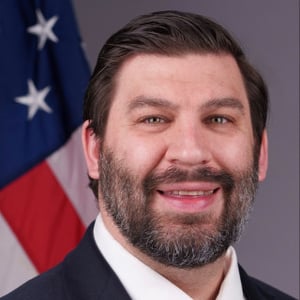
Deputy Counsel, the President
Gary currently is the Deputy Counsel to the President. He was previously a partner at the Dhillon Law Group and worked at the Department of the Interior and Federal Election Commission. He is a native of Virginia, and earned his B.A. and J.D. from the University of Virginia.
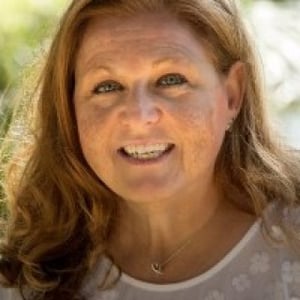
Director, Office of Government Information Services, United States National Archives and Records Administration
In December 2016, Alina M. Semo became the Director of the Office of Government Information Services (OGIS), the Federal Freedom of Information Act (FOIA) ombudsman’s office, which is part of the National Archives and Records Administration (NARA).
Prior to joining OGIS, Ms. Semo served as the Director of Litigation in NARA's Office of General Counsel for two and a half years. Before coming to NARA, Ms. Semo led the FOIA Litigation Unit in the Office of the General Counsel at the Federal Bureau of Investigation (FBI) for over ten years, and also served as an Assistant General Counsel in the Litigation Branch for nearly five years. Ms. Semo began her federal government career as a Department of Justice trial attorney and later senior counsel in the Federal Programs Branch, Civil Division, from 1991 to 1999, and from 1988 to 1991 worked as an associate at Hopkins & Sutter in Washington, D.C.
Ms. Semo holds a Bachelor of Arts degree in Government and Politics from the University of Maryland, College Park, and a Juris Doctor degree from Georgetown University Law School; she is licensed in the District of Columbia and Maryland.

Deputy Executive Director and Legal Director, Reporters Committee for Freedom of the Press
Katie Townsend (@katie_rcfp) is Deputy Executive Director and Legal Director at the Reporters Committee for Freedom of the Press (www.rcfp.org), a nonprofit organization based in Washington, D.C. She oversees the litigation, amicus, and other legal work of Reporters Committee attorneys, and represents the Reporters Committee, news organizations, and individual journalists, including documentary filmmakers, in court access, freedom of information, and other First Amendment and press freedom matters.
Prior to joining the Reporters Committee as its first Litigation Director in 2014, Ms. Townsend was an associate in the Los Angeles office of Gibson Dunn & Crutcher LLP, where her practice focused on media and entertainment litigation. She was recognized in 2015 as a Washington, D.C. “Rising Star” by The National Law Journal and, in 2015, was named one of the “Next Gen – Hollywood’s Up-and-Coming Execs 35 and Under” by the Hollywood Reporter. She is a Fellow of the American Bar Foundation and serves on the International Documentary Association’s Enterprise Documentary Fund Advisory Committee.
Ms. Townsend is a 2007 graduate of the University of Virginia School of Law, where she was a member of the editorial board of the Virginia Law Review. She graduated summa cum laude from the University of Florida in 2004 with a B.A. in English and a B.S. in broadcast journalism.
Deputy Secretary of Agriculture, U.S. Department of Agriculture
Judge Stephen Alexander Vaden was appointed as the Deputy Secretary of the U.S. Department of Agriculture on July 7, 2025. Alongside Secretary Brooke L. Rollins, Deputy Secretary Vaden leads the Department’s operations and implements policies that support America’s food and farm systems. A native of Union City, Tennessee, Deputy Secretary Vaden brings expertise in agricultural policy, law, and rural development. Previously, he served as a judge on the U.S. Court of International Trade and as General Counsel of USDA. Throughout Deputy Secretary Vaden’s time as General Counsel, he led successful Supreme Court litigation, advanced regulatory reform, and supported the implementation of the 2018 Farm Bill. He is a graduate of Yale Law School and Vanderbilt University. A public servant with strong agricultural roots, Deputy Secretary Vaden is committed to revitalizing rural America and ensuring an abundant, affordable, and safe U.S. food supply.

Counsel, Cause of Action Institute
Ryan P. Mulvey has worked as policy counsel at Americans for Prosperity Foundation since December 2019. He previously worked as Counsel as Cause of Action Institute (2013-2019) and continues to volunteer in that position. Ryan’s practice touches on various aspects of government oversight, civic engagement, and administrative and constitutional law. He regularly lectures on government transparency matters and litigates cases under the Freedom of Information Act and Administrative Procedure Act. Ryan has helped to prosecute state public records requests, too, and provided amicus support at various levels of state and federal courts, including the Supreme Court, on various matters. As a policy expert, he regularly advises congressional staff about FOIA reform and cutting-edge transparency issues.
Ryan was graduated from the University of San Diego (2010) summa cum laude with an honors degree in history and political science. He earned his JD and MA in philosophy from Boston University (2013). While a law student, Ryan completed internships at the Cato Institute’s Center for Constitutional Studies, as well as the Office of the General Counsel of the Roman Catholic Archdiocese of Boston. He served as Executive Editor for Notes and Comments at the Review of Banking & Financial Law and worked as a research assistant for the second revised edition of the Heritage Foundation’s Guide to the Constitution (2014).
Ryan is admitted to the practice of law in New York State, the District of Columbia, and the Commonwealth of Virginia. In addition to his work at AFPF, Ryan is the president of the American Society of Access Professionals and a contributor at FOIA Advisor.
Deputy Counsel, the President
Gary currently is the Deputy Counsel to the President. He was previously a partner at the Dhillon Law Group and worked at the Department of the Interior and Federal Election Commission. He is a native of Virginia, and earned his B.A. and J.D. from the University of Virginia.
Director, Office of Government Information Services, United States National Archives and Records Administration
In December 2016, Alina M. Semo became the Director of the Office of Government Information Services (OGIS), the Federal Freedom of Information Act (FOIA) ombudsman’s office, which is part of the National Archives and Records Administration (NARA).
Prior to joining OGIS, Ms. Semo served as the Director of Litigation in NARA's Office of General Counsel for two and a half years. Before coming to NARA, Ms. Semo led the FOIA Litigation Unit in the Office of the General Counsel at the Federal Bureau of Investigation (FBI) for over ten years, and also served as an Assistant General Counsel in the Litigation Branch for nearly five years. Ms. Semo began her federal government career as a Department of Justice trial attorney and later senior counsel in the Federal Programs Branch, Civil Division, from 1991 to 1999, and from 1988 to 1991 worked as an associate at Hopkins & Sutter in Washington, D.C.
Ms. Semo holds a Bachelor of Arts degree in Government and Politics from the University of Maryland, College Park, and a Juris Doctor degree from Georgetown University Law School; she is licensed in the District of Columbia and Maryland.
Deputy Executive Director and Legal Director, Reporters Committee for Freedom of the Press
Katie Townsend (@katie_rcfp) is Deputy Executive Director and Legal Director at the Reporters Committee for Freedom of the Press (www.rcfp.org), a nonprofit organization based in Washington, D.C. She oversees the litigation, amicus, and other legal work of Reporters Committee attorneys, and represents the Reporters Committee, news organizations, and individual journalists, including documentary filmmakers, in court access, freedom of information, and other First Amendment and press freedom matters.
Prior to joining the Reporters Committee as its first Litigation Director in 2014, Ms. Townsend was an associate in the Los Angeles office of Gibson Dunn & Crutcher LLP, where her practice focused on media and entertainment litigation. She was recognized in 2015 as a Washington, D.C. “Rising Star” by The National Law Journal and, in 2015, was named one of the “Next Gen – Hollywood’s Up-and-Coming Execs 35 and Under” by the Hollywood Reporter. She is a Fellow of the American Bar Foundation and serves on the International Documentary Association’s Enterprise Documentary Fund Advisory Committee.
Ms. Townsend is a 2007 graduate of the University of Virginia School of Law, where she was a member of the editorial board of the Virginia Law Review. She graduated summa cum laude from the University of Florida in 2004 with a B.A. in English and a B.S. in broadcast journalism.
Deputy Secretary of Agriculture, U.S. Department of Agriculture
Judge Stephen Alexander Vaden was appointed as the Deputy Secretary of the U.S. Department of Agriculture on July 7, 2025. Alongside Secretary Brooke L. Rollins, Deputy Secretary Vaden leads the Department’s operations and implements policies that support America’s food and farm systems. A native of Union City, Tennessee, Deputy Secretary Vaden brings expertise in agricultural policy, law, and rural development. Previously, he served as a judge on the U.S. Court of International Trade and as General Counsel of USDA. Throughout Deputy Secretary Vaden’s time as General Counsel, he led successful Supreme Court litigation, advanced regulatory reform, and supported the implementation of the 2018 Farm Bill. He is a graduate of Yale Law School and Vanderbilt University. A public servant with strong agricultural roots, Deputy Secretary Vaden is committed to revitalizing rural America and ensuring an abundant, affordable, and safe U.S. food supply.
Counsel, Cause of Action Institute
Ryan P. Mulvey has worked as policy counsel at Americans for Prosperity Foundation since December 2019. He previously worked as Counsel as Cause of Action Institute (2013-2019) and continues to volunteer in that position. Ryan’s practice touches on various aspects of government oversight, civic engagement, and administrative and constitutional law. He regularly lectures on government transparency matters and litigates cases under the Freedom of Information Act and Administrative Procedure Act. Ryan has helped to prosecute state public records requests, too, and provided amicus support at various levels of state and federal courts, including the Supreme Court, on various matters. As a policy expert, he regularly advises congressional staff about FOIA reform and cutting-edge transparency issues.
Ryan was graduated from the University of San Diego (2010) summa cum laude with an honors degree in history and political science. He earned his JD and MA in philosophy from Boston University (2013). While a law student, Ryan completed internships at the Cato Institute’s Center for Constitutional Studies, as well as the Office of the General Counsel of the Roman Catholic Archdiocese of Boston. He served as Executive Editor for Notes and Comments at the Review of Banking & Financial Law and worked as a research assistant for the second revised edition of the Heritage Foundation’s Guide to the Constitution (2014).
Ryan is admitted to the practice of law in New York State, the District of Columbia, and the Commonwealth of Virginia. In addition to his work at AFPF, Ryan is the president of the American Society of Access Professionals and a contributor at FOIA Advisor.

Director, International Center for Food Industry Excellence, Texas Tech University
Dr. Mindy Brashears is the former Under Secretary of Agriculture in Food Safety where she served the USDA as a political appointee from 2019-2021. She is currently the Associate Vice President of Research at Texas Tech University and a Professor of Food Safety and Public Health holding the Roth and Letch family Endowed Chair of Food Safety. She also serves as the Director of the International Center for Food Industry Excellence at Texas Tech University.
She is a fellow of the National Academy of Inventors and has 3 spinoff companies based on her work. She holds a B.S. in food technology from Texas Tech (magna cum laude) and M.S. and Ph.D. degrees in food science from Oklahoma State University. She is married to Dr. Todd Brashears, who is a professor of agricultural education, and has three daughters, Bailey, Reagan (Jimenez) and Presley and one son-in-law, Eli Jimenez. Her research focuses on mitigation strategies in pre-and post-harvest environments and on the emergence of antimicrobial drug resistance in agricultural ecosystems. Her interests are primarily in meat, poultry and vegetable products.
She also has a passion for food security and has led international research teams to numerous places across Latin America and the Caribbean to improve food safety and security in those sectors and to set up sustainable agriculture systems in developing areas. She teaches courses in food microbiology and food safety and offers industry training in food safety and security. She has received multiple awards including the IAFP Laboratorian Award, The AMSA Research and Industry/Extension Award and was named as a Future Icon in the Meat Industry by the National Provisioner Magazine.
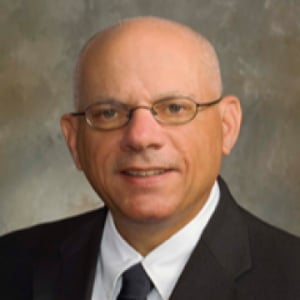
MD
Dr. Ostroff retired from the US Food and Drug Administration (FDA) in early 2019.
During his 7 years at FDA, he served as Deputy Commissioner for Foods and
Veterinary Medicine, where he oversaw the agency’s food and animal health
activities of FDA, including responsibilities in the areas of food safety and
nutrition, food labeling, food and color additives, cosmetics, dietary supplements,
animal drugs and animal feed, and research to support the food and veterinary
medicine mission of FDA. Dr. Ostroff also served as FDA’s Chief Scientist and as
the agency’s Acting Commissioner on two occasions in both the Obama and
Trump administrations.
Before joining the FDA, Dr. Ostroff worked at the Centers for Disease Control and
Prevention (CDC) in Atlanta for more than 20 years on infectious disease
surveillance and outbreak investigations, especially management and
coordination of complex emerging infectious disease threats such as anthrax,
Ebola, West Nile virus, SARS, and avian influenza. He was in the US Public Health
Service Commissioned Corps, attaining the rank of Assistant Surgeon General
(Rear Admiral). He also worked at the Pennsylvania Department of Health as
Director of the Bureau of Epidemiology and the Commonwealth’s Acting Physician
General.
Dr. Ostroff received his undergraduate and medical degrees from the University
of Pennsylvania. He currently holds adjunct professor appointments at Penn
State College of Medicine’s Department of Public Health Sciences and the
University of Pittsburgh School of Public Health’s Department of Epidemiology.
Deputy Secretary of Agriculture, U.S. Department of Agriculture
Judge Stephen Alexander Vaden was appointed as the Deputy Secretary of the U.S. Department of Agriculture on July 7, 2025. Alongside Secretary Brooke L. Rollins, Deputy Secretary Vaden leads the Department’s operations and implements policies that support America’s food and farm systems. A native of Union City, Tennessee, Deputy Secretary Vaden brings expertise in agricultural policy, law, and rural development. Previously, he served as a judge on the U.S. Court of International Trade and as General Counsel of USDA. Throughout Deputy Secretary Vaden’s time as General Counsel, he led successful Supreme Court litigation, advanced regulatory reform, and supported the implementation of the 2018 Farm Bill. He is a graduate of Yale Law School and Vanderbilt University. A public servant with strong agricultural roots, Deputy Secretary Vaden is committed to revitalizing rural America and ensuring an abundant, affordable, and safe U.S. food supply.
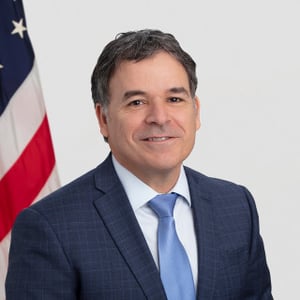
Former Deputy Commissioner for Food Policy and Response, FDA
Frank Yiannas is a former Deputy Commissioner for Food Policy and Response, a position he assumed in December of 2018. In that role he was the principal advisor to the FDA Commissioner in the development and execution of policies related to food safety, including implementation of the FDA Food Safety Modernization Act (FSMA). His leadership role within the Agency covered a broad spectrum of food safety priorities, such as outbreak response, traceback investigations, product recall activities, and supply chain innovation across the full spectrum of FDA-regulated products.
Prior to his time at FDA, Mr. Yiannas held leadership roles with two industry giants: Walmart and the Walt Disney Company. At Walmart, which he joined in 2008 and served for over a decade, Mr. Yiannas was the Vice President for Food Safety. In this role, he led the effort to make Walmart the first U.S. retailer to require suppliers to achieve certification against one of the Global Food Safety Initiative (GFSI) benchmarked food safety schemes.
At Disney, where he worked for 19 years, he was the Director of Safety and Health. During his tenure, Disney received the prestigious Black Pearl Award for corporate excellence in food safety from the International Association for Food Protection. The recipient of numerous awards, in 2007, he received the National Science Foundation’s International Lifetime Achievement Award for Leadership in Food Safety. He is also the recipient of the Collaboration Award by FDA in 2008 and he was named the 2015 Industry Professional Food Safety Hero Award by STOP Foodborne Illness, a consumer advocacy group.
Mr. Yiannas is a past president of the International Association for Food Protection and a past vice-chairman of the Global Food Safety Initiative. He was also an adjunct Professor in the Food Safety Program at Michigan State University, and in 2017 was awarded the MSU Outstanding Faculty Award.
A microbiologist, Mr. Yiannas received a B.S. in microbiology from the University of Central Florida and a Master of Public Health degree from the University of South Florida.
Director, International Center for Food Industry Excellence, Texas Tech University
Dr. Mindy Brashears is the former Under Secretary of Agriculture in Food Safety where she served the USDA as a political appointee from 2019-2021. She is currently the Associate Vice President of Research at Texas Tech University and a Professor of Food Safety and Public Health holding the Roth and Letch family Endowed Chair of Food Safety. She also serves as the Director of the International Center for Food Industry Excellence at Texas Tech University.
She is a fellow of the National Academy of Inventors and has 3 spinoff companies based on her work. She holds a B.S. in food technology from Texas Tech (magna cum laude) and M.S. and Ph.D. degrees in food science from Oklahoma State University. She is married to Dr. Todd Brashears, who is a professor of agricultural education, and has three daughters, Bailey, Reagan (Jimenez) and Presley and one son-in-law, Eli Jimenez. Her research focuses on mitigation strategies in pre-and post-harvest environments and on the emergence of antimicrobial drug resistance in agricultural ecosystems. Her interests are primarily in meat, poultry and vegetable products.
She also has a passion for food security and has led international research teams to numerous places across Latin America and the Caribbean to improve food safety and security in those sectors and to set up sustainable agriculture systems in developing areas. She teaches courses in food microbiology and food safety and offers industry training in food safety and security. She has received multiple awards including the IAFP Laboratorian Award, The AMSA Research and Industry/Extension Award and was named as a Future Icon in the Meat Industry by the National Provisioner Magazine.
MD
Dr. Ostroff retired from the US Food and Drug Administration (FDA) in early 2019.
During his 7 years at FDA, he served as Deputy Commissioner for Foods and
Veterinary Medicine, where he oversaw the agency’s food and animal health
activities of FDA, including responsibilities in the areas of food safety and
nutrition, food labeling, food and color additives, cosmetics, dietary supplements,
animal drugs and animal feed, and research to support the food and veterinary
medicine mission of FDA. Dr. Ostroff also served as FDA’s Chief Scientist and as
the agency’s Acting Commissioner on two occasions in both the Obama and
Trump administrations.
Before joining the FDA, Dr. Ostroff worked at the Centers for Disease Control and
Prevention (CDC) in Atlanta for more than 20 years on infectious disease
surveillance and outbreak investigations, especially management and
coordination of complex emerging infectious disease threats such as anthrax,
Ebola, West Nile virus, SARS, and avian influenza. He was in the US Public Health
Service Commissioned Corps, attaining the rank of Assistant Surgeon General
(Rear Admiral). He also worked at the Pennsylvania Department of Health as
Director of the Bureau of Epidemiology and the Commonwealth’s Acting Physician
General.
Dr. Ostroff received his undergraduate and medical degrees from the University
of Pennsylvania. He currently holds adjunct professor appointments at Penn
State College of Medicine’s Department of Public Health Sciences and the
University of Pittsburgh School of Public Health’s Department of Epidemiology.
Deputy Secretary of Agriculture, U.S. Department of Agriculture
Judge Stephen Alexander Vaden was appointed as the Deputy Secretary of the U.S. Department of Agriculture on July 7, 2025. Alongside Secretary Brooke L. Rollins, Deputy Secretary Vaden leads the Department’s operations and implements policies that support America’s food and farm systems. A native of Union City, Tennessee, Deputy Secretary Vaden brings expertise in agricultural policy, law, and rural development. Previously, he served as a judge on the U.S. Court of International Trade and as General Counsel of USDA. Throughout Deputy Secretary Vaden’s time as General Counsel, he led successful Supreme Court litigation, advanced regulatory reform, and supported the implementation of the 2018 Farm Bill. He is a graduate of Yale Law School and Vanderbilt University. A public servant with strong agricultural roots, Deputy Secretary Vaden is committed to revitalizing rural America and ensuring an abundant, affordable, and safe U.S. food supply.
Former Deputy Commissioner for Food Policy and Response, FDA
Frank Yiannas is a former Deputy Commissioner for Food Policy and Response, a position he assumed in December of 2018. In that role he was the principal advisor to the FDA Commissioner in the development and execution of policies related to food safety, including implementation of the FDA Food Safety Modernization Act (FSMA). His leadership role within the Agency covered a broad spectrum of food safety priorities, such as outbreak response, traceback investigations, product recall activities, and supply chain innovation across the full spectrum of FDA-regulated products.
Prior to his time at FDA, Mr. Yiannas held leadership roles with two industry giants: Walmart and the Walt Disney Company. At Walmart, which he joined in 2008 and served for over a decade, Mr. Yiannas was the Vice President for Food Safety. In this role, he led the effort to make Walmart the first U.S. retailer to require suppliers to achieve certification against one of the Global Food Safety Initiative (GFSI) benchmarked food safety schemes.
At Disney, where he worked for 19 years, he was the Director of Safety and Health. During his tenure, Disney received the prestigious Black Pearl Award for corporate excellence in food safety from the International Association for Food Protection. The recipient of numerous awards, in 2007, he received the National Science Foundation’s International Lifetime Achievement Award for Leadership in Food Safety. He is also the recipient of the Collaboration Award by FDA in 2008 and he was named the 2015 Industry Professional Food Safety Hero Award by STOP Foodborne Illness, a consumer advocacy group.
Mr. Yiannas is a past president of the International Association for Food Protection and a past vice-chairman of the Global Food Safety Initiative. He was also an adjunct Professor in the Food Safety Program at Michigan State University, and in 2017 was awarded the MSU Outstanding Faculty Award.
A microbiologist, Mr. Yiannas received a B.S. in microbiology from the University of Central Florida and a Master of Public Health degree from the University of South Florida.
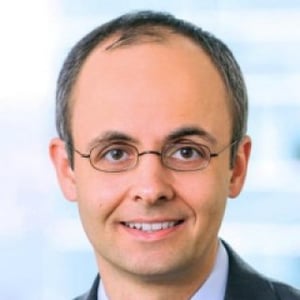
Partner, Skadden, Arps, Slate, Meagher and Flom, LLP and Affiliates
Boris Bershteyn is a partner at Skadden, Arps, Slate, Meagher and Flom, LLP. He served as acting Administrator of the Office of Information and Regulatory Affairs in 2012 and 2013, and as General Counsel of the Office of Management and Budget (OMB) starting 2011. In 2010 and 2011, Bershteyn served as Special Assistant to the President and Associate White House Counsel, focusing on legal issues in regulatory, economic, health, and environmental policy. In 2009 and 2010, he served as the Deputy General Counsel of OMB. Earlier in his career, he served as a law clerk to Justice David H. Souter of the U.S. Supreme Court and Judge José A. Cabranes of the U.S. Court of Appeals for the Second Circuit. He holds a B.A. in Economics and Political Science from Stanford University and a J.D. from Yale Law School. Among other positions, Bershteyn serves as Senior Fellow of the Administrative Conference of the United States, the Chair of the Board of Advisors of the Institute for Policy Integrity at NYU Law School, and Trustee of the U.S. Supreme Court Historical Society.
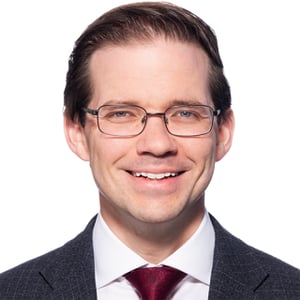
Of Counsel, Covington & Burling LLP
The Honorable Paul J. Ray is currently Of Counsel at Covington & Burling LLP where he advises clients on regulatory opportunities and challenges and helps them formulate and execute advocacy strategies for their regulatory policy priorities before the executive branch and Congress.
During the first Trump Administration, Paul held various senior positions at the Office of Information and Regulatory Affairs (OIRA) within the White House’s Office of Management and Budget, including as acting, and then Senate-confirmed, head of the office. As OIRA Administrator (the "regulations czar"), Paul supervised the review of hundreds of regulations from across the government, drafted numerous executive orders governing the regulatory process, and led the Administration’s regulatory reform effort. As a result of this experience, Paul is well-positioned to help clients understand and achieve regulatory policy priorities in the context of the government’s regulatory agenda and ongoing reform efforts.
Most recently, Paul was also the Director of the Roe Institute for Economic Policy Studies at The Heritage Foundation. In that role, he supervised the formulation of the Foundation’s economic and regulatory policy recommendations and provided technical assistance to congressional committees and staff regarding legislative changes to the regulatory process. In addition to his role at The Heritage Foundation, Paul also served as a Senior Advisor at a strategic advisory firm. Before his time in government, Paul practiced law at a law firm in Washington, specializing in administrative law matters.
Prior to his role at the White House, Paul was Counselor to the Secretary at the U.S. Department of Labor. There he led departmental efforts in high-profile rulemakings and helped formulate the Department’s legal positions and strategy.
Paul served as a law clerk to Supreme Court Justice Samuel Alito and as a law clerk to the Honorable Debra Livingston of the U.S. Court of Appeals for the Second Circuit.
Paul is a thought leader in the conservative legal movement and is a frequent commentator and speaker on regulatory policy and reform matters, including at law schools, professional gatherings, and other venues. He is the Chairman of Innovations in Peacebuilding International and the Regulatory Process Working Group of the Federalist Society’s Regulatory Transparency Project and a public member of the Administrative Conference of the United States. Paul is also an adjunct lecturer at the Hillsdale College School of Government.
Deputy Secretary of Agriculture, U.S. Department of Agriculture
Judge Stephen Alexander Vaden was appointed as the Deputy Secretary of the U.S. Department of Agriculture on July 7, 2025. Alongside Secretary Brooke L. Rollins, Deputy Secretary Vaden leads the Department’s operations and implements policies that support America’s food and farm systems. A native of Union City, Tennessee, Deputy Secretary Vaden brings expertise in agricultural policy, law, and rural development. Previously, he served as a judge on the U.S. Court of International Trade and as General Counsel of USDA. Throughout Deputy Secretary Vaden’s time as General Counsel, he led successful Supreme Court litigation, advanced regulatory reform, and supported the implementation of the 2018 Farm Bill. He is a graduate of Yale Law School and Vanderbilt University. A public servant with strong agricultural roots, Deputy Secretary Vaden is committed to revitalizing rural America and ensuring an abundant, affordable, and safe U.S. food supply.

Professor of Law, South Texas College of Law Houston
Josh Blackman is a national thought leader on constitutional law and the United States Supreme Court. Josh’s work was quoted during two presidential impeachment trials. He has testified before Congress and advises federal and state lawmakers. Josh regularly appears on TV, including NBC, CBS, ABC, Fox, and the BBC. Josh is also a frequent guest on NPR and other syndicated radio programs. He has published commentaries in the New York Times, Wall Street Journal, Washington Post, and leading national publications.
Since 2012, Josh has served as a professor at the South Texas College of Law Houston. He holds the Centennial Chair of Constitutional Law. Josh is an Adjunct Fellow at the Manhattan Institute. Josh has written more than seven dozen law review articles that have been cited more than a thousand times. Josh was selected as the Jurist of the Year by the Texas Journal of Law & Public Policy, received the inaugural Meese III Originalism Award, and was awarded the Inaugural Joseph Story Award. Josh was selected by Forbes Magazine for the “30 Under 30” in Law and Policy. Josh is the President of the Harlan Institute, and founded FantasySCOTUS, the Internet’s Premier Supreme Court Fantasy League. He blogs at the Volokh Conspiracyand posts@JoshMBlackman.
Partner, Torridon Law PLLC
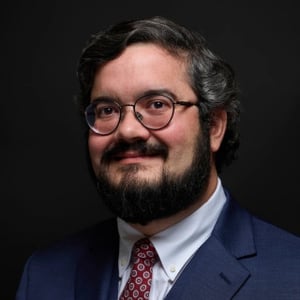
Mike Fragoso is an experienced legal and policy strategist who represents clients before all three branches of the federal government. Most recently he served as chief counsel to the Senate Republican Leader, Mitch McConnell (R-KY). He has negotiated consequential legislation, managed successful congressional oversight, and prepared individuals for the most contentious Senate hearings.
As chief counsel to Leader McConnell, Mike was the Leader’s primary legal advisor and managed the “last mile” of any legislation touching on the Senate Judiciary Committee. He ran the 2024 reauthorization of FISA Section 702 and was involved at the highest levels of the appropriations and budget-reconciliation processes. Mike also repeatedly represented Leader McConnell as counsel of record at the Supreme Court. Leader McConnell said of Mike that he’s “equally at home in the high-minded philosophical discourse of the legal community and the urgent pragmatism of congressional dealmaking,” and that he “maintains a firm grasp on the realm of the possible” but “knows which screws to twist.” He observed that Mike “is so exceptionally competent that he often produces from his desk the work that would normally require, literally, teams of outside counsel.”
Founder, Original Jurisdiction
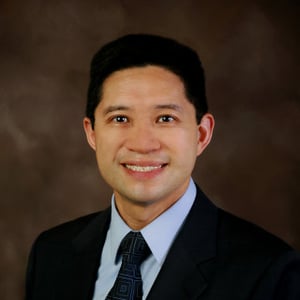
David Lat is a lawyer turned writer. He publishes Original Jurisdiction, a newsletter on Substack about law and legal affairs, and he writes for newspapers and magazines, including the New York Times, Washington Post, and Wall Street Journal. Prior to launching Original Jurisdiction, David founded Above the Law, one of the nation's most widely read legal news websites, and Underneath Their Robes, a popular blog about federal judges that he wrote under a pseudonym. He is also the author of a novel set in the world of the federal courts, Supreme Ambitions. Before entering the media world, David worked as a federal prosecutor in Newark, New Jersey; a litigation associate at Wachtell, Lipton, Rosen & Katz, in New York; and a law clerk to Judge Diarmuid F. O’Scannlain of the U.S. Court of Appeals for the Ninth Circuit. David graduated from Harvard College and Yale Law School, where he served as an editor of the Yale Law Journal.

Associate Professor of Law, Antonin Scalia Law School at George Mason University
Robert Luther III was appointed Associate Professor of Law in 2025 after serving as Distinguished Professor of Law from 2024-2025 and Adjunct Professor of Law from 2019-2024. He teaches and writes on the federal courts, legal and judicial ethics, political law, Congress, and professional sports. He has served at high levels in all three branches of the federal government and recently founded Constitutional Solutions PLLC—a law firm that navigates judicial candidates, judges, elected officials, professional athletes, and executives through high-stakes hearings, investigations, and reputational attacks.
Immediately before joining the Scalia Law faculty, Professor Luther spent over five years in the Washington, D.C. office of Jones Day, where his practice focused on strategic counseling, crisis management, and litigation. Prior to joining Jones Day, he served as Associate Counsel to the President of the United States in the White House Counsel’s Office. In the White House, he co-managed the judicial selection process and supervised the preparation of over 150 federal judicial nominees for their successful U.S. Senate confirmation hearings. The New York Times Magazine referred to his work on judicial selection during this period as “unique in White House history.” Before joining the White House, Professor Luther served as Counsel to then–U.S. Senator Jeff Sessions (R-Ala.) on the U.S. Senate Judiciary Committee, where he served as a core member of the team that prepared the Senator for confirmation as United States Attorney General. Professor Luther was also a law clerk to Judge Daniel A. Manion of the U.S. Court of Appeals for the Seventh Circuit. Earlier in his career, Professor Luther practiced civil and appellate litigation at a boutique firm in Williamsburg, Va. and taught at William & Mary Law School.
Professor Luther frequently speaks on the legal profession, political law, and federal judicial selection. His public work has been covered by or appeared in The New York Times, The Washington Post, The Wall Street Journal, Bloomberg, Fox News, The Hill, Politico, the Washington Examiner, National Law Journal, Law360, The Washington Reporter, and elsewhere, while his scholarship is published in the law journals of nearly twenty universities including three journals of Harvard University. He holds active law licenses in Virginia, the District of Columbia, the U.S. Supreme Court, and half of the U.S. Courts of Appeals.
In 2025, Virginia Governor Glenn Youngkin appointed Professor Luther to the Board of Visitors to Mount Vernon. He is an elected member of the American Law Institute (ALI) and serves on the Advisory Board of the Wilson Center for Leadership at Hampden-Sydney College. Since 2019, he has helped over 200 of his students secure clerkships with federal judges.
Deputy Secretary of Agriculture, U.S. Department of Agriculture
Judge Stephen Alexander Vaden was appointed as the Deputy Secretary of the U.S. Department of Agriculture on July 7, 2025. Alongside Secretary Brooke L. Rollins, Deputy Secretary Vaden leads the Department’s operations and implements policies that support America’s food and farm systems. A native of Union City, Tennessee, Deputy Secretary Vaden brings expertise in agricultural policy, law, and rural development. Previously, he served as a judge on the U.S. Court of International Trade and as General Counsel of USDA. Throughout Deputy Secretary Vaden’s time as General Counsel, he led successful Supreme Court litigation, advanced regulatory reform, and supported the implementation of the 2018 Farm Bill. He is a graduate of Yale Law School and Vanderbilt University. A public servant with strong agricultural roots, Deputy Secretary Vaden is committed to revitalizing rural America and ensuring an abundant, affordable, and safe U.S. food supply.

Chevron Under Review: Courthouse Steps Preview: Loper Bright & Relentless
John F. Duffy, Philip A. Hamburger, Kristin E. Hickman, Stephen Alexander Vaden
Chevron v. NRDC (1984) and subsequent precedents held that courts should defer to agency interpretations...
Chevron Under Review: Courthouse Steps Preview: Loper Bright & Relentless
John F. Duffy, Philip A. Hamburger, Kristin E. Hickman, Stephen Alexander Vaden
Chevron v. NRDC (1984) and subsequent precedents held that courts should defer to agency interpretations...
SFFA and Beyond
Akhil Reed Amar, Gail L. Heriot, Randall Kennedy, Stephen Alexander Vaden, Devon Westhill
2023 National Lawyers Convention
This year the Supreme Court issued its long-awaited decision in Students for Fair Admissions Inc....
SFFA and Beyond
Akhil Reed Amar, Gail L. Heriot, Randall Kennedy, Stephen Alexander Vaden, Devon Westhill
2023 National Lawyers Convention
This year the Supreme Court issued its long-awaited decision in Students for Fair Admissions Inc....
$64,000 Questions — Obtaining Information from the Executive Branch
Gary Lawkowski, Alina M. Semo, Katie Townsend, Stephen Alexander Vaden, Ryan Patrick Mulvey
EBRXI
We’ve grown accustomed to learning about government actions only because an enterprising person or group...
$64,000 Questions — Obtaining Information from the Executive Branch
Gary Lawkowski, Alina M. Semo, Katie Townsend, Stephen Alexander Vaden, Ryan Patrick Mulvey
EBRXI
We’ve grown accustomed to learning about government actions only because an enterprising person or group...
Food Safety: When Regulatory Jurisdictional Battles and Public Safety Collide
Mindy Brashears, Stephen Ostroff, Stephen Alexander Vaden, Frank Yiannas
Food is a necessity for life. It should therefore surprise few that the federal government...
Food Safety: When Regulatory Jurisdictional Battles and Public Safety Collide
Mindy Brashears, Stephen Ostroff, Stephen Alexander Vaden, Frank Yiannas
Food is a necessity for life. It should therefore surprise few that the federal government...
Deep Dive Episode 246 - Creatures of Statute: Administrative Agencies in Practice
Boris Bershteyn, Paul J. Ray, Stephen Alexander Vaden
Regulatory Transparency Project's Fourth Branch Podcast
The first in a lecture series on how the administrative state functions in modern American...
The Judge’s Role in Choosing a Successor
Josh Blackman, Michael Fragoso, David Lat, Robert Luther, Stephen Alexander Vaden
2022 National Lawyer's Convention
Under the Constitution, two branches of government are formally involved in the selection of federal...