

Director of Policy Studies & Senior Fellow, The Free State Foundation
Seth L. Cooper is Director of Policy Studies & Senior Fellow at The Free State Foundation. His work on federal communications and technology policy at the Free State Foundation began in 2009.
With Randolph May, Mr. Cooper is the co-author of Modernizing Copyright Law for the Digital Age: Constitutional Foundations for Reform (2020) and Constitutional Foundations of Intellectual Property: A Natural Rights Perspective (2015), both published by Carolina Academic Press. Along with Mr. May, Mr. Cooper also co-authored A Reader on Net Neutrality and Restoring Internet Freedom (2018) and #CommActUpdate: A Communications Law Fit for the Digital Age (2017), both published by Free State Foundation Press. He previously contributed to two chapters in Communications Law and Policy in the Digital Age (2012), published by Carolina Academic Press. Mr. Cooper's work has also appeared in such publications as CommLaw Conspectus, the San Jose Mercury News, Forbes.com, the Des Moines Register, the Baltimore Sun, the Washington Examiner, and the Washington Times.
Mr. Cooper previously served as Director to the Telecommunications and Information Technology Task Force at the American Legislative Exchange Council (ALEC). Mr. Cooper served as judicial clerk to the Honorable James Johnson at the Washington State Supreme Court. His co-writings about the Washington Supreme Court have appeared in the Gonzaga Law Review and in Federalist Society publications. He has worked in law and policy staff positions at the Washington State Senate and at the Discovery Institute's Center for Science & Culture. Mr. Cooper is a 2009 Lincoln Fellow at the Claremont Institute. He also has worked in private practice in the State of Washington, handling civil legal matters involving personal injuries, small business, contracts, and wills, trusts, and estates.
Mr. Cooper earned his B.A. degree in Political Science from Pacific Lutheran University and received his J.D. from Seattle University School of Law.

Senior Vice President, Public Knowledge
Harold Feld is the Senior Vice President for Public Knowledge, one of the nation’s premier consumer advocacy organizations working at the intersection of copyright, telecommunications and the Internet. Feld is a highly regarded thought leader in the areas of telecommunications and digital consumer protection, and author of The Case for the Digital Platform Act: Market Structure and Regulation of Digital Platforms. He was previously Senior Vice President at the Media Access Project (MAP), a public interest law firm, where he advanced competition policies in media, telecommunications and technology. Prior to joining MAP, Feld was an associate at Covington & Burling, and clerked for the DC Court of Appeals.

President, The Free State Foundation
Randolph J. May is Founder and President of The Free State Foundation. The Free State Foundation is an independent, non-profit free market-oriented think tank founded in 2006.
From October 1999-May 2006, May was a Senior Fellow and Director of Communications Policy Studies at The Progress & Freedom Foundation, a Washington, DC-based think tank. Prior to joining PFF, he practiced communications, administrative, and regulatory law as a partner at major national law firms. From 1978 to 1981, May served as Assistant General Counsel and Associate General Counsel at the Federal Communication Commission.
May has held numerous leadership positions in bar associations. He is a past Chair of the American Bar Association’s Section of Administrative Law and Regulatory Practice. He is a Fellow of the National Academy of Public Administration. Mr. May also has served as a Public Member of the Administrative Conference of the United States and currently is a Senior Fellow at ACUS.
Mr. May has published more than two hundred articles and essays on communications, administrative and constitutional law topics. He is author of A Call for a Radical New Communications Policy: Proposals for Free Market Reform, and co-author of #CommActUpdate: A Communications Law Fit for the Digital Age and The Constitutional Foundations of Intellectual Property. Mr. May is editor of two books, Communications Law and Policy in the Digital Age: The Next Five Years and New Directions in Communications Policy. In addition, he is the co-editor of two other books, Net Neutrality or Net Neutering: Should Broadband Internet Services Be Regulated? and Communications Deregulation and FCC Reform. In the past, Mr. May has written regular columns on legal and regulatory affairs for Legal Times and the National Law Journal, leading national legal periodicals.
He received his A.B. from Duke University and his J.D. from Duke Law School, where he serves as a member of the Board of Visitors.
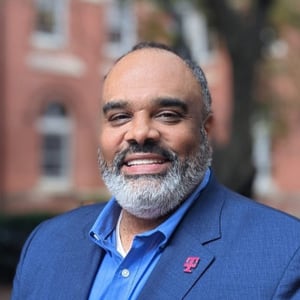
Vice President, Strategic Alliances & External Affairs, T-Mobile
Clint Odom is the vice president for strategic alliances & external affairs at T-Mobile. Previously, Odom led policy and advocacy for the National Urban League while simultaneously serving as executive director of their Washington Bureau. Odom served for a decade in the United States Senate as legislative director for Senator Kamala Harris of California and general counsel to Senator Bill Nelson of Florida.
Odom also served as a senior advisor at the Federal Communications Commission and practiced law at the firm Dow, Lohnes & Albertson (now Cooley LLP). Odom served as a law clerk to the Honorable Henry T. Wingate of the U.S. District Court of the Southern District of Mississippi and is a graduate of Louisiana State University and the University of Pennsylvania Law School.
Director of Policy Studies & Senior Fellow, The Free State Foundation
Seth L. Cooper is Director of Policy Studies & Senior Fellow at The Free State Foundation. His work on federal communications and technology policy at the Free State Foundation began in 2009.
With Randolph May, Mr. Cooper is the co-author of Modernizing Copyright Law for the Digital Age: Constitutional Foundations for Reform (2020) and Constitutional Foundations of Intellectual Property: A Natural Rights Perspective (2015), both published by Carolina Academic Press. Along with Mr. May, Mr. Cooper also co-authored A Reader on Net Neutrality and Restoring Internet Freedom (2018) and #CommActUpdate: A Communications Law Fit for the Digital Age (2017), both published by Free State Foundation Press. He previously contributed to two chapters in Communications Law and Policy in the Digital Age (2012), published by Carolina Academic Press. Mr. Cooper's work has also appeared in such publications as CommLaw Conspectus, the San Jose Mercury News, Forbes.com, the Des Moines Register, the Baltimore Sun, the Washington Examiner, and the Washington Times.
Mr. Cooper previously served as Director to the Telecommunications and Information Technology Task Force at the American Legislative Exchange Council (ALEC). Mr. Cooper served as judicial clerk to the Honorable James Johnson at the Washington State Supreme Court. His co-writings about the Washington Supreme Court have appeared in the Gonzaga Law Review and in Federalist Society publications. He has worked in law and policy staff positions at the Washington State Senate and at the Discovery Institute's Center for Science & Culture. Mr. Cooper is a 2009 Lincoln Fellow at the Claremont Institute. He also has worked in private practice in the State of Washington, handling civil legal matters involving personal injuries, small business, contracts, and wills, trusts, and estates.
Mr. Cooper earned his B.A. degree in Political Science from Pacific Lutheran University and received his J.D. from Seattle University School of Law.
Senior Vice President, Public Knowledge
Harold Feld is the Senior Vice President for Public Knowledge, one of the nation’s premier consumer advocacy organizations working at the intersection of copyright, telecommunications and the Internet. Feld is a highly regarded thought leader in the areas of telecommunications and digital consumer protection, and author of The Case for the Digital Platform Act: Market Structure and Regulation of Digital Platforms. He was previously Senior Vice President at the Media Access Project (MAP), a public interest law firm, where he advanced competition policies in media, telecommunications and technology. Prior to joining MAP, Feld was an associate at Covington & Burling, and clerked for the DC Court of Appeals.
President, The Free State Foundation
Randolph J. May is Founder and President of The Free State Foundation. The Free State Foundation is an independent, non-profit free market-oriented think tank founded in 2006.
From October 1999-May 2006, May was a Senior Fellow and Director of Communications Policy Studies at The Progress & Freedom Foundation, a Washington, DC-based think tank. Prior to joining PFF, he practiced communications, administrative, and regulatory law as a partner at major national law firms. From 1978 to 1981, May served as Assistant General Counsel and Associate General Counsel at the Federal Communication Commission.
May has held numerous leadership positions in bar associations. He is a past Chair of the American Bar Association’s Section of Administrative Law and Regulatory Practice. He is a Fellow of the National Academy of Public Administration. Mr. May also has served as a Public Member of the Administrative Conference of the United States and currently is a Senior Fellow at ACUS.
Mr. May has published more than two hundred articles and essays on communications, administrative and constitutional law topics. He is author of A Call for a Radical New Communications Policy: Proposals for Free Market Reform, and co-author of #CommActUpdate: A Communications Law Fit for the Digital Age and The Constitutional Foundations of Intellectual Property. Mr. May is editor of two books, Communications Law and Policy in the Digital Age: The Next Five Years and New Directions in Communications Policy. In addition, he is the co-editor of two other books, Net Neutrality or Net Neutering: Should Broadband Internet Services Be Regulated? and Communications Deregulation and FCC Reform. In the past, Mr. May has written regular columns on legal and regulatory affairs for Legal Times and the National Law Journal, leading national legal periodicals.
He received his A.B. from Duke University and his J.D. from Duke Law School, where he serves as a member of the Board of Visitors.
Vice President, Strategic Alliances & External Affairs, T-Mobile
Clint Odom is the vice president for strategic alliances & external affairs at T-Mobile. Previously, Odom led policy and advocacy for the National Urban League while simultaneously serving as executive director of their Washington Bureau. Odom served for a decade in the United States Senate as legislative director for Senator Kamala Harris of California and general counsel to Senator Bill Nelson of Florida.
Odom also served as a senior advisor at the Federal Communications Commission and practiced law at the firm Dow, Lohnes & Albertson (now Cooley LLP). Odom served as a law clerk to the Honorable Henry T. Wingate of the U.S. District Court of the Southern District of Mississippi and is a graduate of Louisiana State University and the University of Pennsylvania Law School.

Topics
States Should Keep Broadband Internet Services Free From Price Controls
On January 15, New York began requiring broadband providers to offer services to customers at...
Topics
Power to Persuade: The FCC’s Authority to Interpret Section 230 Post-Loper Bright
In a November 21 FedSoc Blog post, the Phoenix Center’s Lawrence J. Spiwak convincingly argued...
Topics
Fifth Circuit Rules USF Contribution Scheme Violates Legislative Vesting Clause
On July 24, the U.S. Court of Appeals for the Fifth Circuit issued an en...
Topics
Second Circuit Rejects Preemption Challenge to New York’s Broadband Rate Regulation
On April 26, the U.S. Court of Appeals for the Second Circuit issued its decision...
The FCC's Digital Discrimination Rulemaking: Facilitating Equal Access to Broadband Services
Seth L. Cooper, Harold Feld, Randolph May, Clint Odom
The Infrastructure Investment and Jobs Act, signed into law on November 15, 2021, requires the...
The FCC's Digital Discrimination Rulemaking: Facilitating Equal Access to Broadband Services
Seth L. Cooper, Harold Feld, Randolph May, Clint Odom
The Infrastructure Investment and Jobs Act, signed into law on November 15, 2021, requires the...
Topics
Second Circuit Hears Preemption Challenge to New York’s Broadband Rate Regulation Law
On January 12, the U.S. Court of Appeals for the Second Circuit held oral argument...
Topics
District Court Decision Bolsters Anti-Circumvention Rights of Copyright Owners
On September 30, the U.S. District Court for the District of Connecticut issued its decision...
D.C. Circuit Upholds FCC's 5.9 GHz Order Reallocating Spectrum for Unlicensed Use
On August 12, the U.S. Court of Appeals for the D.C. Circuit upheld the Federal...
Topics
Conflict Preemption Ruling Bars Enforcement of Maryland’s Law on Forced Ebook Licensing
On February 16, the U.S. District Court for the District of Maryland granted an injunction...