
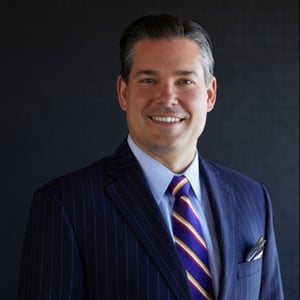
Partner, Graves Garrett Greim LLC
Edward “Eddie” Greim focuses his practice on complex commercial litigation, free speech and election law, and internal investigations and whistleblower claims. He has been recognized for his successful representation of businesses and individuals in commercial litigation while also being named a “go-to” lawyer on policy and constitutional issues.
Eddie was named a Constitutional and Election Law Trailblazer by the National Law Journal in 2020. His free speech and election law practice has included numerous constitutional challenges to election and campaign finance laws; representation of clients in state and federal ethics and campaign finance enforcement actions and investigations; initiative petition drafting and litigation; litigation and advice regarding First Amendment protections for petition circulation; representation of not-for-profit clients before state regulators; litigation of state and federal redistricting issues; and advice on campaign and election law compliance.
Eddie complements his trial work in complex, high-profile commercial and constitutional cases with oral advocacy and briefing in important appeals. Recognized as a Missouri Lawyers Media POWER 30 Appellate Attorney in 2021, he has argued before the Missouri and Kansas supreme courts multiple times, other state appellate courts across the country, and before the Sixth, Seventh, Eighth, and Tenth U.S. Courts of Appeals.
Eddie’s notable work for clients includes:
Recovering substantial compensation and injunctive relief for plaintiffs, in complex multiyear litigation, as lead counsel in the first and only nationwide class action certified against the Internal Revenue Service for violating taxpayer protection statutes when it targeted hundreds of groups based on their political viewpoints.
Successful First Amendment challenge to Missouri’s 2016 campaign finance restrictions.
Successful challenge to a vast, multiyear, secret criminal investigation into Wisconsin political groups and nonprofits, and follow-up challenge to expose role of state ethics board which secretly aided the investigation and was later dissolved by the legislature.
U.S. Supreme Court amicus brief for the National Republican Redistricting Trust in the 2019 Rucho litigation, and federal and state redistricting litigation and advice since 2011.
Challenges under the First Amendment in federal court, and in briefing to the Michigan Supreme Court on state constitutional grounds, to unprecedented emergency powers claimed by Michigan Governor in 2020.
Representation of numerous public officials and private citizens who are subject to “lawfare” attacks based on their political viewpoints or policy objectives.
Oversight of multiple internal investigations.
Eddie received his law degree from Harvard Law School in 2002, where he taught on the Board of Student Advisers, received the Dean’s Award for Leadership, and served as President of the Harvard Catholic Law Students Association. He received two bachelor’s degrees, summa cum laude, in economics and political science from the University of Missouri.
A native of Excelsior Springs, Missouri, Eddie lives in Kansas City with his family. He enjoys Missouri and military history. On many weekends, he can be found with his wife and daughters exploring sites of local interest. He enjoys reading and debating and has given presentations or organized discussions at numerous gatherings, formal and informal, of professional and personal interest.
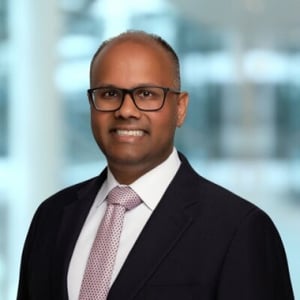
Partner, Holtzman Vogel Baran Torchinsky & Josefiak PLLC
Abhishek (Abhi) Kambli is a partner at Holtzman Vogel who represents clients in high-stakes appellate and complex litigation, constitutional challenges, and matters involving state attorneys general and federal agencies. He is one of a handful of lawyers nationally who has both led federal litigation from inside the Department of Justice and multi-state coalition work from a State Attorney General’s office—giving clients a 360-degree perspective on government enforcement, regulatory challenges, and constitutional advocacy.
Prior to joining Holtzman Vogel, Abhi served as Deputy Associate Attorney General at the United States Department of Justice, where he acted as lead counsel in high-priority matters for the Trump Administration, oversaw the Department’s civil components on behalf of the Associate Attorney General, advised the White House Counsel’s Office and federal agencies on litigation risk and strategy, and developed the Department’s national affirmative civil litigation strategy.
Earlier, he served as Deputy Attorney General and Division Chief of the Special Litigation and Constitutional Issues Division at the Kansas Attorney General’s Office, where he launched the division and led multi-state coalitions in trial and appellate courts nationwide, including the United States Supreme Court. He began his career as an Assistant United States Attorney in the Southern District of Indiana, prosecuting more than 100 federal cases from investigation through appeal.
Abhi is also a Lieutenant Colonel in the United States Air Force Judge Advocate General's Corps, having served on active duty and in the reserves since 2013. His military service includes criminal trials as both prosecutor and defense attorney, appellate representation before the Court of Appeals for the Armed Forces, and representation of a high-profile detainee before the Military Commissions at Guantánamo Bay.
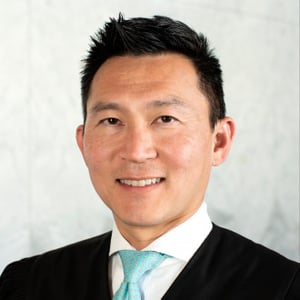
Judge, United States Court of Appeals, Ninth Circuit
Kenneth Kiyul Lee is a judge on the U.S. Court of Appeals for the Ninth Circuit. He was appointed in June 2019 and is based in San Diego, California.
Prior to his appointment, he was a partner at the law firm of Jenner & Block in Los Angeles. Judge Lee previously served as an Associate Counsel to President George W. Bush and as Special Counsel to Senator Arlen Specter, then-chair of the Senate Judiciary Committee. He started his legal career at Wachtell, Lipton, Rosen & Katz in New York.
Judge Lee received his J.D. from Harvard Law School, magna cum laude, and his A.B. from Cornell University, summa cum laude. He clerked for Judge Emilio M. Garza of the U.S. Court of Appeals for the Fifth Circuit.
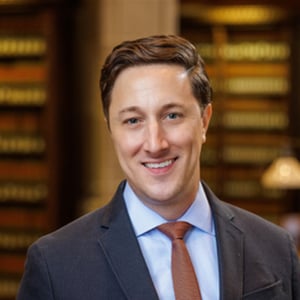
Professor of Law, Notre Dame Law School
Professor Derek Muller is a nationally-recognized scholar in the field of election law. His research focuses on the role of states in the administration of federal elections, the constitutional contours of voting rights and election administration, the limits of judicial power in the domain of elections, and the Electoral College.
He has published more than two dozen academic works, and his op-eds have appeared in the New York Times, the Los Angeles Times, and the Wall Street Journal. He has testified before Congress, and he is a contributor at the Election Law Blog. He is a co-author on a Federal Courts casebook published by Carolina Academic Press. He is also the co-reporter on a new Restatement of the Law, Election Litigation, an effort led by the American Law Institute.
Professor Muller teaches Election Law, Civil Procedure, and Evidence.
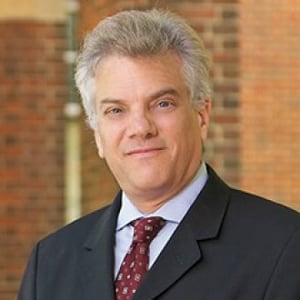
Sudler Family Professor of Constitutional Law, New York University School of Law
Richard H. Pildes is one of the nation’s leading scholars of constitutional law and a specialist in legal issues affecting democracy. He is a Member of the American Academy of Arts and Sciences and the American Law Institute, and has received recognition as a Guggenheim Fellow and a Carnegie Scholar. His acclaimed casebook, The Law of Democracy: Legal Structure of the Political Process (now in its fourth edition), helped create an entirely new field of study in the law schools. The Law of Democracy systematically explores legal and policy issues concerning the structure of democratic elections and institutions, such as the role of money in politics, the design of election districts, the regulation of political parties, the design of voting systems, the representation of minority interests in democratic institutions, and similar issues. He has written extensively on the rise of political polarization in the United States, the Voting Rights Act, the dysfunction of America’s political processes, the role of the Supreme Court in overseeing American democracy, the powers of the American President and Congress, and he has criticized excessively “romantic” understandings of democracy. In addition to his scholarship on these issues, he has written on national-security law, the design of the regulatory state, and American constitutional history and theory.
Respect for his expertise in these areas is reflected in frequent citations of his work in U.S. Supreme Court opinions, the translation of his work into many languages, and his frequent public lectures and appearances around the world, including his nomination with the NBC News Team for an Emmy Award for coverage of the 2000 Presidential election litigation.
His work has been translated and published in Chinese, French, Spanish, and Portuguese. In addition to his scholarship, Professor Pildes plays an active role litigating in these areas. He has won two cases before the United States Supreme Court, including a 2015 victory in Alabama Democratic Conference v. Alabama, a case involving race and redistricting. He served as counsel to a group of former chairmen of the Securities and Exchange Commission in litigation defending the constitutionality of the Sarbanes-Oxley Act; as counsel in election litigation to the Puerto Rico Electoral Commission; as counsel to the government of Puerto Rico; as a federal court-appointed independent expert on voting rights litigation; and as counsel in successful Supreme Court litigation that challenged the way the United States Tax Court operated. He was also a senior legal advisor to the 2008 and 2012 campaigns of President Obama.
Pildes received his A.B. in physical chemistry summa cum laude from Princeton, and his J.D. magna cum laude from Harvard, where he served as Supreme Court Note Editor on the Harvard Law Review. He clerked for Judge Abner J. Mikva of the U.S. Court of Appeals for the District of Columbia Circuit and for Justice Thurgood Marshall of the U.S. Supreme Court. After practicing law in Boston, he began his academic career at the University of Michigan Law School, before joining the NYU School of Law in 2001.
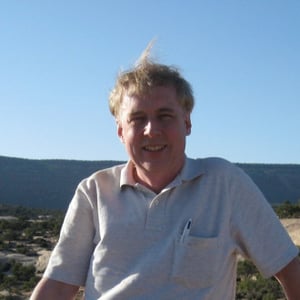
Distinguished Fellow, Foundation for Applied Molecular Evolution
Steven Benner heads the Foundation for Applied Molecular Evolution, which he founded after serving on the faculty at Harvard, ETH Zurich, and University of Florida. His research combines two traditions in science, one from natural history, the other from the physical sciences. In His laboratory has been a leader in the field of synthetic biology, where it has redesigned DNA to better understand how these molecules work, generate new classes of diagnostics tools, and to open new avenues to disease therapy. Separately, he also created the field of paleogenetics, where genes and proteins from now-extinct organisms are sesurrected to better understand how those proteins functioned in those organisms in changing environments. He has founded or contributed technology to a dozen different biotechnology companies, whose products include those that personalize the care of HIV, hepatitis B and hepatitis C patients, detect insect-borne pathogens, and monitor COVID. The work also guides NASA missions to see alien life and how life originated. His most recent book is: "Life, the Universe, and the Scientific Method."
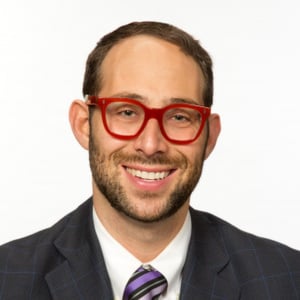
James A. Attwood and Leslie Williams Professor of Law, Deputy Dean, and Faculty Director, Petrie-Flom Center for Health Law Policy, Biotechnology & Bioethics, Harvard Law School
Prof. Cohen is one of the world's leading experts on the intersection of bioethics (sometimes also called "medical ethics") and the law, as well as health law. He also teaches civil procedure. From Seoul to Krakow to Vancouver, Professor Cohen has spoken at legal, medical, and industry conferences around the world and his work has appeared in or been covered on PBS, NPR, ABC, CNN, MSNBC, Mother Jones, the New York Times, the New Republic, the Boston Globe, and several other media venues.
He was the youngest professor on the faculty at Harvard Law School (tenured or untenured) both when he joined the faculty in 2008 (at age 29) and when he was tenured as a full professor in 2013 (at age 34), though not the youngest in history.
Prof. Cohen's current projects relate to big data, medical AI, health information technologies, mobile health, reproduction/reproductive technology, research ethics, organ transplantation, rationing in law and medicine, health policy, FDA law, COVID-19, translational medicine, and to medical tourism – the travel of patients who are residents of one country, the "home country," to another country, the "destination country," for medical treatment.
He is the author of more than 200 articles and chapters and his award-winning work has appeared in leading legal (including the Stanford, Cornell, and Southern California Law Reviews), medical (including the New England Journal of Medicine, JAMA), bioethics (including the American Journal of Bioethics, the Hastings Center Report), scientific (Science, Cell, Nature Reviews Genetics) and public health (the American Journal of Public Health) journals, as well as Op-Eds in the New York Times, Washington Post, New Republic, Time Magazine, and other venues.
Cohen is the author, co-author, editor, or co-editor of more than 18 books. They include: Consumer Genetic Technologies: Ethical and Legal Considerations (Cambridge University Press, 2021); Reproductive Technologies and the Law (Caroline Academic Press, 2021); Readings in Comparative Health Law and Bioethics (Carolina Academic Press, 2020); Disability, Health, Law, and Bioethics (Cambridge University Press, 2020); Transparency in Health and Health Care in the United States (Cambridge University Press, 2019); Health Care Law and Ethics (Aspen, 2018); Big Data, Health Law, and Bioethics (Cambridge University Press, 2018); Law, Religion, and Health in the United States (Cambridge University Press, 2017); Specimen Science (MIT Press, 2017); Nudging Health: Health Law and Behavioral Economics (John Hopkins University Press, 2016) The Oxford Handbook of U.S. Health Care Law (Oxford University Press, 2016); FDA in the Twenty-First Century: The Challenges of Regulating Drugs and New Technologies (Columbia University Press, 2015); Identified Versus Statistical Lives: An Interdisciplinary Perspective (Oxford University Press, 2015); Patients with Passports: Medical Tourism, Law, and Ethics (Oxford University Press, 2014); Human Subjects Research Regulation: Perspectives on the Future (MIT Press, 2014); The Globalization of Health Care: Legal and Ethical Issues (Oxford University Press, 2013).
For his law school teaching he was awarded the HLS Student Government Teaching and Advising Award in 2017. He also sometimes teaches courses at Harvard College and Harvard Medical School. For the public he created the free online Harvard X class Bioethics: The Law, Medicine, and Ethics of Reproductive Technologies and Genetics, which was nominated by Harvard for the Japan Prize. More than 97,000 students have taken the course so far. You can also watch his Tedx talk, Are There Non-Human Persons? Are There Non-Person Humans? He is also the faculty lead on Zero-L, an online course to help law students transition to law school that is now being used by more than half of all U.S. law schools.
Prior to becoming a professor he served as a law clerk to Judge Michael Boudin of the U.S. Court of Appeals for the First Circuit and as a lawyer for U.S. Department of Justice, Civil Division, Appellate Staff, where he handled litigation in the Courts of Appeals and (in conjunction with the Solicitor General’s Office) in the U.S. Supreme Court. In his spare time (where he can find any!) he still litigates, having authored an amicus brief in the U.S. Supreme Court for leading gene scientist Eric Lander in Association of Molecular Pathology v. Myriad, concerning whether human genes are patent eligible subject matter, a brief that was extensively discussed by the Justices at oral argument. Most recently he submitted an amicus brief to the U.S. Supreme Court in Whole Women's Health v. Hellerstedt (the Texas abortion case, on behalf of himself, Melissa Murray, and B. Jessie Hill).
Cohen was selected as a Radcliffe Institute Fellow for the 2012-2013 year and by the Greenwall Foundation to receive a Faculty Scholar Award in Bioethics. He is also a Fellow at the Hastings Center, the leading bioethics think tank in the United States as well as being a fellow of the Pierre Elliot Trudeau Foundation. He leads the Project on Precision Medicine, Artificial Intelligence, and the Law (PMAIL), which is part of the larger Centre for Advanced Studies in Biomedical Innovation Law (CeBIL). He co-leads the Regulatory Foundations, Ethics, and Law Program of Harvard Catalyst | The Harvard Clinical and Translational Science Center program. He is also the lead on the Project on Psychedelics Law and Regulation (POPLAR). He previously served as one of the key co-investigators on the multi-million dollar Football Players Health Study at Harvard which is committed to improving the health of NFL players (for more on this work click here). He is also one of three editors-in-chief of the Journal of Law and the Biosciences, a peer-reviewed journal published by Oxford University Press and serves on the editorial board for the American Journal of Bioethics. He served on the Steering Committee for Ethics for the Canadian Institutes of Health Research (CIHR), the Canadian counterpart to the NIH, and the Ethics Committee for the American College of Obstetricians and Gynecologists (ACOG). He currently serves on the Ethics Committee of the U.S. Organ Procurement and Transplantation Network (OPTN).
You can freely download his work here, and follow him on twitter @CohenProf.
Judge, United States Court of Appeals, Ninth Circuit
Kenneth Kiyul Lee is a judge on the U.S. Court of Appeals for the Ninth Circuit. He was appointed in June 2019 and is based in San Diego, California.
Prior to his appointment, he was a partner at the law firm of Jenner & Block in Los Angeles. Judge Lee previously served as an Associate Counsel to President George W. Bush and as Special Counsel to Senator Arlen Specter, then-chair of the Senate Judiciary Committee. He started his legal career at Wachtell, Lipton, Rosen & Katz in New York.
Judge Lee received his J.D. from Harvard Law School, magna cum laude, and his A.B. from Cornell University, summa cum laude. He clerked for Judge Emilio M. Garza of the U.S. Court of Appeals for the Fifth Circuit.
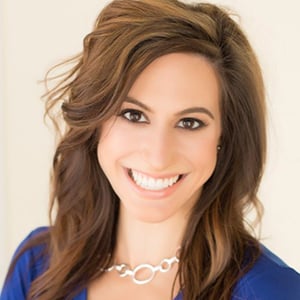
Executive Vice President, Goldwater Institute
Christina Sandefur is the Executive Vice President at the Goldwater Institute. She develops policies and litigates cases advancing healthcare freedom, free enterprise, private property rights, free speech, and taxpayer rights.
Christina is a co-drafter of the Right to Try initiative, now federal law, which protects terminally ill patients' right to try safe investigational treatments that have been prescribed by their physician but are not yet FDA-approved. She has won important victories for property rights in Arizona and works nationally to promote the Institute's Private Property Rights Protection Act, a state-level reform that requires government to pay owners when regulations destroy property rights and reduce property values.
Christina is the co-author of the book Cornerstone of Liberty: Private Property Rights in 21st Century America (2016). She is a frequent guest on national television and radio programs, has provided expert legal testimony to various legislative committees, and is a frequent speaker at conferences. She is the recipient of the 2018 Buckley Award in recognition of her leadership in the freedom movement, and she is an Advisory Board Member of the Network of enlightened Women. Christina serves on the board of the Phoenix Lawyers Chapter of the Federalist Society and is a member of the executive committee for the Federalist Society's Regulatory Transparency Project: FDA & Health.
Christina is a graduate of Michigan State University College of Law and Hillsdale College.
Distinguished Fellow, Foundation for Applied Molecular Evolution
Steven Benner heads the Foundation for Applied Molecular Evolution, which he founded after serving on the faculty at Harvard, ETH Zurich, and University of Florida. His research combines two traditions in science, one from natural history, the other from the physical sciences. In His laboratory has been a leader in the field of synthetic biology, where it has redesigned DNA to better understand how these molecules work, generate new classes of diagnostics tools, and to open new avenues to disease therapy. Separately, he also created the field of paleogenetics, where genes and proteins from now-extinct organisms are sesurrected to better understand how those proteins functioned in those organisms in changing environments. He has founded or contributed technology to a dozen different biotechnology companies, whose products include those that personalize the care of HIV, hepatitis B and hepatitis C patients, detect insect-borne pathogens, and monitor COVID. The work also guides NASA missions to see alien life and how life originated. His most recent book is: "Life, the Universe, and the Scientific Method."
James A. Attwood and Leslie Williams Professor of Law, Deputy Dean, and Faculty Director, Petrie-Flom Center for Health Law Policy, Biotechnology & Bioethics, Harvard Law School
Prof. Cohen is one of the world's leading experts on the intersection of bioethics (sometimes also called "medical ethics") and the law, as well as health law. He also teaches civil procedure. From Seoul to Krakow to Vancouver, Professor Cohen has spoken at legal, medical, and industry conferences around the world and his work has appeared in or been covered on PBS, NPR, ABC, CNN, MSNBC, Mother Jones, the New York Times, the New Republic, the Boston Globe, and several other media venues.
He was the youngest professor on the faculty at Harvard Law School (tenured or untenured) both when he joined the faculty in 2008 (at age 29) and when he was tenured as a full professor in 2013 (at age 34), though not the youngest in history.
Prof. Cohen's current projects relate to big data, medical AI, health information technologies, mobile health, reproduction/reproductive technology, research ethics, organ transplantation, rationing in law and medicine, health policy, FDA law, COVID-19, translational medicine, and to medical tourism – the travel of patients who are residents of one country, the "home country," to another country, the "destination country," for medical treatment.
He is the author of more than 200 articles and chapters and his award-winning work has appeared in leading legal (including the Stanford, Cornell, and Southern California Law Reviews), medical (including the New England Journal of Medicine, JAMA), bioethics (including the American Journal of Bioethics, the Hastings Center Report), scientific (Science, Cell, Nature Reviews Genetics) and public health (the American Journal of Public Health) journals, as well as Op-Eds in the New York Times, Washington Post, New Republic, Time Magazine, and other venues.
Cohen is the author, co-author, editor, or co-editor of more than 18 books. They include: Consumer Genetic Technologies: Ethical and Legal Considerations (Cambridge University Press, 2021); Reproductive Technologies and the Law (Caroline Academic Press, 2021); Readings in Comparative Health Law and Bioethics (Carolina Academic Press, 2020); Disability, Health, Law, and Bioethics (Cambridge University Press, 2020); Transparency in Health and Health Care in the United States (Cambridge University Press, 2019); Health Care Law and Ethics (Aspen, 2018); Big Data, Health Law, and Bioethics (Cambridge University Press, 2018); Law, Religion, and Health in the United States (Cambridge University Press, 2017); Specimen Science (MIT Press, 2017); Nudging Health: Health Law and Behavioral Economics (John Hopkins University Press, 2016) The Oxford Handbook of U.S. Health Care Law (Oxford University Press, 2016); FDA in the Twenty-First Century: The Challenges of Regulating Drugs and New Technologies (Columbia University Press, 2015); Identified Versus Statistical Lives: An Interdisciplinary Perspective (Oxford University Press, 2015); Patients with Passports: Medical Tourism, Law, and Ethics (Oxford University Press, 2014); Human Subjects Research Regulation: Perspectives on the Future (MIT Press, 2014); The Globalization of Health Care: Legal and Ethical Issues (Oxford University Press, 2013).
For his law school teaching he was awarded the HLS Student Government Teaching and Advising Award in 2017. He also sometimes teaches courses at Harvard College and Harvard Medical School. For the public he created the free online Harvard X class Bioethics: The Law, Medicine, and Ethics of Reproductive Technologies and Genetics, which was nominated by Harvard for the Japan Prize. More than 97,000 students have taken the course so far. You can also watch his Tedx talk, Are There Non-Human Persons? Are There Non-Person Humans? He is also the faculty lead on Zero-L, an online course to help law students transition to law school that is now being used by more than half of all U.S. law schools.
Prior to becoming a professor he served as a law clerk to Judge Michael Boudin of the U.S. Court of Appeals for the First Circuit and as a lawyer for U.S. Department of Justice, Civil Division, Appellate Staff, where he handled litigation in the Courts of Appeals and (in conjunction with the Solicitor General’s Office) in the U.S. Supreme Court. In his spare time (where he can find any!) he still litigates, having authored an amicus brief in the U.S. Supreme Court for leading gene scientist Eric Lander in Association of Molecular Pathology v. Myriad, concerning whether human genes are patent eligible subject matter, a brief that was extensively discussed by the Justices at oral argument. Most recently he submitted an amicus brief to the U.S. Supreme Court in Whole Women's Health v. Hellerstedt (the Texas abortion case, on behalf of himself, Melissa Murray, and B. Jessie Hill).
Cohen was selected as a Radcliffe Institute Fellow for the 2012-2013 year and by the Greenwall Foundation to receive a Faculty Scholar Award in Bioethics. He is also a Fellow at the Hastings Center, the leading bioethics think tank in the United States as well as being a fellow of the Pierre Elliot Trudeau Foundation. He leads the Project on Precision Medicine, Artificial Intelligence, and the Law (PMAIL), which is part of the larger Centre for Advanced Studies in Biomedical Innovation Law (CeBIL). He co-leads the Regulatory Foundations, Ethics, and Law Program of Harvard Catalyst | The Harvard Clinical and Translational Science Center program. He is also the lead on the Project on Psychedelics Law and Regulation (POPLAR). He previously served as one of the key co-investigators on the multi-million dollar Football Players Health Study at Harvard which is committed to improving the health of NFL players (for more on this work click here). He is also one of three editors-in-chief of the Journal of Law and the Biosciences, a peer-reviewed journal published by Oxford University Press and serves on the editorial board for the American Journal of Bioethics. He served on the Steering Committee for Ethics for the Canadian Institutes of Health Research (CIHR), the Canadian counterpart to the NIH, and the Ethics Committee for the American College of Obstetricians and Gynecologists (ACOG). He currently serves on the Ethics Committee of the U.S. Organ Procurement and Transplantation Network (OPTN).
You can freely download his work here, and follow him on twitter @CohenProf.
Judge, United States Court of Appeals, Ninth Circuit
Kenneth Kiyul Lee is a judge on the U.S. Court of Appeals for the Ninth Circuit. He was appointed in June 2019 and is based in San Diego, California.
Prior to his appointment, he was a partner at the law firm of Jenner & Block in Los Angeles. Judge Lee previously served as an Associate Counsel to President George W. Bush and as Special Counsel to Senator Arlen Specter, then-chair of the Senate Judiciary Committee. He started his legal career at Wachtell, Lipton, Rosen & Katz in New York.
Judge Lee received his J.D. from Harvard Law School, magna cum laude, and his A.B. from Cornell University, summa cum laude. He clerked for Judge Emilio M. Garza of the U.S. Court of Appeals for the Fifth Circuit.
Executive Vice President, Goldwater Institute
Christina Sandefur is the Executive Vice President at the Goldwater Institute. She develops policies and litigates cases advancing healthcare freedom, free enterprise, private property rights, free speech, and taxpayer rights.
Christina is a co-drafter of the Right to Try initiative, now federal law, which protects terminally ill patients' right to try safe investigational treatments that have been prescribed by their physician but are not yet FDA-approved. She has won important victories for property rights in Arizona and works nationally to promote the Institute's Private Property Rights Protection Act, a state-level reform that requires government to pay owners when regulations destroy property rights and reduce property values.
Christina is the co-author of the book Cornerstone of Liberty: Private Property Rights in 21st Century America (2016). She is a frequent guest on national television and radio programs, has provided expert legal testimony to various legislative committees, and is a frequent speaker at conferences. She is the recipient of the 2018 Buckley Award in recognition of her leadership in the freedom movement, and she is an Advisory Board Member of the Network of enlightened Women. Christina serves on the board of the Phoenix Lawyers Chapter of the Federalist Society and is a member of the executive committee for the Federalist Society's Regulatory Transparency Project: FDA & Health.
Christina is a graduate of Michigan State University College of Law and Hillsdale College.

Patrick Hotung Professor of Constitutional Law, Georgetown University Law Center
Randy Barnett is the Patrick Hotung Professor of Constitutional Law at Georgetown University Law Center. He has argued before the United States Supreme Court, tried murder cases to juries as a prosecutor in Chicago, and appeared as a prosecutor in the feature film Inalienable. He is the author of numerous books, including Restoring the Lost Constitution, The Structure of Liberty, Our Republican Constitution, and The Original Meaning of the Fourteenth Amendment. He has published two memoirs, A Life for Liberty: The Making of an American Originalist, and Felony Review: Tales of True Crime and Corruption in Chicago. He is currently working on a new book, Freedom and Flourishing: Libertarianism for the Real World.
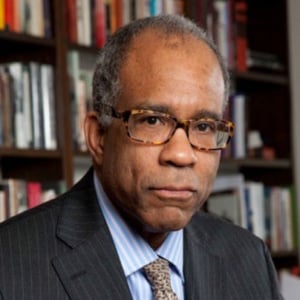
Michael R. Klein Professor of Law, Harvard Law School
Randall Kennedy is Michael R. Klein Professor at Harvard Law School where he teaches courses on contracts, criminal law, and the regulation of race relations. He was born in Columbia, South Carolina. For his education he attended St. Albans School, Princeton University, Oxford University, and Yale Law School. He served as a law clerk for Judge J. Skelly Wright of the United States Court of Appeals and for Justice Thurgood Marshall of the United States Supreme Court. He is a member of the bar of the District of Columbia and the Supreme Court of the United States. Awarded the 1998 Robert F. Kennedy Book Award for Race, Crime, and the Law, Mr Kennedy writes for a wide range of scholarly and general interest publications. His other books are For Discrimination: Race, Affirmative Action, and the Law (2013), The Persistence of the Color Line: Racial Politics and the Obama Presidency (2011), Sellout: The Politics of Racial Betrayal (2008), Interracial Intimacies: Sex, Marriage, Identity, and Adoption (2003), and Nigger: The Strange Career of a Troublesome Word (2002). A member of the American Law Institute, the American Academy of Arts and Sciences, and the American Philosophical Association, Mr. Kennedy is also a Trustee emeritus of Princeton University.
Judge, United States Court of Appeals, Ninth Circuit
Kenneth Kiyul Lee is a judge on the U.S. Court of Appeals for the Ninth Circuit. He was appointed in June 2019 and is based in San Diego, California.
Prior to his appointment, he was a partner at the law firm of Jenner & Block in Los Angeles. Judge Lee previously served as an Associate Counsel to President George W. Bush and as Special Counsel to Senator Arlen Specter, then-chair of the Senate Judiciary Committee. He started his legal career at Wachtell, Lipton, Rosen & Katz in New York.
Judge Lee received his J.D. from Harvard Law School, magna cum laude, and his A.B. from Cornell University, summa cum laude. He clerked for Judge Emilio M. Garza of the U.S. Court of Appeals for the Fifth Circuit.

George C. Dix Professor in Constitutional Law, Northwestern University Pritzker School of Law
John O. McGinnis is a graduate of Harvard College and Harvard Law School where he was an editor of the Harvard Law Review. He also has an MA degree from Balliol College, Oxford, in philosophy and theology. Professor McGinnis clerked on the U.S. Court of Appeals for the District of Columbia. From 1987 to 1991, he was deputy assistant attorney general in the Office of Legal Counsel at the Department of Justice. He is the author of Accelerating Democracy: Transforming Government Through Technology (Princeton 2013) and Originalism and the Good Constitution (Harvard 2013) (with M. Rappaport). He is a past winner of the Paul Bator award given by the Federalist Society to an outstanding academic under 40. He has been listed by the United States on the roster of panelists who may be called upon to decide World Trade Organization Disputes.
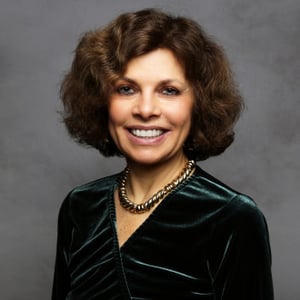
John Marshall Harlan II Professor of Law Emerita, New York Law School; Former President, American Civil Liberties Union
Nadine Strossen, New York Law School Professor Emerita and Senior Fellow at FIRE (the Foundation for Individual Rights and Expression), was national President of the American Civil Liberties Union from 1991 to 2008. An internationally acclaimed free speech scholar and advocate, who regularly addresses diverse audiences and provides media commentary around the world, Strossen is also the Host and Project Consultant for Free To Speak, a 3-hour documentary film series distributed on public television in 2023. Her books about free speech include: Free Speech: What Everyone Needs to Know® (Oxford University Press 2023); HATE: Why We Should Resist It with Free Speech, Not Censorship (Oxford University Press 2018); and Defending Pornography: Free Speech, Sex, and the Fight for Women’s Rights (Scribner 1995), which was republished with a new Preface in 2024 as part of the NYU Classics Series. Her many honors and awards include the National Coalition Against Censorship’s Judy Blume Lifetime Achievement Award for Free Speech. She serves on the Advisory Boards of several organizations that do free speech work, including: ACLU, Academic Freedom Alliance, Foundation Against Intolerance and Racism (FAIR), Heterodox Academy, National Coalition Against Censorship, and the University of Austin.

Former President & CEO, The Federalist Society for Law and Public Policy Studies
Eugene B. Meyer, former President and CEO of the Federalist Society, has served as Executive Director, CEO, and/or President of the organization for more than 40 years. He is responsible for shepherding the organization from a small group of law students to a community of 90,000 lawyers, law students, academics, judges, and others interested in the rule of law. The Society now includes a Student Chapter at nearly every ABA-accredited law school in the country and Lawyers Chapters in 220 major cities across the nation. Gene earned his B.A. in history at Yale in 1975 and his M.A. in political science from the London School of Economics in 1976. Gene currently serves on the boards of the U.S. Chess Center, the Holman Foundation, the Sarah Scaife Foundation, and the advisory board of the Adam Smith Society. He holds the title of International Chess Master.
Patrick Hotung Professor of Constitutional Law, Georgetown University Law Center
Randy Barnett is the Patrick Hotung Professor of Constitutional Law at Georgetown University Law Center. He has argued before the United States Supreme Court, tried murder cases to juries as a prosecutor in Chicago, and appeared as a prosecutor in the feature film Inalienable. He is the author of numerous books, including Restoring the Lost Constitution, The Structure of Liberty, Our Republican Constitution, and The Original Meaning of the Fourteenth Amendment. He has published two memoirs, A Life for Liberty: The Making of an American Originalist, and Felony Review: Tales of True Crime and Corruption in Chicago. He is currently working on a new book, Freedom and Flourishing: Libertarianism for the Real World.
Michael R. Klein Professor of Law, Harvard Law School
Randall Kennedy is Michael R. Klein Professor at Harvard Law School where he teaches courses on contracts, criminal law, and the regulation of race relations. He was born in Columbia, South Carolina. For his education he attended St. Albans School, Princeton University, Oxford University, and Yale Law School. He served as a law clerk for Judge J. Skelly Wright of the United States Court of Appeals and for Justice Thurgood Marshall of the United States Supreme Court. He is a member of the bar of the District of Columbia and the Supreme Court of the United States. Awarded the 1998 Robert F. Kennedy Book Award for Race, Crime, and the Law, Mr Kennedy writes for a wide range of scholarly and general interest publications. His other books are For Discrimination: Race, Affirmative Action, and the Law (2013), The Persistence of the Color Line: Racial Politics and the Obama Presidency (2011), Sellout: The Politics of Racial Betrayal (2008), Interracial Intimacies: Sex, Marriage, Identity, and Adoption (2003), and Nigger: The Strange Career of a Troublesome Word (2002). A member of the American Law Institute, the American Academy of Arts and Sciences, and the American Philosophical Association, Mr. Kennedy is also a Trustee emeritus of Princeton University.
Judge, United States Court of Appeals, Ninth Circuit
Kenneth Kiyul Lee is a judge on the U.S. Court of Appeals for the Ninth Circuit. He was appointed in June 2019 and is based in San Diego, California.
Prior to his appointment, he was a partner at the law firm of Jenner & Block in Los Angeles. Judge Lee previously served as an Associate Counsel to President George W. Bush and as Special Counsel to Senator Arlen Specter, then-chair of the Senate Judiciary Committee. He started his legal career at Wachtell, Lipton, Rosen & Katz in New York.
Judge Lee received his J.D. from Harvard Law School, magna cum laude, and his A.B. from Cornell University, summa cum laude. He clerked for Judge Emilio M. Garza of the U.S. Court of Appeals for the Fifth Circuit.
George C. Dix Professor in Constitutional Law, Northwestern University Pritzker School of Law
John O. McGinnis is a graduate of Harvard College and Harvard Law School where he was an editor of the Harvard Law Review. He also has an MA degree from Balliol College, Oxford, in philosophy and theology. Professor McGinnis clerked on the U.S. Court of Appeals for the District of Columbia. From 1987 to 1991, he was deputy assistant attorney general in the Office of Legal Counsel at the Department of Justice. He is the author of Accelerating Democracy: Transforming Government Through Technology (Princeton 2013) and Originalism and the Good Constitution (Harvard 2013) (with M. Rappaport). He is a past winner of the Paul Bator award given by the Federalist Society to an outstanding academic under 40. He has been listed by the United States on the roster of panelists who may be called upon to decide World Trade Organization Disputes.
Former President & CEO, The Federalist Society for Law and Public Policy Studies
Eugene B. Meyer, former President and CEO of the Federalist Society, has served as Executive Director, CEO, and/or President of the organization for more than 40 years. He is responsible for shepherding the organization from a small group of law students to a community of 90,000 lawyers, law students, academics, judges, and others interested in the rule of law. The Society now includes a Student Chapter at nearly every ABA-accredited law school in the country and Lawyers Chapters in 220 major cities across the nation. Gene earned his B.A. in history at Yale in 1975 and his M.A. in political science from the London School of Economics in 1976. Gene currently serves on the boards of the U.S. Chess Center, the Holman Foundation, the Sarah Scaife Foundation, and the advisory board of the Adam Smith Society. He holds the title of International Chess Master.
John Marshall Harlan II Professor of Law Emerita, New York Law School; Former President, American Civil Liberties Union
Nadine Strossen, New York Law School Professor Emerita and Senior Fellow at FIRE (the Foundation for Individual Rights and Expression), was national President of the American Civil Liberties Union from 1991 to 2008. An internationally acclaimed free speech scholar and advocate, who regularly addresses diverse audiences and provides media commentary around the world, Strossen is also the Host and Project Consultant for Free To Speak, a 3-hour documentary film series distributed on public television in 2023. Her books about free speech include: Free Speech: What Everyone Needs to Know® (Oxford University Press 2023); HATE: Why We Should Resist It with Free Speech, Not Censorship (Oxford University Press 2018); and Defending Pornography: Free Speech, Sex, and the Fight for Women’s Rights (Scribner 1995), which was republished with a new Preface in 2024 as part of the NYU Classics Series. Her many honors and awards include the National Coalition Against Censorship’s Judy Blume Lifetime Achievement Award for Free Speech. She serves on the Advisory Boards of several organizations that do free speech work, including: ACLU, Academic Freedom Alliance, Foundation Against Intolerance and Racism (FAIR), Heterodox Academy, National Coalition Against Censorship, and the University of Austin.
Of Counsel, Stanley Law Group
Stephen Gardner serves of counsel to the Dallas-based Stanley Law Group, a plaintiffs firm. Previously, Mr. Gardner was Director of Litigation for the Washington, DC based advocacy group Center for Science in the Public Interest 2004-2014); Of Counsel to the National Consumer Law Center (2002-2006); Assistant Dean of Clinical Education at Southern Methodist University School of Law (1994-1995); Visiting Assistant Professor of Law at Southern Methodist University School of Law (1992-1995); Assistant Attorney General in the Consumer Protection Division of the State of Texas (1984-1991); Assistant Attorney General in the Bureau of Consumer Frauds of the State of New York (1982-1984); Students Attorney at the University of Texas (1981-1982); and a staff attorney at the legal aid office in Austin, now part of Texas RioGrande Legal Services (1976-1981). He is a frequent author and speaker on consumer advocacy issues.
Judge, United States Court of Appeals, Ninth Circuit
Kenneth Kiyul Lee is a judge on the U.S. Court of Appeals for the Ninth Circuit. He was appointed in June 2019 and is based in San Diego, California.
Prior to his appointment, he was a partner at the law firm of Jenner & Block in Los Angeles. Judge Lee previously served as an Associate Counsel to President George W. Bush and as Special Counsel to Senator Arlen Specter, then-chair of the Senate Judiciary Committee. He started his legal career at Wachtell, Lipton, Rosen & Katz in New York.
Judge Lee received his J.D. from Harvard Law School, magna cum laude, and his A.B. from Cornell University, summa cum laude. He clerked for Judge Emilio M. Garza of the U.S. Court of Appeals for the Fifth Circuit.
Judge, United States Court of Appeals, Ninth Circuit
Kenneth Kiyul Lee is a judge on the U.S. Court of Appeals for the Ninth Circuit. He was appointed in June 2019 and is based in San Diego, California.
Prior to his appointment, he was a partner at the law firm of Jenner & Block in Los Angeles. Judge Lee previously served as an Associate Counsel to President George W. Bush and as Special Counsel to Senator Arlen Specter, then-chair of the Senate Judiciary Committee. He started his legal career at Wachtell, Lipton, Rosen & Katz in New York.
Judge Lee received his J.D. from Harvard Law School, magna cum laude, and his A.B. from Cornell University, summa cum laude. He clerked for Judge Emilio M. Garza of the U.S. Court of Appeals for the Fifth Circuit.
Judge, United States Court of Appeals, Ninth Circuit
Kenneth Kiyul Lee is a judge on the U.S. Court of Appeals for the Ninth Circuit. He was appointed in June 2019 and is based in San Diego, California.
Prior to his appointment, he was a partner at the law firm of Jenner & Block in Los Angeles. Judge Lee previously served as an Associate Counsel to President George W. Bush and as Special Counsel to Senator Arlen Specter, then-chair of the Senate Judiciary Committee. He started his legal career at Wachtell, Lipton, Rosen & Katz in New York.
Judge Lee received his J.D. from Harvard Law School, magna cum laude, and his A.B. from Cornell University, summa cum laude. He clerked for Judge Emilio M. Garza of the U.S. Court of Appeals for the Fifth Circuit.
Judge, United States Court of Appeals, Ninth Circuit
Kenneth Kiyul Lee is a judge on the U.S. Court of Appeals for the Ninth Circuit. He was appointed in June 2019 and is based in San Diego, California.
Prior to his appointment, he was a partner at the law firm of Jenner & Block in Los Angeles. Judge Lee previously served as an Associate Counsel to President George W. Bush and as Special Counsel to Senator Arlen Specter, then-chair of the Senate Judiciary Committee. He started his legal career at Wachtell, Lipton, Rosen & Katz in New York.
Judge Lee received his J.D. from Harvard Law School, magna cum laude, and his A.B. from Cornell University, summa cum laude. He clerked for Judge Emilio M. Garza of the U.S. Court of Appeals for the Fifth Circuit.
President, Society for the Rule of Law
George T. Conway III has been a partner in the Litigation Department of Wachtell, Lipton, Rosen & Katz since January 1994. He joined the firm in September 1988. His litigation experience has included a variety of high-profile matters spanning many areas of law in federal and state courts throughout the country. He has extensive experience in securities litigation, mergers and acquisitions litigation, contract litigation, antitrust litigation, and other litigation, both at the trial and appellate levels.
In the area of securities litigation, he recently briefed and argued the case for respondents in Morrison v. National Australia Bank, in which the Supreme Court of the United States held that Section 10(b) of the Securities Exchange Act of 1934 does not apply extraterritorially to claims of so-called "foreign-cubed" plaintiffs -- foreign investors who purchased securities of foreign issuers on foreign exchanges. He also recently argued and won a precedent-setting motion to dismiss so-called "foreign-squared" claims against European Aeronautic Defence & Space Co. brought by American plaintiffs who purchased that foreign company's shares on foreign exchanges.
Mr. Conway also recently argued and won an important appeal under the Visual Artists Rights Act of 1990 on behalf of the Swiss installation artist Christoph Büchel in the artist’s highly publicized dispute with the Massachusetts Museum of Contemporary Art. He also successfully represented the Chief Judge of the State of New York and the New York Unified Court System in historic constitutional litigation over the State of New York’s extended failure to adjust judicial salaries. Mr. Conway also played a substantial role in the successful defense of Kenneth Langone’s Invemed Associates in a disciplinary proceeding before the NASD (now FINRA) that resulted in what the New York Times called a "withering," "high-profile defeat" for the regulators.
Mr. Conway’s work in mergers and acquisitions litigation includes the representation of Rohm and Haas Co. and ADVO, Inc., in, respectively, Rohm and Haas v. Dow Chemical Co., and Valassis Communications v. ADVO, two Delaware Chancery Court cases involving claims to enforce merger agreements, as well as two historic cases in the development of Delaware corporate law governing mergers and acquisitions, QVC v. Paramount Communications and Paramount Communications v. Time Inc. and Warner Communications, in addition to many other cases involving contests for corporate control in the Delaware courts and elsewhere over the past two decades.
In addition, Mr. Conway played a substantial role in prosecuting one of the most prominent defamation cases in recent memory (Philip Morris v. American Broadcasting Cos.). He has extensive experience in merger-related private antitrust litigation and government antitrust investigations, including the defense of Cardinal Health in the preliminary injunction proceedings before the United States District Court for the District of Columbia in FTC v. Cardinal Health. He also represented the National Football League in trademark and antitrust litigation against the Dallas Cowboys in NFL Properties v. Dallas Cowboys Football Club. His pro bono work includes his successful representation in the Second Circuit of crime victims and public-interest groups as amici curiae in opposing claims that federal law requires the State of New York to allow felons to vote while still incarcerated.
Mr. Conway is a graduate of Harvard College, where in 1984 he received an A.B. magna cum laude in biochemical sciences. He received his J.D. in 1987 from Yale Law School, where he was an editor of the Yale Law Journal. In 1987 and 1988, he served as a law clerk to Circuit Judge Ralph K. Winter, Jr. of the United States Court of Appeals for the Second Circuit.
Board Member, Center for Equal Opportunity
Roger Clegg is a Board Member at and former President and General Counsel of the Center for Equal Opportunity. He focuses on legal issues arising from civil rights laws--including the regulatory impact on business and the problems in higher education created by affirmative action. A former Deputy Assistant Attorney General in the Reagan and Bush administrations, Clegg held the second highest positions in both the Civil Rights Division (1987-91) and in the Environment and Natural Resources Division (1991-93). He has held several other positions at the U.S. Justice Department, including Assistant to the Solicitor General (1985-87), Associate Deputy Attorney General (1984-85), and Acting Assistant Attorney General in the Office of Legal Policy (1984). Clegg is a graduate of Yale University Law School (1981).
Judge, United States Court of Appeals, Ninth Circuit
Kenneth Kiyul Lee is a judge on the U.S. Court of Appeals for the Ninth Circuit. He was appointed in June 2019 and is based in San Diego, California.
Prior to his appointment, he was a partner at the law firm of Jenner & Block in Los Angeles. Judge Lee previously served as an Associate Counsel to President George W. Bush and as Special Counsel to Senator Arlen Specter, then-chair of the Senate Judiciary Committee. He started his legal career at Wachtell, Lipton, Rosen & Katz in New York.
Judge Lee received his J.D. from Harvard Law School, magna cum laude, and his A.B. from Cornell University, summa cum laude. He clerked for Judge Emilio M. Garza of the U.S. Court of Appeals for the Fifth Circuit.

Race and Redistricting: How Are We to Understand the VRA?
Edward D. Greim, Abhishek Kambli, Kenneth Kiyul Lee, Derek T. Muller, Richard H. Pildes
Election Law Practice Group
The Voting Rights Act (VRA) is at a crossroads. Section Two of the VRA forbids...
Showcase Panel IV: Law, Science, and Public Policy
Steven A. Benner, I. Glenn Cohen, Kenneth Kiyul Lee, Christina Sandefur
2021 National Lawyers Convention
The 2021 National Lawyers Convention took place November 11-13, 2021 at the Mayflower Hotel in...
Showcase Panel IV: Law, Science, and Public Policy
Steven A. Benner, I. Glenn Cohen, Kenneth Kiyul Lee, Christina Sandefur
2021 National Lawyers Convention
The 2021 National Lawyers Convention took place November 11-13, 2021 at the Mayflower Hotel in...
Showcase Panel I: Law, Social Justice, Wokeness and the Protests: Where Do We Go From Here?
Randy E. Barnett, Randall Kennedy, Kenneth Kiyul Lee, John O. McGinnis, Nadine Strossen, Eugene B. Meyer
2020 National Lawyers Convention
On November 12, 2020, the Federalist Society hosted a virtual panel for the 2020 National...
Showcase Panel I: Law, Social Justice, Wokeness and the Protests: Where Do We Go From Here?
Randy E. Barnett, Randall Kennedy, Kenneth Kiyul Lee, John O. McGinnis, Eugene B. Meyer, Nadine Strossen
2020 National Lawyers Convention
On November 12, 2020, the Federalist Society hosted a virtual panel for the 2020 National...
Food Labeling: Genetically Modified Organisms - Podcast
Stephen Gardner, Kenneth Kiyul Lee
Litigation Practice Group Podcast
There has been a recent surge in consumer class action lawsuits challenging "all natural" labels...
Comcast v. Behrend - Post-Decision SCOTUScast
Kenneth Kiyul Lee
SCOTUScast 4-1-13 featuring Ken Lee
On March 27, 2013, the Supreme Court announced its decision in Comcast v. Behrend. The question...
Comcast v. Behrend - Post-Argument SCOTUScast
Kenneth Kiyul Lee
SCOTUScast 12-7-12 featuring Kenneth Lee
On November 5, 2012, the Supreme Court heard oral argument in Comcast v. Behrend. The question...
State Efforts to Impose "Amazon Tax" on Internet Vendors
Kenneth Kiyul Lee
Engage Volume 13, Issue 2, July 2012
Burdened by unfunded pensions and other fiscal calamities, cash-strapped states have scoured for new and...
The Debate Over Felon Voting
George T. Conway, Roger B. Clegg, George ConwayI, Kenneth Kiyul Lee
Today, from the bluest of the blue to the reddest of the red, almost every...