
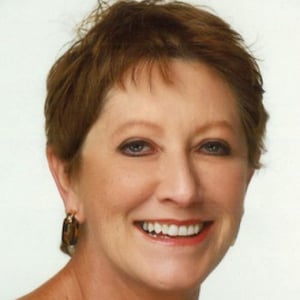
Former Chief Judge, U.S. Court of Federal Claims
Judge Braden was appointed to the United States Court of Federal Claims on July 14, 2003, by President George W. Bush, after being confirmed by unanimous consent of the United States Senate. She was sworn into office by Senator Jeff Sessions. Her investiture was conducted on October 24, 2003 by Justice Sandra Day O’Connor and Justice Ruth Bader Ginsburg.
On January 28, 2015, Judge Braden was appointed by the American Law Institute as one of seven Judicial Advisors to the Restatement of the Law on Copyright. In 2013, Judge Braden was appointed to the Judges Special Committee of the American Intellectual Property Law Association and was named as Chair of the Intellectual Property Committee of the Advisory Council of the United States Court of Federal Claims. On March 23, 2012, Judge Braden received the Linn Inn Alliance Distinguished Service Medal at the New York Intellectual Property Lawyers Association Annual Dinner for her work with the American Inns of Court, dedicated to intellectual property law. On February 7, 2012, Judge Braden was appointed as Chair of the American Bar Association’s Section of Intellectual Property Law Task Force to consider how to more efficiently adjudicate "small" patent infringement cases. During 2010-2011, Judge Braden served as President of the Giles S. Rich American Inn of Court, which is affiliated with the United States Court of Appeals for the Federal Circuit. She was recognized at a ceremony in the United States Supreme Court in November 2011, when she received the American Inns of Court’s Platinum Distinction Award. Judge Braden also served as a Member of the Editorial Board of the American Intellectual Property Law Association.
In July 2009, Judge Braden was appointed as a Member of the Standing Committee on Ethics and Professional Responsibility-Judges Advisory Committee to the American Bar Association, on which she served until 2012. On February 14, 2007, Judge Braden was elected as a Member of the American Law Institute and was active in drafting Restatement of Law Third, Restitution and Unjust Enrichment. On October 22, 2004, she was inducted as a Senior Fellow of the ABA’s Administrative Law and Regulatory Section by Justice O’Connor at a ceremony held at the United States Supreme Court.
Prior to joining the bench, Judge Braden litigated complex federal and administrative law cases in private practice in trial and appellate courts. In particular, her work in the intellectual property area received favorable notice in the Wall Street Journal, New York Times, National Law Journal, and the Journal of the American Bar Association, and was featured in Interfaces on Trial: Intellectual Property and Interoperability In The Global Software Industry. In 1996, Judge Braden was honored by the Computer Law Association for winning multiple decisions in the Eastern District of New York, the Eastern District of Texas, the Second Circuit, and a certified question to the Supreme Court of Texas in Computer Assocs. Int’l, Inc. v. Altai Inc., a landmark case that changed the application of copyright law to computer software. In 1998, she also won a companion case brought in France before the Cour de Appel de Paris.
In private practice, Judge Braden represented a wide variety of client interests before almost every major department and federal agency, testified before the United States Congress on a variety of matters, and was a principal lobbyist for the Emergency Oil and Steel Loan Guarantee Act of 1999, that established a $1 billion federal loan guarantee program to assist bankrupt and troubled steel mills and small oil companies.
Judge Braden received a B.A. degree (1970) and J. D. degree (1973) from Case Western Reserve University in Cleveland, Ohio. She also attended post graduate courses at the Harvard Law School in the summer of 1978.
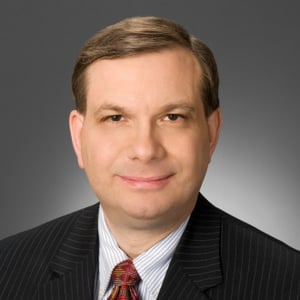
National Affairs Columnist, National Review
John Fund is National Affairs Columnist for National Review magazine and a on-air analyst on the Fox News Channel. He is considered a notable expert on American politics and the nexus between politics and economics.
He previously served as a columnist and editorial board member for The Wall Street Journal. He is the author of several books, including Who's Counting: Bow Fraudsters and Bureaucrats Put Your Vote At Risk (Encounter Books, 2012); Stealing Elections: How Voter Fraud Threatens Our Democracy (Encounter Books, 2008) and The Dangers of Regulation Through Litigation (ATRA Press, 2008). He worked as a research analyst for the California Legislature in Sacramento before beginning his journalism career as a reporter for the syndicated columnists Rowland Evans and Robert Novak.
Roll Call, the newspaper of Capitol Hill, called him "the Tom Paine of the modern Congressional reform movement." He has won awards from the Institute for Justice, The School Choice Aliance and the Warren Brooks award for journalistic excellence from the American Legislative Exchange Council.
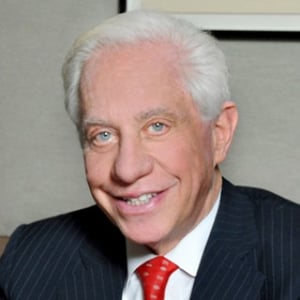
Partner, Shook, Hardy & Bacon LLP
Victor Schwartz chairs the firm's Public Policy Practice Group, which focuses on integrating litigation, government affairs and public relations. The group seeks to be the vanguard of developing public policy issues that will help improve our civil justice system. Mr. Schwartz also has an active appellate practice and advises product manufacturers on liability prevention, litigation and public relations issues.
Sought by print and broadcast media, Mr. Schwartz is frequently quoted in The Wall Street Journal, The Washington Post and The New York Times. He has appeared on Oprah, 60 Minutes and leading news programs. The Legal Times of Washington has named Mr. Schwartz one of Washington’s Top 30 “Visionary” lawyers, and The National Law Journal named Mr. Schwartz one of the 100 most influential lawyers in the United States in March 2013.
Mr. Schwartz is on the Board of Directors of the Searle Civil Justice Institute at George Mason University School of Law. He is a frequent participant in judicial education programs. Mr. Schwartz serves as General Counsel to the American Tort Reform Association.
Prior to entering the full time practice of law, Mr. Schwartz was a professor and dean at the University of Cincinnati College of Law. He currently serves on the College’s Board of Visitors. In 2012, the College established the Professor Victor E. Schwartz Chair in Tort Law.
Mr. Schwartz, while at the U.S. Department of Commerce, served as chair of the Federal Inter-Agency Task Force on Product Liability, and the Federal Inter-Agency Council on Insurance. He was the principal author of the Uniform Product Liability Act and the Federal Risk Retention Act. He received the Secretary of Commerce’s Award for Professional Excellence.
Mr. Schwartz is co-author of the most widely used torts casebook in the United States, Prosser, Wade and Schwartz’s Torts (12th ed. 2010). He is author of the leading text Comparative Negligence (5th ed. 2010).
Mr. Schwartz has been an advisor for each of the American Law Institute’s (ALI) Restatement (Third) of Torts projects; Products Liability, Apportionment of Liability, and Liability for Physical Injury and Emotional Harm. He is a life member of the ALI.
Mr. Schwartz’s law review articles have analyzed almost every major subject of modern tort and civil justice public policy issues. His articles are frequently cited by both state and federal courts.

Partner, WilmerHale and former United States Solicitor General
Universally considered to be among the country's premier Supreme Court and appellate advocates, Seth Waxman served as Solicitor General of the United States from 1997 through January 2001. In addition to leading the firm's appellate practice, Mr. Waxman engages in a broad litigation and counseling practice, with particular emphasis on complex challenges involving governments or public policy, intellectual property, regulatory, criminal and commercial issues.
A Fellow of the American College of Trial Lawyers, Mr. Waxman also is a widely respected trial litigator. In January 2016, The American Lawyer named him "Litigator of the Year." Mr. Waxman was also named Appellate/Litigation "Lawyer of the Year" for 2018, Litigation - Intellectual Property "Lawyer of the Year" for 2016 and Litigation - First Amendment Law and Regulatory Enforcement Law "Lawyer of the Year" for 2015 by Best Lawyers in America, and, in 2014, Super Lawyers deemed him the "number one" lawyer in Washington DC. Mr. Waxman has been accorded both "star" rating by Chambers USA and "leading lawyer" ranking in PLC's Global Counsel Handbook.
Mr. Waxman's practice spans both federal and state trial and appellate courts. He has delivered 80 oral arguments in the United States Supreme Court and many more in the lower federal and state courts. Mr. Waxman's clients range from financial institutions to technology, consumer, industrial and media companies, universities and Indian tribes, and he leads the firm's efforts to counsel tribal governments. He also represents a number of local, state and national governments and prominent business and government executives and professionals. The recipient of numerous professional awards and honors, Mr. Waxman is among a small handful of practicing attorneys elected to the American Academy of Arts and Sciences. He holds several honorary degrees, as well as the Jefferson Medal in Law, an honor awarded once a year and only rarely to an attorney in private practice. In recognition of exceptional service to law enforcement, Mr. Waxman holds the extraordinary status of permanent honorary Special Agent of the Federal Bureau of Investigation.

Distinguished Senior Fellow and Antonin Scalia Chair in Constitutional Studies, Ethics and Public Policy Center
Edward Whelan is a Distinguished Senior Fellow of the Ethics and Public Policy Center and holds EPPC’s Antonin Scalia Chair in Constitutional Studies. He is the longest-serving President in EPPC’s history, having held that position from March 2004 through January 2021.
Mr. Whelan directs EPPC’s program on The Constitution, the Courts, and the Culture. His areas of expertise include constitutional law and the judicial confirmation process. As a contributor to National Review Online’s Bench Memos blog, he has been a leading commentator on nominations to the Supreme Court and the lower courts and on issues of constitutional law. He has written essays and op-eds for leading newspapers—including the Wall Street Journal, the New York Times, and the Washington Post—opinion journals, and academic symposia and law reviews. The National Law Journal has named Mr. Whelan among its “Champions and Visionaries” in the practice of law in D.C.
Mr. Whelan is co-editor of three volumes of Supreme Court Justice Antonin Scalia’s work: Scalia Speaks: Reflections on Law, Faith, and Life Well Lived (Crown Forum, 2017), a New York Times bestselling collection of speeches by Justice Scalia; On Faith: Lessons from an American Believer (Crown Forum, 2019), a collection of Justice Scalia’s writings on faith and religion; and The Essential Scalia: On the Constitution, the Courts, and the Rule of Law (Crown Forum, 2020), a collection of Justice Scalia’s views on legal issues.
Mr. Whelan, a lawyer and a former law clerk to Justice Scalia, has served in positions of responsibility in all three branches of the federal government. From just before the terrorist attacks of September 11, 2001, until joining EPPC in 2004, Mr. Whelan was the Principal Deputy Assistant Attorney General for the Office of Legal Counsel in the U.S. Department of Justice. In that capacity, he advised the White House Counsel’s Office, the Attorney General and other senior DOJ officials, and departments and agencies throughout the executive branch on difficult and sensitive legal questions. Mr. Whelan previously served on Capitol Hill as General Counsel to the U.S. Senate Committee on the Judiciary. In addition to clerking for Justice Scalia, he was a law clerk to Judge J. Clifford Wallace of the U.S. Court of Appeals for the Ninth Circuit.
In 1981 Mr. Whelan graduated with honors from Harvard College and was inducted into Phi Beta Kappa. He received his J.D. magna cum laude in 1985 from Harvard Law School, where he was a member of the Board of Editors of the Harvard Law Review.
For more on Mr. Whelan’s background, see this interview.
Former Chief Judge, U.S. Court of Federal Claims
Judge Braden was appointed to the United States Court of Federal Claims on July 14, 2003, by President George W. Bush, after being confirmed by unanimous consent of the United States Senate. She was sworn into office by Senator Jeff Sessions. Her investiture was conducted on October 24, 2003 by Justice Sandra Day O’Connor and Justice Ruth Bader Ginsburg.
On January 28, 2015, Judge Braden was appointed by the American Law Institute as one of seven Judicial Advisors to the Restatement of the Law on Copyright. In 2013, Judge Braden was appointed to the Judges Special Committee of the American Intellectual Property Law Association and was named as Chair of the Intellectual Property Committee of the Advisory Council of the United States Court of Federal Claims. On March 23, 2012, Judge Braden received the Linn Inn Alliance Distinguished Service Medal at the New York Intellectual Property Lawyers Association Annual Dinner for her work with the American Inns of Court, dedicated to intellectual property law. On February 7, 2012, Judge Braden was appointed as Chair of the American Bar Association’s Section of Intellectual Property Law Task Force to consider how to more efficiently adjudicate "small" patent infringement cases. During 2010-2011, Judge Braden served as President of the Giles S. Rich American Inn of Court, which is affiliated with the United States Court of Appeals for the Federal Circuit. She was recognized at a ceremony in the United States Supreme Court in November 2011, when she received the American Inns of Court’s Platinum Distinction Award. Judge Braden also served as a Member of the Editorial Board of the American Intellectual Property Law Association.
In July 2009, Judge Braden was appointed as a Member of the Standing Committee on Ethics and Professional Responsibility-Judges Advisory Committee to the American Bar Association, on which she served until 2012. On February 14, 2007, Judge Braden was elected as a Member of the American Law Institute and was active in drafting Restatement of Law Third, Restitution and Unjust Enrichment. On October 22, 2004, she was inducted as a Senior Fellow of the ABA’s Administrative Law and Regulatory Section by Justice O’Connor at a ceremony held at the United States Supreme Court.
Prior to joining the bench, Judge Braden litigated complex federal and administrative law cases in private practice in trial and appellate courts. In particular, her work in the intellectual property area received favorable notice in the Wall Street Journal, New York Times, National Law Journal, and the Journal of the American Bar Association, and was featured in Interfaces on Trial: Intellectual Property and Interoperability In The Global Software Industry. In 1996, Judge Braden was honored by the Computer Law Association for winning multiple decisions in the Eastern District of New York, the Eastern District of Texas, the Second Circuit, and a certified question to the Supreme Court of Texas in Computer Assocs. Int’l, Inc. v. Altai Inc., a landmark case that changed the application of copyright law to computer software. In 1998, she also won a companion case brought in France before the Cour de Appel de Paris.
In private practice, Judge Braden represented a wide variety of client interests before almost every major department and federal agency, testified before the United States Congress on a variety of matters, and was a principal lobbyist for the Emergency Oil and Steel Loan Guarantee Act of 1999, that established a $1 billion federal loan guarantee program to assist bankrupt and troubled steel mills and small oil companies.
Judge Braden received a B.A. degree (1970) and J. D. degree (1973) from Case Western Reserve University in Cleveland, Ohio. She also attended post graduate courses at the Harvard Law School in the summer of 1978.
National Affairs Columnist, National Review
John Fund is National Affairs Columnist for National Review magazine and a on-air analyst on the Fox News Channel. He is considered a notable expert on American politics and the nexus between politics and economics.
He previously served as a columnist and editorial board member for The Wall Street Journal. He is the author of several books, including Who's Counting: Bow Fraudsters and Bureaucrats Put Your Vote At Risk (Encounter Books, 2012); Stealing Elections: How Voter Fraud Threatens Our Democracy (Encounter Books, 2008) and The Dangers of Regulation Through Litigation (ATRA Press, 2008). He worked as a research analyst for the California Legislature in Sacramento before beginning his journalism career as a reporter for the syndicated columnists Rowland Evans and Robert Novak.
Roll Call, the newspaper of Capitol Hill, called him "the Tom Paine of the modern Congressional reform movement." He has won awards from the Institute for Justice, The School Choice Aliance and the Warren Brooks award for journalistic excellence from the American Legislative Exchange Council.
Partner, Shook, Hardy & Bacon LLP
Victor Schwartz chairs the firm's Public Policy Practice Group, which focuses on integrating litigation, government affairs and public relations. The group seeks to be the vanguard of developing public policy issues that will help improve our civil justice system. Mr. Schwartz also has an active appellate practice and advises product manufacturers on liability prevention, litigation and public relations issues.
Sought by print and broadcast media, Mr. Schwartz is frequently quoted in The Wall Street Journal, The Washington Post and The New York Times. He has appeared on Oprah, 60 Minutes and leading news programs. The Legal Times of Washington has named Mr. Schwartz one of Washington’s Top 30 “Visionary” lawyers, and The National Law Journal named Mr. Schwartz one of the 100 most influential lawyers in the United States in March 2013.
Mr. Schwartz is on the Board of Directors of the Searle Civil Justice Institute at George Mason University School of Law. He is a frequent participant in judicial education programs. Mr. Schwartz serves as General Counsel to the American Tort Reform Association.
Prior to entering the full time practice of law, Mr. Schwartz was a professor and dean at the University of Cincinnati College of Law. He currently serves on the College’s Board of Visitors. In 2012, the College established the Professor Victor E. Schwartz Chair in Tort Law.
Mr. Schwartz, while at the U.S. Department of Commerce, served as chair of the Federal Inter-Agency Task Force on Product Liability, and the Federal Inter-Agency Council on Insurance. He was the principal author of the Uniform Product Liability Act and the Federal Risk Retention Act. He received the Secretary of Commerce’s Award for Professional Excellence.
Mr. Schwartz is co-author of the most widely used torts casebook in the United States, Prosser, Wade and Schwartz’s Torts (12th ed. 2010). He is author of the leading text Comparative Negligence (5th ed. 2010).
Mr. Schwartz has been an advisor for each of the American Law Institute’s (ALI) Restatement (Third) of Torts projects; Products Liability, Apportionment of Liability, and Liability for Physical Injury and Emotional Harm. He is a life member of the ALI.
Mr. Schwartz’s law review articles have analyzed almost every major subject of modern tort and civil justice public policy issues. His articles are frequently cited by both state and federal courts.
Partner, WilmerHale and former United States Solicitor General
Universally considered to be among the country's premier Supreme Court and appellate advocates, Seth Waxman served as Solicitor General of the United States from 1997 through January 2001. In addition to leading the firm's appellate practice, Mr. Waxman engages in a broad litigation and counseling practice, with particular emphasis on complex challenges involving governments or public policy, intellectual property, regulatory, criminal and commercial issues.
A Fellow of the American College of Trial Lawyers, Mr. Waxman also is a widely respected trial litigator. In January 2016, The American Lawyer named him "Litigator of the Year." Mr. Waxman was also named Appellate/Litigation "Lawyer of the Year" for 2018, Litigation - Intellectual Property "Lawyer of the Year" for 2016 and Litigation - First Amendment Law and Regulatory Enforcement Law "Lawyer of the Year" for 2015 by Best Lawyers in America, and, in 2014, Super Lawyers deemed him the "number one" lawyer in Washington DC. Mr. Waxman has been accorded both "star" rating by Chambers USA and "leading lawyer" ranking in PLC's Global Counsel Handbook.
Mr. Waxman's practice spans both federal and state trial and appellate courts. He has delivered 80 oral arguments in the United States Supreme Court and many more in the lower federal and state courts. Mr. Waxman's clients range from financial institutions to technology, consumer, industrial and media companies, universities and Indian tribes, and he leads the firm's efforts to counsel tribal governments. He also represents a number of local, state and national governments and prominent business and government executives and professionals. The recipient of numerous professional awards and honors, Mr. Waxman is among a small handful of practicing attorneys elected to the American Academy of Arts and Sciences. He holds several honorary degrees, as well as the Jefferson Medal in Law, an honor awarded once a year and only rarely to an attorney in private practice. In recognition of exceptional service to law enforcement, Mr. Waxman holds the extraordinary status of permanent honorary Special Agent of the Federal Bureau of Investigation.
Distinguished Senior Fellow and Antonin Scalia Chair in Constitutional Studies, Ethics and Public Policy Center
Edward Whelan is a Distinguished Senior Fellow of the Ethics and Public Policy Center and holds EPPC’s Antonin Scalia Chair in Constitutional Studies. He is the longest-serving President in EPPC’s history, having held that position from March 2004 through January 2021.
Mr. Whelan directs EPPC’s program on The Constitution, the Courts, and the Culture. His areas of expertise include constitutional law and the judicial confirmation process. As a contributor to National Review Online’s Bench Memos blog, he has been a leading commentator on nominations to the Supreme Court and the lower courts and on issues of constitutional law. He has written essays and op-eds for leading newspapers—including the Wall Street Journal, the New York Times, and the Washington Post—opinion journals, and academic symposia and law reviews. The National Law Journal has named Mr. Whelan among its “Champions and Visionaries” in the practice of law in D.C.
Mr. Whelan is co-editor of three volumes of Supreme Court Justice Antonin Scalia’s work: Scalia Speaks: Reflections on Law, Faith, and Life Well Lived (Crown Forum, 2017), a New York Times bestselling collection of speeches by Justice Scalia; On Faith: Lessons from an American Believer (Crown Forum, 2019), a collection of Justice Scalia’s writings on faith and religion; and The Essential Scalia: On the Constitution, the Courts, and the Rule of Law (Crown Forum, 2020), a collection of Justice Scalia’s views on legal issues.
Mr. Whelan, a lawyer and a former law clerk to Justice Scalia, has served in positions of responsibility in all three branches of the federal government. From just before the terrorist attacks of September 11, 2001, until joining EPPC in 2004, Mr. Whelan was the Principal Deputy Assistant Attorney General for the Office of Legal Counsel in the U.S. Department of Justice. In that capacity, he advised the White House Counsel’s Office, the Attorney General and other senior DOJ officials, and departments and agencies throughout the executive branch on difficult and sensitive legal questions. Mr. Whelan previously served on Capitol Hill as General Counsel to the U.S. Senate Committee on the Judiciary. In addition to clerking for Justice Scalia, he was a law clerk to Judge J. Clifford Wallace of the U.S. Court of Appeals for the Ninth Circuit.
In 1981 Mr. Whelan graduated with honors from Harvard College and was inducted into Phi Beta Kappa. He received his J.D. magna cum laude in 1985 from Harvard Law School, where he was a member of the Board of Editors of the Harvard Law Review.
For more on Mr. Whelan’s background, see this interview.
National Affairs Columnist, National Review
John Fund is National Affairs Columnist for National Review magazine and a on-air analyst on the Fox News Channel. He is considered a notable expert on American politics and the nexus between politics and economics.
He previously served as a columnist and editorial board member for The Wall Street Journal. He is the author of several books, including Who's Counting: Bow Fraudsters and Bureaucrats Put Your Vote At Risk (Encounter Books, 2012); Stealing Elections: How Voter Fraud Threatens Our Democracy (Encounter Books, 2008) and The Dangers of Regulation Through Litigation (ATRA Press, 2008). He worked as a research analyst for the California Legislature in Sacramento before beginning his journalism career as a reporter for the syndicated columnists Rowland Evans and Robert Novak.
Roll Call, the newspaper of Capitol Hill, called him "the Tom Paine of the modern Congressional reform movement." He has won awards from the Institute for Justice, The School Choice Aliance and the Warren Brooks award for journalistic excellence from the American Legislative Exchange Council.
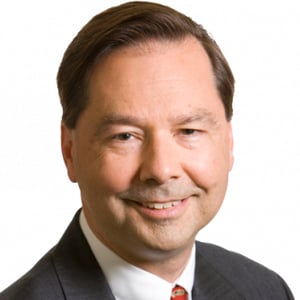
Senior Legal Fellow, Edwin Meese III Institute for the Rule of Law, Advancing American Freedom
National Affairs Columnist, National Review
John Fund is National Affairs Columnist for National Review magazine and a on-air analyst on the Fox News Channel. He is considered a notable expert on American politics and the nexus between politics and economics.
He previously served as a columnist and editorial board member for The Wall Street Journal. He is the author of several books, including Who's Counting: Bow Fraudsters and Bureaucrats Put Your Vote At Risk (Encounter Books, 2012); Stealing Elections: How Voter Fraud Threatens Our Democracy (Encounter Books, 2008) and The Dangers of Regulation Through Litigation (ATRA Press, 2008). He worked as a research analyst for the California Legislature in Sacramento before beginning his journalism career as a reporter for the syndicated columnists Rowland Evans and Robert Novak.
Roll Call, the newspaper of Capitol Hill, called him "the Tom Paine of the modern Congressional reform movement." He has won awards from the Institute for Justice, The School Choice Aliance and the Warren Brooks award for journalistic excellence from the American Legislative Exchange Council.
Senior Legal Fellow, Edwin Meese III Institute for the Rule of Law, Advancing American Freedom
National Affairs Columnist, National Review
John Fund is National Affairs Columnist for National Review magazine and a on-air analyst on the Fox News Channel. He is considered a notable expert on American politics and the nexus between politics and economics.
He previously served as a columnist and editorial board member for The Wall Street Journal. He is the author of several books, including Who's Counting: Bow Fraudsters and Bureaucrats Put Your Vote At Risk (Encounter Books, 2012); Stealing Elections: How Voter Fraud Threatens Our Democracy (Encounter Books, 2008) and The Dangers of Regulation Through Litigation (ATRA Press, 2008). He worked as a research analyst for the California Legislature in Sacramento before beginning his journalism career as a reporter for the syndicated columnists Rowland Evans and Robert Novak.
Roll Call, the newspaper of Capitol Hill, called him "the Tom Paine of the modern Congressional reform movement." He has won awards from the Institute for Justice, The School Choice Aliance and the Warren Brooks award for journalistic excellence from the American Legislative Exchange Council.
Senior Legal Fellow, Edwin Meese III Institute for the Rule of Law, Advancing American Freedom
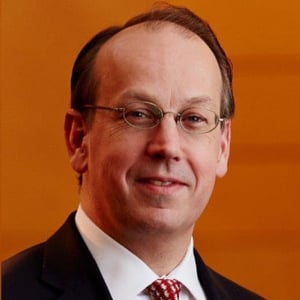
Partner, Clement & Murphy, PLLC
Paul served as the 43rd Solicitor General of the United States from June 2005 until June 2008. Before his confirmation as Solicitor General, he served as Acting Solicitor General for nearly a year and as Principal Deputy Solicitor General for over three years.
Paul has argued over 100 cases before the United States Supreme Court, including McConnell v. FEC, Tennessee v. Lane, United States v. Booker, MGM v. Grokster, Hobby Lobby v. Burwell, Epic Systems Corp. v. Lewis, Rucho v. Common Cause, Facebook v. Duguid, and TransUnion v. Ramirez. Paul has argued more Supreme Court cases since 2000 than any lawyer in or out of government. He has also argued many important cases in the lower courts, including Walker v. Cheney, United States v. Moussaoui and NFL v. Brady.
Paul’s practice focuses on appellate matters, constitutional litigation and strategic counseling. He represents a broad array of clients in the Supreme Court and in federal and state appellate courts. Last year, for example, he successfully argued Supreme Court cases involving significant issues of energy regulation, statutory interpretation, state sovereign immunity and Article III standing, and successfully argued a trademark appeal in the Fourth Circuit, and a constitutional appeal before the en banc Eleventh Circuit.
Paul focuses on high-stakes appeals. In recent years, he successfully defended a $1.2 billion jury verdict for clients in a Tenth Circuit case, while securing the reversal of an over $2 billion jury verdict for another client in the Seventh Circuit and the approval of a nearly $1 billion dollar class action settlement in the Third Circuit. He has initiated major administrative law challenges and constitutional litigation against the federal government, such as the successful challenge to the HHS drug-pricing rule and threatened challenges that led to the withdrawal of the Treasury Department’s proposed cryptocurrency regulations. He also counsels clients on a variety of strategic legal questions, whether arising from pending legislation, government inquiries or ongoing litigation.
Paul has undertaken substantial pro bono engagements in the Supreme Court, such as twice successfully representing the defendant in Bond v. United States and successfully representing the Omaha Tribe in Nebraska v. Parker, the guardian ad litem in Adoptive Couple v. Baby Girl, the defendant in Sekhar v. United States, a high school football coach in Kennedy v. Bremerton, and the Little Sisters of the Poor. Paul’s pro bono representation also precipitated the federal government’s confession of error in United States v. Rojas.
Following law school, Paul clerked for Judge Laurence H. Silberman of the U.S. Court of Appeals for the D.C. Circuit and for Associate Justice Antonin Scalia of the U.S. Supreme Court. After his clerkships, he went on to serve as Chief Counsel of the U.S. Senate Subcommittee on the Constitution, Federalism and Property Rights.
Paul is a Distinguished Lecturer in Law at the Georgetown University Law Center, where he has taught in various capacities since 1998. He also serves as a Senior Fellow of the Law Center’s Supreme Court Institute. He is the Justice Joseph Story Distinguished Practitioner in Residence at the Gray Center at Scalia Law School.
National Affairs Columnist, National Review
John Fund is National Affairs Columnist for National Review magazine and a on-air analyst on the Fox News Channel. He is considered a notable expert on American politics and the nexus between politics and economics.
He previously served as a columnist and editorial board member for The Wall Street Journal. He is the author of several books, including Who's Counting: Bow Fraudsters and Bureaucrats Put Your Vote At Risk (Encounter Books, 2012); Stealing Elections: How Voter Fraud Threatens Our Democracy (Encounter Books, 2008) and The Dangers of Regulation Through Litigation (ATRA Press, 2008). He worked as a research analyst for the California Legislature in Sacramento before beginning his journalism career as a reporter for the syndicated columnists Rowland Evans and Robert Novak.
Roll Call, the newspaper of Capitol Hill, called him "the Tom Paine of the modern Congressional reform movement." He has won awards from the Institute for Justice, The School Choice Aliance and the Warren Brooks award for journalistic excellence from the American Legislative Exchange Council.
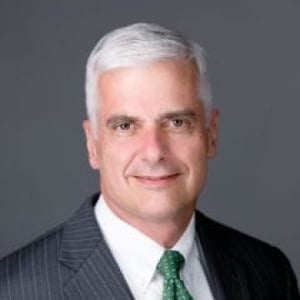
David McIntosh is a leader for the principles of limited constitutional government and individual freedom. He is president of the Club for Growth, the leading advocate for economic liberty.
Former Congressman David McIntosh represented Indiana's 2nd Congressional District in the United States Congress from 1995-2001. As a Freshman, David chaired the Subcommittee on Regulatory Relief. He passed the Congressional Review Act and held extensive oversight and field hearings to build a record of public support for regulatory relief initiatives in energy, biotechnology, pharmaceutical, healthcare, transportation and technology sectors. Another issue that he championed was the elimination of the marriage penalty in the Federal Tax Code.
David served during the Reagan administration as special assistant to Attorney General Edwin Meese III, and as special assistant to President Reagan for Domestic Affairs. During the first Bush administration, he served as executive director of the President's Council on Competitiveness and assistant to the Vice President. The Competitiveness Council coordinated the cost/benefit review of major regulations and promoted legal reform measures.
David is a co-founder of the Federalist Society for Law and Public Policy and serves on the Board of Directors. He remains active with several free market and conservative think tanks and grassroots organizations. David has also had stints at the Hudson Institute and as a Professor of Economics at Ball State School of Business.
Prior to the Club for Growth, David was a partner at Mayer Brown, LLP in Washington, DC.
David graduated from the University of Chicago Law School in 1983, and Yale University, BA, cum laude, in 1980. He and his wife, Ruthie, are the proud parents of Ellie age 17 and Davey age 13.
Partner, WilmerHale and former United States Solicitor General
Universally considered to be among the country's premier Supreme Court and appellate advocates, Seth Waxman served as Solicitor General of the United States from 1997 through January 2001. In addition to leading the firm's appellate practice, Mr. Waxman engages in a broad litigation and counseling practice, with particular emphasis on complex challenges involving governments or public policy, intellectual property, regulatory, criminal and commercial issues.
A Fellow of the American College of Trial Lawyers, Mr. Waxman also is a widely respected trial litigator. In January 2016, The American Lawyer named him "Litigator of the Year." Mr. Waxman was also named Appellate/Litigation "Lawyer of the Year" for 2018, Litigation - Intellectual Property "Lawyer of the Year" for 2016 and Litigation - First Amendment Law and Regulatory Enforcement Law "Lawyer of the Year" for 2015 by Best Lawyers in America, and, in 2014, Super Lawyers deemed him the "number one" lawyer in Washington DC. Mr. Waxman has been accorded both "star" rating by Chambers USA and "leading lawyer" ranking in PLC's Global Counsel Handbook.
Mr. Waxman's practice spans both federal and state trial and appellate courts. He has delivered 80 oral arguments in the United States Supreme Court and many more in the lower federal and state courts. Mr. Waxman's clients range from financial institutions to technology, consumer, industrial and media companies, universities and Indian tribes, and he leads the firm's efforts to counsel tribal governments. He also represents a number of local, state and national governments and prominent business and government executives and professionals. The recipient of numerous professional awards and honors, Mr. Waxman is among a small handful of practicing attorneys elected to the American Academy of Arts and Sciences. He holds several honorary degrees, as well as the Jefferson Medal in Law, an honor awarded once a year and only rarely to an attorney in private practice. In recognition of exceptional service to law enforcement, Mr. Waxman holds the extraordinary status of permanent honorary Special Agent of the Federal Bureau of Investigation.
Partner, Clement & Murphy, PLLC
Paul served as the 43rd Solicitor General of the United States from June 2005 until June 2008. Before his confirmation as Solicitor General, he served as Acting Solicitor General for nearly a year and as Principal Deputy Solicitor General for over three years.
Paul has argued over 100 cases before the United States Supreme Court, including McConnell v. FEC, Tennessee v. Lane, United States v. Booker, MGM v. Grokster, Hobby Lobby v. Burwell, Epic Systems Corp. v. Lewis, Rucho v. Common Cause, Facebook v. Duguid, and TransUnion v. Ramirez. Paul has argued more Supreme Court cases since 2000 than any lawyer in or out of government. He has also argued many important cases in the lower courts, including Walker v. Cheney, United States v. Moussaoui and NFL v. Brady.
Paul’s practice focuses on appellate matters, constitutional litigation and strategic counseling. He represents a broad array of clients in the Supreme Court and in federal and state appellate courts. Last year, for example, he successfully argued Supreme Court cases involving significant issues of energy regulation, statutory interpretation, state sovereign immunity and Article III standing, and successfully argued a trademark appeal in the Fourth Circuit, and a constitutional appeal before the en banc Eleventh Circuit.
Paul focuses on high-stakes appeals. In recent years, he successfully defended a $1.2 billion jury verdict for clients in a Tenth Circuit case, while securing the reversal of an over $2 billion jury verdict for another client in the Seventh Circuit and the approval of a nearly $1 billion dollar class action settlement in the Third Circuit. He has initiated major administrative law challenges and constitutional litigation against the federal government, such as the successful challenge to the HHS drug-pricing rule and threatened challenges that led to the withdrawal of the Treasury Department’s proposed cryptocurrency regulations. He also counsels clients on a variety of strategic legal questions, whether arising from pending legislation, government inquiries or ongoing litigation.
Paul has undertaken substantial pro bono engagements in the Supreme Court, such as twice successfully representing the defendant in Bond v. United States and successfully representing the Omaha Tribe in Nebraska v. Parker, the guardian ad litem in Adoptive Couple v. Baby Girl, the defendant in Sekhar v. United States, a high school football coach in Kennedy v. Bremerton, and the Little Sisters of the Poor. Paul’s pro bono representation also precipitated the federal government’s confession of error in United States v. Rojas.
Following law school, Paul clerked for Judge Laurence H. Silberman of the U.S. Court of Appeals for the D.C. Circuit and for Associate Justice Antonin Scalia of the U.S. Supreme Court. After his clerkships, he went on to serve as Chief Counsel of the U.S. Senate Subcommittee on the Constitution, Federalism and Property Rights.
Paul is a Distinguished Lecturer in Law at the Georgetown University Law Center, where he has taught in various capacities since 1998. He also serves as a Senior Fellow of the Law Center’s Supreme Court Institute. He is the Justice Joseph Story Distinguished Practitioner in Residence at the Gray Center at Scalia Law School.
National Affairs Columnist, National Review
John Fund is National Affairs Columnist for National Review magazine and a on-air analyst on the Fox News Channel. He is considered a notable expert on American politics and the nexus between politics and economics.
He previously served as a columnist and editorial board member for The Wall Street Journal. He is the author of several books, including Who's Counting: Bow Fraudsters and Bureaucrats Put Your Vote At Risk (Encounter Books, 2012); Stealing Elections: How Voter Fraud Threatens Our Democracy (Encounter Books, 2008) and The Dangers of Regulation Through Litigation (ATRA Press, 2008). He worked as a research analyst for the California Legislature in Sacramento before beginning his journalism career as a reporter for the syndicated columnists Rowland Evans and Robert Novak.
Roll Call, the newspaper of Capitol Hill, called him "the Tom Paine of the modern Congressional reform movement." He has won awards from the Institute for Justice, The School Choice Aliance and the Warren Brooks award for journalistic excellence from the American Legislative Exchange Council.
David McIntosh is a leader for the principles of limited constitutional government and individual freedom. He is president of the Club for Growth, the leading advocate for economic liberty.
Former Congressman David McIntosh represented Indiana's 2nd Congressional District in the United States Congress from 1995-2001. As a Freshman, David chaired the Subcommittee on Regulatory Relief. He passed the Congressional Review Act and held extensive oversight and field hearings to build a record of public support for regulatory relief initiatives in energy, biotechnology, pharmaceutical, healthcare, transportation and technology sectors. Another issue that he championed was the elimination of the marriage penalty in the Federal Tax Code.
David served during the Reagan administration as special assistant to Attorney General Edwin Meese III, and as special assistant to President Reagan for Domestic Affairs. During the first Bush administration, he served as executive director of the President's Council on Competitiveness and assistant to the Vice President. The Competitiveness Council coordinated the cost/benefit review of major regulations and promoted legal reform measures.
David is a co-founder of the Federalist Society for Law and Public Policy and serves on the Board of Directors. He remains active with several free market and conservative think tanks and grassroots organizations. David has also had stints at the Hudson Institute and as a Professor of Economics at Ball State School of Business.
Prior to the Club for Growth, David was a partner at Mayer Brown, LLP in Washington, DC.
David graduated from the University of Chicago Law School in 1983, and Yale University, BA, cum laude, in 1980. He and his wife, Ruthie, are the proud parents of Ellie age 17 and Davey age 13.
Partner, WilmerHale and former United States Solicitor General
Universally considered to be among the country's premier Supreme Court and appellate advocates, Seth Waxman served as Solicitor General of the United States from 1997 through January 2001. In addition to leading the firm's appellate practice, Mr. Waxman engages in a broad litigation and counseling practice, with particular emphasis on complex challenges involving governments or public policy, intellectual property, regulatory, criminal and commercial issues.
A Fellow of the American College of Trial Lawyers, Mr. Waxman also is a widely respected trial litigator. In January 2016, The American Lawyer named him "Litigator of the Year." Mr. Waxman was also named Appellate/Litigation "Lawyer of the Year" for 2018, Litigation - Intellectual Property "Lawyer of the Year" for 2016 and Litigation - First Amendment Law and Regulatory Enforcement Law "Lawyer of the Year" for 2015 by Best Lawyers in America, and, in 2014, Super Lawyers deemed him the "number one" lawyer in Washington DC. Mr. Waxman has been accorded both "star" rating by Chambers USA and "leading lawyer" ranking in PLC's Global Counsel Handbook.
Mr. Waxman's practice spans both federal and state trial and appellate courts. He has delivered 80 oral arguments in the United States Supreme Court and many more in the lower federal and state courts. Mr. Waxman's clients range from financial institutions to technology, consumer, industrial and media companies, universities and Indian tribes, and he leads the firm's efforts to counsel tribal governments. He also represents a number of local, state and national governments and prominent business and government executives and professionals. The recipient of numerous professional awards and honors, Mr. Waxman is among a small handful of practicing attorneys elected to the American Academy of Arts and Sciences. He holds several honorary degrees, as well as the Jefferson Medal in Law, an honor awarded once a year and only rarely to an attorney in private practice. In recognition of exceptional service to law enforcement, Mr. Waxman holds the extraordinary status of permanent honorary Special Agent of the Federal Bureau of Investigation.
National Affairs Columnist, National Review
John Fund is National Affairs Columnist for National Review magazine and a on-air analyst on the Fox News Channel. He is considered a notable expert on American politics and the nexus between politics and economics.
He previously served as a columnist and editorial board member for The Wall Street Journal. He is the author of several books, including Who's Counting: Bow Fraudsters and Bureaucrats Put Your Vote At Risk (Encounter Books, 2012); Stealing Elections: How Voter Fraud Threatens Our Democracy (Encounter Books, 2008) and The Dangers of Regulation Through Litigation (ATRA Press, 2008). He worked as a research analyst for the California Legislature in Sacramento before beginning his journalism career as a reporter for the syndicated columnists Rowland Evans and Robert Novak.
Roll Call, the newspaper of Capitol Hill, called him "the Tom Paine of the modern Congressional reform movement." He has won awards from the Institute for Justice, The School Choice Aliance and the Warren Brooks award for journalistic excellence from the American Legislative Exchange Council.
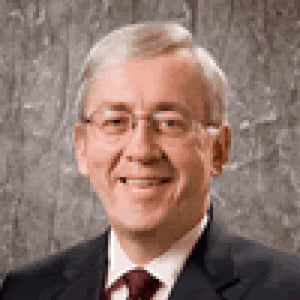
Director, Center for Representative Government, Cato Institute
John Samples directs Cato's Center for Representative Government, which studies campaign finance regulation, delegation of legislative authority, term limits, and the political culture of limited government and the civic virtues necessary for liberty. He is an adjunct professor at Johns Hopkins University. Samples is the author of The Struggle to Limit Government: A Modern Political History and The Fallacy of Campaign Finance Reform. Prior to joining Cato, Samples served eight years as director of Georgetown University Press, and before that, as vice president of the Twentieth Century Fund. He has published scholarly articles in Society, History of Political Thought, and Telos. Samples has also been featured in mainstream publications like USA Today, the New York Times, and the Los Angeles Times. He has appeared on NPR, Fox News Channel, and MSNBC. Samples received his Ph.D. in political science from Rutgers University.
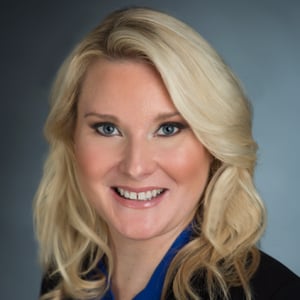
President, Constitutional Accountability Center
Elizabeth is Constitutional Accountability Center’s President. From 2008-2016, she served as CAC's Chief Counsel, representing the Center as well as clients including preeminent constitutional scholars and historians, state and local government organizations, and groups such as the League of Women Voters and the AARP. She frequently participates in Supreme Court litigation and her legal brief writing has been recognized as “exemplary” by the Green Bag Almanac & Reader. Elizabeth has also argued several important cases in the federal courts of appeals on a range of issues, including immigration law, habeas corpus, and sovereign immunity. She joined CAC from private practice at Quinn Emanuel Urquhart & Sullivan in San Francisco, where she was an attorney working with former Stanford Law School Dean Kathleen Sullivan in the firm’s Supreme Court/appellate practice. Previously, Elizabeth was a supervising attorney and teaching fellow at the Georgetown University Law Center appellate litigation clinic, a law clerk for Judge James R. Browning of the U.S. Court of Appeals for the Ninth Circuit, and a lawyer at Pillsbury Winthrop Shaw Pittman, a law firm in Washington. She has appeared as a legal expert for NBC, ABC, PBS, CNN, Fox News, the BBC, Current TV, and NPR, among other outlets. Elizabeth has been quoted extensively in the print media and is a regular contributor to the ABA’s Preview of United States Supreme Court Cases. Her writings have appeared in The New York Times, Reuters, USA Today, Politico, CNN.com, Slate, and on numerous political and legal blogs, such as Huffington Post, SCOTUSblog, and ACSblog. She has also published in the UCLA Journal of Environmental Law & Policy, Syracuse Law Review, The Cato Institute’s Supreme Court Review, and the Yale Journal of International Law. Elizabeth is a graduate of Yale Law School.
National Affairs Columnist, National Review
John Fund is National Affairs Columnist for National Review magazine and a on-air analyst on the Fox News Channel. He is considered a notable expert on American politics and the nexus between politics and economics.
He previously served as a columnist and editorial board member for The Wall Street Journal. He is the author of several books, including Who's Counting: Bow Fraudsters and Bureaucrats Put Your Vote At Risk (Encounter Books, 2012); Stealing Elections: How Voter Fraud Threatens Our Democracy (Encounter Books, 2008) and The Dangers of Regulation Through Litigation (ATRA Press, 2008). He worked as a research analyst for the California Legislature in Sacramento before beginning his journalism career as a reporter for the syndicated columnists Rowland Evans and Robert Novak.
Roll Call, the newspaper of Capitol Hill, called him "the Tom Paine of the modern Congressional reform movement." He has won awards from the Institute for Justice, The School Choice Aliance and the Warren Brooks award for journalistic excellence from the American Legislative Exchange Council.
Director, Center for Representative Government, Cato Institute
John Samples directs Cato's Center for Representative Government, which studies campaign finance regulation, delegation of legislative authority, term limits, and the political culture of limited government and the civic virtues necessary for liberty. He is an adjunct professor at Johns Hopkins University. Samples is the author of The Struggle to Limit Government: A Modern Political History and The Fallacy of Campaign Finance Reform. Prior to joining Cato, Samples served eight years as director of Georgetown University Press, and before that, as vice president of the Twentieth Century Fund. He has published scholarly articles in Society, History of Political Thought, and Telos. Samples has also been featured in mainstream publications like USA Today, the New York Times, and the Los Angeles Times. He has appeared on NPR, Fox News Channel, and MSNBC. Samples received his Ph.D. in political science from Rutgers University.
President, Constitutional Accountability Center
Elizabeth is Constitutional Accountability Center’s President. From 2008-2016, she served as CAC's Chief Counsel, representing the Center as well as clients including preeminent constitutional scholars and historians, state and local government organizations, and groups such as the League of Women Voters and the AARP. She frequently participates in Supreme Court litigation and her legal brief writing has been recognized as “exemplary” by the Green Bag Almanac & Reader. Elizabeth has also argued several important cases in the federal courts of appeals on a range of issues, including immigration law, habeas corpus, and sovereign immunity. She joined CAC from private practice at Quinn Emanuel Urquhart & Sullivan in San Francisco, where she was an attorney working with former Stanford Law School Dean Kathleen Sullivan in the firm’s Supreme Court/appellate practice. Previously, Elizabeth was a supervising attorney and teaching fellow at the Georgetown University Law Center appellate litigation clinic, a law clerk for Judge James R. Browning of the U.S. Court of Appeals for the Ninth Circuit, and a lawyer at Pillsbury Winthrop Shaw Pittman, a law firm in Washington. She has appeared as a legal expert for NBC, ABC, PBS, CNN, Fox News, the BBC, Current TV, and NPR, among other outlets. Elizabeth has been quoted extensively in the print media and is a regular contributor to the ABA’s Preview of United States Supreme Court Cases. Her writings have appeared in The New York Times, Reuters, USA Today, Politico, CNN.com, Slate, and on numerous political and legal blogs, such as Huffington Post, SCOTUSblog, and ACSblog. She has also published in the UCLA Journal of Environmental Law & Policy, Syracuse Law Review, The Cato Institute’s Supreme Court Review, and the Yale Journal of International Law. Elizabeth is a graduate of Yale Law School.
National Affairs Columnist, National Review
John Fund is National Affairs Columnist for National Review magazine and a on-air analyst on the Fox News Channel. He is considered a notable expert on American politics and the nexus between politics and economics.
He previously served as a columnist and editorial board member for The Wall Street Journal. He is the author of several books, including Who's Counting: Bow Fraudsters and Bureaucrats Put Your Vote At Risk (Encounter Books, 2012); Stealing Elections: How Voter Fraud Threatens Our Democracy (Encounter Books, 2008) and The Dangers of Regulation Through Litigation (ATRA Press, 2008). He worked as a research analyst for the California Legislature in Sacramento before beginning his journalism career as a reporter for the syndicated columnists Rowland Evans and Robert Novak.
Roll Call, the newspaper of Capitol Hill, called him "the Tom Paine of the modern Congressional reform movement." He has won awards from the Institute for Justice, The School Choice Aliance and the Warren Brooks award for journalistic excellence from the American Legislative Exchange Council.
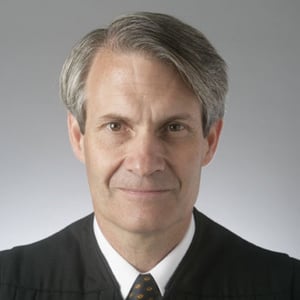
Special Counsel, Hunton Andrews Kurth
After serving on the United State Court of Appeals for the D. C. Circuit from 2005, Judge Griffith stepped down from the bench in 2020. Currently he is a Lecturer on Law at Harvard Law School, a Fellow at the Wheatley Institute at Brigham Young University, and Special Counsel in the Washington, DC office of the law firm of Hunton Andrews Kurth. Most recently, he was a member of President Biden's Commission on the Supreme Court. He is the author of Civic Charity and the Constitution , and the co-author, along with former judges Michael Luttig and Michael McConnell, of Lost, Not Stolen: The Conservative Case that Trump Lost and Biden Won the 2020 Presidential Election. https://lostnotstolen.org/ . Before being appointed to the D. C. Circuit, Judge Griffith was the General Counsel at BYU; Senate Legal Counsel, the non-partisan chief legal officer of the U. S. Senate; and a partner at Wiley, Rein & Fielding. Long active in rule-of-law programs in former communist nations, Judge Griffith is a member of the international advisory board of the CEELI Institute in Prague. He is a graduate of BYU and the University of Virginia School of Law and is a member of the American Law Institute.
Professor of Law, The George Washington University Law School
Professor Overton specializes in voting rights and campaign finance. His academic articles on election law have appeared in several leading law journals, including the Texas Law Review, the University of Pennsylvania Law Review, and the Michigan Law Review. Professor Overton's book “Stealing Democracy: The New Politics of Voter Suppression“ was published and released by W.W. Norton.
During Professor Overton’s time in the Obama campaign, transition, and Administration (2007–2010), he was a key leader on the Administration’s landmark efforts to curb special interests, enhance transparency, and increase citizen participation. From 2007–2008, he was Chair of Government Reform Policy for the Obama presidential campaign. On the Obama Transition Team, he served in the Office of the General Counsel and helped write the Administration’s ethics guidelines. He also chaired the Election Assistance Commission Agency Review Team and served as a member of the Federal Election Commission Agency Review Team.
At the beginning of the Obama Administration, Professor Overton took a leave from GW Law School and was appointed the Principal Deputy Assistant Attorney General at the Department of Justice in the Office of Legal Policy. In that position, he partnered with White House officials to lead the Administration’s policy efforts on democracy issues. He played a key leadership role in conceptualizing and/or implementing policies related to the Military and Overseas Voter Empowerment Act, the National Voter Registration Act, the Voting Rights Act, and the Administration’s response to the U.S. Supreme Court’s decision to allow unlimited corporate spending in federal elections.
Prior to joining the Law School faculty, he was a member of the law faculty of the University of California, Davis, and served as the Charles Hamilton Houston Fellow at Harvard. Before entering academia, he practiced law at Debevoise & Plimpton in Washington, DC, where he worked on several widely noted cases, including investigations by Congress and the Justice Department into fundraising techniques employed by the Democratic National Committee. Professor Overton also served as a law clerk to Judge Damon J. Keith of the U.S. Court of Appeals for the Sixth Circuit.
Professor Overton has served as a commissioner on the Jimmy Carter-James Baker Commission on Federal Election Reform, and as well as the Commission on Presidential Nomination Timing and Scheduling. He has also served as a board member of several organizations, including Common Cause, Demos, The Center for Responsive Politics, and the American Constitution Society. His commentaries have appeared in the Washington Post, Roll Call, Boston Globe, and Los Angeles Times, among others, and he has made numerous appearances on national and local radio and television outlets to discuss election law issues.
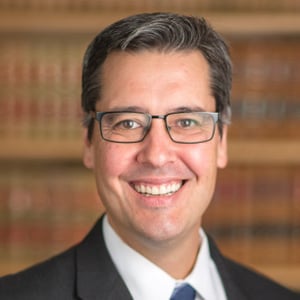
Associate Dean for Faculty; Charles W. Ebersold and Florence Whitcomb Ebersold Professor of Constitutional Law, The Ohio State University Mortiz College of Law
Professor Daniel Tokaji is an authority on the law of elections and democracy. He teaches courses on Election Law, Civil Rights, Civil Procedure, Comparative Law, Constitutional Law, Federal Courts, Legislation and Regulation, and the U.S. Legal System. His scholarship addresses questions of voting rights, racial justice, free speech, and the role of the courts in American democracy.
Professor Tokaji is the author of Election Law in a Nutshell (2d ed. 2016), and co-author of Election Law: Cases and Materials (6th ed. 2017) and The New Soft Money (2014). He has written numerous articles and book chapters on a wide variety of election and voting issues, including voting rights, voter ID, voter registration, redistricting, campaign finance regulation. Recent articles include “Gerrymandering and Association,” 59 William & Mary Law Review 2159 (2018), and “Denying Systemic Equality: The Last Words of the Kennedy Court,” 13 Harvard Law & Policy Review 539 (2019). His current research focuses on the challenges facing democracies around the globe, including the free speech issues surrounding digital disinformation and the need for trustworthy electoral institutions.
Media outlets frequently seek Professor Tokaji’s expertise on election and voting issues. He has been quoted in The New York Times, Los Angeles Times, The Columbus Dispatch, USA TODAY, and appeared on TODAY, FOX News, NBC News, and National Public Radio and many other media outlets.
A graduate of Harvard College and the Yale Law School, Professor Tokaji clerked for the Honorable Stephen Reinhardt of the U.S. Court of Appeals for the Ninth Circuit. Before arriving at Ohio State, he was a staff attorney with the ACLU Foundation of Southern California and Chair of California Common Cause.
Professor Tokaji has litigated many civil rights, civil liberties, and election law cases. He was lead counsel in a case that struck down an Ohio law requiring naturalized citizens to produce a certificate of naturalization when challenged at the polls. He also served as counsel in litigation challenging the state’s voting purges. He was also an attorney for plaintiffs in cases that kept open the window for simultaneous registration and early voting in Ohio’s 2008 general election, and that challenged punch-card voting systems in Ohio and California after the 2000 election.
Senior Legal Fellow, Edwin Meese III Institute for the Rule of Law, Advancing American Freedom

ALI: Unbiased Analyzer or Agenda Driver?
Susan G. Braden, John Fund, Victor E. Schwartz, Seth P. Waxman, Edward Whelan
Litigation Practice Group Event
On June 5, 2019, the Federalist Society's Litigation Practice Group hosted a panel at the...
ALI: Unbiased Analyzer or Agenda Driver?
Susan G. Braden, John Fund, Victor E. Schwartz, Seth P. Waxman, Edward Whelan
Litigation Practice Group Event
On June 5, 2019, the Federalist Society's Litigation Practice Group hosted a panel at the...
Obama’s Enforcer: Eric Holder’s Justice Department
John Fund, Hans A. Von Spakovsky
Las Vegas Lawyers Chapter
From “Fast and Furious” to the unprecedented surveillance of journalists, Eric Holder’s Justice Department has...
Obama’s Enforcer: Eric Holder’s Justice Department
John Fund, Hans A. Von Spakovsky
Las Vegas Lawyers Chapter
From “Fast and Furious” to the unprecedented surveillance of journalists, Eric Holder’s Justice Department has...
Obama's Enforcer: Eric Holder's Justice Department - Podcast
John Fund, Hans A. Von Spakovsky
Federalism & Separation of Powers Practice Group Podcast
In their new book, Obama's Enforcer: Eric Holder's Justice Department, Hans von Spakovsky and John...
Closing Panel: The Electorate and the Courts
Paul D. Clement, John Fund, David M. McIntosh, Seth P. Waxman
2013 National Lawyers Convention
The Federalist Society's Practice Groups presented this panel on "The Electorate and the Courts" on...
Closing Panel: The Electorate and the Courts
Paul D. Clement, John Fund, David M. McIntosh, Seth P. Waxman
2013 National Lawyers Convention
The Federalist Society's Practice Groups presented this panel on "The Electorate and the Courts" on...
Who's Counting?: How Fraudsters and Bureaucrats Put Your Vote at Risk
John Fund, John Samples, Elizabeth B. Wydra
Free Speech & Election Law Practice Group and Civil Rights Practice Group
In the past few years, various states, citing voter fraud and other concerns, have passed...
Who's Counting?: How Fraudsters and Bureaucrats Put Your Vote at Risk
John Fund, John Samples, Elizabeth B. Wydra
Free Speech & Election Law Practice Group and Civil Rights Practice Group
In the past few years, various states, citing voter fraud and other concerns, have passed...
Free Speech: Voter Fraud and Voter ID — The Constitution and the Right to Vote
John Fund, Thomas B. Griffith, Spencer A. Overton, Daniel P. Tokaji, Hans A. Von Spakovsky
2011 National Lawyers Convention
The Free Speech & Election Law Practice Group hosted this panel on "Voter Fraud and...