
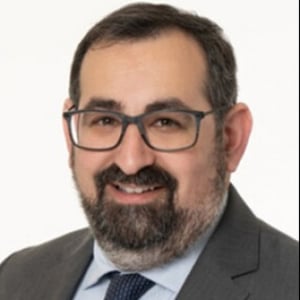
Research Scholar in Law and Executive Director, Center for Academic Freedom and Free Speech, Yale Law School
Joe Cohn is a research scholar in law at Yale Law school and the executive director of the Center for Academic Freedom and Free Speech (CAFFS).
Cohn has served as a staff attorney at the AIDS Law Project of Pennsylvania, a staff attorney for the Court of Appeals for the 3rd Circuit, an adjunct professor of law at the University of Pennsylvania Law School, where he supervised law students representing clients in litigation in state and federal courts, and as the interim legal director for ACLU affiliates in Nevada and Utah.
A majority of Cohn’s career has been dedicated to defending civil liberties on college campuses and free expression in society at large. As the Foundation for Individual Rights and Expression’s (FIRE’s) founding legislative and policy director, from 2012 to 2023, he testified on numerous occasions in legislatures across America and in Congress, drafted legislation on campus free speech, campus due process, and academic freedom that has been enacted in states across the country. Immediately before joining CAFFS, Cohn advocated for open inquiry, viewpoint diversity, and constructive disagreement in higher education as Heterodox Academy’s director of policy.
Cohn writes extensively on civil liberties, with articles published in a wide array of media outlets, including the Wall Street Journal, the Washington Post, Newsweek, the Hill, the New York Daily News, the Chicago Tribune, the Las Vegas Review Journal, the Minnesota Star Tribune, the Chronicle of Higher Education, Inside Higher Ed, and the Volokh Conspiracy.
He earned his bachelor of arts from the University of Nevada at Las Vegas in 2000. He is a 2004 graduate of the University of Pennsylvania Carey School of Law and the Fels Institute of Government Administration, where he earned his J.D. and M.A. in Government Administration.
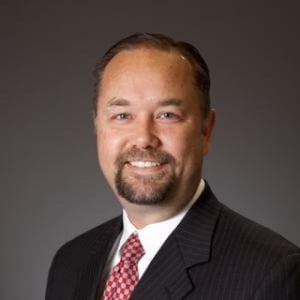
Senior Counsel, Director of Center for Academic Freedom, Alliance Defending Freedom
Tyson Langhofer serves as senior counsel and director of the Center for Academic Freedom with Alliance Defending Freedom.
Langhofer represents students and faculty at public high schools and colleges in defending their First Amendment rights. For example, in Denton v. Hecht, he successfully defended a Florida State University student after he was removed as Student Senate President simply for sharing his Catholic views in a private group chat. In Cross v. Loudoun County Public Schools, he successfully defended an elementary school gym teacher after the school suspended him for peacefully sharing his views on a proposed policy at a public school board meeting.
Langhofer has extensive experience in civil litigation and constitutional law. Before joining ADF, Langhofer was a partner with Stinson LLP, where he worked as a commercial litigation attorney from 2000 until he joined ADF in 2015.
Langhofer is Peer Review Rated AV® Preeminent in Martindale-Hubbell. He is a sought-after speaker on legal and cultural issues. He regularly comments on free speech issues in television, radio, and print media. He has appeared as a guest and written pieces for numerous major media outlets, including The Washington Post, The Washington Times, USA Today, Townhall, The Federalist, and The Daily Wire.
Langhofer earned his Juris Doctor from Regent University School of Law in 1999, graduating cum laude. Langhofer is admitted to practice in multiple states, the Supreme Court, and numerous federal district and appellate courts.
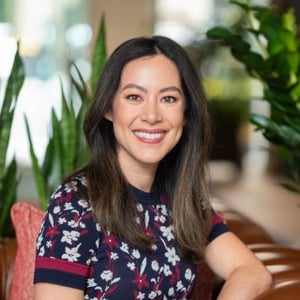
Founder, MPL Strategies
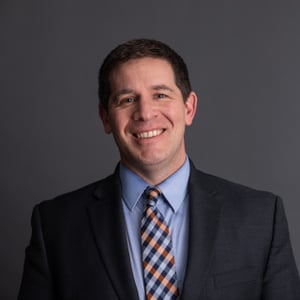
Vice President for Legal Strategy, Stand Together
Casey Mattox is Vice President for Legal Strategy at Stand Together and Senior Advisor at
Americans for Prosperity. In these roles he advocates for and creates strategies and
partnerships to ensure a constitutionally limited government that protects the civil liberties of all
Americans. Prior to joining Stand Together and AFP Casey’s legal career focused on defending
the First Amendment rights of students, faculty, healthcare workers and religious organizations.
Casey has a J.D. from Boston College School of Law and an undergraduate degree from the
University of Virginia. You can find him on Twitter at @CaseyMattox_ and on LinkedIn at
@Casey-Mattox-ST.
Research Scholar in Law and Executive Director, Center for Academic Freedom and Free Speech, Yale Law School
Joe Cohn is a research scholar in law at Yale Law school and the executive director of the Center for Academic Freedom and Free Speech (CAFFS).
Cohn has served as a staff attorney at the AIDS Law Project of Pennsylvania, a staff attorney for the Court of Appeals for the 3rd Circuit, an adjunct professor of law at the University of Pennsylvania Law School, where he supervised law students representing clients in litigation in state and federal courts, and as the interim legal director for ACLU affiliates in Nevada and Utah.
A majority of Cohn’s career has been dedicated to defending civil liberties on college campuses and free expression in society at large. As the Foundation for Individual Rights and Expression’s (FIRE’s) founding legislative and policy director, from 2012 to 2023, he testified on numerous occasions in legislatures across America and in Congress, drafted legislation on campus free speech, campus due process, and academic freedom that has been enacted in states across the country. Immediately before joining CAFFS, Cohn advocated for open inquiry, viewpoint diversity, and constructive disagreement in higher education as Heterodox Academy’s director of policy.
Cohn writes extensively on civil liberties, with articles published in a wide array of media outlets, including the Wall Street Journal, the Washington Post, Newsweek, the Hill, the New York Daily News, the Chicago Tribune, the Las Vegas Review Journal, the Minnesota Star Tribune, the Chronicle of Higher Education, Inside Higher Ed, and the Volokh Conspiracy.
He earned his bachelor of arts from the University of Nevada at Las Vegas in 2000. He is a 2004 graduate of the University of Pennsylvania Carey School of Law and the Fels Institute of Government Administration, where he earned his J.D. and M.A. in Government Administration.
Senior Counsel, Director of Center for Academic Freedom, Alliance Defending Freedom
Tyson Langhofer serves as senior counsel and director of the Center for Academic Freedom with Alliance Defending Freedom.
Langhofer represents students and faculty at public high schools and colleges in defending their First Amendment rights. For example, in Denton v. Hecht, he successfully defended a Florida State University student after he was removed as Student Senate President simply for sharing his Catholic views in a private group chat. In Cross v. Loudoun County Public Schools, he successfully defended an elementary school gym teacher after the school suspended him for peacefully sharing his views on a proposed policy at a public school board meeting.
Langhofer has extensive experience in civil litigation and constitutional law. Before joining ADF, Langhofer was a partner with Stinson LLP, where he worked as a commercial litigation attorney from 2000 until he joined ADF in 2015.
Langhofer is Peer Review Rated AV® Preeminent in Martindale-Hubbell. He is a sought-after speaker on legal and cultural issues. He regularly comments on free speech issues in television, radio, and print media. He has appeared as a guest and written pieces for numerous major media outlets, including The Washington Post, The Washington Times, USA Today, Townhall, The Federalist, and The Daily Wire.
Langhofer earned his Juris Doctor from Regent University School of Law in 1999, graduating cum laude. Langhofer is admitted to practice in multiple states, the Supreme Court, and numerous federal district and appellate courts.
Founder, MPL Strategies
Vice President for Legal Strategy, Stand Together
Casey Mattox is Vice President for Legal Strategy at Stand Together and Senior Advisor at
Americans for Prosperity. In these roles he advocates for and creates strategies and
partnerships to ensure a constitutionally limited government that protects the civil liberties of all
Americans. Prior to joining Stand Together and AFP Casey’s legal career focused on defending
the First Amendment rights of students, faculty, healthcare workers and religious organizations.
Casey has a J.D. from Boston College School of Law and an undergraduate degree from the
University of Virginia. You can find him on Twitter at @CaseyMattox_ and on LinkedIn at
@Casey-Mattox-ST.
Research Scholar in Law and Executive Director, Center for Academic Freedom and Free Speech, Yale Law School
Joe Cohn is a research scholar in law at Yale Law school and the executive director of the Center for Academic Freedom and Free Speech (CAFFS).
Cohn has served as a staff attorney at the AIDS Law Project of Pennsylvania, a staff attorney for the Court of Appeals for the 3rd Circuit, an adjunct professor of law at the University of Pennsylvania Law School, where he supervised law students representing clients in litigation in state and federal courts, and as the interim legal director for ACLU affiliates in Nevada and Utah.
A majority of Cohn’s career has been dedicated to defending civil liberties on college campuses and free expression in society at large. As the Foundation for Individual Rights and Expression’s (FIRE’s) founding legislative and policy director, from 2012 to 2023, he testified on numerous occasions in legislatures across America and in Congress, drafted legislation on campus free speech, campus due process, and academic freedom that has been enacted in states across the country. Immediately before joining CAFFS, Cohn advocated for open inquiry, viewpoint diversity, and constructive disagreement in higher education as Heterodox Academy’s director of policy.
Cohn writes extensively on civil liberties, with articles published in a wide array of media outlets, including the Wall Street Journal, the Washington Post, Newsweek, the Hill, the New York Daily News, the Chicago Tribune, the Las Vegas Review Journal, the Minnesota Star Tribune, the Chronicle of Higher Education, Inside Higher Ed, and the Volokh Conspiracy.
He earned his bachelor of arts from the University of Nevada at Las Vegas in 2000. He is a 2004 graduate of the University of Pennsylvania Carey School of Law and the Fels Institute of Government Administration, where he earned his J.D. and M.A. in Government Administration.
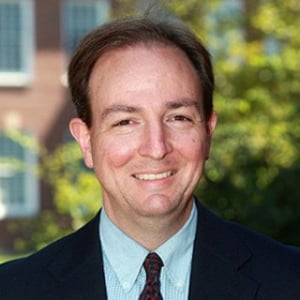
Political Science, Professor and Department Chair, University of Nebraska Omaha
Carson Holloway is Department Chair and Professor of Political Science at the University of Nebraska, Omaha and a Washington Fellow in the Claremont Institute’s Center for the American Way of Life. He is the author most recently of No Liberty to Libel: The Constitutional Case Against New York Times v. Sullivan (Encounter Books, 2026). He is co-editor, with Bradford P. Wilson, of The Political Writings of Alexander Hamilton (Cambridge University Press, 2017) and The Political Writings of George Washington (Cambridge University Press, 2023). He has held visiting fellowships in Princeton University’s James Madison Program in American Ideals and Institutions and at the Heritage Foundation. His scholarly articles have appeared in the Review of Politics, Interpretation, and Perspectives on Political Science, and he has written public commentary for The New Criterion, First Things, National Affairs, Public Discourse, National Review, Law and Liberty, The Federalist, the American Spectator, and the American Conservative.
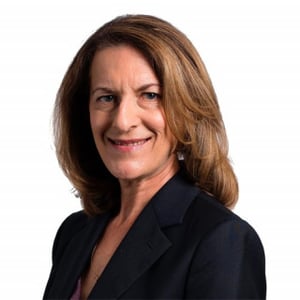
Partner, Thomas & LoCicero PL
Carol is the managing partner in TLo's Tampa office. She practices at the trial and appellate levels, handling litigation concerning defamation and privacy, the Public Records Act, the Government in the Sunshine Law, court access and cameras in the courtroom. She leads advocacy efforts on media issues, including cameras in the courtroom, and sealed court records.
Carol is a nationally-recognized media lawyer routinely sought after as a speaker on media issues at national and statewide conferences. She often leads statewide advocacy efforts on media issues, most recently involving access to Florida courts and Florida’s anti-SLAPP law. Carol regularly renders pre-and post-publication advice on investigative news stories. She handles issues concerning newsgathering and technology – including smartphones, social media and drones. Carol has litigated many cases resulting in published opinions. In addition to media law, Carol is experienced in marketing law, web law and intellectual property matters. She manages trademark portfolios, policing programs and litigation for sophisticated corporations.
Carol is the Immediate Past Chair for the First Amendment Foundation's Board of Trustees. She is a former board member of the Junior League of Tampa, former vice-chair of the Media Law Committee of The Florida Bar, and is a governing committee member of the ABA Forum on Communications Law. She has litigated capital habeas cases with other lawyers in the firm. Carol also serves as the Program Coordinator for End 68 Hours of Hunger – Tampa, a charity dedicated to eradicating hunger among school children. She is an active member of Hyde Park Presbyterian Church.
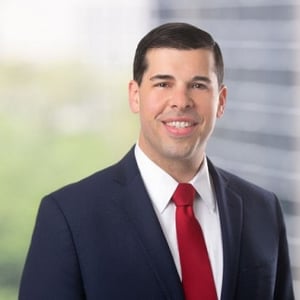
Partner, Boies Schiller Flexner LLP
Jesse, the former third-ranking official at the U.S. Department of Justice, helps clients with their most difficult litigation and regulatory issues─whether that means defending against an enforcement action, pursuing high-stakes litigation and appeals, navigating regulatory thickets at federal and state agencies, or crafting a comprehensive strategy to manage a crisis. He approaches these problems with the knowledge gained both from his broad private-practice experience and from having served at the highest levels of federal and state government.
Jesse has experience across a range of substantive and regulatory areas. He has sued the federal government and has also been one of its top law-enforcement officials; he has represented states and has also navigated their regulatory agencies on behalf of clients; and he has represented companies in business disputes, both as defendants and plaintiffs.
Before joining the firm, Jesse was the Acting Associate Attorney General at the United States Department of Justice. In that role, he oversaw the civil and criminal work of the Antitrust, Civil, Civil Rights, Environment and Natural Resources, and Tax Divisions. During Jesse’s tenure, the Associate’s office closely managed the Department’s most significant litigation, including matters involving large financial institutions, healthcare companies, automakers, energy companies, and state and local governments. In addition, Jesse served as Chair of DOJ’s Regulatory Reform Task Force and Vice Chair of DOJ’s Task Force on Market Integrity and Consumer Fraud. Jesse regularly provided legal and strategic advice to the highest-level decision makers in the federal government, including the Attorney General and Deputy Attorney General, general counsels across the spectrum of federal agencies, and White House officials.
Jesse served for three years as the secretary of Florida’s labor, economic-development, and land-use agency, the Florida Department of Economic Opportunity. Before that, he served as Governor (now Senator) Rick Scott’s general counsel.
Jesse maintains offices in both Washington D.C. and Florida. From Washington, he focuses on federal litigation and crisis management. In Florida, in addition to federal litigation, Jesse employs his knowledge of state government and regulation to help clients in courts across the state, from trial through the Florida Supreme Court.
Jesse currently serves on the Florida Supreme Court Judicial Nominating Commission, the body that provides the governor with nominees for appointment to the Florida Supreme Court. Jesse is also a fellow at the Center for the Study of the Administrative State at the Scalia Law School at George Mason University, where he writes and speaks about administrative law.
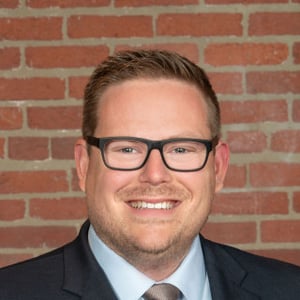
Counsel, Clare Locke
Jered is an experienced litigator relied upon by his clients to deliver practical and exacting legal advice guided by sound business judgment. He has spent his career representing clients ranging from Fortune 500 companies to controversial high-profile figures in sensitive and sometimes existential crises requiring extraordinary discretion.
Prior to joining Clare Locke, Jered was the chief legal officer of media non-profit Project Veritas, through which he managed a team of lawyers working on reputational risk. During his time at Veritas, Jered and his team obtained over five dozen corrections and retractions and avoided countless more inaccurate articles. Jered also oversaw a portfolio of defamation lawsuits, including Project Veritas’ lawsuit against The New York Times in which Clare Locke defeated The Times’ motion to dismiss – the first defamation case to survive New York’s newly-expanded anti-SLAPP law.
Jered has successfully represented clients in litigation and appeals in federal and state courts across the country. Throughout his career, Jered has handled a variety of matters, including media liability, fraud and deceptive trade practices, financial services, construction and real estate, bankruptcy, and harassment. Jered served as lead trial counsel in securing one of 2019’s top 50 highest bench awards in the United States in a real estate dispute, and in obtaining a first-of-its-kind national injunction and receivership over a fraudster leading to federal incarceration and a permanent restraining order.
Research Scholar in Law and Executive Director, Center for Academic Freedom and Free Speech, Yale Law School
Joe Cohn is a research scholar in law at Yale Law school and the executive director of the Center for Academic Freedom and Free Speech (CAFFS).
Cohn has served as a staff attorney at the AIDS Law Project of Pennsylvania, a staff attorney for the Court of Appeals for the 3rd Circuit, an adjunct professor of law at the University of Pennsylvania Law School, where he supervised law students representing clients in litigation in state and federal courts, and as the interim legal director for ACLU affiliates in Nevada and Utah.
A majority of Cohn’s career has been dedicated to defending civil liberties on college campuses and free expression in society at large. As the Foundation for Individual Rights and Expression’s (FIRE’s) founding legislative and policy director, from 2012 to 2023, he testified on numerous occasions in legislatures across America and in Congress, drafted legislation on campus free speech, campus due process, and academic freedom that has been enacted in states across the country. Immediately before joining CAFFS, Cohn advocated for open inquiry, viewpoint diversity, and constructive disagreement in higher education as Heterodox Academy’s director of policy.
Cohn writes extensively on civil liberties, with articles published in a wide array of media outlets, including the Wall Street Journal, the Washington Post, Newsweek, the Hill, the New York Daily News, the Chicago Tribune, the Las Vegas Review Journal, the Minnesota Star Tribune, the Chronicle of Higher Education, Inside Higher Ed, and the Volokh Conspiracy.
He earned his bachelor of arts from the University of Nevada at Las Vegas in 2000. He is a 2004 graduate of the University of Pennsylvania Carey School of Law and the Fels Institute of Government Administration, where he earned his J.D. and M.A. in Government Administration.
Political Science, Professor and Department Chair, University of Nebraska Omaha
Carson Holloway is Department Chair and Professor of Political Science at the University of Nebraska, Omaha and a Washington Fellow in the Claremont Institute’s Center for the American Way of Life. He is the author most recently of No Liberty to Libel: The Constitutional Case Against New York Times v. Sullivan (Encounter Books, 2026). He is co-editor, with Bradford P. Wilson, of The Political Writings of Alexander Hamilton (Cambridge University Press, 2017) and The Political Writings of George Washington (Cambridge University Press, 2023). He has held visiting fellowships in Princeton University’s James Madison Program in American Ideals and Institutions and at the Heritage Foundation. His scholarly articles have appeared in the Review of Politics, Interpretation, and Perspectives on Political Science, and he has written public commentary for The New Criterion, First Things, National Affairs, Public Discourse, National Review, Law and Liberty, The Federalist, the American Spectator, and the American Conservative.
Partner, Thomas & LoCicero PL
Carol is the managing partner in TLo's Tampa office. She practices at the trial and appellate levels, handling litigation concerning defamation and privacy, the Public Records Act, the Government in the Sunshine Law, court access and cameras in the courtroom. She leads advocacy efforts on media issues, including cameras in the courtroom, and sealed court records.
Carol is a nationally-recognized media lawyer routinely sought after as a speaker on media issues at national and statewide conferences. She often leads statewide advocacy efforts on media issues, most recently involving access to Florida courts and Florida’s anti-SLAPP law. Carol regularly renders pre-and post-publication advice on investigative news stories. She handles issues concerning newsgathering and technology – including smartphones, social media and drones. Carol has litigated many cases resulting in published opinions. In addition to media law, Carol is experienced in marketing law, web law and intellectual property matters. She manages trademark portfolios, policing programs and litigation for sophisticated corporations.
Carol is the Immediate Past Chair for the First Amendment Foundation's Board of Trustees. She is a former board member of the Junior League of Tampa, former vice-chair of the Media Law Committee of The Florida Bar, and is a governing committee member of the ABA Forum on Communications Law. She has litigated capital habeas cases with other lawyers in the firm. Carol also serves as the Program Coordinator for End 68 Hours of Hunger – Tampa, a charity dedicated to eradicating hunger among school children. She is an active member of Hyde Park Presbyterian Church.
Partner, Boies Schiller Flexner LLP
Jesse, the former third-ranking official at the U.S. Department of Justice, helps clients with their most difficult litigation and regulatory issues─whether that means defending against an enforcement action, pursuing high-stakes litigation and appeals, navigating regulatory thickets at federal and state agencies, or crafting a comprehensive strategy to manage a crisis. He approaches these problems with the knowledge gained both from his broad private-practice experience and from having served at the highest levels of federal and state government.
Jesse has experience across a range of substantive and regulatory areas. He has sued the federal government and has also been one of its top law-enforcement officials; he has represented states and has also navigated their regulatory agencies on behalf of clients; and he has represented companies in business disputes, both as defendants and plaintiffs.
Before joining the firm, Jesse was the Acting Associate Attorney General at the United States Department of Justice. In that role, he oversaw the civil and criminal work of the Antitrust, Civil, Civil Rights, Environment and Natural Resources, and Tax Divisions. During Jesse’s tenure, the Associate’s office closely managed the Department’s most significant litigation, including matters involving large financial institutions, healthcare companies, automakers, energy companies, and state and local governments. In addition, Jesse served as Chair of DOJ’s Regulatory Reform Task Force and Vice Chair of DOJ’s Task Force on Market Integrity and Consumer Fraud. Jesse regularly provided legal and strategic advice to the highest-level decision makers in the federal government, including the Attorney General and Deputy Attorney General, general counsels across the spectrum of federal agencies, and White House officials.
Jesse served for three years as the secretary of Florida’s labor, economic-development, and land-use agency, the Florida Department of Economic Opportunity. Before that, he served as Governor (now Senator) Rick Scott’s general counsel.
Jesse maintains offices in both Washington D.C. and Florida. From Washington, he focuses on federal litigation and crisis management. In Florida, in addition to federal litigation, Jesse employs his knowledge of state government and regulation to help clients in courts across the state, from trial through the Florida Supreme Court.
Jesse currently serves on the Florida Supreme Court Judicial Nominating Commission, the body that provides the governor with nominees for appointment to the Florida Supreme Court. Jesse is also a fellow at the Center for the Study of the Administrative State at the Scalia Law School at George Mason University, where he writes and speaks about administrative law.
Counsel, Clare Locke
Jered is an experienced litigator relied upon by his clients to deliver practical and exacting legal advice guided by sound business judgment. He has spent his career representing clients ranging from Fortune 500 companies to controversial high-profile figures in sensitive and sometimes existential crises requiring extraordinary discretion.
Prior to joining Clare Locke, Jered was the chief legal officer of media non-profit Project Veritas, through which he managed a team of lawyers working on reputational risk. During his time at Veritas, Jered and his team obtained over five dozen corrections and retractions and avoided countless more inaccurate articles. Jered also oversaw a portfolio of defamation lawsuits, including Project Veritas’ lawsuit against The New York Times in which Clare Locke defeated The Times’ motion to dismiss – the first defamation case to survive New York’s newly-expanded anti-SLAPP law.
Jered has successfully represented clients in litigation and appeals in federal and state courts across the country. Throughout his career, Jered has handled a variety of matters, including media liability, fraud and deceptive trade practices, financial services, construction and real estate, bankruptcy, and harassment. Jered served as lead trial counsel in securing one of 2019’s top 50 highest bench awards in the United States in a real estate dispute, and in obtaining a first-of-its-kind national injunction and receivership over a fraudster leading to federal incarceration and a permanent restraining order.
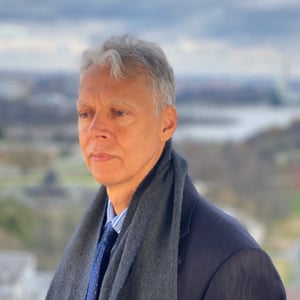
Emeritus Professor and Editor, Emory University and First Things magazine
Mark Bauerlein is an editor at First Things and Professor of English Emeritus at Emory University, where he taught since earning his PhD in English at UCLA in 1989. From 2003 to 2005 he served as Director of the Office of Research and Analysis at the National Endowment for the Arts. He has written or edited 12 books, including Literary Criticism: An Autopsy (1997), The Pragmatic Mind: Explorations in the Psychology of Belief (1997), Negrophobia: A Race Riot in Atlanta, 1906 (2001), The Dumbest Generation: How the Digital Age Stupefies Young Americans and Jeopardizes Our Future (2008), and The Dumbest Generation Grows Up: From Stupefied Youth to Dangerous Adults (2022). His essays have appeared in PMLA, Philosophy and Literature, Partisan Review, Wilson Quarterly, Commentary, and New Criterion, and his commentaries and reviews in the Wall Street Journal, New York Times, Washington Post, Boston Globe, Weekly Standard, Politico, Vox, Slate, The Guardian, Chronicle of Higher Education, and other national periodicals. He has done more than 500 media interviews, including Fox & Friends, CNN, BBC World Today, NPR All Things Considered, ABC Nightline, 20/20, PBS NOVA, and The New Yorker podcast. He hosts a podcast at First Things, which focusses on recent books and runs twice a week. In January 2023, he was appointed a Trustee of New College Florida by Governor DeSantis.
Research Scholar in Law and Executive Director, Center for Academic Freedom and Free Speech, Yale Law School
Joe Cohn is a research scholar in law at Yale Law school and the executive director of the Center for Academic Freedom and Free Speech (CAFFS).
Cohn has served as a staff attorney at the AIDS Law Project of Pennsylvania, a staff attorney for the Court of Appeals for the 3rd Circuit, an adjunct professor of law at the University of Pennsylvania Law School, where he supervised law students representing clients in litigation in state and federal courts, and as the interim legal director for ACLU affiliates in Nevada and Utah.
A majority of Cohn’s career has been dedicated to defending civil liberties on college campuses and free expression in society at large. As the Foundation for Individual Rights and Expression’s (FIRE’s) founding legislative and policy director, from 2012 to 2023, he testified on numerous occasions in legislatures across America and in Congress, drafted legislation on campus free speech, campus due process, and academic freedom that has been enacted in states across the country. Immediately before joining CAFFS, Cohn advocated for open inquiry, viewpoint diversity, and constructive disagreement in higher education as Heterodox Academy’s director of policy.
Cohn writes extensively on civil liberties, with articles published in a wide array of media outlets, including the Wall Street Journal, the Washington Post, Newsweek, the Hill, the New York Daily News, the Chicago Tribune, the Las Vegas Review Journal, the Minnesota Star Tribune, the Chronicle of Higher Education, Inside Higher Ed, and the Volokh Conspiracy.
He earned his bachelor of arts from the University of Nevada at Las Vegas in 2000. He is a 2004 graduate of the University of Pennsylvania Carey School of Law and the Fels Institute of Government Administration, where he earned his J.D. and M.A. in Government Administration.
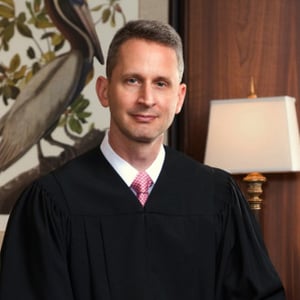
Judge, United States Court of Appeals, Fifth Circuit
Judge Duncan received his B.A. from Louisiana State University in 1994, his J.D. from the Paul M. Hebert Law Center at Louisiana State University in 1997, and his LL.M. from Columbia Law School in 2004.
After graduating from law school, he clerked for Louisiana-based Circuit Judge John Malcolm Duhé Jr. of the United States Court of Appeals for the Fifth Circuit.
From 2008–2012, Duncan served as Appellate Chief for Louisiana's Attorney General's office. From 2012–2014, he served as general counsel of the Becket Fund for Religious Liberty. From 2004-2008, he was an assistant professor of law at the University of Mississippi School of Law.
Before becoming a judge, Duncan practiced at the Washington, D.C. firm of Schaerr Duncan LLP, where he was a founding partner. He was appointed by President Trump to the United States Court of Appeals for the Fifth Circuit on May 1, 2018.
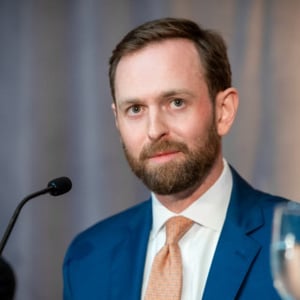
Commissioner, Federal Trade Commission
Andrew N. Ferguson was sworn in April 2, 2024 as a Commissioner of the Federal Trade Commission. President Joe Biden named Ferguson to a term that expires on September 25, 2030.
Ferguson most recently served as solicitor general of the Commonwealth of Virginia. Prior to that position, he served as chief counsel to U.S. Sen. Mitch McConnell of Kentucky, the Republican leader, and as a Republican counsel on the U.S. Senate Judiciary Committee. He also practiced law at several Washington, D.C. law firms. He earned his undergraduate degree and law degree from the University of Virginia. After law school, Ferguson clerked for Judge Karen L. Henderson on the U.S. Court of Appeals for the D.C. Circuit and U.S. Supreme Court Justice Clarence Thomas.
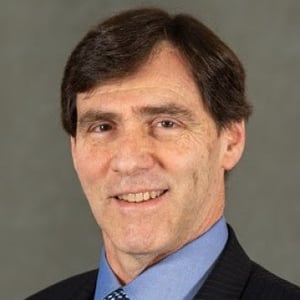
Professor of Business and Professor of Law (by courtesy) | Executive Director, Georgetown Institute for the Study of Markets and Ethics McDonough School of Business, Georgetown University
John Hasnas is a professor of business at Georgetown's McDonough School of Business and a professor of law (by courtesy) at Georgetown University Law Center in Washington, DC, where he teaches courses in ethics and law.
Professor Hasnas is also the executive director of the Georgetown Institute for the Study of Markets and Ethics, whose tripartite mission is to produce high-quality research on matters related to the ethics of market activity, improve ethics pedagogy, and educate the broader, non-academic community about ethical issues related to the functioning of markets.
Professor Hasnas has held previous appointments as associate professor of law at George Mason University School of Law, visiting associate professor of law at Duke University School of Law and the Washington College of Law at American University, and Law and Humanities Fellow at Temple University School of Law. Professor Hasnas has also been a visiting scholar at the Kennedy Institute of Ethics in Washington, DC and the Social Philosophy and Policy Center in Bowling Green, Ohio.
He received his B.A. in Philosophy from Lafayette College, his J.D. and Ph.D. in Legal Philosophy from Duke University, and his LL.M. in Legal Education from Temple Law School. His scholarship concerns ethics and white collar crime, jurisprudence, and legal history.
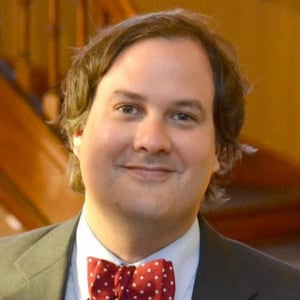
Professor of Law, Elon University
Enrique Armijo, Professor of Law at Elon University School of Law, Affiliate Fellow of the Yale Law School Information Society Project and the UNC-Chapel Hill Center for Information, Technology, and Public Life, and Fellow at the George Washington University Institute for Data, Democracy, and Politics, teaches and researches in the areas of the First Amendment, constitutional law, torts, administrative law, media and internet law, and international freedom of expression. Professor Armijo’s current scholarship addresses the interaction between new technologies and free speech. His scholarly work has recently appeared in the Cato Supreme Court Review, Boston University Law Review, the William and Mary Bill of Rights Journal, the peer-reviewed Communication Law and Policy and Political Science Quarterly, and several other journals. His work has been cited by the Federal Communications Commission, the Federal Election Commission, and other agencies, and in testimony before the U.S. Senate Committee on Governmental Affairs. He also has provided advice on media and internet law reform to governments, stakeholders and NGOs located around the world, including in Africa, Asia and the Middle East. Most recently, he has worked on media and communications reform projects in Myanmar (Burma) for the U.S. Department of State with Annenberg’s Center for Global Communications Studies at the University of Pennsylvania. His commentaries on these and other topics have appeared on NPR's On the Media, Voice of America , WUNC-FM, and Bloomberg Law, and in print in the Charlotte Observer, the Raleigh News and Observer, and several other outlets nationwide.
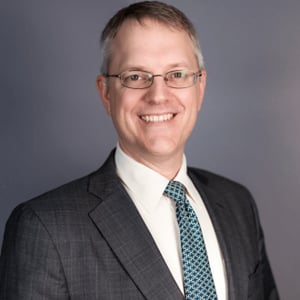
President and General Counsel, New Civil Liberties Alliance
NCLA’s President and General Counsel, Mark Chenoweth, has observed the administrative state up close and personal from perches in all four branches of the federal government. Mark served as the first chief of staff to Congressman Mike Pompeo, as legal counsel to Commissioner Anne Northup at the U.S. Consumer Product Safety Commission, as an attorney advisor in the Office of Legal Policy at the U.S. Department of Justice, and as a law clerk to the Hon. Danny J. Boggs on the U.S. Court of Appeals for the Sixth Circuit.
Mark has worked in several different roles in the private sector as well. He began his legal career in D.C. as a regulatory associate at Wilmer, Cutler & Pickering. He then returned to his home state of Kansas to serve as in-house counsel for Koch Industries. Most recently he spent over four years as general counsel of the Washington Legal Foundation.
Mark is a graduate of Yale College and the University of Chicago Law School, where he co-founded the Institute for Justice Clinic on Entrepreneurship and became a Tony Patiño Fellow. Mark has been widely quoted and/or published in newspapers and websites including the New York Times, San Francisco Chronicle, New Hampshire Union Leader, and Metropolitan Corporate Counsel. He has also had recurring op-eds in the Los Angeles Daily Journal, and at Forbes.com.
Research Scholar in Law and Executive Director, Center for Academic Freedom and Free Speech, Yale Law School
Joe Cohn is a research scholar in law at Yale Law school and the executive director of the Center for Academic Freedom and Free Speech (CAFFS).
Cohn has served as a staff attorney at the AIDS Law Project of Pennsylvania, a staff attorney for the Court of Appeals for the 3rd Circuit, an adjunct professor of law at the University of Pennsylvania Law School, where he supervised law students representing clients in litigation in state and federal courts, and as the interim legal director for ACLU affiliates in Nevada and Utah.
A majority of Cohn’s career has been dedicated to defending civil liberties on college campuses and free expression in society at large. As the Foundation for Individual Rights and Expression’s (FIRE’s) founding legislative and policy director, from 2012 to 2023, he testified on numerous occasions in legislatures across America and in Congress, drafted legislation on campus free speech, campus due process, and academic freedom that has been enacted in states across the country. Immediately before joining CAFFS, Cohn advocated for open inquiry, viewpoint diversity, and constructive disagreement in higher education as Heterodox Academy’s director of policy.
Cohn writes extensively on civil liberties, with articles published in a wide array of media outlets, including the Wall Street Journal, the Washington Post, Newsweek, the Hill, the New York Daily News, the Chicago Tribune, the Las Vegas Review Journal, the Minnesota Star Tribune, the Chronicle of Higher Education, Inside Higher Ed, and the Volokh Conspiracy.
He earned his bachelor of arts from the University of Nevada at Las Vegas in 2000. He is a 2004 graduate of the University of Pennsylvania Carey School of Law and the Fels Institute of Government Administration, where he earned his J.D. and M.A. in Government Administration.
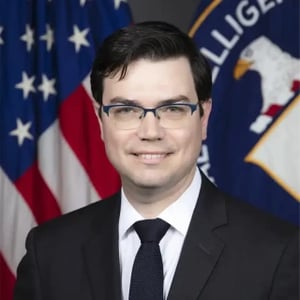
Deputy Director, Central Intelligence Agency
Michael Ellis was sworn in as Deputy Director of the Central Intelligence Agency on February 10, 2025. Deputy Director Ellis has held a variety of senior national security positions, including General Counsel of the National Security Agency and Senior Director for Intelligence Programs at the National Security Council.
Deputy Director Ellis previously served in the White House Counsel's Office, providing legal advice on national security and foreign relations. Prior to the White House, he was General Counsel of the U.S. House of Representatives Permanent Select Committee on Intelligence and served as an intelligence officer in the U.S. Navy Reserve.
Before returning to government, Deputy Director Ellis was the General Counsel of Rumble, a publicly traded video sharing platform and cloud services provider.
Deputy Director Ellis is a graduate of Yale Law School and Dartmouth College. Following law school, he served as a clerk to two federal judges. He is a "Jeopardy!" champion.
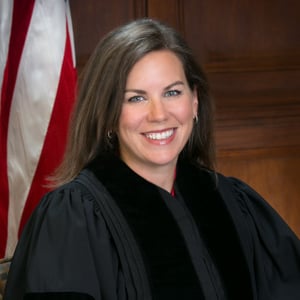
Judge, United States Court of Appeals, Eleventh Circuit
Britt C. Grant is a judge on the U.S. Court of Appeals for the Eleventh Circuit. Judge Grant was appointed to the federal bench in August 2018 after serving as a Justice on the Supreme Court of Georgia. Prior to her judicial appointment, she served as the Solicitor General of Georgia and practiced in the Washington, D.C. office of Kirkland & Ellis. Upon graduation from law school, Judge Grant served as a law clerk to then-Judge Brett M. Kavanaugh of the U.S. Court of Appeals for the District of Columbia Circuit. She earned her J.D., with distinction, from Stanford Law School, where she was the Co-Founder of the Stanford National Security and the Law Society, and the President of the Stanford Law chapter of the Federalist Society. Before enrolling in law school, Judge Grant served in The White House in a variety of domestic policy roles as well as on the staff of Congressman Nathan Deal. Judge Grant earned her B.A., summa cum laude, from Wake Forest University, where she was inducted into Phi Beta Kappa. She now lives in Atlanta, Georgia with her husband and three children.
Professor of Law, Elon University
Enrique Armijo, Professor of Law at Elon University School of Law, Affiliate Fellow of the Yale Law School Information Society Project and the UNC-Chapel Hill Center for Information, Technology, and Public Life, and Fellow at the George Washington University Institute for Data, Democracy, and Politics, teaches and researches in the areas of the First Amendment, constitutional law, torts, administrative law, media and internet law, and international freedom of expression. Professor Armijo’s current scholarship addresses the interaction between new technologies and free speech. His scholarly work has recently appeared in the Cato Supreme Court Review, Boston University Law Review, the William and Mary Bill of Rights Journal, the peer-reviewed Communication Law and Policy and Political Science Quarterly, and several other journals. His work has been cited by the Federal Communications Commission, the Federal Election Commission, and other agencies, and in testimony before the U.S. Senate Committee on Governmental Affairs. He also has provided advice on media and internet law reform to governments, stakeholders and NGOs located around the world, including in Africa, Asia and the Middle East. Most recently, he has worked on media and communications reform projects in Myanmar (Burma) for the U.S. Department of State with Annenberg’s Center for Global Communications Studies at the University of Pennsylvania. His commentaries on these and other topics have appeared on NPR's On the Media, Voice of America , WUNC-FM, and Bloomberg Law, and in print in the Charlotte Observer, the Raleigh News and Observer, and several other outlets nationwide.
President and General Counsel, New Civil Liberties Alliance
NCLA’s President and General Counsel, Mark Chenoweth, has observed the administrative state up close and personal from perches in all four branches of the federal government. Mark served as the first chief of staff to Congressman Mike Pompeo, as legal counsel to Commissioner Anne Northup at the U.S. Consumer Product Safety Commission, as an attorney advisor in the Office of Legal Policy at the U.S. Department of Justice, and as a law clerk to the Hon. Danny J. Boggs on the U.S. Court of Appeals for the Sixth Circuit.
Mark has worked in several different roles in the private sector as well. He began his legal career in D.C. as a regulatory associate at Wilmer, Cutler & Pickering. He then returned to his home state of Kansas to serve as in-house counsel for Koch Industries. Most recently he spent over four years as general counsel of the Washington Legal Foundation.
Mark is a graduate of Yale College and the University of Chicago Law School, where he co-founded the Institute for Justice Clinic on Entrepreneurship and became a Tony Patiño Fellow. Mark has been widely quoted and/or published in newspapers and websites including the New York Times, San Francisco Chronicle, New Hampshire Union Leader, and Metropolitan Corporate Counsel. He has also had recurring op-eds in the Los Angeles Daily Journal, and at Forbes.com.
Research Scholar in Law and Executive Director, Center for Academic Freedom and Free Speech, Yale Law School
Joe Cohn is a research scholar in law at Yale Law school and the executive director of the Center for Academic Freedom and Free Speech (CAFFS).
Cohn has served as a staff attorney at the AIDS Law Project of Pennsylvania, a staff attorney for the Court of Appeals for the 3rd Circuit, an adjunct professor of law at the University of Pennsylvania Law School, where he supervised law students representing clients in litigation in state and federal courts, and as the interim legal director for ACLU affiliates in Nevada and Utah.
A majority of Cohn’s career has been dedicated to defending civil liberties on college campuses and free expression in society at large. As the Foundation for Individual Rights and Expression’s (FIRE’s) founding legislative and policy director, from 2012 to 2023, he testified on numerous occasions in legislatures across America and in Congress, drafted legislation on campus free speech, campus due process, and academic freedom that has been enacted in states across the country. Immediately before joining CAFFS, Cohn advocated for open inquiry, viewpoint diversity, and constructive disagreement in higher education as Heterodox Academy’s director of policy.
Cohn writes extensively on civil liberties, with articles published in a wide array of media outlets, including the Wall Street Journal, the Washington Post, Newsweek, the Hill, the New York Daily News, the Chicago Tribune, the Las Vegas Review Journal, the Minnesota Star Tribune, the Chronicle of Higher Education, Inside Higher Ed, and the Volokh Conspiracy.
He earned his bachelor of arts from the University of Nevada at Las Vegas in 2000. He is a 2004 graduate of the University of Pennsylvania Carey School of Law and the Fels Institute of Government Administration, where he earned his J.D. and M.A. in Government Administration.
Deputy Director, Central Intelligence Agency
Michael Ellis was sworn in as Deputy Director of the Central Intelligence Agency on February 10, 2025. Deputy Director Ellis has held a variety of senior national security positions, including General Counsel of the National Security Agency and Senior Director for Intelligence Programs at the National Security Council.
Deputy Director Ellis previously served in the White House Counsel's Office, providing legal advice on national security and foreign relations. Prior to the White House, he was General Counsel of the U.S. House of Representatives Permanent Select Committee on Intelligence and served as an intelligence officer in the U.S. Navy Reserve.
Before returning to government, Deputy Director Ellis was the General Counsel of Rumble, a publicly traded video sharing platform and cloud services provider.
Deputy Director Ellis is a graduate of Yale Law School and Dartmouth College. Following law school, he served as a clerk to two federal judges. He is a "Jeopardy!" champion.
Judge, United States Court of Appeals, Eleventh Circuit
Britt C. Grant is a judge on the U.S. Court of Appeals for the Eleventh Circuit. Judge Grant was appointed to the federal bench in August 2018 after serving as a Justice on the Supreme Court of Georgia. Prior to her judicial appointment, she served as the Solicitor General of Georgia and practiced in the Washington, D.C. office of Kirkland & Ellis. Upon graduation from law school, Judge Grant served as a law clerk to then-Judge Brett M. Kavanaugh of the U.S. Court of Appeals for the District of Columbia Circuit. She earned her J.D., with distinction, from Stanford Law School, where she was the Co-Founder of the Stanford National Security and the Law Society, and the President of the Stanford Law chapter of the Federalist Society. Before enrolling in law school, Judge Grant served in The White House in a variety of domestic policy roles as well as on the staff of Congressman Nathan Deal. Judge Grant earned her B.A., summa cum laude, from Wake Forest University, where she was inducted into Phi Beta Kappa. She now lives in Atlanta, Georgia with her husband and three children.
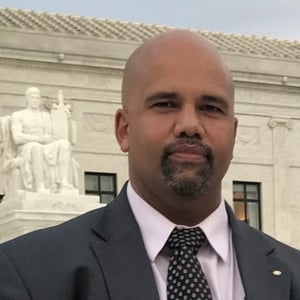
Professor of History, East Stroudsburg University
Dr. Brooks is currently professor of history at East Stroudsburg University, where he teaches several courses, including African Americans and the Courts and US Constitutional History and Law and other courses in legal history. Further to his work at ESU, he is also a founding member and vice president of the Harrisburg lawyers' chapter of the Federalist Society.
Professor Brooks received his BA and MA in US History from East Stroudsburg University of Pennsylvania. He then received a Rotary Ambassadorial Scholarship to Edinburgh University (Scotland), where he studied British influences on the US judiciary. He completed his doctoral work at Kassel University (Germany). There he worked on the international “Modern Constitutionalism” project, editing and translating constitutions from German to English and English to German. His doctoral work there focused in particular on eleventh amendment sovereignty issues and law during the US founding era.
While in Germany, Prof. Brooks was an active member of the Center for North American Research, where he focused on constitutional and legal history, especially as it pertained to jurisprudential matters. He ran a solo business where he trained attorneys in several mid- to large-sized German and international law firms in legal English and communication. Prof. Brooks also did legal translation for many firms and for Germany’s Federal Constitutional Court, that nation’s highest court. Two books resulting from his work there include German Employment Law: 618 Questions Frequently Asked by Foreigners (2014) and Expats in Germany - Inbound and Outbound: Questions Frequently Asked by Foreigners (2017).
Current areas of research include state appellate judicial selection reform, early black attorneys, and comparative employment law.
Dr. Brooks has also written extensively Real Clear Politics, Real Clear Pennsylvania, and Allentown’s The Morning Call. His work has also appeared in New York Daily News, Los Angeles Times, Chicago Tribune, and The Hill.
Research Scholar in Law and Executive Director, Center for Academic Freedom and Free Speech, Yale Law School
Joe Cohn is a research scholar in law at Yale Law school and the executive director of the Center for Academic Freedom and Free Speech (CAFFS).
Cohn has served as a staff attorney at the AIDS Law Project of Pennsylvania, a staff attorney for the Court of Appeals for the 3rd Circuit, an adjunct professor of law at the University of Pennsylvania Law School, where he supervised law students representing clients in litigation in state and federal courts, and as the interim legal director for ACLU affiliates in Nevada and Utah.
A majority of Cohn’s career has been dedicated to defending civil liberties on college campuses and free expression in society at large. As the Foundation for Individual Rights and Expression’s (FIRE’s) founding legislative and policy director, from 2012 to 2023, he testified on numerous occasions in legislatures across America and in Congress, drafted legislation on campus free speech, campus due process, and academic freedom that has been enacted in states across the country. Immediately before joining CAFFS, Cohn advocated for open inquiry, viewpoint diversity, and constructive disagreement in higher education as Heterodox Academy’s director of policy.
Cohn writes extensively on civil liberties, with articles published in a wide array of media outlets, including the Wall Street Journal, the Washington Post, Newsweek, the Hill, the New York Daily News, the Chicago Tribune, the Las Vegas Review Journal, the Minnesota Star Tribune, the Chronicle of Higher Education, Inside Higher Ed, and the Volokh Conspiracy.
He earned his bachelor of arts from the University of Nevada at Las Vegas in 2000. He is a 2004 graduate of the University of Pennsylvania Carey School of Law and the Fels Institute of Government Administration, where he earned his J.D. and M.A. in Government Administration.
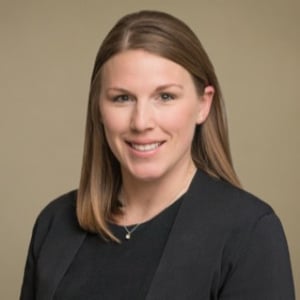
Partner, Consovoy McCarthy PLLC
Ms. Meehan’s practice focuses on constitutional litigation, election law matters, and complex federal statutes. She has represented states, state legislatures, and individual clients in the U.S. Supreme Court, state supreme courts, federal courts of appeals, and federal district courts. She has served as trial and appellate counsel for disputes about legislative privilege for state legislators and has successfully appealed to federal appellate courts to halt subpoenas targeting high-ranking public officials. She has served as trial and appellate counsel in recent redistricting litigation in Alabama, Florida, Texas, Utah, and Wisconsin. And she has had the privilege of defending other state laws in every stage of litigation, including in state supreme courts and the U.S. Supreme Court.
In 2022, Ms. Meehan served as counsel of record for the Wisconsin Legislature in Wisconsin Legislature v. Wisconsin Elections Commission, 595 U.S. 398 (2022). The U.S. Supreme Court granted the legislature’s request to summarily reverse the state supreme court’s redistricting decision, which would have racially gerrymandered electoral districts on the eve of elections. In 2021, the U.S. Supreme Court appointed Ms. Meehan to brief and argue Patel v. Garland, 596 U.S. 328 (2022), and the court adopted the position she was appointed to argue. Years earlier, the en banc Eleventh Circuit Court of Appeals appointed Ms. Meehan to brief and argue a federal habeas case as the court-appointed amicus curiae, and the en banc court adopted the position she was appointed to argue. Before joining Consovoy, Ms. Meehan was a partner at Bartlit Beck, where she served as a trial lawyer for high-stakes commercial disputes and constitutional litigation.
Ms. Meehan is a former law clerk to Justice Antonin Scalia and Justice Clarence Thomas of the U.S. Supreme Court and Chief Judge William H. Pryor Jr. of the U.S. Court of Appeals for the Eleventh Circuit. She graduated with high honors from the University of Chicago Law School, where she was selected for Order of the Coif and served as Managing Editor of the Law Review. Before law school, Ms. Meehan graduated first in her class from the University of Missouri School of Journalism. Her first writing job was bylining a human-interest column inspired by Studs Terkel for her Indiana hometown paper.
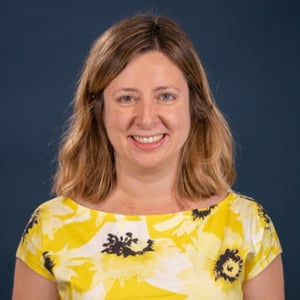
Legal Fellow, Center for the Separation of Powers, Pacific Legal Foundation
Alison Somin joined Pacific Legal Foundation in May 2020 as a legal fellow in the Center for the Separation of Powers and part of the equality before the law practice group.
Before joining the Pacific Legal Foundation team, Alison was a special assistant and counsel for over a decade to Gail Heriot, a member of the bipartisan United States Commission on Civil Rights. She also has deep roots in the liberty movement. Alison was a Koch Associate at the National Federation for Independent Business Legal Foundation and, during law school, completed summer clerkships at the Institute for Justice and the Charles G. Koch Charitable Foundation. She holds a J.D. from Emory University School of Law and an A.B. in history from Dartmouth College.
Her work has been published in the San Francisco Chronicle, the Daily Journal, Texas Journal of Law and Politics, and The Federalist Society’s Engage magazine and blog.
She lives in northern Virginia with her husband Ilya; two children; and golden retriever Willow. In her spare time, she enjoys reading, baking and cooking, children’s art projects, and training and exercising Willow.
Professor of History, East Stroudsburg University
Dr. Brooks is currently professor of history at East Stroudsburg University, where he teaches several courses, including African Americans and the Courts and US Constitutional History and Law and other courses in legal history. Further to his work at ESU, he is also a founding member and vice president of the Harrisburg lawyers' chapter of the Federalist Society.
Professor Brooks received his BA and MA in US History from East Stroudsburg University of Pennsylvania. He then received a Rotary Ambassadorial Scholarship to Edinburgh University (Scotland), where he studied British influences on the US judiciary. He completed his doctoral work at Kassel University (Germany). There he worked on the international “Modern Constitutionalism” project, editing and translating constitutions from German to English and English to German. His doctoral work there focused in particular on eleventh amendment sovereignty issues and law during the US founding era.
While in Germany, Prof. Brooks was an active member of the Center for North American Research, where he focused on constitutional and legal history, especially as it pertained to jurisprudential matters. He ran a solo business where he trained attorneys in several mid- to large-sized German and international law firms in legal English and communication. Prof. Brooks also did legal translation for many firms and for Germany’s Federal Constitutional Court, that nation’s highest court. Two books resulting from his work there include German Employment Law: 618 Questions Frequently Asked by Foreigners (2014) and Expats in Germany - Inbound and Outbound: Questions Frequently Asked by Foreigners (2017).
Current areas of research include state appellate judicial selection reform, early black attorneys, and comparative employment law.
Dr. Brooks has also written extensively Real Clear Politics, Real Clear Pennsylvania, and Allentown’s The Morning Call. His work has also appeared in New York Daily News, Los Angeles Times, Chicago Tribune, and The Hill.
Research Scholar in Law and Executive Director, Center for Academic Freedom and Free Speech, Yale Law School
Joe Cohn is a research scholar in law at Yale Law school and the executive director of the Center for Academic Freedom and Free Speech (CAFFS).
Cohn has served as a staff attorney at the AIDS Law Project of Pennsylvania, a staff attorney for the Court of Appeals for the 3rd Circuit, an adjunct professor of law at the University of Pennsylvania Law School, where he supervised law students representing clients in litigation in state and federal courts, and as the interim legal director for ACLU affiliates in Nevada and Utah.
A majority of Cohn’s career has been dedicated to defending civil liberties on college campuses and free expression in society at large. As the Foundation for Individual Rights and Expression’s (FIRE’s) founding legislative and policy director, from 2012 to 2023, he testified on numerous occasions in legislatures across America and in Congress, drafted legislation on campus free speech, campus due process, and academic freedom that has been enacted in states across the country. Immediately before joining CAFFS, Cohn advocated for open inquiry, viewpoint diversity, and constructive disagreement in higher education as Heterodox Academy’s director of policy.
Cohn writes extensively on civil liberties, with articles published in a wide array of media outlets, including the Wall Street Journal, the Washington Post, Newsweek, the Hill, the New York Daily News, the Chicago Tribune, the Las Vegas Review Journal, the Minnesota Star Tribune, the Chronicle of Higher Education, Inside Higher Ed, and the Volokh Conspiracy.
He earned his bachelor of arts from the University of Nevada at Las Vegas in 2000. He is a 2004 graduate of the University of Pennsylvania Carey School of Law and the Fels Institute of Government Administration, where he earned his J.D. and M.A. in Government Administration.
Partner, Consovoy McCarthy PLLC
Ms. Meehan’s practice focuses on constitutional litigation, election law matters, and complex federal statutes. She has represented states, state legislatures, and individual clients in the U.S. Supreme Court, state supreme courts, federal courts of appeals, and federal district courts. She has served as trial and appellate counsel for disputes about legislative privilege for state legislators and has successfully appealed to federal appellate courts to halt subpoenas targeting high-ranking public officials. She has served as trial and appellate counsel in recent redistricting litigation in Alabama, Florida, Texas, Utah, and Wisconsin. And she has had the privilege of defending other state laws in every stage of litigation, including in state supreme courts and the U.S. Supreme Court.
In 2022, Ms. Meehan served as counsel of record for the Wisconsin Legislature in Wisconsin Legislature v. Wisconsin Elections Commission, 595 U.S. 398 (2022). The U.S. Supreme Court granted the legislature’s request to summarily reverse the state supreme court’s redistricting decision, which would have racially gerrymandered electoral districts on the eve of elections. In 2021, the U.S. Supreme Court appointed Ms. Meehan to brief and argue Patel v. Garland, 596 U.S. 328 (2022), and the court adopted the position she was appointed to argue. Years earlier, the en banc Eleventh Circuit Court of Appeals appointed Ms. Meehan to brief and argue a federal habeas case as the court-appointed amicus curiae, and the en banc court adopted the position she was appointed to argue. Before joining Consovoy, Ms. Meehan was a partner at Bartlit Beck, where she served as a trial lawyer for high-stakes commercial disputes and constitutional litigation.
Ms. Meehan is a former law clerk to Justice Antonin Scalia and Justice Clarence Thomas of the U.S. Supreme Court and Chief Judge William H. Pryor Jr. of the U.S. Court of Appeals for the Eleventh Circuit. She graduated with high honors from the University of Chicago Law School, where she was selected for Order of the Coif and served as Managing Editor of the Law Review. Before law school, Ms. Meehan graduated first in her class from the University of Missouri School of Journalism. Her first writing job was bylining a human-interest column inspired by Studs Terkel for her Indiana hometown paper.
Legal Fellow, Center for the Separation of Powers, Pacific Legal Foundation
Alison Somin joined Pacific Legal Foundation in May 2020 as a legal fellow in the Center for the Separation of Powers and part of the equality before the law practice group.
Before joining the Pacific Legal Foundation team, Alison was a special assistant and counsel for over a decade to Gail Heriot, a member of the bipartisan United States Commission on Civil Rights. She also has deep roots in the liberty movement. Alison was a Koch Associate at the National Federation for Independent Business Legal Foundation and, during law school, completed summer clerkships at the Institute for Justice and the Charles G. Koch Charitable Foundation. She holds a J.D. from Emory University School of Law and an A.B. in history from Dartmouth College.
Her work has been published in the San Francisco Chronicle, the Daily Journal, Texas Journal of Law and Politics, and The Federalist Society’s Engage magazine and blog.
She lives in northern Virginia with her husband Ilya; two children; and golden retriever Willow. In her spare time, she enjoys reading, baking and cooking, children’s art projects, and training and exercising Willow.

Academic Freedom and the First Amendment: Who Decides What Is Taught?
Joe Cohn, Tyson Langhofer, May Mailman, Casey Mattox
In 2022, Florida enacted the Stop WOKE (Wrongs to Our Kids and Employees) Act,...
Academic Freedom and the First Amendment: Who Decides What Is Taught?
Joe Cohn, Tyson Langhofer, May Mailman, Casey Mattox
In 2022, Florida enacted the Stop WOKE (Wrongs to Our Kids and Employees) Act,...
Panel I: New York Times v. Sullivan
Joe Cohn, Carson Holloway, Carol Jean Locicero, Jesse Panuccio, Jered Ede
2023 Florida Young Lawyers Summit
In 1964, the U.S. Supreme Court issued its opinion in New York Times v. Sullivan...
Panel I: New York Times v. Sullivan
Joe Cohn, Carson Holloway, Carol Jean Locicero, Jesse Panuccio, Jered Ede
2023 Florida Young Lawyers Summit
In 1964, the U.S. Supreme Court issued its opinion in New York Times v. Sullivan...
Panel 4: Academic Freedom in Higher Education: The Role of States Defending Freedom of Thought
Mark Bauerlein, Joe Cohn, Stuart Kyle Duncan, Andrew N. Ferguson, John Hasnas
State Power Review Conference
What policies and practices can states adopt to encourage freedom of thought within higher education?...
Is Executive Soft Power a Threat to Free Speech?
Enrique Armijo, Mark Chenoweth, Joe Cohn, Michael J. Ellis, Britt C. Grant
2022 National Lawyers Convention
There are no federal speech police, but law enforcement is not the only way that...
Is Executive Soft Power a Threat to Free Speech?
Enrique Armijo, Mark Chenoweth, Joe Cohn, Michael J. Ellis, Britt C. Grant
2022 National Lawyers Convention
There are no federal speech police, but law enforcement is not the only way that...
Panel Three: Critical Race Theory in Schools
Christopher Brooks, Joe Cohn, Taylor Meehan, Alison E. Somin
2021 Third Circuit Chapters Conference
Schools across the country have introduced elements of critical race theory into their curriculums. The...
Panel Three: Critical Race Theory in Schools
Christopher Brooks, Joe Cohn, Taylor Meehan, Alison E. Somin
2021 Third Circuit Chapters Conference
Schools across the country have introduced elements of critical race theory into their curriculums. The...