
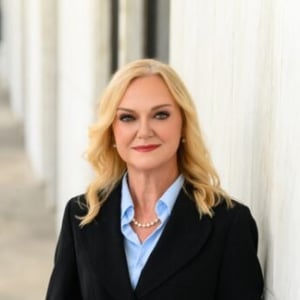
I. Beverly Lake, Jr. Chair in Constitutional Studies and Chief Legal Officer, John Locke Foundation
Jeanette Doran is the I. Beverly Lake, Jr. Chair in Constitutional Studies and Senior Counsel at the John Locke Foundation.
Doran began her legal career as a federal law clerk in the Middle District of North Carolina after graduating with honors from Campbell Law School. She then served as the Research and Writing Attorney in the appeals section of the Federal Public Defender’s Office, appearing before the U.S. Court of Appeals for the Fourth Circuit. In 2004, she joined the UNC–Chapel Hill School of Government, and a year later became staff attorney at NCICL, ultimately rising to executive director in 2011. Appointed in 2013 by the Governor to chair the Division of Employment Security’s Board of Review, she completed that public service in 2019.
Doran is also the president of the North Carolina Institute for Constitutional Law (NCICL), and she serves on the state’s Rules Review Commission. She is admitted to practice before the U.S. Supreme Court, the Fourth Circuit, multiple federal district courts, and all North Carolina courts. Doran holds a Juris Doctor from Campbell University.
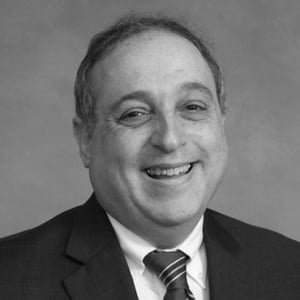
Executive Director, North Carolina Justice Center
Mr. Glazier has held his current position as Executive Director of the North Carolina Justice Center since 2015. The Justice Center focuses on anti-poverty work in the areas of education, immigration, health care, housing, workers’ rights, consumer law, and budget and tax policy.
Prior to his position as Executive Director of the Justice Center, Mr. Glazier served seven terms from 2003-2015 as state representative from Cumberland County in the North Carolina General Assembly. Mr. Glazier received multiple Legislator of Year Awards, and also received the Order of the Long Leaf Pine from Governor McCrory in 2015.
Mr. Glazier received his law degree from Wake Forest University School of Law in 1981 and his undergraduate degree from Penn State University in 1977.
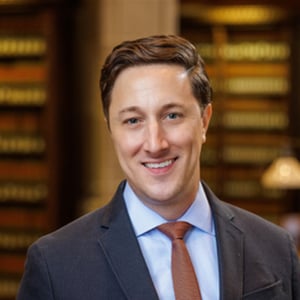
Professor of Law, Notre Dame Law School
Professor Derek Muller is a nationally-recognized scholar in the field of election law. His research focuses on the role of states in the administration of federal elections, the constitutional contours of voting rights and election administration, the limits of judicial power in the domain of elections, and the Electoral College.
He has published more than two dozen academic works, and his op-eds have appeared in the New York Times, the Los Angeles Times, and the Wall Street Journal. He has testified before Congress, and he is a contributor at the Election Law Blog. He is a co-author on a Federal Courts casebook published by Carolina Academic Press. He is also the co-reporter on a new Restatement of the Law, Election Litigation, an effort led by the American Law Institute.
Professor Muller teaches Election Law, Civil Procedure, and Evidence.
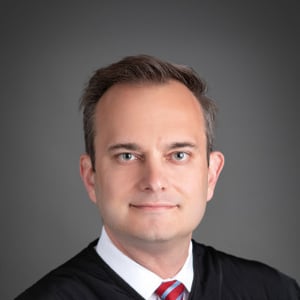
United States Magistrate Judge, Eastern District of North Carolina
Robert T. Numbers, II serves as a United States Magistrate Judge in the United States District Court for the Eastern District of North Carolina.
Judge Numbers received degrees in Political Science and Economics, with honors, from Wake Forest University. After completing his undergraduate work, Judge Numbers obtained his law degree from the University of Notre Dame where he served on the Notre Dame Law Review.
Upon his graduation from law school, Judge Numbers joined the Winston-Salem office of a large, regional law firm. From 2005 until 2010, Judge Numbers’ practice focused on civil rights claims against local municipalities and government contractors. In 2010, Judge Numbers joined the firm’s Raleigh office and concentrated his practice on complex business litigation in state and federal courts.
I. Beverly Lake, Jr. Chair in Constitutional Studies and Chief Legal Officer, John Locke Foundation
Jeanette Doran is the I. Beverly Lake, Jr. Chair in Constitutional Studies and Senior Counsel at the John Locke Foundation.
Doran began her legal career as a federal law clerk in the Middle District of North Carolina after graduating with honors from Campbell Law School. She then served as the Research and Writing Attorney in the appeals section of the Federal Public Defender’s Office, appearing before the U.S. Court of Appeals for the Fourth Circuit. In 2004, she joined the UNC–Chapel Hill School of Government, and a year later became staff attorney at NCICL, ultimately rising to executive director in 2011. Appointed in 2013 by the Governor to chair the Division of Employment Security’s Board of Review, she completed that public service in 2019.
Doran is also the president of the North Carolina Institute for Constitutional Law (NCICL), and she serves on the state’s Rules Review Commission. She is admitted to practice before the U.S. Supreme Court, the Fourth Circuit, multiple federal district courts, and all North Carolina courts. Doran holds a Juris Doctor from Campbell University.
Executive Director, North Carolina Justice Center
Mr. Glazier has held his current position as Executive Director of the North Carolina Justice Center since 2015. The Justice Center focuses on anti-poverty work in the areas of education, immigration, health care, housing, workers’ rights, consumer law, and budget and tax policy.
Prior to his position as Executive Director of the Justice Center, Mr. Glazier served seven terms from 2003-2015 as state representative from Cumberland County in the North Carolina General Assembly. Mr. Glazier received multiple Legislator of Year Awards, and also received the Order of the Long Leaf Pine from Governor McCrory in 2015.
Mr. Glazier received his law degree from Wake Forest University School of Law in 1981 and his undergraduate degree from Penn State University in 1977.
Professor of Law, Notre Dame Law School
Professor Derek Muller is a nationally-recognized scholar in the field of election law. His research focuses on the role of states in the administration of federal elections, the constitutional contours of voting rights and election administration, the limits of judicial power in the domain of elections, and the Electoral College.
He has published more than two dozen academic works, and his op-eds have appeared in the New York Times, the Los Angeles Times, and the Wall Street Journal. He has testified before Congress, and he is a contributor at the Election Law Blog. He is a co-author on a Federal Courts casebook published by Carolina Academic Press. He is also the co-reporter on a new Restatement of the Law, Election Litigation, an effort led by the American Law Institute.
Professor Muller teaches Election Law, Civil Procedure, and Evidence.
United States Magistrate Judge, Eastern District of North Carolina
Robert T. Numbers, II serves as a United States Magistrate Judge in the United States District Court for the Eastern District of North Carolina.
Judge Numbers received degrees in Political Science and Economics, with honors, from Wake Forest University. After completing his undergraduate work, Judge Numbers obtained his law degree from the University of Notre Dame where he served on the Notre Dame Law Review.
Upon his graduation from law school, Judge Numbers joined the Winston-Salem office of a large, regional law firm. From 2005 until 2010, Judge Numbers’ practice focused on civil rights claims against local municipalities and government contractors. In 2010, Judge Numbers joined the firm’s Raleigh office and concentrated his practice on complex business litigation in state and federal courts.

NC NAACP v. Moore: The Impact of Unconstitutional Legislative Maps on a State Legislature's Ability to Propose Constitutional Amendments
Jeanette Doran, Rick Glazier, Derek T. Muller, Robert T. Numbers
In 2018, the North Carolina General Assembly placed several constitutional amendments before voters for ratification. Voters...
NC NAACP v. Moore: The Impact of Unconstitutional Legislative Maps on a State Legislature's Ability to Propose Constitutional Amendments
Jeanette Doran, Rick Glazier, Derek T. Muller, Robert T. Numbers
In 2018, the North Carolina General Assembly placed several constitutional amendments before voters for ratification. Voters...