
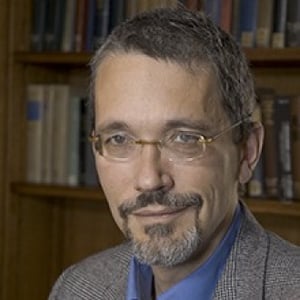
William K. Townsend Professor of Law, Yale Law School
Ian Ayres is a lawyer and an economist. He is the William K. Townsend Professor at Yale Law School, the Anne Urowsky Professorial Fellow in Law, and a Professor at Yale’s School of Management.
Professor Ayres has been a columnist for Forbes magazine, a commentator on public radio’s Marketplace, and a contributor to the New York Times’ Freakonomics Blog. His research has been featured on PrimeTime Live, Oprah and Good Morning America and in Time and Vogue magazines. Ian is a co-founder of stickK.com, a web site that helps you stick to your goals. In an Illinois post-conviction proceeding, Ayres helped convince a court to vacate his client’s death sentence.
In 2020, Harvard University Press will publish Ian’s twelfth book, “Disarmed By Choice: Liberating Individuals to Reduce Gun Violence” (with Fredrick Vars). Ian has also published over 100 articles on a wide range of topics including several empirical studies.
In 2006, he was elected to the American Academy of Arts and Sciences. His book with Greg Klass, Insincere Promises: The Law of Misrepresented Intent, won the 2006 Scribes book award “for the best work of legal scholarship published during the previous year.” Professor Ayres has been ranked as one of the most prolific and most-cited law professors of his generation. (See James Lindgren & Daniel Seltzer, The Most Prolific Law Professors and Faculties, 71 CHI.-KENT L. REV. 781 (1996); Fred R. Shapiro, The Most-Cited Legal Scholars, 29 J. LEGAL STUD. 409 (2000).) The Chronicle of Higher Education referred to Ayres as “a law-and-economics guru.”
He was born and raised in Kansas City, Missouri, received his B.A. (majoring in Russian studies and economics) and J.D. from Yale and his Ph.D in economics from M.I.T. Professor Ayres and clerked for the Honorable James K. Logan of the Tenth Circuit Court of Appeals. He has previously taught at Harvard, Illinois, Northwestern, Stanford and Virginia law schools and has been a research fellow of the American Bar Foundation and Columbia. From 2002 to 2009, he was the editor of the Journal of Law, Economics and Organization.
His two most cited law review articles are Fair Driving: Gender and Race Discrimination in Retail Car Negotiations, 104 Harvard Law Review 817 (1991) and Filling Gaps in Incomplete Contracts: An Economic Theory of Default Rules, 99 Yale Law Journal 87 (1989) (with Robert Gertner).
Excerpts of his publications as well as audio and video clips can be found on the internet at: www.ianayres.com.
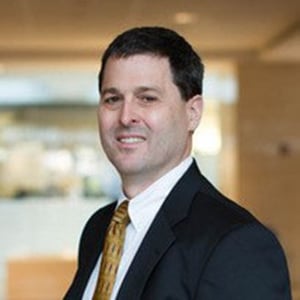
Scott K. Ginsburg Professor of Health Law & Policy, Georgetown University
David A. Hyman, M.D., J.D., is the Scott K. Ginsburg Professor of Health Law & Policy at Georgetown University. Professor Hyman focuses his research and writing on the regulation and financing of health care. He teaches or has taught health care regulation, civil procedure, insurance, medical malpractice, law & economics, professional responsibility, and tax policy.
While serving as Special Counsel to the Federal Trade Commission, Professor Hyman was principal author and project leader for the first joint report ever issued by the Federal Trade Commission and Department of Justice, “Improving Health Care: A Dose of Competition” (2004). He is also the author of Medicare Meets Mephistopheles, which was selected by the U.S. Chamber of Commerce/National Chamber Foundation as one of the top ten books of 2007, and the co-author (with Charles Silver) of Overcharged: Why Americans Pay Too Much for Health Care (2018). He has published widely in student-edited law reviews and peer-reviewed medical, health policy, law, and economics journals.
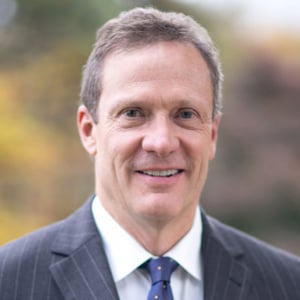
Blaine T. Phillips Distinguished Professor in Environmental Law, University of Virginia School of Law
Law and economics expert Jason Scott Johnston joined the Virginia Law faculty in 2010 and is the Blaine T. Phillips Distinguished Professor in Environmental Law. He formerly served as the the Nicholas E. Chimicles Research Professor in Business Law and Regulation at Virginia Law, and the Robert G. Fuller, Jr. Professor of Law and director of the Program on Law, Environment and Economy at the University of Pennsylvania Law School.
Johnston’s scholarship has examined subjects ranging from natural resources law to torts and contracts. He has published dozens of articles in law journals, such as the Yale Law Journal, and in peer-reviewed economics journals, such as the Journal of Law, Economics and Organization. He is currently working on a book that critically analyzes the foundations of global warming law and policy, a series of articles on the economics of regulatory science and another series of articles on various aspects of the law and economics of consumer protection. He has served on the Board of Directors of the American Law and Economics Association, on the National Science Foundation’s Law and Social Science grant review panel, and on the Board of the Searle Civil Justice Institute. He won Penn Law’s Robert A. Gorman Award for Teaching Excellence in 2003.
After earning his A.B. from Dartmouth College and both his J.D. and Ph.D. (economics) from the University of Michigan, Johnston clerked for Judge Gilbert S. Merritt on the U.S. Court of Appeals for the Sixth Circuit. He then taught at Vermont Law School and Vanderbilt Law School before joining Penn’s faculty. He has been a visiting professor or held fellowship appointments at Yale Law School, the University of Southern California Gould School of Law, the American Academy in Berlin and the Property and Environment Research Center.
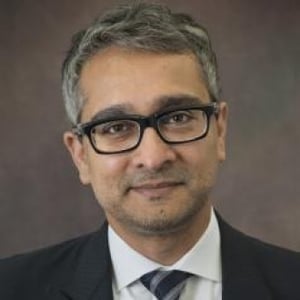
Lee and Brena Freeman Professor of Law, University of Chicago Law School
Anup Malani is the Lee and Brena Freeman Professor at the University of Chicago Law School and a Professor at the Pritzker School of Medicine. He is also a Research Associate at the National Bureau of Economic Research in Boston, a Senior Fellow at the Schaeffer Center at the University of Southern California, and an editor at the Journal of Law and Economics.
Malani is the co-founder and Faculty Director of the International Innovation Corps, a social service program that sends teams of University of Chicago and foreign university graduates to work on innovative development projects with government officials in India and Brazil.
Malani has a PhD in economics and a JD, both from University of Chicago. He clerked for Judge Stephen Williams on the US Court of Appeals for District of Columbia and Justice Sandra Day O’Connor on the US Supreme Court.
Malani conducts research in law and economics, health economics and development economics. His law and economics research focuses on judicial behavior, measuring the welfare impact of laws, and, recently legal implications of blockchain. His health economics research focuses on the value of medical innovation and health care insurance, control of infectious diseases, placebo effects, and conflicts of interest in medicine. Malani’s development economics work focuses on health care supply and financing in India and the growth of and quality of life in urban slums. He is the principal investigator on the Indian Health Insurance Experiment, an 11,000 household randomized controlled trial of health insurance in Karnataka, India, and on a large-scale impact evaluation of Mission Kakatiya, a major effort to expand rainfall capture as means of irrigation in Telangana, India. Malani’s research has been published in leading journals in a number of different fields, including the Proceedings of the National Academy of Sciences, the Journal of Political Economy, the Journal of Econometrics, the Harvard Law Review, the University of Chicago Law Review, the Archives of Internal Medicine, and Theoretical Population Biology. Malani teaches courses in commercial law, health law, the canons of American legal thought, law and economics and law and development in the Law School and a PhD course in law and economics in the Economics Department.

Former President & CEO, The Federalist Society for Law and Public Policy Studies
Eugene B. Meyer, former President and CEO of the Federalist Society, has served as Executive Director, CEO, and/or President of the organization for more than 40 years. He is responsible for shepherding the organization from a small group of law students to a community of 90,000 lawyers, law students, academics, judges, and others interested in the rule of law. The Society now includes a Student Chapter at nearly every ABA-accredited law school in the country and Lawyers Chapters in 220 major cities across the nation. Gene earned his B.A. in history at Yale in 1975 and his M.A. in political science from the London School of Economics in 1976. Gene currently serves on the boards of the U.S. Chess Center, the Holman Foundation, the Sarah Scaife Foundation, and the advisory board of the Adam Smith Society. He holds the title of International Chess Master.
William K. Townsend Professor of Law, Yale Law School
Ian Ayres is a lawyer and an economist. He is the William K. Townsend Professor at Yale Law School, the Anne Urowsky Professorial Fellow in Law, and a Professor at Yale’s School of Management.
Professor Ayres has been a columnist for Forbes magazine, a commentator on public radio’s Marketplace, and a contributor to the New York Times’ Freakonomics Blog. His research has been featured on PrimeTime Live, Oprah and Good Morning America and in Time and Vogue magazines. Ian is a co-founder of stickK.com, a web site that helps you stick to your goals. In an Illinois post-conviction proceeding, Ayres helped convince a court to vacate his client’s death sentence.
In 2020, Harvard University Press will publish Ian’s twelfth book, “Disarmed By Choice: Liberating Individuals to Reduce Gun Violence” (with Fredrick Vars). Ian has also published over 100 articles on a wide range of topics including several empirical studies.
In 2006, he was elected to the American Academy of Arts and Sciences. His book with Greg Klass, Insincere Promises: The Law of Misrepresented Intent, won the 2006 Scribes book award “for the best work of legal scholarship published during the previous year.” Professor Ayres has been ranked as one of the most prolific and most-cited law professors of his generation. (See James Lindgren & Daniel Seltzer, The Most Prolific Law Professors and Faculties, 71 CHI.-KENT L. REV. 781 (1996); Fred R. Shapiro, The Most-Cited Legal Scholars, 29 J. LEGAL STUD. 409 (2000).) The Chronicle of Higher Education referred to Ayres as “a law-and-economics guru.”
He was born and raised in Kansas City, Missouri, received his B.A. (majoring in Russian studies and economics) and J.D. from Yale and his Ph.D in economics from M.I.T. Professor Ayres and clerked for the Honorable James K. Logan of the Tenth Circuit Court of Appeals. He has previously taught at Harvard, Illinois, Northwestern, Stanford and Virginia law schools and has been a research fellow of the American Bar Foundation and Columbia. From 2002 to 2009, he was the editor of the Journal of Law, Economics and Organization.
His two most cited law review articles are Fair Driving: Gender and Race Discrimination in Retail Car Negotiations, 104 Harvard Law Review 817 (1991) and Filling Gaps in Incomplete Contracts: An Economic Theory of Default Rules, 99 Yale Law Journal 87 (1989) (with Robert Gertner).
Excerpts of his publications as well as audio and video clips can be found on the internet at: www.ianayres.com.
Scott K. Ginsburg Professor of Health Law & Policy, Georgetown University
David A. Hyman, M.D., J.D., is the Scott K. Ginsburg Professor of Health Law & Policy at Georgetown University. Professor Hyman focuses his research and writing on the regulation and financing of health care. He teaches or has taught health care regulation, civil procedure, insurance, medical malpractice, law & economics, professional responsibility, and tax policy.
While serving as Special Counsel to the Federal Trade Commission, Professor Hyman was principal author and project leader for the first joint report ever issued by the Federal Trade Commission and Department of Justice, “Improving Health Care: A Dose of Competition” (2004). He is also the author of Medicare Meets Mephistopheles, which was selected by the U.S. Chamber of Commerce/National Chamber Foundation as one of the top ten books of 2007, and the co-author (with Charles Silver) of Overcharged: Why Americans Pay Too Much for Health Care (2018). He has published widely in student-edited law reviews and peer-reviewed medical, health policy, law, and economics journals.
Blaine T. Phillips Distinguished Professor in Environmental Law, University of Virginia School of Law
Law and economics expert Jason Scott Johnston joined the Virginia Law faculty in 2010 and is the Blaine T. Phillips Distinguished Professor in Environmental Law. He formerly served as the the Nicholas E. Chimicles Research Professor in Business Law and Regulation at Virginia Law, and the Robert G. Fuller, Jr. Professor of Law and director of the Program on Law, Environment and Economy at the University of Pennsylvania Law School.
Johnston’s scholarship has examined subjects ranging from natural resources law to torts and contracts. He has published dozens of articles in law journals, such as the Yale Law Journal, and in peer-reviewed economics journals, such as the Journal of Law, Economics and Organization. He is currently working on a book that critically analyzes the foundations of global warming law and policy, a series of articles on the economics of regulatory science and another series of articles on various aspects of the law and economics of consumer protection. He has served on the Board of Directors of the American Law and Economics Association, on the National Science Foundation’s Law and Social Science grant review panel, and on the Board of the Searle Civil Justice Institute. He won Penn Law’s Robert A. Gorman Award for Teaching Excellence in 2003.
After earning his A.B. from Dartmouth College and both his J.D. and Ph.D. (economics) from the University of Michigan, Johnston clerked for Judge Gilbert S. Merritt on the U.S. Court of Appeals for the Sixth Circuit. He then taught at Vermont Law School and Vanderbilt Law School before joining Penn’s faculty. He has been a visiting professor or held fellowship appointments at Yale Law School, the University of Southern California Gould School of Law, the American Academy in Berlin and the Property and Environment Research Center.
Lee and Brena Freeman Professor of Law, University of Chicago Law School
Anup Malani is the Lee and Brena Freeman Professor at the University of Chicago Law School and a Professor at the Pritzker School of Medicine. He is also a Research Associate at the National Bureau of Economic Research in Boston, a Senior Fellow at the Schaeffer Center at the University of Southern California, and an editor at the Journal of Law and Economics.
Malani is the co-founder and Faculty Director of the International Innovation Corps, a social service program that sends teams of University of Chicago and foreign university graduates to work on innovative development projects with government officials in India and Brazil.
Malani has a PhD in economics and a JD, both from University of Chicago. He clerked for Judge Stephen Williams on the US Court of Appeals for District of Columbia and Justice Sandra Day O’Connor on the US Supreme Court.
Malani conducts research in law and economics, health economics and development economics. His law and economics research focuses on judicial behavior, measuring the welfare impact of laws, and, recently legal implications of blockchain. His health economics research focuses on the value of medical innovation and health care insurance, control of infectious diseases, placebo effects, and conflicts of interest in medicine. Malani’s development economics work focuses on health care supply and financing in India and the growth of and quality of life in urban slums. He is the principal investigator on the Indian Health Insurance Experiment, an 11,000 household randomized controlled trial of health insurance in Karnataka, India, and on a large-scale impact evaluation of Mission Kakatiya, a major effort to expand rainfall capture as means of irrigation in Telangana, India. Malani’s research has been published in leading journals in a number of different fields, including the Proceedings of the National Academy of Sciences, the Journal of Political Economy, the Journal of Econometrics, the Harvard Law Review, the University of Chicago Law Review, the Archives of Internal Medicine, and Theoretical Population Biology. Malani teaches courses in commercial law, health law, the canons of American legal thought, law and economics and law and development in the Law School and a PhD course in law and economics in the Economics Department.
Former President & CEO, The Federalist Society for Law and Public Policy Studies
Eugene B. Meyer, former President and CEO of the Federalist Society, has served as Executive Director, CEO, and/or President of the organization for more than 40 years. He is responsible for shepherding the organization from a small group of law students to a community of 90,000 lawyers, law students, academics, judges, and others interested in the rule of law. The Society now includes a Student Chapter at nearly every ABA-accredited law school in the country and Lawyers Chapters in 220 major cities across the nation. Gene earned his B.A. in history at Yale in 1975 and his M.A. in political science from the London School of Economics in 1976. Gene currently serves on the boards of the U.S. Chess Center, the Holman Foundation, the Sarah Scaife Foundation, and the advisory board of the Adam Smith Society. He holds the title of International Chess Master.

Government vs. Private Decisionmaking
Ian Ayres, David Hyman, Jason Johnston, Anup Malani, Eugene B. Meyer
COVID-19 & the Law Conference
The Federalist Society's COVID-19 & the Law Conference began with a panel discussion on "Government...
Government vs. Private Decisionmaking
Ian Ayres, David Hyman, Jason Johnston, Anup Malani, Eugene B. Meyer
COVID-19 & the Law Conference
The Federalist Society's COVID-19 & the Law Conference began with a panel discussion on "Government...