
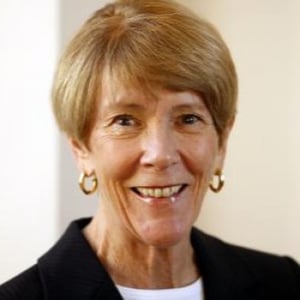
David and Mary Harrison Distinguished Professor of Law Emeritus, University of Virginia School of Law
Lillian BeVier taught constitutional law (with special emphasis on First Amendment issues), intellectual property (trademark, copyright), real property and torts from 1973-2010 at the Law School, and now teaches a January Term course on judicial philosophy.
At Stanford Law School, BeVier was revising editor for the Stanford Law Review and a member of the Order of the Coif. Before coming to Virginia, she was associate professor of law at the University of Santa Clara Law School; practiced law with Spaeth Blase Valentine & Klein in Palo Alto, Calif.; served as research associate to Professor William F. Baxter at Stanford University Law School, working on the FAA-ABA study of the legal aspects of airport noise and the sonic boom; and was assistant to the general secretary and assistant staff legal counsel for Stanford University.
BeVier received the University of Virginia Alumni Association Distinguished Professor Award in 2006. The Raven Society elected her to membership in 1993 and honored her with the faculty award in 2010. She delivered the Henry Miller Memorial Lecture at Georgia State Law School in 2005, the Coen Memorial Lecture at the University of Colorado Law School in 2000, and the David C. Baum Lecture on Civil Rights and Civil Liberties at the University of Illinois Law School in 1996. In 1999, at the invitation of the Supreme Court Historical Society, she spoke to the Society on Free Expression in the Warren and Burger Courts. Suffolk University awarded her an honorary S.J.D. degree in 1998. In the fall of 2003, she was a visiting scholar at the National Constitution Center in Philadelphia.
Having been nominated by President Bush and confirmed by the Senate in 2003, she served as vice-chair of the Board of Directors of the Legal Services Corporation until 2009. She serves on the national Board of Visitors of the Federalist Society. Within the Charlottesville community, BeVier has served as chair of the Board of Trustees of St. Anne’s-Belfield School and of the Martha Jefferson Hospital. She is currently chair of the board of the Martha Jefferson Health Services Corporation and of Piedmont CASA (Court-Appointed Special Advocates).
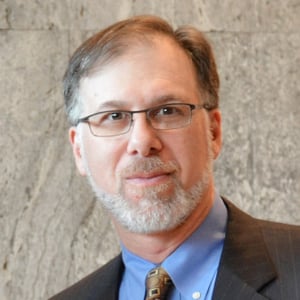
Partner, Schaerr | Jaffe LLP
Erik Jaffe has been involved in appeals on a broad range of legal issues, including First Amendment challenges to campaign finance reform, Commerce Clause challenges to Health Care Reform and other federal legislation, Equal Protection Clause challenges to affirmative action in education, First Amendment challenges to school vouchers, Fifth Amendment challenges to takings of property, Second Amendment challenges to restrictions on gun ownership, and a wide variety of cases involving patents, copyrights, ERISA, securities fraud, federal preemption, environmental regulation, and other state and federal constitutional and statutory matters. He has represented businesses and non-profit groups, Judges, Senators, former government officials, Nobel Prize winners, and a broad cross-section of private individuals. Mr. Jaffe has been involved in over 120 Supreme Court matters, including filing over 30 cert. petitions, representing half-a-dozen parties on the merits, and filing over 70 amicus briefs at both the cert. and merits stages.
A 1990 graduate of the Columbia University School of Law, Mr. Jaffe was a law clerk to Judge Douglas H. Ginsburg of the United States Court of Appeals for the District of Columbia Circuit from 1990 to 1991. Following that clerkship he spent five years in litigation practice with the Washington, D.C. law firm of Williams & Connolly. In the summer of 1996 he left Williams & Connolly to clerk for Supreme Court Justice Clarence Thomas. At the end of that clerkship he started his own practice, and he was a sole practitioner from 1997 to 2018. He joined the firm of Schaerr | Jaffe LLP in 2018.
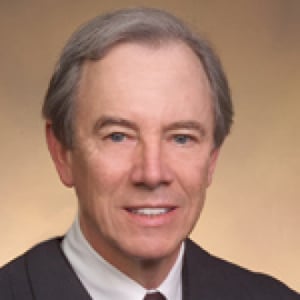
Judge, United States Court of Appeals, D.C. Circuit
Judge Randolph was confirmed by the Senate and appointed to the United States Court of Appeals for the District of Columbia Circuit by President George H. W. Bush in July 1990.
Judge Randolph received his B.S. degree in 1966 from Drexel University, majoring in economics and basic engineering. At Drexel, he was president of the debate society, vice president of the Student Senate, and a member of the varsity wrestling squad. In 1969, he received his J.D. from the University of Pennsylvania, summa cum laude. Judge Randolph ranked first in his law school class all three years and was managing editor of the Law Review.
After graduation, Judge Randolph served as a law clerk to Judge Henry J. Friendly of the United States Court of Appeals for the Second Circuit in New York.
Admitted to the California Bar in 1970 (and to the District of Columbia bar in 1973), Judge Randolph worked as Assistant to the Solicitor General, U.S. Department of Justice, in Washington, D.C., 1970-1973.
After two years in private practice, Judge Randolph was named Deputy Solicitor General of the United States, a position he held from 1975-1977.
In 1979, Judge Randolph was appointed Special Counsel to the Committee on Standards of Official Conduct (the Ethics Committee) of the United States House of Representatives, remaining in this position until 1980.
In the 1980s, Judge Randolph held a number of positions while in private practice, including Special Assistant Attorney General for the states of New Mexico (1985 90), Utah (1986-1990) and Montana (1983-1990). He also served as a Member of the Advisory Panel of the Federal Courts Study Committee.
From 1971-1990, Judge Randolph argued 23 times in the United States Supreme Court, winning 20 of his cases.
As an Adjunct Professor of Law at Georgetown University Law Center from 1974-1978 he taught courses in civil procedure and injunctions. In 1992 he taught a course in constitutional law. He is a Distinguished Adjunct Professor of Law at George Mason School of Law and for the past ten years has been teaching First Amendment law. He also serves on the Judicial Advisory Board of the George Mason University Law and Economics Center.
From 1993 through 1995 Judge Randolph was a member of the Committee on Codes of Conduct of the Judicial Conference of the United States, and from 1995 to 1998 served as the Committee's chairman. He also served as the judicial liaison to the American Bar Association’s Administrative Law Section.
Judge Randolph is a member of the Board of Visitors at Drexel University Law School and was named to the “Drexel One Hundred” as a leading alumnus. In 2002 he was presented the James Wilson Award by the University of Pennsylvania Law School. In November 2005 he delivered the Fifth Annual Barbara K. Olson Memorial Lecture at the Annual Lawyers Convention of the Federalist Society. He has published numerous articles, the most recent of which is in the June 2006 issue of the Harvard Journal of Law and Public Policy.
Judge Randolph is married to the Honorable Eileen J. O’Connor, formerly Assistant Attorney General, Tax Division, U.S. Department of Justice. His son John Trevor Randolph is an investment banker in New York. His daughter Cynthia Lee Randolph is an artist living in San Francisco.
Justice, Supreme Court of Alabama (Retired); Professor of Law, Belmont University College of Law?
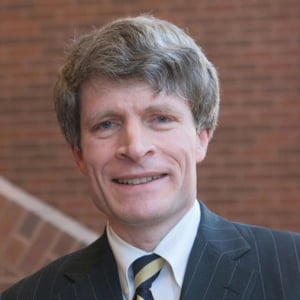
S. Walter Richey Professor of Corporate Law, University of Minnesota Law School
Professor Richard W. Painter received his B.A., summa cum laude, in history from Harvard University and his J.D. from Yale University, where he was an editor of the Yale Journal on Regulation. Following law school, he clerked for Judge John T. Noonan Jr., of the United States Court of Appeals for the Ninth Circuit and later practiced at Sullivan & Cromwell in New York City and Finn Dixon & Herling in Stamford, Connecticut.
He has served as a tenured member of the law faculty at the University of Oregon School of Law and the University of Illinois College of Law, where he was the Guy Raymond and Mildred Van Voorhis Jones Professor of Law from 2002 to 2005.
From February 2005 to July 2007, he was Associate Counsel to the President in the White House Counsel's office, serving as the chief ethics lawyer for the President, White House employees and senior nominees to Senate-confirmed positions in the Executive Branch. He is a member of the American Law Institute and is an advisor for the new ALI Principles of Government Ethics. He has also been active in the Professional Responsibility Section of the American Bar Association.
Professor Painter has also been active in law reform efforts aimed at deterring securities fraud and improving ethics of corporate managers and lawyers. A key provision of the Sarbanes-Oxley Act of 2002 requiring the SEC to issue rules of professional responsibility for securities lawyers was based on earlier proposals Professor Painter made in law review articles and to the ABA and the SEC. He has given dozens of lectures on the Sarbanes-Oxley Act to law schools, bar associations, and learned societies, such as the American Academy of Arts and Sciences. Professor Painter has on four separate occasions provided invited testimony before committees of the U.S. House of Representatives or the U.S. Senate on securities litigation and/or the role of attorneys in corporate governance.
His book, Getting the Government America Deserves: How Ethics Reform Can Make a Difference, was published by Oxford University Press in January 2009. He has written op-eds on government ethics for various publications including the New York Times, the Washington Post and the Los Angeles Times, and he has been interviewed several times on government ethics and corporate ethics by national news organizations, including appearances on Lawrence O'Donnell (MSNBC), Anderson Cooper 360 (CNN), CNN News, Fox News, National Public Radio All Things Considered, and Minnesota Public Radio News. In 2011, he testified before the U.S. House Government Oversight Committee on partisan political activity by government officials and reform of the Hatch Act. Professor Painter has also given expert testimony in cases involving securities transactions and the professional responsibility of lawyers. He testified as a defense witness in SEC. v. The Reserve Money Market Fund (SDNY, November 2012), a jury trial of an SEC enforcement action against the founders of the world's oldest money market fund that ended with a defense verdict on all of the fraud counts.
Professor Painter is the author of two casebooks: Securities Litigation and Enforcement (with Margaret Sachs and Donna Nagy; West 2003; Second Edition, 2007; Third Edition 2011) and Professional and Personal Responsibilities of the Lawyer (with Judge John T. Noonan Jr.; Foundation 1997; Second Edition, 2001; Third Edition 2011). He has written dozens of articles, book reviews, and essays, including a series of papers and a forthcoming book with Minnesota colleague Claire Hill on the personal responsibility of investment bankers.

Google's Book Project
David McGowan
Is it better to ask forgiveness than permission? Google believes so. Its agents are copying...
Judicial Speech Codes: Supreme Court Review of Republican Party of Minnesota v. Kelly
David McGowan, Lillian R. BeVier, Erik S. Jaffe
MS. GRYPHON: Republican Party of Minnesota v. Kelly arose when Mr. Wersal, who was running...
When Free Speech and Ethical Standards Collide - Transcript
Steven Lubet, David McGowan, A. Raymond Randolph, Harold F. See, Richard W. Painter
The Professional Responsibility Practice Group sponsored this panel during the 2001 National Lawyers Convention on...
Finley v. National Endowment for the Arts: Unfortunate Decision, Important Lessons
David McGowan
Free Speech & Election Law Practice Group Newsletter - Volume 1, Issue 2, Spring 1997
The force of Tocqueville's observation that in America political questions tend to become legal questions...