
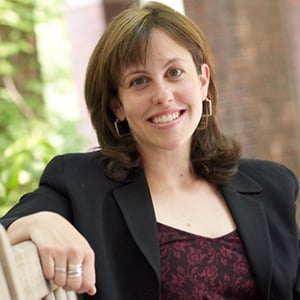
Segal Family Professor of Regulatory Law and Policy, New York University School of Law
Rachel Barkow is the Segal Family Professor of Regulatory Law and Policy and the Faculty Director of the Center on the Administration of Criminal Law at NYU. In June of 2013, the Senate confirmed her as a Member of the United States Sentencing Commission. Since 2010, she has also been a member of the Manhattan District Attorney's Office Conviction Integrity Policy Advisory Panel.
Professor Barkow teaches courses in criminal law, administrative law, and constitutional law. In 2013, she was the recipient of the NYU Distinguished Teaching Award. The Law School awarded her its Podell Distinguished Teaching Award in 2007.
Her scholarship focuses on criminal law, and she is especially interested in applying the lessons and theory of administrative and constitutional law to the administration of criminal justice. She has written more than 20 articles that span a range of topics. She has written several articles on sentencing, including the relationship between modern sentencing laws and the constitutional role of the criminal jury; federalism and the politics of sentencing; the role of cost-benefit and risk tradeoff analysis in sentencing policy; what institutional model works for designing agencies that regulate criminal punishment; the political factors that lead to guideline and commission formation; and the flawed bifurcation between capital and noncapital constitutional sentencing jurisprudence. Professor Barkow has also explored in numerous articles the role of prosecutors in the criminal justice system. For example, she has analyzed how the lessons of institutional design from administrative law could improve the way prosecutors' offices are structured; she has looked to organizational guidelines and compliance programs as a model for prosecutorial oversight; and she has considered the increasing role of prosecutors as regulators through the conditions they place on corporations. Professor Barkow has also explored larger structural questions of how criminal justice is administered in the United States. In a series of major articles, she has explored the relationship between separation of powers and the criminal law and the relationship between federalism and the criminal law. Professor Barkow has also considered the role of mercy and clemency in criminal justice, paying particular attention to the relationship between administrative law's dominance and the increasing reluctance of scholars and experts to accept pockets of unreviewable discretion in criminal law.
Barkow has been invited to present her work in various settings. In the summer of 2009, Barkow testified before the House of Representatives Subcommittee on Commerce, Trade, and Consumer Protection regarding the institutional design of the proposed Consumer Financial Protection Agency. Barkow testified before the United States Sentencing Commission at a 2009 regional hearing on the 25th Anniversary of the Sentencing Reform Act. In the summer of 2004, Barkow testified before the Senate Judiciary Committee at a hearing on the future of the Federal Sentencing Guidelines. She has also presented her work on sentencing to the National Association of Sentencing Commissions Conference, the Federal Judicial Center's National Sentencing Policy Institute, and the Judicial Conference of the Courts of Appeals for the First and Seventh Circuits. In addition, Barkow has presented papers at numerous law schools.
After graduating from Northwestern University (B.A. 1993), Barkow attended Harvard Law School (J.D. 1996), where she won the Sears Prize, which is awarded annually to two students with the top overall grade averages in the first-year class. Barkow served as a law clerk to Judge Laurence H. Silberman on the District of Columbia Circuit, and Justice Antonin Scalia on the U.S. Supreme Court. Barkow was an associate at Kellogg, Huber, Hansen, Todd, Evans & Figel, PLLC, in Washington, D.C., from 1998-2002, where she focused on telecommunications and administrative law issues in proceedings before the FCC, state regulatory agencies, and federal and state courts. She took a leave from the firm in 2001 to serve as the John M. Olin Fellow in Law at Georgetown University Law Center.
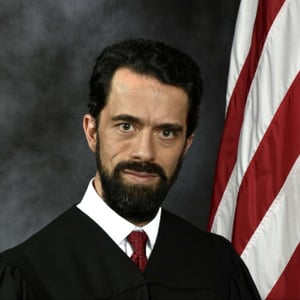
Judge, United States Court of Appeals, Third Circuit
Stephanos Bibas is a judge on the U.S. Court of Appeals for the Third Circuit. Judge Bibas was previously a professor of law and criminology at the University of Pennsylvania Law School. As director of the Penn Law Supreme Court Clinic, he argued six cases before the Supreme Court of the United States and filed briefs in dozens of others. He graduated summa cum laude and Phi Beta Kappa from Columbia University in 1989 with a B.A. in political theory and from Oxford University in 1991 with a B.A. in jurisprudence. He then earned his J.D. from Yale Law School in 1994.
After graduating from Yale Law, Judge Bibas clerked for Judge Patrick Higginbotham of the U.S. Court of Appeals for the Fifth Circuit and Justice Anthony Kennedy on the Supreme Court and was a litigation associate at Covington & Burling LLP in Washington, D.C. Thereafter, Judge Bibas served as an Assistant U.S. Attorney in the Southern District of New York, where he successfully prosecuted the world’s leading expert in Tiffany stained glass for hiring a grave robber to steal priceless Tiffany windows from cemeteries. Before his tenure at Penn Law, Judge Bibas taught at the University of Chicago Law School and the University of Iowa College of Law and was a research fellow at Yale Law School. He has published two books and seventy scholarly articles.
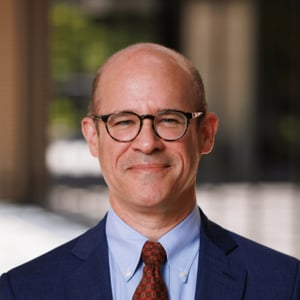
Professor of Law, Stanford Law School
Orin S. Kerr is a Professor of Law at Stanford Law School, where he teaches and writes in the areas of criminal procedure and computer crime law. Kerr earned mechanical engineering degrees from Princeton University and Stanford University before graduating with a J.D. from Harvard Law School. He is a former law clerk to Justice Anthony M. Kennedy at the United States Supreme Court and Judge Leonard I. Garth of the U.S. Court of Appeals for the Third Circuit.
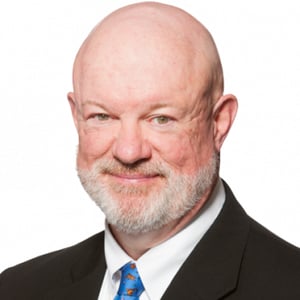
Senior Legal Fellow, the Meese Institute for the Rule of Law, Advancing American Freedom
Paul J. Larkin is a Senior Legal Fellow in the Meese Institute for the Rule of Law at Advancing American Freedom. Paul has held various positions in the federal and state governments throughout his career, such as being an attorney in the Organized Crime and Racketeering Section of the Criminal Division at the U.S. Department of Justice, an Assistant to the Solicitor General in the Office of the Solicitor General at the U.S. Department of Justice, Special Agent-in-Charge and Acting Director of the Criminal Investigation Division at the Environmental Protection Agency, and a member of the Parole Abolition and Sentencing Reform Commission and of the Juvenile Justice Reform Commission in the Office of Virginia Governor George Allen.
He has also worked at Verizon Communications and two law firms in Washington, D.C. His current research is principally in the fields of drug policy, criminal justice policy, and administrative law and policy. He has published numerous articles in law and public policy journals, both in print and online.
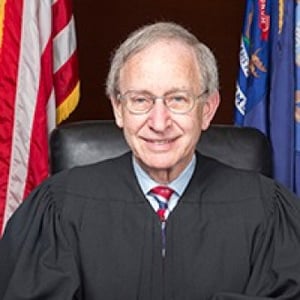
Justice, Michigan Supreme Court
Stephen Markman was appointed Justice of the Michigan Supreme Court on October 1, 1999. He served as the Chief Justice from 2017-2019. Before his appointment, he served as Judge on the Michigan Court of Appeals from 1995-1999. Prior to this, he practiced law with the firm of Miller, Canfield, Paddock & Stone in Detroit.
From 1989-1993, Justice Markman served as United States Attorney, or federal prosecutor, in Michigan, after having been nominated by President George H. W. Bush and confirmed by the United States Senate. From 1985-1989, he served as Assistant Attorney General of the United States, after having been nominated by President Ronald Reagan and confirmed by the United States Senate. In that position, he headed the Department of Justice’s Office of Legal Policy, which served as the principal policy development office within the Department, and which coordinated the federal judicial selection process. Prior to this, he served for seven years as Chief Counsel of the United States Senate Subcommittee on the Constitution, and as Deputy Chief Counsel of the United States Senate Judiciary Committee.
Justice Markman has authored articles for such publications as the University of Michigan Journal of Law Reform, the Detroit College of Law Review, the Stanford Law Review, the University of Chicago Law Review, the American Criminal Justice Law Review, the Barrister’s Law Journal, the Harvard Journal of Law & Public Policy, and the American University Law Review. He has also served as a contributing editor of National Review magazine, and has authored chapters in such books as “In the Name of Justice: The Aims of the Criminal Law,” “Still the Law of the Land,” and “Originalism: A Quarter Century of Debate.”
Justice Markman has taught constitutional law at Hillsdale College since 1993. He has served on the Board of Directors of the Western Michigan University Thomas M. Cooley Law School. He traveled to Ukraine on two occasions on behalf of the State Department, to provide assistance in the development of that nation’s post-Soviet constitution. He is a Fellow of the Michigan Bar Foundation, a Master of the Bench of the Inns of Court, and a member of the One Hundred Club. He has spoken before hundreds of youth, civic, charitable, and legal groups throughout Michigan and nationally, and has coached Little League baseball and basketball. He lives with his wife Mary Kathleen in Mason, and has two sons, James and Charles.
Justice Markman was re-elected to the Supreme Court in 2000, 2004, and 2012. His present term expires January 1, 2021.

Judge, United States Court of Appeals, Eighth Circuit
David Stras became a judge on the United States Court of Appeals for the Eighth Circuit on January 31, 2018. Before serving on the Eighth Circuit, Judge Stras was an Associate Justice of the Minnesota Supreme Court, a position he occupied from July 1, 2010 until his appointment to the Eighth Circuit.
Prior to becoming a judge, Stras was a member of the faculty of the University of Minnesota Law School from 2004 through 2010. He taught and wrote in the areas of federal courts and jurisdiction, constitutional law, criminal law, and law and politics.
Judge Stras received his Bachelor of Arts degree, with highest distinction, in 1995 and his Master of Business Administration in 1999, both from the University of Kansas. He also received his law degree from the University of Kansas School of Law in 1999, where he served as Editor-in-Chief of the Criminal Procedure Edition of the Kansas Law Review.
Following law school, Stras clerked for The Honorable Melvin Brunetti of the United States Court of Appeals for the Ninth Circuit and then for The Honorable J. Michael Luttig of the United States Court of Appeals for the Fourth Circuit.
From 2001 to 2002, he practiced white-collar criminal and appellate litigation with the Washington, D.C., office of Sidley Austin Brown & Wood. Following his year in practice, he clerked for The Honorable Clarence Thomas of the Supreme Court of the United States.

Associate Justice, Supreme Court of the United States
Associate Justice Brett Kavanaugh was born in Washington, D.C., on February 12, 1965. He married Ashley Estes in 2004, and they have two daughters - Margaret and Liza. He received a B.A. from Yale College in 1987 and a J.D. from Yale Law School in 1990. He served as a law clerk for Judge Walter Stapleton of the U.S. Court of Appeals for the Third Circuit from 1990-1991, for Judge Alex Kozinski of the U.S. Court of Appeals for the Ninth Circuit from 1991-1992, and for Justice Anthony M. Kennedy of the U.S. Supreme Court during the 1993 Term. In 1992-1993, he was an attorney in the Office of the Solicitor General of the United States. From 1994 to 1997 and for a period in 1998, he was Associate Counsel in the Office of Independent Counsel. He was a partner at a Washington, D.C., law firm from 1997 to 1998 and again from 1999 to 2001. From 2001 to 2003, he was Associate Counsel and then Senior Associate Counsel to President George W. Bush. From 2003 to 2006, he was Assistant to the President and Staff Secretary for President Bush. He was appointed a Judge of the United States Court of Appeals for the District of Columbia Circuit in 2006. President Donald J. Trump nominated him as an Associate Justice of the Supreme Court, and he took his seat on October 6, 2018.
Former Judge, United States Court of Appeals, Ninth Circuit
Judge Kozinski served as a United States Circuit Judge for the Ninth Circuit from November 1985 until December 2017. He served as Chief Judge from 2007 to 2014. He graduated from UCLA, receiving an A.B. degree in 1972, and from UCLA Law School, receiving a J.D. degree in 1975.
Prior to his appointment to the appellate bench, Judge Kozinski served as Chief Judge of the United States Claims Court, 1982-85; Special Counsel, Merit Systems Protection Board, 1981-82; Assistant Counsel, Office of Counsel to the President, 1981; Deputy Legal Counsel, Office of President-Elect Reagan, 1980-81; Attorney, Covington & Burling, 1979-81; Attorney, Forry Golbert Singer & Gelles, 1977-79; Law Clerk to Chief Justice Warren E. Burger, 1976-77; and Law Clerk to Circuit Judge Anthony M. Kennedy, 1975-76.
Judge Kozinski is married to Marcy Jane Tiffany and has three children: Yale, Wyatt and Clayton, and three grandchildren: Quinn, Owen and Anna.
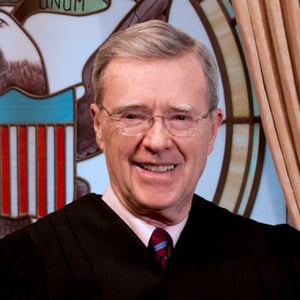
Judge, United States Court of Appeals, Ninth Circuit
Judge O’Scannlain was appointed United States Circuit Judge for the Ninth Circuit by President Reagan on September 26, 1986. He received a J.D. degree in 1963 from Harvard Law School and a B.A. in 1957 from St. John’s University. He also earned the LL.M. (Judicial Process) degree at University of Virginia Law School in 1992. He was awarded the LL.D. (honoris causa) degree by the University of Notre Dame in 2002, the LL.D. (honoris causa) degree by Lewis & Clark College in 2003 and the LL.D. (honoris causa) degree by the University of Portland in 2011.
As a judge on the U.S. Court of Appeals for the Ninth Circuit, Judge O’Scannlain has participated in over 6,000 federal cases and has written hundreds of published opinions on a broad range of subjects including constitutional law, international law, securities law, administrative law, and criminal law. He hears appeals in San Francisco (court headquarters), as well as in Los Angeles (Pasadena), Portland, Seattle, Anchorage and Honolulu. The late Chief Justice Rehnquist appointed Judge O'Scannlain to the Federal Judicial Center's Advisory Committee on Appellate Judge Education. In 2009, Chief Justice Roberts appointed Judge O’Scannlain to the International Judicial Relations Committee of the U.S. Judicial Conference and subsequently appointed him Chairman in 2010.
President George W. Bush appointed Judge O’Scannlain to the Board of Trustees of the James Madison Memorial Fellowship Foundation in 2004. Pope Benedict XVI conferred the Order of Saint Gregory the Great on Judge and Mrs. O’Scannlain in 2007.
Judge O’Scannlain’s professional interests also include judicial administration and reform, and continuing legal education. Judge O’Scannlain is former Chair of the Judicial Division of the American Bar Association and has previously chaired the ABA’s Appellate Judges Conference, its Committee on Appellate Practice, and its 9th Appellate Practice Institute. He has testified before the Senate Judiciary Committee on several occasions, the House Judiciary Subcommittee on Courts and Intellectual Property, and the Commission on Structural Alternatives for the Federal Courts of Appeals on the subject of court reorganization. In addition to serving as a faculty member at numerous federal appellate practice seminars for judges and attorneys, including New York University Law School’s Institute for Judicial Administration, Judge O’Scannlain is an Adjunct Professor at Lewis & Clark Law School where he teaches a seminar on the Supreme Court. He has served as a Moot Court Judge at distinguished law schools across the United States including Harvard, Yale Stanford, Boalt Hall (Berkeley Law), Virginia, Cornell, Notre Dame, Fordham, Alabama, University of Southern California, King Hall (U.C. Davis) and Loyola Marymount University and in China at Xiamen and Renmin Universities.
Between graduation from Harvard and investiture as a federal judge, Judge O’Scannlain was primarily engaged in private law practice. Between 1969 and 1974, he was consecutively the Deputy Attorney General of Oregon, the Public Utility Commissioner of Oregon, and Director of the Oregon Department of Environmental Quality. He retired from the U.S. Army Reserve in 1978 as a Major after 23 years Reserve and National Guard service, including four years as an enlisted man.
A first generation Irish-American son of immigrant parents from Sligo and Derry, Judge O’Scannlain is married to the former Maura Nolan and has eight children: Sean, Jane, Brendan, Kevin, Megan, Christopher, Anne, and Kate, and nineteen grandchildren. His chambers are in the Pioneer Courthouse in Portland, Oregon.

Executive Vice President, The Federalist Society
Dean Reuter is Executive Vice President at the Federalist Society for Law and Public Policy Studies. He has served in two federal government agency Offices of the Inspector General, as Counsel to the Inspector General and Deputy Inspector General, responsible for policing the use of federal funds granted and contracted through those agencies. As such, he helped conduct and oversee criminal investigations across the country. He is the principal author of the non-fiction book, The Hidden Nazi: The Untold Story of America's Deal with the Devil, and editor of Liberty’s Nemesis: The Unchecked Expansion of the State and Confronting Terror: 9/11 and the Future of American National Security. He was appointed by the President and served as Vice-Chairman of the Board of Directors of the Corporation for National and Community Service, and recently served as an appointee on the U.S. Commission on Presidential Scholars. He is a graduate of Hood College (BA with Honors) and the University of Maryland School of Law.
Judge, U.S. Court of Appeals, District of Columbia Circuit
Judge Sentelle was appointed United States Circuit Judge in October 1987, served as Chief Judge from February 11, 2008 until February 11, 2013, and took senior status on February 12, 2013. He is a 1968 graduate of the University of North Carolina Law School. Following law school, he practiced with the firm of Uzzell & DuMont until he became an Assistant U.S. Attorney in Charlotte, N.C. in 1970. From 1974 to 1977, he served as a North Carolina State District Judge but left the bench in 1977 to become a partner with the firm of Tucker, Hicks, Sentelle, Moon & Hodge. In 1985, Judge Sentelle joined the U.S. District Court, Western District of North Carolina, in Asheville, where he served until his appointment to the D.C. Circuit. Judge Sentelle was the Presiding Judge of the Special Division for the Purpose of Appointing Independent Counsels (1992-2006). He also served as the Chair of the U.S. Judicial Conference's Executive Committee (2010-2013). Judge Sentelle served for over 20 years as President of the Edward Bennett Williams Inn of the American Inns of Court.
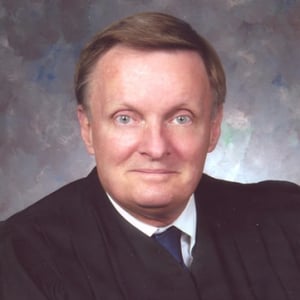
Judge, United States Court of Appeals, Fifth Circuit
Judge Smith was appointed U.S. Circuit Judge for the Fifth Circuit by President Reagan and entered on duty in January 1988. He attended public schools in Lubbock, Texas, and graduated from Yale University, receiving a B.A. in 1969 and a J.D. in 1972.
Judge Smith was a Law Clerk to U.S. District Judge Halbert Woodward, Northern District of Texas, 1972-1973; with the Houston law firm of Fulbright & Jaworski as an Associate, 1973-1981, and as Partner, 1981-1984; and as City Attorney, City of Houston, 1984-1988. He was Chairman, Civil Service Commission, City of Houston, 1982-1984; and a Director, Harris County Housing Authority, 1978-1980.
Judge Smith lives in Houston and is married to Mary Jane Smith and has four children: Ruth Ann, Clark, J.J., and Brandon. He formerly was Chair of the Advisory Committee on Federal Rules of Evidence of the Judicial Conference of the United States. He assists LexisNexis/Matthew Bender & Co. in periodic revisions of several chapters of Moore’s Federal Practice.
Judge, United States Court of Appeals, Eighth Circuit
David Stras became a judge on the United States Court of Appeals for the Eighth Circuit on January 31, 2018. Before serving on the Eighth Circuit, Judge Stras was an Associate Justice of the Minnesota Supreme Court, a position he occupied from July 1, 2010 until his appointment to the Eighth Circuit.
Prior to becoming a judge, Stras was a member of the faculty of the University of Minnesota Law School from 2004 through 2010. He taught and wrote in the areas of federal courts and jurisdiction, constitutional law, criminal law, and law and politics.
Judge Stras received his Bachelor of Arts degree, with highest distinction, in 1995 and his Master of Business Administration in 1999, both from the University of Kansas. He also received his law degree from the University of Kansas School of Law in 1999, where he served as Editor-in-Chief of the Criminal Procedure Edition of the Kansas Law Review.
Following law school, Stras clerked for The Honorable Melvin Brunetti of the United States Court of Appeals for the Ninth Circuit and then for The Honorable J. Michael Luttig of the United States Court of Appeals for the Fourth Circuit.
From 2001 to 2002, he practiced white-collar criminal and appellate litigation with the Washington, D.C., office of Sidley Austin Brown & Wood. Following his year in practice, he clerked for The Honorable Clarence Thomas of the Supreme Court of the United States.
Associate Justice, Supreme Court of the United States
Associate Justice Brett Kavanaugh was born in Washington, D.C., on February 12, 1965. He married Ashley Estes in 2004, and they have two daughters - Margaret and Liza. He received a B.A. from Yale College in 1987 and a J.D. from Yale Law School in 1990. He served as a law clerk for Judge Walter Stapleton of the U.S. Court of Appeals for the Third Circuit from 1990-1991, for Judge Alex Kozinski of the U.S. Court of Appeals for the Ninth Circuit from 1991-1992, and for Justice Anthony M. Kennedy of the U.S. Supreme Court during the 1993 Term. In 1992-1993, he was an attorney in the Office of the Solicitor General of the United States. From 1994 to 1997 and for a period in 1998, he was Associate Counsel in the Office of Independent Counsel. He was a partner at a Washington, D.C., law firm from 1997 to 1998 and again from 1999 to 2001. From 2001 to 2003, he was Associate Counsel and then Senior Associate Counsel to President George W. Bush. From 2003 to 2006, he was Assistant to the President and Staff Secretary for President Bush. He was appointed a Judge of the United States Court of Appeals for the District of Columbia Circuit in 2006. President Donald J. Trump nominated him as an Associate Justice of the Supreme Court, and he took his seat on October 6, 2018.
Former Judge, United States Court of Appeals, Ninth Circuit
Judge Kozinski served as a United States Circuit Judge for the Ninth Circuit from November 1985 until December 2017. He served as Chief Judge from 2007 to 2014. He graduated from UCLA, receiving an A.B. degree in 1972, and from UCLA Law School, receiving a J.D. degree in 1975.
Prior to his appointment to the appellate bench, Judge Kozinski served as Chief Judge of the United States Claims Court, 1982-85; Special Counsel, Merit Systems Protection Board, 1981-82; Assistant Counsel, Office of Counsel to the President, 1981; Deputy Legal Counsel, Office of President-Elect Reagan, 1980-81; Attorney, Covington & Burling, 1979-81; Attorney, Forry Golbert Singer & Gelles, 1977-79; Law Clerk to Chief Justice Warren E. Burger, 1976-77; and Law Clerk to Circuit Judge Anthony M. Kennedy, 1975-76.
Judge Kozinski is married to Marcy Jane Tiffany and has three children: Yale, Wyatt and Clayton, and three grandchildren: Quinn, Owen and Anna.
Judge, United States Court of Appeals, Ninth Circuit
Judge O’Scannlain was appointed United States Circuit Judge for the Ninth Circuit by President Reagan on September 26, 1986. He received a J.D. degree in 1963 from Harvard Law School and a B.A. in 1957 from St. John’s University. He also earned the LL.M. (Judicial Process) degree at University of Virginia Law School in 1992. He was awarded the LL.D. (honoris causa) degree by the University of Notre Dame in 2002, the LL.D. (honoris causa) degree by Lewis & Clark College in 2003 and the LL.D. (honoris causa) degree by the University of Portland in 2011.
As a judge on the U.S. Court of Appeals for the Ninth Circuit, Judge O’Scannlain has participated in over 6,000 federal cases and has written hundreds of published opinions on a broad range of subjects including constitutional law, international law, securities law, administrative law, and criminal law. He hears appeals in San Francisco (court headquarters), as well as in Los Angeles (Pasadena), Portland, Seattle, Anchorage and Honolulu. The late Chief Justice Rehnquist appointed Judge O'Scannlain to the Federal Judicial Center's Advisory Committee on Appellate Judge Education. In 2009, Chief Justice Roberts appointed Judge O’Scannlain to the International Judicial Relations Committee of the U.S. Judicial Conference and subsequently appointed him Chairman in 2010.
President George W. Bush appointed Judge O’Scannlain to the Board of Trustees of the James Madison Memorial Fellowship Foundation in 2004. Pope Benedict XVI conferred the Order of Saint Gregory the Great on Judge and Mrs. O’Scannlain in 2007.
Judge O’Scannlain’s professional interests also include judicial administration and reform, and continuing legal education. Judge O’Scannlain is former Chair of the Judicial Division of the American Bar Association and has previously chaired the ABA’s Appellate Judges Conference, its Committee on Appellate Practice, and its 9th Appellate Practice Institute. He has testified before the Senate Judiciary Committee on several occasions, the House Judiciary Subcommittee on Courts and Intellectual Property, and the Commission on Structural Alternatives for the Federal Courts of Appeals on the subject of court reorganization. In addition to serving as a faculty member at numerous federal appellate practice seminars for judges and attorneys, including New York University Law School’s Institute for Judicial Administration, Judge O’Scannlain is an Adjunct Professor at Lewis & Clark Law School where he teaches a seminar on the Supreme Court. He has served as a Moot Court Judge at distinguished law schools across the United States including Harvard, Yale Stanford, Boalt Hall (Berkeley Law), Virginia, Cornell, Notre Dame, Fordham, Alabama, University of Southern California, King Hall (U.C. Davis) and Loyola Marymount University and in China at Xiamen and Renmin Universities.
Between graduation from Harvard and investiture as a federal judge, Judge O’Scannlain was primarily engaged in private law practice. Between 1969 and 1974, he was consecutively the Deputy Attorney General of Oregon, the Public Utility Commissioner of Oregon, and Director of the Oregon Department of Environmental Quality. He retired from the U.S. Army Reserve in 1978 as a Major after 23 years Reserve and National Guard service, including four years as an enlisted man.
A first generation Irish-American son of immigrant parents from Sligo and Derry, Judge O’Scannlain is married to the former Maura Nolan and has eight children: Sean, Jane, Brendan, Kevin, Megan, Christopher, Anne, and Kate, and nineteen grandchildren. His chambers are in the Pioneer Courthouse in Portland, Oregon.
Executive Vice President, The Federalist Society
Dean Reuter is Executive Vice President at the Federalist Society for Law and Public Policy Studies. He has served in two federal government agency Offices of the Inspector General, as Counsel to the Inspector General and Deputy Inspector General, responsible for policing the use of federal funds granted and contracted through those agencies. As such, he helped conduct and oversee criminal investigations across the country. He is the principal author of the non-fiction book, The Hidden Nazi: The Untold Story of America's Deal with the Devil, and editor of Liberty’s Nemesis: The Unchecked Expansion of the State and Confronting Terror: 9/11 and the Future of American National Security. He was appointed by the President and served as Vice-Chairman of the Board of Directors of the Corporation for National and Community Service, and recently served as an appointee on the U.S. Commission on Presidential Scholars. He is a graduate of Hood College (BA with Honors) and the University of Maryland School of Law.
Judge, U.S. Court of Appeals, District of Columbia Circuit
Judge Sentelle was appointed United States Circuit Judge in October 1987, served as Chief Judge from February 11, 2008 until February 11, 2013, and took senior status on February 12, 2013. He is a 1968 graduate of the University of North Carolina Law School. Following law school, he practiced with the firm of Uzzell & DuMont until he became an Assistant U.S. Attorney in Charlotte, N.C. in 1970. From 1974 to 1977, he served as a North Carolina State District Judge but left the bench in 1977 to become a partner with the firm of Tucker, Hicks, Sentelle, Moon & Hodge. In 1985, Judge Sentelle joined the U.S. District Court, Western District of North Carolina, in Asheville, where he served until his appointment to the D.C. Circuit. Judge Sentelle was the Presiding Judge of the Special Division for the Purpose of Appointing Independent Counsels (1992-2006). He also served as the Chair of the U.S. Judicial Conference's Executive Committee (2010-2013). Judge Sentelle served for over 20 years as President of the Edward Bennett Williams Inn of the American Inns of Court.
Judge, United States Court of Appeals, Fifth Circuit
Judge Smith was appointed U.S. Circuit Judge for the Fifth Circuit by President Reagan and entered on duty in January 1988. He attended public schools in Lubbock, Texas, and graduated from Yale University, receiving a B.A. in 1969 and a J.D. in 1972.
Judge Smith was a Law Clerk to U.S. District Judge Halbert Woodward, Northern District of Texas, 1972-1973; with the Houston law firm of Fulbright & Jaworski as an Associate, 1973-1981, and as Partner, 1981-1984; and as City Attorney, City of Houston, 1984-1988. He was Chairman, Civil Service Commission, City of Houston, 1982-1984; and a Director, Harris County Housing Authority, 1978-1980.
Judge Smith lives in Houston and is married to Mary Jane Smith and has four children: Ruth Ann, Clark, J.J., and Brandon. He formerly was Chair of the Advisory Committee on Federal Rules of Evidence of the Judicial Conference of the United States. He assists LexisNexis/Matthew Bender & Co. in periodic revisions of several chapters of Moore’s Federal Practice.
Judge, United States Court of Appeals, Eighth Circuit
David Stras became a judge on the United States Court of Appeals for the Eighth Circuit on January 31, 2018. Before serving on the Eighth Circuit, Judge Stras was an Associate Justice of the Minnesota Supreme Court, a position he occupied from July 1, 2010 until his appointment to the Eighth Circuit.
Prior to becoming a judge, Stras was a member of the faculty of the University of Minnesota Law School from 2004 through 2010. He taught and wrote in the areas of federal courts and jurisdiction, constitutional law, criminal law, and law and politics.
Judge Stras received his Bachelor of Arts degree, with highest distinction, in 1995 and his Master of Business Administration in 1999, both from the University of Kansas. He also received his law degree from the University of Kansas School of Law in 1999, where he served as Editor-in-Chief of the Criminal Procedure Edition of the Kansas Law Review.
Following law school, Stras clerked for The Honorable Melvin Brunetti of the United States Court of Appeals for the Ninth Circuit and then for The Honorable J. Michael Luttig of the United States Court of Appeals for the Fourth Circuit.
From 2001 to 2002, he practiced white-collar criminal and appellate litigation with the Washington, D.C., office of Sidley Austin Brown & Wood. Following his year in practice, he clerked for The Honorable Clarence Thomas of the Supreme Court of the United States.
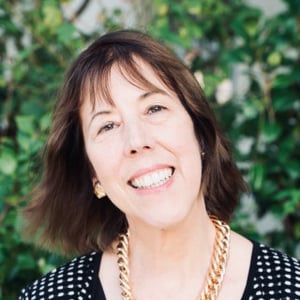
Professor of Law, University of San Diego School of Law (Retired)
Gail Heriot is a recently retired law professor from the University of San Diego. She also served as a member of the U.S. Commission on Civil Rights from 2007 to 2025. She is also the chairman of the board of the American Civil Rights Project and the chair emerita of the Civil Rights practice group at the Federalist Society for Law & Public Policy.
Professor Heriot is a prolific writer in the area of civil rights. She is the author of many law review articles. She is also the editor (along with Maimon Schwarzschild) of the 2021 anthology, A Dubious Expediency: How Race Preferences Damage Higher Education. Her upcoming book is entitled, Why We Walk on Eggshell: How Our Civil Rights Laws Helped Bring About the Woke Era—And the Trump Era, Too.
Her writings for a general audience have appeared in the Wall Street Journal, the San Diego Union-Tribune, the National Review and many other newspapers and magazines.
In 1996, she co-chaired the successful “Yes on Proposition 209” campaign, which amended the California Constitution to prohibit state-sponsored discrimination or preferential treatment based on race, sex, color, ethnicity or national origin. In 2020, she co-chaired the “No on Proposition 16” campaign, which successfully prevented Proposition 209’s repeal.
Partner, Loevy & Loevy
Arthur Loevy graduated from the University of Michigan Law School in 1963, and has been a member of the Illinois bar continuously for more than forty years. He began his legal career practicing labor law until 1970 when he became an elected officer of a trade union, the Amalgamated Clothing and Textile Workers Union (“ACTWU”). Arthur proceeded to serve in various elected capacities for trade unions, including International Executive Vice President of ACTWU, International Secretary-Treasurer of ACTWU, and, most recently International Secretary-Treasurer of the Union of Needle-Trades Industrial and Textile Employees (U.N.I.T.E.).
Arthur Loevy has also served as a Director and Vice Chairman of the Executive Committee of the Amalgamated Bank of New York (1990-98), the President, Chief Executive Officer, and Trustee of various Taft-Hartley insurance and trust funds for almost twenty years, the President of the Amalgamated Housing Foundation (1974-98), and the President of the Sidney Hillman Health Center in Chicago (1980-98).
Since January 1, 1997, Arthur Loevy has resumed the practice of law on a full-time basis. In 1998, he joined the law firm started by his son, Jon Loevy, and has practiced here ever since.
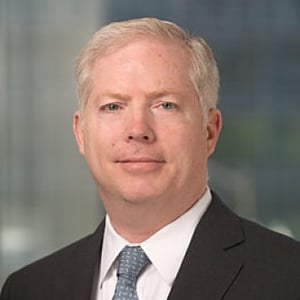
Adjunct Scholar and Former Director, Project On Criminal Justice, Cato Institute
Tim Lynch is an attorney specializing in criminal law, constitutional law, and civil liberties. He is an adjunct scholar at the Cato Institute and the former director of Cato’s Project on Criminal Justice. His research interests include all aspects of constitutional criminal procedure, overcriminalization, the drug war, and police and prosecutorial misconduct. In 2000, he served on the National Committee to Prevent Wrongful Executions. Lynch also prepares amicus briefs before appellate courts and the U.S. Supreme Court in cases involving constitutional rights. He is the editor of In the Name of Justice: Leading Experts Reexamine the Classic Article “The Aims of the Criminal Law” and After Prohibition: An Adult Approach to Drug Policies in the 21st Century.
Lynch has published a variety of articles in both the law journals and in opinion pieces for the New York Times, the Washington Post, the Wall Street Journal, the Los Angeles Times, and other newspapers. He has appeared on The PBS NewsHour, NBC Nightly News, ABC World News Tonight, and C-SPAN’s Washington Journal. Lynch is a member of the Virginia, District of Columbia, and Supreme Court bars. He earned both a BS and a JD from Marquette University.
Mr. Lynch can be reached via his personal website.
Research Fellow in Empirical Policy Analysis, Center for Data A, The Heritage Foundation
David B. Muhlhausen is a leading expert on the need for evaluating the effectiveness of federal social programs in The Heritage Foundation’s Center for Data Analysis. A Research Fellow in Empirical Policy Analysis at the think tank, Muhlhausen has testified frequently before Congress on the efficiency and effectiveness of federal programs, including testimonies before the U.S. Senate Committee on the Budget and the House Committee on Ways and Means.
In 2013, Praeger published his book, Do Federal Social Programs Work? The book presents an extensive review of scientifically rigorous national studies that almost unanimously find that the federal government fails to solve social problems.
Muhlhausen rose to national prominence in 2001 with publication of his analysis showing the highly touted Community Oriented Policing Services (COPS) program to be a waste of taxpayer dollars. His research illustrated that COPS neither had put 100,000 new police officers on the street nor reduced violent crime.
His work prompted Vice President Joseph Biden, at the time a U.S. senator from Delaware and chairman of the Senate Subcommittee on Crime and Drugs, to call a hearing specifically to investigate Muhlhausen’s findings. “I want to have a hearing on what has been, from The Heritage Foundation and other places, criticism that the COPS program does not work,” Biden said in opening the hearing.
Muhlhausen joined Heritage in 1999 after serving on the staff for the Senate Judiciary Committee, where he specialized in crime and juvenile justice policies. Prior to that, he was a manager at a juvenile correctional facility in Baltimore.
He holds a doctorate in public policy from the University of Maryland-Baltimore County and a bachelor’s degree in political science and justice studies from Frostburg State University.
In addition to his work at Heritage, Muhlhausen is an adjunct professor at George Mason University, teaching program evaluation and statistical methods to graduate students.
A native of Colorado, Muhlhausen grew up in Maryland. He currently resides in Falls Church, Va.
Judge, United States Court of Appeals, Eighth Circuit
David Stras became a judge on the United States Court of Appeals for the Eighth Circuit on January 31, 2018. Before serving on the Eighth Circuit, Judge Stras was an Associate Justice of the Minnesota Supreme Court, a position he occupied from July 1, 2010 until his appointment to the Eighth Circuit.
Prior to becoming a judge, Stras was a member of the faculty of the University of Minnesota Law School from 2004 through 2010. He taught and wrote in the areas of federal courts and jurisdiction, constitutional law, criminal law, and law and politics.
Judge Stras received his Bachelor of Arts degree, with highest distinction, in 1995 and his Master of Business Administration in 1999, both from the University of Kansas. He also received his law degree from the University of Kansas School of Law in 1999, where he served as Editor-in-Chief of the Criminal Procedure Edition of the Kansas Law Review.
Following law school, Stras clerked for The Honorable Melvin Brunetti of the United States Court of Appeals for the Ninth Circuit and then for The Honorable J. Michael Luttig of the United States Court of Appeals for the Fourth Circuit.
From 2001 to 2002, he practiced white-collar criminal and appellate litigation with the Washington, D.C., office of Sidley Austin Brown & Wood. Following his year in practice, he clerked for The Honorable Clarence Thomas of the Supreme Court of the United States.
Former Philadelphia Police Officer
Michael P. Tremoglie is a former Philadelphia police officer, corporate executive, and now a journalist and writer. He was an editor and an investigative journalist for the Philadelphia Bulletin. He has also written for the Philadelphia Daily News, Philadelphia Inquirer, Pittsburgh Tribune-Review, Insight magazine, and the Washington Times.
He has appeared on nationally syndicated radio shows such as Bill Bennett’s Morning in America and the Larry Elder show. His work has been featured on Rush Limbaugh and other radio programs.
Many of his articles were reprinted in law reviews and referenced in congressional testimony. He is the author of a critically acclaimed novel, A Sense of Duty, derived from his experiences on the police force.
Active in the community, he started, in 2008, a wrestling club to help Philadelphia’s minority and inner city youth be competitive with suburban athletes. He also helped coach a high school wrestling team.
That same year he joined the Philadelphia chapter of the Federalist Society. Two years later his cousin, a judge in Sicily, also joined. Together, in 2011, they co-founded the Italian affiliate of the Federalist Society, Academia Res Publica.
They have done much comparative study of the two criminal justice systems.
Mike holds a Bachelor of Science degree in Accounting and a Master of Science degree in Criminal Justice from St. Joseph’s University in Philadelphia.
Founder and President, Center for Neighborhood Enterprise
Robert (Bob) Woodson is Founder and President of the Center for Neighborhood Enterprise and one of America’s most influential leaders on issues of poverty and upward mobility. He chose the word “enterprise” in naming the organization because he believes strongly that market-based principles should also operate in the social economy.
Woodson was instrumental in paving the way for resident management and ownership of public housing, brought together task forces of grassroots groups to advise the 104th Congress, the Pennsylvania Legislature, and the Wisconsin Assembly on welfare reform, and helped create Violence-Free Zones that operate in many of the nation’s most troubled schools and communities.
More recently, he has taken Wisconsin Congressman Paul Ryan on a “listening and learning” tour of some of America’s most impoverished neighborhoods in an effort to move beyond the traditional conservative and liberal understanding of how to address the needs of the poor.
Woodson is frequently featured as a social commentator in print and on-air media, including The News Hour with Jim Lehrer, The O’Reilly Factor, the Garrison Show and other national and local broadcasts. He is the only person ever to receive both the liberal and conservative world’s most prestigious awards – the John D. and Catherine T. MacArthur “Genius” Fellowship and the Lynde and Harry Bradley Foundation Prize, as well as the Presidential Citizens Medal.
He has written several books, including The Triumphs of Joseph: How Today’s Community Healers are Reviving Our Streets and Neighborhood.
Professor of Law, University of San Diego School of Law (Retired)
Gail Heriot is a recently retired law professor from the University of San Diego. She also served as a member of the U.S. Commission on Civil Rights from 2007 to 2025. She is also the chairman of the board of the American Civil Rights Project and the chair emerita of the Civil Rights practice group at the Federalist Society for Law & Public Policy.
Professor Heriot is a prolific writer in the area of civil rights. She is the author of many law review articles. She is also the editor (along with Maimon Schwarzschild) of the 2021 anthology, A Dubious Expediency: How Race Preferences Damage Higher Education. Her upcoming book is entitled, Why We Walk on Eggshell: How Our Civil Rights Laws Helped Bring About the Woke Era—And the Trump Era, Too.
Her writings for a general audience have appeared in the Wall Street Journal, the San Diego Union-Tribune, the National Review and many other newspapers and magazines.
In 1996, she co-chaired the successful “Yes on Proposition 209” campaign, which amended the California Constitution to prohibit state-sponsored discrimination or preferential treatment based on race, sex, color, ethnicity or national origin. In 2020, she co-chaired the “No on Proposition 16” campaign, which successfully prevented Proposition 209’s repeal.
Partner, Loevy & Loevy
Arthur Loevy graduated from the University of Michigan Law School in 1963, and has been a member of the Illinois bar continuously for more than forty years. He began his legal career practicing labor law until 1970 when he became an elected officer of a trade union, the Amalgamated Clothing and Textile Workers Union (“ACTWU”). Arthur proceeded to serve in various elected capacities for trade unions, including International Executive Vice President of ACTWU, International Secretary-Treasurer of ACTWU, and, most recently International Secretary-Treasurer of the Union of Needle-Trades Industrial and Textile Employees (U.N.I.T.E.).
Arthur Loevy has also served as a Director and Vice Chairman of the Executive Committee of the Amalgamated Bank of New York (1990-98), the President, Chief Executive Officer, and Trustee of various Taft-Hartley insurance and trust funds for almost twenty years, the President of the Amalgamated Housing Foundation (1974-98), and the President of the Sidney Hillman Health Center in Chicago (1980-98).
Since January 1, 1997, Arthur Loevy has resumed the practice of law on a full-time basis. In 1998, he joined the law firm started by his son, Jon Loevy, and has practiced here ever since.
Adjunct Scholar and Former Director, Project On Criminal Justice, Cato Institute
Tim Lynch is an attorney specializing in criminal law, constitutional law, and civil liberties. He is an adjunct scholar at the Cato Institute and the former director of Cato’s Project on Criminal Justice. His research interests include all aspects of constitutional criminal procedure, overcriminalization, the drug war, and police and prosecutorial misconduct. In 2000, he served on the National Committee to Prevent Wrongful Executions. Lynch also prepares amicus briefs before appellate courts and the U.S. Supreme Court in cases involving constitutional rights. He is the editor of In the Name of Justice: Leading Experts Reexamine the Classic Article “The Aims of the Criminal Law” and After Prohibition: An Adult Approach to Drug Policies in the 21st Century.
Lynch has published a variety of articles in both the law journals and in opinion pieces for the New York Times, the Washington Post, the Wall Street Journal, the Los Angeles Times, and other newspapers. He has appeared on The PBS NewsHour, NBC Nightly News, ABC World News Tonight, and C-SPAN’s Washington Journal. Lynch is a member of the Virginia, District of Columbia, and Supreme Court bars. He earned both a BS and a JD from Marquette University.
Mr. Lynch can be reached via his personal website.
Research Fellow in Empirical Policy Analysis, Center for Data A, The Heritage Foundation
David B. Muhlhausen is a leading expert on the need for evaluating the effectiveness of federal social programs in The Heritage Foundation’s Center for Data Analysis. A Research Fellow in Empirical Policy Analysis at the think tank, Muhlhausen has testified frequently before Congress on the efficiency and effectiveness of federal programs, including testimonies before the U.S. Senate Committee on the Budget and the House Committee on Ways and Means.
In 2013, Praeger published his book, Do Federal Social Programs Work? The book presents an extensive review of scientifically rigorous national studies that almost unanimously find that the federal government fails to solve social problems.
Muhlhausen rose to national prominence in 2001 with publication of his analysis showing the highly touted Community Oriented Policing Services (COPS) program to be a waste of taxpayer dollars. His research illustrated that COPS neither had put 100,000 new police officers on the street nor reduced violent crime.
His work prompted Vice President Joseph Biden, at the time a U.S. senator from Delaware and chairman of the Senate Subcommittee on Crime and Drugs, to call a hearing specifically to investigate Muhlhausen’s findings. “I want to have a hearing on what has been, from The Heritage Foundation and other places, criticism that the COPS program does not work,” Biden said in opening the hearing.
Muhlhausen joined Heritage in 1999 after serving on the staff for the Senate Judiciary Committee, where he specialized in crime and juvenile justice policies. Prior to that, he was a manager at a juvenile correctional facility in Baltimore.
He holds a doctorate in public policy from the University of Maryland-Baltimore County and a bachelor’s degree in political science and justice studies from Frostburg State University.
In addition to his work at Heritage, Muhlhausen is an adjunct professor at George Mason University, teaching program evaluation and statistical methods to graduate students.
A native of Colorado, Muhlhausen grew up in Maryland. He currently resides in Falls Church, Va.
Judge, United States Court of Appeals, Eighth Circuit
David Stras became a judge on the United States Court of Appeals for the Eighth Circuit on January 31, 2018. Before serving on the Eighth Circuit, Judge Stras was an Associate Justice of the Minnesota Supreme Court, a position he occupied from July 1, 2010 until his appointment to the Eighth Circuit.
Prior to becoming a judge, Stras was a member of the faculty of the University of Minnesota Law School from 2004 through 2010. He taught and wrote in the areas of federal courts and jurisdiction, constitutional law, criminal law, and law and politics.
Judge Stras received his Bachelor of Arts degree, with highest distinction, in 1995 and his Master of Business Administration in 1999, both from the University of Kansas. He also received his law degree from the University of Kansas School of Law in 1999, where he served as Editor-in-Chief of the Criminal Procedure Edition of the Kansas Law Review.
Following law school, Stras clerked for The Honorable Melvin Brunetti of the United States Court of Appeals for the Ninth Circuit and then for The Honorable J. Michael Luttig of the United States Court of Appeals for the Fourth Circuit.
From 2001 to 2002, he practiced white-collar criminal and appellate litigation with the Washington, D.C., office of Sidley Austin Brown & Wood. Following his year in practice, he clerked for The Honorable Clarence Thomas of the Supreme Court of the United States.
Former Philadelphia Police Officer
Michael P. Tremoglie is a former Philadelphia police officer, corporate executive, and now a journalist and writer. He was an editor and an investigative journalist for the Philadelphia Bulletin. He has also written for the Philadelphia Daily News, Philadelphia Inquirer, Pittsburgh Tribune-Review, Insight magazine, and the Washington Times.
He has appeared on nationally syndicated radio shows such as Bill Bennett’s Morning in America and the Larry Elder show. His work has been featured on Rush Limbaugh and other radio programs.
Many of his articles were reprinted in law reviews and referenced in congressional testimony. He is the author of a critically acclaimed novel, A Sense of Duty, derived from his experiences on the police force.
Active in the community, he started, in 2008, a wrestling club to help Philadelphia’s minority and inner city youth be competitive with suburban athletes. He also helped coach a high school wrestling team.
That same year he joined the Philadelphia chapter of the Federalist Society. Two years later his cousin, a judge in Sicily, also joined. Together, in 2011, they co-founded the Italian affiliate of the Federalist Society, Academia Res Publica.
They have done much comparative study of the two criminal justice systems.
Mike holds a Bachelor of Science degree in Accounting and a Master of Science degree in Criminal Justice from St. Joseph’s University in Philadelphia.
Founder and President, Center for Neighborhood Enterprise
Robert (Bob) Woodson is Founder and President of the Center for Neighborhood Enterprise and one of America’s most influential leaders on issues of poverty and upward mobility. He chose the word “enterprise” in naming the organization because he believes strongly that market-based principles should also operate in the social economy.
Woodson was instrumental in paving the way for resident management and ownership of public housing, brought together task forces of grassroots groups to advise the 104th Congress, the Pennsylvania Legislature, and the Wisconsin Assembly on welfare reform, and helped create Violence-Free Zones that operate in many of the nation’s most troubled schools and communities.
More recently, he has taken Wisconsin Congressman Paul Ryan on a “listening and learning” tour of some of America’s most impoverished neighborhoods in an effort to move beyond the traditional conservative and liberal understanding of how to address the needs of the poor.
Woodson is frequently featured as a social commentator in print and on-air media, including The News Hour with Jim Lehrer, The O’Reilly Factor, the Garrison Show and other national and local broadcasts. He is the only person ever to receive both the liberal and conservative world’s most prestigious awards – the John D. and Catherine T. MacArthur “Genius” Fellowship and the Lynde and Harry Bradley Foundation Prize, as well as the Presidential Citizens Medal.
He has written several books, including The Triumphs of Joseph: How Today’s Community Healers are Reviving Our Streets and Neighborhood.
Professor of Law, LMU Loyola Law School (Los Angeles)
After graduating from the University of Michigan Law School, Aaron Caplan clerked for the Honorable Betty Binns Fletcher, United States Court of Appeals for the Ninth Circuit. From 1992 to 1998, he worked in the Seattle office of Perkins Coie, where his practice included intellectual property matters and other types of commercial litigation. He also maintained an active pro bono practice that included capital habeas corpus, asylum, death with dignity, and freedom of speech.
In 1998, Caplan became the first full-time staff attorney in more than 20 years for the American Civil Liberties Union of Washington, where his practice included freedom of speech, freedom of religion, gay rights, prisoner's rights, access to government documents and much more. At the ACLU, his litigation included some of the nation’s first decisions on the free speech rights of public school students on the Internet, the first challenge to the federal No Fly List, and the first decision to order the reinstatement of a gay officer discharged under the Don't-Ask-Don't-Tell statute. Professor Caplan joined the Loyola Law School faculty in 2008.
Professor of Law, Catholic University of America
Robert Destro served as Assistant Secretary for the Bureau of Democracy, Human Rights, and Labor (DRL). He has a long history as a human rights advocate and civil rights attorney with expertise in elections, employment, and constitutional law. Destro has served on the faculty at Catholic University’s Columbus School of Law since 1982 and served as its interim dean from 1999 to 2001. He was founding director of the Interdisciplinary Program in Law and Religion and served as the Director of the Institute for Policy Research and Catholic Studies from June 2017 to September 2019. He served as a commissioner on the U.S. Commission on Civil Rights from 1983-1989. His legal work includes collaboration with the Peace Research Institute Oslo in a fifteen-year dialogue among Muslim, Christian, and Jewish leaders in the legal, business, and religious fields in the United States and the Middle East as well as efforts promoting the release of political prisoners and prisoners of conscience in the Middle East. He has served as voting rights counsel for the Ohio Secretary of State and has advocated for the first amendment rights of individuals and organizations.
He earned a B.A. from Miami University, Ohio, and a J.D. from the University of California at Berkeley. He is an active member of the Bar in Ohio and California.
The rest of his bio including his publications are available on the Catholic University Faculty page linked here.
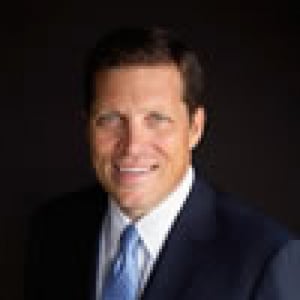
Partner, Graves Garrett LLC
Todd Graves is a lawyer in private practice with the law firm of Graves Garrett. Todd represents individuals and businesses nationwide before federal and state courts and administrative agencies. His areas of expertise include white collar criminal defense, political speech and election law, internal investigations, regulatory compliance, and complex commercial litigation. Todd is admitted to the United States Supreme Court, the Missouri Bar, the Kansas Bar, the Texas Bar, the Iowa Bar, the Federal Courts of Appeals for the Tenth Circuit, the Eighth Circuit and the Sixth Circuit, and the Federal District Courts for the Western District of Missouri, Eastern District of Missouri, the District of Kansas, and the Western District of Michigan.
Todd currently serves as Executive Vice-President of the Pony Express Council of the Boy Scouts of America. He is a member of the Board of Directors of the American Royal Association and a founding board member of the Kansas City Missouri Police Foundation.
Before forming Graves Garrett, Todd served as the United States Attorney for the Western District of Missouri. As United States Attorney, Todd was responsible for prosecuting federal crimes including mail and wire fraud, money laundering, public corruption, health care fraud, child pornography, firearms violations, narcotics trafficking, pharmaceutical diversion, corporate fraud, and terrorism financing. During Graves’ tenure, felony filings doubled.
In addition, Todd was responsible for defending civil lawsuits brought against the United States, handling federal forfeiture actions, and collecting debts and restitution. Todd managed a staff of 120 with headquarters in Kansas City and two branch offices.
Todd also served as a member of the Attorney General’s Advisory Committee, advising the Attorney General on Department of Justice national priorities and policies. Todd participated in drafting Department of Justice policies in corporate investigations including charging, pre-trial diversion, and sentencing. Todd was also a member of the national Executive Working Group, which includes six Department of Justice officials, six state attorneys general, and six district attorneys.
Todd was appointed United States Attorney from his position as Platte County Prosecuting Attorney, an office to which he was elected in 1994 and 1998. At the time of his election in 1994, he was the youngest full-time prosecuting attorney in Missouri. In that position, he oversaw a yearly caseload of approximately 400 felonies, 2500 misdemeanors and 14,000 traffic offenses.
As Prosecuting Attorney and as United States Attorney, Todd actively managed cases and trials under his authority and personally tried numerous jury trials to verdict, including cases of child molestation, drug distribution, murder and capital murder.
Prior to his service as Platte County Prosecuting Attorney, Todd was in private practice with the Bryan Cave law firm. Before joining Bryan Cave, he was an Assistant Attorney General for the State of Missouri.
In 1991, Todd received his law degree and a master’s degree in public administration from the University of Virginia. He received a bachelor’s degree, Summa Cum Laude, from the University of Missouri in 1988.
Raised on a family farm near Tarkio, Missouri, Todd has been married 24 years to his wife, Tracy. The couple has four children, and they reside on a 270 acre farm north of Kansas City that has been in the family since 1867.
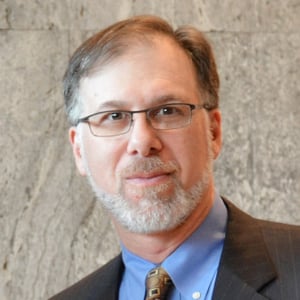
Partner, Schaerr | Jaffe LLP
Erik Jaffe has been involved in appeals on a broad range of legal issues, including First Amendment challenges to campaign finance reform, Commerce Clause challenges to Health Care Reform and other federal legislation, Equal Protection Clause challenges to affirmative action in education, First Amendment challenges to school vouchers, Fifth Amendment challenges to takings of property, Second Amendment challenges to restrictions on gun ownership, and a wide variety of cases involving patents, copyrights, ERISA, securities fraud, federal preemption, environmental regulation, and other state and federal constitutional and statutory matters. He has represented businesses and non-profit groups, Judges, Senators, former government officials, Nobel Prize winners, and a broad cross-section of private individuals. Mr. Jaffe has been involved in over 120 Supreme Court matters, including filing over 30 cert. petitions, representing half-a-dozen parties on the merits, and filing over 70 amicus briefs at both the cert. and merits stages.
A 1990 graduate of the Columbia University School of Law, Mr. Jaffe was a law clerk to Judge Douglas H. Ginsburg of the United States Court of Appeals for the District of Columbia Circuit from 1990 to 1991. Following that clerkship he spent five years in litigation practice with the Washington, D.C. law firm of Williams & Connolly. In the summer of 1996 he left Williams & Connolly to clerk for Supreme Court Justice Clarence Thomas. At the end of that clerkship he started his own practice, and he was a sole practitioner from 1997 to 2018. He joined the firm of Schaerr | Jaffe LLP in 2018.
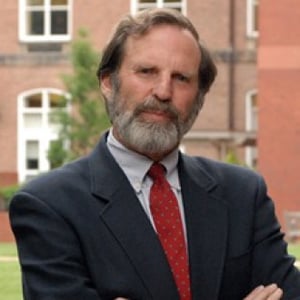
Adjunct Professor, George Washington University Law School
Judge, United States Court of Appeals, Eighth Circuit
David Stras became a judge on the United States Court of Appeals for the Eighth Circuit on January 31, 2018. Before serving on the Eighth Circuit, Judge Stras was an Associate Justice of the Minnesota Supreme Court, a position he occupied from July 1, 2010 until his appointment to the Eighth Circuit.
Prior to becoming a judge, Stras was a member of the faculty of the University of Minnesota Law School from 2004 through 2010. He taught and wrote in the areas of federal courts and jurisdiction, constitutional law, criminal law, and law and politics.
Judge Stras received his Bachelor of Arts degree, with highest distinction, in 1995 and his Master of Business Administration in 1999, both from the University of Kansas. He also received his law degree from the University of Kansas School of Law in 1999, where he served as Editor-in-Chief of the Criminal Procedure Edition of the Kansas Law Review.
Following law school, Stras clerked for The Honorable Melvin Brunetti of the United States Court of Appeals for the Ninth Circuit and then for The Honorable J. Michael Luttig of the United States Court of Appeals for the Fourth Circuit.
From 2001 to 2002, he practiced white-collar criminal and appellate litigation with the Washington, D.C., office of Sidley Austin Brown & Wood. Following his year in practice, he clerked for The Honorable Clarence Thomas of the Supreme Court of the United States.

Thomas M. Siebel Senior Fellow, The Hoover Institution, Stanford University; Gary T. Schwartz Distinguished Professor of Law Emeritus, UCLA School of Law
Eugene Volokh is the Thomas M. Siebel Senior Fellow at the Hoover Institution (Stanford), as well as the Gary T. Schwartz Distinguished Professor of Law Emeritus and Distinguished Research Professor at UCLA School of Law. He recently retired from teaching at UCLA, after 30 years there, and is now focusing on research.
Volokh is the author of the textbooks The First Amendment and Related Statutes (8th ed. 2023), and Academic Legal Writing (5th ed. 2016), as well as over 100 academic law journal articles, mostly on First Amendment law. He is a member of The American Law Institute; the editor-in-chief of the Journal of Free Speech Law; and the creator and coauthor of The Volokh Conspiracy, a leading legal blog founded in 2002 (hosted at the Washington Post from 2014 to 2017 and now at Reason Magazine).
Professor of Law, LMU Loyola Law School (Los Angeles)
After graduating from the University of Michigan Law School, Aaron Caplan clerked for the Honorable Betty Binns Fletcher, United States Court of Appeals for the Ninth Circuit. From 1992 to 1998, he worked in the Seattle office of Perkins Coie, where his practice included intellectual property matters and other types of commercial litigation. He also maintained an active pro bono practice that included capital habeas corpus, asylum, death with dignity, and freedom of speech.
In 1998, Caplan became the first full-time staff attorney in more than 20 years for the American Civil Liberties Union of Washington, where his practice included freedom of speech, freedom of religion, gay rights, prisoner's rights, access to government documents and much more. At the ACLU, his litigation included some of the nation’s first decisions on the free speech rights of public school students on the Internet, the first challenge to the federal No Fly List, and the first decision to order the reinstatement of a gay officer discharged under the Don't-Ask-Don't-Tell statute. Professor Caplan joined the Loyola Law School faculty in 2008.
Professor of Law, Catholic University of America
Robert Destro served as Assistant Secretary for the Bureau of Democracy, Human Rights, and Labor (DRL). He has a long history as a human rights advocate and civil rights attorney with expertise in elections, employment, and constitutional law. Destro has served on the faculty at Catholic University’s Columbus School of Law since 1982 and served as its interim dean from 1999 to 2001. He was founding director of the Interdisciplinary Program in Law and Religion and served as the Director of the Institute for Policy Research and Catholic Studies from June 2017 to September 2019. He served as a commissioner on the U.S. Commission on Civil Rights from 1983-1989. His legal work includes collaboration with the Peace Research Institute Oslo in a fifteen-year dialogue among Muslim, Christian, and Jewish leaders in the legal, business, and religious fields in the United States and the Middle East as well as efforts promoting the release of political prisoners and prisoners of conscience in the Middle East. He has served as voting rights counsel for the Ohio Secretary of State and has advocated for the first amendment rights of individuals and organizations.
He earned a B.A. from Miami University, Ohio, and a J.D. from the University of California at Berkeley. He is an active member of the Bar in Ohio and California.
The rest of his bio including his publications are available on the Catholic University Faculty page linked here.
Partner, Graves Garrett LLC
Todd Graves is a lawyer in private practice with the law firm of Graves Garrett. Todd represents individuals and businesses nationwide before federal and state courts and administrative agencies. His areas of expertise include white collar criminal defense, political speech and election law, internal investigations, regulatory compliance, and complex commercial litigation. Todd is admitted to the United States Supreme Court, the Missouri Bar, the Kansas Bar, the Texas Bar, the Iowa Bar, the Federal Courts of Appeals for the Tenth Circuit, the Eighth Circuit and the Sixth Circuit, and the Federal District Courts for the Western District of Missouri, Eastern District of Missouri, the District of Kansas, and the Western District of Michigan.
Todd currently serves as Executive Vice-President of the Pony Express Council of the Boy Scouts of America. He is a member of the Board of Directors of the American Royal Association and a founding board member of the Kansas City Missouri Police Foundation.
Before forming Graves Garrett, Todd served as the United States Attorney for the Western District of Missouri. As United States Attorney, Todd was responsible for prosecuting federal crimes including mail and wire fraud, money laundering, public corruption, health care fraud, child pornography, firearms violations, narcotics trafficking, pharmaceutical diversion, corporate fraud, and terrorism financing. During Graves’ tenure, felony filings doubled.
In addition, Todd was responsible for defending civil lawsuits brought against the United States, handling federal forfeiture actions, and collecting debts and restitution. Todd managed a staff of 120 with headquarters in Kansas City and two branch offices.
Todd also served as a member of the Attorney General’s Advisory Committee, advising the Attorney General on Department of Justice national priorities and policies. Todd participated in drafting Department of Justice policies in corporate investigations including charging, pre-trial diversion, and sentencing. Todd was also a member of the national Executive Working Group, which includes six Department of Justice officials, six state attorneys general, and six district attorneys.
Todd was appointed United States Attorney from his position as Platte County Prosecuting Attorney, an office to which he was elected in 1994 and 1998. At the time of his election in 1994, he was the youngest full-time prosecuting attorney in Missouri. In that position, he oversaw a yearly caseload of approximately 400 felonies, 2500 misdemeanors and 14,000 traffic offenses.
As Prosecuting Attorney and as United States Attorney, Todd actively managed cases and trials under his authority and personally tried numerous jury trials to verdict, including cases of child molestation, drug distribution, murder and capital murder.
Prior to his service as Platte County Prosecuting Attorney, Todd was in private practice with the Bryan Cave law firm. Before joining Bryan Cave, he was an Assistant Attorney General for the State of Missouri.
In 1991, Todd received his law degree and a master’s degree in public administration from the University of Virginia. He received a bachelor’s degree, Summa Cum Laude, from the University of Missouri in 1988.
Raised on a family farm near Tarkio, Missouri, Todd has been married 24 years to his wife, Tracy. The couple has four children, and they reside on a 270 acre farm north of Kansas City that has been in the family since 1867.
Partner, Schaerr | Jaffe LLP
Erik Jaffe has been involved in appeals on a broad range of legal issues, including First Amendment challenges to campaign finance reform, Commerce Clause challenges to Health Care Reform and other federal legislation, Equal Protection Clause challenges to affirmative action in education, First Amendment challenges to school vouchers, Fifth Amendment challenges to takings of property, Second Amendment challenges to restrictions on gun ownership, and a wide variety of cases involving patents, copyrights, ERISA, securities fraud, federal preemption, environmental regulation, and other state and federal constitutional and statutory matters. He has represented businesses and non-profit groups, Judges, Senators, former government officials, Nobel Prize winners, and a broad cross-section of private individuals. Mr. Jaffe has been involved in over 120 Supreme Court matters, including filing over 30 cert. petitions, representing half-a-dozen parties on the merits, and filing over 70 amicus briefs at both the cert. and merits stages.
A 1990 graduate of the Columbia University School of Law, Mr. Jaffe was a law clerk to Judge Douglas H. Ginsburg of the United States Court of Appeals for the District of Columbia Circuit from 1990 to 1991. Following that clerkship he spent five years in litigation practice with the Washington, D.C. law firm of Williams & Connolly. In the summer of 1996 he left Williams & Connolly to clerk for Supreme Court Justice Clarence Thomas. At the end of that clerkship he started his own practice, and he was a sole practitioner from 1997 to 2018. He joined the firm of Schaerr | Jaffe LLP in 2018.
Adjunct Professor, George Washington University Law School
Judge, United States Court of Appeals, Eighth Circuit
David Stras became a judge on the United States Court of Appeals for the Eighth Circuit on January 31, 2018. Before serving on the Eighth Circuit, Judge Stras was an Associate Justice of the Minnesota Supreme Court, a position he occupied from July 1, 2010 until his appointment to the Eighth Circuit.
Prior to becoming a judge, Stras was a member of the faculty of the University of Minnesota Law School from 2004 through 2010. He taught and wrote in the areas of federal courts and jurisdiction, constitutional law, criminal law, and law and politics.
Judge Stras received his Bachelor of Arts degree, with highest distinction, in 1995 and his Master of Business Administration in 1999, both from the University of Kansas. He also received his law degree from the University of Kansas School of Law in 1999, where he served as Editor-in-Chief of the Criminal Procedure Edition of the Kansas Law Review.
Following law school, Stras clerked for The Honorable Melvin Brunetti of the United States Court of Appeals for the Ninth Circuit and then for The Honorable J. Michael Luttig of the United States Court of Appeals for the Fourth Circuit.
From 2001 to 2002, he practiced white-collar criminal and appellate litigation with the Washington, D.C., office of Sidley Austin Brown & Wood. Following his year in practice, he clerked for The Honorable Clarence Thomas of the Supreme Court of the United States.
Thomas M. Siebel Senior Fellow, The Hoover Institution, Stanford University; Gary T. Schwartz Distinguished Professor of Law Emeritus, UCLA School of Law
Eugene Volokh is the Thomas M. Siebel Senior Fellow at the Hoover Institution (Stanford), as well as the Gary T. Schwartz Distinguished Professor of Law Emeritus and Distinguished Research Professor at UCLA School of Law. He recently retired from teaching at UCLA, after 30 years there, and is now focusing on research.
Volokh is the author of the textbooks The First Amendment and Related Statutes (8th ed. 2023), and Academic Legal Writing (5th ed. 2016), as well as over 100 academic law journal articles, mostly on First Amendment law. He is a member of The American Law Institute; the editor-in-chief of the Journal of Free Speech Law; and the creator and coauthor of The Volokh Conspiracy, a leading legal blog founded in 2002 (hosted at the Washington Post from 2014 to 2017 and now at Reason Magazine).
Professor of Law, Stanford Law School
Orin S. Kerr is a Professor of Law at Stanford Law School, where he teaches and writes in the areas of criminal procedure and computer crime law. Kerr earned mechanical engineering degrees from Princeton University and Stanford University before graduating with a J.D. from Harvard Law School. He is a former law clerk to Justice Anthony M. Kennedy at the United States Supreme Court and Judge Leonard I. Garth of the U.S. Court of Appeals for the Third Circuit.
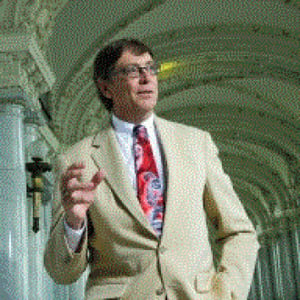
Professor of Law, University of California Hastings College of the Law
Professor Rory Little began teaching at UC Hastings in 1994 after a distinguished 12-year career as a practicing litigator, criminal defense and prosecution lawyer, and appellate lawyer. He is today a nationally recognized authority on criminal litigation ethics, federal criminal law, appellate litigation, and constitutional issues. On three occasions he has been awarded the “Best Professor” designation by the UC Hastings third-year class.
Professor Little chairs and serves on various committees in the American Bar Association and Federal Bar Association; annually publishes a Review of the Supreme Court’s Term: Criminal Cases for the ABA; and serves as Reporter to the ABA’s Task Force to Revise the Criminal Justice Standards, Prosecution and Defense Functions. He also occasionally serves as an expert witness in litigation matters; provides commentary on current legal issues for various print and electronic media; and maintains an Of Counsel position for appellate matters with the international law firm of McDermott, Will & Emery.
After graduating from Yale Law School, Professor Little served as law clerk to U.S. District Judge Louis F. Oberdorfer (Washington DC); Justice Potter Stewart (ret.), working on matters before the First, Third and Sixth Circuit Courts of Appeal; and Justice William J. Brennan, Jr. Professor Little also clerked for Justices Powell, Stevens, and Chief Justice Burger—a unique one-year experience.
Professor Little then practiced privately at Miller, Cassidy, Larroca & Lewin in Washington D.C. In 1987, he joined the U.S. Department of Justice’s Organized Crime & Racketeering Strike Force as a Trial Attorney. In 1989, he became the Appellate Chief for the U.S. Attorney’s Office in the Northern District of California, and has now argued over 60 federal and state appeals while briefing many more. In 1996 to 1997, Professor Little took a leave of absence from UC Hastings to serve as an Associate Deputy Attorney General in Washington D.C. under Attorney General Janet Reno and Deputy AG Jamie Gorelick.
Judge, United States Court of Appeals, Eighth Circuit
David Stras became a judge on the United States Court of Appeals for the Eighth Circuit on January 31, 2018. Before serving on the Eighth Circuit, Judge Stras was an Associate Justice of the Minnesota Supreme Court, a position he occupied from July 1, 2010 until his appointment to the Eighth Circuit.
Prior to becoming a judge, Stras was a member of the faculty of the University of Minnesota Law School from 2004 through 2010. He taught and wrote in the areas of federal courts and jurisdiction, constitutional law, criminal law, and law and politics.
Judge Stras received his Bachelor of Arts degree, with highest distinction, in 1995 and his Master of Business Administration in 1999, both from the University of Kansas. He also received his law degree from the University of Kansas School of Law in 1999, where he served as Editor-in-Chief of the Criminal Procedure Edition of the Kansas Law Review.
Following law school, Stras clerked for The Honorable Melvin Brunetti of the United States Court of Appeals for the Ninth Circuit and then for The Honorable J. Michael Luttig of the United States Court of Appeals for the Fourth Circuit.
From 2001 to 2002, he practiced white-collar criminal and appellate litigation with the Washington, D.C., office of Sidley Austin Brown & Wood. Following his year in practice, he clerked for The Honorable Clarence Thomas of the Supreme Court of the United States.
Co-Founder and Contributor, Power Line Blog
Scott W. Johnson is a graduate of Dartmouth College and the University of Minnesota Law School. He clerked for the United States Court of Appeals for the Eighth Circuit before going to work as a litigator at Faegre & Benson, where he practiced for 16 years and became its first head of appellate practice. He then went to work as regional counsel and senior vice president for TCF Financial Corporation. He currenly serves as legal counsel for a health insurer in Minneapolis. Among his professional publications are "Abraham Lincoln: A Genius for Friendship" (Bench & Bar of Minnesota, September 2000), "Guidelines for Cross-Examination: Lessons from the Cross-Examination of Hermann Goehring" (Bench & Bar of Minnesota, October 2002). He is a founder of, and contributor to, the blog Power Line, which was named Time's first and only blog of the year in December 2004 for its role in exposing the Rathergate story.
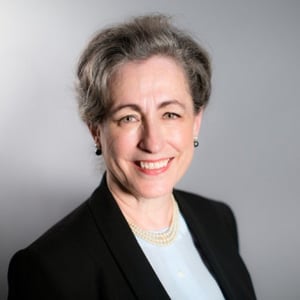
Senior Litigation Counsel, New Civil Liberties Alliance
Peggy Little, Senior Counsel at New Civil Liberties Alliance, a new public interest law firm challenging the administrative state founded in 2017 by Professor Philip Hamburger, has over three decades of experience as a trial and appellate litigator in complex, high-stakes regulatory, mass-tort, class-action, products liability, securities, commercial and civil rights litigation representing individuals and high-profile litigants including Fortune 50 companies, financial institutions, public companies, and universities in state and federal courts, including the United States Supreme Court.
Peggy is a graduate of Yale College and Yale Law School, where she was awarded the Potter Stewart Prize. She was a law clerk to the Hon. Ralph K. Winter on the U.S. Court of Appeals for the Second Circuit. Prior to starting her own trial and appellate law firm in 1997, where she was appellate consulting counsel to the New Haven firefighters in Ricci v.DeStefano, a landmark 2009 United States Supreme Court decision, Peggy was a partner at Tyler, Cooper & Alcorn in New Haven, Connecticut. From 2004 to early 2018, Peggy directed, part-time, the Federalist Society Pro Bono Center.
Peggy has participated in many national conferences and symposia addressing issues of current importance in constitutional law – specifically state and federal constitutional questions regarding the separation of powers and the first amendment – and regularly speaks, blogs and publishes on the topic of the unconstitutional exercise of governmental power. In May of 2017, she presented her paper, Pirates at the Parchment Gates, to a conference of state and federal judges at the Law and Economics Center at the Antonin Scalia Law School. Her work has been published by law reviews, legal publications, the Federalist Society, the Wall Street Journal, Law and Liberty and the Manhattan Institute.
Recent publications include: How the SEC silences its critics, The SEC should listen to Sen. Cotton, Lucia v. SEC, Opening Salvos in the Opioid Litigation Wars, Straight Dope on the Opioid Crisis
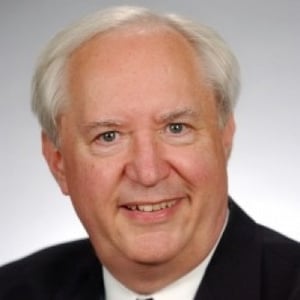
Oppenheim Professor Emeritus of Antitrust and Trade Regulation Law, George Washington University Law School
Thomas D. Morgan is Oppenheim Professor of Antitrust and Trade Regulation Law Emeritus at George Washington University. He was Dean of the Emory University School of Law and on the faculties of the University of Illinois and Brigham Young University. He is co-author of Problems and Materials on Professional Responsibility (14th Ed. 2022), with Professors Mitt Regan and John Dzienkowski. Professor Morgan served as an Associate Reporter for both the American Law Institute’s Restatement of the Law (Third): The Law Governing Lawyers and the American Bar Association’s Ethics 2000 Commission. He is an Executive Committee member of the Federalist Society’s Professional Responsibility and Legal Education Practice Group and a member of the ABA Business Law Section’s Professional Responsibility committee. His book, “The Vanishing American Lawyer” (2010), was published by Oxford University Press.
Adjunct Professor, George Washington University Law School
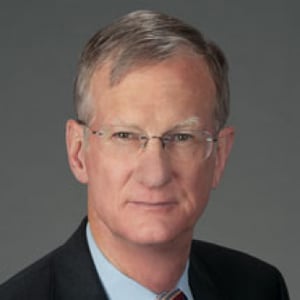
Legal Scholar and Solo Practitioner
Jack received his B.A. in History from the University of Virginia in 1977, graduating with Highest Distinction. After graduating Yale Law School in 1980, he served active duty in the U.S. Army's JAG Corps, rising to the rank of Major, where he represented the United States in more than 250 cases.
He practiced for a decade as an Associate for Bradley Arant in Birmingham, Alabama. He proudly served the State of Alabama in the Office of the Attorney General, both as Deputy and Assistant Attorney General, handling complex civil and criminal litigation cases for the people of Alabama. In 2000, he won the "Best Brief Award" from the National Association of Attorneys General for his brief in a case decided by the U.S. Supreme Court, James Alexander v. Martha Sandoval – a case he won. He was Special Assistant to the Inspector General for the Corporation for National and Community Service, Visiting Legal Fellow for the Center for Judicial and Legal Studies for the Heritage Foundation, Of Counsel at Strickland Brockington Lewis, a solo practitioner, and General Counsel for Indigo Energy.
Most recently, he "re-upped" for military service, volunteering his legal services to the Georgia State Defense Force where twice each month he provided legal services for National Guardsmen who were being deployed. He wore his military uniform for the last time in October 2024.
Jack Park passed away on March 16, 2026.
Judge, United States Court of Appeals, Eighth Circuit
David Stras became a judge on the United States Court of Appeals for the Eighth Circuit on January 31, 2018. Before serving on the Eighth Circuit, Judge Stras was an Associate Justice of the Minnesota Supreme Court, a position he occupied from July 1, 2010 until his appointment to the Eighth Circuit.
Prior to becoming a judge, Stras was a member of the faculty of the University of Minnesota Law School from 2004 through 2010. He taught and wrote in the areas of federal courts and jurisdiction, constitutional law, criminal law, and law and politics.
Judge Stras received his Bachelor of Arts degree, with highest distinction, in 1995 and his Master of Business Administration in 1999, both from the University of Kansas. He also received his law degree from the University of Kansas School of Law in 1999, where he served as Editor-in-Chief of the Criminal Procedure Edition of the Kansas Law Review.
Following law school, Stras clerked for The Honorable Melvin Brunetti of the United States Court of Appeals for the Ninth Circuit and then for The Honorable J. Michael Luttig of the United States Court of Appeals for the Fourth Circuit.
From 2001 to 2002, he practiced white-collar criminal and appellate litigation with the Washington, D.C., office of Sidley Austin Brown & Wood. Following his year in practice, he clerked for The Honorable Clarence Thomas of the Supreme Court of the United States.
Co-Founder and Contributor, Power Line Blog
Scott W. Johnson is a graduate of Dartmouth College and the University of Minnesota Law School. He clerked for the United States Court of Appeals for the Eighth Circuit before going to work as a litigator at Faegre & Benson, where he practiced for 16 years and became its first head of appellate practice. He then went to work as regional counsel and senior vice president for TCF Financial Corporation. He currenly serves as legal counsel for a health insurer in Minneapolis. Among his professional publications are "Abraham Lincoln: A Genius for Friendship" (Bench & Bar of Minnesota, September 2000), "Guidelines for Cross-Examination: Lessons from the Cross-Examination of Hermann Goehring" (Bench & Bar of Minnesota, October 2002). He is a founder of, and contributor to, the blog Power Line, which was named Time's first and only blog of the year in December 2004 for its role in exposing the Rathergate story.
Senior Litigation Counsel, New Civil Liberties Alliance
Peggy Little, Senior Counsel at New Civil Liberties Alliance, a new public interest law firm challenging the administrative state founded in 2017 by Professor Philip Hamburger, has over three decades of experience as a trial and appellate litigator in complex, high-stakes regulatory, mass-tort, class-action, products liability, securities, commercial and civil rights litigation representing individuals and high-profile litigants including Fortune 50 companies, financial institutions, public companies, and universities in state and federal courts, including the United States Supreme Court.
Peggy is a graduate of Yale College and Yale Law School, where she was awarded the Potter Stewart Prize. She was a law clerk to the Hon. Ralph K. Winter on the U.S. Court of Appeals for the Second Circuit. Prior to starting her own trial and appellate law firm in 1997, where she was appellate consulting counsel to the New Haven firefighters in Ricci v.DeStefano, a landmark 2009 United States Supreme Court decision, Peggy was a partner at Tyler, Cooper & Alcorn in New Haven, Connecticut. From 2004 to early 2018, Peggy directed, part-time, the Federalist Society Pro Bono Center.
Peggy has participated in many national conferences and symposia addressing issues of current importance in constitutional law – specifically state and federal constitutional questions regarding the separation of powers and the first amendment – and regularly speaks, blogs and publishes on the topic of the unconstitutional exercise of governmental power. In May of 2017, she presented her paper, Pirates at the Parchment Gates, to a conference of state and federal judges at the Law and Economics Center at the Antonin Scalia Law School. Her work has been published by law reviews, legal publications, the Federalist Society, the Wall Street Journal, Law and Liberty and the Manhattan Institute.
Recent publications include: How the SEC silences its critics, The SEC should listen to Sen. Cotton, Lucia v. SEC, Opening Salvos in the Opioid Litigation Wars, Straight Dope on the Opioid Crisis
Oppenheim Professor Emeritus of Antitrust and Trade Regulation Law, George Washington University Law School
Thomas D. Morgan is Oppenheim Professor of Antitrust and Trade Regulation Law Emeritus at George Washington University. He was Dean of the Emory University School of Law and on the faculties of the University of Illinois and Brigham Young University. He is co-author of Problems and Materials on Professional Responsibility (14th Ed. 2022), with Professors Mitt Regan and John Dzienkowski. Professor Morgan served as an Associate Reporter for both the American Law Institute’s Restatement of the Law (Third): The Law Governing Lawyers and the American Bar Association’s Ethics 2000 Commission. He is an Executive Committee member of the Federalist Society’s Professional Responsibility and Legal Education Practice Group and a member of the ABA Business Law Section’s Professional Responsibility committee. His book, “The Vanishing American Lawyer” (2010), was published by Oxford University Press.
Adjunct Professor, George Washington University Law School
Legal Scholar and Solo Practitioner
Jack received his B.A. in History from the University of Virginia in 1977, graduating with Highest Distinction. After graduating Yale Law School in 1980, he served active duty in the U.S. Army's JAG Corps, rising to the rank of Major, where he represented the United States in more than 250 cases.
He practiced for a decade as an Associate for Bradley Arant in Birmingham, Alabama. He proudly served the State of Alabama in the Office of the Attorney General, both as Deputy and Assistant Attorney General, handling complex civil and criminal litigation cases for the people of Alabama. In 2000, he won the "Best Brief Award" from the National Association of Attorneys General for his brief in a case decided by the U.S. Supreme Court, James Alexander v. Martha Sandoval – a case he won. He was Special Assistant to the Inspector General for the Corporation for National and Community Service, Visiting Legal Fellow for the Center for Judicial and Legal Studies for the Heritage Foundation, Of Counsel at Strickland Brockington Lewis, a solo practitioner, and General Counsel for Indigo Energy.
Most recently, he "re-upped" for military service, volunteering his legal services to the Georgia State Defense Force where twice each month he provided legal services for National Guardsmen who were being deployed. He wore his military uniform for the last time in October 2024.
Jack Park passed away on March 16, 2026.
Judge, United States Court of Appeals, Eighth Circuit
David Stras became a judge on the United States Court of Appeals for the Eighth Circuit on January 31, 2018. Before serving on the Eighth Circuit, Judge Stras was an Associate Justice of the Minnesota Supreme Court, a position he occupied from July 1, 2010 until his appointment to the Eighth Circuit.
Prior to becoming a judge, Stras was a member of the faculty of the University of Minnesota Law School from 2004 through 2010. He taught and wrote in the areas of federal courts and jurisdiction, constitutional law, criminal law, and law and politics.
Judge Stras received his Bachelor of Arts degree, with highest distinction, in 1995 and his Master of Business Administration in 1999, both from the University of Kansas. He also received his law degree from the University of Kansas School of Law in 1999, where he served as Editor-in-Chief of the Criminal Procedure Edition of the Kansas Law Review.
Following law school, Stras clerked for The Honorable Melvin Brunetti of the United States Court of Appeals for the Ninth Circuit and then for The Honorable J. Michael Luttig of the United States Court of Appeals for the Fourth Circuit.
From 2001 to 2002, he practiced white-collar criminal and appellate litigation with the Washington, D.C., office of Sidley Austin Brown & Wood. Following his year in practice, he clerked for The Honorable Clarence Thomas of the Supreme Court of the United States.

Criminal Law: Justice Scalia and the Criminal Law
Rachel Barkow, Stephanos Bibas, Orin S. Kerr, Paul James Larkin, Steve J. Markman, David R. Stras
2016 National Lawyers Convention
Justice Scalia's originalism had an important impact on our nation's criminal law. While sometimes overlooked,...
Special Session: Life on the Bench
Brett M. Kavanaugh, Alex Kozinski, Diarmuid F. O'Scannlain, Dean Reuter, David B. Sentelle, Jerry E. Smith, David R. Stras
2015 National Lawyers Convention
Many attorneys see a judgeship as the pinnacle of professional achievement in the legal world....
Special Session: Life on the Bench
Brett M. Kavanaugh, Alex Kozinski, Diarmuid F. O'Scannlain, Dean Reuter, David B. Sentelle, Jerry E. Smith, David R. Stras
2015 National Lawyers Convention
Many attorneys see a judgeship as the pinnacle of professional achievement in the legal world....
Civil Rights: Ferguson, Baltimore, and Criminal Justice Reform
Gail L. Heriot, Arthur Loevy, Tim Lynch, David B. Muhlhausen, David R. Stras, Michael P. Tremoglie, Robert L. Woodson
2015 National Lawyers Convention
Criminal justice and policing reform are much in the news lately, sparked by events that...
Civil Rights: Ferguson, Baltimore, and Criminal Justice Reform
Gail L. Heriot, Arthur Loevy, Tim Lynch, David B. Muhlhausen, David R. Stras, Michael P. Tremoglie, Robert L. Woodson
2015 National Lawyers Convention
Criminal justice and policing reform are much in the news lately, sparked by events that...
How First Amendment Procedures Protect First Amendment Substance
Aaron H. Caplan, Robert A. Destro, Todd P. Graves, Erik S. Jaffe, Alan B. Morrison, David R. Stras, Eugene Volokh
2014 National Lawyers Convention
While the substance of constitutional rights is always important, it is often the procedures surrounding...
How First Amendment Procedures Protect First Amendment Substance
Aaron H. Caplan, Robert A. Destro, Todd P. Graves, Erik S. Jaffe, Alan B. Morrison, David R. Stras, Eugene Volokh
2014 National Lawyers Convention
While the substance of constitutional rights is always important, it is often the procedures surrounding...
Drunk Driving and the Fourth Amendment: The Implications of Missouri v. McNeely - Podcast
Orin S. Kerr, Rory Little, David R. Stras
Criminal Law & Procedure Practice Group Podcast
The Supreme Court’s decision last Term in Missouri v. McNeely is an important one for...
Professional Responsibility: Regulation of the Legal Profession in the 21st Century: Should Professional Regulation Favor Social Policy over Client Protection?
Scott W. Johnson, Margaret A. Little, Thomas D. Morgan, Alan B. Morrison, John J. Park, David R. Stras
2013 National Lawyers Convention
In 1990, the Supreme Court unanimously held that an integrated state bar association, which all...
Professional Responsibility: Regulation of the Legal Profession in the 21st Century: Should Professional Regulation Favor Social Policy over Client Protection?
Scott W. Johnson, Margaret A. Little, Thomas D. Morgan, Alan B. Morrison, John J. Park, David R. Stras
2013 National Lawyers Convention
In 1990, the Supreme Court unanimously held that an integrated state bar association, which all...