
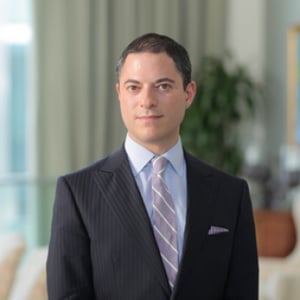
Partner, BakerHostetler, Adjunct Fellow, The Manhattan Institute
Andrew Grossman leads BakerHostetler’s Appellate and Major Motion team. He has appeared before the U.S. Supreme Court, nearly all the federal courts of appeals, as well as some state appellate courts, litigating high-profile and complex commercial, administrative and constitutional issues.
Andrew works with practice groups across BakerHostetler to identify and tackle complex issues, advise on administrative law and strategy, tee up issues for appeal and tackle appeals. He has developed and implemented litigation and administrative strategies for clients in several fields and industries.
In addition to his practice, Andrew advises members of Congress on matters of constitutional and administrative law, having testified more than a dozen times before the House and Senate Judiciary Committees. He has been a frequent legal commentator on radio and television, having appeared on Fox News, CNN, MSNBC, CNBC, NPR and its affiliates, CBN and elsewhere. His legal commentary has also appeared in dozens of magazines and newspapers, including The Wall Street Journal, USA Today, The Washington Post, The Washington Times and many others.
Andrew is a Senior Legal Fellow at the Buckeye Institute, an Adjunct Fellow the Manhattan Institute and a member of the leadership of the Federalist Society. He previously served as an adjunct scholar at the Cato Institute’s Robert A. Levy Center for Constitutional Studies and a legal fellow at the Heritage Foundation’s Meese Center for Legal and Judicial Studies. He clerked for Judge Edith H. Jones on the U.S. Court of Appeals for the Fifth Circuit.
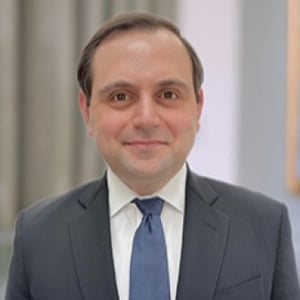
Associate, Baker Hostetler
Sean Sandoloski is a member of BakerHostetler’s Appellate and Major Motions Team. Sean has represented clients at every level of the federal judiciary, as well as in multiple federal agencies and state courts. He has extensive experience in constitutional, administrative, and antitrust law and litigation.
Sean has developed and implemented litigation, administrative, legislative, and communications strategies for clients—presenting holistic solutions for complex problems. He regularly works across groups and offices to tackle high-stakes, fast-moving issues, and advise clients on strategic and regulatory matters. Throughout his career, Sean has worked to cultivate and foster relationships at all levels from the highest offices in government to corporate executives to benefit his clients.
Prior to joining BakerHostetler, Sean served as Special Assistant and Associate Counsel to the President in the Office of White House Counsel, where his primary responsibilities included the selection and confirmation of judicial nominees. There, Sean worked closely with the Department of Justice, a number of federal agencies, and various congressional committees. He also previously served in the Appellate Section of the Department of Justice’s Antitrust Division, representing the United States in the courts of appeals and advising Division leadership on complex issues of federal law. Additionally, he clerked for Judge Steven M. Colloton of the United States Court of Appeals for the Eighth Circuit.
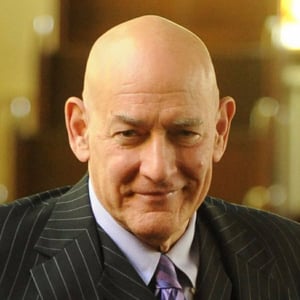
Raoul Berger Professor of Legal History at Northwestern University School of Law
Stephen Presser is a leading American legal historian and expert on shareholder liability for corporate debts. He is frequently an invited witness before committees of the U.S. Senate and House of Representatives on issues of constitutional law. He holds a joint appointment with the J. L. Kellogg Graduate School of Management and also teaches in Northwestern's history department.
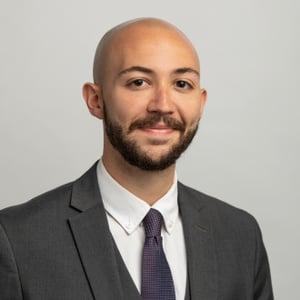
Attorney, Institute for Justice
John Wrench is a Constitutional Law Fellow at the Institute for Justice.
John grew up outside of Ithaca, New York, and received his law degree from the Case Western Reserve University School of Law in 2019. During law school, he served as editor in chief of the Case Western Reserve Journal of International Law and was a member of the Federalist Society. John interned in his law school’s First Amendment Litigation Clinic and was a judicial extern to the Honorable Paul E. Davison in the Southern District of New York. John graduated from Pace University in 2015 with a Bachelor of Arts in Philosophy and Religious Studies.
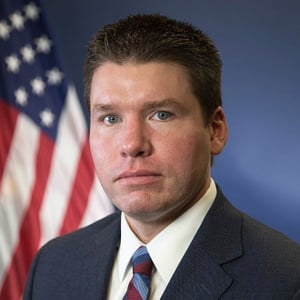
United States Attorney, Eastern District of Kentucky
Robert M. Duncan, Jr. is the United States Attorney for the Eastern District of Kentucky. He was nominated by President Donald Trump on August 3, 2017, and confirmed by the United States Senate on November 9, 2017.
Prior to his appointment, Duncan had served for more than a decade as an Assistant United States Attorney in the Eastern District of Kentucky. Beginning in 2011 and continuing until his appointment as United States Attorney, Duncan focused on the prosecution of Organized Crime Drug Enforcement Task Force cases, working with federal, state, and local law enforcement personnel to disrupt and dismantle complex drug trafficking and money laundering organizations operating in the District and elsewhere. From 2007 to 2013, Duncan served as coordinator of the office’s Project Safe Neighborhoods Program, a Department of Justice initiative to reduce gun and gang crime through education, community outreach, and prosecution.
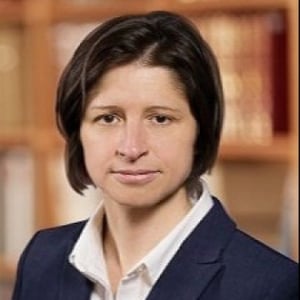
Attorney, Sheehey Furlong & Behm P.C.
Christina E. Nolan, the former United States Attorney for Vermont, is a principal in the firm. She focuses on complex civil litigation, defense of government enforcement actions, false claims act defense and enforcement, white collar and serious felony criminal defense, and internal investigations. Having previously served as a state and federal prosecutor, Christina has tried more than a dozen cases to juries, regularly handled evidentiary hearings before federal and state trial courts, and appeared several times before the United States Court of Appeals for the Second Circuit.
Christina, a native Vermonter, was employed from 2010 to 2021 at the U.S. Attorney’s Office in Vermont (USAO), serving first as an Assistant U.S. Attorney in the Criminal Division for nearly 8 years, and then leading the office as U.S. Attorney from November 2017 until March 2021. Following the bipartisan recommendation of Senator Patrick Leahy and Governor Phil Scott, Christina was nominated for the chief law enforcement officer post by the President and unanimously confirmed by the U.S. Senate. As U.S. Attorney, Christina supervised all federal criminal and civil investigations and prosecutions in Vermont, served as chief spokesperson for federal law enforcement and the USAO, and partnered with community leaders and government officials to promote criminal justice policies and launch community-based and law enforcement initiatives.
U.S. Attorney General William Barr selected Christina as one of a dozen U.S. Attorneys to sit on the Attorney General’s Advisory Committee, which advises the Attorney General on all aspects of criminal and civil policy. Christina chaired the Advisory Committee’s Controlled Substances Subcommittee (CSS), and was a member of its Health Care Fraud and Domestic Violence Working Groups. Christina also cochaired the Justice Department’s initiative to combat sexual harassment in housing during the pandemic and helped lead the Attorney General’s effort to implement police reform pursuant to the 2020 Executive Order on Safe Policing for Safe Communities. In her capacity as leader of the CSS, Christina testified before the U.S. Senate Judiciary Committee concerning fentanyl enforcement policy and proposed fentanyl legislation. In Vermont, Christina sat on Governor Scott’s Opioid Coordination, Substance Misuse, and Emergency Preparedness Councils and cochaired the Vermont Human Trafficking Task Force.
As U.S. Attorney, Christina actively supervised a range of criminal and civil cases involving drug trafficking; firearms and violence; human trafficking; organized crime; child exploitation; wire, health care, bank, and securities fraud; embezzlement and money laundering; government contracting fraud; medical malpractice; and federal False Claims Act enforcement. Under Christina’s leadership, the USAO resolved criminal felony antikickback charges and civil False Claims Act claims against Purdue Pharma L.P. as part of the largest criminal resolution ever reached against a pharmaceutical company; charged the largest fraud case in Vermont history relating to the EB-5/Jay Peak financial scandal in the Northeast Kingdom and obtained a guilty plea from the lead defendant; and secured unprecedented False Claims Act civil and criminal settlements against healthcare companies that garnered national attention.
As a federal prosecutor, Christina investigated and prosecuted financial, narcotics, violent, child exploitation, and other crimes. She tried six federal cases to juries, each trial resulting in conviction. Among her most notable cases was the prosecution and conviction of Richard Monroe for the drug-related murder of University of Vermont student, Kevin DeOliveira, in Burlington. Monroe is serving a 25-year sentence. As Assistant U.S. Attorney, Christina was also tasked with oversight of all opioid trafficking prosecutions and investigations in Eastern Vermont and served as the USAO’s Violent Crime Coordinator.
Before joining the USAO, Christina served as an Assistant District Attorney in Middlesex County, Massachusetts, where she tried numerous cases to juries and prosecuted a variety of state crimes, including DUI, drug trafficking, firearms, and domestic violence matters. From 2005 to 2009, Nolan worked as a litigation associate at Goodwin Procter, LLP, a large Boston law firm. In that role, she represented white collar defendants, conducted internal investigation, supervised complex civil litigation, and played a managerial role in the representation of a corporate executive in a high-profile federal securities fraud prosecution. The securities fraud case ended in dismissal of charges against the client.
After law school, Christina clerked for The Honorable F. Dennis Saylor, IV of the United States District Court for the District of Massachusetts.
Christina graduated magna cum laude from Boston College Law School in 2004, where she served a Senior Editor on the Boston College Law Review. She earned her Bachelor’s degrees in political science and history from the University of Vermont, where she graduated summa cum laude.
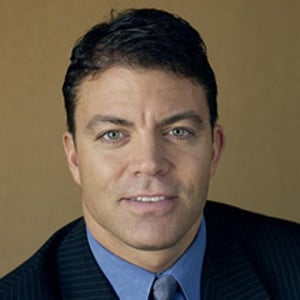
Daniel Levin Professor of Public Policy, The University of Chicago
Tomas J. Philipson is the Daniel Levin Professor of Public Policy Studies at the University of Chicago Harris School of Public Policy and directs the Becker Friedman Institute’s Program on Foundational Research in Health Care Markets and Policies within the Health Economics Initiative. He is also an associate member of the Department of Economics and a former senior lecturer at the Law School. His research focuses on health economics, and he teaches master's and PhD courses in microeconomics and health economics at the University.
Philipson is a US citizen but was born and raised in Sweden where he obtained his undergraduate degree in mathematics at Uppsala University. He received his MA and PhD in economics from the Wharton School at the University of Pennsylvania. He has been a visiting faculty member at Yale University and a visiting senior fellow at the World Bank.
Philipson has served in several public sector positions. He served in the second Bush Administration as the senior economic advisor to the head of the Food and Drug Administration and subsequently as the senior economic advisor to the head of the Centers for Medicare and Medicaid Services. He served as a health care advisor to Senator John McCain during his campaign for President of the United States. He was appointed by the Speaker of the US House of Representatives to the Key Indicator Commission created by the Affordable Care Act. He has served as a scientific advisor to Congress on the 21st Century Cures legislation and on the steering committee of Vice President Biden's Cancer Moon Shot Initiative.
Philipson is the recipient of numerous international and national research awards. He has twice been the recipient of the highest honor of his field: the Kenneth Arrow Award of the International Health Economics Association (for best paper in the field of health economics). In addition, he was awarded the Garfield Award by Research America, The Prêmio Haralambos Simeonidisand from the Brazilian Economic Association, and the Distinguished Economic Research Award from the Milken Institute. Philipson has been awarded numerous grants and awards from both public and private agencies, including the National Institutes of Health, the National Science Foundation, the Rockefeller Foundation, the Alfred P. Sloan Foundation, the John M. Olin Foundation, and the Royal Swedish Academy of Sciences.
Philipson is a founding editor of the journal Forums for Health Economics & Policy of Berkeley Electronic Press and has been on the editorial board of the journal Health Economics and The European Journal of Health Economics. His research has been published widely in all leading academic journals of economics such as the American Economic Review, Journal of Political Economy, Quarterly Journal of Economics, Journal of Economic Theory, Journal of Health Economics, Health Affairs, and Econometrica.
Philipson is a fellow, board member, or associate of a number of other organizations outside the University of Chicago, including the National Bureau of Economic Research, the American Enterprise Institute, the Manhattan Institute (where he was chairman of Project FDA), the Heartland Institute, the Milken Institute, the RAND Corporation, and the USC Shaeffer Center for Health Economics and Policy. At the University of Chicago, he is affiliated with the John M. Olin Program of Law & Economics, the George J. Stigler Center for the Study of the Economy and the State, the Population Research Center, and NORC. He has served on the University-wide Council on Research and on the Advisory Committee to the University's Office of Intellectual Property and Technology Transfer.
Philipson has done executive consulting for both private corporations, including many US Fortune 100 companies, as well as government organizations domestically and internationally. This has included work for the President's Council on Science and Technology, the National Academy of Sciences, and the UK National Health Service. It has also included work for multi-lateral organizations such as the World Bank, the World Intellectual Property Organization, and the OECD. In 2007 he co-founded Precision Heath Economics LLC, which was sold in 2015 to Precision for Medicine Group LLC.
Philipson’s research is frequently disseminated through the popular press. He is a monthly op-ed contributor for Forbes magazine and frequently appears in numerous popular media outlets such as CNN, CBS, FOX News, Bloomberg TV, National Public Radio, New York Times, Wall Street Journal, Businessweek, The Economist, Washington Post, Investor's Business Daily, and USA Today. He is a frequent keynote speaker at many domestic and international health care events and conferences.
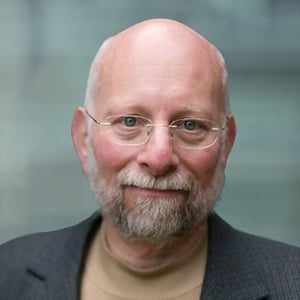
Senior Fellow, Cato Institute
Jeffrey A. Singer is a senior fellow at the Cato Institute and works in the Department of Health Policy Studies. He is principal and founder of Valley Surgical Clinics Ltd., the largest and oldest group private surgical practice in Arizona, and has been in private practice as a general surgeon for more than 35 years.
He is also a visiting fellow at the Goldwater Institute in Phoenix. Singer is a member of the Board of Scientific Advisors of the American Council on Science and Health. From 1994 to 2016, he was a regular contributor to Arizona Medicine, the journal of the Arizona Medical Association. He served on the Advisory Board Council of the Center for Political Thought and Leadership at Arizona State University from 2014 to 2018 and is an adjunct instructor in the Program on Political History and Leadership at ASU. He writes and speaks extensively on regional and national public policy, with a specific focus on the areas of health care policy and the harmful effects of drug prohibition.
He received his BA from Brooklyn College (City University of New York) and his MD from New York Medical College. He is a fellow of the American College of Surgeons.
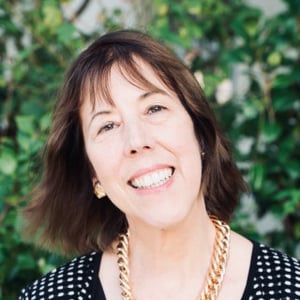
Professor of Law, University of San Diego School of Law (Retired)
Gail Heriot is a recently retired law professor from the University of San Diego. She also served as a member of the U.S. Commission on Civil Rights from 2007 to 2025. She is also the chairman of the board of the American Civil Rights Project and the chair emerita of the Civil Rights practice group at the Federalist Society for Law & Public Policy.
Professor Heriot is a prolific writer in the area of civil rights. She is the author of many law review articles. She is also the editor (along with Maimon Schwarzschild) of the 2021 anthology, A Dubious Expediency: How Race Preferences Damage Higher Education. Her upcoming book is entitled, Why We Walk on Eggshell: How Our Civil Rights Laws Helped Bring About the Woke Era—And the Trump Era, Too.
Her writings for a general audience have appeared in the Wall Street Journal, the San Diego Union-Tribune, the National Review and many other newspapers and magazines.
In 1996, she co-chaired the successful “Yes on Proposition 209” campaign, which amended the California Constitution to prohibit state-sponsored discrimination or preferential treatment based on race, sex, color, ethnicity or national origin. In 2020, she co-chaired the “No on Proposition 16” campaign, which successfully prevented Proposition 209’s repeal.
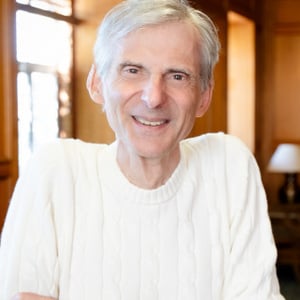
Professor of Law, University of San Diego School of Law
Maimon Schwarzschild is Professor of Law at the University of San Diego, where he has taught
since 1982. He has published extensively on constitutional law, jurisprudence, law and religion,
and civil rights. He is an English barrister and an American lawyer: he was an attorney in the
Civil Rights Division of the US Department of Justice from 1976 to 1981 and practised as a
barrister in London in the 1980s. He was a visiting professor at the Sorbonne for several years,
and has been a visiting professor at the Hebrew University in Jerusalem. He is a Director of the
Institute of Law and Religion at the University of San Diego and a member of the editorial board
of Law and Philosophy. With Gail Heriot he recently co-edited a volume entitled “A Dubious
Expediency: How Race Preferences Damage Higher Education”, published by Encounter Books.
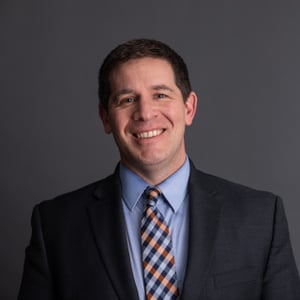
Vice President for Legal Strategy, Stand Together
Casey Mattox is Vice President for Legal Strategy at Stand Together and Senior Advisor at
Americans for Prosperity. In these roles he advocates for and creates strategies and
partnerships to ensure a constitutionally limited government that protects the civil liberties of all
Americans. Prior to joining Stand Together and AFP Casey’s legal career focused on defending
the First Amendment rights of students, faculty, healthcare workers and religious organizations.
Casey has a J.D. from Boston College School of Law and an undergraduate degree from the
University of Virginia. You can find him on Twitter at @CaseyMattox_ and on LinkedIn at
@Casey-Mattox-ST.

Patrick Hotung Professor of Constitutional Law, Georgetown University Law Center
Randy Barnett is the Patrick Hotung Professor of Constitutional Law at Georgetown University Law Center. He has argued before the United States Supreme Court, tried murder cases to juries as a prosecutor in Chicago, and appeared as a prosecutor in the feature film Inalienable. He is the author of numerous books, including Restoring the Lost Constitution, The Structure of Liberty, Our Republican Constitution, and The Original Meaning of the Fourteenth Amendment. He has published two memoirs, A Life for Liberty: The Making of an American Originalist, and Felony Review: Tales of True Crime and Corruption in Chicago. He is currently working on a new book, Freedom and Flourishing: Libertarianism for the Real World.
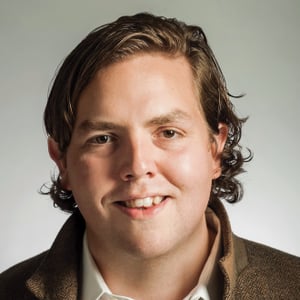
Harry Kalven, Jr. Professor of Law & Faculty Director, Constitutional Law Institute, University of Chicago Law School
William Baude is a Professor of Law and the Faculty Director of the Constitutional Law Institute at the University of Chicago Law School, where he teaches federal courts, constitutional law, and conflict of laws. His current research interests include different aspects of the Fourteenth Amendment (particularly both Section One and Section Three) and the nature of judicial discretion.
Among his other activities Baude is: the co-editor of two textbooks, The Constitution of the United States and Hart & Wechsler's Federal Courts in the Federal System; an Affiliated Scholar at the Center for the Study of Constitutional Originalism; a founding member of the Academic Freedom Alliance; a member of the American Law Institute; an occasional blogger at The Volokh Conspiracy; and a podcaster on Divided Argument. He also recently served on the Presidential Commission on the Supreme Court of the United States.
Professor Baude received his BS in Mathematics from the University of Chicago and his JD from Yale Law School. He then clerked for then-Judge Michael McConnell on the United States Court of Appeals, and Chief Justice John Roberts on the United States Supreme Court. Before joining the Chicago faculty, he was a fellow at the Stanford Constitutional Law Center, and a lawyer in Washington, DC.
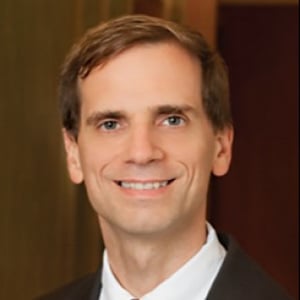
Judge, United States Court of Appeals, District of Columbia Circuit
Judge Katsas was appointed to the D.C. Circuit in December 2017. He graduated from Princeton University and Harvard Law School, where he was an executive editor on the Harvard Law Review. Between 1989 and 1992, he served as a law clerk to Judge Edward Becker on the Third Circuit, to then-Judge Clarence Thomas on the D.C. Circuit, and to Justice Thomas on the Supreme Court. Between 1992 and 2001, he was an associate and then partner in the Washington office of Jones Day, where he specialized in appellate and complex civil litigation. Between 2001 and 2009, he served in many senior positions in the Department of Justice, including as Assistant Attorney General for the Civil Division and as Acting Associate Attorney General. In 2009, he returned to Jones Day. From January to December 2017, he served as Deputy Assistant to the President and Deputy Counsel to the President.
Before joining the bench, Judge Katsas argued more than 75 appeals, including three cases in the Supreme Court, 13 cases in the D.C. Circuit, and cases in every other federal court of appeals. By appointment of the Chief Justice, he served on the Advisory Committee on Appellate Rules from 2013 to 2017. In 2016, he was elected to membership in the American Academy of Appellate Lawyers.
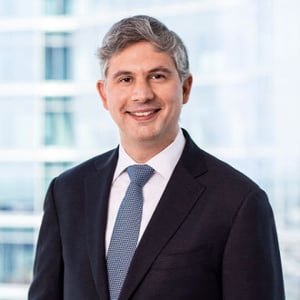
Partner, Keller Postman
Ashley Keller is one of the founding Partners of Keller Postman LLC. An experienced trial and appellate lawyer, Ashley helps set strategic direction across virtually all of the firm’s cases. He represents clients in a wide variety of practice areas and types of claims, including product-liability, antitrust, class action, and arbitration matters.
Ashley is one of the leaders of Keller Postman’s national product-liability practice. He leverages his ability to detangle complex concepts and develop novel legal theories to support individual client matters and as counsel on numerous product-liability multidistrict litigation matters. He chairs the plaintiffs’ Law & Briefing Committee in the Zantac (Ranitidine) Product Liability MDL in the U.S. District Court for the Southern District of Florida.
Ashley also litigates complex antitrust and class action matters. Among his notable cases, Ashley represents numerous States in antitrust litigation against Google for monopolizing products and services used by advertisers and publishers in online-display advertising.
Ashley also has played a central role in developing the firm’s pioneering arbitration practice, which includes pursuing individual arbitrations for clients whose claims are subject to arbitration clauses with class-action waivers. In part through managing the complexity of pursuing these individual claims simultaneously, the firm has secured millions in settlements for more than 500,000 employees and consumers.
Before launching Keller Postman, Ashley co-founded the litigation finance firm Gerchen Keller Capital, which grew to more than $1.3 billion in assets under management and was the world’s largest private investment manager focused on legal and regulatory risk prior to being acquired by Burford Capital in 2016.
Previously, Ashley was a partner at Bartlit Beck Herman Palenchar & Scott LLP, The American Lawyer’s litigation boutique of the year. While there, he handled various trial and appellate matters involving multi-billion-dollar securities and patent cases, contract disputes, mass torts, and class actions.
Ashley also worked as an analyst at Alyeska Investment Group, a Chicago-based market-neutral hedge fund, where he focused on investments in companies facing litigation and other complicated regulatory matters.
Ashley was named a 2021 Plaintiffs’ Lawyers Trailblazer by the National Law Journal. He is also listed on Lawdragon’s 500 Leading Lawyers in America, Lawdragon’s 500 Leading Plaintiff Consumer Lawyers, Lawdragon’s Leading Plaintiff Financial Lawyers, National Trial Lawyers’ Top 100, and Illinois Super Lawyers.
Ashley was a law clerk for Justice Anthony M. Kennedy at the Supreme Court of the United States and Judge Richard Posner at the U.S. Court of Appeals for the Seventh Circuit. He graduated magna cum laude from Harvard College, received his M.B.A. from the University of Chicago Booth School of Business and received his J.D. from the University of Chicago Law School, where he graduated first in his class.
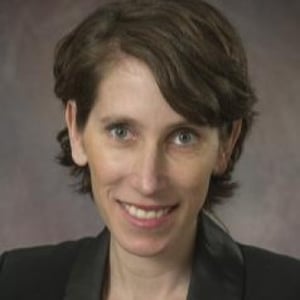
Professor of Law, Herbert and Marjorie Fried Teaching Scholar, University of Chicago Law School
Genevieve Lakier’s research explores the connections between culture and law. She is currently engaged in a long-term project exploring the cultural history of the First Amendment, and another project exploring the changing role of the state in the regulation of sex.
Genevieve has an AB from Princeton University, a JD from New York University School of Law, and an MA and PhD in anthropology from the University of Chicago. Between 2006 and 2008, she was an Academy Scholar at the Weatherhead Center for International and Area Studies at Harvard University. After law school, she clerked for Judge Leonard B. Sand of the Southern District of New York and Judge Martha C. Daughtrey of the Sixth Circuit Court of Appeals. Before joining the faculty, Genevieve taught at the Law School as a Bigelow Fellow and Lecturer in Law.
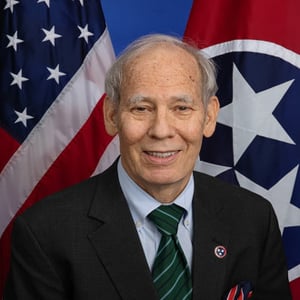
Comptroller Emeritus, Tennessee Comptroller of the Treasury
Justin P. Wilson serves as Comptroller Emeritus within the Office of the Tennessee Comptroller of the Treasury. He previously served six terms as Tennessee’s 34th Comptroller from January 15, 2009 until January 13, 2021.
Comptroller Emeritus Wilson has a long history of public service. He served as Commissioner of the Tennessee Department of Environment and Conservation and as Deputy to the Governor for Policy under former Governor Don Sundquist. He was a member of the Financial Advisory Board of the U.S. Environmental Protection Agency, and he served as Chairman of the Nashville Electric Board, the Davidson County Metropolitan Health Board, and the Community Health Agency of Nashville and Davidson County. He was Foreman of the Davidson County Grand Jury, and he has served in leadership positions for numerous Nashville business as well as civic and charitable organizations.
Comptroller Emeritus Wilson was also a partner in the law firm of Waller Lansden Dortch & Davis where he served on its Executive Committee. He is a graduate of Stanford University, Vanderbilt University School of Law, and New York University.
Comptroller Emeritus Wilson was named Conservationist of the Year in 1997, and the Justin P. Wilson Cumberland Trail State Park is named in recognition of his “conservation and environmental contributions to the State of Tennessee.”
Comptroller Emeritus Wilson is married to Dr. Barbara Engelhardt, and he is the father of four sons.

Chief Judge, United States Court of Appeals, Eleventh Circuit
William H. Pryor Jr. serves as Chief Circuit Judge on the United States Court of Appeals for the Eleventh Circuit.
In 2013–18, he served on the United States Sentencing Commission and, in 2017–18, served as Acting Chair.
He has taught as a visiting professor at the University of Alabama School of Law and previously taught as an adjunct professor at the Cumberland School of Law of Samford University.
He served as the 45th Attorney General of Alabama from 1997 to 2004. When he took office, he was the youngest attorney general in the nation. In his reelection, he received the highest percentage of votes of any statewide candidate.
He graduated magna cum laude from Tulane Law School where he finished first in the common-law curriculum and was editor in chief of the Tulane Law Review. He then served as a law clerk for Judge John Minor Wisdom of the U.S. Court of Appeals for the Fifth Circuit.
He is a member of The American Law Institute and an Adviser for the RESTATEMENT OF THE LAW THIRD, CONFLICT OF LAWS. He is a coauthor with Bryan Garner, Justices Gorsuch and Kavanaugh, and several other judges of a treatise, THE LAW OF JUDICIAL PRECEDENT. He has published in the Yale Law Journal, Columbia Law Review, Virginia Law Review, Notre Dame Law Review, Harvard Journal of Law & Public Policy, Yale Law & Policy Review, George Mason Law Review, Florida Law Review, Alabama Law Review, Case Western Reserve Law Review, and Tulane Law Review. He has published op-eds in The Wall Street Journal, The New York Times, National Review, and USA Today. He has debated at National Lawyers’ Conventions of the Federalist Society (including on National Public Radio) and at the Oxford Union in the United Kingdom. And he is listed among several “widely admired judicial writers” in Bryan Garner’s The Redbook: A Manual on Legal Style.
He is a member of the Tulane Law School Hall of Fame and has received the Defender of the Constitution Award from the Heritage Foundation, the Jurist of the Year Award from the Texas Review of Law & Politics, and the St. Thomas More Award from the St. Thomas More Society of Atlanta. Judge Pryor is also a proud member of the National Society of the Sons of the American Revolution.

The End of Independent Agencies? Restoring Presidential Control of the Executive Branch
Andrew Grossman, Sean Sandoloski
On the day that President Joe Biden took office, among his first official acts was...
Should the “Hollow Core” of Constitutional Theory Be Filled with the Framers’ Intentions?
Stephen B. Presser
A Review of The Hollow Core of Constitutional Theory: Why We Need the Framers, by...
Opioids in 2021: Enforcement Strategies and Policy Prescriptions
Criminal Law & Procedure Practice Group Teleforum
TeleforumTalks with Authors: A Dubious Expediency
Civil Rights Practice Group Teleforum
TeleforumLitigation Update: InterVarsity Christian Fellowship/USA v. University of Iowa et al.
Free Speech & Election Law Practice Group Teleforum
TeleforumAnnual Summer Cocktail Reception
Milwaukee Lawyers Chapter
Milwaukee, WIPrivate Entities and Public Concern
Freedom of Thought Six-Part Series: Part 6
TeleforumState Finances: What’s Good about Tennessee
Nashville Lawyers Chapter
Nashville, TNJudge Bill Pryor Discusses the 100th Anniversary of the Murder of Father James Coyle
Birmingham Lawyers Chapter
Birmingham, ALState Court Docket Watch: State of Iowa v. Wright
John Wrench
Note from the Editor: The Federalist Society takes no positions on particular legal and public...